Affiliate disclosure: This roundup is reader-supported. When you click through Amazon links, we may earn a referral commission on qualifying purchases.
If you share a garage or manage charging for more than one EV, choosing the right charger affects convenience, cost, and how quickly each car gets back on the road. You want a unit that balances power, safety, cable reach, and flexibility so you can charge multiple vehicles without tripping breakers or constantly moving cars around.
This guide focuses on home EV chargers that work well for shared garages, family EVs, guest charging, and backup charging. You’ll find high-output wall chargers, smart energy-management options, rugged simple chargers, and portable units that make sense when one charger needs to serve different vehicles.
Quick Verdict
Choose the Emporia Pro if you want the best fit for a multi-EV household that needs energy monitoring and load-aware charging. Choose the Emporia 48A if you want a strong all-around smart charger with broad vehicle compatibility. Choose the Grizzl-E Classic if you prefer a rugged, simple charger without app dependence.
For mixed Tesla and non-Tesla garages, the Apex Mach1 and Apex Mach3 are useful because they support both J1772 and NACS-style charging setups. For backup or travel use, the Raylix Portable is better as a secondary charger than as your main multi-car charging station.
Top Picks
|
Category |
Product |
Why It Fits |
|---|---|---|
|
🏆 Best Overall |
Strong smart features, long cable, and high-output charging when properly installed |
|
|
⚡ Best Energy Management |
Best fit for load-aware charging and whole-home energy tracking |
|
|
🌧️ Best Outdoor |
Weather-ready design with app control and a 25 ft cable |
|
|
⭐ Best Smart Charger |
Flexible amperage, strong app support, and broad home-charging compatibility |
|
|
🔰 Most Durable |
Rugged, simple, and ideal if you do not want app dependence |
|
|
🚀 Best Plug-and-Play |
Good fit when you want a simple smart charger with a long cable |
|
|
🔌 Best Tesla-Friendly |
Useful for mixed J1772 and NACS households |
|
|
🔁 Most Versatile |
Portable dual-connector option for different outlets and vehicles |
|
|
💼 Best Backup Charger |
Best as a travel, guest, or emergency charger rather than a primary station |
How We Chose These Chargers
You need chargers that match a multi-car routine, so we prioritized real-world factors that reduce friction and risk. Charge rate and amperage determine how quickly each vehicle tops up, while cord length and connector options decide whether one charger can reach different parking spots.
We also weighed installation flexibility, weatherproofing, smart scheduling, energy monitoring, portability, and durability. For shared garages, the best charger is not always the fastest one. It is the one that matches your electrical panel, your parking layout, and the connector types your household actually uses.
Before You Buy
- Confirm panel capacity: Ask a licensed electrician whether your panel can support a 40A, 48A, or 50A charging setup.
- Match the circuit to the charger: A 48A charger usually needs a properly sized hardwired circuit. A NEMA 14-50 plug-in setup is commonly limited to lower continuous output.
- Check connector type: J1772 works for many non-Tesla EVs, while NACS support can help if your garage includes Tesla or newer NACS-equipped vehicles.
- Measure cable reach: A 23 to 30 ft cable can make one charger more practical across two parking spots.
- Plan charging rotation: One single-port charger can serve multiple cars, but you still need to stagger sessions unless you install a dual-port or load-sharing system.
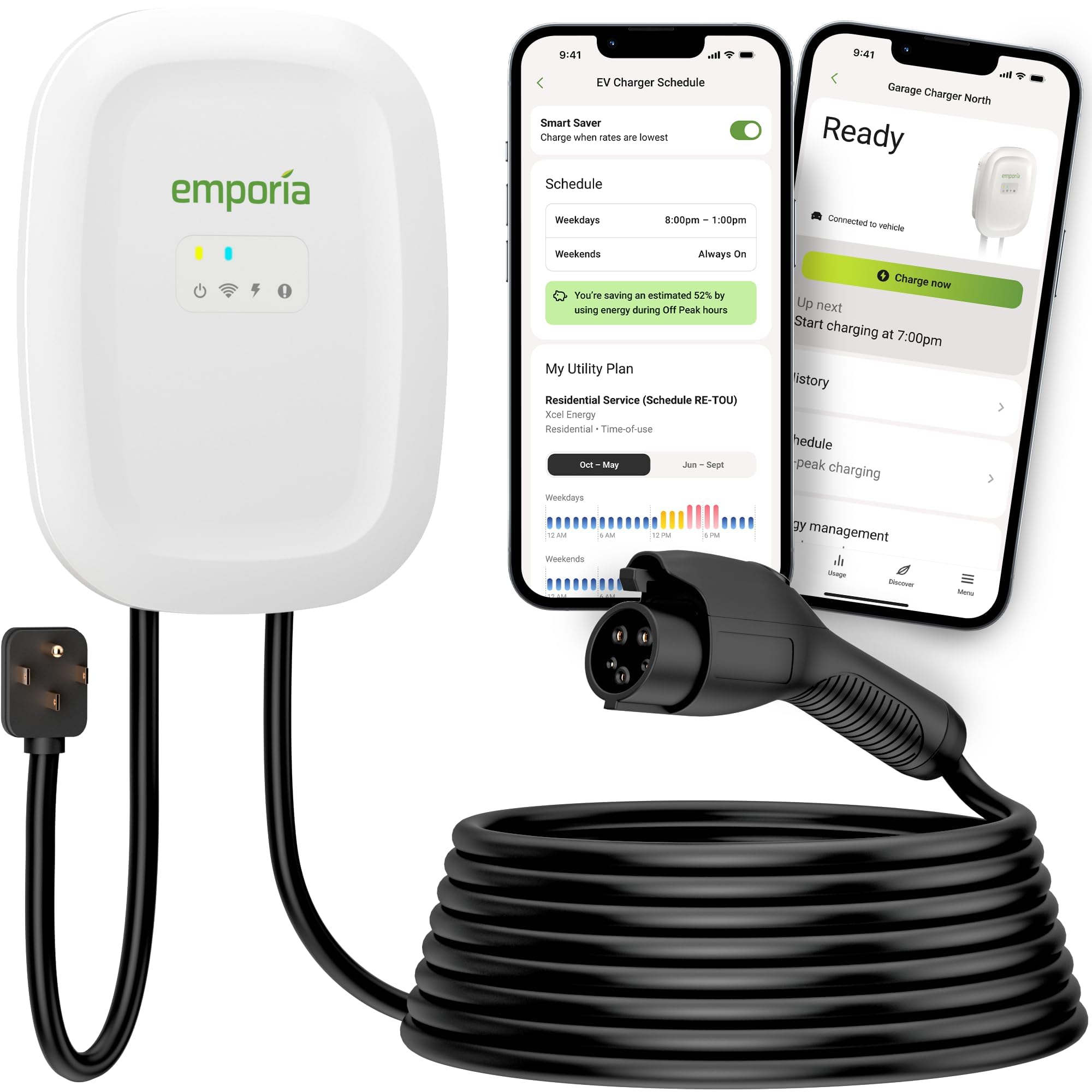
This Emporia unit gives you a reliable Level 2 charger for a garage where more than one driver may need access. It offers strong charging output when hardwired correctly, and it can also work in a lower-output plug-in setup depending on the version and installation.
The 25 ft cable helps you reach different parking spots without relying on extension gear, while WiFi control lets you schedule sessions and monitor charging from your phone. That makes it a sensible all-around choice for nightly top-ups, guest cars, and households that want smart control without jumping into a more complex load-management system.
Why You’ll Like It
You get a strong balance of speed, cable reach, app control, and brand support. It is especially useful if you want one main wall charger that can rotate between vehicles through scheduled charging windows.
Watch Out For
Do not assume every installation delivers the same amperage. For the highest output, plan for a hardwired setup and confirm circuit sizing with an electrician.
Ease Of Use
|
Feature |
Ease Level |
|---|---|
|
Installation |
Moderate |
|
App Setup |
Moderate |
|
Daily Plug-In |
Easy |
|
Scheduling |
Easy |
Durability
The enclosure is designed for regular home charging and indoor or outdoor placement when installed correctly. The cable length and app features make it practical for repeated daily use in a shared garage.
Key Benefits
- Strong Level 2 charging for faster home top-ups
- 25 ft cable gives extra reach across multiple parking spots
- WiFi scheduling and remote monitoring for easier energy use
- Good fit for households rotating one charger between multiple EVs
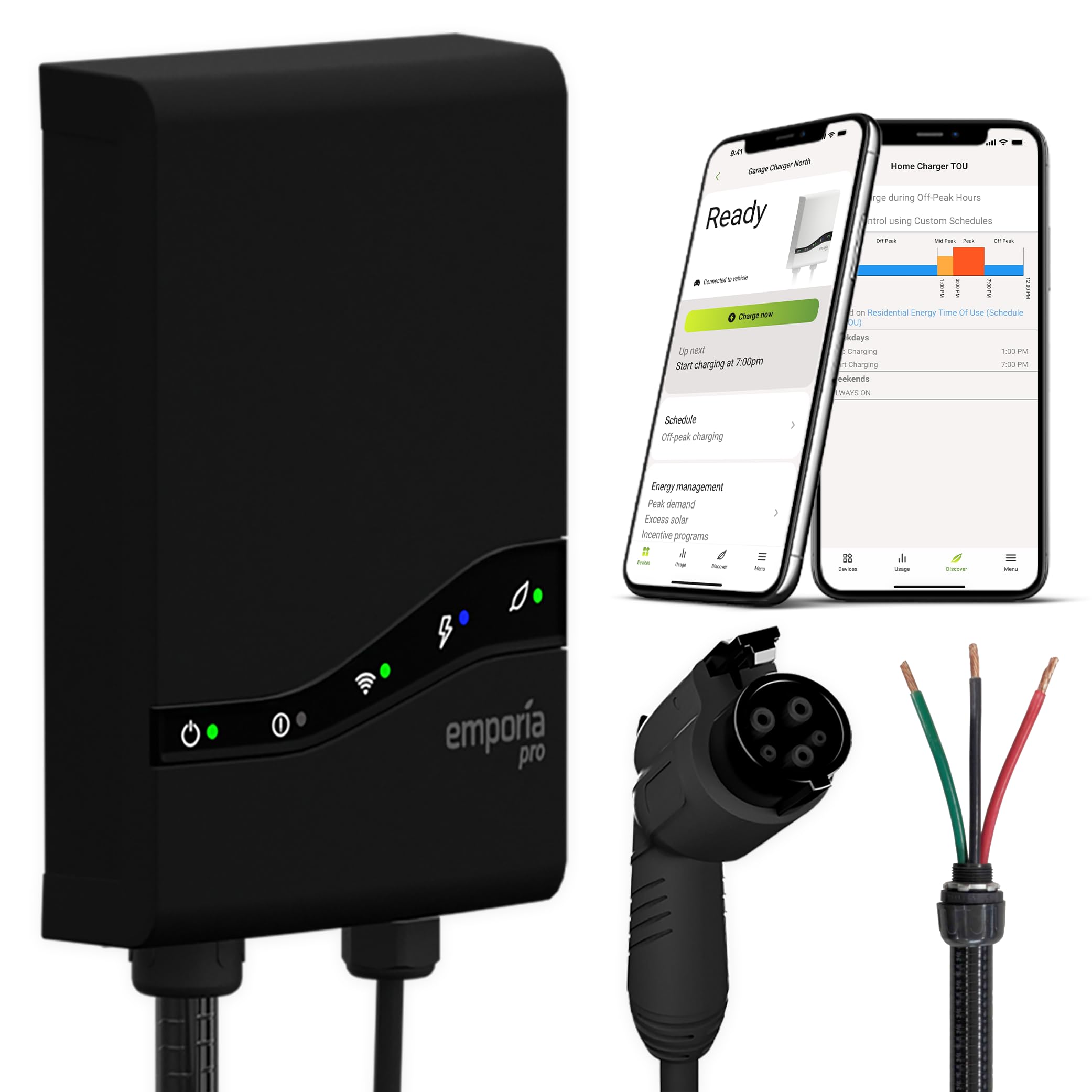
The Emporia Pro is the strongest fit here if your main concern is managing power across a busy home. It is built for a garage where multiple cars share charging and where whole-home electrical load matters.
It pairs charging control with energy monitoring features, so you can better understand when and how your EVs use power. The 25 ft cable and J1772 connector make it practical across common garage layouts, while the hardwired design gives you a clean permanent setup.
Why You’ll Like It
You can use it to manage charging around peak hours, household demand, and daily driving routines. That matters when two EVs, HVAC, appliances, and other electrical loads compete for panel capacity.
Watch Out For
This is not the simplest option. You should expect a professional install and some app setup time, especially if you want to use the energy-management features properly.
Ease Of Use
|
Feature |
Ease Level |
|---|---|
|
Installation |
Moderate |
|
App Setup |
Moderate |
|
Daily Use |
Easy |
|
Energy Scheduling |
Easy |
Durability
The unit is designed for regular home use and permanent installation. Its value comes from combining daily charging durability with smarter power management.
Key Benefits
- PowerSmart energy features help with scheduling and load management
- Strong Level 2 output when installed on a suitable hardwired circuit
- 25 ft cable helps reach different parking positions
- Good option for homes with more than one EV and heavier electrical demand
This EVIQO charger makes sense when you need a charger that can live outside or in a garage with changing parking arrangements. The 25 ft cable gives you useful reach, and WiFi scheduling helps you stagger charging between cars.
For a multi-car household, its biggest advantage is convenience. You can use it as the main charger for daily rotation, then schedule sessions so one car charges after another without peak-hour guesswork.
Why You’ll Like It
It combines smart control, outdoor-friendly construction, and enough cable length for real garage layouts. That makes it easier to serve more than one EV from one mounted location.
Watch Out For
Confirm whether the version you select is plug-in or hardwired, because that affects the maximum safe output and installation cost.
Ease Of Use
|
Feature |
Ease Level |
|---|---|
|
Installation |
Moderate |
|
App Setup |
Moderate |
|
Daily Use |
Easy |
|
Scheduling |
Easy |
Durability
The weather-resistant housing helps if your charging spot is exposed to rain, dust, or temperature swings. Proper installation still matters, especially for outdoor mounting.
Key Benefits
- Smart scheduling helps rotate charging between vehicles
- 25 ft cable supports flexible parking layouts
- Good fit for indoor or outdoor charging locations
- Useful for shared garages where cable reach matters
The ChargePoint HomeFlex is built around flexibility, so it works well when different drivers and vehicles share one charging spot. You can adjust amperage to match the circuit and use the app to schedule charging around off-peak rates.
The 23 ft cable gives useful reach across most garages, and the brand’s app ecosystem is one of the main reasons to consider it. For households that want a polished smart-charging experience, it remains a practical option.
Why You’ll Like It
The app makes scheduling, monitoring, and routine charging management easier. That is helpful when you want one EV charged before work and another charged later overnight.
Watch Out For
Plug-in and hardwired versions can have different output limits. Choose the version that matches your circuit, outlet, and charging-speed goals.
Ease Of Use
|
Feature |
Ease Level |
|---|---|
|
Installation |
Moderate |
|
App Setup |
Moderate |
|
Daily Plug-In |
Easy |
|
Amp Adjustment |
Easy |
Durability
The unit is designed for regular home use and indoor or outdoor placement when installed as directed. It is best for buyers who value smart features as much as raw simplicity.
Key Benefits
- Adjustable amperage helps match home wiring and vehicle needs
- WiFi and app control support scheduling and remote monitoring
- 23 ft cable reaches many common parking setups
- Good choice for buyers who want a polished smart-charging platform
If you want a no-nonsense charger that just works, the Grizzl-E Classic is built around simplicity and durability. You plug it into a suitable NEMA 14-50 outlet and get steady Level 2 charging without relying on apps or cloud services.
That matters in a shared garage because every driver can use the same simple process: plug in, check the status light, and let the car charge. The 24 ft cable gives useful reach, and the heavy-duty casing suits buyers who care more about rugged hardware than smart features.
Why You’ll Like It
It removes app headaches from the routine. For families with multiple drivers, simple hardware can be easier to live with than another connected device.
Watch Out For
This is not the best option if you need app scheduling, energy monitoring, or advanced load management. Your EV or utility app may still handle some scheduling tasks separately.
Ease Of Use
|
Feature |
Ease Level |
|---|---|
|
Installation |
Easy to Moderate |
|
Daily Plug-In |
Easy |
|
Status Indicators |
Easy |
|
App Connectivity |
Not Applicable |
Durability
The heavy-duty enclosure and premium cable are the main selling points. It is a strong pick for repeated home use where ruggedness matters more than smart controls.
Key Benefits
- Reliable, no-frills charging with minimal setup complexity
- Heavy-duty enclosure built for regular use
- 24 ft cable gives flexibility across multiple parking spots
- Good fit for buyers who want fewer connected-device issues
This NexCyber unit is built for straightforward home charging when you want a capable smart charger with good cable reach. The 25 ft cord helps in a shared garage, and the app features support scheduling and monitoring.
It is a practical choice if you want a tidy wall-mounted charger without going too deep into whole-home energy management. Use it for daily charging, staggered overnight sessions, or as the main station for rotating between family EVs.
Why You’ll Like It
The long cable and smart controls make it easier to manage more than one vehicle from one location. It fits buyers who want a modern setup without a complicated feature list.
Watch Out For
Check the exact plug or hardwire configuration before ordering. Maximum output depends on the circuit, breaker, and installation method.
Ease Of Use
|
Feature |
Ease Level |
|---|---|
|
Installation |
Easy to Moderate |
|
App Setup |
Moderate |
|
Daily Plug-In |
Easy |
|
Scheduling |
Easy |
Durability
The enclosure is designed for regular home use. For best results, install it according to local electrical requirements and keep the cable stored properly between sessions.
Key Benefits
- 25 ft cable supports flexible parking configurations
- WiFi app lets you schedule and monitor charging remotely
- Good choice for a clean, wall-mounted garage setup
- Works best for buyers who want smart control without advanced load monitoring
The Mach1 is aimed at households with mixed EV connectors. If one car uses J1772 and another uses a Tesla/NACS-style setup, a dual-compatibility charger can reduce adapter hassle.
The 30 ft cable is the standout feature for multi-car garages. That extra reach can help when one car parks inside, another sits outside the garage door, or the charging inlet is on the opposite side of the vehicle.
Why You’ll Like It
It solves two common shared-garage problems: connector mismatch and cable reach. That makes it a strong fit for Tesla and non-Tesla households.
Watch Out For
Because it supports multiple installation styles, verify the exact configuration, outlet, circuit size, and connector setup before buying.
Ease Of Use
|
Feature |
Ease Level |
|---|---|
|
Installation |
Moderate |
|
Connector Flexibility |
Easy |
|
Daily Plug-In |
Easy |
|
Amp Adjustment |
Easy to Moderate |
Durability
The long cable and outdoor-friendly design make it practical for real garage layouts. Protect the connector and avoid dragging the cable across rough surfaces to extend service life.
Key Benefits
- J1772 and NACS support helps mixed-EV households
- 30 ft cable reaches more parking positions than many home chargers
- Hardwire or NEMA 14-50 installation options add flexibility
- Useful for guest charging and rotating between different EVs
The Mach3 is a versatile portable charger for homes where flexibility matters more than a permanent wall installation. You can use it as a travel charger, guest charger, or backup charger when your main wall unit is occupied.
Its dual connector support helps if your household includes both J1772 and NACS vehicles. The 25 ft cable also gives enough reach for many garage and driveway layouts.
Why You’ll Like It
It adapts to different outlets, cars, and charging situations. That makes it useful when your second EV does not need a permanent dedicated charger every night.
Watch Out For
Portable chargers still need safe, compatible outlets. Always match amperage to the circuit and avoid using household extension cords for EV charging.
Ease Of Use
|
Feature |
Ease Level |
|---|---|
|
Setup |
Moderate |
|
Portability |
Easy |
|
Amp Adjustment |
Easy |
|
Connector Switching |
Easy |
Durability
Built with portable use in mind, the Mach3 should be stored carefully between trips. Keep the cable dry, protected, and loosely coiled to reduce wear.
Key Benefits
- Portable design works for home backup, travel, and guest charging
- Adjustable output helps match different circuits
- J1772 and NACS support improves mixed-vehicle compatibility
- 25 ft cable improves reach in cramped garages
The Raylix Portable is not the fastest charger in this roundup, but it has a clear role in a multi-car setup. It works best as a backup, guest, travel, or emergency charger when your main Level 2 station is busy.
You can use a standard outlet for slower charging or a compatible higher-voltage outlet when available. The built-in display and timer are useful if you want simple scheduling without relying on a phone app.
Why You’ll Like It
It is easy to store, easy to move, and useful in more places than a fixed wall charger. That makes it a practical add-on for households with one main charger and more than one EV.
Watch Out For
With 8–16A output, it is better for overnight top-ups, plug-in hybrids, emergencies, or low-mileage use. Do not choose it as your only charger if two long-range EVs need frequent fast home charging.
Ease Of Use
|
Feature |
Ease Level |
|---|---|
|
Plug-and-Play |
Easy |
|
Timer Programming |
Easy |
|
Switching Amps |
Moderate |
|
Portability |
Easy |
Durability
The unit is light enough to carry and better suited to occasional mobile use than heavy permanent-duty charging. Store it in a dry, protected place when you are not using it.
Key Benefits
- Built-in display and timer for app-free scheduling
- Works as a backup charger for guests, travel, or emergencies
- Adjustable 8–16A output for different compatible outlets
- 21 ft cable gives useful reach in tight garages
- Compact design makes it easy to move between cars
How To Choose An EV Charger For Multiple Cars
Start With Your Electrical Panel
Before comparing charger speed, check your available electrical capacity. A high-output charger can only perform safely when the wiring, breaker, outlet, and installation method support that load.
If you plan to charge two EVs regularly, ask an electrician whether your home can support one high-output charger, two lower-output chargers, or a load-management setup.
Think About Charging Rotation
One single-port charger can serve multiple cars, but it still charges one vehicle at a time. If both cars drive long distances every day, you may need two circuits, a dual-port charger, or a load-sharing system.
If one car is a commuter and the other only needs occasional top-ups, a single smart charger plus a portable backup can work well.
Match The Connector To Your Garage
J1772 remains common for many non-Tesla EVs and plug-in hybrids. NACS support is increasingly useful for Tesla vehicles and newer North American EVs. If your garage has both, choose a dual-connector option or budget for a safe adapter.
Do Not Ignore Cable Length
A few extra feet can decide whether one charger works for two parking spots. For shared garages, a 23 to 30 ft cable is often more practical than a shorter cable with slightly higher smart features.
FAQ
Can One Charger Serve Multiple Cars?
Yes, one charger can serve several cars, but it will usually charge one car at a time unless you install a dual-port charger or a load-sharing system. In practice, you’ll swap vehicles or stagger charging windows so each car gets enough time overnight.
Another common approach is to keep a portable or secondary charger on hand for guests or occasional use while relying on a main wall unit for daily top-ups. If you want hands-off convenience, choose a charger with smart scheduling so you can set charging windows without manual switching.
How Do I Manage My Garage’s Electrical Load?
Start by checking your electrical panel and talking to a licensed electrician about available capacity and proper circuit sizing for Level 2 charging. Many home EV chargers run on 40–48 amps at 240V, but your wiring and breaker must support the selected output.
If your panel is limited, choose a charger with adjustable amperage or use scheduling and energy monitoring to spread demand across off-peak hours. For multi-car setups, consider a load-management solution or an EV charger that integrates with a home energy monitor.
Is A 48A Charger Always Better Than A 40A Charger?
No. A 48A charger can be faster, but it usually needs a higher-capacity hardwired circuit. A 40A charger on a NEMA 14-50 outlet can still be fast enough for most overnight home charging routines.
For two EVs, smart scheduling and cable reach may matter more than chasing the highest amperage number.
Should I Choose J1772 Or NACS?
Choose based on the vehicles in your household. J1772 works with many non-Tesla EVs and plug-in hybrids, while NACS support is useful for Tesla vehicles and many newer North American EVs. If you own both types, look for a charger with dual support or confirm that your adapter is rated for the charger’s output.
What Should I Consider When Choosing A Charger?
Think about amperage, connector type, cable reach, installation style, outdoor rating, scheduling features, and warranty support. For a multi-car garage, also ask whether you need one high-output charger, two separate chargers, or a charger with load-management features.
Portability can help if you only need occasional charging for a second EV. A permanent wall charger is usually better if two vehicles need regular overnight charging.
Wrapping Up
In a multi-car garage, you want reliability, safe amperage, useful cable reach, and enough flexibility to serve different vehicles. Pick the Emporia Pro if you want advanced energy management, or choose the Emporia 48A if you want a strong all-around smart charger for daily home use.
The Grizzl-E Classic is the better fit when you value rugged simplicity, while the Apex Mach1 and Apex Mach3 help mixed J1772 and NACS households. If you only need a backup or travel charger, the Raylix Portable gives you useful flexibility without pretending to replace a full high-output wall unit.
| Product Name | Image | Current Rating | Charging Cable Length | Best For | CTA |
|---|---|---|---|---|---|
| Emporia Level 2 EV Charger |
 |
Up to 48A hardwired; lower output with plug-in setup | 25 Feet | Best overall smart home charger | Check Price |
| Emporia Pro Level 2 EV Charger |
 |
Up to 48A hardwired | 25 Feet | Energy management and load-aware charging | Check Price |
| EVIQO Level 2 EV Charger |
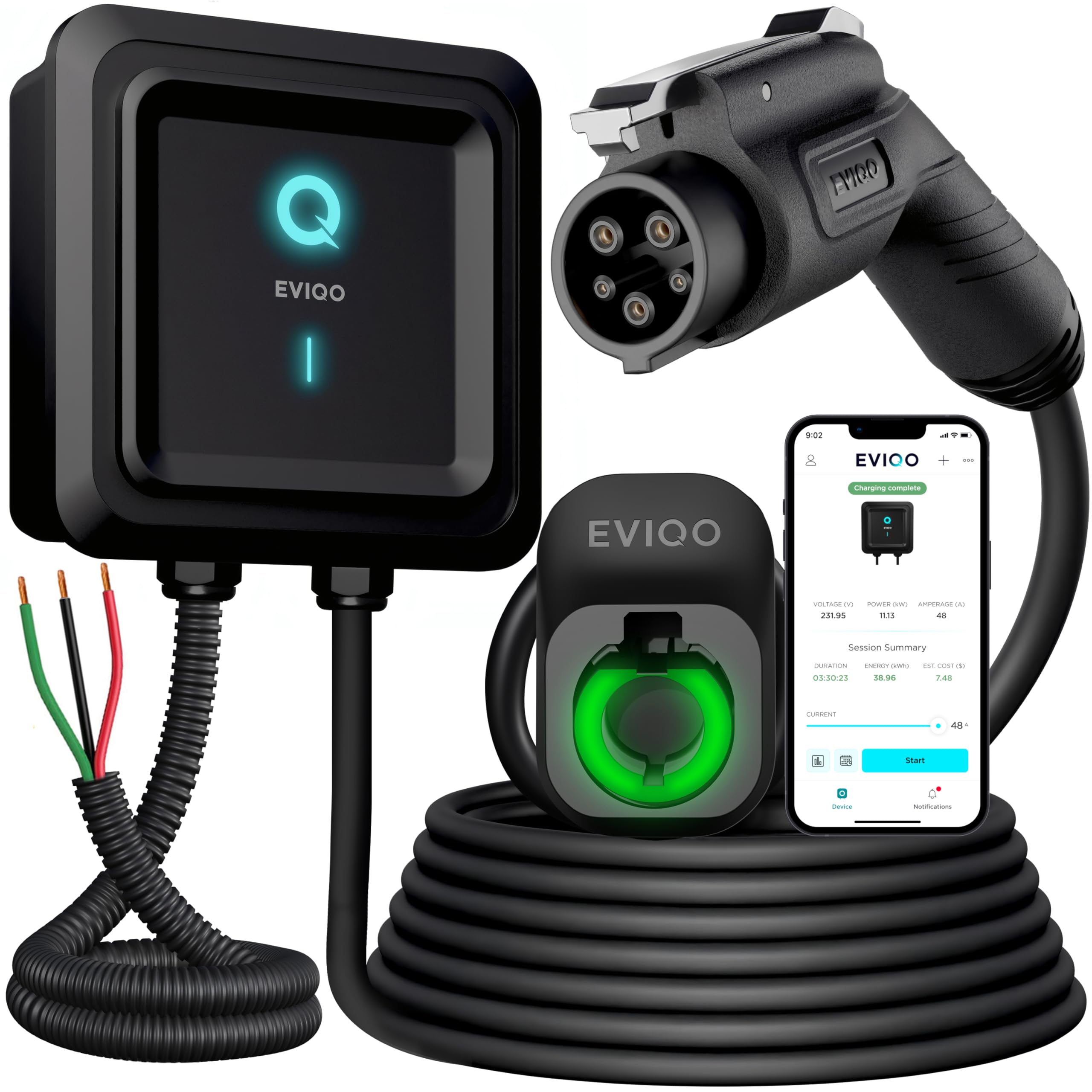 |
Up to 48A depending on version and installation | 25 Feet | Outdoor or garage installation | Check Price |
| ChargePoint HomeFlex Level 2 EV Charger |
 |
Adjustable output; model and install dependent | 23 Feet | Smart app control and flexible amperage | Check Price |
| Grizzl-E Classic Level 2 Electric Vehicle Charger |
 |
Up to 40A | 24 Feet | Durable no-app charging | Check Price |
| NexCyber Level 2 EV Charger |
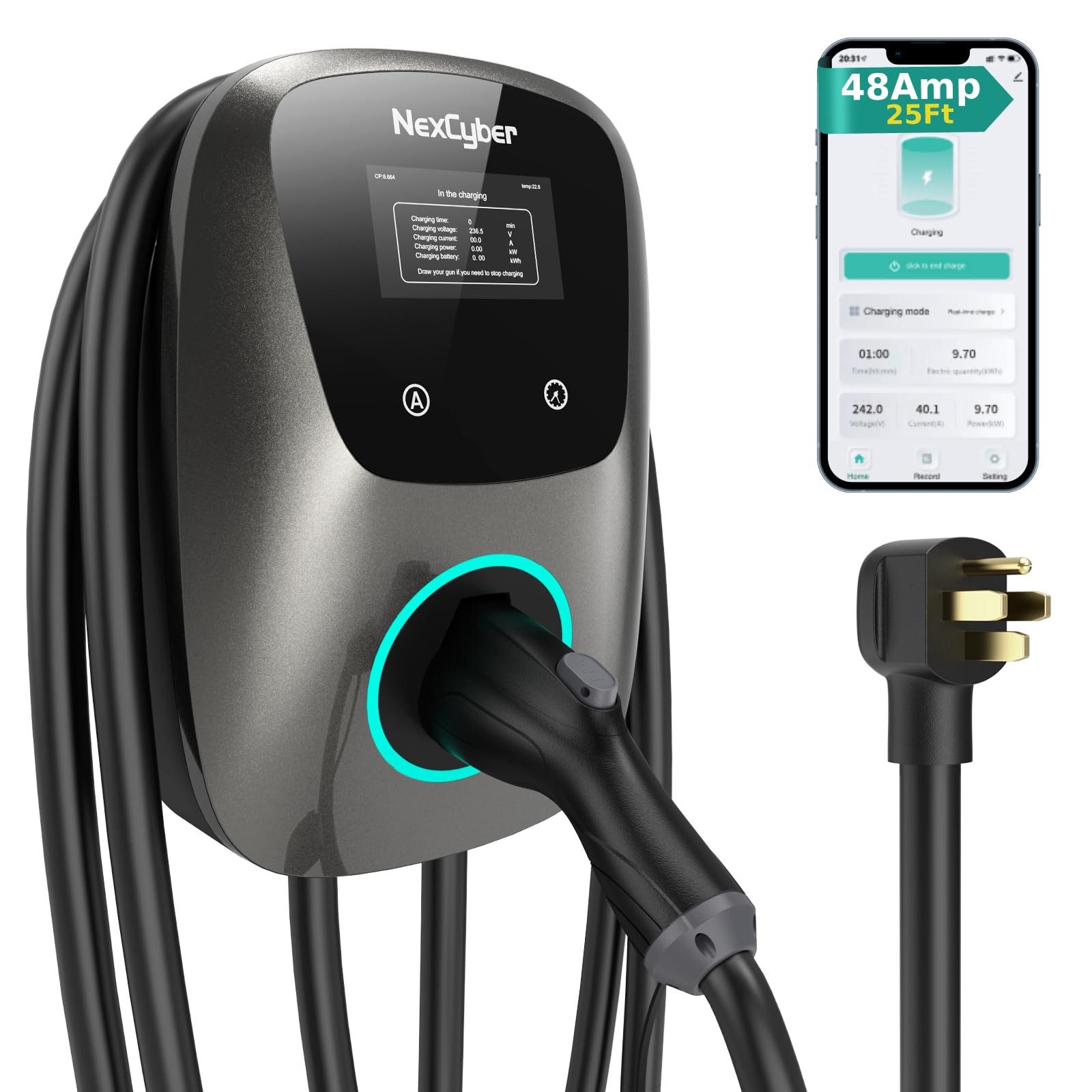 |
Up to 48A depending on installation | 25 Feet | Smart wall-mounted charging | Check Price |
| MACH 1: Fast 48 Amp Level 2 EV Charger |
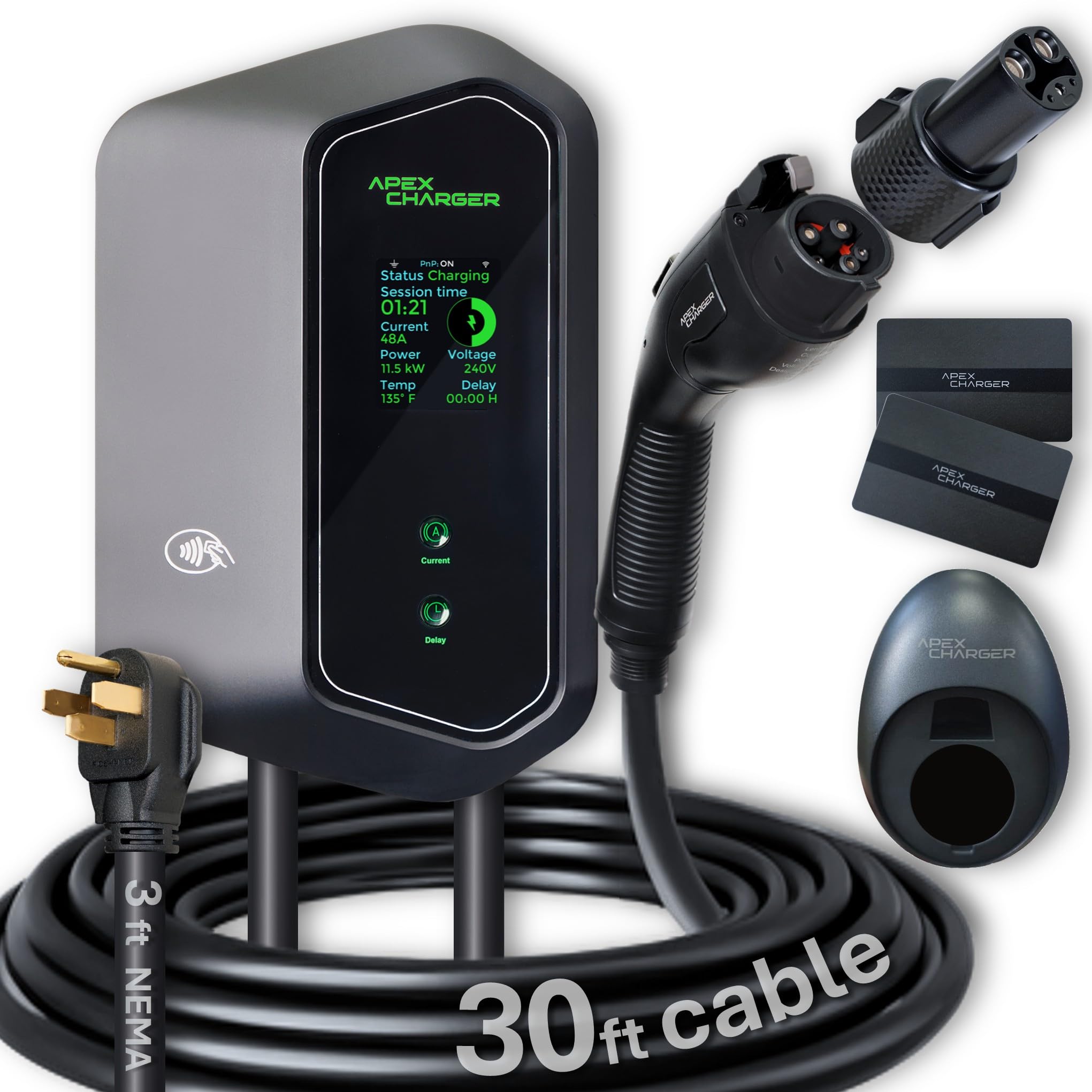 |
Up to 48A depending on installation | 30 Feet | Mixed J1772 and NACS households | Check Price |
| MACH 3 Fast 40 Amp Level 1&2 Portable EV Charger |
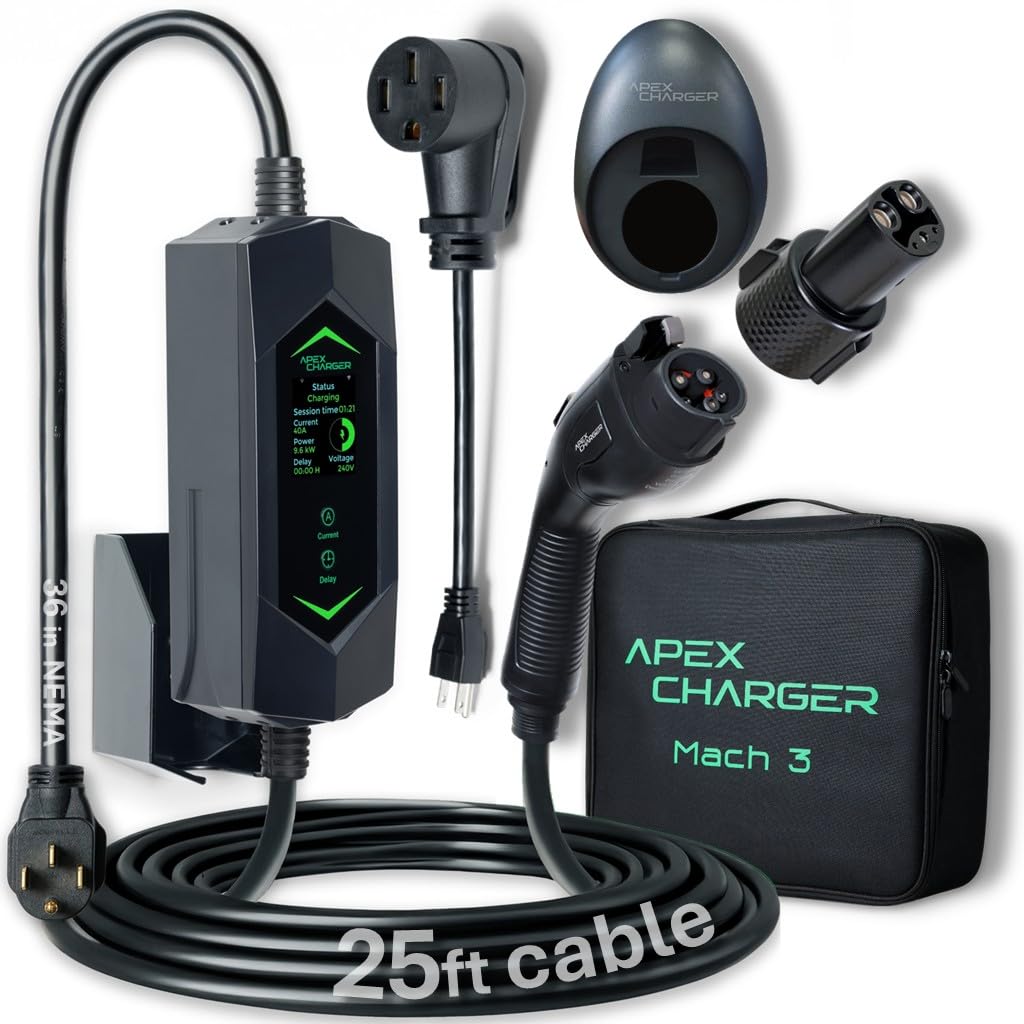 |
Adjustable portable output | 25 Feet | Portable mixed-connector charging | Check Price |
| 2026 Upgraded Level 1&2 Portable EV Charger |
 |
8–16A | 21 Feet | Backup, guest, and travel charging | Check Price |
