Auto shops in 2027 will rely on tire lifting tools that cut strain and speed up service. From heavy-duty dollies to compact jack-style helpers, each option solves a different workflow problem. Some are built for large trucks, others for solo mechanics or tight bays. The real question is which tool fits a shop’s daily demands best, and the answer depends on more than lifting power.
Tire Wheel Dolly for Easy Lifting
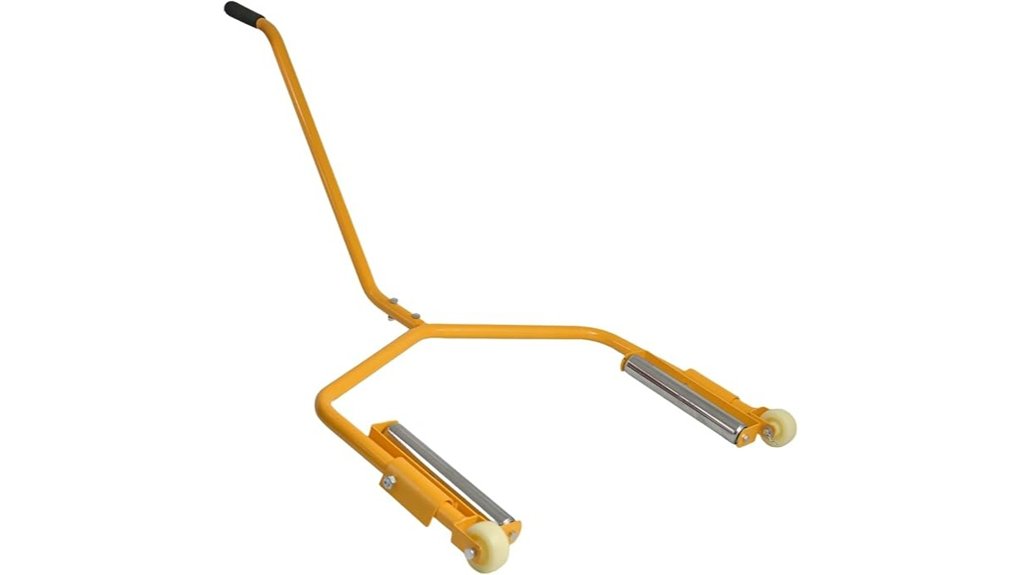
The Weetron Tire Wheel Dolly, model YS002, stands out as a practical choice for auto shops and truck service centers that regularly handle heavy tire and wheel assemblies. Its heavy-duty steel tubing supports up to 300 pounds, while pneumatic wheels and 360-degree rotation help position loads with less effort. Designed for 36- to 48-inch tires, it suits large trucks and fleet maintenance. The lightweight yet sturdy frame reduces back strain during removal and installation. With two wheels, a modern yellow finish, and dependable stability, it improves daily efficiency and long service life in demanding shop environments.
Best For: Auto repair shops, truck service centers, and fleet maintenance teams that need an easy-to-move dolly for handling large, heavy tire and wheel assemblies.
Pros:
- Supports heavy-duty tires and wheels up to 300 lbs.
- Pneumatic wheels with 360° rotation make positioning easier and smoother.
- Lightweight but sturdy steel construction helps reduce back strain.
Cons:
- Limited to tires in the 36- to 48-inch range.
- Only two wheels, so it may not suit every handling situation.
- Warranty details are not clearly specified.
Tonchean Heavy Duty Tire Lifting Tool
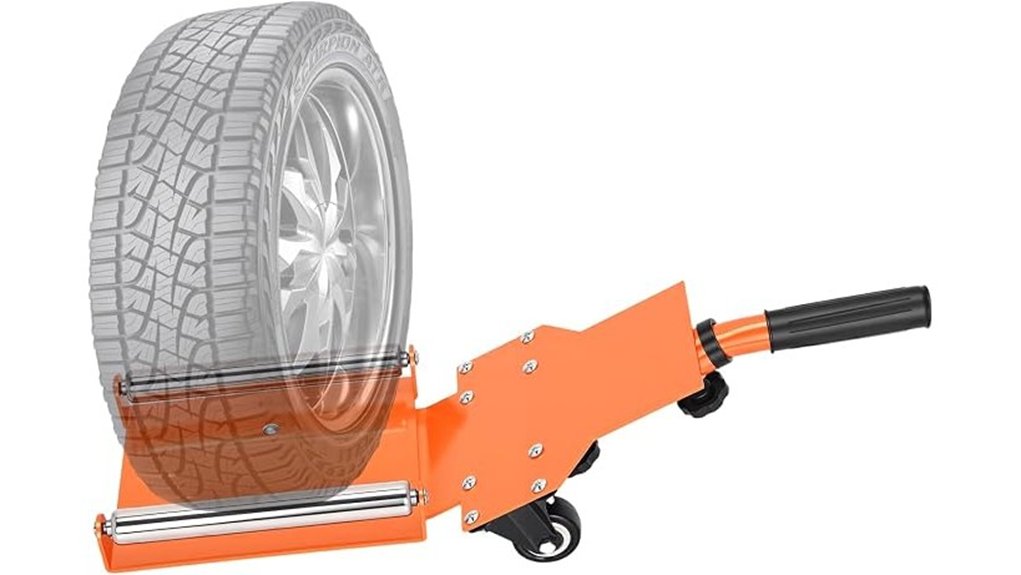
Tonchean’s Portable Heavy Duty Tire Lifting Tool suits shops handling cars, SUVs, and trucks. Built from high-strength carbon steel, it uses a bright orange powder coat to resist rust and corrosion. At 9 pounds, it remains easy to carry and position. An extendable handle reduces effort during lifting, while the integrated roller plate helps raise and move heavy tires smoothly. Its stable, smooth-rolling design supports accurate wheel alignment. The modular structure disassembles for compact storage in a trunk or garage. It fits tire changes, brake work, suspension maintenance, and roadside assistance. Assembly is required on arrival.
Best For: Auto shops, mechanics, and DIY users who need a portable heavy-duty tire lifting tool for cars, SUVs, and trucks.
Pros:
- High-strength carbon steel construction with rust- and corrosion-resistant powder coating
- Extendable handle and roller plate make lifting and moving heavy tires easier
- Compact, modular design is easy to store in a trunk or garage
Cons:
- Assembly is required before first use
- Not as specialized as larger shop equipment for high-volume tire service
- At 9 lbs, it’s portable but still may be cumbersome for some users to carry repeatedly
Adjustable Tire Lift Caddy for Easy Tire Handling
https://m.media-amazon.com/images/I/51VZvw+QKGL._SX522_.jpg
Marastar’s Tire Lift Caddy suits shops that need safer, faster tire handling. The TLC926 supports tires up to 150 lbs with a powder-coated steel frame and weighs 27.5 lbs. It works with a power drill or manual operation, giving crews flexibility in busy bays. Durable rollers help align wheel studs quickly, while smooth-rolling casters improve mobility and stability. A built-in tire ramp makes loading and unloading easier, and no assembly is required. Suitable for cars, trucks, SUVs, RVs, trailers, rotations, cleaning, and brake work, it reduces lifting strain during routine service.
Best For: Auto shops, tire shops, and DIY vehicle owners who need a safer, easier way to lift and position heavy tires during rotations, repairs, and seasonal tire changes.
Pros:
- Supports tires up to 150 lbs, making it useful for a wide range of vehicles including cars, trucks, SUVs, RVs, and trailers.
- Power drill or manual operation adds flexibility for different work environments and preferences.
- Built-in rollers, casters, and ramp improve alignment, mobility, and loading ease while reducing strain.
Cons:
- At 27.5 lbs, it may still be somewhat heavy to move or store compared with simpler tire-handling tools.
- Best suited for tire-related tasks, so it has limited use outside automotive maintenance.
- Requires access to adequate floor space in a garage or shop for safe maneuvering.
Car Tire Lifter for Tire Changer Machine
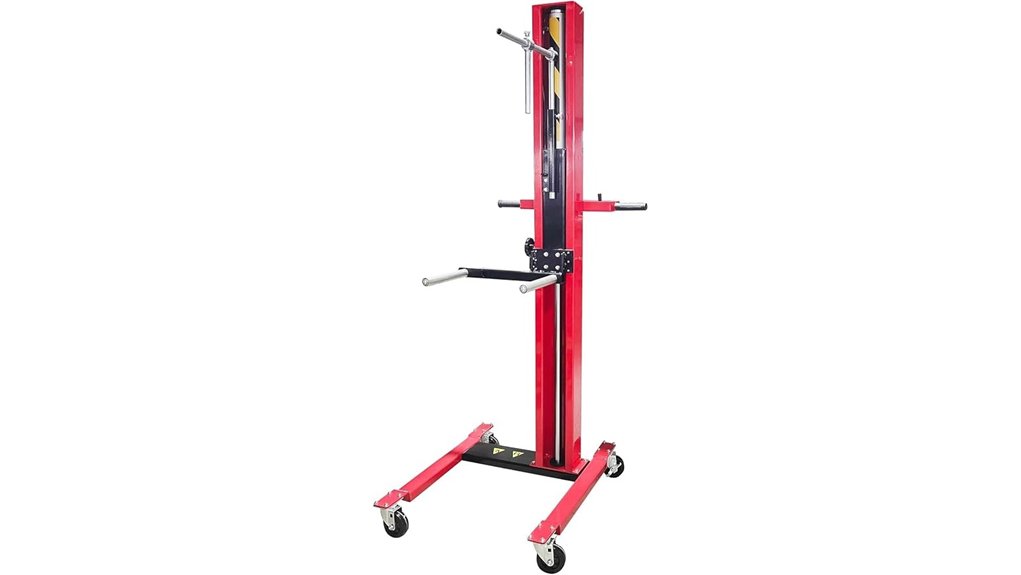
Built for busy garages, this car pneumatic tire lift tool helps prevent wheel drops during tire changes. Its light aluminum alloy body offers durability without excess weight, making it practical for tire changer machines. A 4-inch rear universal wheel bracket supports smooth movement, while the ergonomic handle reduces effort during positioning. Angle adjustment allows precise placement for different tire tasks. The lightweight pneumatic track design is easy to push and control. Suitable for garages and workshops, it combines strength, comfort, and efficient handling for everyday tire changing work.
Best For: Garages, workshops, and tire service professionals who need a lightweight, durable tire lift tool for safer and easier tire changes.
Pros:
- Lightweight aluminum alloy body offers durability without adding excess weight.
- Ergonomic handle and easy-push design help reduce effort during operation.
- Angle adjustment and 4-inch rear universal wheels support smooth, precise positioning.
Cons:
- Designed mainly for tire-changing tasks, so it has limited general-use applications.
- Pneumatic track setup may not suit users looking for a fully manual tool.
- Best suited for professional or semi-professional settings rather than occasional home use.
Portable Heavy Duty Tire Jack Tool with Roller Plate
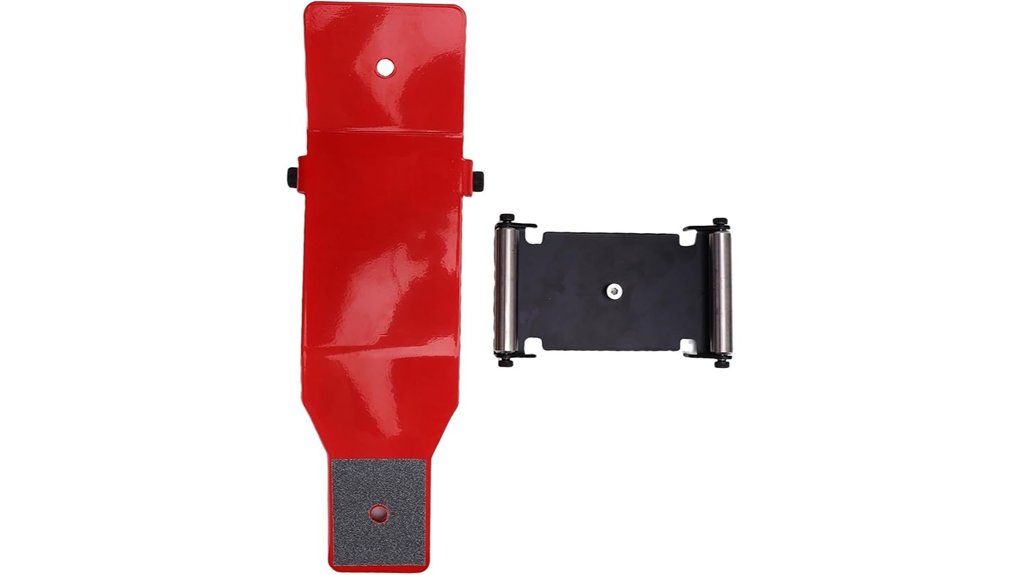
The portable tire jack tool suits solo mechanics who need to lift heavy tires with less strain. Built from heavy-duty steel with stainless steel rollers, it supports cars, SUVs, trucks, ATVs, and UTVs while remaining under 12 pounds for easy carrying. Its matte non-slip handle improves control, and the rolling plate helps align wheel holes with hub bolts for faster installation and rotation. Designed for one-person use, it can handle 50-pound tires with minimal effort. Compact enough for workshops or trunks, it saves time, reduces back strain, and keeps tire service efficient.
Best For: Solo mechanics, DIY drivers, and small workshop users who need a portable heavy-duty tire lifter for cars, SUVs, trucks, ATVs, and UTVs.
Pros:
- Lightweight under 12 pounds, making it easy to carry, store, and use in a trunk or workshop.
- Rolling plate helps align wheel holes with hub bolts, speeding up tire installation and rotation.
- Reduces back strain and makes handling heavy tires easier for one-person operation.
Cons:
- Primarily useful for tire lifting and alignment, not a full replacement for a standard jack or lift.
- Best suited for tire service tasks, so it has limited use beyond wheel and tire handling.
- Heavy-duty steel construction may be durable, but it can still be bulky compared with simpler handheld tools.
Factors to Consider When Choosing Tire Lifting Tools for Auto Shops
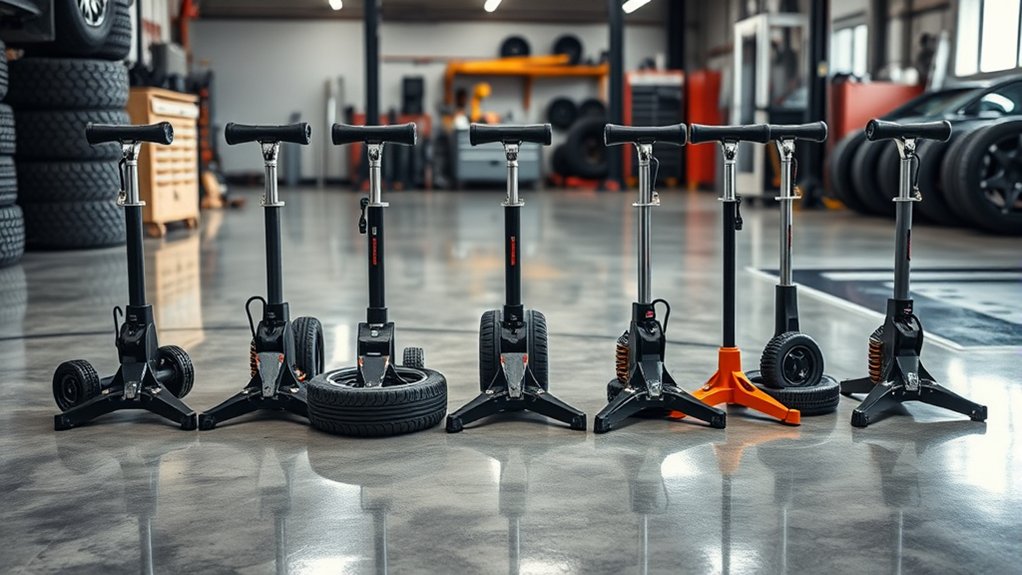
When selecting tire lifting tools for auto shops, weight capacity and wheel size range should be matched to the vehicles being serviced. Material durability and mobility features also matter, since they affect long-term reliability and ease of use in busy work areas. Safety design remains essential to reduce strain, improve control, and support secure lifting during routine shop operations.
Weight Capacity
Weight capacity is a critical specification for tire lifting tools, as it must safely support the heaviest tires in the shop’s inventory, which for heavy-duty work often range from 150 to 300 lbs. Selecting a tool with sufficient rating helps prevent overload, sudden failure, and costly damage. Models rated at 300 lbs are often preferred for trucks and SUVs, where tire mass is greater. The appropriate capacity should align with the tires handled most often, allowing safe, efficient workflow without unnecessary strain on equipment or operators. Manufacturer specifications should always be checked before purchase, since published limits define proper use and reduce risk. Matching capacity to real shop demands supports reliable lifting performance and safer service operations.
Wheel Size Range
Wheel size range is a key factor in choosing tire lifting tools because the equipment must match everything from small passenger-car tires to large truck assemblies. Shops benefit from tools that cover a broad span of diameters, since compact car tires and heavy-duty truck wheels demand different handling. Larger-vehicle equipment should reliably support wheels around 36 to 48 inches, while smaller units may be adequate for standard passenger vehicles. Adjustable models add versatility by adapting to multiple wheel types and streamlining changeovers. Precise alignment features are also important, as they help position the tool for varied stud patterns and tire configurations. Selecting a lifting tool with the right size range improves workflow, reduces mismatches, and supports consistent service across diverse vehicle fleets.
Material Durability
Material durability is a critical factor in tire lifting tools, as heavy-duty steel and high-strength carbon steel typically deliver the strength and wear resistance needed for demanding shop use. These materials help tools endure repeated loading, impact, and deformation without losing performance in high-frequency tire changing environments. Powder-coated finishes add another layer of protection by limiting rust and corrosion, especially in workshops where moisture exposure is common. Aluminum alloys may also be used when lighter handling is important, while still preserving useful strength. Robust construction supports higher weight capacities, often between 150 and 300 lbs, which improves safety when lifting heavier tires. Choosing a durable build reduces premature failure and supports consistent service life.
Mobility Features
Mobility features play a key role in how efficiently tire lifting tools perform in a busy auto shop. Smooth-rolling wheels or casters help technicians position heavy tires with less effort, especially when frequent repositioning is required. Pneumatic wheels add traction and stability across concrete, tile, or uneven service floors, making movement more dependable. Ergonomic handles improve control and comfort during transport, allowing steadier handling in tight spaces. Compact, portable designs also matter because they simplify storage and make it easier to move tools between work areas. In addition, versatile lifting tools should accommodate a range of tire diameters and weights, supporting different vehicle types without slowing workflow. Together, these mobility traits improve efficiency and flexibility in high-volume tire service.
Safety Design
Safety design is a critical factor when choosing tire lifting tools for auto shops, since the right features can reduce strain and prevent accidents during daily use. Ergonomic handles and lightweight construction help limit injury risk, especially when tools are used repeatedly. Stability also matters, and smooth-rolling wheels, secure tire positioning, and automatic locking or brake mechanisms can keep loads controlled during lifting and lowering. Non-slip grips and safety locks further reduce unintended movement, giving technicians better command of the tool. Clear weight limits and compatibility with multiple tire sizes support safer handling by preventing overload or awkward adjustments. A well-engineered design combines these protections to improve confidence, reduce mistakes, and maintain safer working conditions around heavy tires.
Storage Convenience
Storage convenience is another important factor when selecting tire lifting tools for auto shops, especially after considering how design affects daily handling and workflow. Compact, modular tools are easier to disassemble and fit into limited workshop storage or even vehicle trunks, which matters in busy environments with little spare room. Lightweight materials such as aluminum or high-strength carbon steel improve portability and reduce strain during repositioning. Ready-to-use tools with no assembly required can also save time and minimize clutter, making them practical for immediate access. Models equipped with smooth-rolling casters move in and out of storage with less effort, while ergonomic shapes help prevent damage during lifting, carrying, and placement. Together, these features support efficient organization and quicker retrieval.
Frequently Asked Questions
How Often Should Tire Lifting Tools Be Inspected for Safety?
Tire lifting tools should be inspected before each use, with formal checks weekly and after any impact or repair. Regular inspection helps detect wear, damage, or loosened components before a failure occurs.
Can Tire Lifting Tools Reduce Worker Fatigue in Busy Shops?
Yes, tire lifting tools can reduce worker fatigue in busy shops; miraculous little metal servants spare backs and save time, while humans, thankfully, retain just enough dignity to complain less and lift smarter.
What Maintenance Do Tire Lifting Tools Require Over Time?
Tire lifting tools require regular inspection, lubrication, tightening of fasteners, cleaning of debris, and periodic replacement of worn pads, seals, or cables. Hydraulic models may also need fluid checks and leak monitoring over time.
Are Tire Lifting Tools Compatible With Run-Flat Tires?
Yes, many tire lifting tools are compatible with run-flat tires, provided their load capacity, grip design, and lift height suit the tire’s stiffness and weight. Adjustable, padded models generally handle them best safely.
How Do Tire Lifting Tools Affect Shop Productivity?
Tire lifting tools improve shop productivity by reducing manual strain, speeding wheel handling, and lowering injury risk. They help technicians maintain consistent workflow, minimize downtime, and complete more tire services efficiently during busy periods.
Conclusion
In 2027, the best tire lifting tools seem to arrive just when auto shops need them most, almost by chance, yet with unmistakable purpose. From the Weetron Tire Wheel Dolly to the Portable Heavy Duty Tire Jack Tool, each solution offers its own blend of strength, control, and speed. As shop demands keep rising, the right tool can quietly transform a difficult lift into a smooth, safe, and efficient routine.