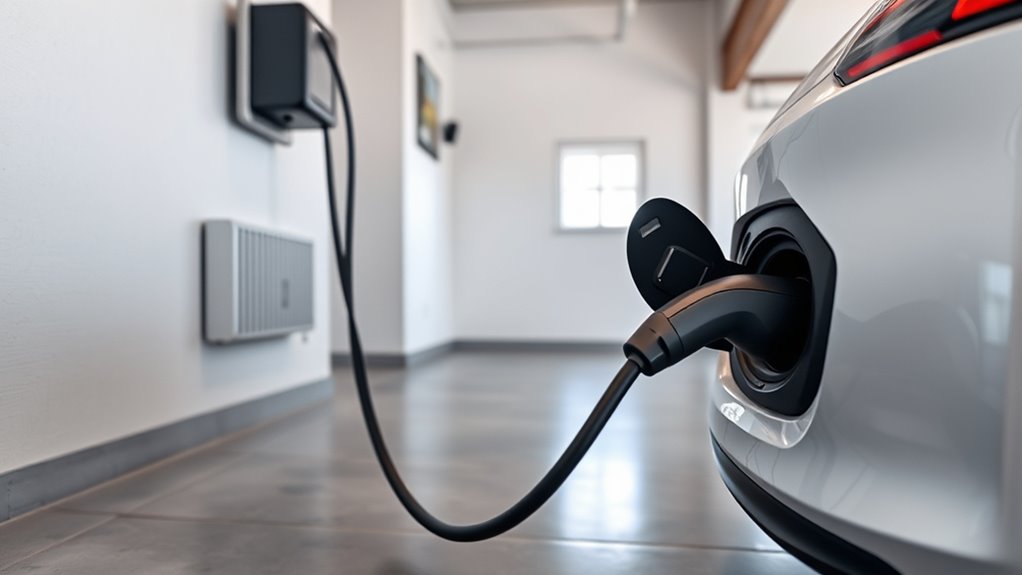
Using a NEMA 14-50 outlet for EV charging can be a practical way to get Level 2 charging at home, but it is not just a bigger wall plug. You need a dedicated 240-volt circuit, a compatible Level 2 EVSE, correct breaker and conductor sizing, proper grounding, and code-compliant GFCI protection where your local authority requires it.
Quick Answer
A NEMA 14-50 outlet can charge an EV when it is installed on a dedicated 240-volt, 50-amp circuit and used with a compatible Level 2 EVSE. For continuous charging, the circuit is typically limited to 40 amps or less, and a licensed electrician should confirm panel capacity, permits, GFCI protection, torque, and grounding.
Key Takeaways
- A NEMA 14-50 receptacle is rated for 240 volts and 50 amps, but EV charging is a continuous load, so 40 amps is usually the practical maximum on a 50-amp circuit.
- Most current NEC-based installations require a dedicated EV charging circuit, correct conductor sizing, grounding, and GFCI protection for receptacle-based EVSE setups.
- A plug-in EVSE may be convenient, but a hardwired charger can reduce plug wear and may be the better long-term choice for daily high-current charging.
- Do not ignore heat, burning smells, loose plugs, repeated breaker trips, or discoloration. These signs can point to a failing outlet or wiring problem.
At a Glance
| Time Required | Often a few hours for a straightforward professional installation, longer if permits, panel work, conduit, trenching, or service upgrades are needed. |
| Difficulty | Advanced electrical work. Use a licensed electrician unless you are legally allowed, trained, permitted, and inspected. |
| Tools Needed | Load calculation, permit documents where required, listed EVSE, 50-amp double-pole breaker, proper conductors, rated receptacle or hardwired unit, torque screwdriver, meter, GFCI test method, and inspection. |
| Cost | Varies widely by panel capacity, wire distance, GFCI breaker cost, permit fees, wall type, conduit, outdoor rating, and whether a service or panel upgrade is needed. |
Warning: A NEMA 14-50 EV outlet is a high-current 240-volt installation. Incorrect breaker sizing, loose terminations, poor receptacle quality, missing GFCI protection, or undersized conductors can cause shock, overheating, or fire. Have the work permitted and inspected where required, and hire a licensed electrician if you are not qualified.
What Is a NEMA 14-50 Outlet?
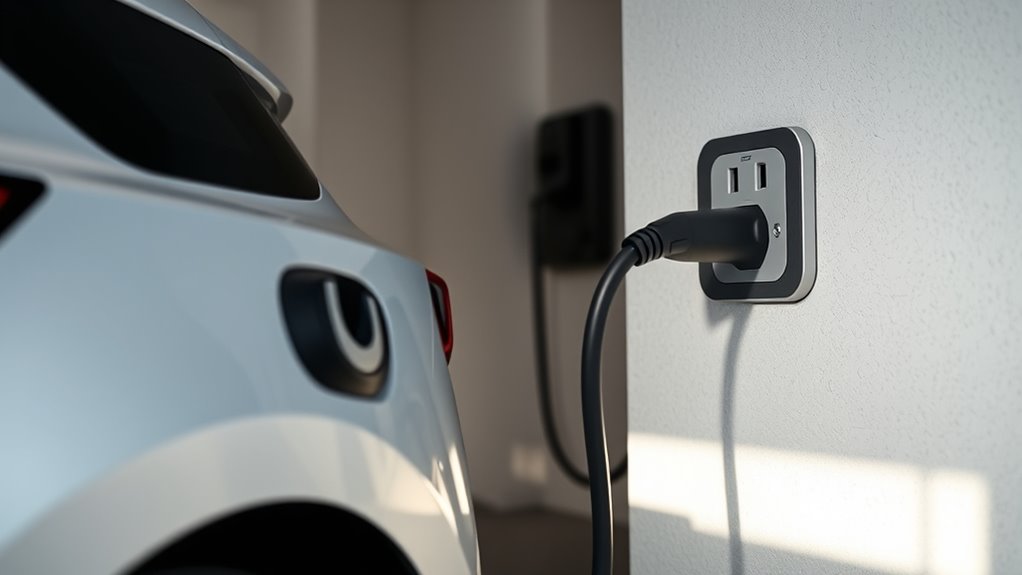
A NEMA 14-50 outlet is a four-slot, 240-volt receptacle rated for 50 amps. It has two hot legs, one neutral, and one equipment ground. It is commonly used for electric ranges, RV shore power, and plug-in Level 2 EV charging.
For EV charging, the outlet does not charge the car by itself. You plug in a compatible electric vehicle supply equipment unit, often called an EVSE or Level 2 charger. The EVSE communicates with the vehicle and tells it how much current is available.
The 50-amp rating does not mean you should draw 50 amps continuously. EV charging is treated as a continuous load, so a 50-amp circuit is commonly used for a 40-amp EVSE. At 240 volts, that equals about 9.6 kW. Some portable EVSE units are lower. For example, Tesla lists its Mobile Connector with a NEMA 14-50 adapter as a 240-volt, 50-amp-breaker setup with 32 amps maximum output.
The U.S. Department of Energy’s Alternative Fuels Data Center explains that many EV owners install Level 2 charging equipment at home for faster charging, but the installation must follow local codes, permitting rules, and applicable NEC requirements.
Note: Most EVs do not use the neutral conductor for standard 240-volt Level 2 charging, but a NEMA 14-50 receptacle is still a four-wire device and must be wired correctly if installed.
Does a NEMA 14-50 Outlet Need GFCI?
In most current NEC-adopting jurisdictions, a receptacle installed for EV charging needs GFCI protection. The exact requirement depends on the electrical code edition adopted in your city or county, local amendments, the installation location, and the authority having jurisdiction, often called the AHJ.
You should treat GFCI protection as a safety requirement, not a convenience feature. A GFCI breaker opens the circuit when it detects leakage current that could create a shock hazard. Garages, outdoor locations, damp areas, and receptacles used for EVSE are common situations where GFCI protection applies under modern code practice.
Some EVSE units also have internal ground-fault monitoring. That does not automatically replace GFCI protection required for the receptacle or branch circuit. If your charger trips a GFCI breaker, do not bypass the protection or install a larger breaker. Find the cause.
The National Electrical Code is updated on a cycle and adopted locally, so your electrician should confirm the version enforced in your area before installation.
Why EV Chargers Trip GFCI Breakers
EV chargers can trip a GFCI breaker when the breaker detects current leaking outside the normal path. That leakage may come from moisture, damaged insulation, a worn plug, a cracked receptacle, a loose terminal, or contamination inside the outlet box.
Repeated tripping can also happen when the EVSE performs its own checks, when the receptacle contacts are worn from frequent plug-ins, or when the charger and breaker combination is sensitive to small leakage currents. Still, you should treat repeated tripping as a real warning until a qualified person proves otherwise.
Inspect the cord, plug, receptacle face, cover, box, and breaker for heat damage, corrosion, dirt, loose fit, or water entry. If the breaker trips again after a reset, stop using the outlet and have the circuit tested.
Pro Tip: For daily charging, leave the EVSE plugged into the NEMA 14-50 outlet when possible. Repeated unplugging can wear receptacle contacts and increase heat at the connection.
Before Installing a NEMA 14-50 for EV Charging
Before you install a NEMA 14-50 outlet, confirm that your home can support the load. A 40-amp EVSE can run for hours, so the circuit must be planned as part of the home’s electrical system, not as an isolated outlet upgrade.
Check Panel Capacity
Your electrician should perform a load calculation before adding the circuit. A service panel with open breaker spaces may still lack enough capacity for a new continuous EV load. If capacity is limited, options may include a lower-amp EVSE setting, load management equipment, a hardwired charger with power sharing, a subpanel, or a service upgrade.
Confirm Permits and Local Code
Many areas require a permit and inspection for a new 240-volt EV charging circuit. The DOE notes that charging equipment installations must comply with local and state codes, and permits may be required. Always check local rules before buying equipment or starting work.
Choose Plug-In or Hardwired
A plug-in NEMA 14-50 EVSE is convenient if you want portability or may move later. A hardwired charger can be better for frequent high-current charging because it removes one plug-and-receptacle connection point, may simplify some GFCI nuisance-trip issues depending on local code, and can support higher-current EVSE models when the circuit is sized correctly.
| Setup | Best For | Main Caution |
|---|---|---|
| NEMA 14-50 plug-in EVSE | Portable charging, renters with approved installs, flexible equipment changes | Receptacle wear, GFCI requirements, and outlet quality matter. |
| Hardwired EVSE | Daily charging, cleaner installation, higher-current setups, long-term reliability | Less portable and still requires correct circuit sizing, permits, and inspection. |
How to Install a NEMA 14-50 Outlet Safely
A safe installation starts with planning, not wiring. You need a dedicated branch circuit, a compatible breaker, the correct conductor type and size for the wiring method, an EV-rated or heavy-duty receptacle, a suitable box and cover, and a final inspection when required.
Load And Circuit Planning
Plan the NEMA 14-50 outlet as a dedicated EV charging circuit. A 40-amp EVSE requires a 50-amp branch circuit because continuous loads are sized at 125% of the maximum charging current. If the EVSE will be set to 32 amps, the circuit may still use a 50-amp NEMA 14-50 configuration when the equipment is listed and installed correctly, but the EVSE must not exceed the circuit rating.
Use the shortest practical route from the panel to the charging location. Long wire runs can increase voltage drop and installation cost. Outdoor or detached-garage installations may need additional conduit, weather-resistant equipment, burial depth planning, and local inspection requirements.
Proper Wiring And Breaker
A typical NEMA 14-50 EV outlet uses a 50-amp double-pole breaker and four conductors: two hot conductors, one neutral, and one equipment grounding conductor. The common starting point is 6 AWG copper conductors, but final conductor size depends on the wiring method, insulation rating, terminals, temperature limitations, local code, and the electrician’s load calculation.
Use a high-quality, properly listed receptacle and a box rated for the wiring method. Tighten every termination to the manufacturer’s torque specification. Loose terminations are one of the most important heat risks in EV charging because the load can run for many hours.
Grounding And GFCI Compliance
The equipment grounding conductor provides a low-impedance fault path. It must be continuous, correctly bonded where required, and landed on the correct terminal. The neutral and ground must not be mixed at the receptacle.
Where required, use a compatible GFCI breaker or other code-approved GFCI method. Confirm that the breaker type is allowed for the panel and that the EVSE manufacturer’s instructions are followed.
NEMA 14-50 Wiring and Breaker Requirements
For EV charging, the key requirements are the breaker size, conductor size, wiring method, receptacle rating, grounding, and continuous-load limit. Do not reuse an old range or RV outlet unless it has been inspected and confirmed suitable for EV charging.
| Element | Typical Requirement | Why It Matters |
|---|---|---|
| Breaker | 50-amp double-pole breaker, often GFCI for receptacle EVSE installations | Protects the circuit from overload and helps meet shock-protection rules. |
| Conductors | Commonly 6 AWG copper for a 50-amp circuit, subject to wiring method and code | Undersized conductors can overheat during long charging sessions. |
| Circuit | Dedicated EV charging branch circuit | Prevents shared loads from overloading the breaker. |
| Receptacle | Heavy-duty, properly listed NEMA 14-50 receptacle | Low-quality or worn receptacles can loosen and heat up under EV loads. |
| Continuous load | Usually 40 amps maximum on a 50-amp circuit | Keeps sustained charging within the safe 80% continuous-load limit. |
If your EVSE allows adjustable amperage, set it to match the installed circuit. Never assume the vehicle will automatically protect an undersized circuit. The EVSE, breaker, conductors, and receptacle must all match.
How to Wire a NEMA 14-50 Receptacle
The basic wiring layout is simple to describe, but the work itself should be done only by a qualified person. A NEMA 14-50 receptacle uses two hot terminals, one neutral terminal, and one ground terminal.
- Turn off the correct breaker and verify the circuit is de-energized with an appropriate tester.
- Install the correct box, conduit, cable, or raceway for the location and wiring method.
- Run the properly sized conductors from the panel to the outlet location.
- Connect the two hot conductors to the brass terminals.
- Connect the neutral conductor to the silver terminal.
- Connect the equipment grounding conductor to the green grounding terminal.
- Torque all terminals to the manufacturer’s listed value.
- Install the cover plate or weather-rated in-use cover where needed.
- Test voltage, grounding, polarity, and GFCI operation before plugging in the EVSE.
- Schedule inspection if your jurisdiction requires it.
Load And Circuit Sizing
Load and circuit sizing should start with the EVSE’s maximum current setting. A 40-amp EVSE needs a 50-amp circuit. A 32-amp EVSE needs at least a 40-amp circuit, although many portable NEMA 14-50 EVSE units are still used on 50-amp receptacle circuits when installed according to their listing and instructions.
The panel must also have enough capacity for the new continuous load. If it does not, a lower charging setting or load-management system may be safer and less expensive than a service upgrade.
Wiring And Protection Requirements
Once the circuit size is confirmed, the installation details determine long-term safety. Use listed components, match breaker type to the panel, keep conductor insulation within its temperature limits, and protect wiring from physical damage.
For garages and outdoor locations, install the receptacle where the EVSE cord can reach the vehicle without strain, sharp bends, or trip hazards. Outdoor receptacles need weather-resistant equipment and a cover suitable for use while the plug is inserted.
Charging Speed From a NEMA 14-50 Outlet
Charging speed depends on the EVSE current limit, vehicle onboard charger, battery state of charge, voltage, temperature, and charging losses. A NEMA 14-50 circuit can be fast enough for overnight charging, but it is not always the same speed for every vehicle.
| EVSE Setting | Approx. Power at 240V | Typical Use |
|---|---|---|
| 24 amps | 5.8 kW | Useful when panel capacity is limited or the EVSE is set lower. |
| 32 amps | 7.7 kW | Common for portable plug-in EVSE units, including some NEMA 14-50 adapters. |
| 40 amps | 9.6 kW | Common maximum continuous load for a properly installed 50-amp EV charging circuit. |
ENERGY STAR notes that Level 2 chargers use 240 volts and provide faster charging than Level 1, while safety-certified models are tested by a nationally recognized testing laboratory.
Signs Your NEMA 14-50 Outlet Is Failing
A failing NEMA 14-50 outlet often shows warning signs before it stops working. Look for black marks, melted plastic, a hot faceplate, buzzing, crackling, looseness, a burning smell, corrosion, or a plug that no longer fits firmly.
Repeated breaker trips, heat, discoloration, or a loose plug can signal worn contacts, poor torque, or a dangerous high-resistance connection.
Watch for circuit breaker tripping during charging. A single trip may come from a temporary condition, but repeated trips mean the circuit should be inspected. Do not keep resetting the breaker and walking away.
- Stop charging if the outlet, plug, or EVSE feels hot.
- Unplug only after charging has stopped and the connector is not under load.
- Call a licensed electrician if you see discoloration, melting, cracking, arcing, or repeated GFCI trips.
Maintenance and Safety Checks
A NEMA 14-50 outlet used for EV charging should be checked more often than a rarely used appliance outlet. EV charging creates long, repeated high-current sessions, so small connection problems can become serious over time.
- Look at the receptacle face monthly for discoloration, cracks, looseness, or melted areas.
- Check that the EVSE plug fits firmly and does not sag.
- Keep the outlet dry, clean, and protected from impact.
- Test GFCI protection according to the breaker or EVSE manufacturer’s instructions.
- Have an electrician recheck torque and outlet condition if you see heat marks or frequent trips.
- Replace worn or damaged receptacles with a quality listed device suitable for repeated EVSE use.
Note: If you bought a used home with an existing NEMA 14-50 outlet, do not assume it is safe for EV charging. Have the breaker, conductor size, receptacle grade, torque, grounding, GFCI protection, and panel capacity checked first.
North Carolina EV Charging Rebates and Tips
In North Carolina, you may be able to reduce EV charging costs with utility programs, rebates, and time-of-use rates. The DOE AFDC North Carolina incentives page currently lists Duke Energy residential EV time-of-use rates, Level 2 charging station purchase rebates, DC fast charging purchase rebates, and make-ready or pre-wiring rebates for EV chargers.
Programs change, funding can run out, and eligibility may depend on your utility territory, charger type, application timing, inspection status, and whether the equipment is networked or utility-approved. Check your utility’s current program page before buying a charger or hiring an electrician.
To lower long-term costs, schedule charging during off-peak hours when your rate plan rewards it. Many EVs and smart EVSE units let you set a charging window, so you can plug in after work and delay charging until the lower-rate period starts.
Frequently Asked Questions
What is a NEMA 14-50 outlet for charging cars?
It is a 240-volt, 50-amp receptacle commonly used with plug-in Level 2 EVSE units. For EV charging, it should be installed on a dedicated circuit with correct wiring, grounding, breaker protection, and GFCI protection where required by local code.
Can I charge an EV with a 50-amp outlet?
Yes, if the outlet is a properly installed NEMA 14-50 or other compatible 240-volt receptacle and your EVSE is designed for that outlet. A 50-amp circuit usually supports up to 40 amps of continuous EV charging, but the EVSE and vehicle may charge at a lower rate.
Can I install a NEMA 14-50 outlet myself?
Only if you are legally allowed to do electrical work in your area, understand 240-volt branch circuits, obtain required permits, use listed components, and pass inspection. For most homeowners, the safer choice is to hire a licensed electrician.
Does a NEMA 14-50 EV outlet need a GFCI breaker?
In most current NEC-based installations, receptacles used for EV charging need GFCI protection. Your local authority having jurisdiction decides the enforceable rule, so confirm the adopted code edition and local amendments before installation.
Is hardwiring better than using a NEMA 14-50 outlet?
Hardwiring can be better for daily high-current charging because it removes the plug-and-receptacle connection, reduces receptacle wear, and may allow cleaner code compliance for some charger models. A NEMA 14-50 is still useful when portability and flexibility matter.
What stops someone from unplugging your electric car?
Many vehicles lock the charging connector at the car while charging, and some EVSE units offer app alerts or access controls. At the wall outlet, a lockable in-use cover or hardwired charger can reduce tampering, but no setup is completely theft-proof.
Conclusion
A NEMA 14-50 outlet can provide fast, reliable Level 2 EV charging when the circuit is planned and installed correctly. The key is matching the EVSE, breaker, conductors, receptacle, grounding, GFCI protection, and panel capacity to the continuous charging load.
For most homes, that means a dedicated 240-volt, 50-amp circuit used at no more than 40 amps continuously. If you are unsure about panel capacity, breaker type, GFCI rules, conductor sizing, torque, permits, or inspection, have a licensed electrician verify the setup before you charge every day.
Sources
- U.S. Department of Energy Alternative Fuels Data Center: Charging Electric Vehicles at Home — supports home Level 2 charging, permitting, local code, and NEC Article 625 guidance.
- ENERGY STAR: Electric Vehicle Chargers — supports Level 1 vs Level 2 charging, safety-certified charger guidance, and EV charger buying considerations.
- Tesla Support: Mobile Connector — supports NEMA 14-50 adapter voltage, breaker rating, and 32-amp maximum output for Tesla Mobile Connector use.
- U.S. Department of Energy AFDC: North Carolina Laws and Incentives — supports North Carolina utility incentive and Duke Energy EV charging program references.
- NFPA 70: National Electrical Code — supports NEC reference and the need to follow the adopted electrical code and local authority requirements.