Quick Answer
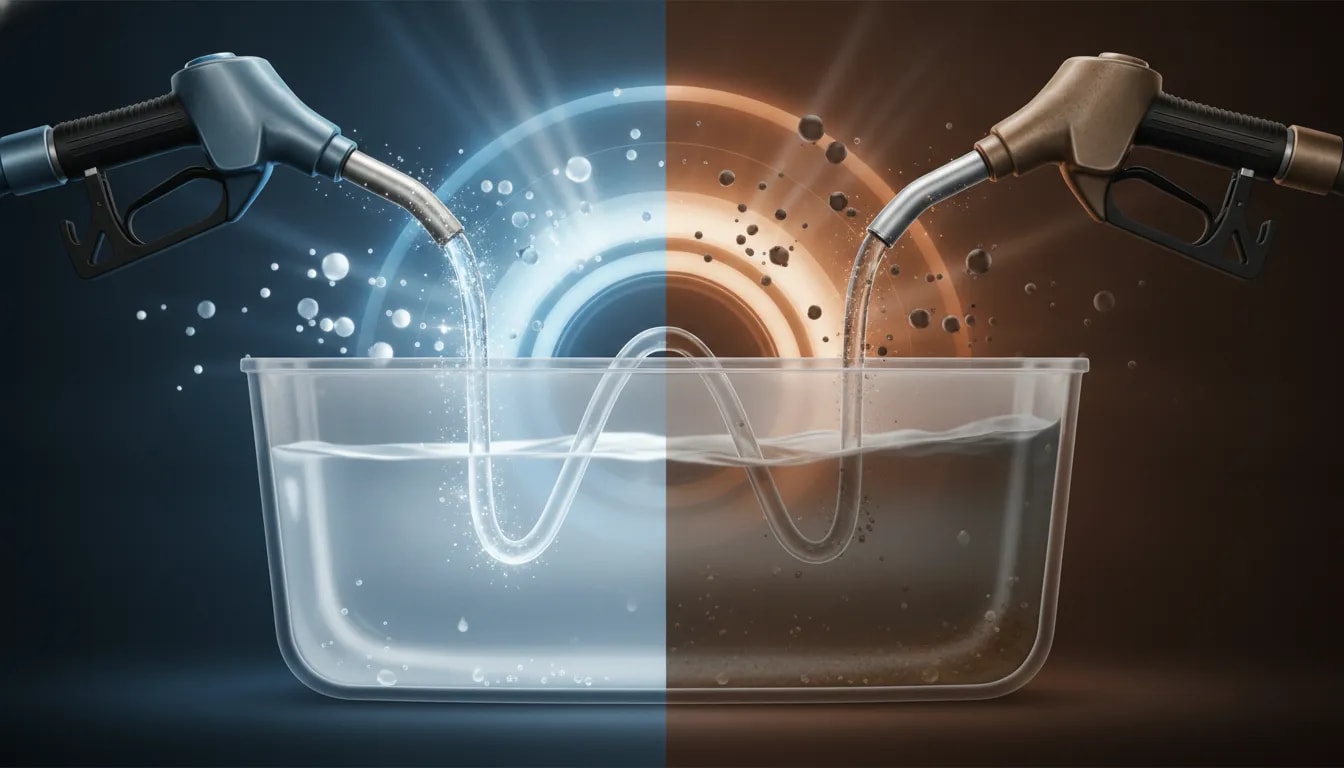
Premium diesel can be worth paying for when your engine benefits from higher cetane, you want a stronger detergent package, or your own fuel-economy records show that the gain offsets the higher pump price. For a healthy diesel that already meets its manufacturer’s fuel specification, premium diesel does not guarantee extra horsepower or lower running costs.
Key Takeaways
- Premium diesel’s clearest benefit is usually stronger deposit control, not guaranteed extra horsepower.
- Cetane requirements vary by engine and market, so your vehicle’s owner’s manual comes first.
- To break even on fuel cost, the percentage improvement in MPG or distance per litre must match the percentage price premium.
- Buy fuel that meets the required specification from a reputable supplier; a premium label alone does not prove that a fuel is better for your particular engine.
Regular vs Premium Diesel at a Glance
| Question | Regular diesel | Premium diesel |
|---|---|---|
| Must it meet the local fuel standard? | Yes | Yes |
| Detergent package | Varies by brand and market | Often marketed with stronger deposit-control additives |
| Cetane | Must meet the applicable standard and vehicle requirement | May be higher, but the number and definition of “premium” vary by market |
| Guaranteed horsepower gain? | No | No |
| Guaranteed fuel-economy gain? | No | No |
| Best reason to choose it | Meets the required specification at lower cost | You want a verified cleaning or ignition-quality benefit, or your manual recommends it |
Table of Contents
- Cetane Is Not Diesel’s Version of Octane
- The Bigger Difference Is Usually Injector Cleaning
- Does Premium Diesel Save Money? Use the Break-Even Rule
- How to Test Regular vs Premium Diesel Properly
- Will Premium Diesel Give You More Power?
- Who Should Consider Premium Diesel?
- Where You Buy Diesel Matters More Than the Label
- The Verdict: Buy for a Benefit, Not a Label
Cetane Is Not Diesel’s Version of Octane
Petrol has octane. Diesel has cetane. The names sound similar, but they describe different properties.
- Octane measures a petrol fuel’s resistance to auto-ignition under the test conditions used for its rating.
- Cetane describes the ignition quality of diesel fuel: a higher cetane number generally means a shorter ignition delay after fuel is injected into hot, compressed air.
Higher cetane can help cold starting and can contribute to smoother, quieter combustion in some engines. It does not automatically make a diesel engine produce more peak power.
There is another complication: the meaning of “premium” changes with location, and different rules may use different fuel properties.
| Fuel or standard | Minimum cetane number | Important context |
|---|---|---|
| ASTM D975 No. 1-D and No. 2-D diesel | 40 | Baseline U.S. diesel-fuel specification for these grades; vehicle makers may require more. |
| U.S. “premium” diesel under the NIST Handbook 130 model regulation | 47 | The model regulation also sets requirements for low-temperature operability, lubricity, corrosion, filter blocking and injector deposit control. |
| EN 590 automotive diesel in Europe | 51 | This is the EN 590 minimum cetane number; local and vehicle-specific requirements can still matter. |
The U.S. premium figure comes from the NIST Handbook 130 model fuel regulation. NIST describes Handbook 130 as a model framework adopted in different ways by state and local authorities, so it is not a claim that every pump labelled premium across the United States follows one nationally enforced definition. For European diesel, DieselNet’s EN 590 overview lists a minimum cetane number of 51.
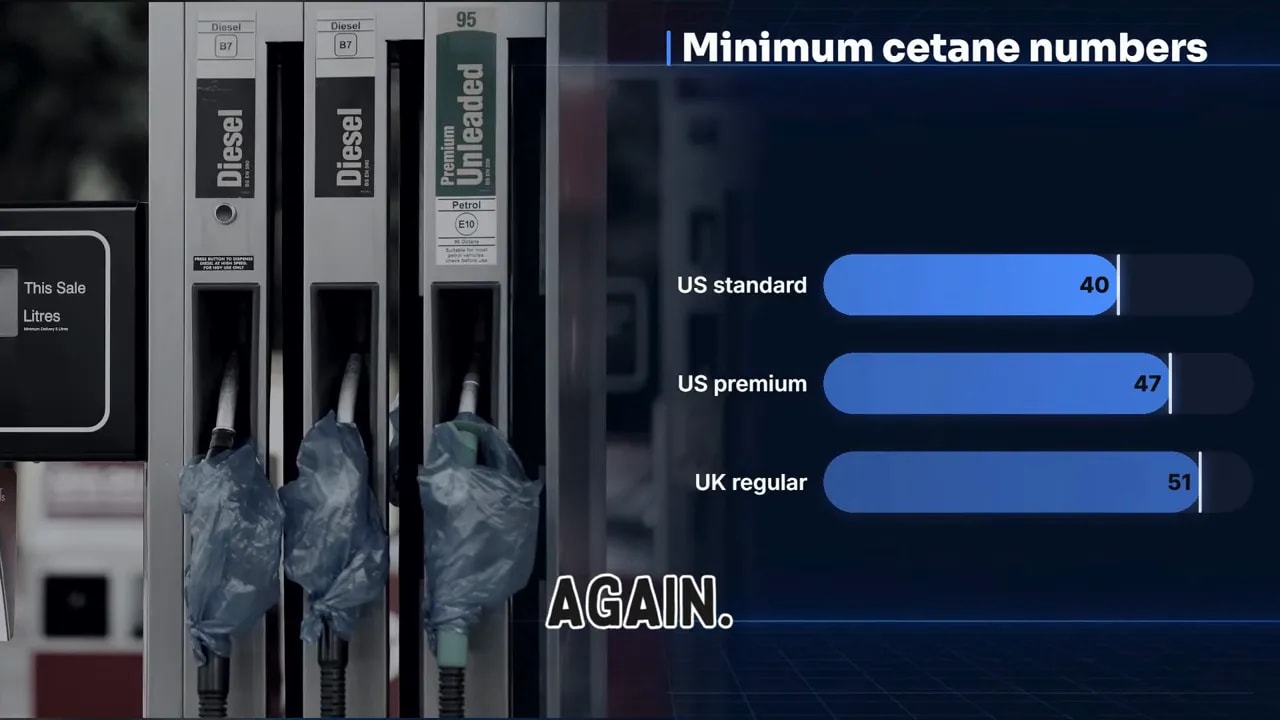
That means ordinary EN 590 diesel has a higher minimum cetane number than “premium” diesel under the cited U.S. model rule. These are specification minimums, not measurements of every fuel sold, and the NIST premium definition includes properties beyond cetane. The label alone still tells you too little.
Cetane Number and Cetane Index Are Not the Same
U.S. regulations also use a cetane index requirement in some contexts. Cetane number is measured using a standardized ignition test, while cetane index is calculated from fuel properties. Do not treat the two terms as interchangeable when comparing pump labels or regulations.
Your Owner’s Manual Comes First
Manufacturers do not give one blanket recommendation for every diesel engine they build.
For example, a Ford Kuga owner’s manual page specifies regular diesel with a pump cetane rating of at least 48 and recommends premium diesel rated at 55 or higher for optimum performance, including severe-duty use such as towing. That is a vehicle-specific example, not a universal Ford or diesel-engine rule.
Before trusting a banner at the pump, check the manual for your exact model, engine and market. The requirement for your vehicle matters more than a general argument about regular versus premium diesel.
The Bigger Difference Is Usually Injector Cleaning
Modern common-rail diesel injectors meter very small quantities of fuel at high pressure through tiny nozzle openings. Deposits in or around those openings can disturb fuel flow and spray quality.
Deposit buildup may not trigger a warning light or sudden breakdown. Instead, the effect can appear gradually as reduced performance or less efficient combustion.
A 2017 SAE study reported about a 3% full-load power loss with low- or non-additised fuel in its test vehicle, while a keep-clean dose of deposit-control additive maintained performance. The same study found a statistically robust link between injector fouling and about a 0.7% increase in specific fuel consumption under its steady-state test conditions. Those results describe a controlled study, not a promise of the same change in every vehicle.
A separate 2015 SAE study found that fuel-borne detergents recovered more than 75% of the power lost during the fouling stage of its tests. That means recovering much of an existing deposit-related loss, not increasing an engine’s designed output by 75%.
This is where premium diesel can make a stronger case. Shell UK, for example, currently says its V-Power Diesel contains 60% more cleaning and protection molecules than its FuelSave Diesel and is designed to remove and protect against performance-robbing deposits.
Those are Shell’s own product claims, and formulations vary by country and brand. They should not be treated as a guarantee for every engine or every premium diesel. The underlying injector-deposit problem, however, is well documented in engineering literature.
The strongest case for premium diesel is protecting or recovering the performance an engine was designed to have, rather than adding performance it never had.
Does Premium Diesel Save Money? Use the Break-Even Rule
A cleaner fuel system can help an engine maintain fuel economy, but that does not automatically make a more expensive fuel cheaper to use.
ExxonMobil has stated that its Synergy Diesel Efficient fuel improved average fuel economy by about 2% versus diesel without detergent additive. Treat that as a product-specific company claim, not a universal result for premium diesel.
A 2% improvement may sound attractive until you compare it with the price premium.
The percentage extra you pay is the percentage improvement in MPG or distance per litre you need to break even on fuel cost.
Calculate the price difference like this:
Price premium (%) = ((premium price ÷ regular price) − 1) × 100
- If premium costs 5% more, you need 5% better MPG or distance per litre to break even.
- If premium costs 8% more and economy improves by only 2%, your fuel cost per mile is still higher.
- If premium costs 7% more, an economy improvement below 7% will not fully cover the higher pump price when you compare distance per unit of fuel.
Be careful with the units. “5% better MPG” and “5% less fuel used” are close, but they are not mathematically identical. At a 5% price premium, the exact break-even reduction in litres per 100 km is about 4.76%. Comparing cost per mile or kilometre avoids that confusion.
The important distinction is between two separate reasons for buying premium:
- Fuel savings: your measured economy improvement covers the higher price.
- Cleaning or ignition-quality benefits: you choose to pay extra for a feature you value even if running cost does not fall.
The second can be a reasonable choice. Just do not call it a saving unless your own figures support it.
How to Test Regular vs Premium Diesel Properly
Do not judge the result from one dashboard reading or one unusually good journey. A useful comparison needs several tanks, a consistent filling method and similar driving conditions.
- Establish a regular-diesel baseline. Start with a full tank, then record three or four complete tanks of normal use.
- Record distance, refill volume and price. At each refill, note how far you travelled, how much fuel was added and the price per litre or gallon.
- Keep the filling point consistent. Stop at the nozzle’s first automatic shutoff rather than repeatedly topping up. Use the same station and, where practical, the same pump.
- Repeat with premium. Measure another three or four full tanks on similar routes, with similar loads and driving conditions.
- Compare combined results. Add the distance and fuel used for each group of tanks, calculate fuel economy and cost per mile or kilometre, and look for a repeatable difference.
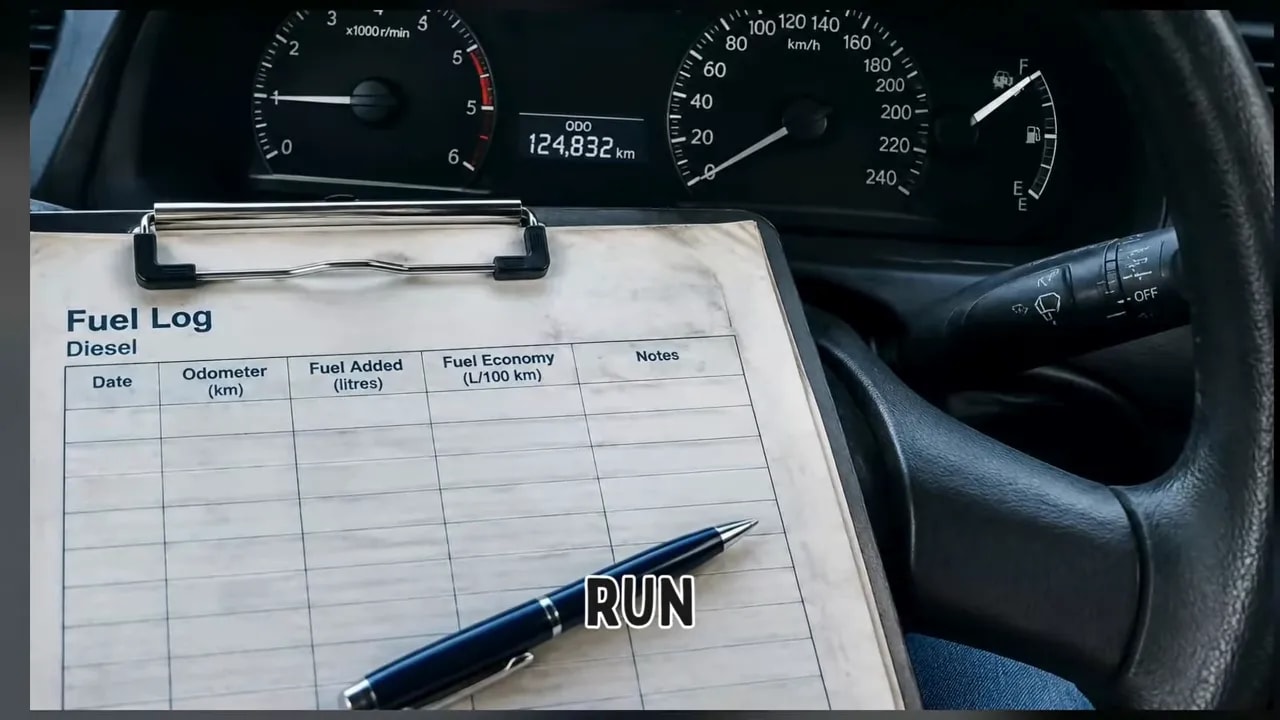
For distance per litre, divide recorded distance by refill volume. For litres per 100 km, divide litres used by kilometres travelled and multiply by 100. Comparing the combined distance and fuel used across each group of tanks is more useful than selecting the best individual result.
Several things can change economy without the diesel itself being responsible:
- Heavy traffic or different routes
- Hot versus cold weather
- Changes in tyre pressure
- Extra passengers or cargo
- Towing or headwinds
- A diesel particulate filter regeneration during a tank
That is why one tank proves very little. Three or four tanks can begin to show a pattern, but they still cannot eliminate every variable. If possible, repeat the comparison in a different period before making a long-term decision.
If you cannot find a repeatable economy improvement, do not invent one because the engine sounds smoother. Smoother running may be something you value, but it is not proof of lower fuel cost.
Will Premium Diesel Give You More Power?
Clean injectors help an engine retain its designed performance. Dirty injectors can reduce power, and detergent fuel can recover some deposit-related loss. Those statements are not the same as saying every healthy diesel gains horsepower from premium fuel.
Once a fuel already meets the engine’s ignition-quality requirement, a higher cetane number does not by itself guarantee a meaningful increase in peak power. Any benefit depends on the engine, calibration, fuel formulation and operating conditions.
Think of it this way: if an engine has lost some performance because injector deposits are restricting fuel flow, an effective deposit-control fuel may help recover part of that loss. It does not change the engine’s designed power rating.
And no fuel will repair:
- A worn turbocharger
- A mechanically or electrically failing injector
- A blocked fuel or air filter
- A clogged or malfunctioning diesel particulate filter
Fuel quality matters, but it is not a substitute for diagnosis and repair.
Who Should Consider Premium Diesel?
Premium diesel is more likely to make sense when there is a specific benefit you need rather than a vague assumption that a higher price must mean a better result.
- Your manual recommends higher cetane. Follow the recommendation for your vehicle, including any guidance for towing, heavy loads or severe-duty use.
- You value stronger injector cleaning. A verified deposit-control package can be a deliberate maintenance-minded choice, especially for a modern common-rail diesel.
- Your diesel works hard. Demanding use makes the manufacturer’s fuel recommendations particularly important.
- You notice cold-start or combustion-quality issues. Higher ignition quality may help in some conditions, but premium fuel is not a substitute for investigating a starting, glow-plug, battery or fuel-system fault.
On the other hand, if your vehicle starts promptly, runs smoothly, shows no repeatable economy improvement with premium and is already using fuel that meets its required specification, it does not automatically need the more expensive option.
Regular diesel is not inherently harmful simply because a premium nozzle is available beside it.
Where You Buy Diesel Matters More Than the Label
Fuel should first meet the specification required by your vehicle and market. A premium label cannot compensate for fuel that is contaminated, incorrectly stored or otherwise out of specification.
Diesel quality involves more than cetane. Water and sediment, lubricity, volatility, sulfur limits, low-temperature operability and other properties can matter, depending on the standard and operating conditions.
The ASTM D975 diesel-fuel specification is useful context because it defines diesel through multiple technical properties, not simply by price tier or marketing name.
No. 1-D and No. 2-D Diesel Are Different Grades
In the United States, No. 1-D and No. 2-D are different ASTM D975 grades, not budget and luxury versions of the same fuel. ASTM describes No. 1-D as a lighter, higher-volatility grade and No. 2-D as a general-purpose middle-distillate grade.
No. 1-D is often used or blended with No. 2-D for cold-weather operation, but the correct grade or seasonal blend depends on the engine, local fuel supply and ambient conditions. Choose the appropriate fuel specification and winter operability before worrying about the most expensive pump.
The Verdict: Buy for a Benefit, Not a Label
Premium diesel can be worth it, but not because it promises free horsepower. Its useful advantages are typically a stronger deposit-control package and, in some markets, higher ignition quality or additional fuel-quality requirements.
Use this order of priority:
- Meet the fuel specification in your owner’s manual.
- Use fuel that meets the applicable local standard from a reputable supplier.
- Decide whether the extra cleaning, ignition quality or other verified premium-fuel properties are worth the extra price.
- If fuel savings are your goal, measure cost per mile or kilometre instead of relying on feel.
If premium costs 7% more, it needs to deliver 7% better MPG or distance per litre to pay for itself through fuel savings. If it does not, you may still choose it for cleaning or other verified benefits. That is a different purchase decision, and it can still be reasonable.
The point is to know what you are paying for. Let the owner’s manual, the fuel specification and your measured running costs make the decision, not the promises printed above the nozzle.