Budget all-season tires can be a practical choice for drivers facing light snow in 2027, but not every low-cost option delivers the same grip or comfort. The Fullway HP108, Starfire Solarus AS, Forceum EXP 70, and Starfire Solarus HT each bring a different balance of value and winter usability. The real question is which one offers the best mix of traction, wear, and everyday confidence when conditions turn less forgiving.
Fullway HP108 195/65R15 91H SL All Season Performance Passenger Tire
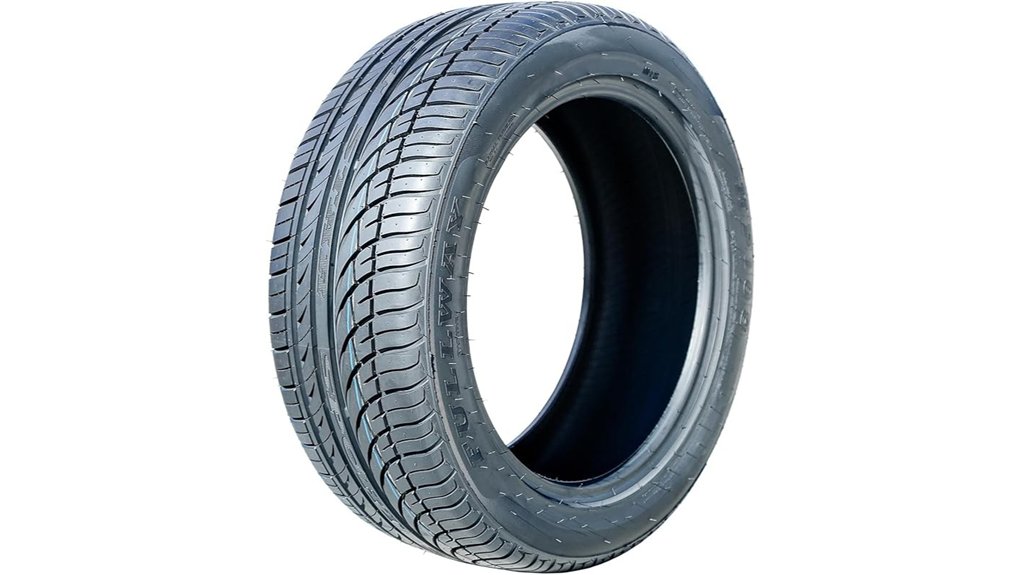
The Fullway HP108 195/65R15 91H SL is a practical pick for drivers seeking a budget-friendly all-season tire for passenger cars, especially those who need dependable everyday traction without paying premium prices. This 15-inch radial performance tire uses a 4-ply rated construction and a one black sidewall design. Its H speed rating supports up to 130 mph, while the 91 load index carries up to 1,356 pounds per tire. With an UTQG rating of 380AA, it is intended for varied conditions, though rim and wheel are not included.
Best For: Budget-conscious passenger car drivers who want a dependable all-season performance tire with solid everyday traction and a 15-inch fitment.
Pros:
- All-season traction for varied driving conditions
- H speed rating and 91 load index provide respectable performance for daily use
- Budget-friendly option with UTQG 380AA and a 4-ply rated radial construction
Cons:
- Not designed for premium-level handling or quiet ride refinement
- Tire only; rim and wheel are not included
- May not be the best choice for drivers needing maximum wet, winter, or high-performance capability
Starfire Solarus AS All-Season 225/65R17 102H Tire
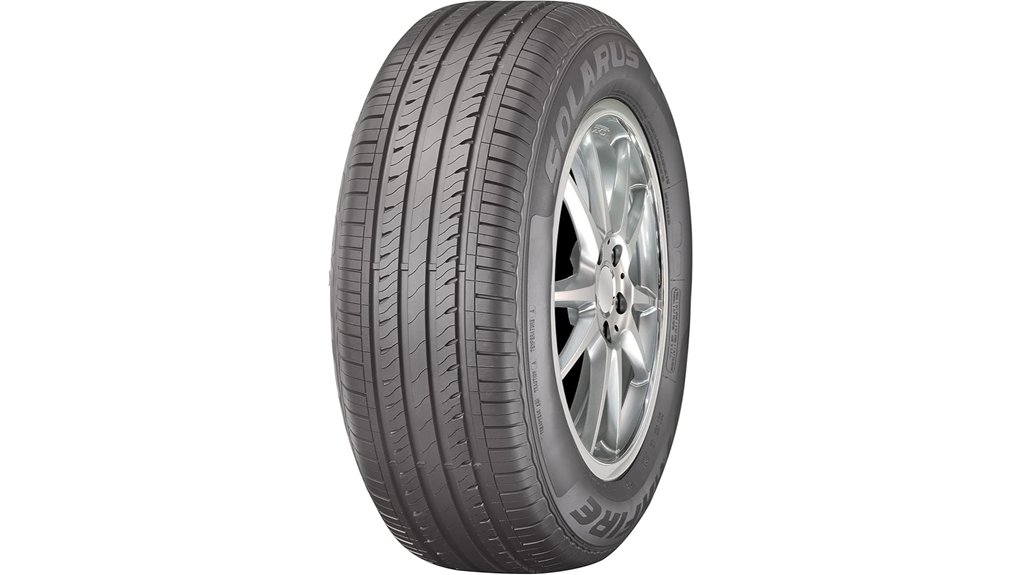
Built for drivers seeking value, the Starfire Solarus AS delivers dependable all-season traction in a 225/65R17 fit. This Cooper Tire product uses a re-engineered tread compound for stronger wet and dry grip, while Shoulder Control Technology adds deep slots and biting edges for steadier handling. A solid center rib supports a smooth ride, and variable-pitch tread design helps reduce road noise. With a symmetrical radial build, 102H rating, 1,874-pound load capacity, and 50,000-mile warranty, it suits everyday commuting and light winter use.
Best For: Drivers looking for a budget-friendly all-season touring tire with dependable wet/dry traction, a comfortable ride, and everyday commuting performance.
Pros:
- Re-engineered tread compound provides solid grip in wet and dry conditions.
- Shoulder Control Technology and a symmetric radial design help improve handling and stability.
- Variable-pitch tread design and solid center rib support a quieter, smoother ride.
Cons:
- Not ideal for severe winter conditions or deep snow.
- Touring-focused performance may not satisfy drivers seeking sporty handling.
- 50,000-mile warranty is decent, but not class-leading for long-life tire shoppers.
4 x Forceum EXP 70 205/70R15 95H SL All Season Touring Tires
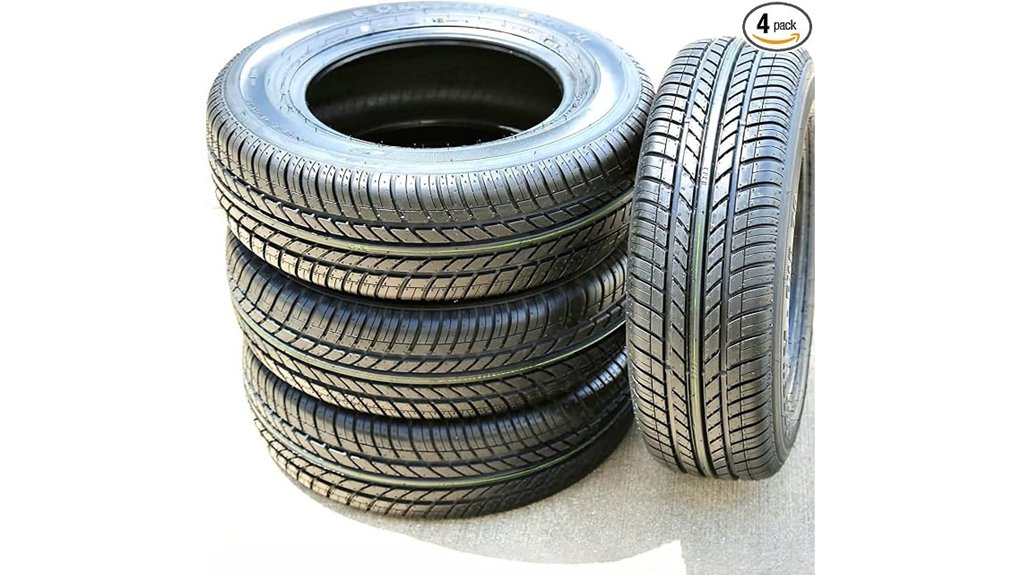
For drivers seeking affordable all-season traction, the Forceum EXP 70 offers a practical 205/70R15 option. This four-tire set is built for passenger vehicles and uses an SL standard-load, radial 4-ply construction. Each tire carries a 95 load index, supporting up to 1,521 pounds, and an H speed rating for road use up to 130 mph. The 15-inch tires feature four black sidewalls and are intended for varied conditions, including light snow-minded commuting. Rims are not included, so buyers receive tires only.
Best For: Budget-conscious drivers who want a four-tire set with dependable all-season traction for passenger vehicles.
Pros:
- Affordable option for everyday driving
- All-season, radial 4-ply construction for varied road conditions
- H speed rating and 95 load index provide solid everyday performance
Cons:
- Tires only; rims/wheels are not included
- May not be ideal for severe winter driving
- Basic touring design may not suit drivers seeking premium performance or handling
Starfire Solarus HT All-Season 255/65R18 111T Tire
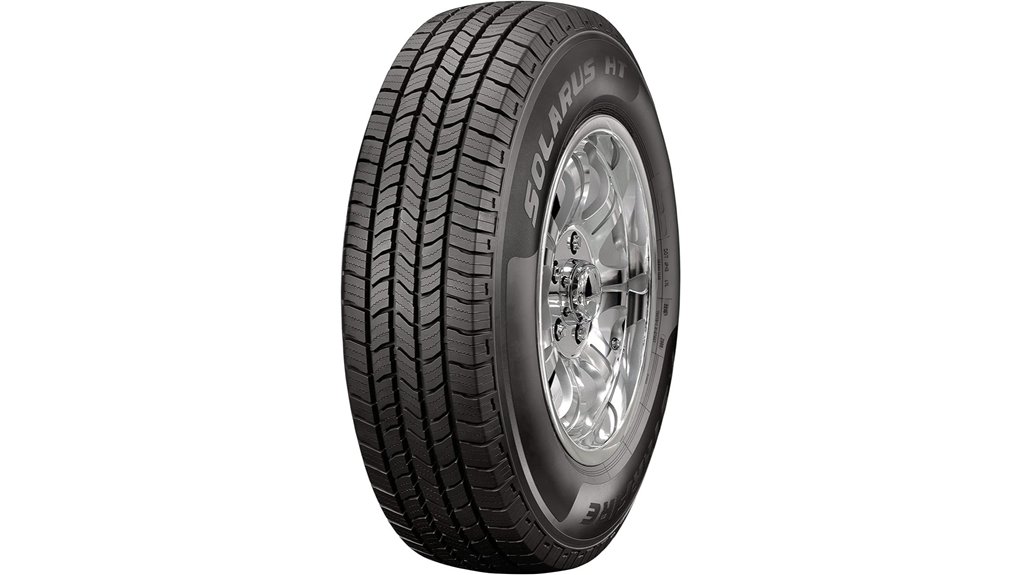
Starfire’s Solarus HT suits drivers needing a budget-friendly all-season tire for SUVs, CUVs, and pickups. This 255/65R18 touring model carries a 111T rating, 2,403-pound load capacity, and a 50,000-mile warranty. Its symmetrical 5-rib highway tread promotes even wear, while Wet Grip Grooves and Traction Sipes help maintain traction in rain and light snow. M+S branding adds confidence in adverse conditions. Built as a radial, 10-ply black sidewall tire, it targets quiet highway comfort and year-round use, making it a practical value option for daily driving.
Best For: Budget-conscious SUV, CUV, and pickup drivers who want a quiet, dependable all-season highway tire with solid wet and light-snow traction.
Pros:
- 50,000-mile warranty adds value and peace of mind.
- Symmetrical 5-rib tread promotes even wear and stable highway performance.
- Wet Grip Grooves, Traction Sipes, and M+S rating help with rain and light snow traction.
Cons:
- Best suited for highway and daily driving, not more aggressive off-road use.
- Touring-focused design may not satisfy drivers wanting sporty handling.
- Budget tire positioning may mean less refinement than premium alternatives.
Factors to Consider When Choosing Budget All Season Tires for Snow
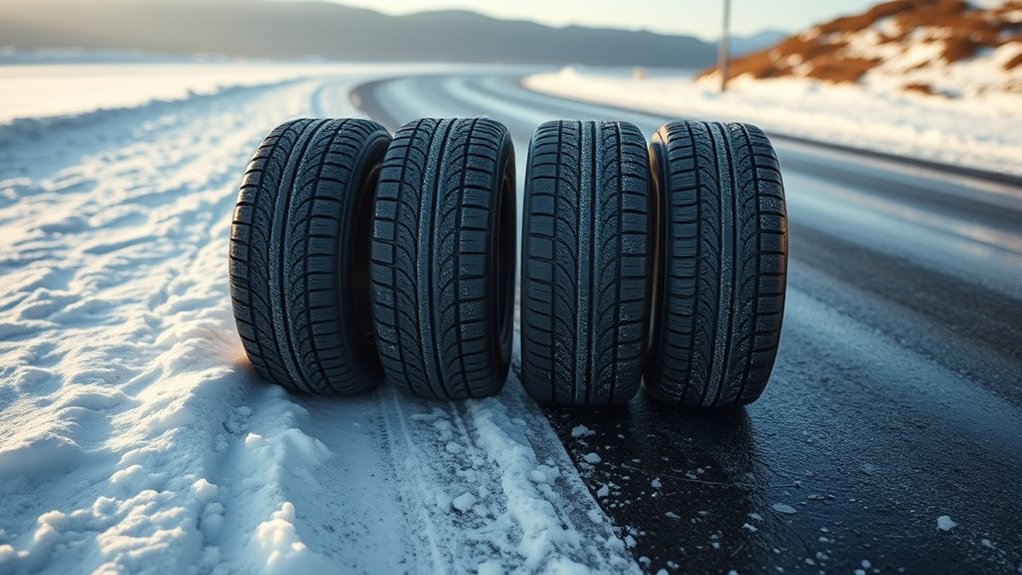
When choosing budget all-season tires for snow, tread design and siping density are key indicators of how well a tire can bite into slippery surfaces. Snow traction should be weighed alongside load capacity and speed rating to guarantee the tire matches the vehicle’s needs without sacrificing safety. A balanced choice depends on getting enough winter grip while still meeting everyday driving requirements.
Tread Design
Tread design is a major factor in how budget all-season tires handle snow, as deeper grooves and well-placed sipes help move snow and slush away from the contact patch while improving grip on icy surfaces. Symmetrical patterns often deliver steady performance in light snow, while asymmetrical layouts can improve stability and adaptability across changing road conditions. Tread depth also matters, since depths of 10/32 inches or more generally allow better passage through packed snow and help preserve handling. Siping adds many small biting surfaces that increase tread block flexibility and contact area. The shape and spacing of these elements influence how well a tire gathers traction during acceleration and braking, making tread architecture a key indicator of winter usefulness.
Snow Traction
Snow traction in budget all-season tires depends on a balance of bite, flexibility, and load support. Grooves and sipes create edges that help the tread hold packed snow, while deeper tread, often around 9/32 inches or more, can move through loose accumulation more effectively. Cold-weather rubber compounds matter because they stay pliable instead of stiffening like summer tire materials, preserving grip when temperatures fall. Load index also plays a role; a tire rated to carry more weight can keep the contact patch more stable under a vehicle’s mass on slippery roads. M+S marking provides a useful baseline, indicating the tire was designed with mud and snow use in mind. Together, these traits determine how confidently a budget all-season tire can handle winter driving.
Siping Density
Sipes are the fine slits that give a tread extra biting edges, and their density has a direct effect on how well a budget all-season tire grips snow and ice. Higher siping density usually creates more edges that can dig into packed snow, improving traction on winter roads. A balanced pattern, however, matters as much as quantity, because too much siping can reduce tread stability, while too little can limit grip. Well-designed siping also supports water dispersal, which helps lower hydroplaning risk on slushy surfaces. In snowy conditions, tread depth and siping density work together: deeper tread can carry snow and slush away from the contact patch, while the siping pattern should complement the overall tread design for consistent handling and control.
Load Capacity
Load capacity is a critical spec when choosing budget all-season tires for snow because it determines how much weight each tire can safely support without sacrificing stability or performance. Tire load index values show this limit, such as 91 for 1,356 pounds per tire or 102 for 1,874 pounds. Matching that rating to the vehicle’s required payload is essential, since under-rated tires may overheat, wear faster, or fail under stress. This matters even more in snow, where extra weight can reduce traction and make braking less predictable. Tires with sufficient capacity help maintain a stable contact patch, improving control on slushy or packed surfaces. The safest choice is one that meets the manufacturer’s specifications while leaving enough margin for passengers, cargo, and winter driving demands.
Speed Rating
Speed rating indicates the maximum speed a tire can safely maintain, making it an important consideration even for budget all-season tires used in snow. Common all-season ratings include T, which covers up to 118 mph, and H, which reaches 130 mph. Selecting a rating that matches the vehicle’s specification helps preserve safety and prevents premature wear or failure. In winter, this choice matters because reduced traction can place extra stress on the tire. Higher speed ratings usually bring stiffer sidewalls, which can improve handling and stability on snowy roads. Lower rated options, however, often provide more flexibility, which may aid grip in cold conditions. The best balance comes from meeting the vehicle requirement while favoring winter-friendly performance and dependable control.
Frequently Asked Questions
Can Budget All-Season Tires Legally Be Used in Winter Road Conditions?
Yes, budget all-season tires can generally be used legally in winter road conditions, but local laws may require snow-rated tires, chains, or specific tread standards. Legality depends on jurisdiction, not tire price.
Do Budget All-Season Tires Need Special Maintenance in Cold Weather?
Yes, they need some care: check pressure, inspect tread, rotate regularly, and avoid hard acceleration. Cold lowers inflation, stiffens rubber, and shortens grip. Proper maintenance preserves safety, wear, and performance.
How Long Do Budget All-Season Tires Typically Last in Snowy Climates?
Budget all-season tires in snowy climates typically last 30,000 to 50,000 miles, though harsh cold, frequent slush, and poor road conditions can shorten life. Rotations, proper inflation, and cautious driving help preserve tread.
Are Tire Chains Compatible With Most Budget All-Season Tire Sizes?
Yes; most budget all-season tire sizes accept chains if wheel well clearance and vehicle manuals allow it. Like a coat over mittens, fit matters most. Some low-profile sizes or electronic systems prohibit chains, so checking exact specifications remains essential.
What Tire Pressure Should I Use for Budget All-Season Tires in Winter?
It should be set to the vehicle placard pressure, not lowered for winter. Cold weather reduces pressure, so a monthly check and topping up by 1–2 psi when needed helps maintain traction and tire wear.
Conclusion
These four budget all-season tires offer practical choices for drivers facing light snow without draining their wallets. The Fullway HP108 brings value, the Starfire Solarus AS adds dependable traction, the Forceum EXP 70 covers basic touring needs, and the Starfire Solarus HT suits SUV owners well. For mild winter conditions, each delivers a sensible balance of cost and capability. Choosing one of them may not be magic, but it is a snow-day lifesaver.