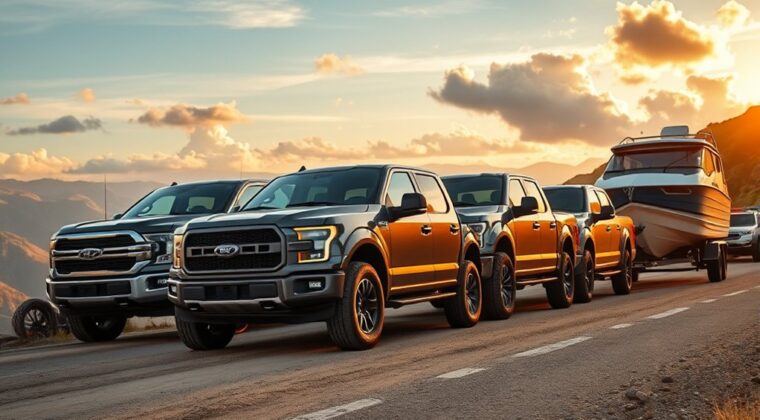
In 2027, the Chevrolet Colorado, Toyota Tacoma, Ford Ranger, and Nissan Frontier are shaping up as the top mid-size trucks for towing. Each one brings strong towing ratings, useful hardware, and the kind of stability buyers expect when hauling trailers or gear. The differences, however, may come down to more than raw capacity. Towing setup, hitch options, and everyday usability could shift the choice in ways that are not immediately obvious.
CURT Class 3 Trailer Hitch, 2-Inch Receiver
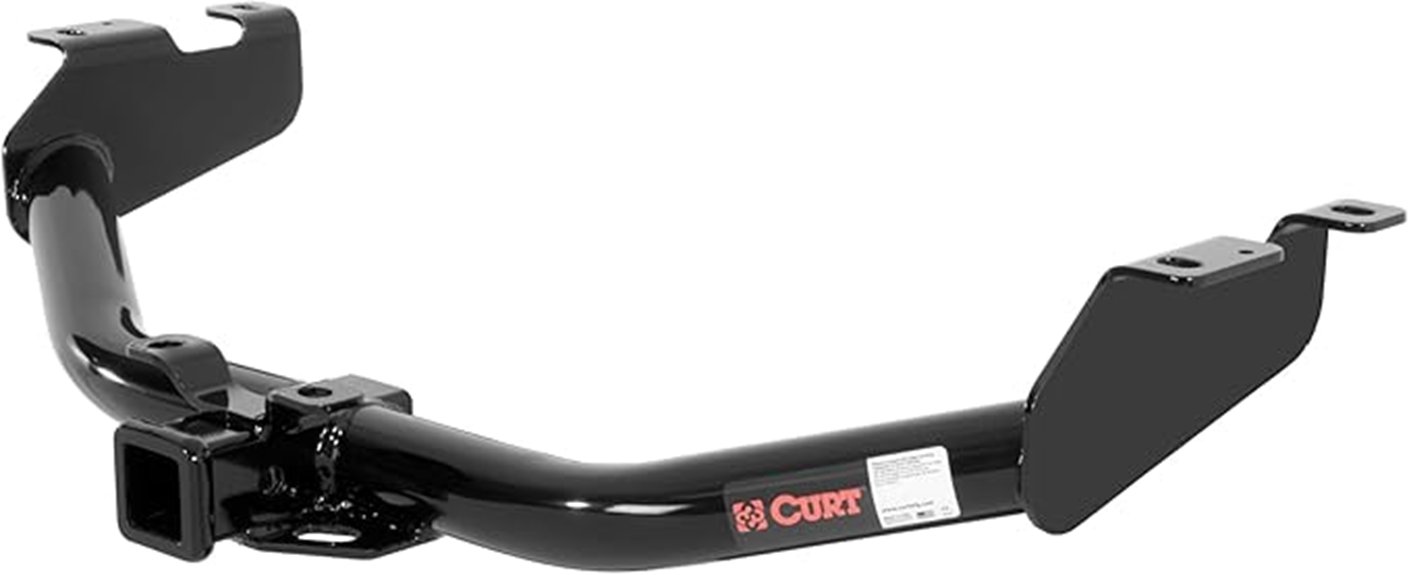
The CURT 13322 Class 3 Trailer Hitch is a strong fit for Chevrolet Silverado and GMC Sierra owners who need dependable towing without a complicated install. It uses a 2-inch receiver and a round-tube frame, with a custom factory fit for select 1500 and 2500 models. Rated at 6,000 pounds gross trailer weight and 600 pounds tongue weight, it also supports weight distribution up to 10,000 pounds. High-strength steel, precise welding, and dual-coat protection improve durability. Real-world SAE J684 testing and a limited lifetime warranty add confidence.
Best For: Chevrolet Silverado and GMC Sierra owners looking for a custom-fit, durable Class 3 hitch with easy no-drill installation and dependable towing capacity.
Pros:
- Strong towing ratings: 6,000 lbs. gross trailer weight and 600 lbs. tongue weight
- Custom factory fit with no drilling required for installation
- Durable high-strength steel construction with rust-resistant dual-coat finish
Cons:
- Only fits select Silverado and Sierra 1500/2500 models
- Weight distribution rating is limited by the lowest-rated towing component
- Finish is covered for only one year under warranty
BFXM Trailer Plug Adapter, Trailer Light Adapter
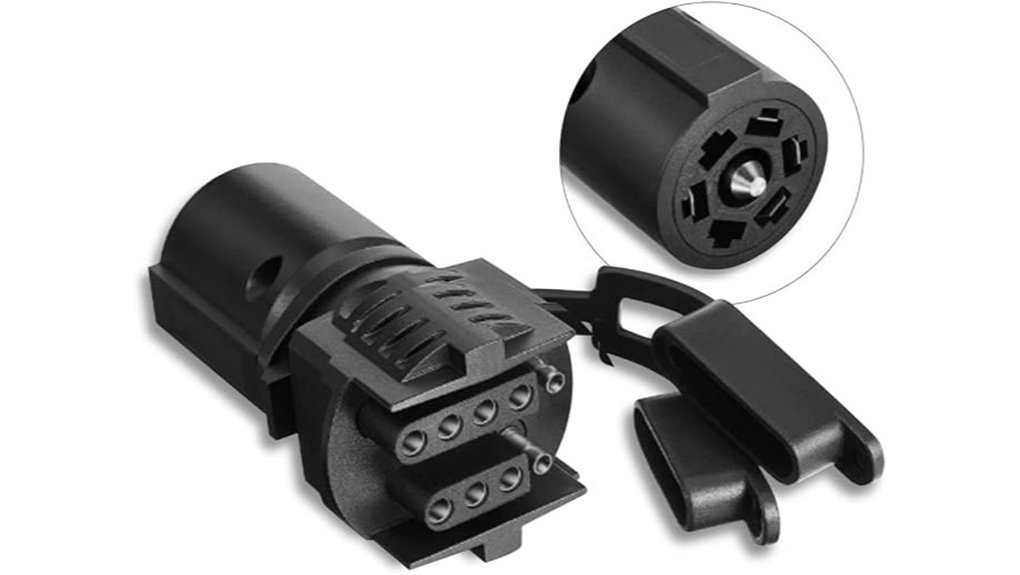
For drivers needing broader trailer compatibility, the BFXM Trailer Plug Adapter converts 4-pin wiring to 7-way. The trailer light adapter includes all necessary conversion parts and two dust covers to help protect the connector from debris. Its plug-and-play design supports quick installation and removal without cutting or splicing, making setup straightforward on towing vehicles. Engineered for balanced power distribution, it helps preserve trailer electrical integrity while keeping brake and signal lights operating properly. Suitable for commercial vehicles, semi-trailers, and other trailers, it reduces the need for multiple plugs and improves towing versatility.
Best For: Drivers who need a simple plug-and-play solution to convert 4-pin trailer wiring to 7-way for broader towing compatibility with commercial vehicles, semi-trailers, and other trailers.
Pros:
- Includes all necessary conversion parts plus two dust covers for added connector protection.
- Plug-and-play design makes installation and removal quick, with no cutting or splicing required.
- Helps maintain balanced power distribution so brake and signal lights work properly and trailer electrical integrity is preserved.
Cons:
- May be unnecessary for users who already have compatible 7-way wiring.
- Focuses on conversion and protection, but does not add advanced trailer electrical features.
- Best suited for standard towing setups, so highly specialized configurations may require a different adapter.
Ayleid Tri-Ball Trailer Hitch Mount with Shackle
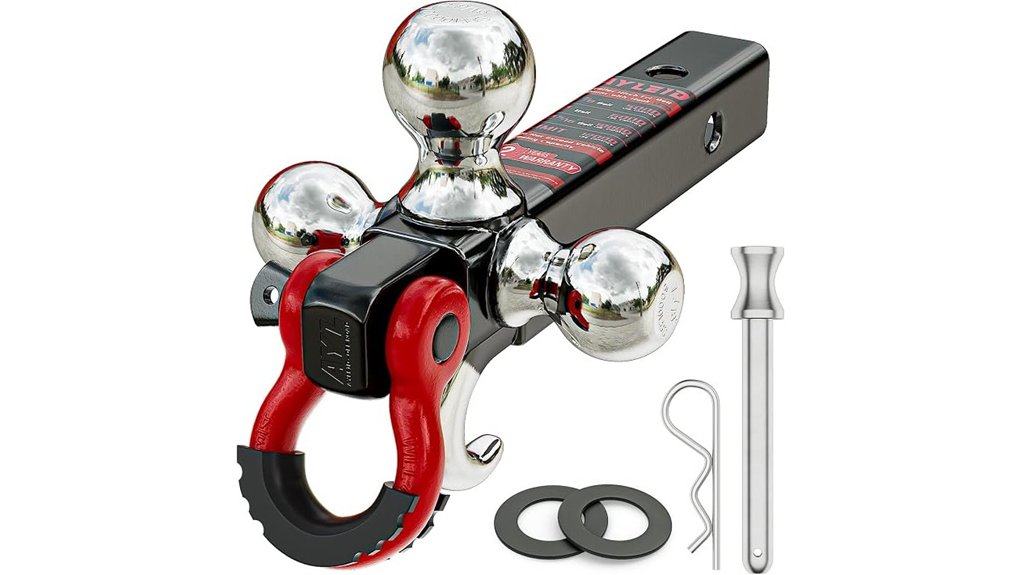
Ayleid’s tri-ball hitch mount suits drivers needing one receiver-ready setup for multiple towing needs. The Ayleid Trailer Hitch Tri-Ball Mount fits 2-inch receivers and carries 1-7/8 inch, 2 inch, and 2-5/16 inch balls, making it adaptable for varied trailers. Its heavy-duty construction is paired with a black powder coat and silver hitch ball for a practical finish. Included hook, pin, and rotatable tow shackle add utility for recovery or secure attachment. Rated at 5,000, 6,000, 10,000, and 12,000 pounds, it also carries a lifetime warranty, strengthening long-term value for towing-focused buyers.
Best For: Drivers who need a versatile, receiver-ready hitch solution for multiple trailer sizes and occasional recovery use.
Pros:
- Fits 2-inch receivers and includes 1-7/8 inch, 2 inch, and 2-5/16 inch balls for flexibility.
- Heavy-duty construction with a black powder coat and silver hitch ball for a durable, practical finish.
- Includes a hook, pin, rotatable tow shackle, and lifetime warranty for added utility and value.
Cons:
- Only fits 2-inch receivers, so it won’t work with other receiver sizes.
- Tri-ball design can be heavier and bulkier than a single-ball hitch.
- Weight ratings vary by ball and may be more than some light-duty users need.
XPE Tri Ball Trailer Hitch Mount with Hook Fits 2 Inch Receiver Matte Black
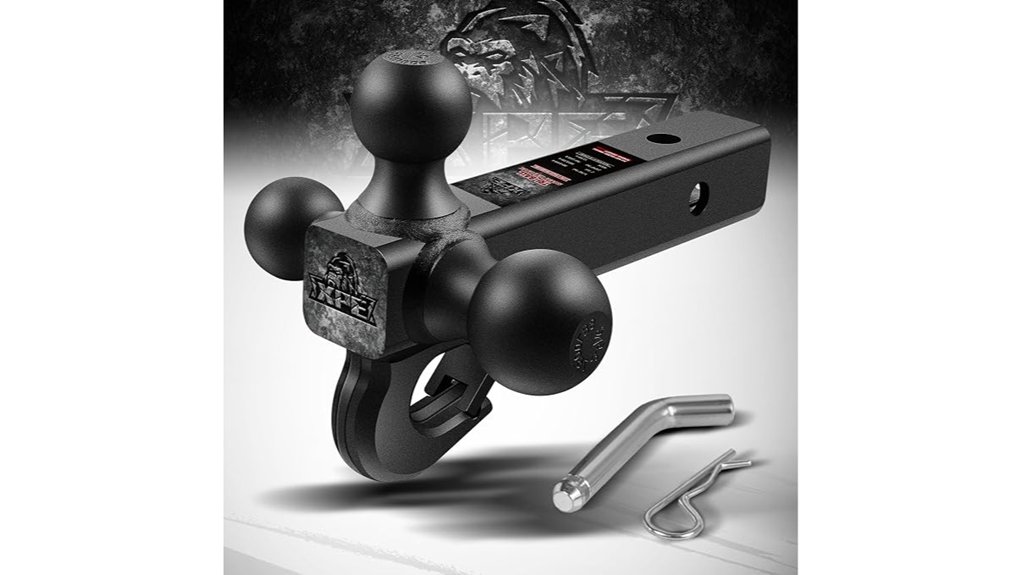
XPE’s tri-ball hitch mount suits mid-size truck owners who tow varied trailers often. It fits standard 2-inch receivers and includes 1-7/8-inch, 2-inch, and 2-5/16-inch black balls, plus a hook for added utility. Rated at 3,500 pounds, 5,000 pounds, 7,500 pounds, and 10,000 pounds with the hook, it covers RVs, cargo trailers, livestock trailers, and farm trailers. Attached pin security supports stable towing. Heavy-duty welded steel and a black powder coat resist rust and corrosion. A one-year warranty and 30-day return window add practical assurance.
Best For: Mid-size truck and SUV owners who tow different trailer types and want a versatile, heavy-duty 2-inch receiver hitch with multiple ball sizes and a hook.
Pros:
- Fits standard 2-inch receivers and includes 1-7/8″, 2″, and 2-5/16″ hitch balls.
- High towing capacity, with up to 10,000 lbs GTW when using the hook.
- Durable welded steel construction with a rust- and corrosion-resistant powder-coat finish.
Cons:
- Only compatible with 2-inch receivers, so it won’t fit smaller or larger receiver sizes.
- Heavier-duty construction may be more than some casual towing users need.
- The tri-ball design may add bulk compared with a single-ball hitch setup.
Factors to Consider When Choosing a Mid Size Truck for Towing
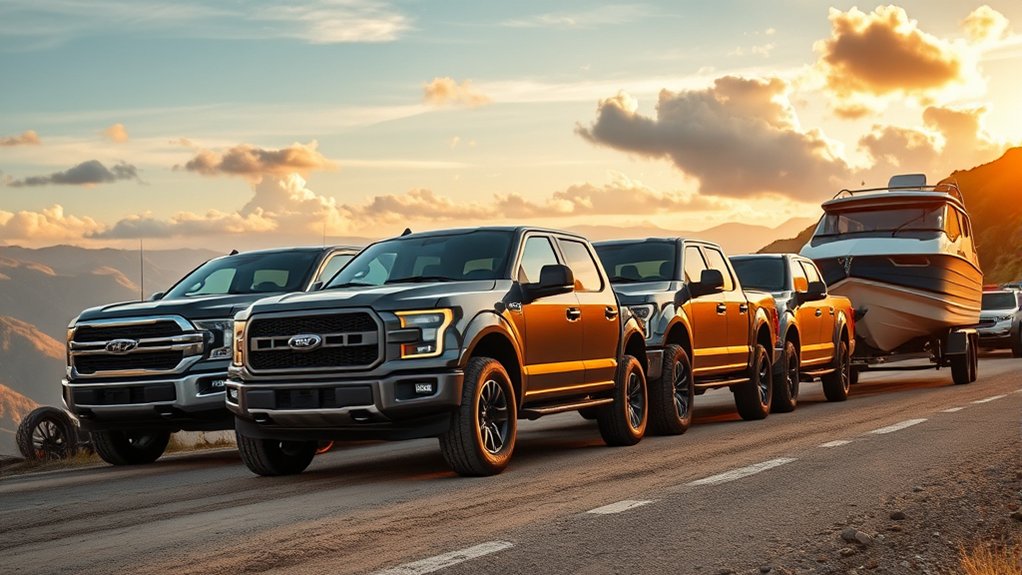
Selecting a mid-size truck for towing starts with checking tow capacity ratings and payload limits to guarantee the vehicle can handle the load safely. Hitch receiver size and brake controller compatibility also matter, since both affect how well the truck connects to and manages a trailer. Engine torque output should be reviewed as well, because it influences pulling strength and performance under load.
Tow Capacity Ratings
Tow capacity ratings are the starting point when evaluating a mid-size truck for towing, since configurations can range from about 3,500 lbs to more than 7,000 lbs. Buyers should compare the truck’s gross trailer weight rating with the trailer they plan to haul, while also checking tongue weight limits for stability and safe hitch loading. Many models add integrated trailer brake controllers and tow/haul modes, which help control speed, shifting, and braking under load. A weight distribution hitch may improve towing performance by spreading trailer weight more evenly across axles. Because ratings vary by engine, drivetrain, cab style, and axle ratio, the manufacturer’s specifications remain the most reliable source. Proper towing accessories should always match the truck’s official limits and intended use.
Payload Limits
Payload limits are a critical factor when choosing a mid-size truck for towing, since these trucks typically offer between 1,000 and 2,200 pounds of payload capacity. That figure determines how much weight can be carried in the cab, bed, and hitch area while still towing safely. Gross Vehicle Weight Rating matters as well, because it combines the truck’s own weight with all added payload and sets the upper boundary for operation. Tongue weight, usually 10 to 15 percent of trailer weight, must fit within that allowance. Suspension tuning and axle ratings also affect stability and control under load. Manufacturers’ specifications should always guide final decisions, and any aftermarket changes must stay within rated limits.
Hitch Receiver Size
Hitch receiver size is one of the most important compatibility checks when matching a mid-size truck to a trailer. Most mid-size trucks use either a 1.25-inch or 2-inch receiver, and the larger option generally supports greater towing capacity. A 2-inch receiver is often the better choice for heavier trailers, with gross trailer weights frequently above 6,000 lbs. The receiver’s rating should always match both the trailer’s gross weight and tongue weight to maintain safe, efficient towing. It also affects accessory fit, since many ball mounts and cargo carriers are built for 2-inch receivers. Selecting the correct hitch size helps avoid instability, equipment failure, and regulatory issues, while ensuring the truck and trailer work together as intended.
Brake Controller Compatibility
After the hitch receiver is matched to the trailer, brake controller compatibility becomes the next key check for a mid-size truck. The truck should have a controller that can manage the trailer’s braking system effectively, since safe towing depends on coordinated stopping. Time-delayed and proportional controllers offer different response characteristics, so the choice should reflect trailer size, usage, and driving conditions. Electrical system compatibility also matters, because the controller must integrate cleanly with the truck’s wiring for dependable operation. Many mid-size trucks include integrated brake controllers, but their settings and specifications still need verification against the trailer’s requirements. Trailer weight capacity and braking demand should guide the final selection, ensuring the controller delivers adequate control, consistency, and safety during towing.
Engine Torque Output
Engine torque output is a critical factor in towing because it affects how easily a mid-size truck can move heavy trailers from a stop and hold speed on grades. Higher torque, measured in pound-feet, improves launch performance and uphill pulling when a trailer is attached. Diesel engines often deliver more torque than gasoline engines, which is why they are frequently chosen for demanding towing jobs. For many mid-size towing needs, around 400 lb-ft or more provides a useful blend of strength and efficiency. The best choice depends on the trailer’s weight and the truck’s rated towing capacity. When these figures are matched well, towing becomes safer, smoother, and less stressful for the drivetrain over long distances and varied terrain.
Towing Package Features
Beyond torque output, towing confidence in a mid-size truck depends on the right towing package features. A strong choice starts with the gross trailer weight rating, which defines the maximum safe load and varies widely by model and package. Factory-installed towing packages often add a heavy-duty radiator, upgraded transmission cooler, and enhanced suspension, all of which help manage heat and stability under strain. A compatible hitch receiver, commonly a 2-inch size, supports ball mounts and cargo carriers. Tongue weight capacity also matters, ideally staying near 10 to 15 percent of trailer weight for balanced handling. Safety equipment such as trailer brake controllers, integrated wiring harnesses, and advanced driver-assistance systems can further improve control, confidence, and everyday towing ease.
Trailer Wiring Options
Trailer wiring options matter because they determine whether a mid-size truck can properly support a trailer’s lighting and braking needs. The connector type should match the trailer, with 4-pin setups handling basic tail lights and turn signals, and 7-way connectors adding circuits for electric brakes and reverse lights. A proper harness should be built for the truck’s exact make and model, enabling plug-and-play installation without cutting or splicing. Dust covers are also useful, since they shield connectors from dirt and moisture that can trigger electrical faults. Power distribution should be evaluated as well, because all trailer lights must receive consistent power for safe operation. Choosing the right wiring option helps guarantee reliable towing performance and fewer problems on the road.
Frequently Asked Questions
Which Mid-Size Truck Has the Highest Towing Capacity in 2027?
The highest towing capacity in 2027 is expected from the Ford Ranger Super Duty, if offered in that market; otherwise, the Jeep Gladiator and Toyota Tacoma trail leaders, depending on configuration and region.
How Does Payload Affect Towing Performance?
Payload acts like ballast in a ship, shaping towing stability. More available payload means better handling, safer tongue weight, and less suspension strain. If payload is exceeded, towing performance weakens, braking suffers, and control diminishes.
What Engine Options Improve Towing Efficiency?
Turbocharged V6s, diesel fours, and hybrid systems usually improve towing efficiency by delivering stronger low-end torque and better fuel economy. Paired with proper cooling and transmissions, they help maintain steady pulling performance under load.
Do Towing Packages Significantly Increase Resale Value?
Towing packages can increase resale value, but usually only modestly. They appeal to buyers needing capability, especially when well documented and factory-installed. Poor maintenance or unnecessary upgrades may cancel much of the advantage.
How Often Should Towing Brakes Be Serviced?
Most towing brake systems should be serviced every 12,000 miles or annually; heavy use may warrant inspection every 6,000 miles. Industry surveys show neglected trailer brakes contribute to roughly 20% of towing-related accidents.
Conclusion
The theory that all mid-size trucks tow the same is quickly disproven in 2027. The Chevrolet Colorado, Toyota Tacoma, Ford Ranger, and Nissan Frontier each bring distinct strengths, from stronger torque to smarter brake controller support and hitch compatibility. With towing limits reaching 7,700 lbs, these trucks prove that capability now depends on more than size alone. For buyers, the real question is not which truck to choose, but which towing needs it must satisfy.