
Choosing the right performance tire for daily driving in 2027 is not only about grip, but also about comfort, noise, and durability. The Fullway HP108, Lexani LXUHP-207, Lexani LX-Twenty, Mastertrack M-TRAC HP, and BFGoodrich G-Force Comp-2 A/S Plus each bring a different balance of traits. The real question is which one fits everyday use best, and the answer is not as simple as it may seem.
4 x Fullway HP108 205/55R16 91V SL All Season Performance Tires
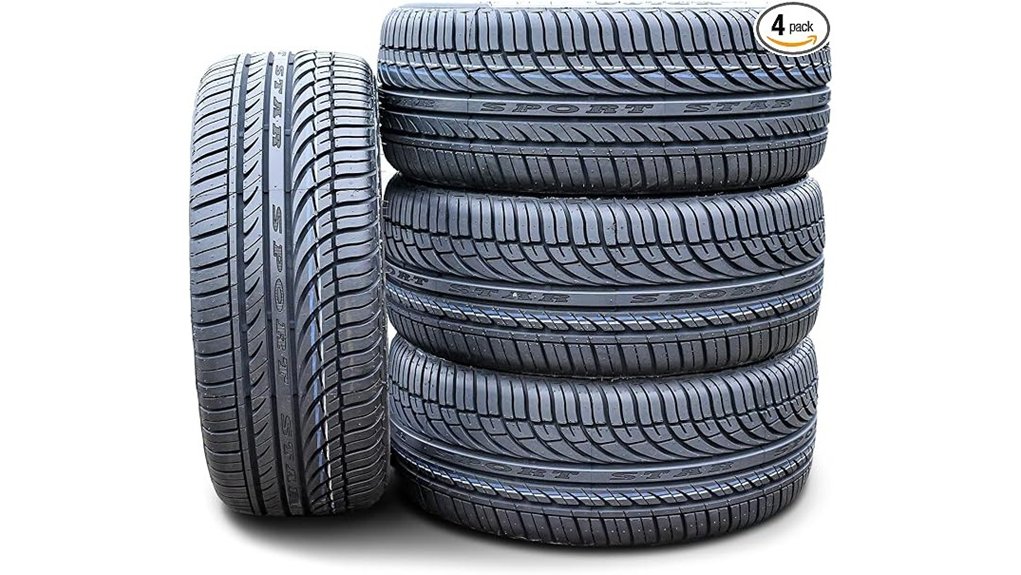
The 4 x Fullway HP108 205/55R16 91V SL All Season Performance Tires are a strong fit for daily drivers who want dependable all-season traction with a performance-focused feel. Built in a 205/55R16 size, they use radial construction, a four-ply design, and a standard load rating. Each tire carries a 91 load index, supporting up to 1,356 pounds, and a V speed rating for speeds up to 149 mph. The 380AA UTQG rating suggests solid wear and grip balance. Four black sidewalls complete the design. Rims and wheels are not included.
Best For: Daily drivers seeking reliable all-season traction with a performance-oriented ride in a 205/55R16 fitment.
Pros:
- All-season tread is suitable for year-round everyday driving.
- V speed rating and 380AA UTQG offer a solid balance of performance and tread life.
- Standard load, radial construction, and four black sidewalls make them a practical replacement option.
Cons:
- Rims and wheels are not included.
- May not be ideal for drivers needing winter-specific or off-road performance.
- Performance-focused design may ride firmer than comfort-oriented touring tires.
Lexani LXUHP-207 225/40ZR18 92W XL
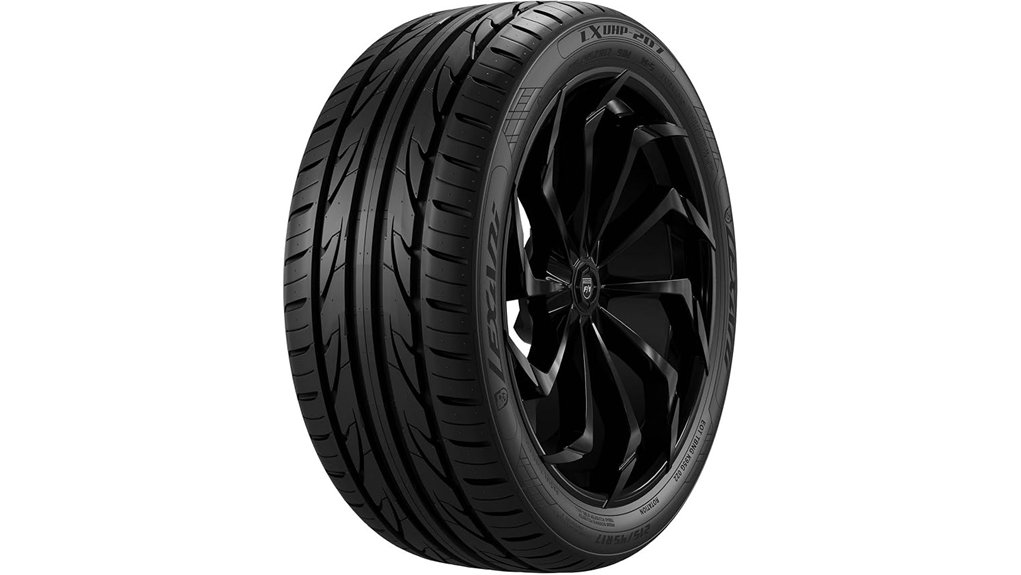
Built for spirited commuters, the Lexani LXUHP-207 225/40ZR18 92W XL suits performance cars needing confident summer grip. This ultra-high-performance radial uses a V-shaped tread to aid traction and braking at speed, while four longitudinal grooves help resist hydroplaning by moving water away. A solid center rib supports steadier handling on wet or dry pavement. The XL construction carries 1,389 pounds per tire, and the W rating suits higher-speed use. Lexani backs it with a 50,000-mile limited tread life, plus computer-optimized noise control for a quieter, more composed daily drive.
Best For: Performance-minded drivers and spirited commuters who want a summer ultra-high-performance tire with strong wet and dry grip, a quieter ride, and a high-speed W rating.
Pros:
- V-shaped tread and four longitudinal grooves help improve traction, braking, and hydroplaning resistance.
- Solid center rib supports more stable handling in both wet and dry conditions.
- Backed by a 50,000-mile limited tread life and computer-optimized noise reduction.
Cons:
- Summer-only tire, so it is not ideal for cold weather, snow, or ice.
- Ultra-high-performance focus may trade some ride comfort and tread longevity versus touring tires.
- Limited manufacturer warranty details are available only upon request.
Lexani LX-Twenty 255/40ZR19 100W XL Performance Passenger Tire
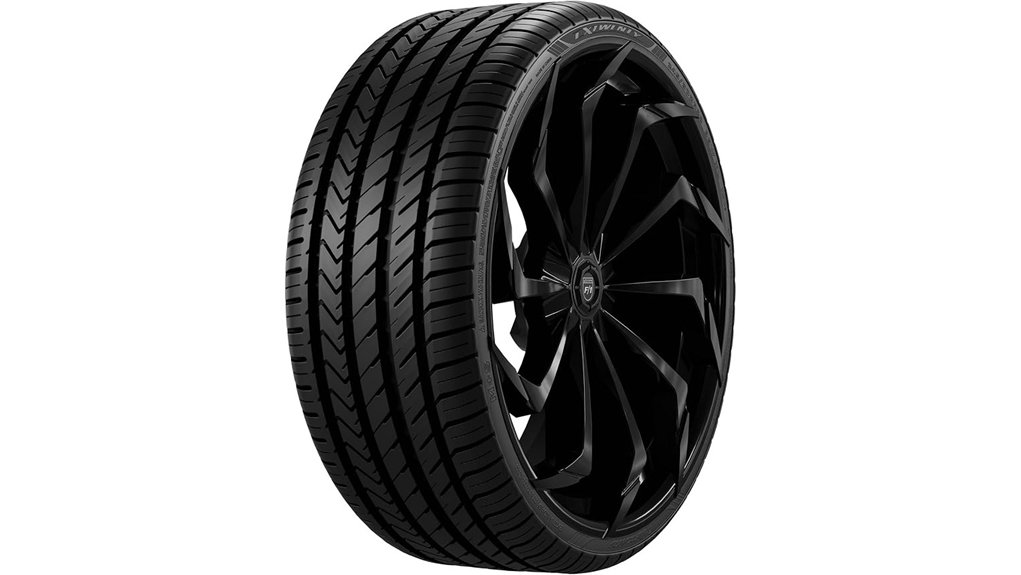
With a 55,000-mile tread life, the Lexani LX-Twenty suits daily drivers wanting performance and longevity. This 255/40ZR19 radial tire uses an asymmetrical tread to support sporty cornering and stable steering. Grooves and sipes aid wet-road grip while sharpening dry handling, and the optimized build helps reduce road noise and vibration. Rated 100W XL, it supports up to 1,764 pounds at 49 psi and fits universal passenger applications. Its non-winter design favors warm-season use, making it a balanced choice for drivers seeking comfort, traction, and responsive road feel.
Best For: Drivers seeking a high-performance all-around passenger tire with strong dry and wet handling, a comfortable ride, and a long tread life for warm-season use.
Pros:
- 55,000-mile limited tread life offers solid longevity for a performance tire.
- Asymmetrical tread design helps improve cornering, steering response, and overall handling.
- Grooves, sipes, and noise-reducing construction support wet traction and a quieter ride.
Cons:
- Non-winter design makes it unsuitable for snow and ice conditions.
- Performance-focused tread may wear faster than touring tires under aggressive driving.
- No manufacturer warranty is specified beyond the return guarantee.
Set of 4 Mastertrack M-TRAC HP 245/45ZR20 103Y XL High Performance Tires
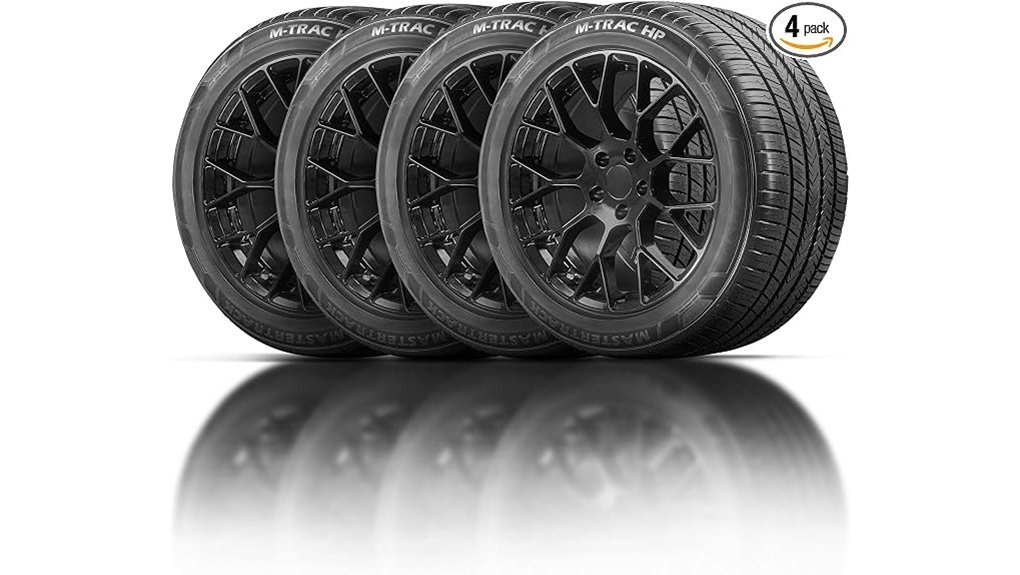
Mastertrack’s M-TRAC HP suits daily drivers wanting high-speed confidence and all-season versatility. The 245/45ZR20 XL set uses an asymmetrical radial tread for stable cornering and responsive control, while the Y speed rating supports up to 186 mph. Each tire carries a 103 load index and 49 psi max pressure, giving strong carrying capacity for heavier vehicles. M+S certification adds usable traction in rain and light snow. Noise-reduction technology helps keep the cabin quiet, and the wear-resistant compound is designed to last 20% longer, backed by a 50,000-mile tread warranty and road-hazard coverage.
Best For: Drivers of heavier performance-oriented vehicles who want a quiet, all-season tire with strong high-speed stability, good wet/light-snow traction, and long tread life.
Pros:
- Asymmetrical tread design supports responsive handling and stable cornering.
- M+S certification and all-season construction add year-round versatility in rain and light snow.
- Backed by a 50,000-mile tread warranty plus road-hazard coverage.
Cons:
- Best suited to performance and larger vehicles, so it may not be ideal for everyday economy driving needs.
- High-performance focus can mean firmer ride comfort than touring tires.
- Light-snow capability is useful, but it is not a replacement for dedicated winter tires in severe conditions.
BFGoodrich G-Force Comp-2 A/S Plus Tire
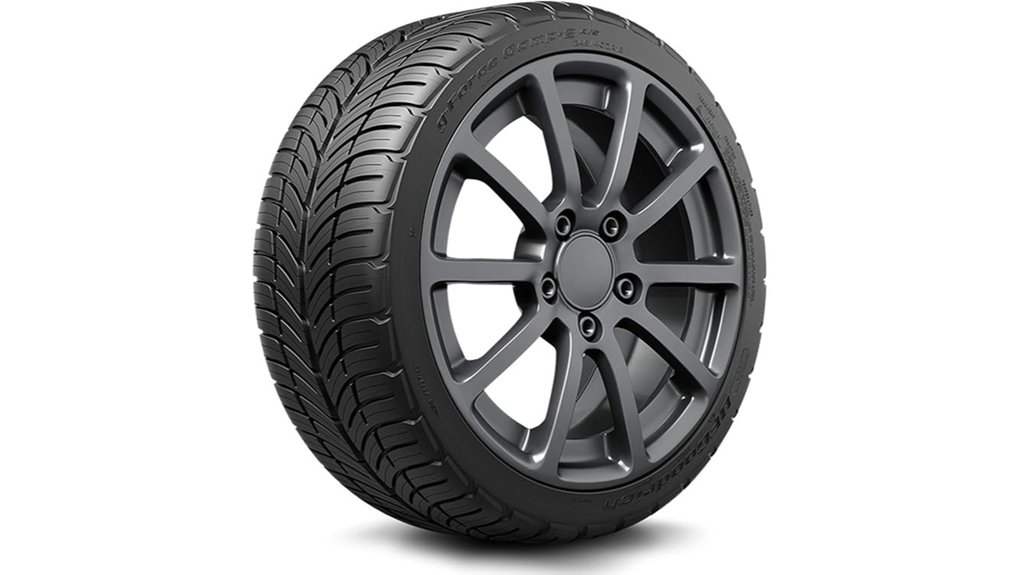
The BFGoodrich G-Force Comp-2 A/S Plus suits drivers wanting year-round grip with performance-focused handling. This ultra-high-performance all-season radial in 225/45ZR17 XL 94W form uses a new-generation compound while retaining its existing tread pattern and sidewall design. The result is stronger lateral grip, sharper cornering, and improved dry-road confidence compared with the previous model. Wet traction also benefits, and braking performance is especially better. With a 45,000-mile limited warranty, it offers a balanced blend of capability and durability for daily driving.
Best For: Drivers who want an ultra-high-performance all-season tire with strong grip, sharper cornering, and dependable wet/dry traction for daily driving.
Pros:
- New-generation compound improves lateral grip and cornering response
- Better wet traction, dry traction, and braking performance than the previous model
- 45,000-mile limited warranty adds solid durability value
Cons:
- Ultra-high-performance focus may trade off some ride comfort
- Not ideal for dedicated winter or severe snow conditions
- Premium performance tires can wear faster under aggressive driving
Factors to Consider When Choosing Performance Tires for Daily Driving
Choosing performance tires for daily driving requires weighing tread life ratings, wet weather grip, noise and comfort, load and speed capacity, and seasonal suitability. A tire that balances these factors can deliver responsive handling without sacrificing everyday usability. The best choice depends on driving conditions, vehicle requirements, and how much comfort or durability matters most.
Tread Life Ratings
Tread life ratings help drivers gauge how long a performance tire is likely to last before noticeable wear sets in, making them a practical way to compare longevity and value. These ratings estimate the mileage a tire can deliver before significant wear occurs, helping buyers judge whether it fits daily use. A higher warranty, often 55,000 miles or more, usually signals stronger durability for routine commuting. Actual life still depends on driving style, road quality, and maintenance such as correct inflation and alignment. Tires with lower tread depth may sharpen response and handling, but they often trade away wear life. Selecting a tire with a stated tread life warranty can also provide reassurance, since the manufacturer is backing its expected mileage over a defined period.
Wet Weather Grip
Wet weather grip is a key factor when comparing performance tires for daily driving, since specialized tread patterns with V-shaped grooves, sipes, and deeper channels help move water away from the contact patch and reduce hydroplaning risk. Tread depth and groove layout also influence how securely a tire bites into wet pavement, improving steering precision and braking confidence. A higher UTQG traction rating, such as 380AA, can signal stronger wet-road capability and more dependable handling in rain. Solid center ribs add stability by maintaining a consistent footprint on the road surface. Proper inflation matters as well, because under-inflated tires flex more and can lose contact efficiency. Together, these traits help performance tires remain controlled and predictable in adverse weather.
Noise And Comfort
Beyond wet-road confidence, noise and comfort are major factors in daily-driven performance tires. Many modern performance models use computer-optimized tread layouts to reduce road noise and suppress vibration, which helps preserve a calmer cabin on long commutes. Asymmetrical and V-shaped patterns often balance grip with quieter operation, allowing strong handling without harshness. Premium rubber compounds and refined construction methods can further soften impacts and limit the drone that sometimes accompanies aggressive tires. Some models also add dedicated noise-reduction features to improve everyday refinement. Tire weight and overall design influence the ride as well; lighter options tend to feel more responsive, while heavier builds may absorb more road texture and mute sound. For daily driving, comfort should complement performance, not compete with it.
Load And Speed
Load index and speed rating are critical specifications when selecting performance tires for daily driving. The load index shows how much weight a tire can safely support, with higher numbers carrying more capacity; for example, 91 supports 1,356 lbs, while 100 supports 1,764 lbs. Speed ratings indicate the maximum safe speed, such as V at 149 mph and W at 168 mph. Matching both ratings to the vehicle’s requirements helps preserve handling, stability, and overall performance. For performance-oriented vehicles, choosing tires with adequate or higher ratings can improve confidence under load and at speed. Exceeding a tire’s rated capacity is unwise, as it can accelerate wear, reduce performance, and increase the risk of tire failure.
Seasonal Suitability
Seasonal suitability is one of the most important factors in choosing performance tires for daily driving, because tire design is closely tied to weather conditions. Performance tires are commonly grouped into all-season, summer, and winter categories, each serving different climates. All-season models, including those with M+S certification, aim to deliver dependable traction in rain and light snow, making them practical for mixed-weather regions. Summer performance tires use specialized tread patterns and rubber compounds to maximize grip in warm temperatures and are best suited to dry roads and spirited driving. Winter tires rely on deeper tread and softer rubber to stay flexible in cold weather, improving control on snow and ice. Matching tire choice to regional conditions supports safer, more consistent performance.
Ride And Handling
Ride and handling are major considerations once the tire has been matched to the local climate, because daily driving still depends on how the tire responds in real-world use. Performance tires often use asymmetrical or V-shaped tread patterns to improve grip on dry pavement and maintain control in wet conditions. Radial construction helps the tire stay stable through cornering and lane changes, giving the vehicle a more composed feel. Load index and speed rating also matter, since they indicate how well the tire can handle weight and sustained highway speeds; the Lexani LXUHP-207, for example, carries a 92 load index and W speed rating. Tire weight affects agility, while noise-reduction features support a quieter, more comfortable commute for regular use.
Frequently Asked Questions
How Often Should Daily-Driven Performance Tires Be Rotated?
They should be rotated every 5,000 to 7,500 miles, or at each oil change, to promote even wear. Aggressive driving, staggered setups, and vehicle-specific recommendations can require shorter or different intervals.
Do Performance Tires Need Different Air Pressures in Winter?
Like a thermometer on a frosty morning, yes—performance tires often need slightly higher pressure in winter because cold air lowers PSI. He should check pressures frequently and follow the vehicle placard, adjusting safely.
Can Performance Tires Improve Fuel Economy in City Driving?
Performance tires can slightly reduce fuel economy in city driving, because softer compounds and wider tread often increase rolling resistance. However, the difference is usually small, and driving habits matter more than tire choice.
Are Performance Tires Noisier Than Touring Tires on Highways?
Yes, performance tires are usually noisier than touring tires on highways because their stiffer compounds and aggressive tread patterns transmit more road noise. Touring tires generally prioritize comfort, making them quieter for long-distance cruising.
How Long Do Daily Driving Performance Tires Usually Last?
Performance tires for daily driving usually last about 20,000 to 40,000 miles. Their softer rubber and aggressive tread wear faster than touring tires, though careful rotation, alignment, and moderate driving can extend service life considerably.
Conclusion
In the end, the best performance tire for daily driving depends on the balance each driver values most. The Fullway HP108, Lexani options, Mastertrack M-TRAC HP, and BFGoodrich G-Force Comp-2 A/S Plus each bring a distinct mix of grip, comfort, and durability. Choosing the right set is like finding the perfect dance partner: the best one moves with the road, responds with confidence, and makes every commute feel smoother and more controlled.