
Front-wheel drive cars can still struggle when winter turns harsh, making tire choice unusually important. In 2027, the strongest options include the Armstrong Ski-Trac PC, Firestone Winterforce 2, and NEXEN Winguard Winspike 3, with snow socks offering a backup in certain situations. Each brings a different balance of grip, control, and practicality. The real question is which one fits the road conditions ahead.
Armstrong Ski-Trac PC 205/55R16 91H SL Winter (Studless) Tire
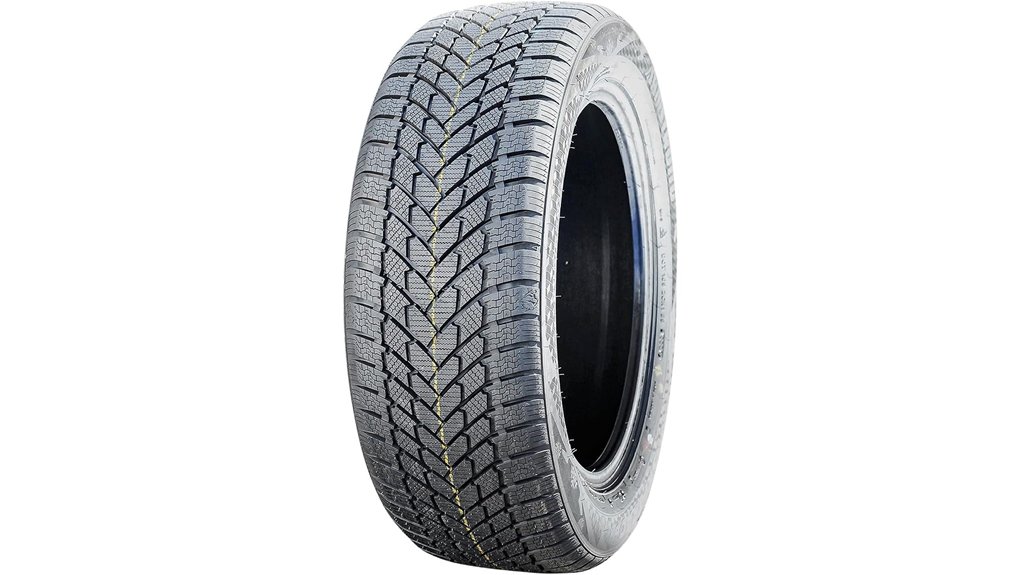
The Armstrong Ski-Trac PC 205/55R16 91H SL is a strong fit for front-wheel-drive drivers who need dependable winter traction without sacrificing everyday road manners. This studless winter tire uses a directional tread, 3D sipes, and four circumferential grooves to improve grip on ice, slush, snow, and wet pavement while helping reduce hydroplaning. Its 91 load index supports 1,356 pounds, and the H speed rating is certified to 130 mph. Built as a 4-ply radial with a standard load, 44 psi maximum, it offers universal fitment and a standard manufacturer warranty.
Best For: Front-wheel-drive drivers seeking a dependable studless winter tire with strong traction on snow, ice, and slush while still maintaining good everyday road comfort.
Pros:
- Directional tread, 3D sipes, and four circumferential grooves help improve grip and reduce hydroplaning in winter conditions.
- 91 load index and H speed rating provide solid everyday performance for a wide range of vehicles.
- Standard load 4-ply radial construction offers a balanced mix of durability and road manners.
Cons:
- Studless design may not match the extreme ice traction of a studded tire in severe conditions.
- Directional tread requires correct mounting and rotation patterns.
- Best suited for winter use, so it is not an all-season replacement.
AutoSock for Passenger Vehicles HP697, Snow Socks for Tires, Pack of 2
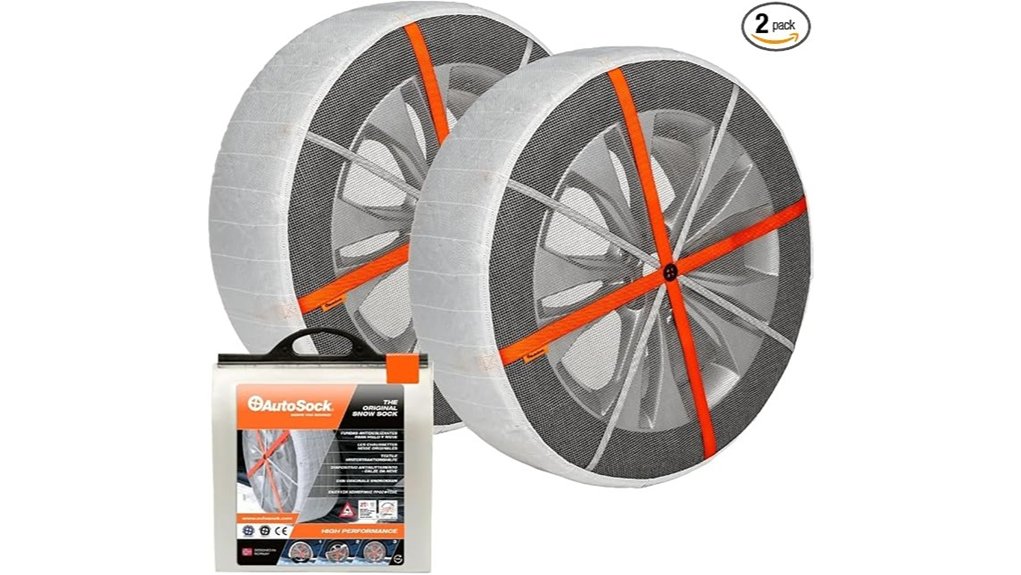
AutoSock HP697 suits front-wheel-drive drivers needing quick winter traction without heavy chains. These snow socks provide added grip on snow and harsh weather, serving as a lightweight alternative to traditional chains. Installation follows a simple three-step process, helping users fit them in minutes. The pack of two is reusable and folds flat for easy storage. HP697 also meets American and European traction laws, supporting road compliance. Its newest-generation design targets reliable performance. Fitment spans many passenger tire sizes, including 195/55 R20 and 265/40 R21, broadening compatibility for winter use.
Best For: Front-wheel-drive passenger vehicle drivers who want a quick, lightweight, and chain-free way to gain winter traction on snowy roads.
Pros:
- Easy 3-step installation that can be done in minutes
- Lightweight, reusable, and folds flat for convenient storage
- Meets American and European traction laws and fits many tire sizes
Cons:
- Best suited for winter traction in snow, not a year-round solution
- Compatibility depends on exact tire size, so fitment must be checked carefully
- May not provide the same durability or traction as traditional chains in extreme conditions
K&K Auto Snow Socks for Tires, XL (2pcs)
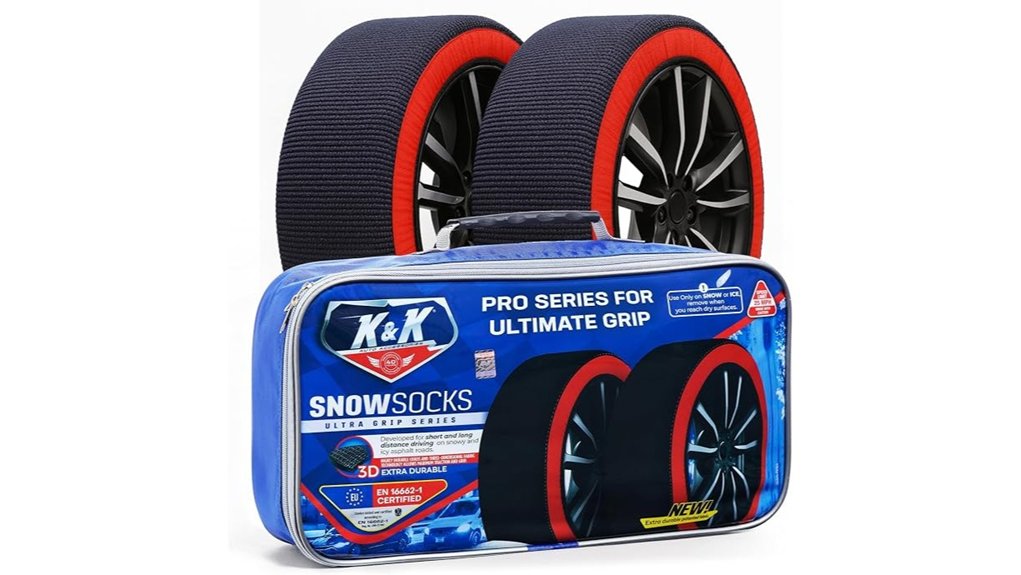
K&K Auto Snow Socks suit drivers needing quick, compact traction for low-clearance vehicles. The Pro Series design serves as an alternative to traditional chains and fits cars, SUVs, vans, pickup trucks, 4WDs, and 4x4s. Installation takes under five minutes, and the package includes gloves, a bag, and instructions. Built with 3D fabric technology and thick cords, it delivers stronger grip than all-season tires, cables, or zip ties. It is washable, reusable, and quiet. Legal approval covers mountain passes and chain checkpoints, but it should be removed on bare pavement and is not a substitute for dedicated snow tires.
Best For: Drivers who need a fast, compact traction solution for cars, SUVs, vans, pickup trucks, 4WDs, or 4x4s, especially in low-clearance vehicles and occasional snowy conditions.
Pros:
- Installs in under 5 minutes and comes with gloves, a bag, and instructions
- Provides better traction than all-season tires, cables, or zip ties
- Washable, reusable, quiet, and approved for many mountain passes and chain checkpoints
Cons:
- Must be removed on bare pavement and is not meant for extended use on dry roads
- Not a replacement for dedicated snow tires in frequent snow conditions
- Requires checking tire size carefully against the size chart before purchase
Snow Socks for Tires, Set of 2 (HPM-70)
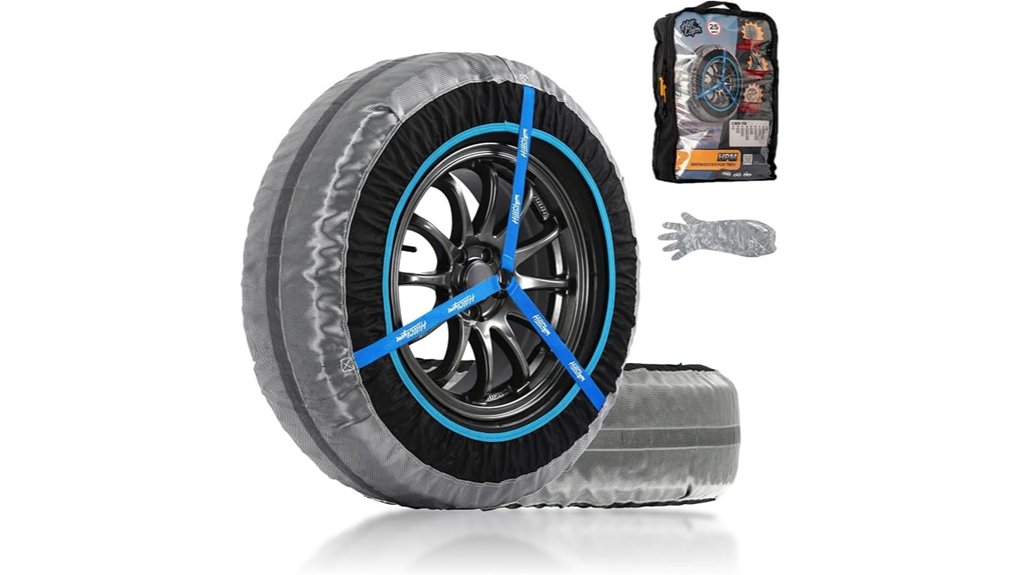
Snow Socks for Tires (HPM-70) suit drivers needing quick winter traction without bulky chains. This set of two elastic tire socks serves as a legal alternative to chains for passenger cars, sedans, and SUVs. Fit depends on sidewall specifications, so the size chart matters for secure placement. Once installed, usually in about five minutes, they provide strong grip for steering and braking on snow. They are compatible with ABS, ASR, ESC, ESP, and TCS, and meet EN 16662-1 standards. Tear-resistant, washable, reusable, compact, and rim-safe, they should be limited to 25 mph.
Best For: Drivers of passenger cars, sedans, and SUVs who want a quick, legal winter traction solution without bulky chains.
Pros:
- Easy to install in about 5 minutes for fast roadside use
- Provides strong grip for improved steering and braking on snow
- Tear-resistant, washable, reusable, compact, and rim-safe
Cons:
- Fit depends on the tire sidewall specs and size chart
- Maximum recommended speed is only 25 mph
- Best suited for snow traction, not heavy-duty off-road conditions
Firestone Winterforce 2 Winter/Snow Passenger Tire 195/65R15 91 S
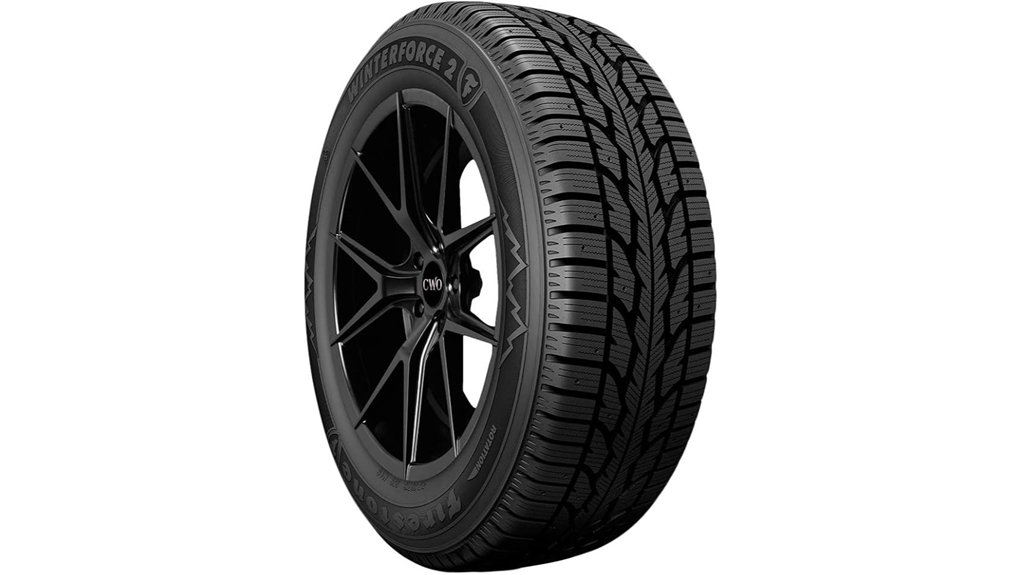
The Firestone Winterforce 2 suits drivers needing dependable winter traction on coupes, sedans, wagons, and minivans. This studdable winter tire uses a directional radial tread in size 195/65R15 with a 15-inch rim, load index 91, and speed rating S. It carries 1,356 pounds, holds up to 44 psi, and measures 25.1 pounds. Bridgestone gives it a 12/32-inch tread depth and a black sidewall. Built for harsh conditions, it emphasizes grip, durability, and value. Warranty details are available through customer service, and many Amazon purchases include a 30-day return guarantee.
Best For: Drivers of coupes, sedans, wagons, and minivans who need a studdable winter tire with dependable cold-weather traction and solid value.
Pros:
- Strong winter grip and traction for harsh snow and icy conditions
- Studdable directional radial tread for added winter performance flexibility
- Good value with durable construction and a standard 30-day Amazon return option
Cons:
- Speed rating S may not suit higher-performance driving needs
- Winter-specific tire, so it’s not ideal for year-round use
- Warranty details require customer service rather than being clearly listed upfront
NEXEN Winguard Winspike 3 Winter Tire – 195/65R15 95T
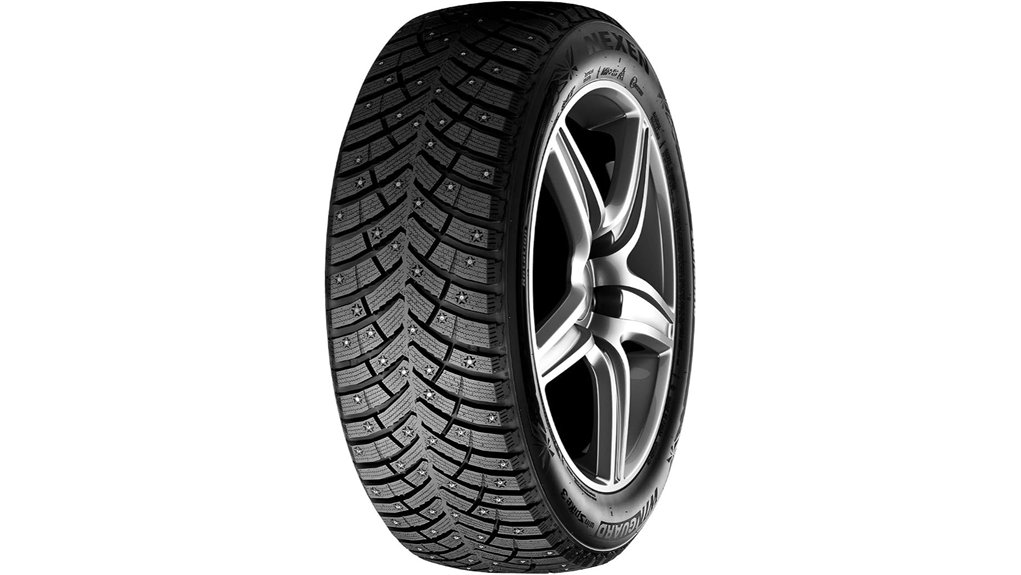
With optional TSMI #12 studs, the NEXEN Winguard Winspike 3 delivers extra bite for drivers facing icy commutes. In 195/65R15 95T sizing, it is aimed at front-wheel drive cars that need dependable winter traction. Its directional tread and deep grooves help move slush and water away from the contact patch, while dense siping adds road bite on packed snow. The tire carries 3PMSF certification for proven snow performance. Nexen backs it with Total Coverage Warranty and 36 months of roadside assistance, adding practical support for winter travel.
Best For: Drivers of front-wheel-drive cars who need dependable winter traction, strong snow and ice performance, and added support for harsh-weather commuting.
Pros:
- Optional TSMI #12 studs provide extra bite on ice and packed snow.
- Directional tread with deep grooves helps evacuate slush and water effectively.
- 3PMSF certification plus warranty coverage and roadside assistance add confidence.
Cons:
- Studs are optional, so maximum ice grip may require additional installation.
- Primarily focused on winter conditions, not ideal for year-round use.
- Best fit for winter traction needs, but may be more than some mild-winter drivers require.
Factors to Consider When Choosing Snow Tires for Front Wheel Drive Cars
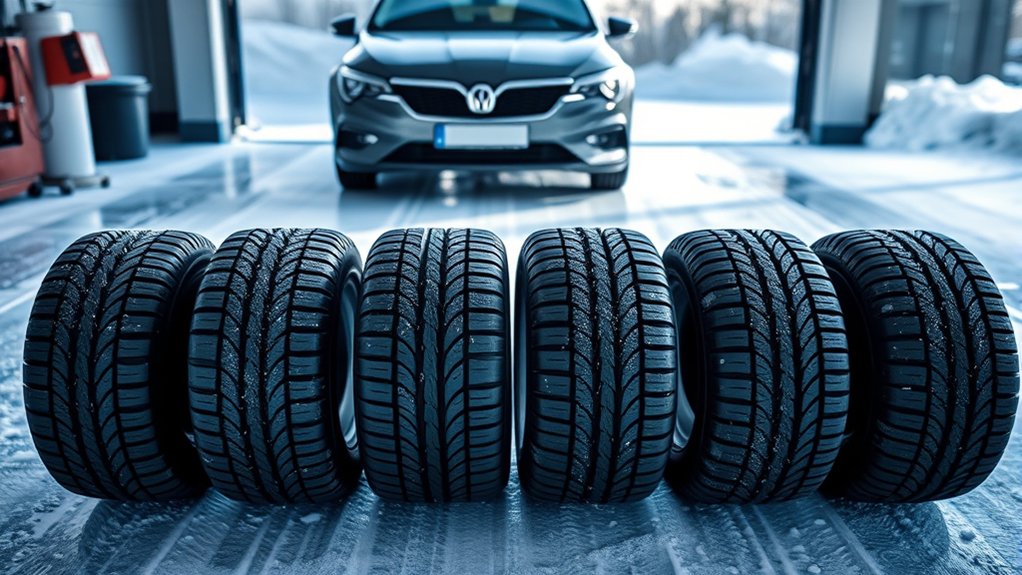
Choosing snow tires for front-wheel drive cars begins with the correct tire size match, since proper fit affects handling and safety. Attention should also be given to tread pattern design, snow traction grip, and the tire’s load and speed ratings to guarantee dependable winter performance. A final decision often comes down to whether studded or studless tires better suit the expected road and weather conditions.
Tire Size Match
A proper tire-size match is essential for front-wheel-drive cars, since winter performance depends on preserving handling, traction, and overall stability on snow and ice. Correct sizing helps maintain traction and predictable steering while reducing the risk of uneven wear or drivetrain stress. Tire size appears as a code such as 205/55R16: the first number is width in millimeters, the second is aspect ratio, and the final number is rim diameter in inches. For front-wheel-drive models, winter tires should generally align with OEM specifications to preserve grip and vehicle balance. The owner’s manual and the driver’s side door placard provide the recommended sizes. Using those references helps guarantee compatibility, safety, and reliable performance in harsh winter conditions.
Tread Pattern Design
Tread pattern design plays a major role once the correct tire size has been selected, because it directly affects how a front-wheel-drive car grips, steers, and stops on snow and ice. Uni-directional patterns are often favored for winter use because they help improve traction and handling on slippery roads. Designs with multiple circumferential grooves can move water, slush, and loose snow away from the contact patch, lowering hydroplaning risk. Deep tread depth and optimized siping let the tire flex around surface irregularities, which supports control on packed snow and ice. Directional patterns with larger tread blocks can add bite and stability during acceleration and braking. Some tread designs are also tuned for certain speed limits, helping preserve traction as conditions and driving speed change.
Snow Traction Grip
Snow traction depends on more than the tire’s size alone, especially for front-wheel-drive cars that rely heavily on the front tires for both steering and propulsion. Snow tires use specialized tread compounds and patterns to bite into ice and packed snow far better than all-season models. Three-dimensional sipes create extra edges, improving cornering control and shortening stopping distances on slick pavement. Deep directional grooves help move slush, water, and loose snow away from the contact patch, preserving grip and reducing hydroplaning. A tread depth near 10/32 inch or greater lets the tire dig into deeper snow while smoothing rough winter roads. Studded options can add traction on hard-packed ice, where permitted, but local rules and driving conditions should guide their use.
Load And Speed Ratings
Load and speed ratings matter as much as tread design when selecting snow tires for a front-wheel-drive car. Load ratings show the maximum weight each tire can safely carry; for example, a 91 load index supports up to 1,356 pounds. That margin helps preserve control, braking, and stability on slick roads. Tires should be matched to the vehicle’s recommended specifications, since underrating can reduce handling quality and raise failure risk, especially when passengers or cargo add weight. Speed ratings are equally important. A tire with an H rating is designed for speeds up to 130 mph, while lower-rated tires may overheat if driven faster than intended. Properly chosen ratings support longer tire life and consistent winter performance.
Studded Vs Studless
When choosing between studded and studless snow tires for a front-wheel-drive car, the key difference is how each handles winter conditions. Studded tires use metal studs to bite into ice, giving superior grip in severe cold and on hard-packed frozen roads. That makes them a strong option for regions with long stretches of glare ice. Studless tires rely on advanced rubber compounds and tread patterns to improve traction on snow, slush, and wet roads. They often perform better in mixed winter weather and usually handle dry pavement more smoothly. Legal rules also matter, since some areas restrict or ban studded tires because of road wear. Studless tires are generally accepted year-round and typically last longer when driven on non-snowy surfaces.
Road Noise Control
Road noise is another important factor to weigh after deciding between studded and studless snow tires for a front-wheel-drive car. Tire tread has a major effect on cabin sound: aggressive patterns often create more noise, while less aggressive designs usually run quieter. Construction materials also matter, since advanced rubber compounds and sound-dampening technologies can lower the rumble felt on paved roads. A higher ply rating may improve toughness, but stiffer sidewalls can increase vibration and sound. Directional tread patterns can help reduce noise by managing airflow around the tire without sacrificing snowy-road grip. Proper maintenance remains important as well. Correct inflation and accurate alignment help tires roll smoothly, limiting unnecessary noise and supporting a calmer winter driving experience.
Wet Slush Evacuation
Wet slush evacuation is a key performance factor for front-wheel-drive snow tires because slush can quickly reduce traction and steering control. Tires that move water and slush away from the contact patch help preserve grip and reduce hydroplaning risk. Four circumferential grooves are especially effective because they create channels for water, snow, and slush to flow outward. A directional tread pattern can further improve evacuation by using angled channels that direct moisture away efficiently while supporting stability. Siping, especially 3D sipes, adds biting edges and increases surface area, which aids traction while still letting slush escape. Tread depth also matters; at least 10/32 inches provides more room for packed snow and slush, improving winter performance in wet conditions.
Warranty Coverage Details
Warranty coverage is another important factor to compare, since snow tire warranties can differ widely by manufacturer and model. Most snow tires include a manufacturer warranty against defects in materials and workmanship, but the length can range from 30 days to several years. Buyers should check whether coverage is tied to mileage limits, because some warranties protect only a set number of miles. A few brands also provide limited roadside assistance, which can add convenience during winter travel. Return or exchange policies may be offered if the tires fail to meet expectations within a defined period. Reviewing these terms helps determine long-term value, especially for drivers who expect heavy seasonal use and want added protection beyond basic performance claims.
Frequently Asked Questions
How Often Should Front-Wheel Drive Snow Tires Be Replaced?
Front-wheel-drive snow tires should be replaced every 4 to 6 years, or sooner if tread falls below 6/32 inch, cracking appears, or traction declines. Regular inspections help determine whether replacement is needed earlier.
Can Snow Socks Replace Winter Tires in Deep Snow?
Snow socks cannot fully replace winter tires in deep snow; they offer short-term traction aid, not durable grip, braking, or sidewall support. A detached assessment would recommend them only as emergency equipment, not a substitute.
Do Studded Tires Work Better Than Studless Tires?
Studded tires usually work better on ice and packed snow, while studless tires often perform better on wet roads, slush, and dry pavement. Their advantage depends on climate, road conditions, and local legality.
Should All Four Tires Be Winter Tires on FWD Cars?
Yes; all four tires should ideally be winter tires on FWD cars. Using only front winter tires can upset balance, reduce cornering grip, and increase spin or oversteer risk. Consistency improves braking, handling, and control.
What Tire Pressure Is Best in Freezing Weather?
In winter’s hush, like a steady metronome, tire pressure should usually match the vehicle placard recommendation, checked cold. Freezing weather lowers pressure; a 1–2 psi rise from that baseline may be warranted, not more.
Conclusion
For front-wheel drive cars, the right winter tire can be the difference between hesitation and confidence when roads turn slick. The Armstrong Ski-Trac PC, Firestone Winterforce 2, and NEXEN Winguard Winspike 3 stand out, while snow socks offer a practical backup. In the end, the best choice is the one that matches climate, budget, and driving needs—because winter does not negotiate, and traction, once lost, is hard to reclaim.