
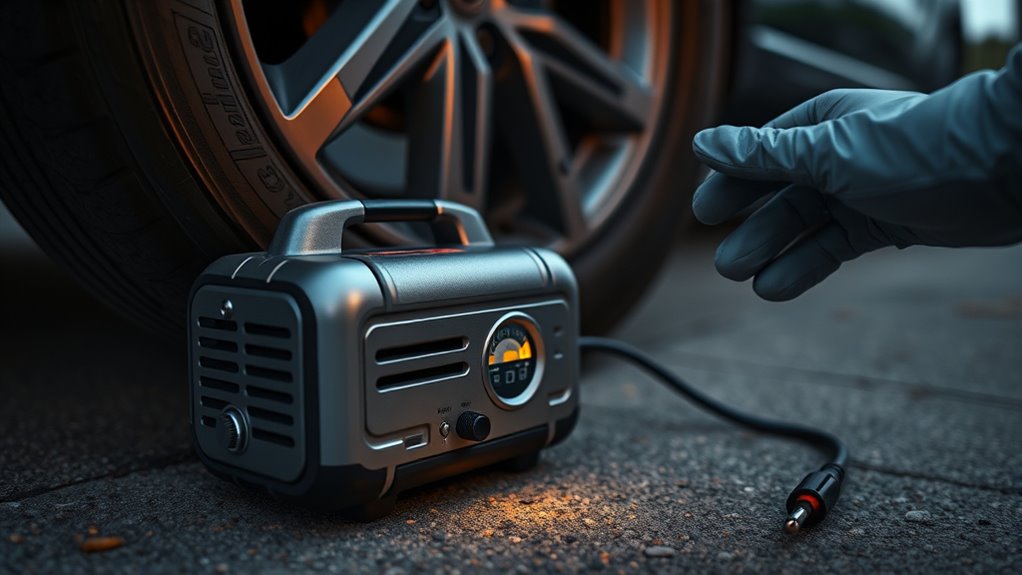
Your tire inflator usually overheats because you’re running it past its duty cycle, blocking airflow, or feeding it low voltage, which makes the motor draw more current and build heat. Watch for hot housing, odd motor noise, shutdowns, or fluctuating PSI. Limit runs to 3–4 minutes, then cool it for 5–7 minutes, longer in heat. Check pressure after cooling, clean vents, and replace it if overheating keeps happening—you’ll see why next.
Key Takeaways
- Tire inflators overheat from continuous use, blocked airflow, high ambient temperatures, low voltage, or exceeding the duty cycle.
- Warning signs include unusual motor noise, frequent shutdowns, excessive housing heat, inconsistent PSI readings, and run times over 3–4 minutes.
- Limit continuous operation to 3–4 minutes, then allow a 5–7 minute cooldown, longer in hot conditions.
- Check vents, filters, hoses, fittings, and power supply; maintain stable voltage and proper ventilation to reduce heat buildup.
- Replace the inflator if it keeps shutting down, loses accuracy, or shows frayed cords, cracked housing, or other visible wear.
Why Is My Tire Inflator Overheating?
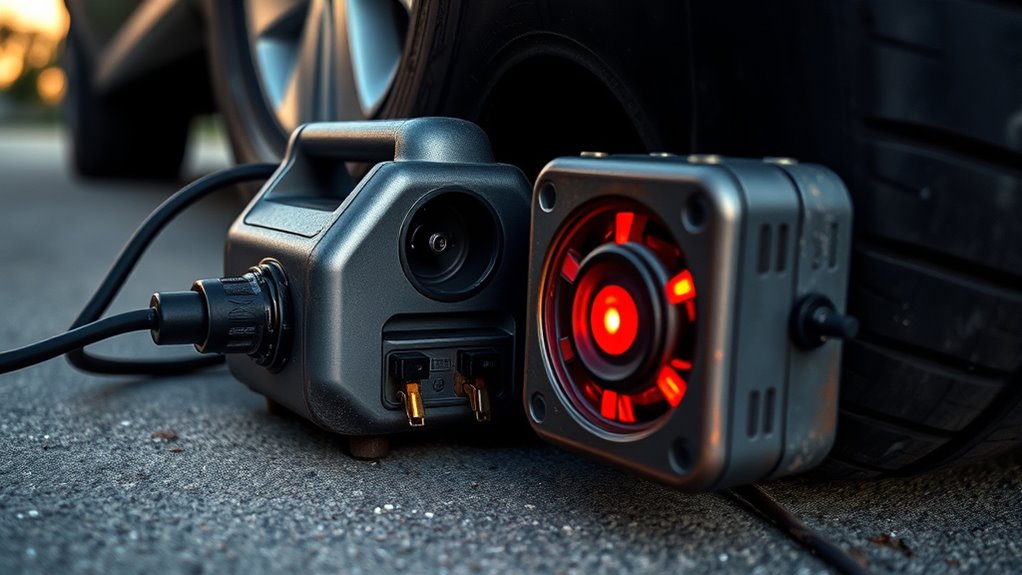
Your tire inflator is likely overheating because it’s working beyond its thermal limits. When you run it continuously without cooldowns, heat accumulates faster than the unit can shed it, and the motor suffers thermal fatigue.
Running it nonstop without cooldowns builds heat faster than it can escape, causing thermal fatigue.
If you inflate several tires back to back, you push the tool past its rated duty cycle, and tire inflator overheating becomes predictable under those operational demands. Hot ambient air worsens the problem by reducing internal cooling efficiency, so the inflator has less margin to recover.
Airflow restrictions also matter: clogged filters, blocked vents, or packed debris force the compressor to draw more power and generate more heat. That extra load drives internal temperatures higher and can trigger thermal cutoffs.
You can prevent this by checking the inflator’s condition regularly, keeping vents clear, and respecting the manufacturer’s cooldown and duty-cycle limits. That discipline keeps your equipment accurate, dependable, and under your control.
What Are the Warning Signs of Overheating?
Once an inflator starts overheating, it usually gives you clear warning signs before it fails.
Listen for unusual motor noises: grinding, whining, or rough vibration often means internal friction or component strain.
Watch for frequent shutdowns during operation; that pattern points to thermal overload, and you need to let it cool.
If the housing feels excessively hot to the touch, stop immediately, because the temperature exceeds safe limits and you risk damage.
Check PSI output too. Inconsistent or fluctuating pressure readings can signal overheating issues, since heat can drift the sensor and distort measurement.
Also track run time. If you’re inflating longer than 3-4 minutes without a cooling period, the unit’s heat load is too high.
These diagnostics help you act early, protect the tool, and keep control instead of letting hidden stress decide the outcome.
What Causes a Tire Inflator to Get Hot?
Tire inflators get hot when they’re forced to run too long, because continuous operation builds cumulative thermal load and can push the motor into thermal fatigue if you don’t let it cool.
You also trigger overheating when you use the unit in high ambient temperatures; the inflator inhales hot air, so its cooling system can’t shed heat efficiently.
Poor ventilation around the housing makes it worse by choking airflow, forcing the compressor to work harder and raise internal temperatures.
If you’re using a 12V inflator with the engine off, voltage drops can increase current draw and heat buildup, especially under load. That’s why running the vehicle usually gives the inflator a steadier supply.
Heat can also skew pressure sensors, causing drift and false readings after the unit cools. You may think the tire is full, but it can still be under-inflated.
Track the thermal causes, not your guesswork, and you keep control.
How Long Can a Tire Inflator Run Safely?
You should run a tire inflator for no more than 3–4 minutes at a time to limit heat buildup and reduce motor stress.
After each session, let it cool for 5–7 minutes, and extend that pause in high ambient temperatures or after inflating two tires back-to-back.
If you notice excess heat, slow output, or sensor drift, stop and verify pressure with a separate gauge after the unit cools.
Safe Run Limits
Most tire inflators are built for short duty cycles, typically 3–4 minutes of continuous run time before they need a 5–7 minute cooldown to avoid overheating. You should treat that limit as a hard diagnostic boundary for each overheated compressor.
| Check | Limit |
|---|---|
| Run time | 3–4 min |
| Cooldown | 5–7 min |
| Hot weather | Extend rest |
| Overrun risk | Thermal stress |
| Specs | Verify model |
If you push past the duty cycle, you can cook internal parts, shorten service life, and skew pressure readings through sensor drift. In high ambient heat, reduce run length further. Check your manufacturer’s specs before every job; your inflator’s safe ceiling isn’t universal. Stay within the numbers, and you keep control, accuracy, and freedom from avoidable failures.
Cooldown Between Uses
Once you’ve stayed within the 3–4 minute run limit, the next check is cooldown between uses.
After you inflate two tires, stop and let the unit rest for 5–7 minutes so the cooling fins can shed heat and the compressor can reset.
If you’re working in high ambient temperatures, extend that pause; heat loads rise, and the cooldown may need to double.
Don’t chain runs together in multi-car prep sessions unless the housing feels normalized.
If you keep hitting thermal cutoff, you’re pushing compressor overheating risk past the safe zone, and the unit needs more recovery time.
After it cools, verify pressure with a separate gauge, because heat can drift the sensor and skew readings.
Signs Of Overheating
Overheating shows up fast in a tire inflator, and the warning signs are usually obvious: unexpected shutoff, slower recovery between inflation sessions, and unusual smells or noises during operation.
If you notice these signs of overheating, stop the unit and let it rest. You should run most inflators no longer than 3-4 minutes at a time, especially when you’re filling two tires back to back.
After each use, give it a mandatory 5-7 minute cooldown so heat can escape. In high ambient temperatures, extend that pause.
Ignore overheating, and sensor drift can skew pressure readings, leaving tires under-inflated after the tool cools.
Watch the machine, trust the data, and keep your inflation routine safe, accurate, and under your control.
How Long Should You Let It Cool Down?
How long should you let it cool down? After compressor overheating, stop the inflator and give it at least 20-30 minutes before you restart it. That pause lowers thermal stress and protects the motor, seals, and bearings from damage.
If you’re working in extreme heat, extend the cool down to 10-15 minutes only when the unit has had a shorter heat spike; otherwise, keep the full rest. Don’t run it continuously. Heat builds cumulatively in portable inflators, so after inflating two tires, take a 5-7 minute break to preserve performance and keep your gear ready for real independence.
Once it’s cool, verify tire pressure with a separate gauge. Overheating can shift the inflator’s sensor and give you a false reading. Use the downtime to inspect hoses, fittings, and vents, then restart only when the case feels near ambient.
Why Does Low Voltage Make an Inflator Hot?
Low voltage makes an inflator run hotter because the motor has to work harder to deliver the same output, which increases current draw, electrical resistance, and friction-related heat. When you feed it low voltage, the compressor overheating risk rises fast: the motor strains, efficiency drops, and insulation ages sooner.
The Arrhenius Rule matters here—each 10°C rise can cut insulation life in half, so heat isn’t harmless.
- Check the supply voltage before inflating.
- Run the vehicle so the system stays stable.
- Stop if the housing feels abnormally hot.
If you’re using the inflator with the engine off, you may be asking it to perform without enough power, and that stress shows up as heat. You can protect the unit by giving it a solid voltage source and avoiding extended low-power operation.
That’s a simple, practical way to keep your equipment cooler, safer, and ready when you need it.
How Does Heat Affect Tire Pressure Readings?
Heat can skew your tire pressure readings, and a hot inflator can drift at the sensor and report a false high value.
As the tire and air warm during inflation, you’ll see a temporary pressure increase that can mask true under-inflation.
Let the tire cool, then recheck cold to confirm the actual pressure.
Heat Sensor Drift
As temperatures climb during inflation, tire pressure sensors can drift and report falsely high readings, even though the tire may actually be underinflated once everything cools back down. You’re seeing heat and temperature push the sensor off spec, not proof of proper pressure.
High heat can also stress electronics, so readings get less trustworthy as run time grows.
- Limit continuous inflation when the unit feels hot.
- Let the inflator cool before retesting.
- Verify final pressure with a separate gauge.
The Arrhenius Rule warns that every 10°C rise can cut insulation life in half, so repeated hot cycles erode reliability.
Treat the inflator like a tool, not an authority: confirm the result, trust your diagnosis, and keep control over the system.
Temporary Pressure Inflation
When you inflate a tire, the trapped air warms and expands, so the pressure can read about 1 PSI higher for every 10°F rise. That temporary jump isn’t a true gain in fill; it’s a heat effect from inflation and ambient air temperature.
If you check pressure right after pumping, overheating can push the gauge and sensors above the tire’s actual cold value. You may think you’ve hit target pressure when you haven’t, or you may bleed off air you still need.
To stay accurate, treat hot readings as provisional. Verify with a separate gauge once the tire has stabilized. This simple diagnostic step keeps you from chasing false numbers and gives you control over under- or over-inflation.
Cool-Down Recheck Method
If you check tire pressure immediately after inflating, the air is still hot and expanded, so the reading can run about 1 PSI high for every 10°F increase in temperature.
Use a cool-down recheck: let the tire sit 20-30 minutes, then measure again. This pause lets heat dissipate and pressure stabilize.
- Watch for overheating during inflation; sensor drift can fake a high reading.
- Recheck with a separate gauge after cooling to confirm the true pressure.
- In hot weather, extend the cool-down to protect inflators and keep readings honest.
If the cooled reading drops, you may have overfilled based on heat, not real pressure.
Trust the post-cool check, not the rushed one. That’s how you keep control, avoid under-inflation, and free your gear from heat distortion.
How Do You Fix an Overheating Tire Inflator?
To fix an overheating tire inflator, start by reducing duty cycle: run it for no more than 3–4 minutes per two tires, then let it cool for 5–7 minutes to prevent thermal fatigue.
If your air compressor still runs hot, clear the area around it and remove dust or debris from vents so airflow stays open.
Next, inspect the intake filter; wash or replace it if clogged, because restricted intake forces the motor to work harder and raises heat.
Check ambient conditions too: if you’re inflating in high heat, move the unit to a cooler spot or wait for a lower temperature.
After the inflator cools, verify tire pressure with a separate gauge, since overheating can drift the sensor and give false readings.
Then resume inflation only if the unit feels normal.
If it overheats again immediately, stop use and inspect for internal damage.
How Can You Prevent Tire Inflator Overheating?
Keep your tire inflator from overheating by running it in short bursts: limit continuous use to 3–4 minutes, then let it cool for 5–7 minutes before restarting. This cycle preserves the motor, cuts heat buildup, and keeps tire inflator overheating in check.
- Guarantee proper ventilation; use the unit in open air and avoid hot ambient conditions.
- Clean or replace clogged filters so airflow stays unrestricted and internal temperatures stay lower.
- Check oil levels if your model uses oil, and keep lubrication adequate to reduce friction.
After inflation, verify pressure with a separate gauge. Heat can shift sensor output, so trust a second reading before you drive away.
Watch for slow performance, rising case temperature, or frequent shutoffs; those signs mean you need more cooling time.
With disciplined use and maintenance, you keep control, protect the tool, and stay free from avoidable failure.
When Should You Replace a Tire Inflator?
You should replace your tire inflator if it hits frequent thermal cutoffs, since repeated shutdowns point to internal wear or insufficient duty cycle.
After it cools, check whether it still reaches and holds the target pressure accurately; if it doesn’t, the unit’s performance has degraded.
Age, visible wear, and a declining duty cycle all support replacement before reliability drops further.
Frequent Thermal Cutoffs
Frequent thermal cutoffs usually mean the inflator’s motor is overheating, which can reduce efficiency and, if ignored, lead to premature failure. When you see repeated thermal cutoffs, stop pushing beyond the 3-4 minute duty cycle; thermal fatigue builds fast.
- Let it cool 5-7 minutes after each run.
- Check hoses for cracks, leaks, or heat damage.
- Sniff for burnt odor and inspect for wear.
If the unit still shuts down regularly after you follow the recommended cycle, the problem likely isn’t user error. At that point, replacement is the safer move for reliable, self-directed work.
You don’t need a tool that keeps dropping out under normal use. Frequent overheating and thermal cutoffs are diagnostic signs, not quirks, and they often point to a motor nearing the end of its service life.
Accuracy After Cooling
After an inflator cools, always recheck tire pressure with a separate gauge, because overheating can cause sensor drift and false high-pressure readings. If the second reading disagrees, trust the gauge, not the inflator.
Watch for accuracy loss after cooling: a unit that recovers poorly, overshoots, or stalls may have internal degradation. Repeated overheating can also signal that the inflator’s controls or pump can’t hold stable output. You shouldn’t ignore frequent thermal shutoffs, because they often point to failing components and unreliable inflation.
Keep monitoring temperature and pressure during use, and compare results over time. When performance drops sharply after cooldown, replace the inflator. A dependable tool should restore precise pressure, not leave you guessing.
Age, Wear, And Duty Cycle
Once an inflator starts losing accuracy after cooldown, age and wear often become the next suspect. If your unit is old, check its age and duty cycle history before trusting it again.
Most inflators need 3-4 minutes of work, then 5-7 minutes of rest; pushing past that burns in thermal fatigue.
- Inspect frayed cords, cracked housing, and loose fittings.
- Watch for repeated thermal cutoff during normal use.
- Replace the unit if pressure drift persists after cooling.
Older inflators often lose efficiency, run hotter, and deliver less stable pressure. You don’t need to accept that decline.
Track use, respect the duty cycle, and retire a tired compressor before it fails on the road.
Frequently Asked Questions
What Are the Common Problems With Auto Air Tire Inflators?
You’ll usually see air loss, weak inflator efficiency, overheating, and pressure inaccuracy.
You may also notice poor hose or chuck seals, noisy motors, slow fill rates, and short duty-cycle limits that cut runtime. These faults can leave you with underinflated tires, so you should verify readings with a separate gauge.
For solid tire maintenance, inspect connections, let the unit cool, and replace worn parts before failure spreads.
How to Stop an Air Compressor From Overheating?
You can keep your compressor from getting a bit warm-under-the-collar by improving cooling methods and tightening compressor maintenance.
Check oil often, replace dirty filters, and clear debris around the unit for airflow. Clean cooling fins and coils so heat escapes efficiently.
Don’t exceed the duty cycle; give it a 20–30 minute rest after long runs. If temperatures rise again, diagnose ventilation, load, and wear before you push harder.
Why Does a Tire Inflator Get Hot?
Your tire inflator gets hot because the tire inflator uses an electric motor that converts energy into compression, and heat generation is unavoidable.
When you run it continuously, friction and electrical load build heat fast. Hot ambient air, restricted airflow, or back-to-back tire fills raise temperatures further.
You’ll also stress bearings, seals, and sensors, so the unit can’t shed heat efficiently and overheats sooner.
What Are Some Common Problems With Tire Air Pumps?
You’ll often see weak pressure, slow fill rates, and overheating in tire air pumps.
You may also notice clogged filters, leaking hoses, worn seals, or degraded oil in lubricated units, all of which cut air pump efficiency.
If you skip tire maintenance, the motor strains, draws excess current, and can fail early.
You should check ventilation, duty cycle, and PSI accuracy, then clean, lubricate, and replace damaged parts promptly.
Conclusion
If your tire inflator runs hot, treat it like a marathon runner gasping at the finish line. You should stop it, let it cool, and inspect airflow, duty cycle, voltage, and hose restrictions. Persistent heat usually points to overload, blockage, or motor wear. To prevent repeat failures, inflate in short bursts and follow the manufacturer’s limits. If the unit still overheats after basic checks, replace it before it damages itself or gives false pressure readings.