
You want a reliable non-Tesla EV charger that fits your car, your electrical setup, and your budget. Choosing the right J1772 charger matters because it affects charging speed, installation cost, daily convenience, and long-term safety.
This guide helps you compare real home and portable charging options so you can pick a charger that works with the outlet or circuit you already have, or the circuit you are willing to add.
Affiliate disclosure: This roundup is reader-supported. When you click through Amazon links, we may earn a referral commission on qualifying purchases at no extra cost to you.
Quick Verdict
Best overall: Choose the EVIQO 48A if you want the fastest permanent home setup and you have a suitable circuit for professional hardwired installation.
Best plug-in value: Choose the EVIQO 40A if you already have, or plan to add, a NEMA 14-50 outlet and want strong Level 2 speed without hardwiring.
Best for existing dryer outlets: Choose the EVDANCE 24A 14-30 or 10-30 version only after confirming your exact outlet type, wiring condition, and safe charging amperage with an electrician.
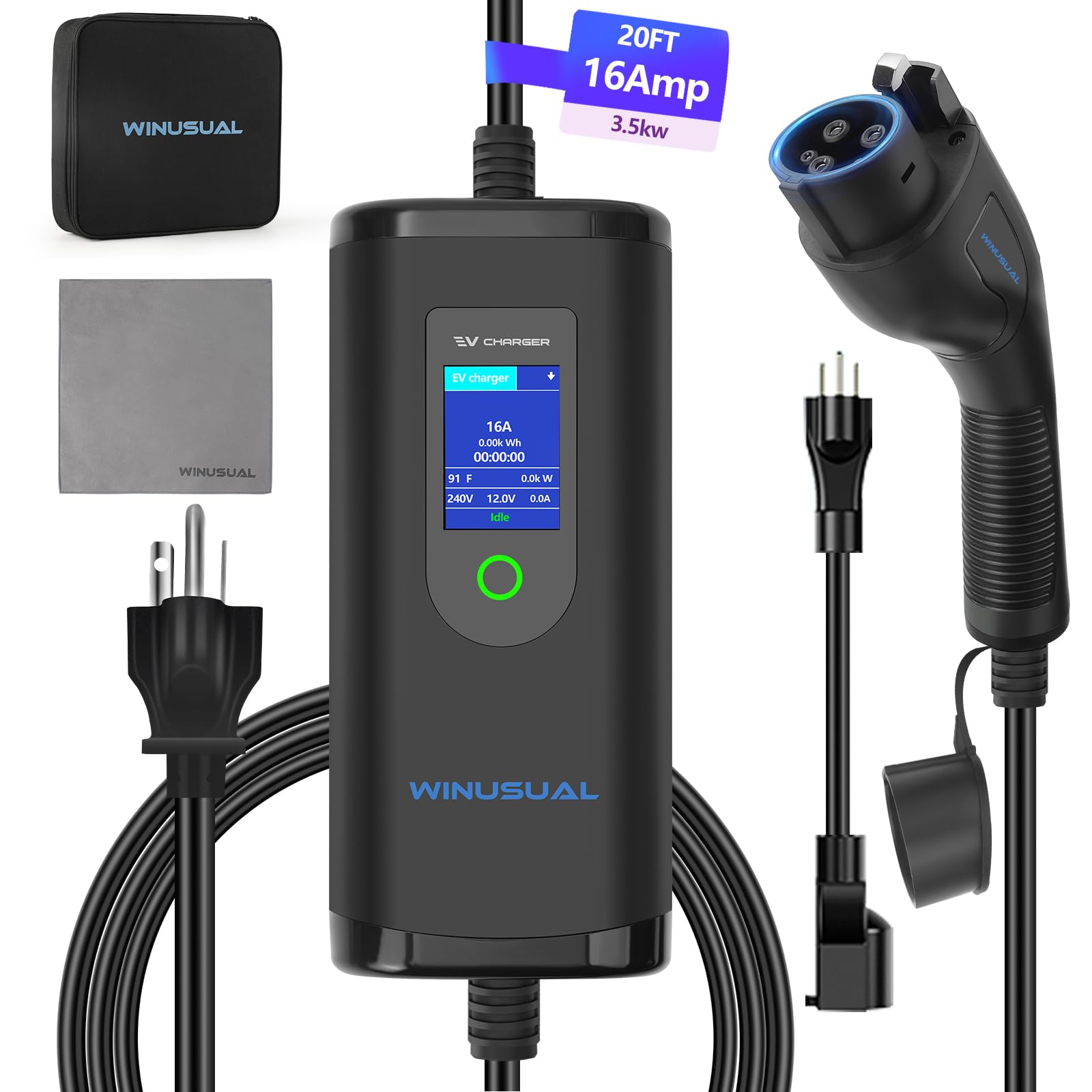
Best portable backup: Choose the WINUSUAL 16A if you want a compact J1772 charger for slower daily charging, travel, work, or emergency use.
Top Picks
|
Category |
Product |
Score |
|---|---|---|
|
🏆 Best Overall |
95/100 |
|
|
💼 Best Plug-In Value |
92/100 |
|
|
🔌 Best Dryer Outlet Match |
83/100 |
|
|
🔧 Best Older Outlet Option |
82/100 |
|
|
🚗 Best Portable |
76/100 |
How We Picked
You need a charger that fits your car and your home, so we prioritized SAE J1772 compatibility for non-Tesla EVs, clear plug options, common home circuits, and realistic charging speed. Power delivery and adjustable amperage matter because they affect overnight charging time and the amount of electrical work your home may need.
Installation type was also important. A hardwired 48A charger suits a permanent daily-use setup, a NEMA 14-50 plug-in unit suits many garages, and 14-30 or 10-30 models can make sense only when the outlet and circuit are confirmed safe for EV charging.
We also weighed cable length, weather resistance, listed safety certifications, smart scheduling, portability, and buyer-friendly value. We avoided exact prices, discounts, review counts, and availability claims because those can change quickly on Amazon.
Before You Buy
|
Check This First |
Why It Matters |
|---|---|
|
Connector Type |
Most non-Tesla EVs with AC home charging use J1772, while Tesla/NACS vehicles need a different connector or an approved adapter. |
|
Circuit And Breaker Size |
EV charging is a continuous load, so the charger amperage must match the circuit safely. Ask an electrician to confirm breaker size, wire gauge, outlet condition, and local code. |
|
Outlet Style |
Do not assume all dryer outlets are the same. A 14-30, 10-30, 6-20, and 14-50 are different and require the correct charger plug. |
|
Outdoor Use |
If you mount or use the charger outside, look for weather-resistant ratings and keep the outlet, plug, and cable protected from damage. |
|
Cable Reach |
A 25 ft cable helps if your charge port location or parking position changes, but you should still avoid extension cords for EV charging. |
This is the strongest choice in this roundup if you want a fixed home charger for daily driving. It offers up to 11.5 kW output, a long 25 foot cable that reaches most parking spots, and app controls for scheduling and usage tracking.
Because it is hardwired and weatherproof, it is meant to stay mounted in a garage or outdoor location after professional installation. For daily commuting it can shorten overnight top-ups, and for road-trip prep it gives you more charging headroom than lower-amp portable units.
If you want a stable, long-term home charging setup and do not mind electrician installation, this is the most capable non-Tesla option here.
What People Say
Customers commonly highlight the solid build and long cable, and many note that the app and scheduling features make charging fit into their routine. People also mention that the unit runs reliably outside and that a hardwired installation felt like a long-term upgrade over portable options.
Overall Sentiment: Positive

When To Use It
|
Situation |
How It Helps |
|---|---|
|
Daily Commuting |
Reliable overnight charging helps your car start each morning with enough range for everyday trips. |
|
Limited Driveway Space |
The 25 ft cable makes it easier to reach the charge port even when parking position varies. |
|
Outdoor Installation |
IP66/NEMA 4 weatherproofing helps protect the unit from rain and snow when installed correctly. |
|
Shared Home Charging |
App scheduling and adjustable output can help coordinate charging windows among household drivers. |
|
Future EV Upgrades |
Higher amperage gives you headroom if you later buy an EV with a more capable onboard charger. |
Environmental Benefits
|
Impact |
Benefit |
|---|---|
|
More Electric Miles |
Convenient home charging makes it easier to rely on your EV for local driving instead of gasoline trips. |
|
Off-Peak Charging |
Scheduling can shift charging to lower-demand hours when your utility plan or grid mix may be more favorable. |
|
Renewable Energy Use |
Smart scheduling may help align charging with home solar production or cleaner grid periods where available. |
Key Benefits
- Fast Level 2 charging up to 11.5 kW for quicker overnight fills
- 25 ft cable gives flexible parking options without extensions
- Weatherproof IP66/NEMA 4 casing for reliable outdoor mounting
- Smart app lets you schedule, monitor, and control charging
- UL and ETL certifications listed for safer home installation
Who should avoid it: Skip this one if you rent, need a movable charger, or do not have a circuit that can safely support a 48A hardwired unit.
Check Product Details on Amazon
This plug-in Level 2 charger is a practical step up from a 120V trickle charge and works well if you want higher charging speed without committing to hardwiring. The 25 foot cable gives you flexibility in the garage while the app lets you schedule sessions and monitor use.
Install is still an electrical job if you need a new NEMA 14-50 outlet, but the charger itself remains easier to remove or relocate than a hardwired unit. Use it for nightly top-ups, topping off before a weekend trip, or as a reliable home base if you plan to upgrade to a faster EV later.
What People Say
People often mention that installation felt straightforward when handled by an electrician and that the build quality and cable feel robust. The app and scheduling features are commonly praised for adding convenience, and owners note that the charger reliably delivers noticeably faster charge than a standard 120V setup.
Overall Sentiment: Positive

When To Use It
|
Situation |
How It Helps |
|---|---|
|
Switching From 120V |
Gives you much faster nightly charging so your car is ready each morning without relying on slow trickle charging. |
|
Renters Or Temporary Setups |
A plug-in NEMA 14-50 format can be easier to remove if you move, as long as the outlet is approved for the load. |
|
Irregular Parking |
The 25 ft cable lets you reach the charge port even when you do not park perfectly aligned every time. |
|
Shared Household |
App scheduling helps coordinate charging windows so multiple drivers can share a single outlet more predictably. |
Environmental Benefits
|
Impact |
Benefit |
|---|---|
|
More Electric Driving |
Faster home charging supports more EV use for local trips and commuting. |
|
Off-Peak Charging |
Scheduling lets you charge during lower-demand hours when your utility plan or local grid mix may be more favorable. |
|
Better Renewable Use |
Smart scheduling can help you match charging to times when home solar or greener grid supply is available. |
Key Benefits
- Higher charging speed than Level 1 for faster overnight fills
- NEMA 14-50 plug-in design avoids immediate hardwiring
- 25 ft cable covers awkward parking spots
- WiFi app for scheduling, monitoring, and basic controls
- IP66 weatherproofing and safety certifications listed for outdoor use
Who should avoid it: Skip it if you only have a standard household outlet, a dryer outlet, or a panel that cannot safely support 40A charging.
Check Product Details on Amazon
This charger is a practical Level 2 step up from a 120V setup, designed to work with a 14-30 dryer-style outlet. It can help you avoid a larger electrical project when a safe, correctly wired 14-30 circuit is already available.
The adjustable amperage makes it more flexible for different circuits, and the long 25 ft cable gives you useful parking reach. It is a solid choice for daily commuting, topping off before a longer drive, or a renter-friendly setup you can move later.
What People Say
Customers often point out how useful the 14-30 plug is when they already have a dryer outlet available, and they appreciate the adjustable amperage that adapts to different wiring. Many mention the long cable and solid feel, and that getting overnight Level 2 speeds without rewiring felt like a practical win.
Overall Sentiment: Positive

When To Use It
|
Situation |
How It Helps |
|---|---|
|
14-30 Outlet Available |
Lets you use a matching 240V outlet for Level 2 charging when the circuit is safe and correctly rated. |
|
Renters Or Short-Term Stay |
Plug-in design means you can take the unit with you or move it more easily when your living situation changes. |
|
Tight Garage Space |
The 25 ft cable reduces the need to reposition your car precisely, making everyday charging less fussy. |
|
Upgrading From 120V |
Provides a faster overnight charge so daily range is more reliable without a full charging station install. |
Environmental Benefits
|
Impact |
Benefit |
|---|---|
|
More Electric Miles |
More practical home charging can reduce reliance on gasoline for short local drives. |
|
Off-Peak Charging |
Using the charger overnight can shift load to lower-demand hours where supported by your utility plan. |
|
Supports Clean Energy |
You can time charging to match rooftop solar or lower-carbon grid periods when available. |
Key Benefits
- Works with matching 14-30 dryer outlets when the circuit is safe for EV charging
- Adjustable current (10-24A) fits a variety of circuits
- 25 ft cable lets you reach awkwardly parked cars
- UL listing and sturdy build for everyday use
- Simple plug-and-play setup after outlet compatibility is confirmed
Who should avoid it: Skip this model if you do not have a true NEMA 14-30 outlet or if the circuit condition is unknown.
Check Product Details on Amazon
This unit is a straightforward way to get Level 2 charging from a NEMA 10-30 style outlet, which may be useful in older garages or laundry areas. Because 10-30 outlets can involve older wiring arrangements, confirm the receptacle, wiring, breaker, and grounding situation before using it for EV charging.
The adjustable current makes it flexible for different circuits, and the long 25 foot cable eases parking alignment issues. It is practical for nightly top-ups, weekend trips when you need a quicker turnaround, or renters who want a movable plug-in option.
If you want a no-frills upgrade from 120V charging and your electrician confirms the outlet is suitable, this charger fits that role well.
What People Say
Owners frequently note that the plug-in convenience is a major plus when their garage already has a compatible outlet, and many appreciate the adjustable current for matching different wiring. People also mention the long cable and solid build as helpful for everyday use, though some remind others to double-check outlet type before ordering.
Overall Sentiment: Positive

When To Use It
|
Situation |
How It Helps |
|---|---|
|
Existing 10-30 Outlet |
Lets you use a matching outlet for Level 2 charging only after the circuit has been checked for safe EV use. |
|
Renting Or Moving Soon |
Plug-in design means you can take the charger with you or reinstall it more easily in a new place. |
|
Tight Parking Spots |
The 25 ft cable gives flexibility so you do not have to shuffle the car into a perfect spot every time. |
|
Upgrading From 120V |
Provides faster overnight charging so daily driving is less constrained by range. |
Environmental Benefits
|
Impact |
Benefit |
|---|---|
|
More Electric Miles |
Faster at-home charging supports more EV driving for short local trips. |
|
Off-Peak Charging |
Using the charger overnight can shift demand to lower-load hours where supported by your utility plan. |
|
Better Renewable Use |
Manual timing can help you charge when rooftop solar or lower-carbon grid energy is available. |
Key Benefits
- Uses matching 10-30 dryer-style outlets when wiring is confirmed safe
- Adjustable amperage (10-24A) for compatibility with varied circuits
- 25 ft cable reduces the need to park perfectly each time
- UL listing and sturdy construction for everyday reliability
- Simple plug-in format makes it easier to relocate if you move
Who should avoid it: Skip this model if your outlet is not a true 10-30, if the wiring is old or unverified, or if local code requires a different installation approach.
Check Product Details on Amazon
This compact portable charger is a solid everyday tool if you want more flexibility than the car’s stock cable. It works on compatible 120V and 240V outlets, so you can charge at home, at work, or at a friend’s place without installing a fixed wall box.
The included adapter and wall bracket make storage and setup easy, and the modest 16A output can be more useful than a basic 12A cord while staying simple to use. Use it for nightly top-ups, occasional longer drives when public chargers are scarce, or as a backup until you install a dedicated Level 2 station.
What People Say
Owners commonly appreciate how easy this unit is to carry and use, noting the convenience of the included adapters and bracket. Many report faster charging compared with the stock 120V cable, making it useful for daily top-ups or as a workplace backup. A few users remind others that a 16A portable unit will not match a fixed high-amp Level 2 station for full-speed charging.
Overall Sentiment: Positive

When To Use It
|
Situation |
How It Helps |
|---|---|
|
Short Daily Commutes |
Gives you extra range overnight or during the day without installing permanent hardware. |
|
Workplace Charging |
Plug into compatible 120V or 240V outlets at work to avoid crowded public chargers and maintain a steady daily charge. |
|
Travel Or Visits |
Take it along to use at compatible outlets when staying with friends or at locations without dedicated EV stations. |
|
Temporary Setup |
Acts as a handy interim solution if you plan to install a permanent Level 2 unit later or if you rent and cannot hardwire. |
Environmental Benefits
|
Impact |
Benefit |
|---|---|
|
More Electric Miles |
Accessible charging makes it easier to rely on electric driving for daily trips. |
|
Off-Peak Charging |
Using available outlets overnight can shift load to lower-demand hours where your utility supports it. |
|
Supports EV Adoption |
An accessible portable option lowers the barrier to EV ownership when a full home upgrade is not ready yet. |
Key Benefits
- Portable design lets you charge wherever a compatible outlet is available
- Works on 120V and 240V with the correct outlet and adapter setup
- 16A output provides faster charging than many basic 120V cords
- Includes adapters and a storage bracket for tidy setup and transport
- Simple plug-and-play operation for backup and light daily use
Who should avoid it: Skip it if you need maximum overnight charging speed for a large battery EV or a permanent outdoor station.
Check Product Details on Amazon
FAQ
Do I Need A Hardwired Charger?
You do not always need a hardwired unit. A hardwired charger gives a permanent, weatherproof setup and usually supports higher amperage suited for heavy daily use, while a plug-in NEMA 14-50 or portable unit can be easier to remove if you move. Talk with an electrician about your panel capacity and local code to pick the safest option for your home.
How Do I Choose The Right Plug And Amperage?
Start by checking what outlet and circuit you already have and what your car’s onboard charger accepts, then match the charger to that setup. Look for chargers with adjustable amperage if you need flexibility, and follow safe continuous-load sizing so you do not overload the circuit. An electrician can confirm the correct breaker size, wiring, GFCI requirements, and outlet condition.
Will This Work With My Non-Tesla EV?
These remaining picks are aimed at non-Tesla EVs that use the SAE J1772 connector for AC home charging. If your vehicle uses a Tesla/NACS inlet, choose a NACS-compatible charger or a manufacturer-approved adapter instead. Also consider practical features like UL/ETL safety listings, weatherproof ratings such as IP66, cable length, and scheduling or app controls so the charger fits how you actually drive and park.
Can I Use A Dryer Outlet For EV Charging?
Sometimes, but only when the outlet type, breaker, wire gauge, receptacle condition, and charging amperage are correct. A 14-30 and a 10-30 are not interchangeable, and older outlets may need extra review before continuous EV charging. When in doubt, have an electrician inspect the circuit before plugging in an EV charger.
Wrapping Up
If you want the most robust home charging option and you have the circuit to support it, the EVIQO 48A hardwired unit gives the fastest reliable charge in this lineup and strong weatherproofing. If you prefer a high-capacity plug-in that is easier to relocate, the EVIQO 40A with NEMA 14-50 is a strong middle ground that blends power and convenience.
For homes that rely on existing dryer outlets, the two EVDANCE variants provide practical Level 2 charging tailored to 14-30 and 10-30 receptacles, but only after outlet and circuit compatibility are confirmed. If portability and simple plug-and-play are your priorities, the WINUSUAL 16A portable charger keeps things flexible and affordable. Choose the option that matches your car’s connector, your home circuit, and the installation approach you are comfortable with.
| Product Name | Image | Charging Power (Amps) | Voltage (V) | Cable Length (Feet) | Weight (Pounds) | Best For | Amazon |
|---|---|---|---|---|---|---|---|
| EVIQO Level 2 EV Charger 48 Amp |
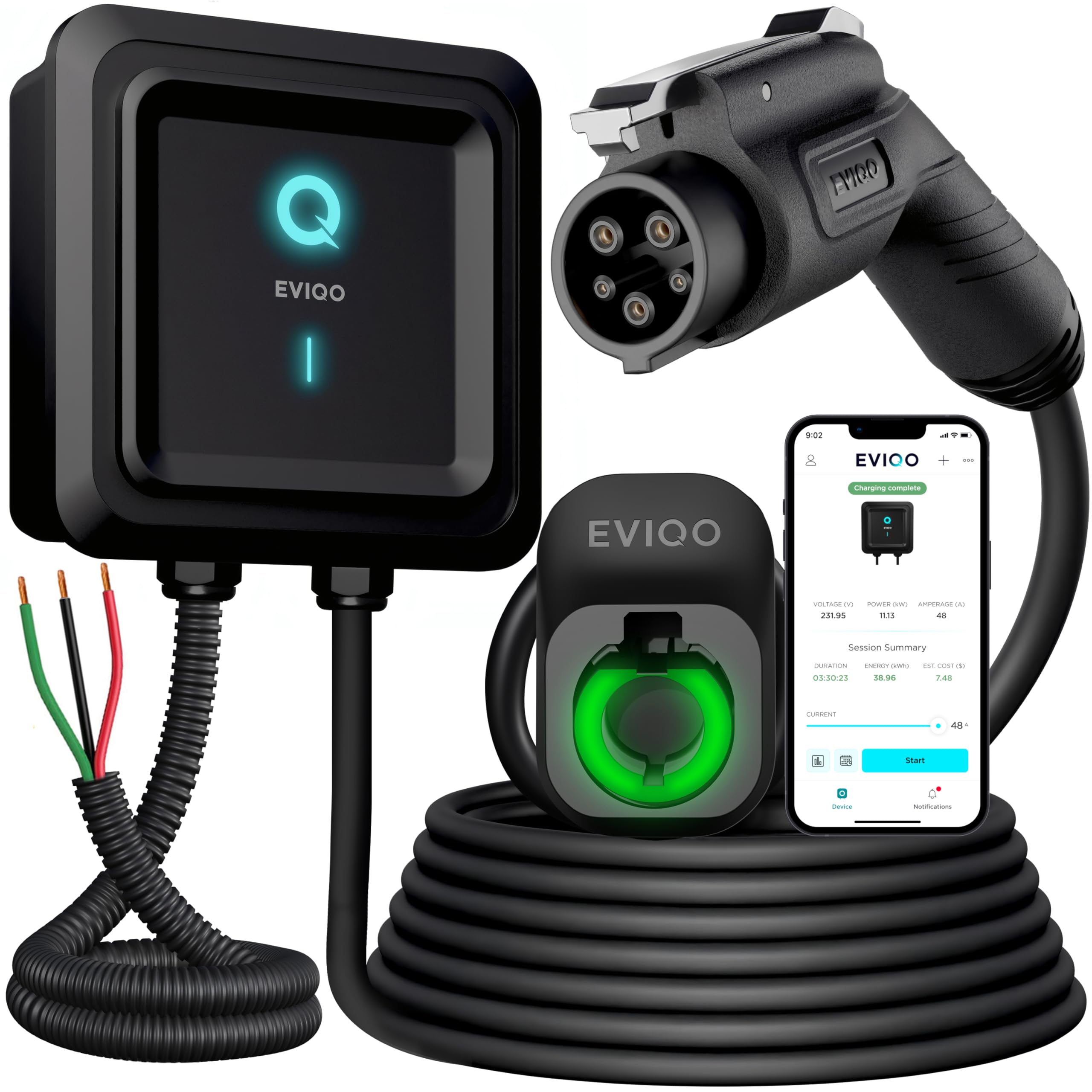 |
48 Amps | 240V | 25 feet | 20.2 lbs | Permanent hardwired home charging | Check Price |
| EVIQO Level 2 EV Charger 40 Amp |
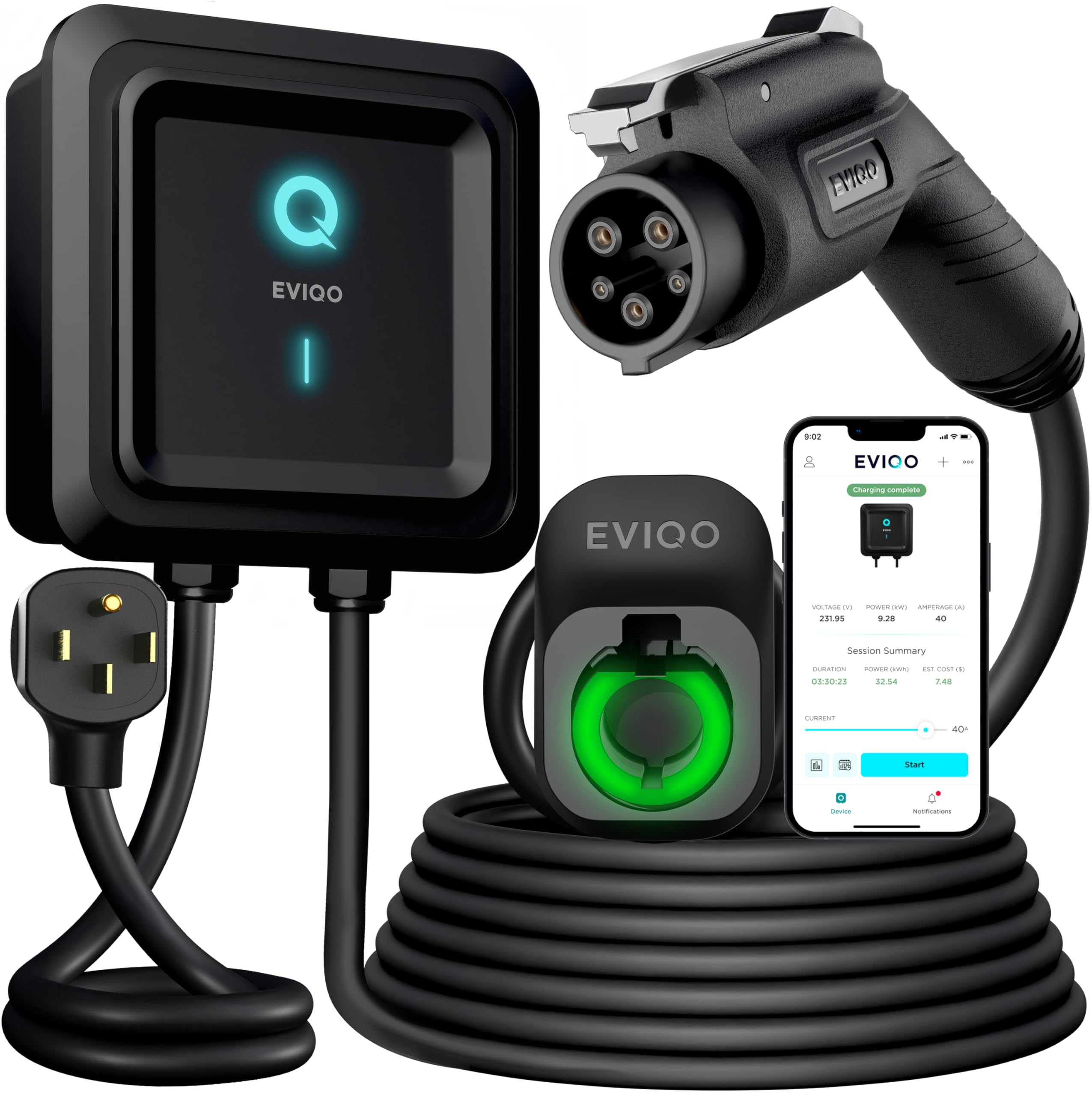 |
40 Amps | 240V | 25 feet | 20.3 lbs | NEMA 14-50 plug-in charging | Check Price |
| EVDANCE Level 2 EV Charger 24 Amp 14-30P |
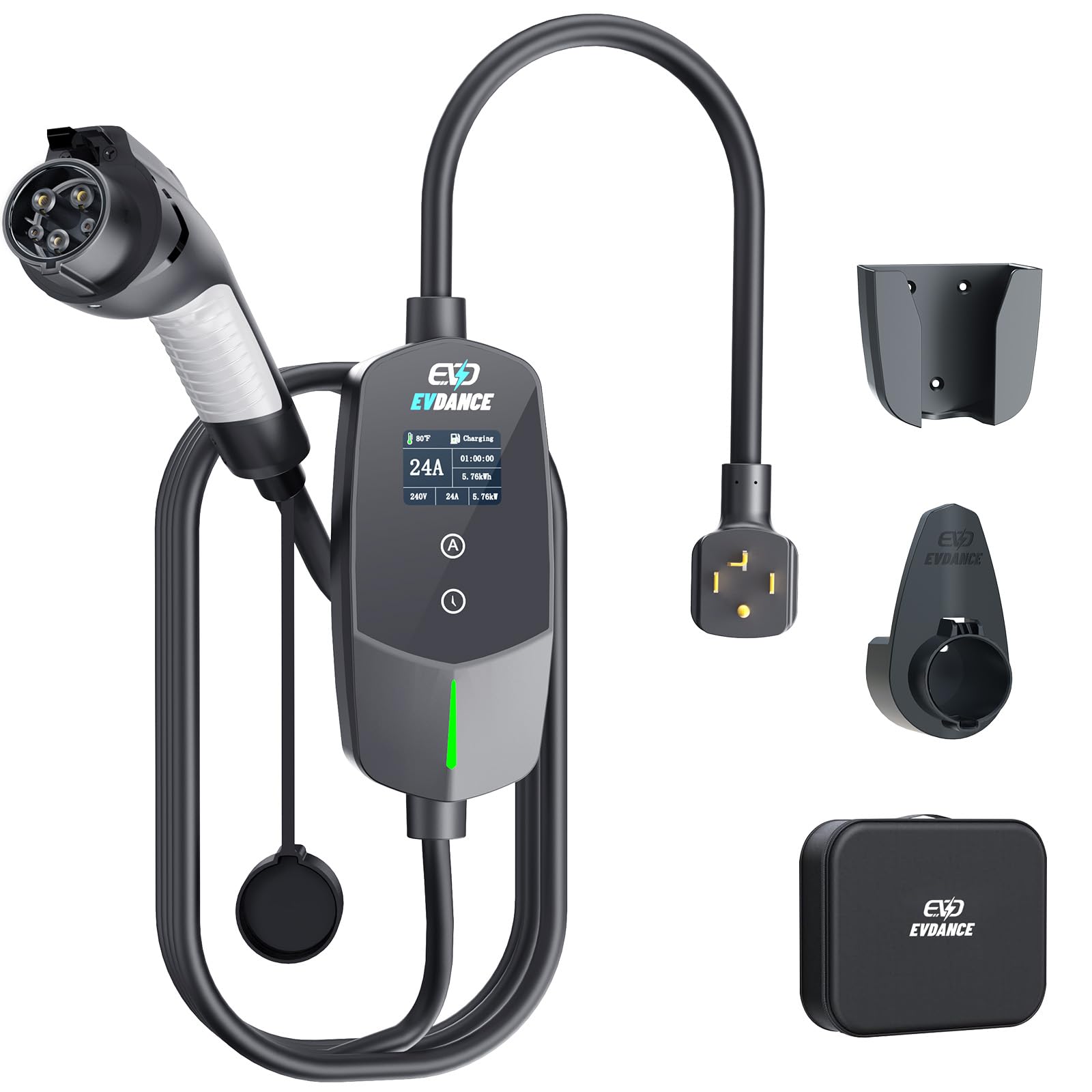 |
24 Amps | 240V | 25 feet | 9.9 lbs | Confirmed 14-30 dryer outlets | Check Price |
| EVDANCE Level 2 EV Charger 24 Amp 10-30P |
 |
24 Amps | 240V | 25 feet | 9.46 lbs | Older 10-30 outlets after inspection | Check Price |
| Portable Level 1 and 2 EV Charger 16A |
 |
16 Amps | 110-240V | 20 feet | N/A | Portable backup and light daily use | Check Price |
This Roundup is reader-supported. When you click through links we may earn a referral commission on qualifying purchases.