Choosing the right spray on wheel cleaner in 2027 is less about branding and more about what the formula can actually handle. Some products cut through heavy brake dust with little effort, while others protect delicate finishes better. The five options below each bring something different to the table, and the differences matter more than they first appear. A closer look shows which one fits polished rims, daily drivers, and tougher cleaning jobs.
Griot’s Garage Heavy-Duty Wheel Cleaner, 35oz
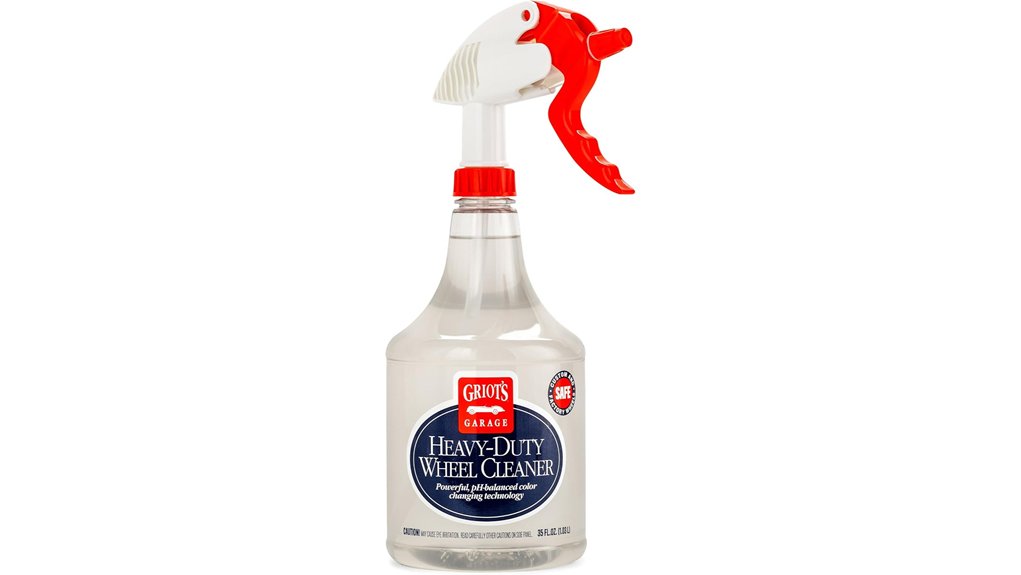
Griot’s Garage Heavy-Duty Wheel Cleaner, 35oz, is a strong choice for drivers who need a spray-on formula that can handle stubborn brake dust without damaging delicate wheel finishes. The pH-balanced, non-acidic, and non-caustic cleaner is safe for painted, chromed, uncoated aluminum, powder-coated, and anodized wheels. Its clinging formula helps loosen road grime, while the color-changing action turns deep purple as it reacts with brake dust. After a 3- to 5-minute dwell, gentle agitation and rinsing leave wheels clean. Reformulated for stronger performance, it also has a fresh scent.
Best For: Drivers looking for a powerful, spray-on wheel cleaner that safely removes heavy brake dust and road grime from a wide range of wheel finishes.
Pros:
- Clings to wheels for better dwell time and cleaning action
- Color-changing formula turns deep purple to show brake dust removal
- Safe for painted, chromed, uncoated aluminum, powder-coated, and anodized wheels
Cons:
- Requires a 3- to 5-minute dwell time before rinsing
- May need gentle agitation for heavily soiled wheels
- Fresh scent may still be noticeable during use
Wheely Clean Professional Wheel Cleaner Spray, 16 oz
https://m.media-amazon.com/images/I/61+BI9rz0-L._AC_SX679_.jpg
Wheely Clean is ideal for drivers who want professional-grade shine with minimal effort. DURA-COATING TECHNOLOGY’s 16 oz ready-to-use spray targets stubborn brake dust and road grime, restoring wheels to their original luster with strong gloss enhancement. It works on aluminum, chrome, and clear-coated wheels, while also remaining safe for glass, non-painted, and clear coat surfaces. The application is simple: spray, let it dwell for one to two minutes, scrub, rinse, and air dry. Made in Naples, Florida, it reflects a family-run focus on quality, professional detailing, and biodegradable materials for more environmentally conscious cleaning.
Best For: Drivers and detailing enthusiasts who want a fast, professional-grade wheel cleaner that removes brake dust and grime while boosting shine with minimal effort.
Pros:
- Effectively removes stubborn brake dust and road grime.
- Safe for aluminum, chrome, clear-coated wheels, glass, and non-painted surfaces.
- Easy spray-on application with quick dwell time for convenient cleaning.
Cons:
- Requires scrubbing and rinsing, so it is not a fully no-touch cleaner.
- Best results may require a wheel brush and some manual effort.
- 16 oz size may be limited for frequent or multi-vehicle use.
Chemical Guys, Diablo Brake Dust & Wheel Cleaner Spray for Rims, 2 x 16 oz
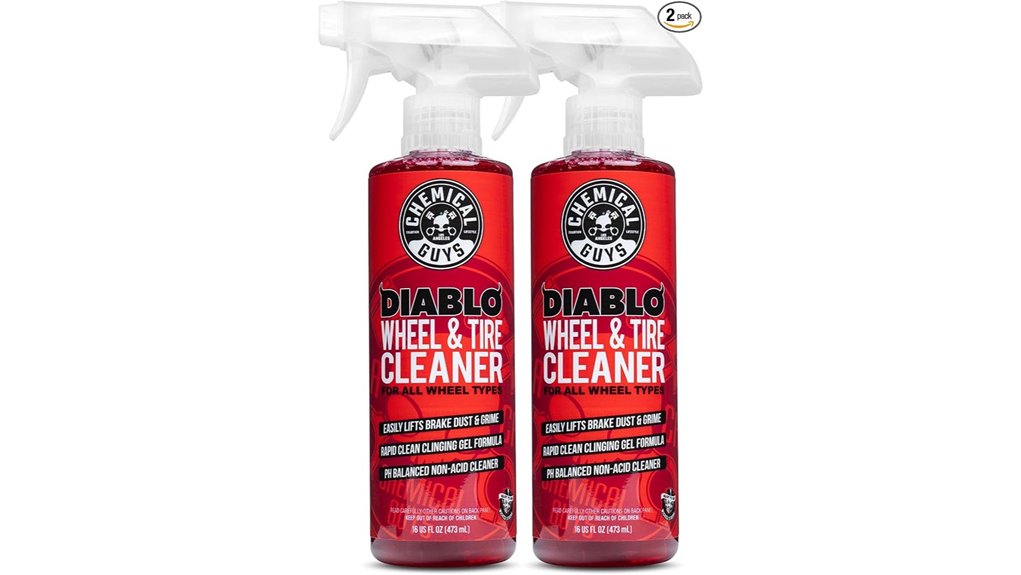
Chemical Guys Diablo Brake Dust & Wheel Cleaner Spray suits drivers who want gentle, effective wheel care. The pH-balanced formula breaks down brake dust, road grime, and dirt while remaining safe on chrome, aluminum, painted, powder-coated, and custom wheels. Its concentrated spray clings to surfaces for strong contact, so minimal scrubbing is needed. The two 16-ounce bottles work well on cars, trucks, SUVs, RVs, and motorcycles. Users can spray, let it dwell, then rinse or wipe away residue. It is a practical choice for frequent maintenance without harsh chemicals or finish damage.
Best For: Drivers and detailers looking for a gentle, pH-balanced wheel cleaner that safely removes brake dust and grime from a wide range of wheel finishes with minimal scrubbing.
Pros:
- Safe for chrome, aluminum, painted, powder-coated, and custom wheels
- Clings well to surfaces, helping break down brake dust and road grime effectively
- Easy to use for frequent maintenance on cars, trucks, SUVs, RVs, and motorcycles
Cons:
- May not be strong enough for heavily neglected wheels without extra agitation
- Requires dwell time, so it is not a instant wipe-and-go solution
- The 16 oz bottle size may go quickly if cleaning multiple vehicles regularly
P&S Professional Brake Buster Wheel and Tire Cleaner
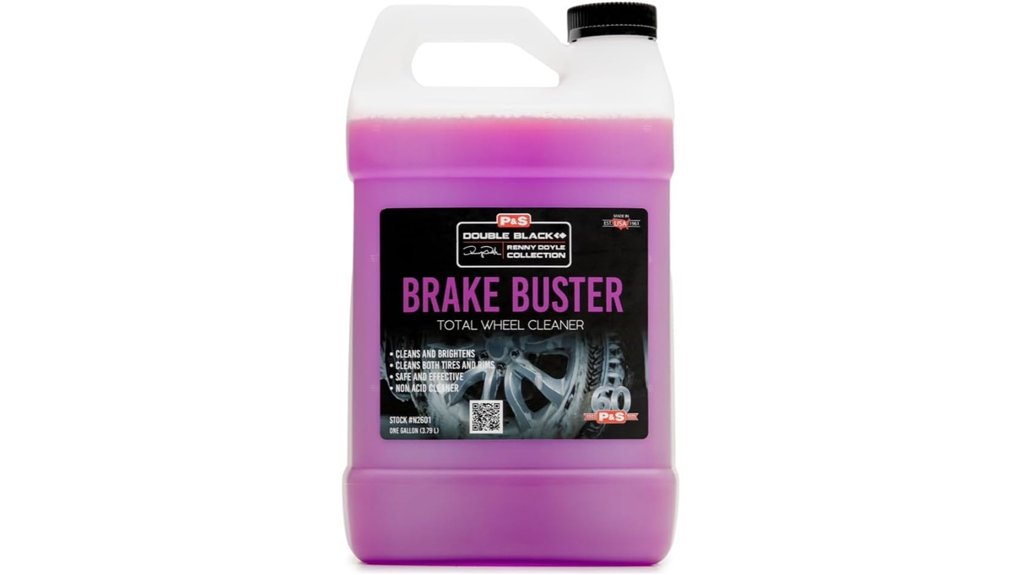
P&S Professional Brake Buster suits drivers wanting a professional-grade cleaner that is safe on every wheel finish. This 1-gallon, non-acid formula targets brake dust, grime, road film, and embedded iron buildup with strong cleaning power. It is compatible with chrome, aluminum, painted, powder-coated, and steel wheels, reducing concern about discoloration or damage. The cleaner may be used straight or diluted in a foam sprayer, where its clinging foam reaches tight areas. It also leaves a protective coating that helps repel future grime, brake dust, and oxidation on daily drivers, off-road vehicles, and show cars.
Best For: Drivers and detailers who want a professional-grade, non-acid wheel and tire cleaner that safely removes heavy brake dust and grime from all wheel finishes.
Pros:
- Safe for chrome, aluminum, painted, powder-coated, and steel wheels
- Strong cleaning power helps remove brake dust, road film, and embedded contaminants
- Can be used straight or in a foam sprayer for better coverage and cling
Cons:
- Large 1-gallon size may be more than casual users need
- May require agitation or multiple passes on heavily soiled wheels
- Foam application can be messier than a simple spray-and-wipe cleaner
Turtle Wax Hybrid Solutions Iron Remover & Wheel Cleaner, 23 oz. (1 Pack)
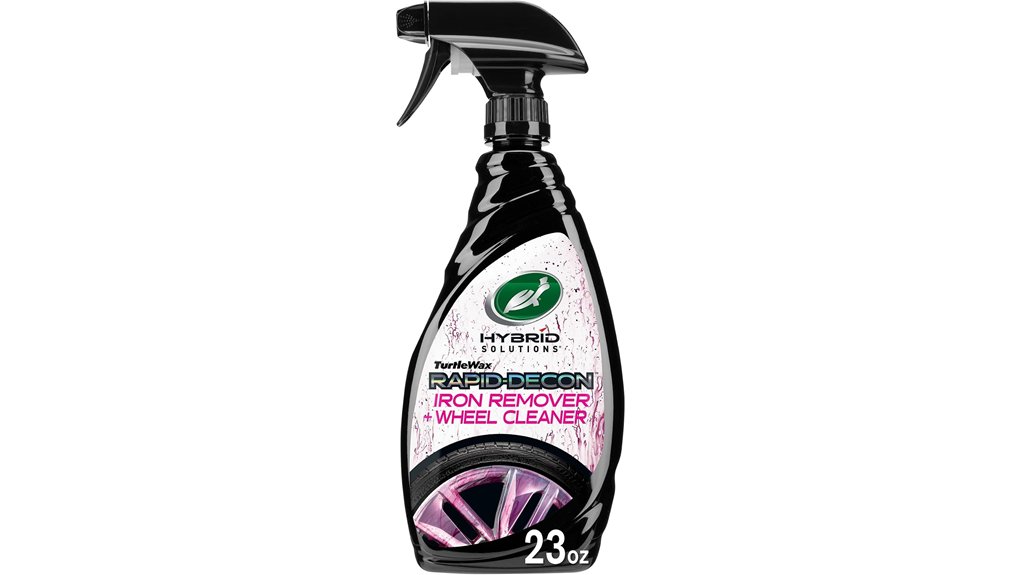
Turtle Wax Hybrid Solutions Iron Remover & Wheel Cleaner is ideal for drivers seeking a deeper, low-scrub clean. The pH-neutral, acid-free formula targets embedded iron particles, brake dust, and road grime while remaining safe for painted surfaces, clear coat, polished metal, chrome, glass, and all wheels. As it reacts with iron or rust, the liquid shifts from clear to purple, offering a clear sign of action. It reduces heavy scrubbing, helps prepare surfaces quickly, and supports better results from waxes, polishes, and coatings. Scent-blocking technology also helps limit harsh chemical odors during use.
Best For: Drivers who want a powerful, low-scrub iron remover and wheel cleaner that safely tackles brake dust, road grime, and embedded contaminants on a variety of exterior surfaces.
Pros:
- pH-neutral and acid-free formula is safe for paint, clear coat, chrome, glass, polished metal, and all wheels.
- Color-changing reaction to purple helps show when it is working on iron and rust.
- Reduces the need for heavy scrubbing and improves prep for waxes, polishes, and coatings.
Cons:
- 23 oz. size may not be enough for frequent or large-area detailing jobs.
- May have a chemical odor despite scent-blocking technology.
- Works best as a decontamination/detailing product, not as a general-purpose car wash replacement.
Factors to Consider When Choosing Spray on Wheel Cleaner
When choosing a spray-on wheel cleaner, compatibility with the wheel finish is essential to avoid damage or discoloration. Its ability to cut through brake dust, along with a safe pH balance, often determines both cleaning strength and surface protection. Dwell time efficiency and spray coverage also matter, since they affect how quickly and evenly the cleaner works.
Wheel Finish Compatibility
Wheel finish compatibility is one of the most important factors when choosing a spray on wheel cleaner, since the wrong formula can damage painted, chrome, uncoated aluminum, powder-coated, or anodized surfaces. A safer choice is typically a non-acidic, pH-balanced formula, because it lowers the risk of corrosion, fading, or discoloration on sensitive materials. Buyers should also review the manufacturer’s recommendations before use, since not every cleaner suits every wheel type. Products labeled for multi-surface applications can offer added flexibility when maintaining mixed wheel setups. Some formulas include color-changing technology, which helps indicate where the cleaner is working without requiring harsh ingredients. Compatibility should always come first, because preserving the wheel’s finish is just as important as cleaning it properly.
Brake Dust Power
Brake dust power becomes the next major consideration after finish compatibility, since a cleaner must do more than simply be safe on the surface. Strong formulations are designed to break down stubborn brake dust, a frequent contaminant that can dull wheel appearance. Many advanced products include cling-enhancing ingredients that help the spray stay on the wheel longer, increasing contact time and improving removal. Some high-performance cleaners also use color-changing indicators, shifting shade when they are actively reacting with brake dust, which gives a clear visual cue during cleaning. Regular use of a capable brake dust remover helps keep wheels looking sharp, limits grime accumulation, and supports longer-lasting finishes by reducing the need for aggressive scrubbing over time.
pH Balance Safety
Among the most important safety checks for a spray-on wheel cleaner is pH balance, since a pH-balanced formula helps preserve the integrity of different wheel finishes. Non-acidic and non-caustic options are generally safer for painted, chromed, anodized, aluminum, and clear-coated wheels, where harsh chemicals can trigger discoloration or corrosion. A pH-neutral cleaner also offers wider compatibility across mixed materials, which makes selection easier for vehicles with varied wheel types. Beyond protection, this balance can still support effective cleaning by breaking down brake dust and road grime without aggressive scrubbing. With regular use, such formulas help maintain original luster and slow visible wear, allowing wheels to keep their appearance longer while reducing the likelihood of finish damage over time.
Dwell Time Efficiency
Dwell time is another important factor when comparing spray-on wheel cleaners, since the product needs enough time on the surface to break down brake dust and road grime effectively. It refers to how long the cleaner remains on the wheel before rinsing, and this window directly affects performance. Most formulas specify about 1 to 5 minutes, giving active ingredients time to penetrate and loosen stubborn contaminants. If the dwell period is too short, cleaning may remain incomplete and require extra scrubbing or repeated applications. Some modern cleaners use color-changing indicators to show when the product is working. When dwell time is optimized, wheel maintenance becomes faster, less labor-intensive, and more efficient overall.
Spray Coverage
Effective spray coverage is essential in a wheel cleaner because it helps the product reach tight spokes, lug areas, and other hard-to-access spots where brake dust tends to build up. Broad, even distribution is useful because it reduces missed sections and supports consistent cleaning across the entire wheel face. A wider spray pattern can also shorten application time, which matters during detailed jobs or when multiple wheels need attention. Nozzle design plays a major role; adjustable and fan-shaped nozzles usually spread cleaner more effectively than narrow single-stream designs. Canister volume is another practical factor, since larger containers can handle bigger tasks with fewer replacements. Good cling on vertical or angled surfaces further improves coverage by keeping the cleaner in place long enough to work.
Scent And Residue
Scent and residue can shape how pleasant and practical a wheel cleaner feels in use. Fresh-smelling formulas improve the experience, especially when the odor fades quickly instead of hanging in the garage. Some products also use scent-blocking technology to neutralize harsh chemical notes. Just as important, the cleaner should rinse away fully. Any film left behind can trap new dirt and grime, reducing the benefit of the wash. pH-neutral, acid-free blends often help limit residue while remaining safer on different wheel finishes. Color-changing formulas add another advantage by showing when the cleaner is working, which can reduce unnecessary scrubbing. Together, these traits make cleanup cleaner, easier, and more efficient.
Frequently Asked Questions
Can Spray-On Wheel Cleaners Damage Aftermarket Wheel Finishes?
Yes, spray-on wheel cleaners can damage aftermarket wheel finishes if they are acidic, overly alkaline, or left on too long. Gentle, pH-balanced formulas and prompt rinsing reduce the risk of corrosion, discoloration, or clear-coat etching.
How Often Should I Use a Wheel Cleaner on Daily Drivers?
For daily drivers, wheel cleaner is typically used every one to two weeks, or sooner after heavy brake dust, road salt, or mud. More frequent use may be needed for neglected or harsh conditions.
Are Spray-On Wheel Cleaners Safe for Painted Brake Calipers?
Yes, spray-on wheel cleaners are generally safe for painted brake calipers if the formula is pH-balanced and non-acidic. He should avoid prolonged contact, test a small area first, and rinse thoroughly to prevent discoloration or damage.
Do Wheel Cleaners Work Better on Wet or Dry Wheels?
Wheel cleaners usually work better on dry wheels, because the product can cling longer and break down grime more effectively. Wet wheels can dilute formulas, reducing contact time and cleaning strength, though some sprays tolerate rinsing.
Can I Use Wheel Cleaner on Motorcycle Wheels?
Yes, wheel cleaner can be used on motorcycle wheels, but only if it is safe for the wheel finish and brakes. Like rain on polished metal, a harsh formula can stain, dull, or corrode delicate surfaces.
Conclusion
To sum up, the five best spray on wheel cleaners for 2027 offer strong cleaning power, finish-safe formulas, and user-friendly features for different needs. From Griot’s Garage to Turtle Wax Hybrid Solutions, each product helps remove brake dust with less effort and better results. Notably, studies suggest that brake dust can make up as much as 20% of a vehicle’s visible wheel grime, showing why a dependable cleaner matters for keeping wheels looking sharp.