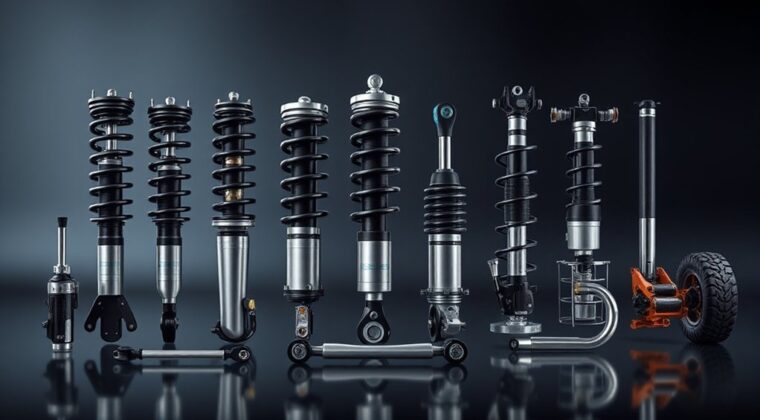
Choosing the best SUV suspension system for 2027 depends on how the vehicle is used, from hauling heavy loads to tackling rough trails. Some systems focus on ride height and off-road clearance, while others improve stability, comfort, or load control. The strongest options are not always the most obvious, and a few stand out for reasons that may surprise many SUV owners.
Onboard Air Compressor Kit for Air Bag Suspension, In-Cab Control System
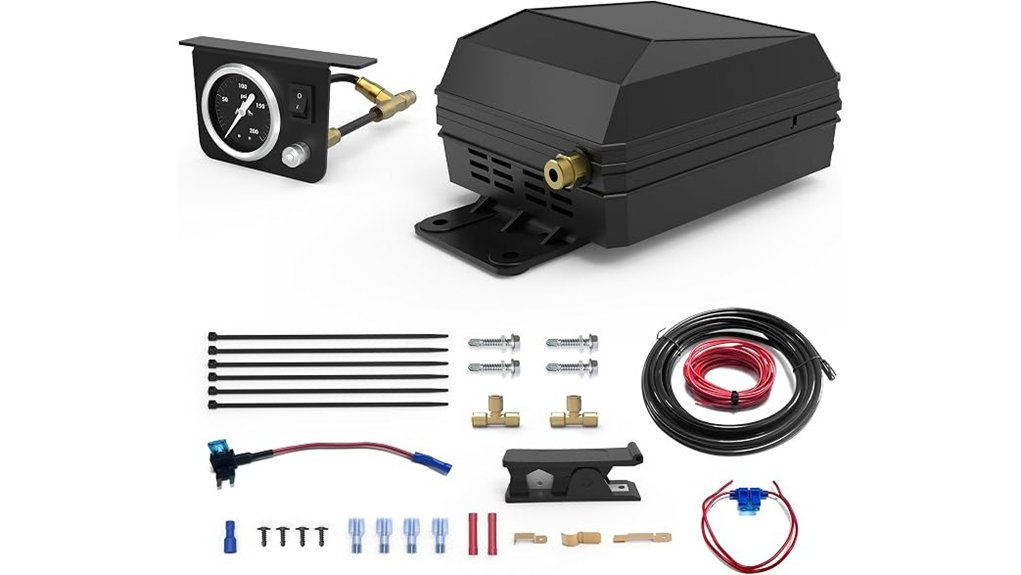
An onboard air compressor kit with in-cab control is best suited for SUV owners who want instant, driver-seat adjustment of air bag suspension for towing, hauling, or improving ride comfort. Its heavy-duty 12V compressor can reach 120 PSI, providing fast inflation and deflation when load conditions change. The control panel keeps adjustments simple and immediate. Built with sealed components and protective housing, it resists debris, mud, and water while operating quietly. Installation is straightforward with labeled wiring, push-to-connect fittings, and included hardware. It fits most air bag suspension setups and is backed by warranty support.
Best For: SUV owners and drivers with air bag suspension who want quick, in-cab control for easy adjustment while towing, hauling, or improving ride comfort.
Pros:
- Heavy-duty 12V compressor reaches up to 120 PSI for fast inflation and deflation.
- In-cab control panel makes suspension adjustments simple and immediate from the driver’s seat.
- Includes installation hardware, labeled wiring, and push-to-connect fittings for easier setup.
Cons:
- Compatibility may vary by vehicle and air bag suspension setup, so fitment should be verified.
- Installation still requires some mechanical and wiring work despite the included instructions.
- The plastic housing and onboard components add extra bulk compared with simpler manual systems.
Detroit Axle – Rear Control Arms Kit for 2002-2009 Chevrolet Trailblazer
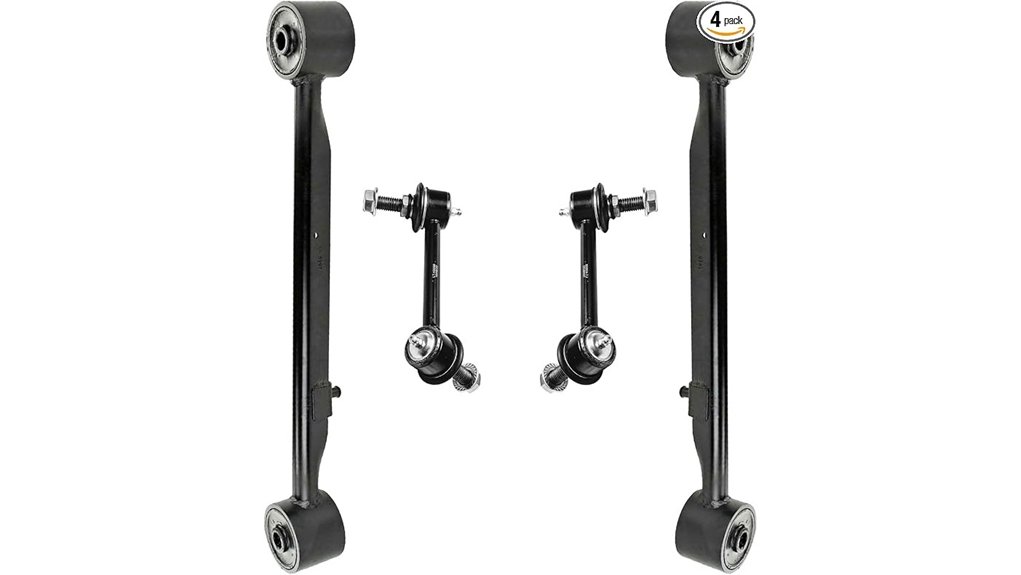
Detroit Axle’s rear control arms kit suits Trailblazer and Envoy owners needing a vehicle-specific rear suspension refresh. It fits 2002-2009 Chevrolet Trailblazer, Trailblazer EXT, GMC Envoy variants, Buick Rainier, Oldsmobile Bravada, and Saab 9-7x applications. The package includes two rear upper control arms and two rear sway bar links for the rear upper position. Detroit Axle backs the kit with a 10-year warranty and subjects it to impact, wear, and fatigue testing. At 20.6 pounds, part number 4CS48132 offers a direct-fit option with Amazon’s 30-day return guarantee.
Best For: Owners of compatible Chevrolet Trailblazer, GMC Envoy, Buick Rainier, Oldsmobile Bravada, or Saab 9-7x models who want a direct-fit rear suspension refresh with a long warranty.
Pros:
- Includes two rear upper control arms and two rear sway bar links in one kit
- Vehicle-specific fit for several GM SUV applications
- Backed by a 10-year warranty and tested for impact, wear, and fatigue
Cons:
- Only fits specific model years and trims, so compatibility is limited
- Rear upper position only, not a full suspension replacement
- Heavier kit at 20.6 pounds, which may be less convenient to handle
Energy Suspension 9.8118R End Link Set with Hardware
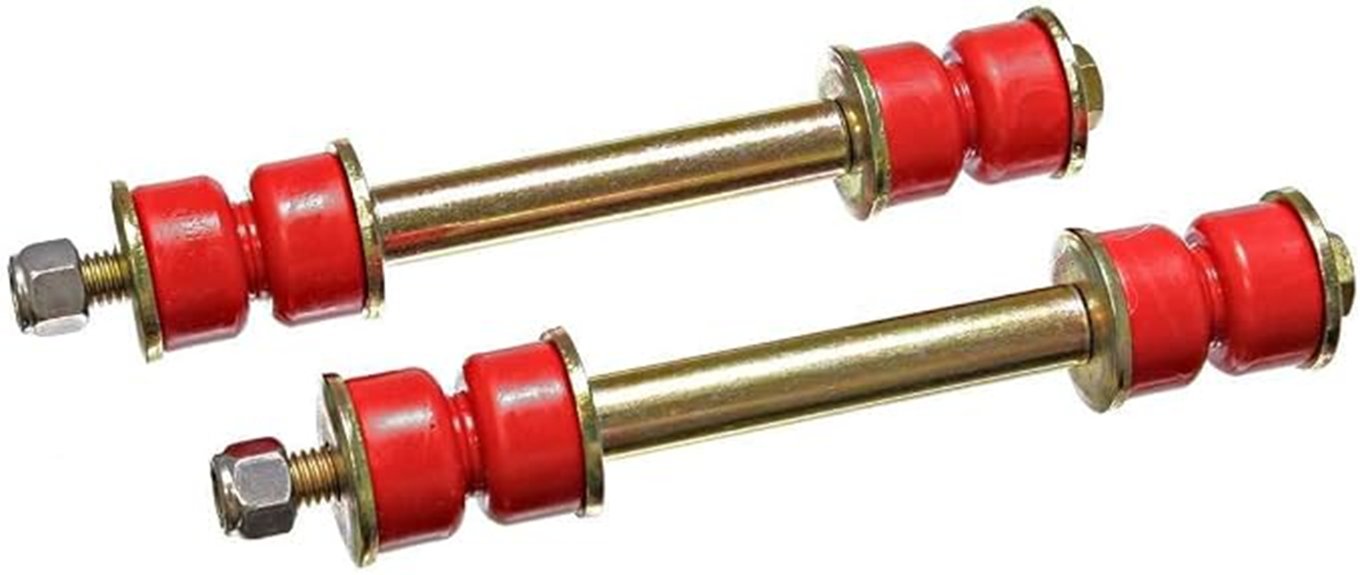
Energy Suspension 9.8118R End Link Set with Hardware suits SUV owners seeking durable suspension upgrades. Designed for cars, trucks, and SUVs, it uses Hyper-Flex polyurethane components that resist road salt, oil, and other contaminants. These parts are built to handle weight and torque forces without permanent compression, offering greater longevity than conventional rubber bushings. Available in different durometers, the set can match specific performance needs. Its race-proven design supports modifications, new builds, and restorations, making it a practical foundation. Energy Suspension’s decades of in-house polyurethane expertise reinforce its reputation for dependable suspension hardware.
Best For: SUV, car, and truck owners looking for a durable, race-proven polyurethane end link upgrade for suspension modifications, restorations, or new builds.
Pros:
- Hyper-Flex polyurethane resists road salt, oil, and other contaminants.
- Built to handle weight and torque forces without permanent compression.
- Available in different durometers to suit specific performance needs.
Cons:
- May be firmer than traditional rubber bushings, which some drivers may find less comfortable.
- Best suited for performance-focused applications rather than basic OEM replacement needs.
- Installation may require more planning than a simple universal replacement part.
RoadActive Suspension 3611-YHD for Ford F150 4WD
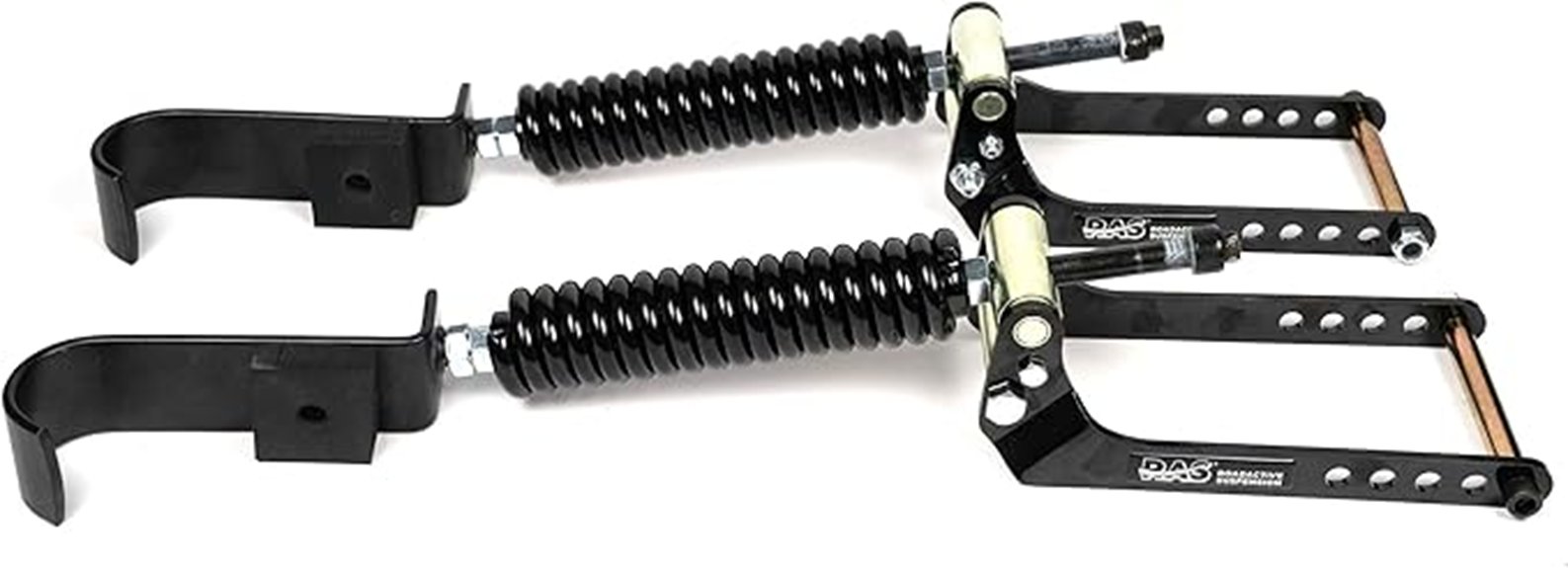
The RoadActive Suspension 3611-YHD suits Ford F150 4WD owners who tow or haul frequently. Designed for 2009-2025 models, this rear leaf spring helper can increase rear spring strength by up to 50 percent, improving load control and stability. Its multi-function design works as a helper spring, sway bar, and traction bar, helping preserve a smooth ride without airbags or harsh jounce setups. Installation takes about 45 minutes, requires no maintenance, and activates immediately. Built in North Carolina and backed by a 5-year warranty, it is trusted for durable heavy-duty use.
Best For: Ford F150 4WD owners from 2009-2025 who frequently tow or haul and want added rear suspension support without sacrificing ride comfort.
Pros:
- Increases rear leaf spring strength by up to 50% for better load control and stability.
- Acts as a helper spring, sway bar, and traction bar while still maintaining a smooth ride.
- Quick 45-minute installation with no maintenance required and a 5-year warranty.
Cons:
- Only fits Ford F150 4WD models from 2009-2025, so compatibility is limited.
- May not be necessary for drivers who rarely tow, haul, or carry heavy loads.
- Raises rear support up to 3 inches, which may not suit every setup or preference.
Eibach PRO-TRUCK-LIFT Stage 2 Suspension Lift Kit
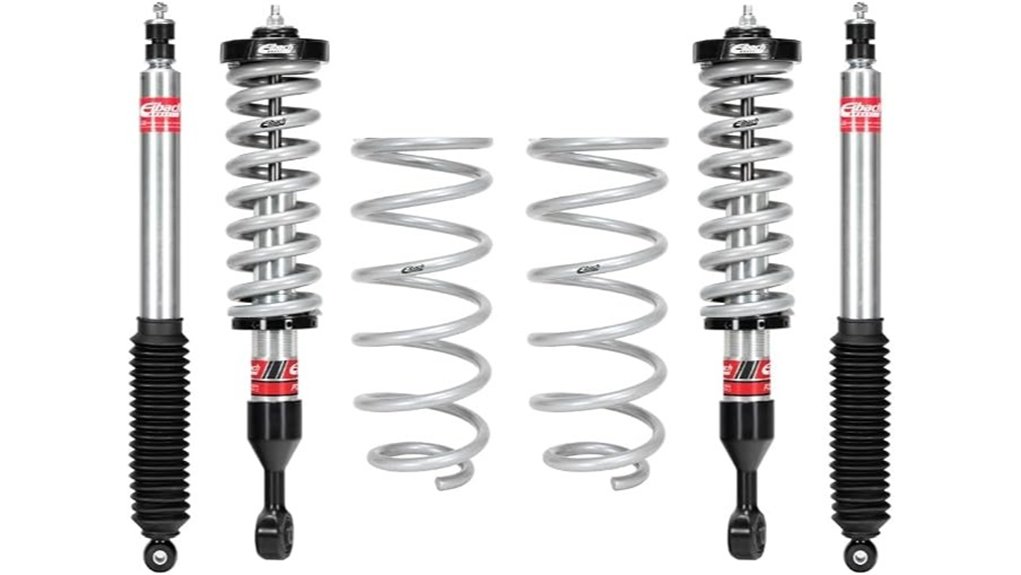
Eibach PRO-TRUCK-LIFT Stage 2 suits Toyota midsize SUV owners seeking controlled lift and sharper handling. Compatible with 2010-2024 models, it delivers 2 to 4 inches of front lift and 1 inch in the rear. The kit includes springs and shocks for a complete upgrade. Race-proven tuning supports quicker response, reduced body roll, and improved cornering confidence on pavement or trails. Stability remains a priority across varied terrain, while ISO 9001:2008 certification reinforces manufacturing consistency. At just 2.0 pounds, the package is compact, yet its focus on durability and controlled performance is clear.
Best For: Toyota midsize SUV owners from 2010–2024 who want a controlled suspension lift with improved handling, stability, and cornering performance on-road and off-road.
Pros:
- Provides a 2 to 4 inch front lift and 1 inch rear lift for a more capable stance.
- Includes springs and shocks for a complete suspension upgrade.
- Race-proven tuning helps reduce body roll and improve response and stability.
Cons:
- Only compatible with Toyota midsize SUVs from 2010–2024.
- Higher-performance suspension kits can require more involved installation and setup.
- May be more than needed for drivers who only want a mild, cosmetic lift.
Air Lift 88354 LoadLifter 5000 Ultimate Air Spring Suspension Kit
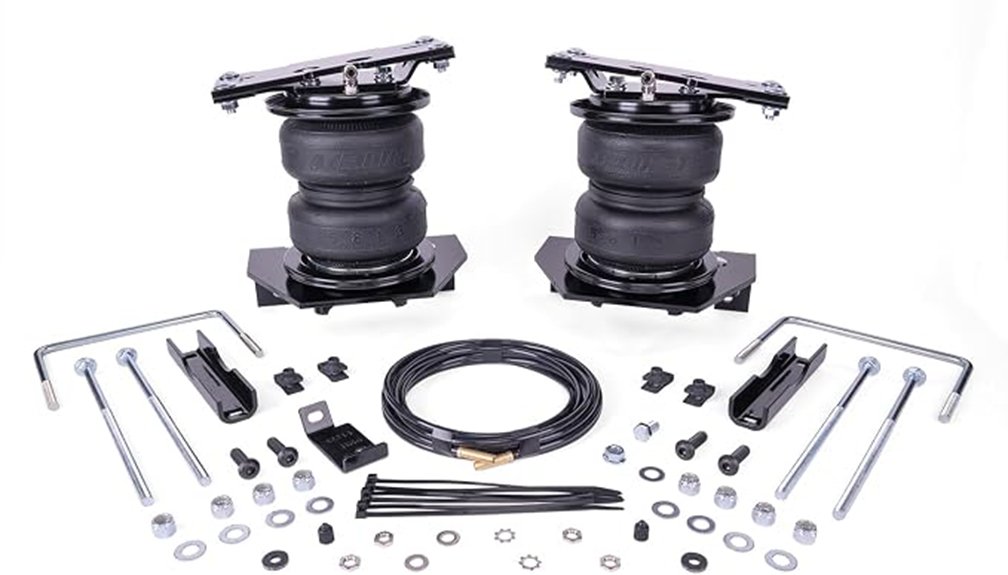
Built for heavy towing, the Air Lift 88354 LoadLifter 5000 Ultimate suits SUVs and trucks needing serious rear support. This premium air spring system levels loads up to 5,000 pounds, helping prevent rear sag, squat, and bottoming out when hauling campers, boats, trailers, or equipment. Adjustable air pressure from 5 to 100 PSI lets it match changing demands. An internal polyurethane jounce bumper preserves operation even with zero pressure, while reducing bounce, sway, and body roll. The bolt-on kit includes brackets, hardware, and a guide. A limited lifetime warranty adds confidence.
Best For: Truck and SUV owners who need heavy-duty rear suspension support for towing, hauling, and improved ride stability under loads up to 5,000 lbs.
Pros:
- Helps eliminate rear sag, squat, and bottoming out when towing heavy loads.
- Adjustable 5–100 PSI air pressure lets you fine-tune support for different payloads.
- Internal jounce bumper provides added shock absorption and operation even at zero air pressure.
Cons:
- Not compatible with Commercial Chassis or DRW models.
- Installation, while bolt-on, may still be more involved than a basic accessory upgrade.
- May be unnecessary for drivers who rarely tow or carry heavy loads.
BDS Rear Coil Springs for Jeep Wrangler JL 4D
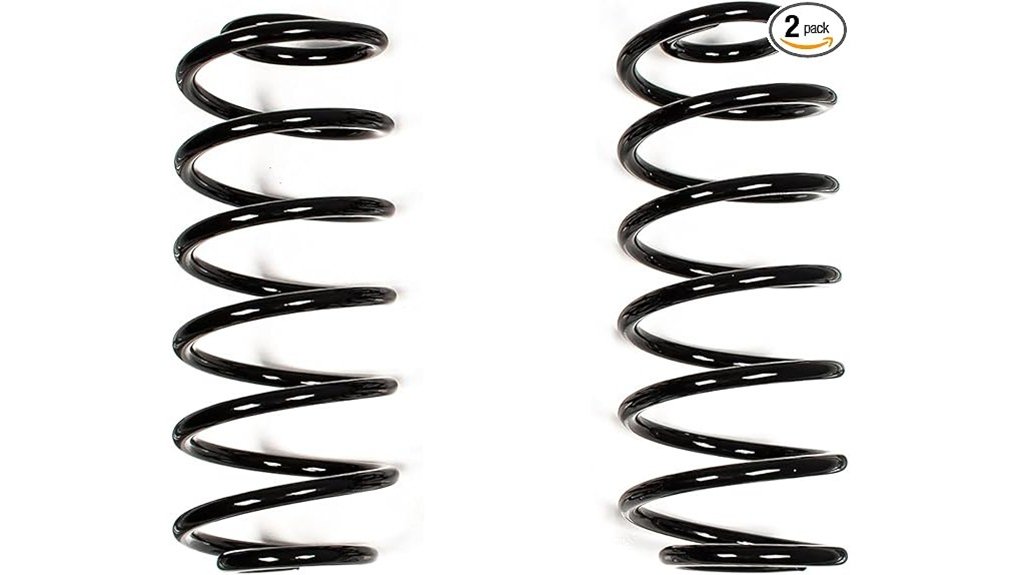
For Jeep Wrangler JL 4D owners seeking up to 3 inches of rear lift, BDS034346 stands out. These rear coil springs fit 2018 to 2022 JL 4D models and arrive as a pair, weighing 22.2 pounds. Built from alloy steel with a durable coating, they use a polyester powder coat for added flexibility and corrosion resistance. BDS engineers them to resist full coil bind, return to original height, and limit sagging through preset hydraulic stress. Shot peening and proper wire sizing support strength, wheel travel, and long service life. A limited lifetime warranty backs the package.
Best For: Jeep Wrangler JL 4D owners from 2018–2022 who want a durable rear spring upgrade with up to 3 inches of lift, improved wheel travel, and long-term sag resistance.
Pros:
- Provides up to 3 inches of rear lift for JL 4D models.
- Built with coil bind resistance, shot peening, and hydraulic presetting for durability.
- Backed by a limited lifetime warranty.
Cons:
- Only fits Jeep Wrangler JL 4D models from 2018–2022.
- Rear coil springs only, so additional lift components may be needed for a complete setup.
- May be more lift than some drivers want for a daily-driver-only build.
Factors to Consider When Choosing a Suv Suspension System
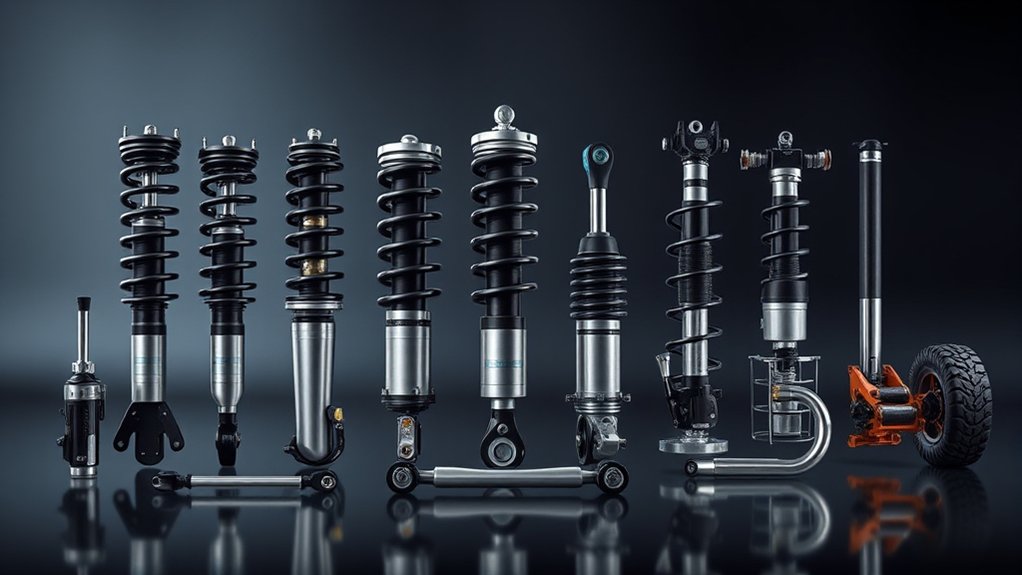
Choosing an SUV suspension system begins with vehicle compatibility, since the setup must match the make, model, and intended use. Load capacity, ride comfort, and lift height also matter because they affect towing performance, on-road feel, and ground clearance. Installation ease is another practical factor, especially for owners seeking a simpler upgrade with less downtime.
Vehicle Compatibility
Vehicle compatibility is a critical starting point when selecting an SUV suspension system, since many kits are engineered for specific makes, model years, and factory configurations. The first check should be whether the suspension is listed for the exact SUV model, because vehicle-specific designs help guarantee correct fitment, reliable installation, and intended performance. Manufacturers often note whether a kit works with existing features such as air bag suspension or factory jounce bumpers, so those details should be reviewed carefully. It is also important to confirm that all required parts are included, since some systems suit only certain setups or need extra hardware. A properly matched kit reduces installation issues and helps the suspension function as designed across everyday driving and specialized use.
Load Capacity
Load capacity is a key factor in SUV suspension selection because it determines how much weight the vehicle can safely support for towing, hauling, and heavy cargo use. A system’s rating should match expected cargo demands, since undercapacity can cause rear-end sag and reduce stability. Some suspension setups use adjustable air pressure, allowing support for different loads across a 5 to 100 PSI range. Others are engineered for maximum strength, with capacities reaching 5,000 lbs for demanding applications. Systems with internal bumpers can improve shock absorption under load while helping preserve function. Higher load capacity generally improves handling, especially on uneven terrain or during sudden stops, where extra support helps maintain control and safety.
Ride Comfort
Ride comfort improves considerably when a suspension system can adapt to changing loads and road conditions, especially through adjustable air springs that let drivers fine-tune support in real time. Internal jounce bumpers add another layer of refinement by absorbing impacts when air pressure drops, preserving composure over rough pavement. Coil springs engineered to avoid coil bind help the suspension hold its intended height and deliver consistent performance, which supports a smoother feel over long-term use. Durable polyurethane components further improve comfort by resisting contamination-related wear and maintaining responsiveness. A well-designed setup also limits body roll during cornering, which keeps the vehicle stable and reduces abrupt movements that can unsettle passengers. Together, these traits create a calmer, more controlled ride.
Lift Height
Lift height plays a major role in how an SUV suspension handles both on-road and off-road demands. A modest 2 to 4 inch lift is common, since it can add ground clearance without sacrificing too much ride quality. Higher settings improve approach and departure angles, helping an SUV clear rocks, ruts, and steep gradients more easily. However, added height also raises the center of gravity, which can reduce stability in cornering and make the vehicle feel less composed on uneven surfaces. Proper selection matters because excessive lift may disturb suspension geometry, alter alignment, and accelerate wear on components. Weight distribution should also be considered, since heavier setups influence steering response and overall comfort.
Installation Ease
Installation ease can greatly affect the overall value of an SUV suspension system, especially for owners who want a faster, less complicated upgrade. Systems with straightforward bolt-on designs are often preferable because they reduce the need for specialized tools and major vehicle modifications. A kit that includes all required parts and clear instructions can further simplify the process, cutting both labor and frustration. Compatibility also improves when the suspension uses existing frame holes, since that approach can make fitment more predictable. User reviews are useful for identifying recurring installation issues or confirming an easy setup. It is also important to determine whether the system needs post-installation adjustments or air-line connections, because options that work immediately can save considerable time and effort.
Durability Materials
Material durability is a major factor in long-term suspension performance. High-tensile steel and alloy steel components are preferred because they provide strong resistance to fatigue and structural wear over time. Polyurethane bushings generally outlast traditional rubber, since they better withstand road salt, oil, and other contaminants while maintaining dependable function under stress. Powder-coated springs and related parts add another layer of protection by improving corrosion resistance in harsh climates and wet conditions. Coil springs should also be designed to survive full coil bind and return to their original height without sagging, preserving consistent ride quality. Durability is further supported when components are subjected to rigorous testing for impact, wear, and fatigue, since that process helps identify parts built for demanding SUV use.
Adjustability Features
Adjustability features help an SUV suspension system adapt to changing loads and road conditions by allowing real-time changes in ride height and stiffness. This flexibility lets the system respond to towing, cargo, or varying terrain without sacrificing control. Customizable air pressure settings, often ranging from 5 to 100 PSI, provide support and comfort tailored to the vehicle’s current demand. In-cab controls add convenience by letting drivers change air spring levels from inside the cabin, improving ride quality on the move. Some systems include multiple durometer settings for end links, enabling firmness selection matched to driving style and application. Multi-functional designs can also act as helper springs, sway bars, and traction bars, combining several adjustments for better handling and stability in one package.
Warranty Coverage
Warranty coverage can be a useful indicator of how much confidence a manufacturer has in an SUV suspension system’s durability. Coverage may range from limited lifetime protection to warranties measured in years or mileage, so the exact term matters. Longer coverage often suggests stronger confidence in the components’ ability to withstand impact, wear, and fatigue. It is equally important to review exclusions, since many warranties apply only to defects in materials and workmanship. Damage from improper installation, misuse, or neglect is commonly left out. A well-structured warranty can reduce repair costs and improve ownership confidence, making it a practical consideration when comparing suspension systems for long-term use.
Frequently Asked Questions
Which Suspension System Best Balances Comfort and Off-Road Performance?
Adaptive air suspension best balances comfort and off-road capability. It can soften bumps on pavement, then raise ride height and maintain articulation on rough trails, offering the most versatile compromise for SUVs.
How Often Should SUV Suspension Components Be Inspected?
SUV suspension components should be inspected every 12,000 miles or annually, and sooner after rough terrain, impacts, or unusual noises. Regular checks help detect wear early, preserving comfort, handling, and safety over time.
Does Suspension Lift Affect Fuel Economy and Towing Capacity?
Like a medieval cart before a windmill, a suspension lift usually reduces fuel economy by increasing drag and weight, while towing capacity may remain unchanged or decrease if stability, braking, and drivetrain limits are affected.
Can Suspension Upgrades Improve Handling Without Increasing Ride Harshness?
Yes; carefully tuned suspension upgrades can sharpen handling while preserving comfort. Quality shocks, springs, bushings, and anti-roll bars may reduce body roll and improve control, though aggressive setups often increase ride harshness.
What Signs Indicate My SUV Needs a Suspension Replacement?
Like a worn bridge, an SUV’s suspension needs replacement when it bounces excessively, leans hard in turns, pulls during braking, bottoms out, or shows leaking shocks, uneven tire wear, and clunking noises.
Conclusion
Choosing the right SUV suspension system is a balancing act: air compressors and LoadLifter kits bring adjustable comfort and heavy-duty support, while Detroit Axle control arms and Energy Suspension end links favor sharper handling and stability. Eibach lifts and BDS rear coils lean into off-road confidence, whereas RoadActive Suspension bridges daily driving and towing. The best setup depends on whether the SUV spends its miles on smooth highways, rugged trails, or somewhere in between.