
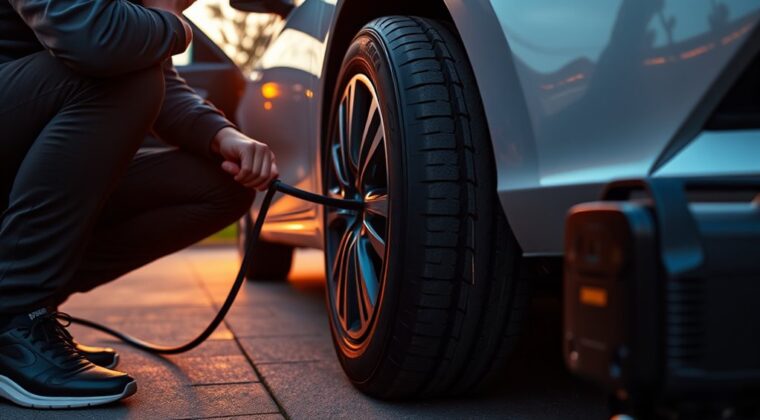
Yes—you can inflate a tire after a TPMS warning, and you should check pressure right away. Use a reliable gauge on cold tires, then add air until each tire matches the placard PSI, usually 30 to 35 PSI. A solid TPMS light usually means low pressure; a flashing light points to a system fault. Cold weather can trigger false alarms. If the light stays on after inflation, you may need a sensor check, and there’s more to know.
Key Takeaways
- Yes, you can inflate a tire after a TPMS warning if the light is solid and low pressure is the cause.
- Check tire pressure with a gauge when tires are cold, then inflate to the vehicle’s recommended PSI.
- A TPMS light can appear when pressure is about 25% below the recommended level.
- After inflating, drive a short distance so the system can recalibrate and clear the warning.
- If the light stays on or flashes, inspect for sensor or system faults and consult a tire shop.
Why Your TPMS Light Came On
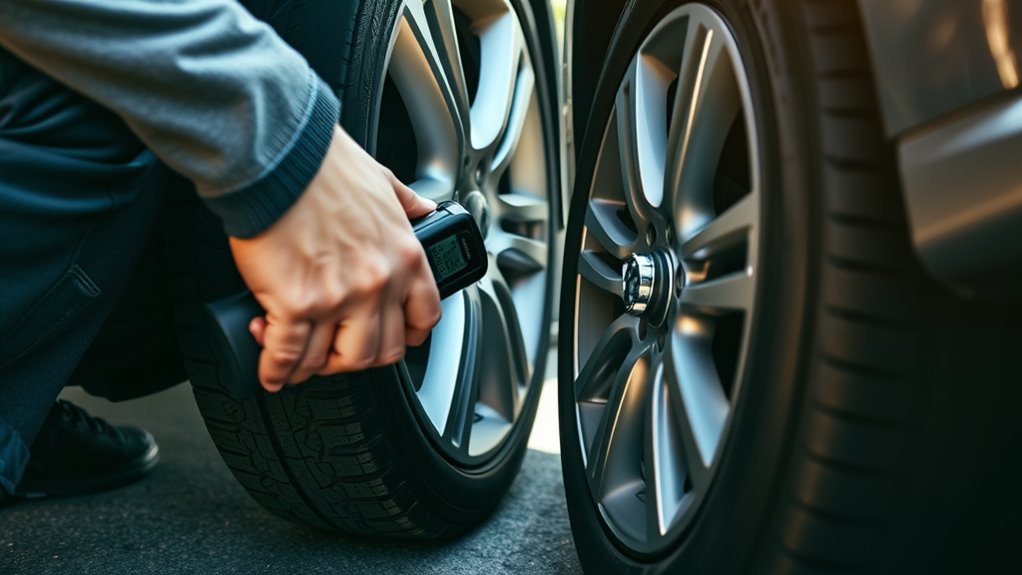
Your TPMS light comes on when one or more tires drop to about 25% below the recommended pressure, which can create handling and safety risks.
You’re seeing your tire pressure monitoring system warn you, not replace routine checks. A solid TPMS light usually means low tire pressure in one or more tires. Cold weather can trigger it too, because tire pressure can fall 1-2 PSI for every 10-degree temperature drop. That loss can push a marginal tire below the threshold.
TPMS warns you about low pressure; it doesn’t replace regular tire checks.
If the TPMS light flashes, the monitoring system itself may have a fault, such as a sensor or communication issue. If you inflate the tires to spec and the light stays on, you may need a sensor inspection.
You keep control by checking pressure regularly and verifying each tire with a gauge.
Should You Add Air Before Driving?
If your TPMS light’s on, check tire pressure with a gauge before you drive.
If any tire is below the manufacturer’s recommended PSI, add air to bring it back to spec.
Driving on low pressure increases wear, heat buildup, and blowout risk, so correcting it first is the safer move.
Check Tire Pressure First
Before adding air, check the tire pressure with a gauge, since a TPMS warning only tells you that pressure is low—not how low it is. You need to check your tire pressure before deciding anything else.
TPMS sensors don’t replace a manual reading, and they can’t tell you whether one tire is slightly low or seriously underinflated. Find the target PSI on the driver’s door jamb or in the owner’s manual; most vehicles specify 30 to 35 PSI.
Measure when the tires are cold, ideally after the car has sat for three hours. Cold weather can drop pressure by 1 to 2 PSI per 10-degree temperature fall, so factor that in.
Accurate readings help you keep the tires properly inflated and protect your freedom on the road.
Add Air Before Driving
Once you’ve confirmed the tire is low with a gauge, add air before you drive. A TPMS warning means low tire pressure, and you shouldn’t ignore it; underinflation hurts handling, safety, and fuel economy.
Check the driver’s door jamb or owner’s manual for the correct PSI, usually 30 to 35, then add air to that spec. In cold weather, pressure drops faster, so a quick top-off can clear the warning and restore control.
After you add air, drive a short distance so tire pressure monitoring can recalibrate and verify the new reading. If the light stays on, recheck the tire and the valve.
Acting now keeps you in command and prevents extra wear, wasted fuel, and avoidable risk.
Check Tire Pressure First
Check the tire pressure with a reliable gauge first, because the TPMS warning may be telling you that one or more tires are low. You need this check before you add air, since a false assumption can push you farther from safe driving.
Measure each tire when it’s cold, ideally after the vehicle has sat for at least three hours, so you get accurate readings. Compare the numbers with the specification on your driver’s door jamb or in the owner’s manual; most vehicles call for roughly 30 to 35 PSI, but your vehicle sets the standard.
Low tire pressure increases blowout risk and wastes fuel, so don’t ignore the warning. If you inflate to the correct tire pressure and the TPMS light still stays on, you may need a sensor inspection or other diagnosis.
Taking control here keeps you informed, independent, and safer on the road.
How Much Air Your Tires Need
You should inflate your tires to the PSI listed on the driver’s door jamb or in the owner’s manual, which is usually 30 to 35 PSI for passenger vehicles.
Check pressure when the tires are cold, since driving heats them and can skew the reading.
If temperatures drop, recheck often because PSI can fall by 1 to 2 for every 10°F decrease.
Recommended PSI Levels
Recommended tire pressure usually falls between 30 and 35 PSI, but your vehicle’s exact target depends on the manufacturer’s specifications and the tire size. To maintain safe performance, you should check the pressure against the owner’s manual or the driver’s door jamb sticker.
These recommended psi levels keep your tires balanced, efficient, and ready for the road you choose.
- Check the pressure monthly.
- Check it when the tires are cold.
- Keep readings within the specified range.
If you let pressure drop too low, you’ll lose fuel efficiency and wear the tread faster. If you overinflate, you’ll get a harsher ride and raise blowout risk.
It’s important to check regularly so you stay free from preventable failures.
Checking Pressure Correctly
A quick pressure check with a reliable tire gauge tells you whether your tires need air to reach the correct PSI, which is usually listed on the driver’s door jamb sticker or in the owner’s manual.
You should check pressure when the tires are cold, ideally before driving, because heat and usage can skew readings. Most vehicles need about 30 to 35 PSI, but your exact target matters.
When the tire pressure light comes on, don’t guess—measure each tire and restore checking pressure discipline monthly.
Cold weather can drop pressure by 1 to 2 PSI for every 10 degrees, so adjust as needed.
After inflating, replace the valve cap to limit air loss and keep your correct pressure steady.
What to Do If the Light Stays On
If the TPMS light stays on after you inflate the tires, check each tire with a reliable pressure gauge to confirm the PSI is actually correct. If the light stays, don’t assume you need new tires; continue pressure checks and verify the spare isn’t triggering the system. A solid warning usually points to low pressure, while a flashing light often signals a sensor fault that needs diagnosis.
- Confirm all four tires match the placard PSI when cold.
- Drive about 10 minutes at 50 mph; some systems relearn during normal motion.
- If the warning remains, get a tire shop or dealership to inspect sensors, wiring, and valves.
Keep doing monthly pressure checks even when TPMS works. That habit protects you from slow leaks, uneven wear, and sudden failure.
Accurate inflation gives you control, lowers risk, and keeps your vehicle ready for the road.
How to Reset the TPMS Light
Before you reset the TPMS light, make sure every tire is inflated to the recommended cold pressure, including the spare if your vehicle monitors it.
Then, turn the ignition to the on position without starting the engine and hold the TPMS reset button until the light blinks three times.
Start the vehicle and drive at about 50 mph for 10 minutes so the system can relearn pressure data and clear the warning.
If the light stays on, disconnect the positive battery cable, press the horn for three seconds to discharge residual power, and reconnect the battery.
On some vehicles, you may need to inflate all tires 3 PSI above spec, then fully deflate and reinflate them to the correct pressure.
Use your owner’s manual for the exact procedure, because TPMS designs vary.
When you follow the correct sequence, you reset the system and reclaim control.
Why Cold Weather Turns the Light On
Cold weather can drop tire pressure by 1 to 2 PSI for every 10-degree temperature decrease, which is enough to trigger the TPMS light on a chilly morning. Your TPMS uses pressure sensors to detect that loss, so the warning often reflects real under-inflation, not a fault. As the air contracts, tire inflation falls below the vehicle’s target, and the system flags it.
- Temperature drops shrink air volume.
- Pressure falls enough to trip TPMS.
- Driving warms the tires and may raise pressure.
If the light clears after a short drive, you’ve likely seen a temporary cold-weather dip.
But if it stays on, you need to add air and restore proper tire inflation.
Don’t ignore repeated warnings; low pressure increases crash risk, hurts handling, and can lead to blowouts.
In colder months, check pressures regularly so you stay free from avoidable limits and keep control.
Solid Light vs. Flashing Light
A solid TPMS light usually means at least one tire is under-inflated, so you need to check and add air right away to restore safe handling and proper tire pressure.
A solid TPMS light usually means one or more tires are under-inflated and need air right away.
In most cases, the solid light tells you one or more tires are about 25% below the recommended level, so inflate them to the manufacturer’s specification and verify the reading with a gauge.
A flashing light is different: it usually appears for 60 to 90 seconds and points to a TPMS malfunction, such as a dead sensor or communication failure.
Don’t treat a flashing light like a simple low-pressure alert. Instead, inspect the system, and reset it only after you’ve confirmed the fault.
Knowing this difference keeps you in control: solid light means low tire pressure, while flashing light means the monitoring system itself needs attention.
Acting on the correct signal helps you drive safer and stay free from avoidable tire trouble.
Do New Tires Need TPMS Sensors?
You usually don’t need new TPMS sensors when you fit new tires if the existing direct sensors still work, so inspect and reuse them during installation.
TPMS sensors typically last about 10 years, so older vehicles or failed units may need replacement.
After installation, you’ll often need to relearn the sensors so the system can read them correctly.
Reuse Existing Sensors
When installing new tires, you can often reuse the existing TPMS sensors if they’re still functioning properly and haven’t reached the end of their service life. You don’t need to buy new hardware just because you’re changing tires; reuse existing sensors when the vehicle’s warning light points to a tire-pressure issue, not a failed module.
During tire rotation or replacement, inspect each sensor, confirm compatibility, and verify that the seals and valves aren’t damaged.
- Check sensor condition before mounting.
- Replace only if compatibility fails.
- Relearn the system after installation.
If you replace sensors with the tires, you can save labor later and avoid paying twice. Direct TPMS sensors usually cost $45 to $65 each, so choosing wisely keeps your setup efficient and your mobility unconstrained.
Sensor Lifespan Basics
TPMS sensors typically last about 10 years, though older vehicles may need replacement sooner because of wear, battery depletion, or valve-stem damage.
You don’t need new sensors just because you buy new tires; if your direct TPMS units still read correctly and fit the wheel setup, you can reuse them. That keeps costs down and preserves your freedom from unnecessary parts swaps.
Check the sensor light after service and confirm each valve stem is intact and leak-free. If the system reports wrong inflation pressures, the sensor may be weak or incompatible.
Replacing a common sensor usually runs $45 to $65, while specialty units cost more. Inspect your existing hardware before you authorize replacement, so you pay only for what actually restores accurate monitoring.
Relearn After Installation
After new tires go on, the TPMS usually doesn’t need new sensors, but it does need a quick function check to confirm each unit still reads properly.
If your car uses direct TPMS, the TPMS sensors usually self-adjust after installation. With indirect systems, you’ll need to relearn the settings by following the vehicle manual.
- Verify each sensor reports pressure.
- Relearn sensor positions if the system asks for it.
- Visit a service center if readings stay wrong.
You should also consider sensor age; most TPMS sensors last about 10 years, so older units may fail during a tire change.
Practical maintenance keeps you in control, and a clean reset protects accurate warnings, safer driving, and your freedom from avoidable roadside trouble.
When to See a Tire Shop
If the TPMS light stays on after you’ve inflated all tires to the recommended 30–35 PSI, it’s time to have a tire shop inspect the vehicle. A persistent TPMS warning often means a sensor fault, not just low air pressure.
At the tire shop, you’ll get a manual pressure check, a scan for faulty sensors, and a proper TPMS reset if the system needs it. If the light keeps returning, or your air pressure fluctuates without explanation, don’t keep guessing. Drive in for diagnostics before the issue turns into uneven wear, poor handling, or a blowout risk.
You’re not trapped by a dashboard light; you can verify the system and restore control. Regular tire shop visits for pressure checks and TPMS maintenance help you protect your tires, improve safety, and keep the vehicle ready for the road.
Frequently Asked Questions
Do I Need to Reset the TPMS After Filling Tires?
Yes, you may need to reset the TPMS after filling tires, depending on the system.
Your TPMS function often clears itself after you drive a short distance, but indirect systems usually need a manual reset.
Always verify tire pressure against the placard, then watch warning indicators. If the light stays on, you could have a fault or another low tire.
Check your owner’s manual for the exact reset procedure.
How Do I Permanently Turn off the TPMS Light?
To turn off the TPMS light permanently, you’ll first restore each tire to spec, like tuning four sentries to the same alert.
Check your door-jamb placard, keep pressure within 30–35 PSI, and confirm tire maintenance is exact.
Then drive about 10 minutes at 50 mph to let pressure monitoring recalibrate. If needed, use the reset button.
Follow safety tips, and inspect faulty sensors if the light stays on.
Can I Reset My TPMS Sensor Myself?
Yes, you can reset your TPMS sensor yourself with a DIY TPMS reset. Inflate each tire to the recommended pressure, then drive about 10 minutes at 50 mph.
If needed, use the reset button or disconnect the battery briefly. This tire pressure monitoring system still needs proper TPMS sensor maintenance, so check your owner’s manual for the exact procedure.
You’ll keep control without relying on a shop.
Why Is My TPMS Light on Even Though My Tire Pressure Is Fine?
Your TPMS light can glow like a stubborn firefly even when your tires read fine.
You may have mismatched TPMS sensor types, a weak battery, or a communication fault in the tire pressure monitoring system. Cold weather, recent inflation, or a failed reset can also trigger warning light causes.
Check pressures manually, drive above 50 mph if needed, and scan for codes if the light stays on.
Conclusion
When your TPMS warning lights up, check your tire pressure first and add air if needed before driving far. Studies show that underinflated tires can lower fuel economy by up to 3%, so quick action can save money and improve safety. If the light stays on after inflation, inspect for leaks, damaged sensors, or temperature-related pressure changes. A flashing light usually means a system fault, so you’ll want a tire shop to diagnose it.