
Choosing the right heavy-duty truck tires in 2027 comes down to more than brand recognition. Durability, load capacity, terrain grip, and weather handling all play a role in long-term performance. Some models lean toward smooth all-season use, while others are built for mud, hauling, or rough job sites. The differences can be subtle at first, but they matter when the road turns demanding.
Cooper Discoverer HT3 All Season Truck Tire, LT245/75R16 120R, Set of 1
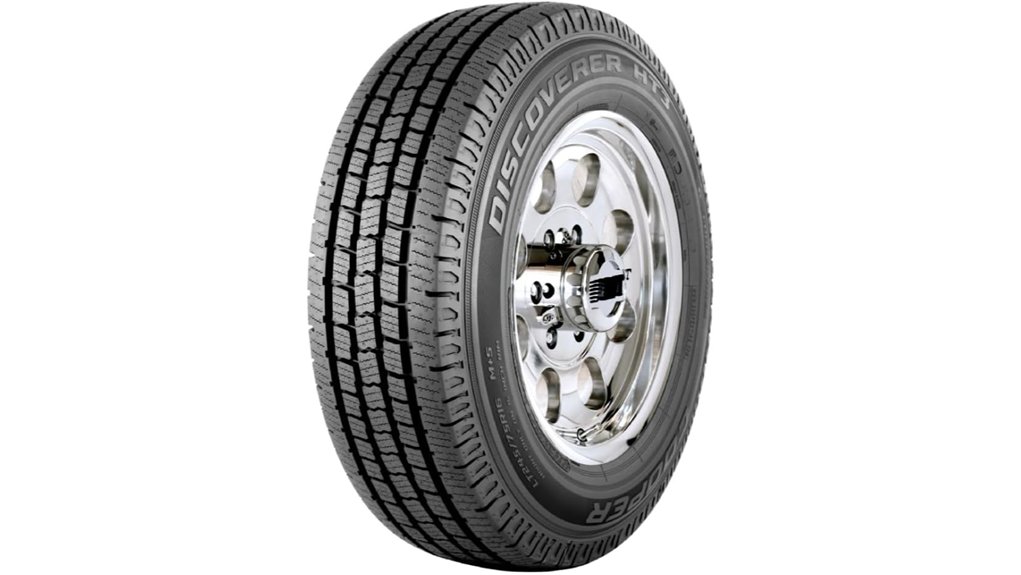
The Cooper Discoverer HT3 All Season Truck Tire is a strong fit for heavy-duty truck owners who need dependable highway performance year-round, especially those prioritizing wet traction and long tread life. This LT245/75R16 120R, 10-ply radial uses four wide channels and biting edges to improve control on wet roads. Its tread repels stones and debris, helping resist abnormal wear, while the quiet-running design supports a calmer ride. With a 50,000-mile treadwear warranty, 3,042-pound load capacity, and 45-day satisfaction guarantee, it offers practical confidence for vehicle-specific fitments.
Best For: Heavy-duty truck owners who need a vehicle-specific, year-round highway tire with strong wet traction, quiet ride comfort, and long tread life.
Pros:
- Four wide channels and biting edges help improve wet-road control and stability.
- Tread design repels stones and debris to help resist abnormal wear.
- 50,000-mile treadwear warranty and 45-day satisfaction guarantee add confidence.
Cons:
- Highway-focused design may not be ideal for off-road or aggressive terrain use.
- Heavy-duty LT 10-ply construction can be stiffer than passenger-oriented tires.
- Sold as a single tire, so a full set requires multiple purchases.
Set of 4 Finalist Terreno A/T LT275/65R20 126/123S 10 Ply All Terrain Tires
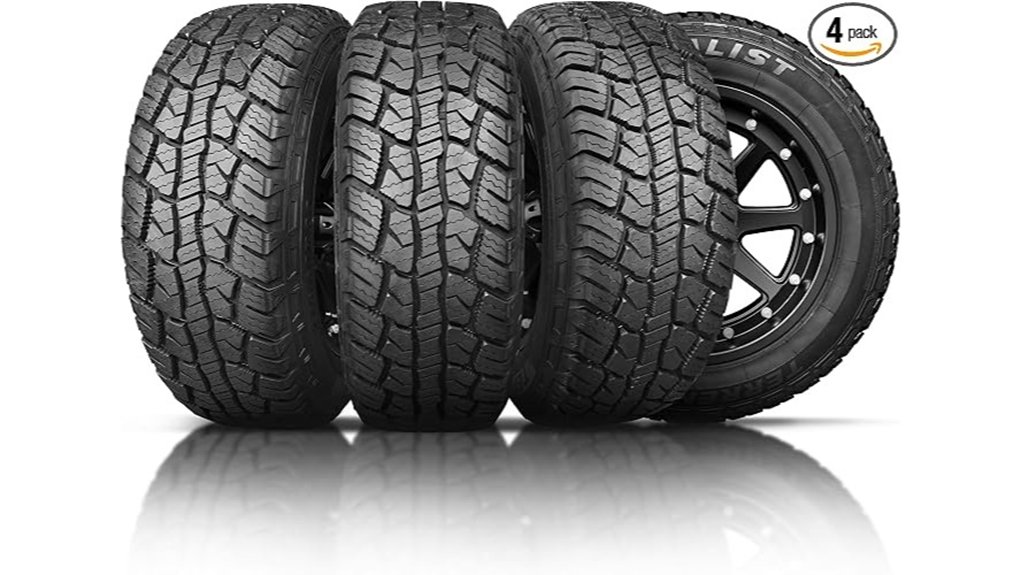
Built for heavy-duty trucks needing dependable all-terrain strength, the Finalist Terreno A/T LT275/65R20 stands out. This set of four 10-ply radial tires uses an E load range to support up to 3,750 pounds per single tire and 3,415 pounds in dual applications. The wear-resistant compound and step-down tread blocks with 3D siping improve grip, handling, and wet or dry control. Sized for 20-inch rims, it carries an S speed rating and year-round versatility. A 50,000-mile tread warranty and three-year road hazard coverage add practical value.
Best For: Heavy-duty truck and light truck owners who need durable, year-round all-terrain tires with strong load capacity, improved traction, and added warranty protection.
Pros:
- 10-ply, Load Range E construction supports heavy loads and rugged use.
- Wear-resistant compound and 3D siping help improve grip on wet and dry surfaces.
- Includes a 50,000-mile tread warranty plus 3-year road hazard coverage.
Cons:
- Speed rating is only S, so it’s not ideal for drivers wanting higher-speed performance.
- All-terrain tread may produce more road noise than highway-focused tires.
- Best suited for 20-inch rims, limiting fitment to specific vehicles.
Set of 4 Travelstar Ecopath AT LT245/75R17 10 Ply 121/118S Light Truck Tire
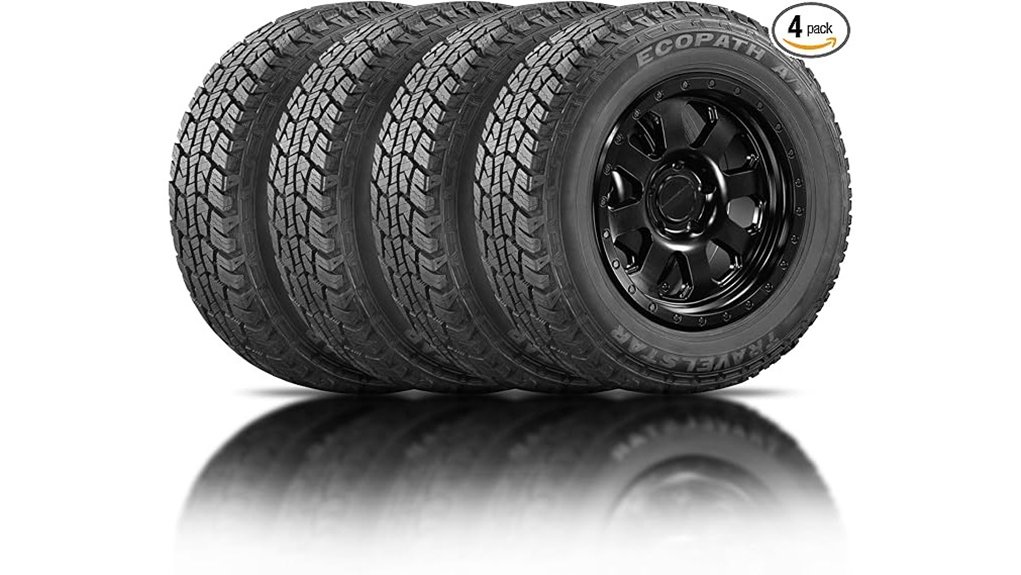
Travelstar’s Ecopath AT LT245/75R17 suits heavy-duty truck owners needing strong all-season hauling support. This radial, 10-ply light truck tire uses a symmetrical tread and universal fit for broad compatibility. Its LT245/75R17 size, 80 psi maximum pressure, and Load Range E support 3,195 pounds single and 2,910 pounds dual. The 112 mph S rating is adequate for work-focused use. Travelstar backs it with a 50,000-mile tread wear warranty, a five-year manufacturer warranty, and a three-year road hazard warranty, adding practical value for year-round service and moderate towing demands.
Best For: Heavy-duty truck and light truck owners who need a durable all-season tire with strong towing, hauling, and year-round reliability.
Pros:
- 10-ply Load Range E construction supports heavy loads with a 3,195 lb single-tire capacity.
- Includes a 50,000-mile tread wear warranty plus a 5-year manufacturer warranty and 3-year road hazard coverage.
- Symmetrical tread and universal fit make it broadly compatible for everyday work use.
Cons:
- S speed rating is only 112 mph, so it’s not ideal for high-performance driving.
- Ride and noise levels may be less refined than on-road or highway-focused tires.
- Best suited for moderate towing and hauling, not extreme off-road or commercial-duty abuse.
Barkley Rammus X/T All-Terrain Mud Light Truck Tire
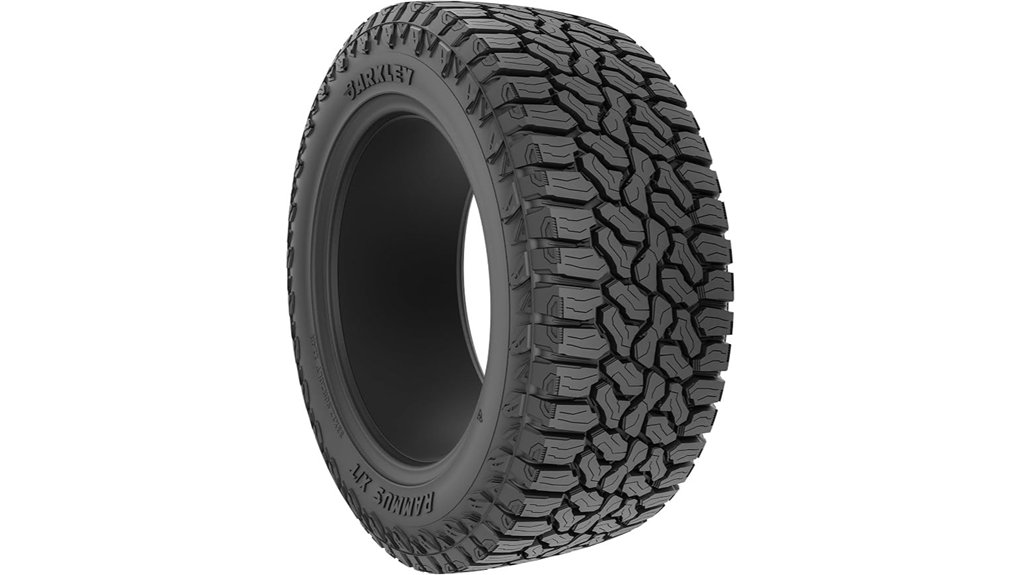
With a 10-ply build and 2,756-pound load capacity, the Barkley Rammus X/T suits demanding hauls. This LT245/75R16 radial uses an aggressive hybrid tread with large interlocking blocks and deep voids to improve grip on dirt, gravel, sand, and mud. Its optimized block arrangement helps straight-line tracking and reduces vibration versus typical mud-terrain tires. Reinforced sidewalls, extended shoulder lugs, and 80 psi maximum pressure support towing and hauling. Year-round use, controlled road noise, and a 55,000-mile warranty add practical appeal for light trucks and SUVs.
Best For: Light truck and SUV owners who need a tough year-round tire for hauling, towing, and off-road use on dirt, gravel, sand, and mud.
Pros:
- Aggressive hybrid tread with deep voids delivers strong traction on loose and muddy terrain.
- Reinforced sidewalls and extended shoulder lugs improve durability for towing, hauling, and trail use.
- 55,000-mile warranty and reduced road noise make it more practical for everyday driving.
Cons:
- Its rugged tread design may not be as quiet or smooth as a standard highway tire.
- Best performance is focused on light trucks and SUVs, so it’s not ideal for passenger-car use.
- Maximum load and pressure ratings require proper inflation and fitment to get full benefit.
Thunderer Trac Grip M/T R408 LT265/75R16 123Q
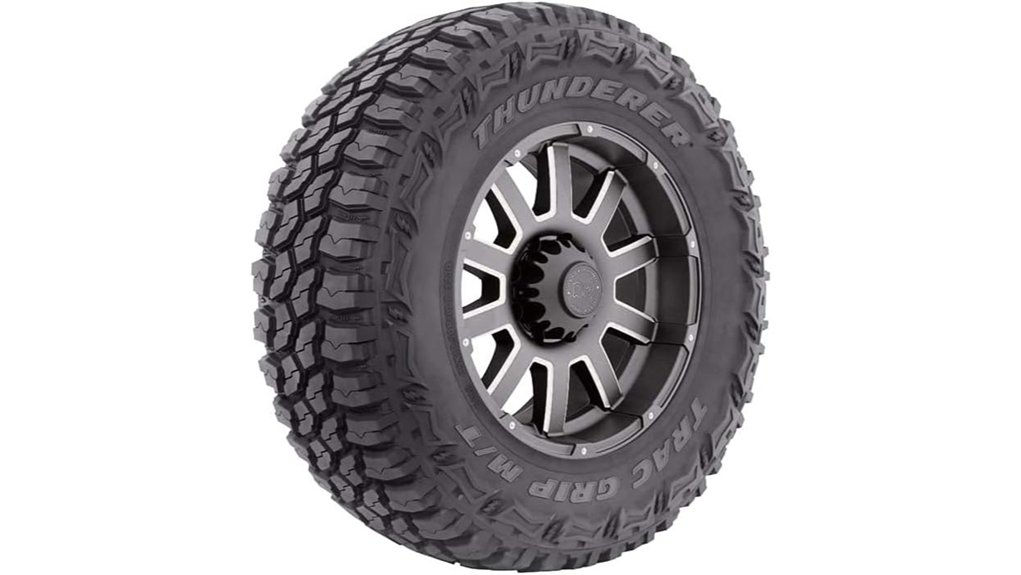
Thunderer Trac Grip M/T R408 suits drivers who need serious off-road traction. In LT265/75R16 form with a 123 load index and Q speed rating, it is built for heavy-duty trucks facing demanding terrain. Its aggressive tread pattern and open lugs help bite into mud, sand, and loose ground while reducing buildup that can weaken grip. The tire is also designed for all-season use and harsh weather, giving it broader utility beyond trails. Durable construction supports long service life in rugged conditions, making it a practical choice for extreme off-road applications.
Best For: Drivers of heavy-duty trucks and off-road vehicles who need aggressive traction for mud, sand, loose terrain, and harsh weather conditions.
Pros:
- Aggressive tread and open lugs provide strong off-road grip.
- Helps reduce mud and sand buildup for more consistent traction.
- Durable construction and all-season capability add versatility and longevity.
Cons:
- Heavy off-road tread may create more road noise on pavement.
- Not ideal for drivers who mainly stay on smooth highways.
- Q speed rating and LT construction may be more tire than some light-duty users need.
Factors to Consider When Choosing Tires for Heavy Duty Trucks
Selecting tires for heavy duty trucks requires attention to load capacity, since the tires must safely support the vehicle and its cargo. Tread pattern, tire size, terrain type, and weather performance also shape how well the tires handle road conditions and demanding work. These factors together determine durability, traction, and overall reliability.
Load Capacity
Load capacity is one of the most important factors when choosing tires for heavy-duty trucks because it determines how much weight each tire can safely support. Tire load ratings, shown through a load index, reveal the maximum weight each tire is designed to carry; for example, a load index of 120 supports up to 3,042 pounds. Choosing an appropriate load range, such as Load Range E, helps improve durability and allows the tire to manage heavier cargo without sacrificing reliability. The selected tires should match the truck’s specifications and the demands of its work. If tires are overloaded, they may wear out early or fail. Maintaining proper tire pressure also matters, since under-inflation reduces load capacity and raises the chance of failure.
Tread Pattern
Beyond load capacity, tread pattern also plays a major role in how a heavy-duty truck performs on the road and off it. Symmetrical, asymmetrical, and directional designs each influence grip, steering response, and overall handling in different conditions. All-terrain patterns, with larger tread blocks and wider voids, balance on-road stability with off-road traction, making them practical for mixed use. Mud-terrain patterns are more aggressive, using deep channels to shed mud and sand while improving bite in severe terrain. Non-directional tread designs can wear evenly and be rotated in several configurations, helping extend service life. Tread depth matters as well, since deeper tread improves wet-weather control, resists punctures, and slows wear over time.
Tire Size
Tire size is a key factor in heavy-duty truck performance because it affects load capacity, handling, and efficiency. Tire markings such as LT245/75R16 provide key details: LT indicates light truck, 245 is the width in millimeters, 75 is the aspect ratio, R means radial construction, and 16 is the rim diameter in inches. Proper sizing matters because load indexes vary; for example, a load index of 120 can support up to 3,042 pounds. Larger tires can improve stability and traction while changing steering response. They may also increase rolling resistance, which can reduce fuel efficiency. Compatibility with the truck’s specifications and wheel well dimensions remains essential to prevent rubbing, fitment problems, and reduced performance.
Terrain Type
Terrain type plays a major role in selecting heavy-duty truck tires, since the best fit depends on where the truck spends most of its time. All-terrain tires suit trucks that move between paved roads and uneven job sites, balancing durability with versatility. Mud-terrain tires are better for loose, rugged ground, where deeper tread and larger voids help the tire bite into dirt, gravel, and sand. Highway-focused tires, by contrast, are built for paved routes, where they support fuel efficiency and quieter operation. Load capacity also matters, because rough surfaces increase stress on the tire structure. Year-round tires can serve mixed-use fleets, while more specialized designs may be needed when the truck regularly faces extreme conditions or demanding off-road work.
Weather Performance
Weather performance is a key factor when selecting heavy-duty truck tires, especially for fleets that operate in changing conditions. All-season designs are generally preferred because they help maintain dependable traction on rain-soaked highways, snowy routes, and dry pavement. Tread pattern plays a major role in wet control; wide channels move water away, while biting edges improve stability on slippery surfaces. Load index and ply rating also matter, since tires must support heavy cargo without losing grip in adverse weather. Proper inflation, often near 80 psi, helps preserve handling and safety across temperatures. Deeper tread, typically 14.5/32 inches or more, can improve bite in mud and snow, giving drivers steadier performance when conditions deteriorate.
Durability Features
Durability is a defining trait in heavy-duty truck tires, especially when vehicles face constant towing, hauling, and rough-road use. Reinforced sidewalls help shield the tire from cuts, abrasions, and impact damage, while tough, wear-resistant compounds improve puncture resistance in harsh environments. A strong internal structure is equally important, as it allows the tire to support heavy loads without compromising stability or accelerating wear. Tread patterns with large interlocking blocks and deep voids add traction on dirt, gravel, and mud, helping the tire perform reliably beyond paved roads. These features work together to extend service life and preserve control under demanding conditions. Many options also advertise 50,000 miles or more, reflecting their expected durability in regular use.
Warranty Coverage
Along with rugged construction and long tread life, warranty coverage is another key factor in choosing heavy-duty truck tires. Buyers should compare tread wear warranties, which for many options range from 50,000 to 55,000 miles. This coverage can indicate how long the tire is expected to perform under normal use. Road hazard protection is also valuable, since it may pay for damage from nails, potholes, or other unexpected road conditions for up to three years. The warranty terms should be reviewed carefully, especially exclusions tied to poor maintenance or overloading. Some manufacturers add satisfaction guarantees, giving fleets a trial period to confirm performance. Strong warranty coverage helps reduce replacement risk, control repair costs, and provide greater confidence in long-term operation.
Frequently Asked Questions
What Tire Pressure Is Best for Heavy Duty Truck Towing?
The ideal tire pressure depends on the truck, tire load rating, and trailer weight, but towing usually works best near the manufacturer’s recommended cold pressure, often slightly higher when heavily loaded, never exceeding sidewall limits.
How Often Should Heavy Duty Truck Tires Be Rotated?
Heavy duty truck tires should usually be rotated every 5,000 to 8,000 miles, or during regular service intervals. Severe towing, uneven wear, and alignment issues may require more frequent rotation.
Can Heavy Duty Truck Tires Improve Fuel Efficiency?
Yes, heavy duty truck tires can improve fuel efficiency; like a well-tuned orchestra, lower rolling resistance, correct inflation, and proper tread design may reduce drag, helping engines work less and conserve fuel over time.
What Tread Pattern Works Best in Winter Conditions?
Deep, siped lug patterns with open shoulders work best in winter conditions, as they bite into snow and shed slush effectively. For heavy duty trucks, such tread also improves traction, braking, and cold-weather stability.
How Do I Know When Heavy Duty Truck Tires Need Replacement?
Like worn boots on a long haul, heavy duty truck tires need replacement when tread depth drops below legal limits, cracks appear, sidewalls bulge, uneven wear develops, or repeated pressure loss occurs despite repairs.
Conclusion
In 2027, the best heavy-duty truck tires offer a clear mix of strength, traction, and reliability for demanding work. The Cooper Discoverer HT3 leads for all-season confidence, while the Finalist Terreno A/T and Travelstar Ecopath AT balance hauling support with versatility. For tougher terrain, the Barkley Rammus X/T and Thunderer Trac Grip M/T stand out. Choosing the right tire is where the rubber meets the road, making performance and safety go hand in hand.

