
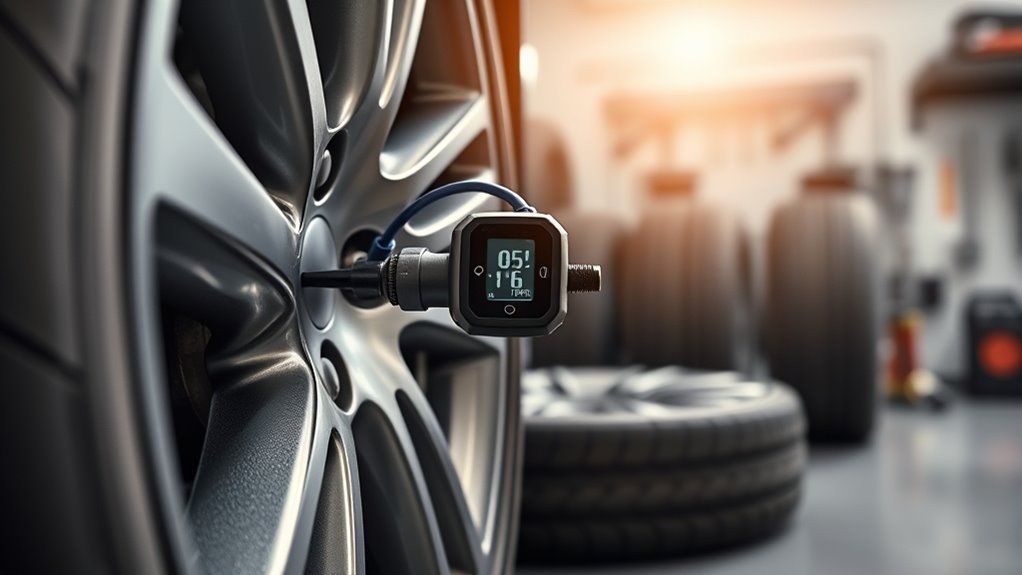
Yes, a tire inflator works with TPMS, but you still need to watch the gauge and follow the vehicle’s pressure spec. Direct TPMS updates in real time, while indirect systems may need a reset after inflation, rotation, or seasonal tire changes. TPMS warns you about low pressure, but it doesn’t replace manual checks for leaks or temperature changes. If the warning light stays on, you’ll want to know what else could be going on.
Key Takeaways
- Tire inflators work with both direct and indirect TPMS, but direct systems show pressure changes more accurately.
- Manual pressure checks are still needed because TPMS warns of low pressure, not exact tire values.
- Inflation can trigger temporary TPMS alerts, especially in indirect systems that may need recalibration.
- Always inflate tires to the vehicle manufacturer’s recommended pressure to avoid overinflation and sensor issues.
- If the warning light stays on after inflation, reset the TPMS or inspect for faults, leaks, or sensor problems.
Can You Use a Tire Inflator With TPMS?
Yes, you can use a tire inflator with TPMS, because both direct and indirect systems are designed to handle normal tire inflation without interference.
You can use tire inflation tools confidently while keeping the tire pressure monitoring system in mind. Direct TPMS sensors give you real-time pressure data, so you can bring each tire to the manufacturer’s specifications without guesswork. That keeps your tires properly inflated and reduces the risk of underinflated tires.
If your vehicle uses indirect monitoring, you may need to reset the system after inflation so it can relearn the new pressure baseline.
Watch the gauge carefully during inflation, because excessive pressure can also trigger alerts. Temperature shifts can change readings after you finish, so check again when conditions stabilize.
With disciplined use, you keep control, protect performance, and avoid unnecessary warning lights.
Why TPMS Isn’t a Substitute for Manual Checks
A tire inflator and TPMS work together, but TPMS shouldn’t replace a manual pressure check. Your TPMS System gives alerts when pressure falls below a set threshold, yet it doesn’t show exact values for each tire.
You need manual checks with a tire gauge to verify pressure, catch gradual leaks, and confirm all four tires stay within spec. TPMS can miss subtle low pressure until the warning light appears, and that delay can increase wear, cut efficiency, and reduce grip.
You should also account for tire temperature, because heat and cold shift pressure faster than the dashboard reports. Monthly manual checks let you spot issues early, including sensor failure or a weak battery in the TPMS System.
That’s practical freedom: you don’t depend on a warning light alone. Use TPMS as a safeguard, but trust your own inspection to keep control, accuracy, and safety on your side.
What Happens to TPMS During Inflation?
During inflation, TPMS behavior depends on the system type. If you have direct tire pressure monitoring, the Tire Pressure Sensors keep sending real-time air pressure data, so you can track changes as you add air.
With an indirect system, the controller watches wheel speed, so inflation can shift the expected pattern and trigger a need for reset or produce a false reading if you inflate tires unevenly. Heat from driving can also raise pressure briefly, so check the tire when it’s cold for the most accurate result.
After you finish, watch the TPMS warning light; if it stays on, you may have a fault beyond low pressure. Always follow the tire manufacturer’s specified pressure, because overinflation can distort readings and handling.
A tire inflator doesn’t block TPMS; it works alongside it, helping you reclaim control of your setup safely.
When Should You Reset TPMS After Inflation?
Reset the TPMS after inflation when your vehicle uses an indirect system, since it needs to relearn the tire baseline after pressure changes. You should also reset after tire rotation, new tire installation, or seasonal swaps so the TPMS can track the correct wheel positions and keep pressure readings accurate.
In direct systems, a reset often isn’t needed after inflation because the sensors update automatically once pressures return to the recommended range. Check your owner’s manual for the exact procedure, since makes and models differ.
- Inflate each tire to the specified PSI.
- Trigger the TPMS reset only when the manual calls for it.
- Recalibrate after tire rotation to restore position-based monitoring.
- Confirm the dashboard clears and pressure readings stabilize.
Treat the reset as a control step, not a workaround. When you follow the correct process, you keep your monitoring system precise, independent, and ready to support safe driving without guesswork or unnecessary intervention.
Common TPMS Issues After Adding Air
After you add air, the TPMS warning may not clear right away, especially if your vehicle uses an indirect system that needs a reset to relearn the new tire baseline. Indirect TPMS tracks wheel speed, so changed tire inflation can confuse it until you drive and reset. Direct sensors usually update on their own, but the warning light can stay on if pressure readings still fall outside spec. Over-inflation can also distort calibration and keep false alerts alive.
| Issue | Cause | Action |
|---|---|---|
| Stubborn warning light | No reset | Follow manual |
| Slow update | Indirect TPMS | Drive, relearn |
| Bad pressure readings | Over-inflation | Recheck psi |
| New alert after fill | System mismatch | Inspect tires |
| Ongoing alert | Missed routine tire inflation | Reset again |
Use your owner’s manual. A tire inflator gives you control, but your TPMS only frees you when the readings match reality.
Frequently Asked Questions
At What PSI Does a TPMS Trigger?
A TPMS usually triggers when your tire pressure drops about 25% below the recommended PSI, so if you run 32 PSI, warning lights may come on near 24 PSI.
You should check your owner’s manual because sensor calibration and TPMS accuracy vary by vehicle.
Follow maintenance guidelines, use inflation tips, and verify each tire pressure manually, since some systems don’t alert until you’re already considerably underinflated.
Will a Magnet Wake up a TPMS Sensor?
Usually, no: a magnet might wake some TPMS sensors, but you can’t count on it.
You’re balancing subtle sensor activation techniques against the bluntness of magnetic sensor interference. Tire pressure monitoring depends on sensor design, sensor location impact, and battery health.
Use TPMS maintenance tips instead: check pressures, relearn procedures, and scan tools. A tire inflator compatibility check won’t help wake the sensor; if it stays silent, the battery may be dead.
What Are the Common Problems With Car Tire Inflators?
Common problems with car tire inflators include poor inflator accuracy, high noise levels, and weak power source performance.
You may face portability issues when units are bulky, plus short hose length that limits access.
Some models overheat, inflate slowly, or give unreliable readings.
Always check the user manual, verify compatibility, and inspect seals and battery health.
Choose a robust inflator that supports your freedom to travel with confidence.
Do TPMS Sensors Detect Over Inflation?
No, your TPMS sensors don’t usually detect over inflation; they’re basically lightning-fast watchdogs for low pressure.
You rely on tire pressure monitoring for underinflation alerts, not inflation safety above spec. TPMS functionality and sensor accuracy focus on threshold drops, so over inflation risks can slip by unnoticed.
You should check pressure manually, verify sensor calibration, and keep your tires at the manufacturer’s recommended level to protect control, wear, and safety.
Conclusion
Yes, you can use a tire inflator with TPMS, and the system usually keeps working while you add air. But TPMS only reports pressure; it doesn’t inflate tires or replace your gauge. After inflation, recheck the pressure manually and reset the TPMS if your vehicle requires it. If the warning light stays on, you may have a sensor or calibration issue, not just low air. Use TPMS as support, not your only check.

