Reader-supported disclosure: This roundup may earn a referral commission when you click qualifying Amazon links. We only recommend products that fit the EV charging and backup-power use cases covered below.
Last Updated: July 8, 2026
You need reliable backup power when you drive an electric vehicle, but not every “generator” can actually support EV charging. The right choice depends on your charger’s voltage, amperage, continuous wattage draw, outlet type, and whether you need quiet solar backup, portable Level 1 charging, or higher-output home backup.
This guide focuses on power and compatibility so you can match a generator to your EVSE without guessing. You’ll find high-output gas and dual-fuel generators for serious backup, inverter generators for lighter Level 1 charging, and solar power stations for short emergency use where quiet, fume-free power matters.
Quick Verdict
If you want the strongest emergency setup for EV charging and home backup, start with the DuroMax XP13000HXT or DuroMax XP13000EH. If you want cleaner, quieter backup for short Level 1 charging and household essentials, the EcoFlow Delta3 options are easier to live with. If you need a more portable gas inverter, the maXpeedingrods 4000, maXpeedingrods 3500, and Champion 2500 make more sense for limited charging, RV use, and outdoor backup.
Top Picks
|
Category |
Product |
Best For |
Check Price |
|---|---|---|---|
|
🏆 Best Whole-Home Power |
High-output backup, 240V-capable setups, and transfer-switch planning |
||
|
⚡ Best Dual-Fuel Backup |
Gas or propane backup for homes, garages, and emergency EV charging |
||
|
🚀 Best Fast-Charging Solar Setup |
Quiet backup, short Level 1 charging, solar recharging, and indoor-safe storage |
||
|
🌞 Best Solar Bundle |
Solar-supported outages, camping, remote work, and light emergency charging |
||
|
🎯 Best App-Enabled Monitor |
Portable inverter power with load monitoring for RVs and light EV charging |
||
|
🔰 Best High-Output Portable |
Portable gas power for basic backup, tools, RVs, and limited EV top-ups |
||
|
💼 Best Lightweight Inverter |
Camping, RV essentials, and light-duty Level 1 charging where compatible |
Selection Criteria
You want a generator that matches the EV charger you plan to run. Wattage and surge capacity matter, but continuous output matters more because EV charging is a long, steady load. Level 1 charging usually needs a 120V outlet with enough continuous watts, while Level 2 charging needs stable 240V output, the correct outlet or connection method, and enough headroom for the charger’s amperage.
Fuel type, runtime, weight, outlet layout, inverter output, CO safety features, transfer-switch compatibility, and noise all affect daily use. For solar power stations, battery capacity and inverter output determine whether you can run a short emergency charge or only support smaller household essentials.
Safety note: Never run a gas, propane, or natural-gas generator indoors, in a garage, or near open windows. Use outdoor ventilation, follow the generator manual, and hire a qualified electrician for transfer-switch or 240V EV charging setups.
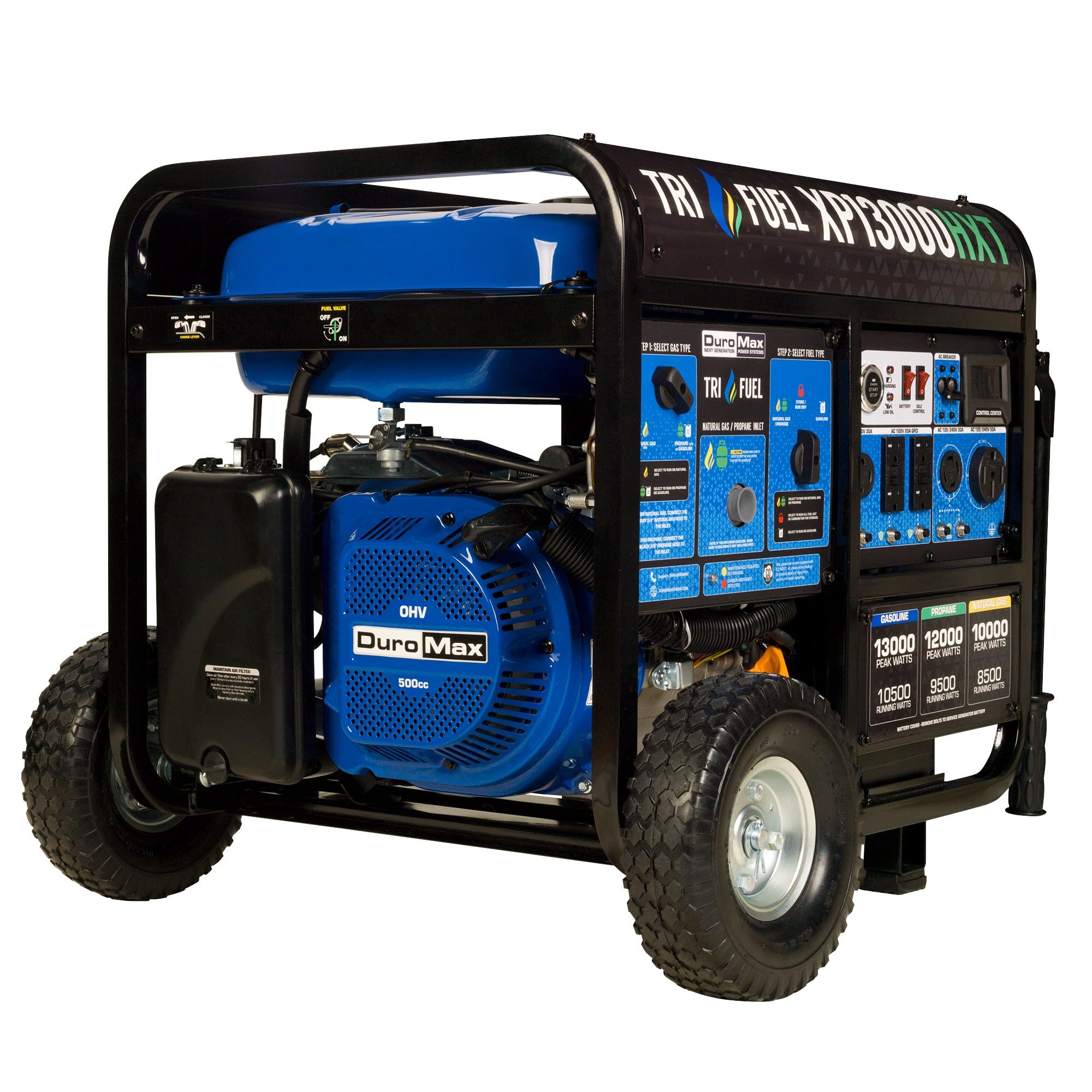
You get the strongest match in this list when you choose the DuroMax XP13000HXT. Its high-output design gives you room for major appliances, garage circuits, power tools, and EV charging setups that need more than a small inverter can supply. The tri-fuel design also helps during outages because you can use gasoline, propane, or natural gas depending on what you have available.
This is not a casual camping generator. It is a large backup-power unit that makes the most sense when you want serious home resilience and you are willing to plan storage, fuel, noise, placement, and safe electrical connection.
Who Should Buy This
- You want one generator for home backup and emergency EV charging support.
- You need flexible fuel options for longer outages.
- You plan to use a transfer switch or properly rated outdoor connection.
Who Should Avoid This
- You need a lightweight camping unit.
- You only want to charge phones, laptops, or low-watt devices.
- You cannot safely store or operate a large fuel-powered generator outdoors.
Buyer Feedback Themes
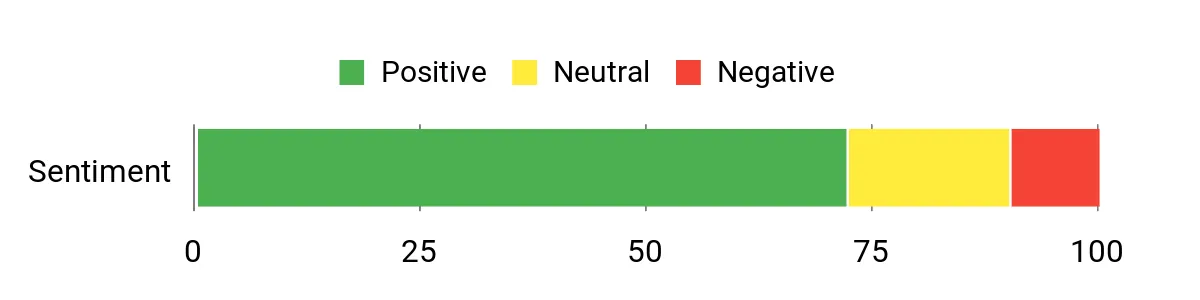
Buyers commonly focus on the generator’s raw output, tri-fuel flexibility, electric start convenience, and usefulness for home backup. Size, weight, noise, and setup planning are the main tradeoffs to consider before choosing it.
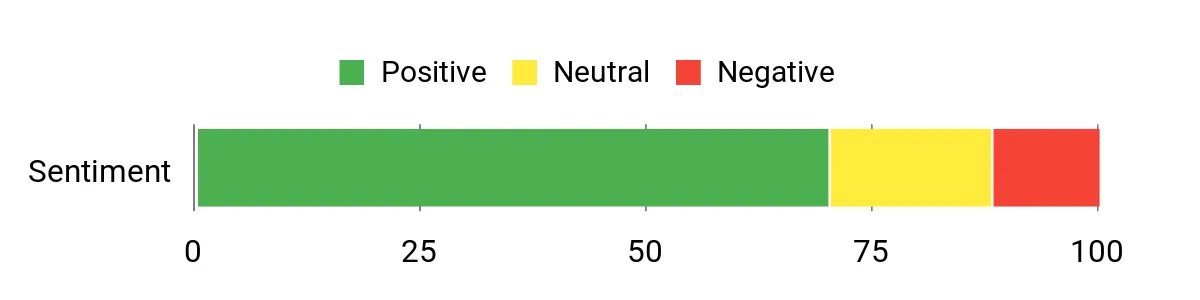
Overall Sentiment: Positive
Situational Benefits
|
Situation |
How It Helps |
|---|---|
|
Whole-Home Backup |
Supports major circuits and appliances during extended outages when connected safely through the proper equipment. |
|
Emergency EV Charging |
Can support EV charging when your EVSE, outlet type, voltage, amperage, and continuous wattage requirements match the generator setup. |
|
Construction Sites |
Handles heavy tools and compressors when permanent power is not available. |
|
Remote Commercial Use |
Supports lighting, refrigeration, and equipment with flexible fuel choices. |
Key Benefits
- High peak and running wattage for demanding backup loads
- Tri-fuel capability for fuel flexibility during outages
- Electric and remote start with a digital display
- Transfer-switch ready for safer home integration
The DuroMax XP13000EH gives you a powerful dual-fuel setup for emergencies, home backup, and EV charging support when your charger requirements match the generator output. It is especially useful if you want gasoline and propane options without stepping into a tri-fuel model.
It is still a large generator, so you should plan for outdoor placement, safe extension-cord or transfer-switch use, and regular maintenance. For EV charging, check your EVSE’s required voltage and amps before connecting.
Who Should Buy This
- You want strong backup power for home circuits and EV charging support.
- You prefer dual-fuel flexibility with gasoline and propane.
- You want a generator that can support heavier loads than compact inverters.
Who Should Avoid This
- You need a quiet indoor-safe battery station.
- You want a small generator for tailgating or tent camping.
- You cannot safely manage fuel storage and outdoor operation.
Buyer Feedback Themes
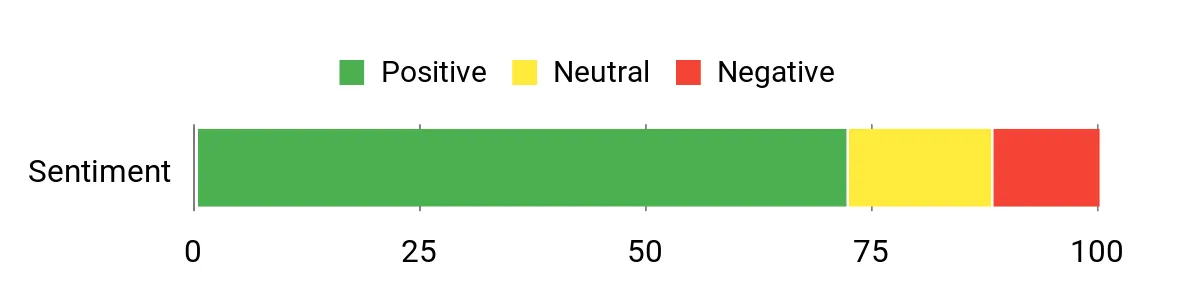
Common buyer themes include strong output, useful dual-fuel operation, and straightforward electric start. The most common drawbacks are weight, storage needs, and the need for careful setup.
Overall Sentiment: Positive
Situational Benefits
|
Situation |
How It Helps |
|---|---|
|
Whole-Home Backup |
Runs essential circuits and larger appliances when properly connected. |
|
Emergency EV Charging |
Supports Level 1 or compatible higher-watt charging setups when the EVSE requirements match the generator. |
|
Storm Preparedness |
Lets you choose gasoline or propane depending on fuel availability. |
|
Garage and Workshop Use |
Provides high-output backup for tools and equipment when utility power is unavailable. |
Key Benefits
- High surge and sustained wattage for large loads
- Dual-fuel flexibility with gasoline or propane
- Electric start and clear controls
- Transfer-switch ready for safer home integration
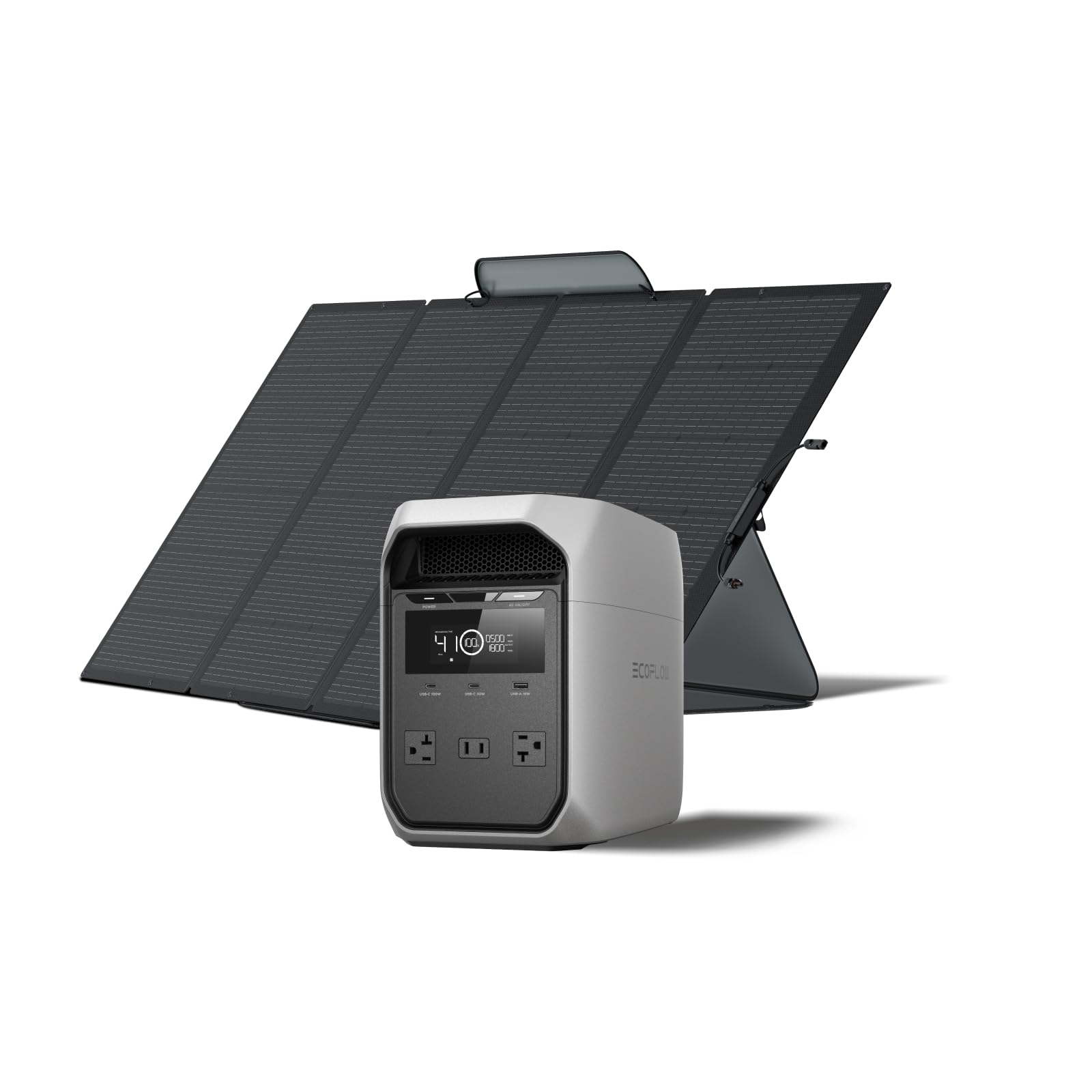
The EcoFlow Delta3 is a cleaner, quieter choice when you do not want fumes, fuel storage, or engine noise. Its 1,800W AC output can support many household essentials and may support short Level 1 EV charging when your charger’s draw stays within the unit’s limits.
The included 400W solar panel makes it more useful during outages or off-grid stays because you can recover some battery capacity in good sunlight. Just keep expectations realistic: a 1,024Wh battery can add only a limited amount of EV range, so this is for emergency top-ups, not routine full charging.
Who Should Buy This
- You want quiet, fume-free backup power.
- You need a solar-capable station for outages, camping, or remote work.
- You want limited emergency EV charging without running a gas engine.
Who Should Avoid This
- You need sustained Level 2 charging.
- You want to run large home loads for many hours without recharging.
- You need the fuel flexibility of a gas, propane, or natural-gas generator.
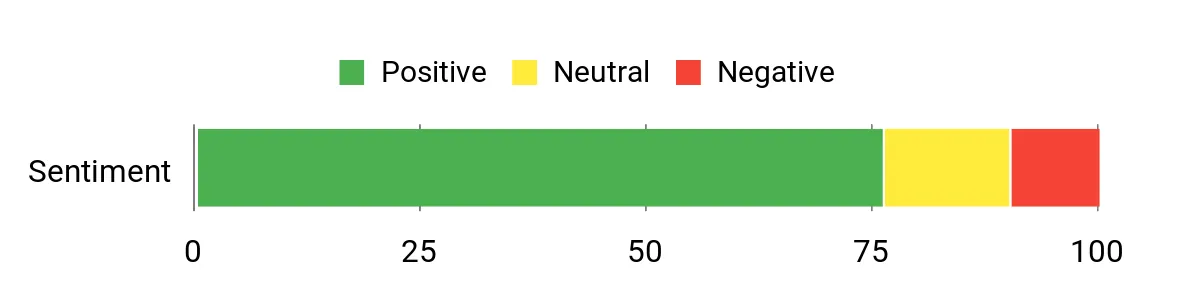
Buyer Feedback Themes
Buyers tend to like the quieter operation, fast recharge design, solar pairing, and ability to run mixed household loads. Weight, battery limits, and realistic EV range gain are the main points to consider.
Overall Sentiment: Positive
Situational Benefits
|
Situation |
How It Helps |
|---|---|
|
Home Outages |
Keeps routers, lights, medical devices, laptops, and small appliances running quietly. |
|
Emergency EV Top-Ups |
Can support short Level 1 charging when the EVSE draw stays within the station’s output limits. |
|
Solar-First Setups |
Pairs with the included 400W panel to recharge off-grid during sunny conditions. |
|
Remote Work |
Provides stable AC and USB-C power for laptops, monitors, networking gear, and tools. |
Key Benefits
- 1,024Wh LiFePO4 battery for quieter backup power
- 1,800W continuous AC output with 3,600W surge
- Fast recharge support and included 400W solar panel
- Multiple outputs including 100W USB-C
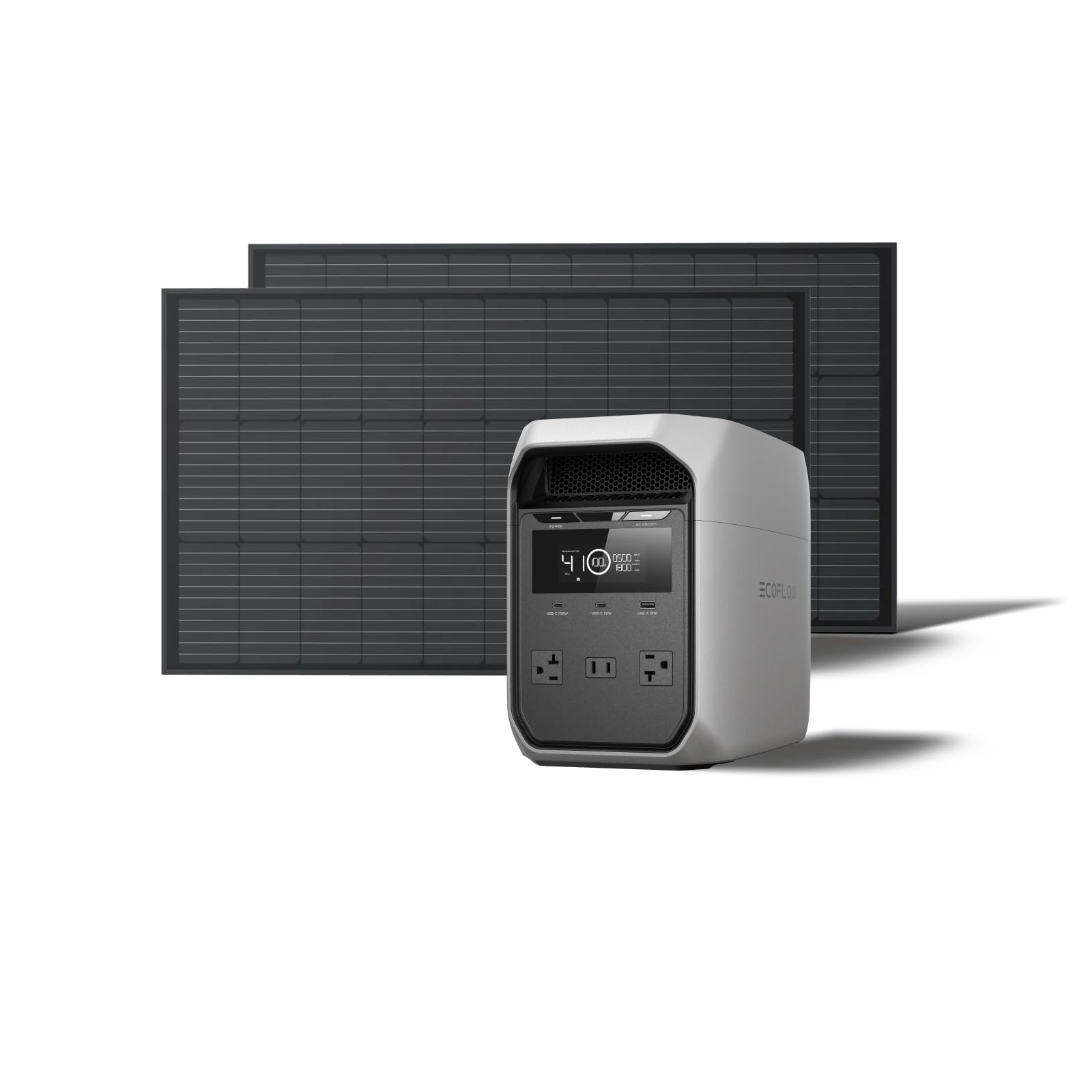
The EcoFlow Delta3 Duo gives you the same practical power-station concept with two 100W solar panels. It fits readers who want quieter emergency power, solar recharging, and enough inverter output for household essentials or short Level 1 EV charging where the charger draw is compatible.
The smaller solar bundle may be easier to move and place than one large panel, but it will also recharge more slowly in weak sunlight. Choose this version if portability and solar flexibility matter more than the fastest possible solar input.
Who Should Buy This
- You want a solar bundle for outages, camping, or remote work.
- You prefer quiet operation over fuel-powered runtime.
- You only need short emergency EV charging, not daily full charging.
Who Should Avoid This
- You need long runtime under heavy loads.
- You need high-output 240V charging.
- You want a generator that can refuel quickly and keep running for days.
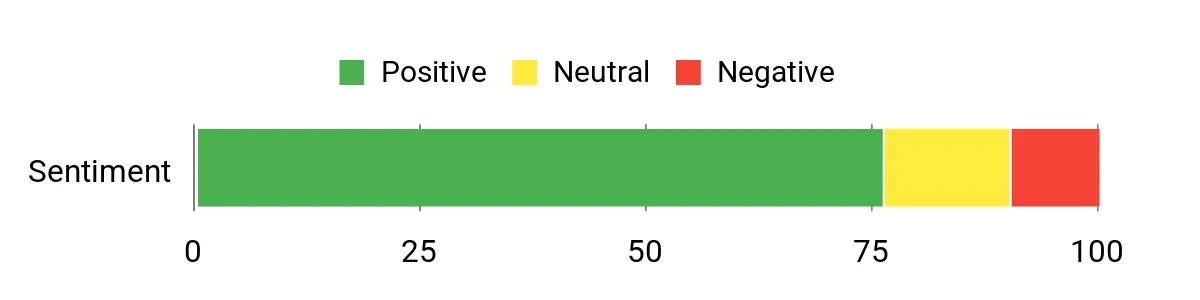
Buyer Feedback Themes
Buyers often value the quiet operation, solar-panel convenience, fast recharge ability, and useful output range. The main tradeoffs are weight, limited battery capacity compared with fuel generators, and slower recovery when sunlight is weak.
Overall Sentiment: Positive
Situational Benefits
|
Situation |
How It Helps |
|---|---|
|
Home Outages |
Keeps refrigerators, routers, lights, and key devices running without engine noise. |
|
Weekend Getaways |
Powers cooking gear, lights, and chargers at a campsite without fumes. |
|
Remote Work |
Provides stable AC and USB-C power away from reliable outlets. |
|
Emergency EV Top-Ups |
Supports short Level 1 charging only when charger draw and station output are compatible. |
Key Benefits
- 1,024Wh LiFePO4 battery for quiet backup power
- 1,800W continuous AC output for many household essentials
- Includes two 100W solar panels for off-grid recharging
- Good fit for emergency backup and solar-supported travel
The maXpeedingrods 4000 gives you more portable power than a small camping generator while staying easier to move than a large whole-home unit. The 3,200W running output works well for tools, RV appliances, event power, and compatible Level 1 EV charging.
The app monitoring is useful because EV charging is a steady load. You can keep an eye on output and avoid overloading the generator. It still runs on fuel, so you need outdoor placement, ventilation, and normal engine maintenance.
Who Should Buy This
- You want portable inverter power with better monitoring.
- You need enough running output for RV appliances and light EV charging.
- You want a middle ground between compact inverters and large home generators.
Who Should Avoid This
- You need sustained high-amp Level 2 charging.
- You want indoor-safe, fume-free power.
- You prefer the fuel flexibility of a dual-fuel or tri-fuel generator.
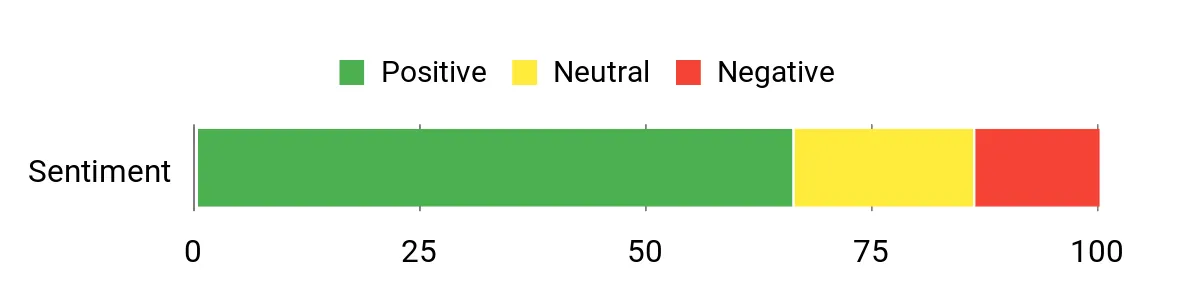
Buyer Feedback Themes
Buyers often focus on the strong output for its size, app monitoring, and RV-friendly design. The main tradeoffs are fuel use, runtime under heavy loads, and higher weight than smaller inverters.
Overall Sentiment: Positive
Situational Benefits
|
Situation |
How It Helps |
|---|---|
|
RV Power |
Runs many RV essentials while staying more portable than larger open-frame units. |
|
Job Site |
Delivers starting watts for tools while app monitoring helps you manage load. |
|
Event Power |
Supports lighting, sound systems, and small catering equipment outdoors. |
|
Emergency EV Charging |
Can support compatible Level 1 charging when the EVSE draw stays within the running-watt limit. |
Key Benefits
- 4,000W starting output with 3,200W running output
- Bluetooth app monitoring for status and load awareness
- RV-ready outlet layout and digital display
- Cleaner inverter-style power for sensitive electronics
The maXpeedingrods 3500 is a practical pick when you want enough output for basic backup, RV needs, tools, and compatible Level 1 EV charging. It gives you more usable power than ultralight inverters without moving into whole-home generator size.
It is best for buyers who need portable gas power and can manage outdoor operation safely. For EV charging, confirm that your charger does not exceed the generator’s continuous wattage and that the outlet and grounding setup are compatible.
Who Should Buy This
- You want a portable inverter generator for emergency backup.
- You need enough output for basic Level 1 charging where compatible.
- You want CO sensor and overload protection in a compact gas unit.
Who Should Avoid This
- You need whole-home backup or sustained Level 2 charging.
- You want solar recharging or indoor-safe operation.
- You prefer dual-fuel or tri-fuel flexibility.
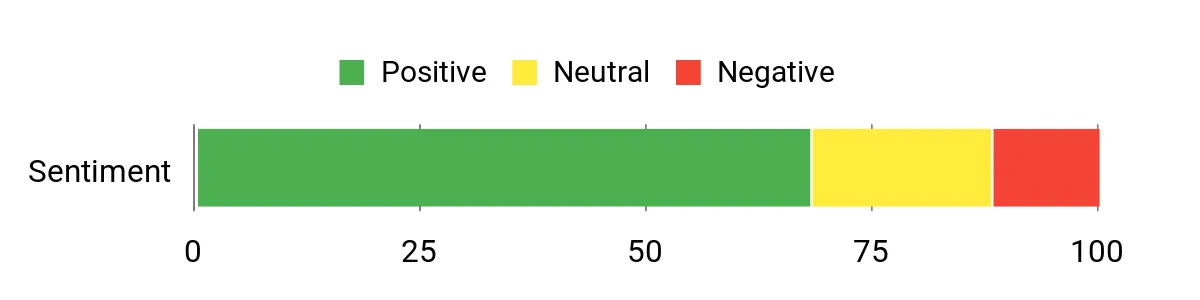
Buyer Feedback Themes
Buyers often mention useful power output, manageable size, and safety features. The tradeoffs are fuel maintenance, outdoor-only operation, and limited capacity compared with larger generators.
Overall Sentiment: Positive
Situational Benefits
|
Situation |
How It Helps |
|---|---|
|
Home Backup |
Runs essential appliances and devices during shorter outages. |
|
RV and Camping |
Provides stronger output than many small inverters while staying portable. |
|
Job Sites |
Handles tools and compressors for temporary work locations. |
|
Emergency EV Charging |
Supports compatible Level 1 charging only when your EVSE draw fits within the continuous output limit. |
Key Benefits
- 3,500W starting output and 3,000W running capacity
- CO sensor and overload protection
- Compact for a higher-output gas inverter
- Useful for RVs, tools, and basic emergency backup
The Champion 2500 is the lightest gas inverter option in this final list. It makes sense if you want portable power for camping, RV essentials, tailgating, and limited backup tasks while keeping weight and noise lower than larger units.
For EV charging, treat it as a light-duty option. It may support compatible low-amp Level 1 charging, but you must confirm your EVSE draw and avoid overloading the generator. It is not a whole-home or Level 2 charging solution.
Who Should Buy This
- You want a lighter inverter generator for camping and outages.
- You need clean power for electronics and small appliances.
- You only need limited emergency EV charging where compatible.
Who Should Avoid This
- You want to run a 240V Level 2 charger.
- You need whole-home backup capacity.
- You want fuel-free indoor-safe backup power.
Buyer Feedback Themes
Buyers often like the portability, quiet operation, clean inverter power, and safety-focused CO Shield feature. The main limitation is output: it is built for light backup, not heavy charging or large home loads.
Overall Sentiment: Positive
Situational Benefits
|
Situation |
How It Helps |
|---|---|
|
Camping |
Keeps lights, a small fridge, and device chargers running with less noise than many open-frame units. |
|
Tailgating |
Delivers clean power for speakers, small cooking gear, and phones. |
|
RV Use |
Fits in tighter storage and supports essential loads. |
|
Short Home Outages |
Runs a few critical items like Wi-Fi, phones, and a mini-fridge until main power returns. |
Key Benefits
- Lightweight for a 2500-watt inverter generator
- Quiet operation for camping and neighborhood use
- Clean inverter power for electronics
- CO Shield® and Cold Start features
Before You Buy an EV Charging Generator
- Check charger draw: Look at your EVSE voltage and amperage, then calculate watts with volts × amps.
- Prioritize running watts: EV charging is a continuous load, so do not rely only on surge watts.
- Match the outlet: Confirm 120V or 240V compatibility, plug type, grounding, and neutral requirements.
- Leave headroom: Choose a generator with extra capacity so it does not run at its limit for hours.
- Plan safety first: Use fuel generators outdoors only, and use a transfer switch for home circuit integration.
- Be realistic with solar stations: Battery stations are quiet and convenient, but they add limited EV range per charge cycle.
FAQ
Can I Use a Portable Generator To Charge My EV?
Yes, you can use some portable generators to charge an EV, but only when the generator output matches your EVSE. Level 1 charging is usually the simplest because it uses 120V power, but it still needs enough continuous wattage. Level 2 charging needs stable 240V output and a properly rated setup.
Always run fuel-powered generators outdoors and follow the generator and EVSE manuals. If you plan to connect a generator to home wiring, use a qualified electrician and the correct transfer equipment.
What Size Generator Do You Need For EV Charging?
Start with the charger’s voltage and amperage. Use watts = volts × amps to estimate continuous power, then choose a generator with extra headroom. A 120V, 12A Level 1 charger draws about 1,440 watts before losses, while a 240V, 32A Level 2 charger draws about 7,680 watts.
This is why small power stations are not a good fit for EV charging. They may run devices, but they do not provide enough sustained output for most EVSE units.
Are Solar Power Stations Suitable For Charging EVs?
Solar power stations can help with short emergency top-ups when their inverter output supports your EVSE. They are quiet, fume-free, and easy to store indoors, but battery capacity limits how much range they can add.
Use them for occasional backup, camping, or emergency range extension. Do not expect a compact solar station to replace a dedicated Level 2 home charger or a high-output fuel generator.
Is Level 2 EV Charging Possible With a Generator?
It can be possible, but the generator must provide stable 240V power, enough continuous watts, the correct connection, and a safe grounding setup. Many smaller portable generators do not meet those needs.
For home use, do not improvise wiring. A transfer switch, inlet box, or professionally designed setup is much safer than makeshift connections.
Should I Choose Gas, Propane, Natural Gas, or Solar?
Gas generators usually offer strong portable output, propane stores well and burns cleaner than gasoline, natural gas can be convenient when you have a home connection, and solar stations are quiet and low-maintenance. Your best choice depends on runtime, output needs, storage space, noise limits, and how often you expect to charge during outages.
Wrapping Up
The best generator for EV charging depends on how much charging you really need. For serious backup and stronger charging support, the DuroMax XP13000HXT and XP13000EH are the most capable options in this roundup. They make the most sense when you need high output, fuel flexibility, and safer home integration through proper equipment.
If you want quiet backup and only need short Level 1 emergency charging, the EcoFlow Delta3 setups are easier to store, safer indoors when not charging from solar, and simpler to use around the house. For RVs, jobsites, and lighter emergency use, the maXpeedingrods and Champion inverter generators give you portable power without stepping up to a full-size home generator.
Before you buy, check your EVSE label, calculate continuous watts, confirm outlet compatibility, and decide whether you need 120V convenience, 240V capability, or quiet solar backup. That simple check will prevent most generator-to-EV charging mistakes.
| Product Name | Image | Output Wattage | Weight | Unique Highlights |
|---|---|---|---|---|
| DuroMax XP13000HXT Tri Fuel Portable Generator |
 |
13,000 Watts peak | 240 Pounds |
|
| DuroMax XP13000EH Dual Fuel Generator |
 |
13,000 Watts peak | 234 Pounds |
|
| EF ECOFLOW Solar Generator DELTA 3 Classic + 400W |
 |
1,800 Watts | N/A |
|
| EF ECOFLOW Solar Generator DELTA 3 Classic + 2x100W |
 |
1,800 Watts | N/A |
|
| maXpeedingrods 4000 Watt Inverter Generator |
 |
3,200 Watts running | 48.5 Pounds |
|
| maXpeedingrods 3500 Watt Portable Inverter Generator |
 |
3,000 Watts running | 52.2 Pounds |
|
| Champion Power Equipment 2500-Watt Inverter Generator |
 |
2,500 Watts peak | 39.7 Pounds |
|
This Roundup is reader-supported. When you click through links we may earn a referral commission on qualifying purchases.