Hardwired EV chargers give you a permanent Level 2 charging setup at home. Instead of plugging the charger into a NEMA outlet, a licensed electrician connects the unit directly to a dedicated circuit from your electrical panel. That can make the setup cleaner, more durable, and better suited for higher-output charging when your panel, wiring, charger, and vehicle all support it.
Quick Answer
A hardwired EV charger is usually worth it if you own your home, charge daily, want a clean permanent setup, or need the highest safe Level 2 output your electrical system can support. A plug-in charger may be better if you rent, move often, or only need basic overnight charging.
Key Takeaways
- A hardwired charger connects directly to a dedicated circuit, so it does not rely on a NEMA receptacle.
- Many home hardwired setups support higher charging settings, such as 48 amps on a properly designed 60-amp circuit.
- Your real charging speed depends on the circuit, charger, vehicle onboard charger, and utility or load-management limits.
- Hardwired installation should be done by a licensed electrician and permitted or inspected where local rules require it.
- Federal charger incentives changed in 2026, so check current IRS, state, and utility programs before assuming a rebate or tax credit.
At a Glance
| Time Required | Planning usually takes 15 to 30 minutes. Installation often takes a few hours for a simple garage setup, but panel upgrades, long wire runs, or trenching can take longer. |
| Difficulty | Advanced electrical work. This is not a DIY job for most homeowners. |
| Tools Needed | Licensed electrician, listed Level 2 EV charger, dedicated breaker, correct wire and conduit, mounting hardware, permit paperwork, and commissioning app if the charger is smart. |
| Cost | Simple installations may cost several hundred dollars. Many full installations run about $500 to $2,500 or more when you include labor, permits, charger hardware, wire length, and possible panel work. |
What’s the Deal With Hardwired EV Chargers?
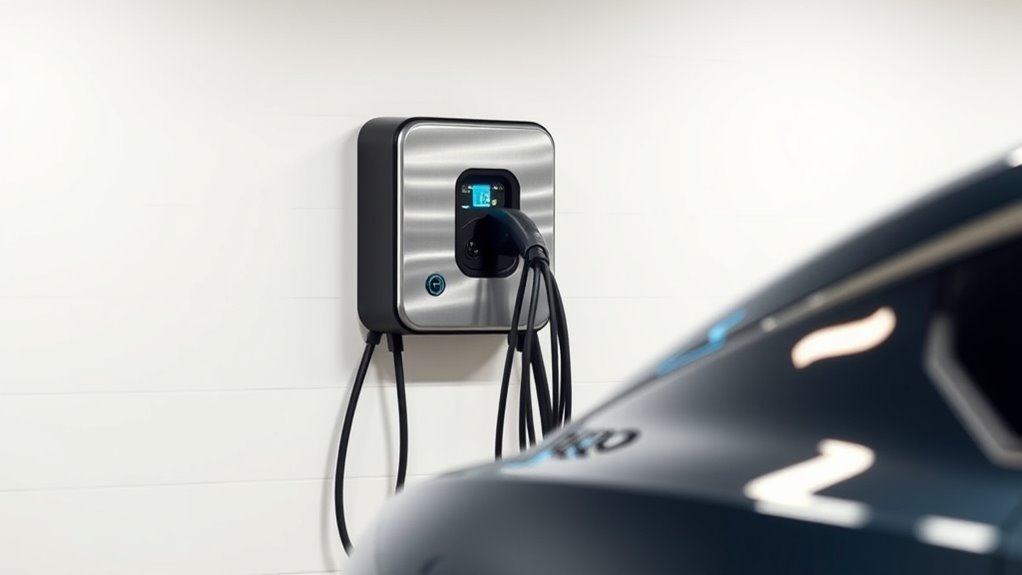
A hardwired EV charger, also called hardwired EVSE, is a charging unit that connects directly to your home’s electrical wiring instead of plugging into a wall receptacle. Most home hardwired chargers are Level 2 chargers, which use 240-volt residential service and charge much faster than a standard 120-volt outlet.
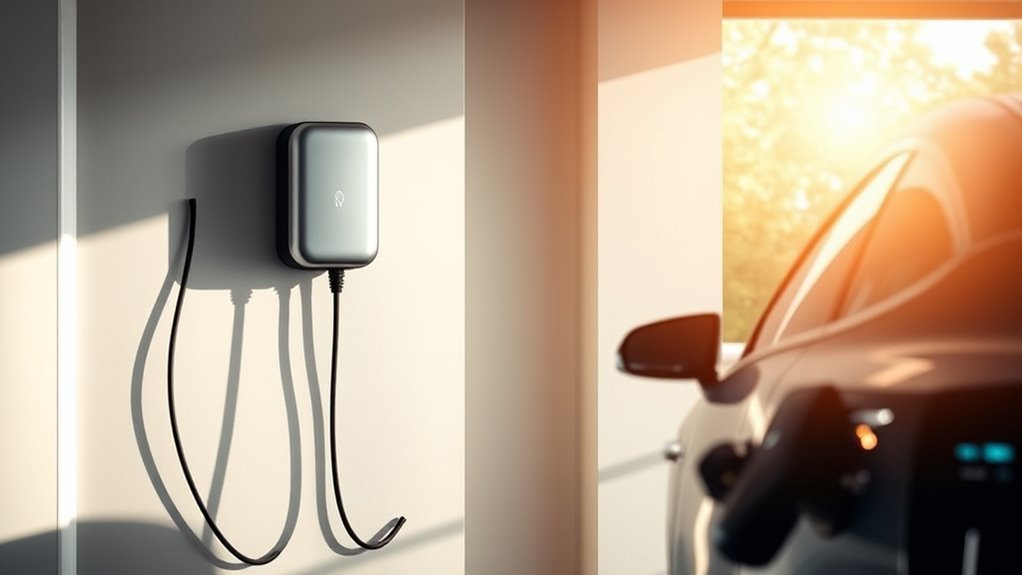
The biggest advantage is that the charger becomes part of a dedicated electrical setup. There is no NEMA plug to insert, remove, loosen, overheat, or expose to weather. That can be especially helpful if the charger is mounted outdoors, in a busy garage, or in a home where you plan to charge the same EV every night.
Hardwiring can also make higher-output Level 2 charging easier to support. For example, many 48-amp home chargers require a properly sized 60-amp circuit. That does not mean every home can safely charge at 48 amps. Your electrician must confirm the panel capacity, wire size, breaker, charger rating, local code, and the vehicle’s onboard AC charging limit.
Warning: Do not install a hardwired EV charger unless you are qualified and legally allowed to do that electrical work in your area. A licensed electrician should size the circuit, follow the National Electrical Code and local amendments, pull permits when required, and arrange inspection when required.
Hardwired vs. Plug-In EV Chargers
Both hardwired and plug-in chargers can work well. The right choice depends on whether you want a permanent charging station or more flexibility.
| Feature | Hardwired Charger | Plug-In Charger |
| Connection | Connected directly to a dedicated circuit. | Plugs into a NEMA receptacle, such as 14-50 or 6-50. |
| Typical output | Often 32 to 48 amps at home, depending on circuit and equipment. | Often up to 40 amps on common 50-amp receptacle setups. |
| Durability | No outlet wear from repeated plugging and unplugging. | Portable, but the receptacle and plug can wear over time. |
| Best for | Homeowners, daily charging, outdoor installs, and long-term EV ownership. | Renters, temporary setups, moving often, or wanting charger portability. |
How to Install Hardwired EV Chargers: What to Expect
Installing a hardwired EV charger starts before anyone mounts the charger on the wall. The most important step is confirming that your electrical system can safely handle the extra load.
1. Check Your Vehicle and Charger Limit
Your EV decides how much AC power it can accept. A 48-amp charger will not charge faster if your vehicle’s onboard charger only accepts 32 amps. Before you choose the biggest charger available, check your owner’s manual or charging screen for the maximum Level 2 AC charging rate.
2. Have the Electrical Panel Evaluated
A licensed electrician should perform a load calculation and inspect your panel, available breaker space, grounding, wire path, and service capacity. Some homes can support a new 40-amp or 60-amp EV circuit easily. Others need load management, a lower charger setting, a subpanel, or a service upgrade.
3. Choose a Listed EV Charger
Choose equipment that is listed by a recognized testing laboratory and suitable for the location where it will be installed. If energy use matters to you, check the ENERGY STAR certified EV charger list before buying.
4. Get Permits if Required
Many areas require an electrical permit for a new EV charger circuit. Permitting protects you, helps with insurance and resale records, and gives the local inspector a chance to verify the installation.
5. Install and Commission the Charger
The electrician mounts the charger, runs the wiring, installs the breaker, makes the hardwired connection, torques terminals as required by the manufacturer, labels the circuit, and tests the unit. Smart chargers may also need Wi-Fi setup, app pairing, firmware updates, and amperage configuration.
Pro Tip: Place the charger near the vehicle’s charge port and close to the electrical panel when practical. A shorter wire run can reduce labor, materials, voltage drop, and installation cost.
Why Choose Hardwired EV Chargers Over Plug-Ins?
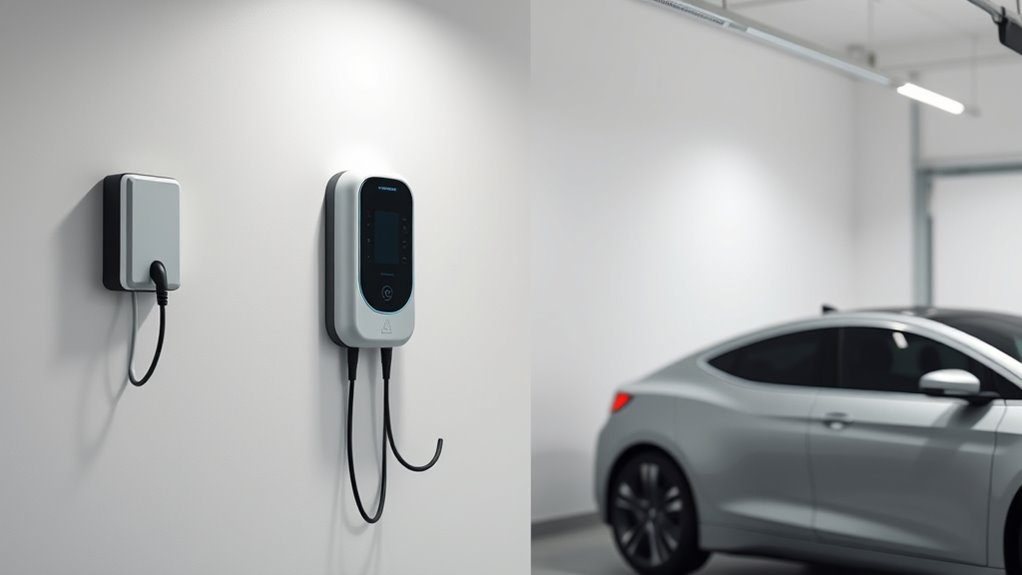
A hardwired EV charger is strongest when you want a permanent, clean, higher-output home charging station. It removes the receptacle from the system, which means there is one less connection point to loosen, corrode, or overheat.
Hardwired chargers can also be better for outdoor locations. A plug-in charger can be safe outdoors only when the receptacle, enclosure, cover, cord, and charger are rated and installed correctly for that environment. A hardwired charger reduces exposed plug hardware and can make weather protection simpler.
Hardwiring also helps if your charger will stay in one place for years. You do not need portability, and you may prefer the cleaner look of a mounted wall unit with a cable holster.
A plug-in charger still makes sense in many cases. If you rent, plan to move soon, already have a properly installed NEMA outlet, or want to take the charger with you, a plug-in model may be the better value.
How Hardwired Chargers Enhance Safety and Durability
Hardwired chargers are not automatically safe just because they are hardwired. They are safer when the installation is correctly designed, permitted where required, installed with the right materials, and matched to the charger’s rating.
The main durability advantage is fewer connection points. A NEMA receptacle must hold a large plug firmly over time. If that receptacle is low quality, poorly installed, frequently unplugged, or exposed to heat and moisture, it can become a weak point. A hardwired charger avoids that plug-and-receptacle connection.
Another safety benefit is correct circuit sizing. EV charging is a long-duration load, so the electrician must size the circuit for continuous use. A common example is a 48-amp charger on a 60-amp circuit, but the exact setup depends on the charger manual and local code.
Note: A bigger charger is not always better. If your daily driving only uses 20 to 40 miles of range, a lower-amperage Level 2 setup may still refill your battery overnight while putting less demand on your panel.
Are Hardwired Chargers Worth the Cost?
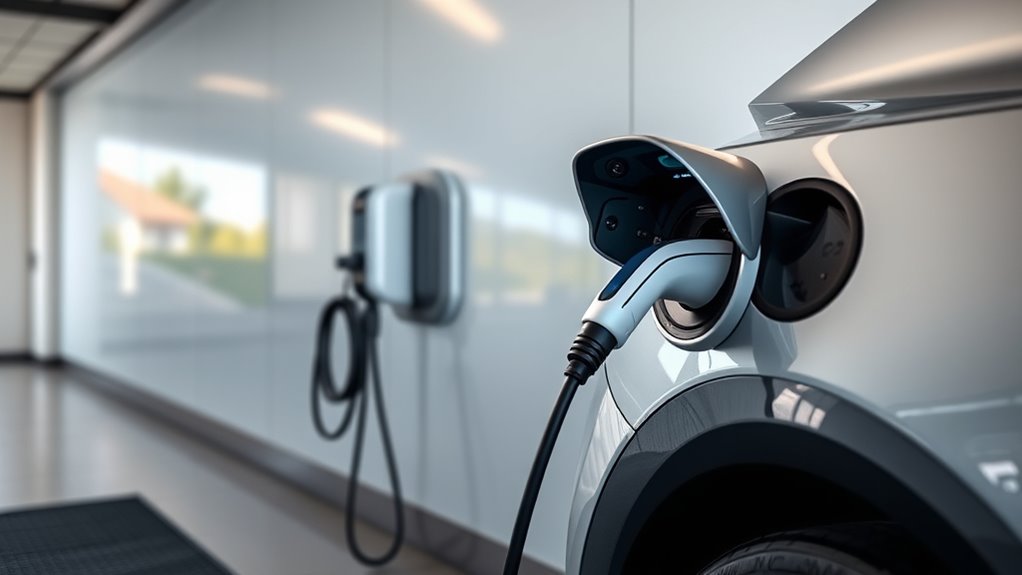
A hardwired EV charger is often worth the cost if you charge at home most of the time. The value comes from convenience, reliability, faster Level 2 charging, cleaner installation, and less wear on a plug-in receptacle.
For many homeowners, the real benefit is not maximum speed. It is waking up to a charged vehicle every morning without handling a portable cord or depending on public charging.
The total price depends on the charger, labor rate, permit fee, breaker size, wire length, wall type, panel capacity, and whether the electrician must add load management or upgrade the panel. A simple garage installation close to the panel may be much cheaper than a detached-garage or outdoor installation with trenching.
Hardwired installation is most likely to pay off when:
- You own your home and plan to keep charging there for years.
- You drive enough that Level 1 charging is too slow.
- You want a permanent outdoor or garage-mounted charger.
- You want the highest safe Level 2 output your home and vehicle can support.
- You have time-of-use electricity rates and want a smart charger that can schedule charging overnight.
It may not be worth it if you drive very little, already charge easily from a 120-volt outlet, rent your home, move often, or would need an expensive service upgrade just to gain a small speed improvement.
Financing Hardwired EV Chargers: Incentives and Options
Before you buy, check incentives from your utility, city, state, and vehicle manufacturer. Some programs require preapproval, approved equipment, a licensed electrician, a final inspection, or enrollment in a managed-charging plan.
Federal incentive rules have changed. The IRS Alternative Fuel Vehicle Refueling Property Credit applied to certain qualifying home EV charger property placed in service from January 1, 2023, through June 30, 2026. For individuals, the credit equaled 30% of the cost up to a maximum credit of $1,000 per item, but the property had to be in an eligible location.
Because the federal date has passed as of July 2026, do not assume a new installation still qualifies. Check the current IRS page, your state energy office, and your utility before scheduling the work. Keep the invoice, permit, inspection record, charger model number, and proof of payment in case you qualify for a rebate or need records later.
Connector Compatibility: J1772, CCS, and J3400/NACS
Most home Level 2 chargers use either a J1772 connector or a J3400/NACS connector. J1772 is common on many non-Tesla EVs for AC Level 1 and Level 2 charging. J3400/NACS is the connector style used by Tesla and adopted by more North American EVs as the market changes.
CCS is different. A CCS Combo connector includes the J1772-style AC portion plus two extra DC pins for DC fast charging. That matters for public fast chargers, not most home hardwired Level 2 chargers.
If you are buying a home charger in the middle of the connector transition, think about the vehicle you own now and the vehicle you may buy next. Some drivers choose a J1772 charger and use an adapter for Tesla/J3400 vehicles. Others choose a J3400/NACS charger if their current or next EV uses that inlet.
Smart Charging, Load Management, and Daily Use
A hardwired charger can be simple or smart. A basic unit supplies power when you plug in. A smart unit can schedule charging, track energy use, connect to Wi-Fi, receive firmware updates, and sometimes respond to utility programs.
Load management can help when your panel has limited spare capacity. Instead of forcing a costly panel upgrade, some systems reduce charger output when the home is using more electricity. This must be designed correctly and accepted by your local authority having jurisdiction.
For daily battery care, many EV owners use the “80/20” habit: charge to about 80% for normal daily driving and avoid dropping very low when possible. This is a general lithium-ion battery care habit, not a law. Follow your vehicle manufacturer’s guidance because battery chemistry and software buffers vary.
Common Installation Problems and Fixes
If your charger does not work as expected after installation, start with the basics before assuming the charger is defective.
- Charging is slower than expected: Check the vehicle’s AC charging limit, charger amperage setting, breaker size, and any app-based charging limit.
- Breaker trips: Stop using the charger and call the electrician. The issue may involve wiring, breaker type, load, charger settings, or a fault.
- Charger feels hot: Some warmth can be normal, but heat at the breaker, wiring, terminals, or charger body needs professional inspection.
- Wi-Fi will not connect: Complete charging setup first, then move the router closer, use a stronger network, or update the charger firmware.
- Car will not start charging: Check scheduled charging settings in both the vehicle and charger app. Two schedules can conflict.
Frequently Asked Questions
Should I get a hardwired EV charger?
You should consider a hardwired EV charger if you own your home, charge often, want a permanent Level 2 setup, or want the highest safe charging output your electrical system and vehicle can support. Choose plug-in if portability, renting, or lower upfront cost matters more.
Is a hardwired EV charger faster than a plug-in charger?
It can be, but not always. Many plug-in chargers on common 50-amp receptacles are limited to 40 amps continuous. A hardwired charger may support higher settings, such as 48 amps on a proper 60-amp circuit, but only if the panel, wire, breaker, charger, and car support it.
What are the three types of EV chargers?
For most drivers, the three practical categories are Level 1, Level 2, and DC fast charging. Level 1 uses a standard 120-volt outlet. Level 2 uses 208- or 240-volt power and is common at homes and workplaces. DC fast charging is mainly for public or commercial sites.
Are J1772 and CCS the same?
No. J1772 is mainly used for AC Level 1 and Level 2 charging. CCS Combo adds two larger DC pins below the J1772-style portion so the same vehicle port can handle DC fast charging. Home Level 2 chargers usually use J1772 or J3400/NACS, not the full CCS fast-charge plug.
What is the 80/20 rule for EV charging?
The 80/20 rule means charging to about 80% for daily use and avoiding very low battery levels when you do not need the full range. It can help reduce battery stress, but it is a general habit. Always follow your EV manufacturer’s guidance for your battery type.
Can I install a hardwired EV charger myself?
Most homeowners should not install a hardwired EV charger themselves. The job involves a dedicated high-power circuit, correct wire sizing, breaker selection, torque specifications, code rules, permits, and inspection. Hire a licensed electrician unless you are qualified and legally allowed to do the work.
Conclusion
A hardwired EV charger is a strong choice when you want a permanent, durable, higher-output Level 2 charging setup at home. It removes the NEMA receptacle from the charging path, can look cleaner, and may support higher safe charging settings when your electrical system and vehicle allow it.
The best decision comes down to your home, driving habits, and budget. If you own the property and plan to charge there for years, hardwired installation is often worth the extra planning. If you rent, move often, or only need light overnight charging, a plug-in charger or even Level 1 charging may be enough.
Before installing, have a licensed electrician check your panel capacity, confirm the circuit size, follow local code, and handle permits or inspection where required. Also check current utility, state, and federal incentive rules before you buy, because EV charger rebate and tax-credit programs change often.
Sources
- U.S. Department of Energy Alternative Fuels Data Center: Electric Vehicle Charging Stations — supports Level 1, Level 2, DC fast charging, home charging, connector, and power-level information.
- Internal Revenue Service: Alternative Fuel Vehicle Refueling Property Credit — supports federal EV charger tax-credit timing and credit limits.
- ENERGY STAR Certified EVSE Product Finder — helps readers identify certified residential EV charging equipment.
- NFPA 70: National Electrical Code — supports electrical-code and installation-safety context.
- SAE International: SAE J3400 North American Charging System — supports current connector-standard context for J3400/NACS.