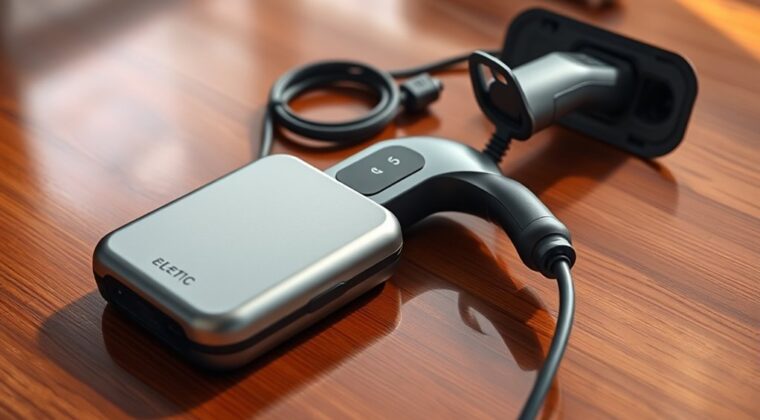
A portable EV charger is a plug-in charging cordset you can carry in your vehicle and use with a compatible wall outlet. Most consumer portable chargers provide AC charging, either Level 1 from a 120V household outlet or Level 2 from a 240V outlet. They are useful for home backup, travel, rental stays, and emergencies, but they still depend on the outlet, circuit, connector, and your EV’s onboard charging limit.
Quick Answer
A portable EV charger is a mobile EVSE cord that connects your electric vehicle to a compatible outlet. Level 1 models are slow but widely usable. Level 2 models are faster, but they need a proper 240V outlet and circuit. It is best for backup, travel, and flexible charging, not as a substitute for unsafe wiring.
Key Takeaways
- Most portable EV chargers are AC charging cordsets, also called EVSE, not battery packs that store a full car charge.
- Level 1 charging usually adds only a few miles of range per hour, while Level 2 can add much more when a safe 240V outlet is available.
- Connector compatibility depends on your region and vehicle. North America commonly uses J1772 or J3400/NACS, while the UK and Europe commonly use Type 2.
- The outlet and circuit matter as much as the charger. Damaged outlets, loose plugs, undersized wiring, or extension cords can create heat and fire risk.
- Look for safety-listed equipment, adjustable amperage, the right plug, a usable cord length, weather rating, and clear manufacturer support.
At a Glance
| Time Required | About 3 to 5 miles of range per hour on many Level 1 setups; often 15 to 30 miles per hour on many Level 2 setups, depending on amperage and vehicle limits. |
| Difficulty | Easy if the outlet, plug, circuit, and vehicle connector already match. Call an electrician if you need a new 240V outlet or dedicated circuit. |
| Tools Needed | Portable EV charger, matching outlet, vehicle connector or approved adapter, vehicle manual, and a dry, safe charging area. |
| Cost | Varies by brand, amperage, cable length, plug type, smart features, and whether electrical work is needed. |
What Is a Portable EV Charger and How Does It Work?
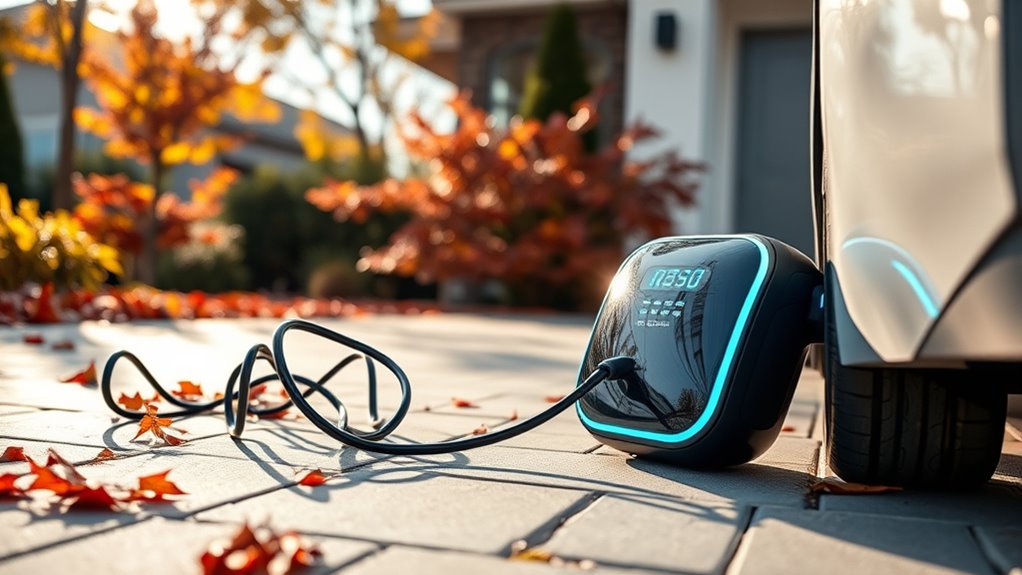
A portable EV charger is the charging cable and control box that safely supplies power from an outlet to your electric vehicle. Technically, this device is electric vehicle supply equipment, or EVSE. The actual charger that converts AC power into battery power is usually built into the vehicle.
When you plug in, the EVSE communicates with the car, checks that the connection is safe, and tells the vehicle how much current it can draw. Your car then controls how quickly it accepts power. That is why two EVs can charge at different speeds from the same portable charger.
Most consumer portable chargers use one of two power sources:
- Level 1: A standard 120V household outlet, often using a NEMA 5-15 plug in North America. This is slow but useful almost anywhere a safe grounded outlet is available.
- Level 2: A 208V or 240V outlet, such as a properly installed NEMA 14-50, NEMA 6-50, or similar outlet. This is much faster, but it needs the right circuit and plug.
Note: A portable EV charger does not create power on its own unless it is a battery-based mobile unit. Most portable chargers simply let your EV draw electricity safely from an existing outlet.
Key Components of a Portable EV Charger
A good portable EV charger is more than a cable. It has several parts that affect safety, speed, and compatibility:
- Wall plug: This matches the outlet, such as NEMA 5-15 for Level 1 or NEMA 14-50 for many Level 2 setups in North America.
- Control box: This is the EVSE module. It manages communication, current limits, fault detection, and safe startup or shutdown.
- Vehicle connector: This connects to the car. In North America, many non-Tesla EVs use J1772 for AC charging, while newer vehicles may use J3400, also known as NACS. In the UK and Europe, Type 2 is common.
- Cable: Many portable chargers have a cable around 15 to 25 feet long. A longer cable can be convenient, but it must still be rated for the current.
- Adapter set: Some chargers include swappable plugs or adapters. Use only adapters approved by the charger or vehicle manufacturer.
Before buying, check your owner’s manual for the maximum AC charging rate your EV can accept. A high-amp portable charger will not make the car charge faster if the vehicle’s onboard charger is the limiting factor.
Charging Speeds of Portable EV Chargers
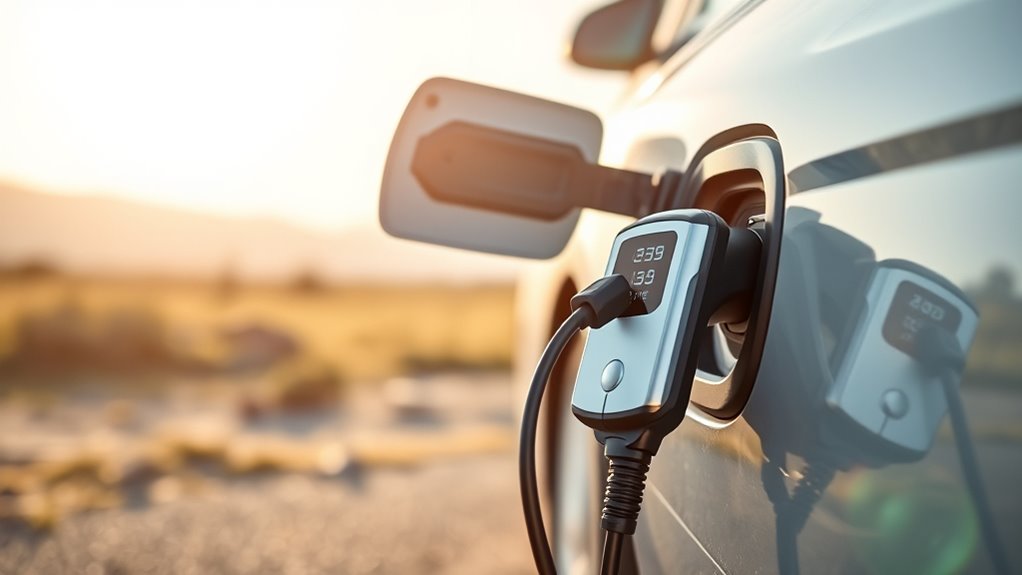
Portable EV charging speed depends on the voltage, amperage, charger setting, outlet condition, battery state of charge, temperature, and your vehicle’s onboard AC charger. Use the numbers below as practical estimates, not guarantees.
| Charging option | Typical power source | What to expect | Best use |
|---|---|---|---|
| Level 1 portable | 120V household outlet | Usually about 3 to 5 miles of range per hour | Overnight top-ups, emergencies, plug-in hybrids, low daily mileage |
| Level 2 portable | 208V or 240V outlet | Often about 15 to 30 miles of range per hour, sometimes more with higher output and a compatible EV | Home charging, road-trip stays, RV parks with compatible outlets |
| Mobile DC or battery unit | Large battery system, generator-style unit, or fleet service equipment | Varies widely; usually expensive and not the same as a consumer portable cordset | Roadside assistance, fleets, events, temporary commercial charging |
Why Charging Speed Varies
Three limits control how fast you charge:
- The outlet: A 120V outlet provides much less power than a 240V outlet.
- The EVSE setting: Many portable chargers let you choose a lower amp setting for weaker circuits.
- The car: Your EV’s onboard AC charger decides how much AC power it can convert into battery power.
For example, a 40-amp Level 2 EVSE will not charge at 40 amps if your vehicle only accepts 32 amps on AC. The charger can offer power, but the vehicle decides what it can safely use.
The Different Types of Portable EV Chargers Explained
Portable EV chargers fall into a few main categories. The right one depends on how often you drive, where you park, and what outlets you can safely use.
Level 1 Portable Chargers
A Level 1 portable charger plugs into a standard grounded household outlet. It is the easiest option to use, but it is slow. It can work well if you drive short distances, own a plug-in hybrid, or need a backup cord for emergencies.
Level 1 is less practical if you have a large EV battery and need to recover a lot of range every night. In that case, a Level 2 setup is usually better.
Level 2 Portable Chargers
A Level 2 portable charger uses a 208V or 240V outlet. These chargers can be much faster than Level 1, but they require a compatible outlet on a properly rated circuit. Common plug types vary, so match the charger plug to the outlet and circuit, not just to the vehicle.
Level 2 portable chargers are useful at home, at a second property, at some RV sites, or anywhere you have permission to use a properly installed 240V outlet.
Dual-Voltage Portable Chargers
Some portable chargers support both 120V and 240V input with interchangeable plugs. These are flexible, but you must use the correct adapter for the outlet and follow the manufacturer’s amp settings. A dual-voltage charger is often the best all-around choice for travel.
Mobile DC and Battery-Based Units
Battery-based EV charging units and mobile DC chargers exist, but they are usually larger, heavier, and more expensive than a consumer portable cordset. They are more common for fleets, events, roadside assistance, and temporary commercial charging. For most drivers, a portable Level 1 or Level 2 AC charger is the realistic choice.
Compatibility: How to Make Sure Your EV Works With Portable Chargers
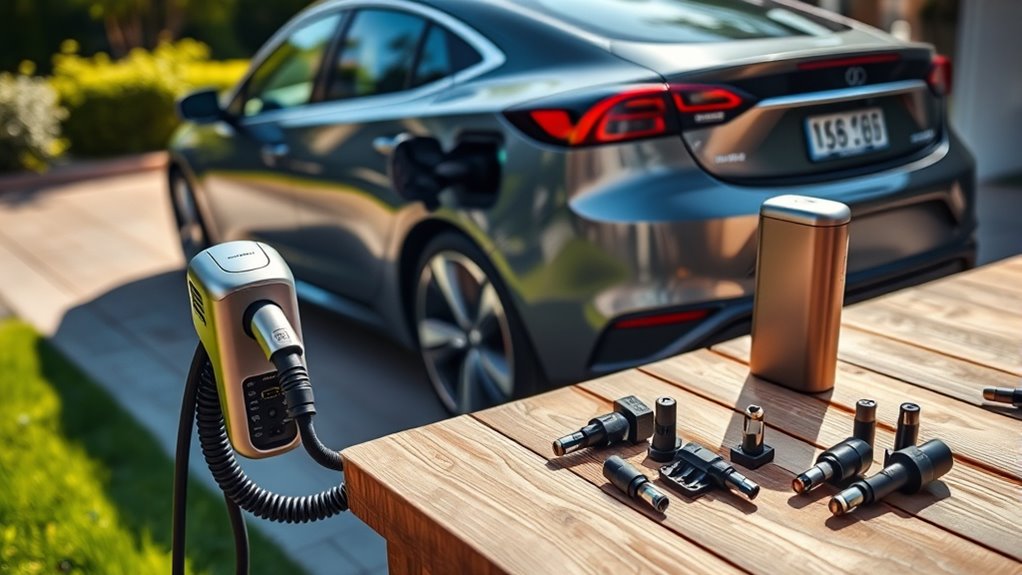
Compatibility has two sides: the vehicle connector and the wall outlet. Both must match before you plug in.
Vehicle Connector Compatibility
- North America, many non-Tesla EVs: J1772 is common for AC Level 1 and Level 2 charging.
- North America, Tesla and newer J3400/NACS vehicles: These vehicles may use the J3400/NACS connector natively. Some can use J1772 with an approved adapter.
- UK and Europe: Type 2 is the common AC connector for many EVs and chargers.
- DC fast charging: CCS, CHAdeMO, and J3400/NACS are DC connector families. These are not the same as most consumer portable AC chargers.
Outlet Compatibility
Do not buy a portable Level 2 charger just because it fits your car. You also need a safe outlet that matches the charger’s plug and current draw. A NEMA 14-50 plug, for example, must be used only with a matching outlet on a properly installed circuit.
Check these items before you charge:
- The outlet type matches the charger plug.
- The circuit amperage supports the charger’s current setting.
- The outlet is grounded, tight, and not damaged.
- The charger is rated for indoor or outdoor use based on where you plan to plug in.
- Any adapter is approved by the charger or vehicle manufacturer.
Pro Tip: If you travel often, keep a simple note in your phone with your EV’s connector type, maximum AC charging rate, and the plug type on your portable charger. It makes it easier to check whether a rental home, campsite, or garage outlet will actually work.
Best Practices and Safety Tips for Using Portable EV Chargers
Portable EV chargers draw high power for long periods, so small electrical problems can become serious. Use the same caution you would use with any high-load electrical equipment.
Warning: Do not use a damaged outlet, loose plug, hot receptacle, burned connector, wet indoor-rated charger, or random extension cord. Stop charging if you smell burning plastic, see discoloration, or feel unusual heat at the plug or outlet.
- Inspect before every use. Check the plug, cable, connector, control box, and outlet for cracks, corrosion, burn marks, or loose parts.
- Use the correct outlet. A Level 2 portable charger needs a properly rated 208V or 240V circuit. Do not assume every large outlet is safe for EV charging.
- Avoid extension cords. Most EV charger manuals warn against extension cords because they can overheat, add voltage drop, and create extra failure points.
- Keep connections dry. For outdoor charging, use equipment and receptacles rated for outdoor exposure. Keep the control box off standing water.
- Set the right amperage. If your portable charger has adjustable current, match it to the circuit and outlet rating.
- Do not force adapters. Use only manufacturer-approved adapters and never modify plugs.
- Check heat early. After charging starts, check the plug and outlet during the first 10 to 15 minutes. Warm can be normal, but hot is a warning sign.
- Follow the manual. Your EV and EVSE manuals override general advice because limits vary by model.
How to Choose a Portable EV Charger
The best portable EV charger is the one that matches your vehicle, outlets, and real charging routine. Use this checklist before buying:
- Connector: Choose J1772, J3400/NACS, Type 2, or an approved adapter based on your vehicle and region.
- Input plug: Match the wall plug to outlets you can safely use, such as a household 120V outlet or a properly installed 240V outlet.
- Adjustable amperage: This helps you lower current for weaker circuits or older outlets.
- Safety certification: Look for equipment listed or certified by a recognized testing laboratory, and check ENERGY STAR certified EV charger listings when relevant.
- Cord length: Pick enough length to reach your charge port without stretching the cable across walkways or traffic paths.
- Weather rating: Choose outdoor-rated equipment if you will charge outside.
- Storage: A case or cable organizer keeps the connector clean and protects it in the trunk.
- Warranty and support: Use a brand with clear documentation, replacement parts, and responsive customer support.
Flexibility Benefits of Portable EV Chargers
A portable EV charger gives you more charging options when a fixed charging station is not available. It can be especially useful when you visit family, stay at a rental property, park near a garage outlet, or need a backup plan during a road trip.
The biggest benefit is not speed. It is control. A portable charger lets you recover range from ordinary electrical infrastructure when the outlet is safe and compatible. For many drivers, that is enough to cover local driving, reach a faster public charger, or avoid towing in a low-battery situation.
Portable charging is also helpful for plug-in hybrids. Because their batteries are smaller than full EV batteries, Level 1 charging may restore a meaningful amount of electric range overnight.
When a Portable EV Charger Is Not Enough
A portable charger is not the right solution for every driver. You may need a hardwired home Level 2 charger or more public fast charging if:
- You drive long distances every day.
- You need to recover most of a large EV battery overnight.
- You do not have access to a safe dedicated outlet.
- Your only available outlet is old, loose, shared with other heavy loads, or exposed to weather.
- You rely on fast road-trip charging where DC fast chargers are the better choice.
If you use Level 2 charging every day at home, a professionally installed hardwired EVSE may be cleaner, safer, and more convenient than constantly plugging and unplugging a portable unit.
Debunking Myths About Portable EV Chargers
- Myth: A portable charger can fully recharge any EV quickly.
Reality: Level 1 is slow, and Level 2 speed depends on the outlet, amperage, and vehicle. - Myth: Any outlet that fits the plug is safe.
Reality: The circuit, wiring, breaker, outlet condition, and continuous-load rating all matter. - Myth: Extension cords are fine if they are heavy duty.
Reality: EV charging is a long-duration high-load use. Follow the charger manual and avoid extension cords unless the manufacturer specifically allows a rated solution. - Myth: All portable chargers work with all EVs.
Reality: Connector type, adapter approval, AC charge rate, and regional standards can differ. - Myth: DC fast charging is just a faster portable charger.
Reality: DC fast charging is usually installed station equipment with much higher power and different connector requirements.
The Future of Portable EV Charging Solutions
Portable EV charging is becoming more useful as EV ownership grows and connector standards shift. In North America, J3400/NACS adoption is changing the adapter and connector landscape. For buyers, that means it is worth checking whether a charger is designed for your current vehicle only or for the vehicle you may buy next.
Smart features are also becoming more common. Some portable chargers include app control, scheduling, energy tracking, adjustable amperage, and fault alerts. These features can help you charge during lower-cost electricity periods and avoid overloading a weak circuit.
Battery-based mobile charging may also improve, but it is still not the everyday answer for most drivers. A compact cordset and a safe outlet remain the most practical portable charging setup for regular consumers.
Frequently Asked Questions
Are portable EV chargers worth it?
Yes, a portable EV charger is worth it if you want a backup charging option, travel to places with usable outlets, or need flexible charging away from a fixed station. It is less useful if you only charge at home from a hardwired Level 2 unit or depend mostly on DC fast charging.
Can I charge my EV with a portable charger?
Yes, you can charge your EV with a portable charger if the vehicle connector, wall plug, outlet voltage, circuit rating, and charger settings are compatible. Always check your vehicle manual and the charger manual before using a new outlet or adapter.
How fast is a portable EV charger?
A Level 1 portable charger often adds about 3 to 5 miles of range per hour. A Level 2 portable charger can add much more, often around 15 to 30 miles per hour, when connected to a proper 240V outlet. Actual speed depends on the EV, charger, outlet, amperage, and battery condition.
Is a portable charger already charged when you buy it?
Most portable EV chargers are not battery packs, so there is nothing to pre-charge. They work by connecting your EV to a wall outlet. If you buy a battery-based mobile charging unit, that unit must be charged before it can transfer power to your vehicle.
What EV charger does Volvo recommend?
Volvo’s recommendations can vary by market, model year, and available home-charging partners. Check your Volvo owner’s manual or Volvo’s official charging accessories page for your exact vehicle. The safest choice is a charger that matches your vehicle connector, onboard AC charging limit, local electrical code, and installation requirements.
Can I use a portable EV charger with an extension cord?
In most cases, you should not use an extension cord with a portable EV charger unless the charger manufacturer specifically approves that setup. EV charging draws high power for long periods, and an undersized or damaged extension cord can overheat.
Can I leave a portable EV charger outside?
Only if the charger and outlet setup are rated for outdoor use. The control box, plug, and connection point should be protected from standing water, damage, and strain. If the charger is indoor-rated only, do not use it outside in wet or exposed conditions.
Conclusion
A portable EV charger is one of the most useful accessories an electric vehicle owner can keep on hand. It gives you a backup way to charge from a compatible outlet, helps during travel, and can reduce stress when a public charger is unavailable.
The key is to stay realistic. Level 1 is convenient but slow. Level 2 is faster but needs a proper 240V outlet and circuit. Connector standards also vary by vehicle and region, so check whether you need J1772, J3400/NACS, Type 2, or an approved adapter.
Choose safety-listed equipment, follow the manual, avoid questionable outlets, and stop charging if anything feels hot, loose, damaged, or unsafe. Used correctly, a portable EV charger can be a practical backup tool and a smart part of your EV charging plan.
Sources
- U.S. Department of Energy Alternative Fuels Data Center: Electric Vehicle Charging Stations — charging levels, estimated range added, connector terminology, and DC fast charging context.
- U.S. Department of Energy Alternative Fuels Data Center: Electricity Basics — EV electricity basics and off-board power source context.
- ENERGY STAR Certified Electric Vehicle Chargers AC Product Finder — certified EVSE product categories, Level 1/Level 2 filters, and portable charger feature filter.
- SAE International: J1772 Electric Vehicle and Plug-in Hybrid Electric Vehicle Conductive Charge Coupler — J1772 charging coupler standard reference.
- Joint Office of Energy and Transportation: DriveElectric.gov — U.S. EV charging infrastructure and connector transition resources.
