
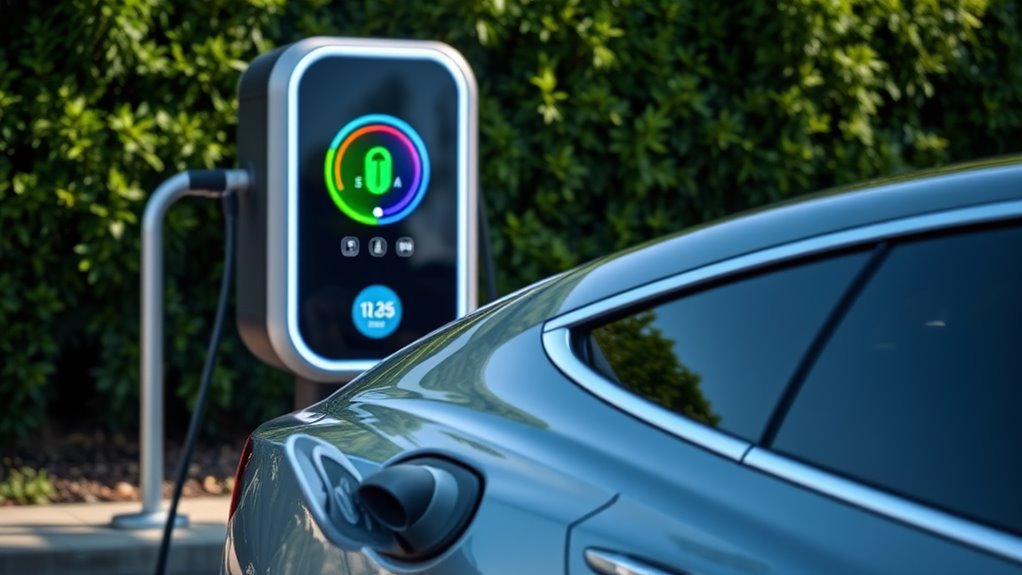
A kilowatt-hour, written as kWh, tells you how much energy your electric vehicle uses, stores, or receives during charging. If kW is the charging speed, kWh is the amount of energy added. Once you understand kWh, it becomes much easier to estimate charging cost, driving range, and how long a charging stop may take.
Quick Answer
A kWh is a unit of energy. In EV charging, it shows how much electricity your car uses or receives. Your charging cost is usually kWh multiplied by your electricity rate, while your range depends on how many miles your EV can drive per kWh.
Key Takeaways
- kWh means energy amount; kW means charging power or speed.
- Cost is simple: kWh used × price per kWh = charging cost before taxes, fees, and losses.
- Range depends on efficiency, usually shown as miles per kWh or kWh per 100 miles.
- Fast chargers do not always deliver their full rating because the vehicle, battery temperature, and state of charge control the real speed.
- For daily charging, follow your vehicle’s charge-limit guidance instead of assuming 100% is best every night.
At a Glance
| Time Required | 1 to 2 minutes to estimate energy use or charging cost |
| Difficulty | Easy |
| Tools Needed | Your EV app, charger screen, trip computer, electricity bill, or calculator |
| Cost | Free to calculate; charging cost depends on your local rate or public charger price |
What Is a kWh and Why Should EV Owners Care?
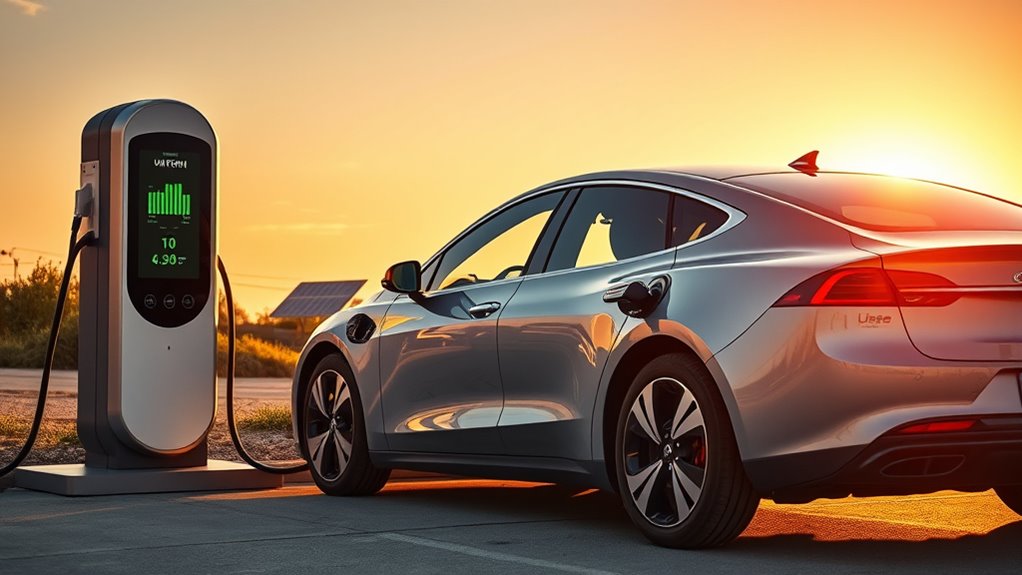
A kilowatt-hour is a unit of energy. One kWh equals using 1,000 watts of power for one hour. In an EV, kWh can describe three related things:
- Battery capacity: how much usable energy the battery can store.
- Energy used while driving: how many kWh your car consumes on a trip.
- Energy delivered while charging: how many kWh the charger adds to the battery.
This matters because EV charging is often billed by the kWh. The U.S. Department of Energy’s Alternative Fuels Data Center explains that EV fuel cost depends on the price of electricity in dollars per kWh and the vehicle’s efficiency in kWh per 100 miles.
For example, if you add 40 kWh and your electricity rate is $0.18 per kWh, the energy cost is about $7.20 before taxes, fees, and charging losses. If your EV averages 4 miles per kWh, that 40 kWh could support about 160 miles of driving in good conditions.
How kWh Affects EV Charging Speeds and Costs
kWh affects your charging bill, but it does not directly describe charging speed. Speed is measured in kW. Energy added is measured in kWh.
| Term | What It Means | EV Example |
|---|---|---|
| kW | Charging power or speed | A 7.2 kW home charger can add up to 7.2 kWh in one hour before losses. |
| kWh | Energy amount | A 60 kWh battery can store more energy than a 40 kWh battery. |
| miles per kWh | Driving efficiency | At 4 miles per kWh, 25 kWh supports about 100 miles. |
| kWh per 100 miles | Energy use over distance | Lower kWh per 100 miles usually means lower energy cost. |
Charging Speed Factors
A charger’s kW rating tells you its maximum power, but your EV decides how much it can actually accept. A 350 kW public charger will not force 350 kW into a car that can accept only 150 kW. Charging can also slow down when the battery is cold, hot, or nearly full.
The basic formula is:
kWh added = charger kW × charging hours
So, a 7.2 kW Level 2 charger running for 4 hours can deliver up to 28.8 kWh before charging losses:
7.2 kW × 4 hours = 28.8 kWh
A 150 kW DC fast charger running at full power for 10 minutes could deliver up to 25 kWh before taper and losses:
150 kW × 10 ÷ 60 = 25 kWh
Note: The charger rating is not a promise. Real charging speed depends on your EV’s maximum charge rate, battery temperature, battery percentage, charger condition, and sometimes the charging network.
Cost Per kWh
To estimate cost, use this formula:
Charging cost = kWh added × price per kWh
According to the U.S. Energy Information Administration, the average U.S. residential electricity price in April 2026 was 18.83 cents per kWh. At that rate, these examples show the energy cost before taxes, fees, and charging losses:
- 20 kWh: about $3.77
- 40 kWh: about $7.53
- 60 kWh: about $11.30
- 75 kWh: about $14.12
Public fast charging often costs more than home charging. Pricing can vary by location, time of day, membership plan, idle fees, and the amount of energy delivered. Electrify America, for example, tells drivers to check real-time pricing in the app or on the charger screen because DC fast charging prices vary by charger location, plan, and energy delivered.
Pro Tip: Check your utility’s time-of-use plan. Charging after peak evening hours can lower your cost per kWh if your electric company offers cheaper overnight rates.
Why kWh Matters in EV Charging and Range
kWh matters because it connects your battery size, charging bill, and driving range. A larger battery usually stores more energy, but range also depends on how efficiently the car uses that energy.
Energy Storage Capacity Explained
Battery capacity is usually shown in kWh. A higher kWh number means the battery can store more usable energy, but it does not guarantee a certain number of miles. A heavy truck, a compact hatchback, and a slippery sedan can all use energy at different rates.
A current example helps. The 2026 Nissan LEAF lists a 75 kWh net battery capacity, with all-electric range estimates of 303, 288, or 259 miles depending on trim. That shows why kWh and efficiency must be read together.
Charging Cost Considerations
Your battery size does not always equal the amount you pay for at every charge. Most drivers do not arrive at 0% and charge to 100%. More often, you pay for the energy added between two battery percentages.
For example, if you add 30 kWh at $0.18 per kWh, the energy cost is:
30 × $0.18 = $5.40
If you add 30 kWh at a public charger charging $0.48 per kWh, the energy cost is:
30 × $0.48 = $14.40
That is why the same EV can be much cheaper to charge at home than at a fast charger.
Impact on Driving Range
To estimate how much energy a trip will use, divide miles driven by your EV’s efficiency:
kWh used = miles driven ÷ miles per kWh
If your EV averages 4 miles per kWh and you drive 120 miles, you use about 30 kWh:
120 ÷ 4 = 30 kWh
Real-world range changes with speed, temperature, hills, tires, cargo, wind, and climate control use. Tesla’s range guidance notes that speed, weather, terrain, driving style, and accessories can all affect energy use and range.
kWh vs. kW: Understanding the Key Differences for EVs
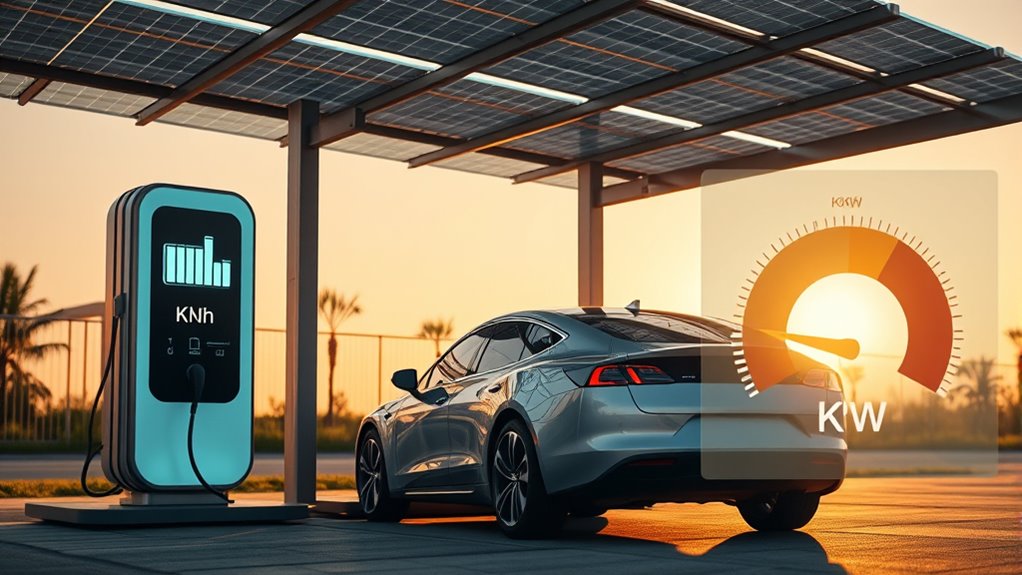
The easiest way to remember the difference is this:
- kW is speed. It tells you how fast energy can move.
- kWh is amount. It tells you how much energy was used, stored, or added.
Think of filling a bucket. kW is how fast water flows from the hose. kWh is how much water ends up in the bucket. A faster hose can fill the bucket sooner, but the bucket still has a fixed size.
| Charging Type | Typical Use | What to Expect |
|---|---|---|
| Level 1 | 120V outlet, backup or light daily driving | The Alternative Fuels Data Center estimates about 5 miles of range per hour of charging. |
| Level 2 | Home, workplace, hotels, public parking | The Alternative Fuels Data Center estimates about 25 miles of range per hour, depending on charger and vehicle. |
| DC fast charging | Road trips and quick public stops | The Alternative Fuels Data Center estimates about 100 to 200+ miles in 30 minutes, depending on vehicle and charger. |
Warning: Level 2 home charging equipment may require a dedicated circuit, permits, and code-compliant installation. Use a qualified electrician when required, and follow your vehicle and charger manuals.
Real-World Scenarios for Understanding kWh Usage in EV Charging
Here are simple examples that show how kWh works in daily EV life.
Scenario 1: Charging at Home Overnight
You plug into a 7.2 kW Level 2 charger for 8 hours. The maximum energy delivered before losses is:
7.2 × 8 = 57.6 kWh
If your EV averages 3.5 miles per kWh, that energy could support about 202 miles in good conditions:
57.6 × 3.5 = 201.6 miles
Scenario 2: Adding Range on a Road Trip
You stop at a DC fast charger and add 42 kWh. If your EV averages 3 miles per kWh on the highway, that charge adds about 126 miles:
42 × 3 = 126 miles
Highway driving often uses more energy than city driving because air resistance rises at higher speeds. Cold weather and headwinds can also reduce the miles you get from each kWh.
Scenario 3: Comparing Two EVs
Two EVs can have the same battery size but different range.
- EV A: 60 kWh battery × 4 miles per kWh = about 240 miles
- EV B: 60 kWh battery × 3 miles per kWh = about 180 miles
The battery size is the same, but EV A goes farther because it uses each kWh more efficiently.
A 60 kWh battery does not automatically mean 240 miles, 300 miles, or any fixed range. The missing piece is efficiency: how many miles your EV gets from each kWh.
Easy Ways to Figure Out Your EV’s kWh Usage
You can estimate EV energy use with a few simple numbers from your car, charger, or utility bill.
Use Your Trip Computer
Most EVs show energy economy as miles per kWh or kWh per 100 miles. If your trip computer says 3.8 miles per kWh and you drove 95 miles, your trip used about 25 kWh:
95 ÷ 3.8 = 25 kWh
Use the Charger Screen or App
Public chargers and many home chargers show how many kWh were delivered during a session. This is useful for tracking cost, but remember that the charger may show energy delivered by the charger, not only energy stored in the battery.
Use Your Electric Bill
Your electric bill shows your price per kWh. To estimate home charging cost, multiply the kWh added by your rate.
If your EV adds 300 kWh in a month and your all-in electricity rate is $0.18 per kWh, your estimated energy cost is:
300 × $0.18 = $54
Estimate Daily Use
For many drivers, 20 kWh per day is not extreme. At 4 miles per kWh, 20 kWh supports about 80 miles of driving. At 18.83 cents per kWh, it costs about $3.77 before taxes, fees, and losses.
If you drive less than that, your daily use may be closer to 5 to 15 kWh. If you commute far, drive fast, tow, use heat in cold weather, or climb steep grades, your daily kWh can be much higher.
Tips for Optimizing Your Charging With kWh Awareness
Once you understand kWh, you can make better charging decisions without overthinking every stop.
- Charge at home when practical. Home charging is usually easier to budget because your electricity rate is shown on your utility bill.
- Use public DC fast charging for trips, not always for daily charging. It is convenient, but it can cost more and charging may slow near the top of the battery.
- Do not judge charging stops by charger kW alone. Your EV’s charge curve and max acceptance rate matter.
- Plan fast-charging stops around 10% to 80% when possible. Many EVs charge faster in the middle of the battery range than near 100%.
- Watch your miles per kWh. Slower speeds, proper tire pressure, and less climate-control strain can improve efficiency.
- Check idle fees. Some public stations charge extra if you stay parked after charging ends.
Note: Battery size, charger rating, and EPA range are helpful, but your real cost and range come from your driving habits, local electricity rate, weather, and how often you use public fast charging.
Frequently Asked Questions
What is a good kWh for an EV?
There is no single “good” kWh number. A smaller city EV may have a smaller battery and still be efficient. A larger SUV or truck may need a much bigger battery to travel a similar distance. Compare battery size with range, efficiency, charging speed, price, and your daily driving needs.
Is 20 kWh per day a lot for an EV?
Not usually. If your EV gets 4 miles per kWh, 20 kWh supports about 80 miles of driving. It may be high for a short city commute, but normal for a longer commute, highway driving, cold weather, or heavy climate-control use.
Can I charge my EV to 100% every night?
Follow your vehicle’s manual or on-screen charge recommendation. Some EVs recommend a lower daily limit, such as about 80%, and saving 100% for longer trips. The key is to avoid leaving the battery near 0% or 100% for long periods unless your manufacturer says that routine is appropriate for your battery type.
Is 2,000 kWh a lot for a month?
For a home, 2,000 kWh in one month is usually high. The U.S. Energy Information Administration says the average U.S. residential electric-utility customer purchased about 899 kWh per month in 2022. An EV can add several hundred kWh per month, so compare your bill before and after EV charging and consider weather, heating, air conditioning, and driving miles.
How do I convert kW to kWh?
Multiply kW by hours. For example, a 7 kW charger running for 3 hours can deliver up to 21 kWh before losses. If the session is in minutes, divide minutes by 60 first.
Why did my charger add fewer kWh than I expected?
Your EV may have reduced charging speed because the battery was cold, hot, nearly full, or limited by the vehicle’s onboard charging system. Charging losses and shared public chargers can also affect the final kWh added during a session.
Conclusion
Understanding kWh makes EV ownership easier. It helps you estimate charging cost, compare vehicles, plan trips, and understand why a charging session may be faster or slower than expected. Remember the simple rule: kW is charging speed, and kWh is energy amount. Use your electricity rate, your EV’s efficiency, and the kWh added during each session to make smarter charging choices.
Sources
- U.S. Department of Energy Alternative Fuels Data Center: Electric Vehicle Charging Stations — charging levels, charging speed estimates, connector types, and charging-time factors.
- U.S. Department of Energy Alternative Fuels Data Center: Charging Electric Vehicles at Home — home charging, kWh cost calculations, installation considerations, and time-of-use rates.
- U.S. Energy Information Administration: Average Price of Electricity to Ultimate Customers — April 2026 residential electricity price example.
- U.S. Energy Information Administration: How much electricity does an American home use? — average monthly household electricity use context.
- Nissan USA: 2026 Nissan LEAF Specs — current LEAF battery capacity and range examples.
- Tesla Support: Range Tips — real-world range factors and battery charging guidance.