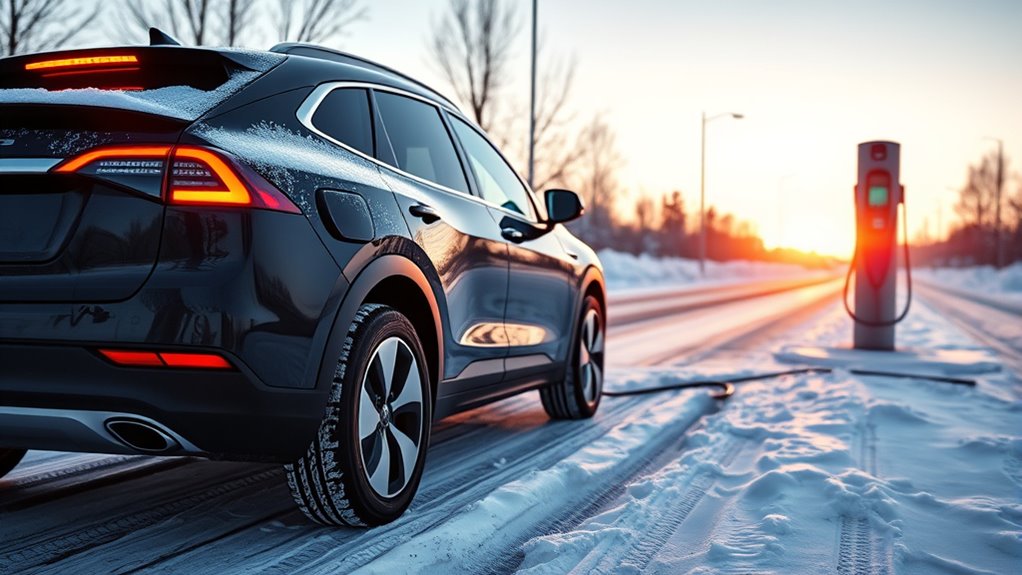
Cold weather can slow EV charging because a cold battery protects itself by limiting how much power it accepts. You can still charge reliably in winter by warming the battery before fast charging, keeping a larger reserve, using Level 2 at home when possible, and reducing cabin-heater waste before you drive.
Quick Answer
To charge an EV in cold weather, precondition the battery while plugged in, use Level 2 charging for daily use, and keep a bigger winter reserve. For DC fast charging, navigate to the charger early so the car can warm the pack before arrival.
Key Takeaways
- Cold batteries charge more slowly because the battery management system limits power to protect the pack.
- Preconditioning works best when the vehicle is plugged in or when navigation can prepare the battery before a fast charger.
- Level 2 home charging is the most reliable winter routine for most drivers.
- Cabin heat, high speed, low tire pressure, and low state of charge can all reduce winter range.
- Use 100% only when your owner’s manual allows it or when you need it for a trip; otherwise, follow your vehicle’s recommended daily charge target.
At a Glance
| Time Required | 5 minutes to set a charging plan; 20-30 minutes or more for battery preconditioning in severe cold; overnight for most Level 2 home charging. |
| Difficulty | Easy once your charge limit, departure schedule, and preconditioning settings are set. |
| Tools Needed | EV app or infotainment system, charging cable or Level 2 charger, weather app, route planner, and tire-pressure gauge. |
| Cost | Usually no extra cost if you already charge at home; Level 2 installation costs vary by home wiring, permits, charger, and electrician. |
How Cold Weather Affects EV Charging
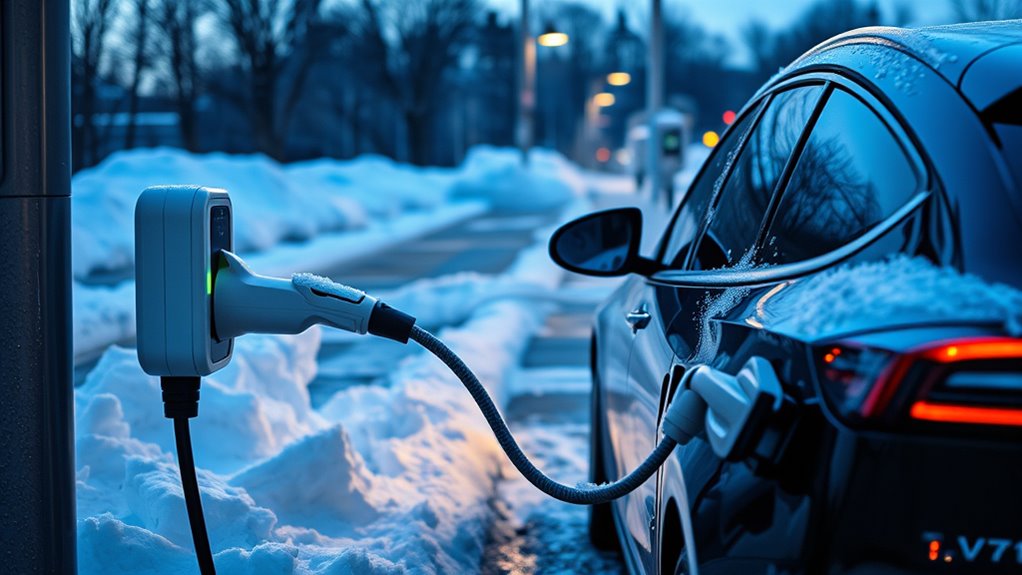
Cold weather can reduce how efficiently your EV charges because lithium-ion batteries accept and deliver power more slowly at low temperatures. The charger may be ready to supply power, but the battery pack decides how much it can safely accept.
The effect changes by model, battery chemistry, age, state of charge, thermal-management system, charger output, and temperature. FuelEconomy.gov reports that EV range can drop by about 41% at 20°F when cabin heat is used, and that much of the extra energy goes to warming the cabin.
Charging can also feel slower in freezing weather because the vehicle may use energy and time to warm the pack before it allows a higher charge rate. This is most obvious at DC fast chargers, where a cold battery may start at a low power level and then ramp up after it warms.
A cold EV may be plugged into a powerful charger, but the pack, not the plug, decides how much power it can safely accept.
Start With The Right Winter EV Charging Strategy
A good winter plan is simple: keep the car plugged in when practical, set a realistic charge limit, warm the battery before fast charging, and leave with more reserve than you would in mild weather.
- Use Level 2 for daily charging if you have access to it at home, work, or a regular parking location.
- Schedule departure preconditioning so the cabin and battery warm while the car is still connected to power.
- Keep a winter buffer, especially before long drives, outdoor parking, storms, or rural routes.
- Use DC fast charging with a warm battery, ideally after the vehicle has preconditioned on the way to the station.
- Reduce heating waste by using seat heaters, steering-wheel heat, and a moderate cabin temperature.
Note: Winter charging advice is model-specific. Always follow your owner’s manual for charge limits, battery conditioning, cold-soak warnings, and whether your battery chemistry is designed for frequent 100% charging.
Precondition Your EV Before Fast Charging
Preconditioning warms the battery before you need strong power output or fast charging. Some EVs do this automatically when you set a DC fast charger as the navigation destination. Others let you schedule departure time or start climate control from the app.
Preconditioning is most useful when the car has been sitting outside, the battery is cold-soaked, or you plan to use a high-power public charger. It can also improve regenerative braking availability and reduce the first-drive energy hit because the cabin is already warm.
Battery Warm-Up Timing
In freezing weather, start battery preconditioning before you reach the charger. A good rule is to route to the DC fast charger through the vehicle’s navigation system 20-30 minutes before arrival, but severe cold may require more time and mild cold may require less.
If your EV does not show a preconditioning message, look for signs such as a snowflake icon, limited regenerative braking, reduced power, or a low initial fast-charge rate. Those signs often mean the pack is still warming.
Pro Tip: For road trips, do not wait until you are almost at the charger to enter the station in navigation. Give the car enough time to prepare the battery before you plug in.
Preheat The Cabin While Plugged In
Cabin heat is one of the biggest winter energy loads. If your EV is plugged in, preheat the cabin before departure so grid power does part of the work instead of your battery.
Set the cabin to a comfortable but not excessive temperature, then rely more on heated seats and a heated steering wheel once you are moving. FuelEconomy.gov specifically recommends preheating plug-in vehicles while connected and using seat warmers instead of the cabin heater when practical.
Charge At The Warmest Practical Time
If your schedule and electricity rate allow it, charge during the warmer part of the day. A battery that starts slightly warmer usually needs less time and energy to reach an efficient charging temperature.
This does not mean you should ignore off-peak electricity rates. For many drivers, overnight Level 2 charging is still the best routine because the car is parked for hours and can precondition before morning departure.
When Midday Charging Helps
Midday or early-afternoon charging can help when your EV sits outside, the weather is very cold overnight, and your electricity plan does not punish daytime charging. It can also help if you need a public charger and want to avoid arriving with a deeply cold battery.
- Choose a sunny or covered parking spot when safe and available.
- Start the session before the pack gets cold again after a drive.
- Use the vehicle app to schedule charging around the warmest practical window.
- Keep the cable and charge-port area clear of snow and ice.
When Overnight Charging Still Makes Sense
Overnight charging still works well for many EV owners because the vehicle has a long dwell time. With Level 2, the car can charge slowly, warm the battery as needed, and finish near your departure time.
For the best balance, set a departure schedule instead of simply starting at full power as soon as you plug in. That lets the car complete charging and cabin preheating closer to the time you leave.
Keep A Larger Battery Reserve In Winter
Low state of charge gives you less room for cabin heat, battery warming, detours, traffic delays, and slower-than-expected charging. In winter, avoid treating the bottom 10-20% as usable trip planning range unless you have a nearby charger and a backup plan.
For normal daily use, follow your vehicle’s recommended charge limit. Many EVs suggest a daily target below 100%, while some LFP battery models may recommend charging to 100% periodically or more often. Before long winter drives, storms, rural trips, or outdoor overnight parking, aim for a larger buffer such as 50% or more before you leave.
| Charge Level | Best Winter Use | What To Watch |
|---|---|---|
| Above 50% | Best for cold starts, longer drives, storms, and outdoor parking. | Still avoid sitting at 100% for long periods unless your manual says otherwise. |
| 20%-50% | Fine for short local driving when chargers are nearby. | Leave extra margin for heat, traffic, hills, and snow. |
| Below 20% | Use only when you are already near a reliable charger. | Charging may be slower if the pack is cold, and you have less energy to warm it. |
Warning: Do not arrive at a winter fast charger nearly empty unless you know the station is working. A very low, cold battery may need time to warm before it accepts strong charging power.
Rely On Level 2 For Daily Winter Charging
For daily winter use, Level 2 charging is usually the most dependable option. The U.S. Department of Energy’s Alternative Fuels Data Center explains that many EV owners charge overnight at home with Level 1 or Level 2 equipment, and that Level 2 charging uses 240V service for faster home charging.
Level 1 can work for short commutes, but in very cold weather it may add range slowly, especially if the car also needs energy for battery heating. Level 2 gives the vehicle more flexibility to charge, warm the pack, and finish before departure.
- Set a daily charge target that matches your vehicle manual and commute.
- Use scheduled charging if your utility has cheaper off-peak rates.
- Use scheduled departure to finish charging and preheating near the time you leave.
- Keep the car plugged in during severe cold if your manual recommends it.
- Have Level 2 equipment installed by a qualified electrician if your home needs a new circuit.
Charging equipment must match local code and the electrical capacity of the home. AFDC notes that charging installations may require permits and should follow National Electrical Code guidance, especially for Level 2 equipment.
When Should You Use DC Fast Charging?
Use DC fast charging when you need speed on a trip or when Level 2 charging will not add enough range in time. In winter, the key is not just finding a fast charger; it is arriving with a battery warm enough to use it.
A cold EV may begin a fast-charge session at a lower rate, then increase as the pack warms. The car may also spend the first part of the session heating the battery instead of adding range as quickly as you expect.
- Set the fast charger as your navigation destination so the vehicle can precondition if supported.
- Arrive with enough charge to handle a wait, a broken stall, or a slower initial charge rate.
- Use fast charging for trip needs, not as your only daily routine if Level 2 is available.
- Expect charging to slow as the battery fills, especially above 80%.
- Move the car once you have enough range so other drivers can use the station.
There is no universal rule that says you must limit DC fast charging to a specific number of sessions per month. Battery life depends on chemistry, temperature, charge level, software, and owner behavior. Use fast charging when needed, but follow your owner’s manual and avoid making high-power charging your default routine if gentler Level 2 charging fits your life.
How Cabin Heat Cuts EV Range
Even with a full battery, cabin heat can reduce usable winter range. Unlike a gas car that can reuse engine waste heat, an EV often uses battery energy to heat the cabin, battery, windows, seats, and mirrors.
FuelEconomy.gov reports that at 20°F, EV range can drop by about 41% in mixed driving when cabin heat is used. It also notes that about two-thirds of the extra energy consumed in that condition goes to heating the cabin.
- Preheat while plugged in. Warm the cabin before departure so the battery keeps more energy for driving.
- Use seat heaters first. Heated seats and steering-wheel heat can make you comfortable with a lower cabin setpoint.
- Lower the cabin temperature once stable. Avoid leaving the heater on maximum longer than needed.
- Use defrost wisely. Clear glass fully for safety, then reduce the fan or temperature when visibility is stable.
- Drive smoothly. Hard acceleration, high speeds, and low tire pressure add to the winter range hit.
Park For Better Winter Charging
Parking location can improve winter charging performance. A garage, covered bay, or sheltered parking spot helps the battery, cabin, cable, and charge port stay warmer and cleaner.
If you park outside, clear snow and ice from the charge-port door before plugging in. Keep the connector off the ground, avoid forcing a frozen latch, and make sure outdoor charging equipment is rated for outdoor use.
Note: Outdoor EV charging can be safe when the equipment is properly rated and installed. AFDC says outdoor installations require outdoor-rated equipment, and local electrical rules still apply.
Good parking habits also help before a public fast-charge stop. If you can choose a charger near your route after the car has been driving for a while, the battery is more likely to be warm than it would be after sitting outside all night.
Winter Charging Tips For Longer Trips
Long winter trips need more planning than summer drives. Cold, snow, wind, elevation, and heater use can all change real-world range, so build your route around realistic margins instead of the best-case number on the dashboard.
- Leave with a warm cabin and battery. Precondition while plugged in before departure.
- Plan more charging stops than the route app first suggests. Add backup stations in case a charger is busy, iced over, blocked, or down.
- Arrive with margin. Try not to plan stops that leave you below 10-15% in freezing weather.
- Use chargers after driving, not after a long cold soak. A battery warmed by driving and preconditioning is more likely to accept higher power.
- Check tire pressure. Cold air lowers tire pressure, which raises rolling resistance and cuts range.
- Reduce speed in severe cold. High speed increases aerodynamic drag, and winter air is denser.
- Pack the right cable. Bring your portable charging cable if your trip includes overnight parking where an outlet may be available.
For a road trip, charging to 90-100% before departure may make sense if your manual allows it and you leave soon after charging finishes. For everyday use, use the daily target your vehicle recommends.
Frequently Asked Questions
Can it be too cold to charge an EV?
Yes, it can be too cold to charge quickly or efficiently. In very low temperatures, the battery may need to heat itself before it accepts much power. The car may still charge, but the first part of the session can be slow. Follow any cold-weather warnings in your owner’s manual.
Should I plug in my EV every night in winter?
Plugging in often is helpful in winter because the vehicle can charge, maintain the battery, and precondition before you leave. You do not always need to charge to 100%. Set the daily charge target recommended by your vehicle, then raise it before longer trips or storms when extra range is useful.
What drains EV batteries the most in winter?
Cabin heating is often the biggest winter drain, followed by high speeds, cold tires, snow or slush on the road, short trips, and a cold battery. Preheating while plugged in, using seat heaters, keeping tires properly inflated, and driving smoothly all help preserve range.
Is life with an electric car in winter really a nightmare?
No. Winter EV driving takes more planning, but it is manageable. The most important habits are charging regularly, preconditioning before driving or fast charging, keeping a larger reserve, checking tire pressure, and knowing where reliable chargers are on longer routes.
How long should I precondition before charging?
In freezing weather, 20-30 minutes is a useful starting point before DC fast charging, but the right time depends on the vehicle and outside temperature. Severe cold can take longer. Use the vehicle’s navigation or app because many EVs manage battery conditioning automatically.
Is Level 1 charging enough in cold weather?
Level 1 can be enough for short commutes, but it is slow and may add range very gradually in severe cold. Level 2 is better for most winter drivers because it gives the car more power to charge, warm the battery, and prepare for departure.
Conclusion
Cold weather can slow charging and reduce range, but it does not have to ruin EV ownership. The best winter routine is to charge at home when possible, precondition while plugged in, keep a larger reserve, and use DC fast charging after the battery has had time to warm. Add smart cabin-heat habits and better trip planning, and your EV will stay much more predictable through winter.
Sources
- FuelEconomy.gov: Fuel Economy in Cold Weather — supports EV winter range loss, cabin heating impact, preheating while plugged in, and using seat warmers to save energy.
- Alternative Fuels Data Center: Charging Electric Vehicles at Home — supports Level 1 and Level 2 home charging, outdoor-rated equipment, permits, and electrical-code considerations.
- Alternative Fuels Data Center: Electricity Basics — supports how EVs draw electricity from off-board power sources and store it in batteries.
- Alternative Fuels Data Center: Maintenance and Safety of Electric Vehicles — supports battery cycle-life, thermal-management, warranty, and high-voltage safety context.
- Associated Press: Frigid Weather and EV Charging — supports practical cold-weather charging delays, range loss variation, and preconditioning guidance.
- Online Electric Vehicle Charging Control with Battery Thermal Management in Cold Environments — supports the importance of battery thermal management for charging in cold environments.