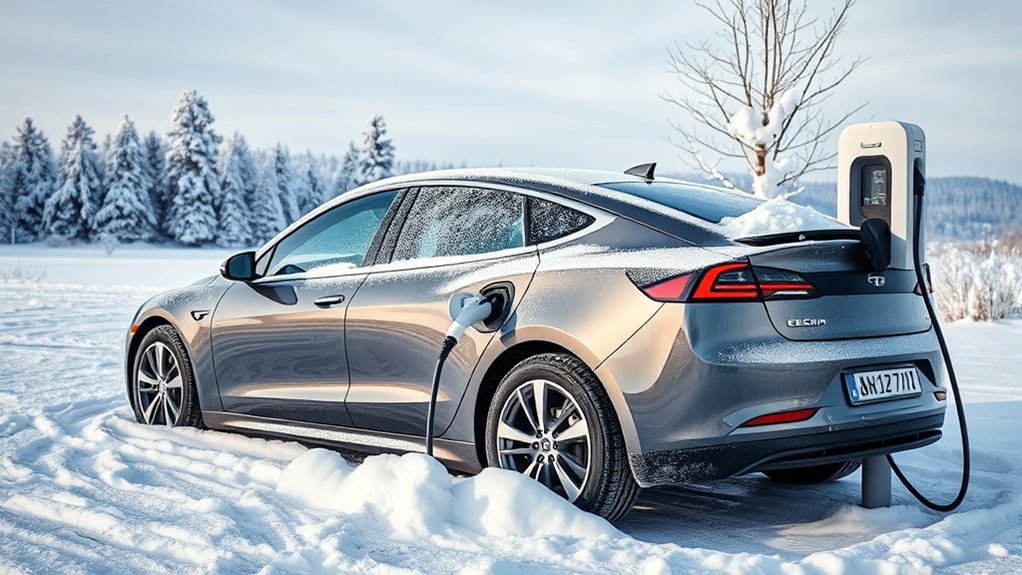
Cold weather can reduce your EV range and slow charging, but it does not have to ruin winter driving. The key is to warm the battery before you need peak performance, keep more range in reserve, choose the right charger for the trip, and drive smoothly when roads are cold, snowy, or icy.
Quick Answer
Cold weather can reduce EV range and slow charging because the battery and cabin need heat. For winter trips, precondition while plugged in, keep more reserve than usual, use seat and steering-wheel heat when safe, check tire pressure, choose reliable chargers, and plan stops with enough buffer for delays.
Key Takeaways
- Very cold weather often cuts EV range, especially when you use heavy cabin heat or drive fast on the highway.
- Preconditioning while plugged in warms the cabin and, on many EVs, helps the battery reach a better temperature for driving or fast charging.
- Use home or work charging as your winter baseline, and save DC fast charging for road trips or when you truly need a quick stop.
- Keep the charge port, cable, and area around the charger clear of snow and ice before plugging in.
- Check tire pressure, slow down, and keep an emergency kit in the car before longer winter drives.
At a Glance
| Time Required | 10 to 20 minutes before departure for checks and cabin preheating; longer if your EV needs battery preconditioning before DC fast charging. |
| Difficulty | Easy, but planning matters more in freezing weather. |
| Tools Needed | EV mobile app, tire-pressure gauge, charging app, snow brush, ice scraper, gloves, and your owner’s manual. |
| Cost | Usually free if you already have charging access; optional winter tires, a portable tire inflator, or a home Level 2 charger add cost. |
How Cold Weather Affects Your EV Range and Charging
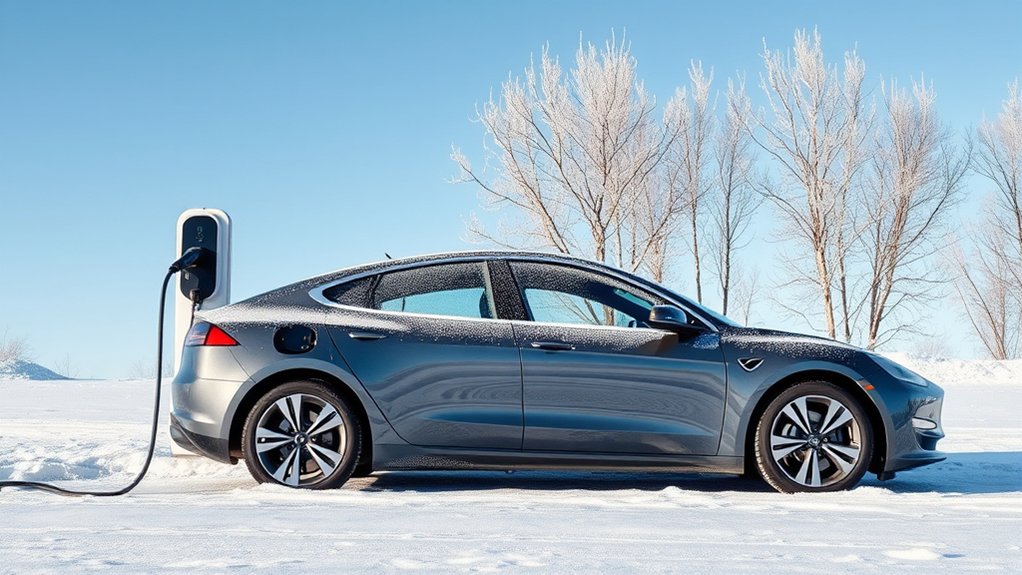
Cold weather affects an electric vehicle in two main ways: the battery works less efficiently, and the vehicle must use energy to warm the cabin, windows, battery, and sometimes the charging hardware. The U.S. Department of Energy’s Alternative Fuels Data Center notes that extreme temperatures reduce EV range because more energy is used to heat or cool the cabin.
In very cold weather, many EV owners should expect a meaningful range drop. A broad, practical estimate is often 20% to 30% less range in very cold conditions, though some vehicles lose less and some lose more depending on temperature, speed, route, tire choice, HVAC use, and whether the vehicle has a heat pump.
Plan winter EV trips with a buffer. A route that feels easy in mild weather can need an extra charging stop when the battery is cold, the heater is running, and roads are wet or snowy.
Charging can also slow down because a cold lithium-ion battery may not accept power as quickly. If your EV shows a message such as “battery warming,” “preconditioning,” or “charging rate limited,” it may simply be waiting for the pack to reach a safer and more efficient temperature.
Note: Winter range loss is not the same for every EV. A newer model with a heat pump, good thermal management, warm garage parking, and winter tires may perform much better than an older EV with a small battery and resistance cabin heat.
How to Precondition Your EV for Best Winter Performance
Preconditioning means warming the cabin, and in many EVs the battery, before you drive or before you arrive at a DC fast charger. The best time to do it is while the vehicle is plugged in, because the car can use grid power instead of pulling all that heat from the battery you need for driving.
Use this simple routine before a winter drive:
- Plug in overnight when possible. Even Level 1 charging can help keep the battery from sitting cold and low.
- Set a departure time in your app or vehicle menu. This lets the EV warm the cabin before you leave.
- Use battery preconditioning for fast charging if your EV supports it. Many vehicles start warming the pack when you navigate to a fast charger through the built-in navigation system.
- Warm the cabin before unplugging. Defrost the windows, melt ice around the wipers, and reduce the need for heavy heater use right after departure.
- Keep the charge level higher than your summer habit. For winter road trips, leave with a larger reserve than you would in mild weather.
Pro Tip: If your EV can precondition the battery only when a charger is selected in the built-in navigation, enter the fast charger as your destination before you arrive. A third-party map app may not trigger battery warming.
Selecting Winter Charging Stations for Your EV
The best winter charging station is not always the fastest one on paper. In cold weather, reliability, access, shelter, and the vehicle’s battery temperature matter as much as the charger’s advertised kilowatts.
Use Home or Work Charging as the Baseline
When possible, charge at home or work before you truly need it. A Level 2 charger is especially helpful in winter because it can add range steadily, support cabin preheating, and reduce your need to rely on public chargers during storms or cold snaps.
If you only have Level 1 charging, it may still be useful for overnight top-ups and for keeping the battery from sitting at a very low state of charge in freezing weather. It will not add range quickly, but it can still support better winter readiness for short daily driving.
Use DC Fast Charging Strategically
DC fast chargers are best for road trips, long workdays, or when you need to add range quickly. In winter, try to arrive with enough charge to handle a delay, but low enough that your EV can accept a strong charging rate once the battery is warm. For many EVs, that means arriving somewhere around the lower-middle part of the battery, not nearly full and not dangerously close to empty.
Before choosing a public charger, check:
- Recent app check-ins or reliability reports
- Whether the station has multiple working stalls
- Whether snow has blocked the parking spots
- Whether nearby food, restrooms, or shelter are available
- Whether your EV needs an adapter for that network
- Whether the charger is close enough that you still have a safe reserve if it is unavailable
Warning: Do not plan a winter fast-charging stop that leaves you arriving with almost no battery. Snow, broken chargers, long lines, detours, and battery warm-up time can all add delay. Keep enough reserve to reach another charger or a safe place to wait.
Maximize EV Efficiency With Energy-Saving Features
Small choices can add up when the temperature drops. The goal is not to turn off everything and be uncomfortable. The goal is to heat the people and the windows efficiently while avoiding waste.
- Use heated seats and a heated steering wheel first. They usually use less energy than heating the whole cabin.
- Keep defogging and visibility as the priority. Do not sacrifice clear windows just to save range.
- Use Eco or Range mode when conditions allow. These modes can soften throttle response and reduce climate-control demand.
- Lower cabin temperature slightly. A small reduction can save energy while keeping the cabin comfortable.
- Remove snow from the roof, hood, lights, and charging area. Extra snow adds drag, weight, and safety risk.
- Check tire pressure when tires are cold. The National Highway Traffic Safety Administration advises filling tires to the vehicle manufacturer’s recommended pressure, not the maximum number printed on the tire sidewall.
If your EV has a heat pump, it may use less energy for cabin heat than a traditional resistance heater. That does not eliminate winter range loss, but it can make the drop less severe in many conditions.
How to Charge Your EV When It’s Snowing
Charging in snow is usually safe when you use approved equipment and follow your vehicle’s instructions, but you need a clean connection and a safe place to stand. Snow, slush, and ice can make the job slower and less comfortable.
Keep Charging Ports Clear
Before you plug in, brush snow away from the charge door, cable, connector, and the ground around the charger. Do not force a frozen charge door open, and do not use metal tools on the charging contacts. If the port is iced over, use gentle warmth, your vehicle’s defrost features if available, or follow the owner’s manual.
- Keep the connector pointed down when carrying it through falling snow.
- Brush snow off the plug and port before connecting.
- Make sure the connector clicks or locks into place.
- Keep the cable out of deep slush where possible.
- After charging, close the charge door fully so it does not freeze open.
Precondition Battery When Possible
If you are heading to a DC fast charger, battery preconditioning can make a big difference. Research on battery preheating before fast charging in cold climates shows why thermal management matters for cold-weather charging. In everyday terms, a warmer battery can usually accept charging power more readily than a cold-soaked one.
If charging starts slowly, give the EV a few minutes. The vehicle may be heating the pack before it increases the charging rate. If the charger never ramps up, check the vehicle message, try a different stall, or move to a backup charger while you still have enough range.
Choose Reliable Charging Locations
In winter, charger reliability matters more than perfect charger speed. Pick sites with recent successful check-ins, multiple stalls, good lighting, plowed access, and nearby shelter. On long trips, plan a backup charger before you need one.
For snowstorms or extreme cold, it is smart to charge earlier than usual. Waiting until the battery is nearly empty gives you fewer options if a charger is blocked, busy, offline, or slower than expected.
Adjusting Your Driving Habits for Winter Conditions
Winter EV driving rewards smooth inputs. The same habits that make a gas car safer on snow and ice also help an EV save energy.
Optimize Acceleration Techniques
Accelerate gently, especially from a stop. EVs make quick torque, which is useful on dry pavement but can break traction on icy roads. Smooth acceleration also reduces power demand and helps preserve range.
If your EV has a snow, chill, eco, or reduced-power mode, use it when road conditions are slick. These modes can make the accelerator easier to control.
Maintain Steady Speeds
Highway speed has a major effect on EV range because air resistance rises quickly as speed increases. In winter, the effect can feel even stronger because the heater, cold air, wet pavement, snow buildup, and winter tires can all add load.
When traffic and weather allow, keep a steady moderate speed, avoid hard braking, and leave more following distance. This helps safety first and efficiency second.
Use Regenerative Braking Carefully
Regenerative braking can recover some energy when you slow down, but it may be limited when the battery is cold or full. On slippery roads, strong one-pedal driving can also feel abrupt. If your EV lets you adjust regen strength, consider a gentler setting in snow or ice.
Use the brake pedal smoothly and let the vehicle’s stability systems help. If the road is very slick, safety matters more than maximizing regen.
Check Tires and Winter Gear
Tires matter for both safety and range. Cold air lowers tire pressure, and underinflated tires can increase rolling resistance. Check pressure when the tires are cold and use the pressure listed on the driver’s door placard or owner’s manual.
If you regularly drive on snow or ice, consider winter tires that fit your EV’s load rating and wheel size. EVs are heavy, and proper tires can improve braking, turning, and traction in freezing conditions.
Winter EV Trip Planning Checklist
Use this checklist before a longer winter drive:
- Charge higher than you would for the same trip in mild weather.
- Precondition the cabin while plugged in.
- Enter DC fast chargers into the built-in navigation if your EV uses navigation-based battery preconditioning.
- Check tire pressure, tread, lights, wipers, and washer fluid.
- Confirm your charging apps, payment methods, and adapters are ready.
- Pack gloves, a snow brush, ice scraper, blanket, water, snacks, phone charger, and any needed medication.
- Plan at least one backup charger on longer routes.
- Watch weather and road closures before leaving.
Note: Your EV’s range estimate may adjust slowly after a temperature drop. Treat the dashboard estimate as a guide, not a promise, and build in extra margin for winter trips.
Frequently Asked Questions
Should I charge my EV in cold weather?
Yes. Charging in cold weather is normal, but it can be slower if the battery is cold. Whenever possible, plug in at home or work, preheat the cabin while connected, and keep more charge in reserve before storms or long drives.
What temperature is too cold for an electric car?
There is no single temperature that is “too cold” for every EV. Most modern EVs can operate below freezing, but range and charging speed can drop as temperatures fall. The colder it gets, the more important preconditioning, route planning, tire pressure, and charging reserve become.
How can I improve my EV range in cold weather?
Precondition while plugged in, use heated seats and steering-wheel heat before heavy cabin heat, keep windows safely defogged, drive at moderate speeds, accelerate gently, check tire pressure, remove snow from the vehicle, and avoid carrying unnecessary weight.
Why does my EV charge slowly at a fast charger in winter?
A cold battery may need to warm before it can accept high charging power. The charger may also be limited by weather, hardware, battery state of charge, or station load. Use built-in navigation to precondition for DC fast charging when your EV supports it.
Is life with an electric car in winter really a nightmare?
No. Winter EV driving takes more planning, but it is manageable. The biggest changes are charging earlier, preconditioning before trips, expecting less range, checking tire pressure, and avoiding low-battery arrivals at public chargers during storms.
Conclusion
Winter makes EV driving less forgiving, but not impossible. Cold weather can reduce range, slow charging, and make public chargers harder to use, especially during storms. You can avoid most problems by preconditioning while plugged in, charging earlier, keeping a safe reserve, checking tires, and choosing reliable charging stops with backups.
The best winter EV habit is simple: plan before the battery is low. Do that, and your EV can handle cold-weather commuting, errands, and road trips with far less stress.
Sources
- U.S. Department of Energy Alternative Fuels Data Center: All-Electric Vehicles — supports EV range factors, temperature impact, speed, rapid acceleration, and regenerative braking context.
- National Highway Traffic Safety Administration: Winter Weather Driving Tips — supports tire-pressure, winter safety, emergency supplies, and plug-in winter guidance.
- AP News / Edmunds: Wintertime Driving With an Electric Vehicle — supports winter range-loss estimates, preheating, home charging, public fast-charging strategy, and heated-seat guidance.
- AP News: Frigid Weather and EV Charging — supports cold-weather charging delays, battery warm-up, and the need for planning.
- Hamednia et al.: Battery Preheating Before Fast Charging in Cold Climates — supports the technical basis for battery preheating and thermal management before fast charging.