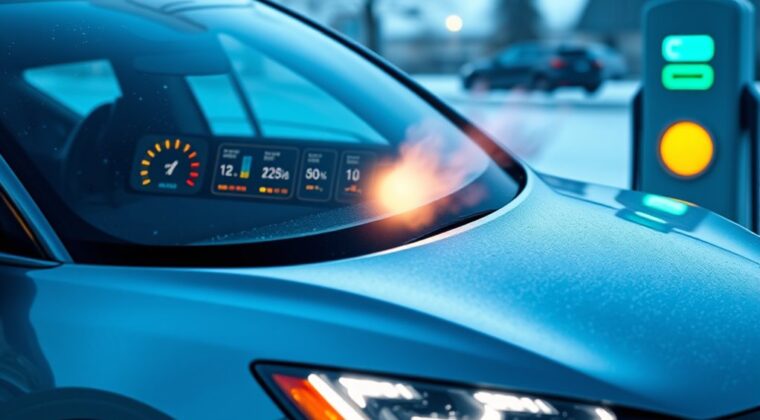
If your EV charges slowly in winter, the battery may be too cold to accept high DC power. Preconditioning helps solve that by letting the car warm or cool the high-voltage battery before you plug into a fast charger. The exact process depends on your vehicle, but the safest rule is simple: use the car’s built-in tools, stay plugged in when possible, and let the battery management system control the temperature.
Quick Answer
To precondition your EV battery before charging, set a compatible DC fast charger as the destination in your vehicle’s built-in navigation system, if your EV supports it. Start 20–45 minutes before arrival in cold weather, stay plugged in when possible, and plug into the charger soon after you arrive.
Key Takeaways
- Preconditioning prepares the high-voltage battery for better charging by warming or cooling it into the vehicle’s target range.
- For DC fast charging, use the car’s built-in navigation when supported. Phone maps may not trigger battery preconditioning.
- Preconditioning is most useful before fast charging in freezing weather, after a cold soak, or before a long winter road trip.
- Do not chase a fixed battery temperature. The battery management system controls the safe target for your specific EV.
- If your EV does not support automatic battery preconditioning, use scheduled departure, charge while plugged in, and allow extra time at the charger.
At a Glance
| Time Required | Usually 20–45 minutes before DC fast charging in cold weather; longer after an overnight cold soak |
| Difficulty | Easy if your EV supports automatic battery preconditioning; moderate if you must manage it manually |
| Tools Needed | Built-in vehicle navigation, charging schedule or departure schedule, EV app if supported, compatible DC fast charger |
| Cost | No separate cost, but preconditioning uses energy; using grid power while plugged in saves more battery for driving |
What EV Battery Preconditioning Means
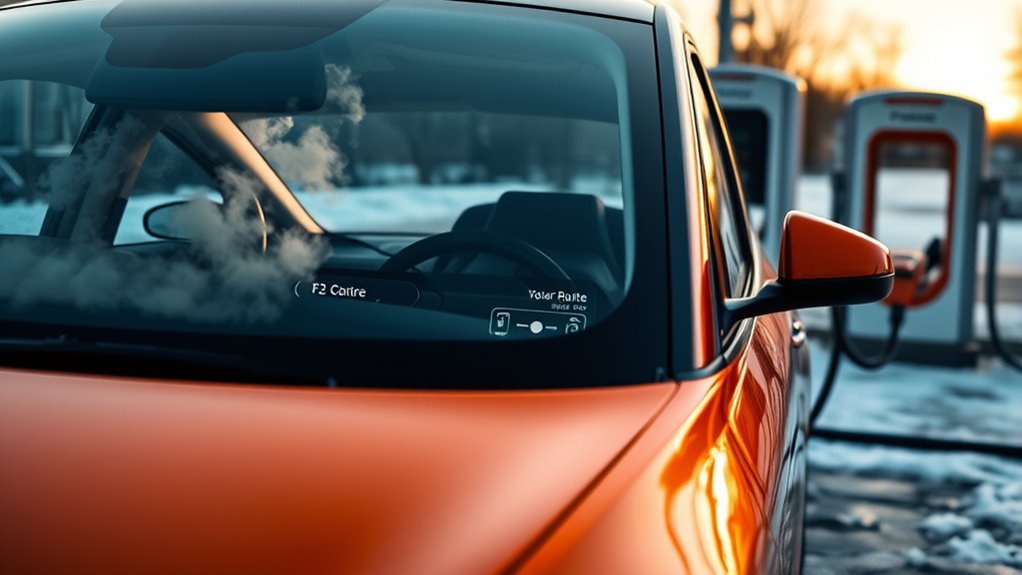
EV battery preconditioning means the vehicle uses its thermal management system to prepare the high-voltage battery before charging or driving. In cold weather, that usually means warming the pack. In hot weather, it may mean cooling it.
The goal is not for you to hit one exact temperature. The goal is to let the car move the battery into the safe target range chosen by its battery management system. That target varies by model, battery chemistry, software, charger power, and state of charge.
A cold battery has higher internal resistance and usually cannot accept high charging power right away. That is why an EV may start a DC fast-charging session slowly, then ramp up after the pack warms. Tesla, for example, says its Trip Planner can automatically preheat the battery as the vehicle approaches a Supercharger, and its cold-weather guidance recommends keeping the car plugged in when possible so preconditioning can use external power instead of the battery. Tesla Winter Driving Tips
Note: Some EVs call this battery preconditioning, battery conditioning, battery heating, winter mode, or scheduled departure. Check your owner’s manual because the name and trigger method vary by brand.
Why EV Battery Preconditioning Matters Before Charging
Preconditioning matters most before DC fast charging. A fast charger can deliver high power, but your EV will only accept what the battery can safely handle at that moment. If the pack is very cold, the car may limit charging power to protect the cells.
A preconditioned EV battery can usually accept higher DC charging power sooner, but the exact time savings depend on the vehicle, battery temperature, charger power, and state of charge.
Cold weather slows the movement of lithium ions inside the battery. That can reduce driving range and slow charging. In very cold conditions, some EVs may need time to heat the battery before they can charge at a normal rate. Associated Press cold-weather EV report
Preconditioning can also support battery health. Fast charging a very cold lithium-ion battery can raise the risk of lithium plating, a degradation process researchers identify as one of the major challenges for high-power charging. Extreme fast charging battery research
That does not mean you should manually heat the pack or try to override the car. Let the vehicle handle the temperature. Your job is to give it enough time, use the right navigation trigger when available, and avoid arriving at a fast charger with a nearly empty, frozen battery.
Step-by-Step EV Battery Preconditioning
Use these steps before a DC fast-charging stop, especially when the temperature is near or below freezing.
- Choose a compatible DC fast charger. Pick a charger your EV can use and, when possible, choose one that appears in your vehicle’s built-in navigation system.
- Set the charger as the destination in the car’s navigation. In many newer EVs, this is the step that tells the battery management system a fast-charging stop is coming. Using only Apple Maps, Google Maps, or a phone app may not trigger battery preconditioning unless your vehicle specifically supports that integration.
- Start early enough. In mild weather, the car may need little or no extra time. In freezing weather, start routing to the charger about 20–45 minutes before arrival. If the car sat outside overnight in severe cold, allow more time.
- Stay plugged in before departure when possible. If you are leaving from home, work, or a hotel charger, schedule cabin and battery preconditioning while plugged in. This lets the vehicle draw more energy from the grid instead of using driving range.
- Watch the vehicle’s messages, not a fixed temperature number. Some vehicles show a battery conditioning message, a warming icon, or a cold-battery symbol. On Tesla vehicles, a blue snowflake can indicate the battery is too cold for full power and ideal range. Icons differ by brand.
- Arrive with enough charge. Fast charging is often quickest at low-to-mid state of charge, but do not arrive nearly empty in extreme cold. Battery heating uses energy, and you need a safe reserve if the charger is busy or unavailable.
- Plug in soon after arrival. If you wait too long in cold weather, the pack can begin cooling again and some of the benefit may fade.
Pro Tip: For road trips, add the DC fast charger as a stop in the vehicle’s own route planner before you need it. This gives the car more time to prepare the battery and helps estimate arrival charge more accurately.
Home Preconditioning vs. DC Fast-Charging Preconditioning
Home preconditioning and fast-charging preconditioning are related, but they are not the same.
Home preconditioning usually prepares the cabin and may also warm the battery before you drive. It is most helpful in winter when the vehicle is plugged in. Tesla’s range guidance recommends preconditioning while plugged in when possible and notes that preconditioning while parked can use battery energy when the car is unplugged. Tesla Range Tips
DC fast-charging preconditioning prepares the battery to accept higher charging power. It is usually triggered by routing to a fast charger in the built-in navigation system, turning on a battery-conditioning mode, or using a vehicle-specific charging plan.
For normal Level 1 or Level 2 charging at home, battery preconditioning is often less important because charging power is much lower. It can still help in extreme cold, but you usually do not need the same preparation you would before a high-power DC fast charger.
When to Precondition Before DC Fast Charging?
Precondition before DC fast charging when the battery is likely to be outside its ideal charging range. This is most common in cold weather, but it can also happen after the vehicle has been parked in extreme heat.
You should make battery preconditioning part of your routine when:
- The outside temperature is near or below freezing.
- The EV sat outside for several hours in cold weather.
- You plan to use a high-power DC fast charger on a road trip.
- Your vehicle shows a cold-battery icon, reduced regenerative braking, or a battery conditioning message.
- You need the shortest practical charging stop and your EV supports automatic preconditioning.
You usually do not need to precondition just to plug into a normal home Level 2 charger in mild weather. You also do not need to keep preconditioning after you arrive. Plug in promptly and let the vehicle manage the session.
Warning: Do not run battery preconditioning for a long time while unplugged at a very low state of charge. If the car is cold and nearly empty, battery heating can use energy you may need to reach another charger.
What If Your EV Does Not Precondition Automatically?
Not every EV can automatically precondition the battery from navigation. Some older EVs, lower trims, or certain software versions may not have this feature. If your car does not support automatic battery preconditioning, use these workarounds:
- Use scheduled departure while plugged in. Set the car to be ready near your departure time so the cabin and battery start warmer.
- Charge before the pack gets cold. If possible, charge after driving rather than waiting until the battery has sat outside for hours.
- Allow extra charging time. A cold battery may start slowly, then speed up as it warms.
- Choose a reliable charger with backup options nearby. Cold weather can also affect charger handles, cables, and station availability.
- Check the manual for battery-conditioning settings. Some EVs require a menu setting or a specific type of charger destination to activate the feature.
If your EV begins charging slowly in cold weather, do not assume the charger is broken. The car may be protecting the battery until the pack warms enough to accept more power.
Common EV Battery Preconditioning Mistakes to Avoid
A good preconditioning routine can still fail if you use the wrong trigger or time it poorly. Avoid these common mistakes:
- Relying on cabin heat alone. A warm cabin does not always mean the high-voltage battery is ready for DC fast charging.
- Using only a phone map. Unless your EV supports deep map integration, a phone route may not tell the car to prepare the battery.
- Starting too late. If you enter the charger only a few minutes before arrival in freezing weather, the battery may not have enough time to warm.
- Arriving too early and waiting. If you precondition, then sit unplugged in cold weather, the pack can cool again.
- Preconditioning unplugged at low charge. This can reduce your safety buffer if the charger is full, offline, or slower than expected.
- Expecting the same result every time. Charging speed depends on battery temperature, charger output, state of charge, battery chemistry, and the car’s software limits.
- Charging to 100% at a DC fast charger when you do not need it. Many EVs charge much slower near the top of the battery. For daily use, follow the charge limit shown by your vehicle; many EVs recommend around 80% unless you need more range for a trip.
Frequently Asked Questions
Should I precondition my EV before charging?
Yes, precondition before DC fast charging when the battery is cold, the car has been parked outside, or your EV recommends it. It is less important for normal Level 1 or Level 2 home charging in mild weather.
How long does EV battery preconditioning take?
In cold weather, plan on about 20–45 minutes before a DC fast-charging stop. It may take less time in mild weather and more time if the battery sat overnight in very low temperatures.
What is the 80/20 rule for an EV battery?
The 80/20 rule means keeping the battery roughly between 20% and 80% for routine use. It is a general habit, not a universal law. Follow the charge limit your EV displays because some battery chemistries and manufacturers have different recommendations.
How do you pre-condition an EV battery?
For DC fast charging, set the charger as a destination in the vehicle’s built-in navigation system if your EV supports automatic preconditioning. For home departure, schedule cabin and battery preconditioning while the car is plugged in.
Does preconditioning use battery power?
Yes. Preconditioning uses energy to heat or cool the battery and cabin. When the car is plugged in, much of that energy can come from the grid instead of reducing your driving range.
What drains an EV battery the most?
High speed, hard acceleration, cabin heating, extreme cold or heat, underinflated tires, roof racks, heavy cargo, and parked features such as climate control or sentry-style security modes can all increase energy use.
Can preconditioning fix every slow charging session?
No. A preconditioned battery helps, but charging can still be limited by charger output, a crowded station, a high state of charge, battery age, battery temperature, software limits, or a charger fault.
Conclusion
Preconditioning your EV battery before DC fast charging can make winter charging faster and more predictable. The key is to use your vehicle’s built-in navigation or battery-conditioning mode, start early enough, stay plugged in when possible, and plug in soon after arrival. Avoid fixed temperature targets and let the battery management system protect the pack. With the right timing, you reduce cold-weather slowdown, preserve more driving range, and make fast-charging stops easier to plan.
Sources
- Tesla Winter Driving Tips — supports plugged-in preconditioning, Trip Planner battery preheating, cold-weather battery icons, and charging guidance.
- Tesla Range Tips — supports battery preconditioning, cold-weather range factors, daily charge limit guidance, and parked energy use.
- Associated Press: Frigid weather can cut EV range and make charging tough — supports cold-weather charging slowdown, range loss context, and the need to plan ahead.
- Extreme fast charging of batteries using thermal switching and self-heating — supports the relationship between battery temperature, fast charging, and lithium plating risk.
- Nature Energy: All-temperature batteries enabled by fluorinated electrolytes — supports the importance of battery chemistry and temperature limits in lithium-based batteries.