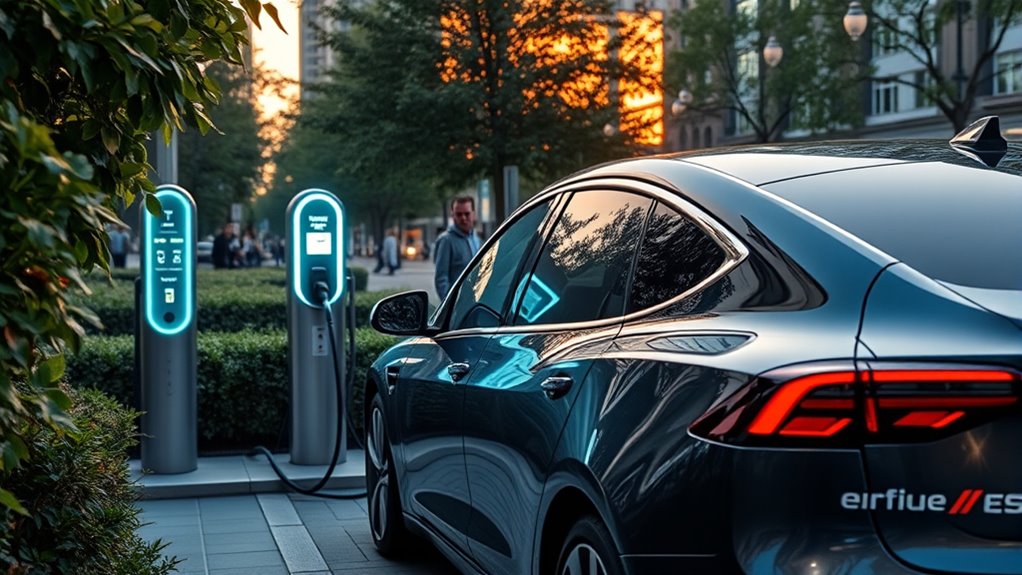
EV charging is the process of adding electricity to an electric vehicle battery, much like refueling a gas car. The difference is that you can often charge where the car already parks, such as at home, work, a hotel, a shopping center, or a highway fast-charging stop.
Quick Answer
EV charging means sending electricity from a charger or outlet into an electric vehicle battery. Level 1 is slow and uses a 120-volt outlet, Level 2 is faster and uses 208- or 240-volt power, and DC fast charging is the quickest option for road trips and public charging stops.
Key Takeaways
- Most EV drivers use home charging for daily driving and public charging for longer trips.
- Level 1 is the slowest option, Level 2 is the best everyday setup for many homes, and DC fast charging is designed for quick stops.
- Charging speed depends on the charger, the vehicle’s maximum charging rate, battery size, state of charge, and temperature.
- Connector type matters. Common North American connectors include J1772, CCS, CHAdeMO, and J3400/NACS.
- For home Level 2 charging, use safety-certified equipment and a qualified electrician when a new circuit or panel work is needed.
What Is EV Charging and Why It Matters
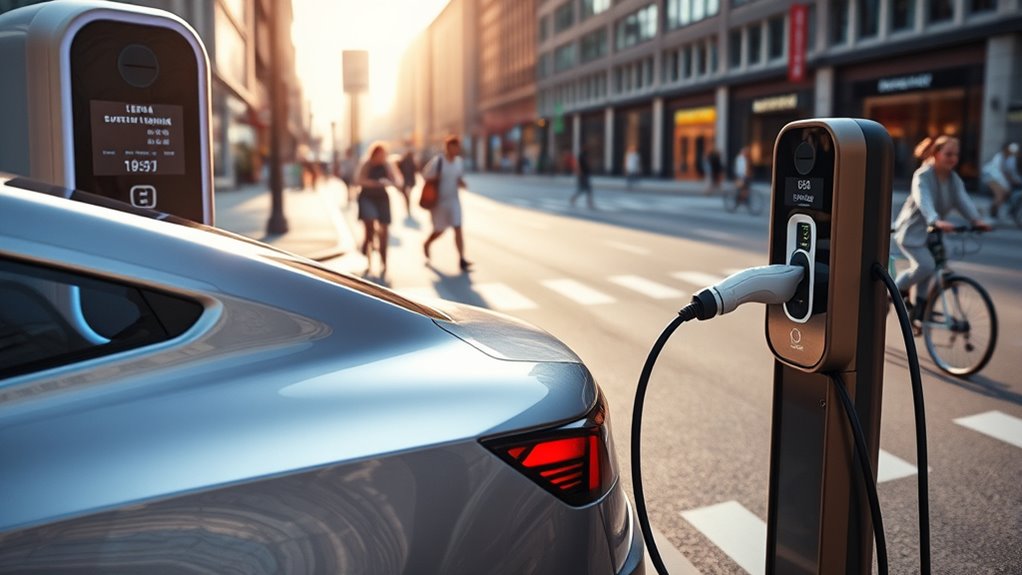
EV charging powers electric vehicles by transferring electricity into the vehicle’s battery. The charger, cable, connector, vehicle electronics, and battery management system all work together to start, monitor, and stop the charging session safely.
According to the U.S. Department of Energy’s Alternative Fuels Data Center, EV charging equipment is grouped by how quickly it charges the battery. The three main options for most drivers are AC Level 1, AC Level 2, and DC fast charging.
Charging matters because it affects your daily routine, road-trip planning, battery care, and total driving cost. A good charging setup can make an EV feel easy to own. A poor setup can lead to long waits, charger compatibility problems, or avoidable range anxiety.
How Does EV Charging Work? The Basics Explained
When you plug in an EV, the charging equipment communicates with the vehicle before power flows. This communication helps confirm that the connector is seated, the charger is available, and the vehicle can accept the power level being offered.
Charging Process Overview
The basic charging process usually works like this:
- You plug the connector into the vehicle’s charge port.
- The charger and vehicle perform a safety and communication check.
- Power flows into the battery at the rate allowed by the charger, the vehicle, and current battery conditions.
- The vehicle slows or stops charging when it reaches the selected limit or when the battery is full.
With AC charging, the vehicle’s onboard charger converts alternating current from the grid into direct current for the battery. With DC fast charging, the station does much of that conversion outside the vehicle and sends direct current to the battery, which is why DC fast charging can be much quicker.
Note: A “charger” is often called EVSE, or electric vehicle supply equipment. In everyday language, most people call the wall box, charging post, or public station the charger.
Types Of Charging Stations
EV charging stations can be found at homes, apartments, workplaces, parking garages, retail centers, hotels, dealerships, and highway stops. A station location can have one charger or many chargers. One charging port can charge one vehicle at a time, even if that port has more than one connector.
Public charging stations may be free, pay-per-use, membership-based, or billed through an app, credit card, RFID card, or Plug & Charge system. Before relying on a public station, check the plug type, power level, recent driver reviews, and whether the charger is working.
What Are the Different Types of EV Chargers?
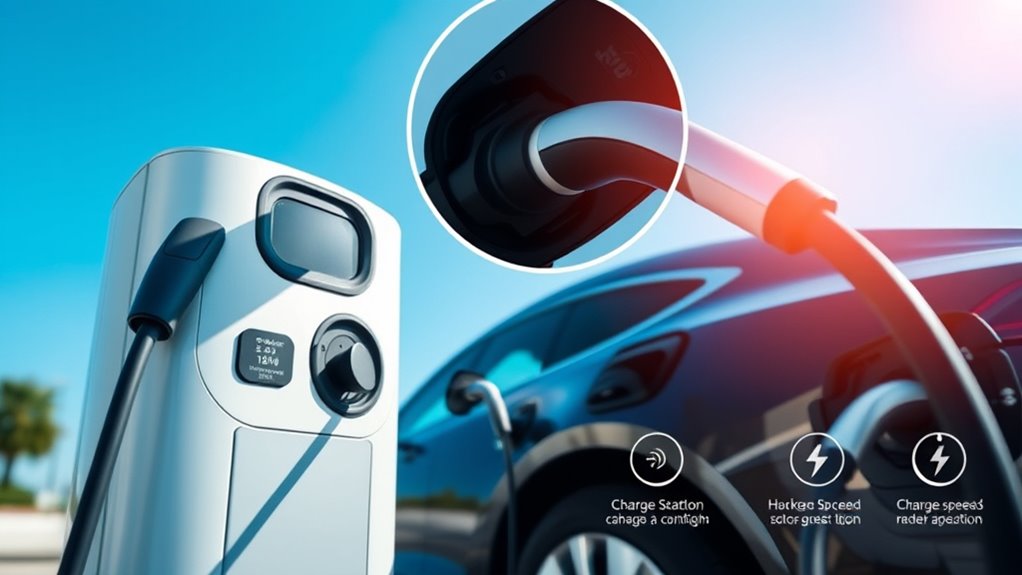
There are three main EV charging levels for everyday drivers: Level 1, Level 2, and DC fast charging. Each one fits a different use case.
| Charger Type | Typical Power | Best For | Typical Charging Result |
|---|---|---|---|
| Level 1 | 120 V AC, often about 1.4 to 1.9 kW | Short commutes, plug-in hybrids, backup charging, overnight top-ups | About 5 miles of range per hour for a typical EV, depending on efficiency |
| Level 2 | 208 or 240 V AC, often 2.9 to 19.2 kW | Home, work, apartments, hotels, daily charging | Often enough to recharge a typical EV overnight |
| DC Fast Charging | High-power DC, with some stations rated up to hundreds of kW | Road trips, quick public stops, fleet corridors | Often adds a large amount of range in 20 to 60 minutes, depending on the vehicle and charger |
Level 1 Charging
Level 1 charging uses a standard 120-volt household outlet. It is slow, but it can work well if you drive only a modest number of miles each day or own a plug-in hybrid with a smaller battery.
The main benefit is simplicity. Many EVs include a portable cordset, so you may not need extra equipment if you already have a safe, dedicated outlet near your parking spot.
Level 2 Charging
Level 2 charging uses 208- or 240-volt power and is the most practical everyday charging setup for many EV owners. It is common at homes, workplaces, apartments, hotels, and public destinations.
For home use, Level 2 often means installing a wall-mounted EV charger or a dedicated 240-volt outlet. A Level 2 setup can usually add far more range overnight than Level 1, which makes it better for longer commutes, larger batteries, and households with more than one EV.
DC Fast Charging
DC fast charging is designed for speed. Instead of sending AC power through the vehicle’s onboard charger, the station sends DC power directly to the battery system. This is why DC fast chargers are common along highways and at busy public charging hubs.
DC fast charging is helpful on road trips, but it is usually not the main charging method for daily use. It can cost more than home charging, and many EVs charge fastest at a low-to-mid battery state of charge, then slow down as the battery gets closer to full.
Pro Tip: On road trips, it is often faster to charge from roughly 10% to 80% and continue driving than to wait for the last 20%. The final portion can charge much more slowly.
EV Charger Connectors and Compatibility
Charging speed is only part of the story. The connector also has to match your vehicle, or you need a safe, approved adapter.
- J1772: Common for Level 1 and Level 2 AC charging on many non-Tesla EVs in North America.
- CCS: A common DC fast-charging connector for many non-Tesla EVs. It combines the J1772-style upper section with two larger DC pins.
- CHAdeMO: A DC fast-charging connector found on some older or specific EV models.
- J3400/NACS: Based on Tesla’s North American Charging Standard connector. The Joint Office of Energy and Transportation notes that J3400/NACS supports AC and DC charging and is part of the North American connector transition.
Before you choose a public station, check your vehicle’s charge port, the station’s connector, and whether your automaker approves any adapter you plan to use. A connector can fit physically only when the vehicle, charger, software, and adapter support that charging session.
How Long Does EV Charging Take?
EV charging time can range from less than half an hour for a useful DC fast-charge stop to many hours for a full Level 1 charge. The right estimate depends on how much energy you need, not just the advertised charger speed.
Here are realistic everyday examples:
- Overnight Level 1: Can work for short commutes or plug-in hybrids, but may be too slow for a fully depleted large EV battery.
- Overnight Level 2: Often enough for daily driving and many full-battery top-ups by morning.
- DC fast-charging stop: Often used to add road-trip range in about 20 to 60 minutes, depending on charger power, the EV’s charging curve, and battery conditions.
A simple way to think about charging time is this: the charger offers power, but the vehicle decides how much it can safely accept. If your EV can accept only 100 kW at that moment, plugging into a 350 kW charger will not make it charge at 350 kW.
The fastest charger is not always the fastest session. Battery temperature, state of charge, vehicle limits, and charger condition all affect the real charging speed.
What Affects EV Charging Speed?
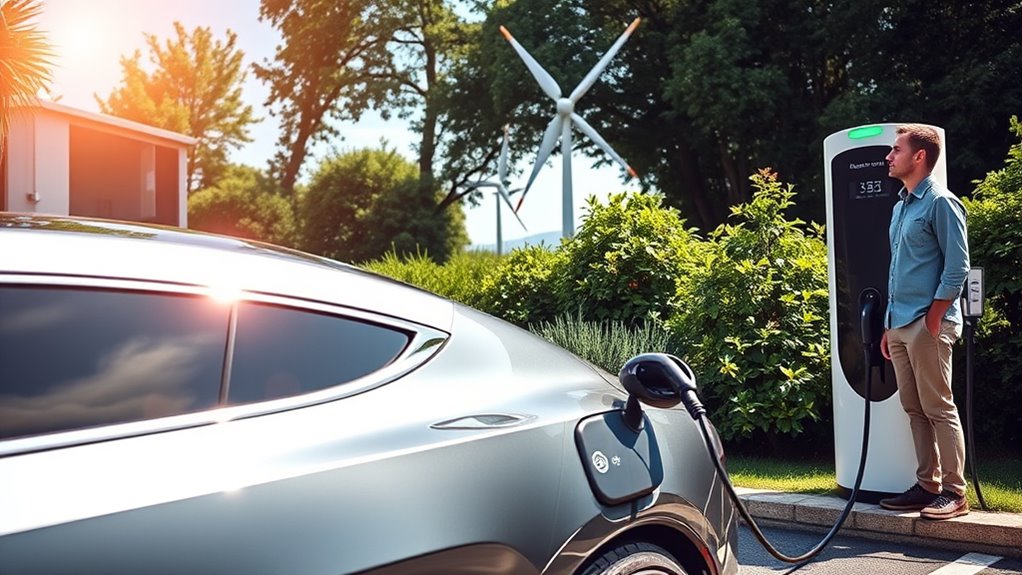
Several factors control how quickly your EV charges. The charger type matters, but it is only one piece of the system.
Battery Size and State of Charge
A larger battery usually takes longer to fill than a smaller one. The battery’s current state of charge also matters. Many EVs charge fastest when the battery is low or in the middle of its range. Charging often slows as the battery approaches 80% and slows more near 100%.
Vehicle’s Maximum Charging Rate
Every EV has a maximum AC charging rate and a maximum DC fast-charging rate. Some vehicles can accept very high DC power for part of the session. Others are limited to lower rates even when plugged into a more powerful station.
For AC charging, the onboard charger is especially important. If your EV’s onboard charger accepts 7.2 kW, a higher-output Level 2 station will not force the vehicle to charge above that limit.
Charger Type and Power
Level 1, Level 2, and DC fast chargers provide very different power levels. However, a charging session is limited by the lowest practical limit in the chain: the station, cable, connector, vehicle, battery temperature, battery state of charge, and sometimes the power shared with other vehicles at the same site.
Temperature and Weather
Very cold or very hot weather can slow charging because the battery management system protects the battery. Some EVs can precondition the battery before a fast-charging stop, which may improve charging speed in cold weather.
Comparing Home and Public Charging: Key Benefits
Home and public charging both matter, but they serve different needs.
Home charging is usually the easiest and most predictable option if you have a driveway, garage, or assigned parking with electrical access. You plug in when you get home and start the next day with the range you need. The AFDC home charging guidance notes that many drivers meet daily range needs by charging overnight.
Public charging helps when you travel, drive more than expected, cannot charge at home, or need a quick top-up. Public Level 2 stations are useful when your car will be parked for a while. DC fast chargers are better for road trips and short stops.
Note: If you live in an apartment or condo, ask about workplace charging, shared Level 2 charging, utility rebates, local right-to-charge rules, or nearby overnight public charging. Multifamily charging can require more planning than single-family home charging.
Charging Safely at Home
Home charging should be simple, but it still involves high electrical load. Treat it as electrical equipment, not as a casual extension-cord setup.
- Use the charging cord and equipment approved for your vehicle.
- Plug Level 1 equipment into a safe outlet on a suitable circuit.
- Do not use damaged cords, loose outlets, or improvised adapters.
- Use outdoor-rated equipment for outdoor charging.
- For Level 2 installation, have a qualified electrician check panel capacity, circuit size, code requirements, and permits.
- Look for safety-certified charging equipment, such as units tested by a nationally recognized testing laboratory.
Warning: Do not run an EV charger through a light-duty extension cord or damaged outlet. If the plug, outlet, breaker, or cord gets hot, stop charging and have the circuit inspected.
Cost Factors for EV Charging Installations
EV charging costs fall into two groups: the cost of electricity and the cost of charging equipment or installation.
For electricity, home charging is often less expensive than public DC fast charging, but your exact cost depends on your local electricity rate, time-of-use plan, vehicle efficiency, and how many kilowatt-hours you add. Some utilities offer lower overnight rates or EV charging programs.
For equipment and installation, the AFDC procurement and installation guidance explains that costs vary by charging level, power output, site conditions, trenching, labor, permitting, electrical upgrades, and networking features.
- Level 1 home charging: May cost little or nothing if your vehicle includes a cordset and you already have a suitable outlet.
- Level 2 home charging: Usually requires buying charging equipment and may require a new circuit, permit, panel work, or professional installation.
- Public Level 2 stations: Cost more because they may include pedestals, networking, payment systems, signage, and site work.
- DC fast chargers: Are much more expensive than Level 2 because they require high-power equipment, utility coordination, and more complex installation.
Before installing a home Level 2 charger, get a quote that separates the charger price, labor, permit fees, panel upgrades, and any utility work. Then check federal, state, local, and utility incentives that may reduce the final cost.
Public Charging Planning and Etiquette
Public charging works best when you plan ahead. Check the station’s connector, power level, price, access hours, and recent status before you arrive. On a long trip, choose backup stations in case your first stop is full, blocked, or out of service.
Good charging etiquette also matters:
- Move your EV after it finishes charging.
- Do not park in a charging space if you are not charging.
- Use DC fast charging for quick road-trip stops, not long parking sessions.
- Leave accessible charging spaces open for drivers who need them whenever possible.
- Report broken chargers in the station app so other drivers are not surprised.
Accessibility is an important part of public charging design. The U.S. Access Board explains that accessible EV charging involves more than a marked parking space because drivers may need room to exit, move around the vehicle, handle the cable, and reach the charger controls.
Battery Care and Smart Charging Habits
You do not need to baby an EV battery, but a few habits can help with convenience and long-term battery health.
- Set a daily charging limit if your vehicle recommends one for regular use.
- Use 100% charging when you need maximum range, especially before a longer trip.
- Precondition the cabin while plugged in when your EV supports it.
- Use battery preconditioning before DC fast charging if your vehicle offers that feature.
- Avoid arriving at a fast charger with a very cold battery when you can plan ahead.
- Follow your owner’s manual because charging recommendations vary by battery chemistry and model.
Emerging Trends in EV Charging Technology
EV charging is changing quickly. Some trends are already common, while others are still developing or limited to certain vehicles, fleets, or regions.
| Technology | What It Means | Why It Matters |
|---|---|---|
| Plug & Charge | The car and charger authenticate the session automatically. | Fewer apps, cards, and payment steps. |
| Smart Charging | Charging can shift to lower-cost or lower-demand times. | May reduce charging costs and help the grid. |
| Vehicle-to-Grid and Vehicle-to-Home | Some EVs can send energy back to a home, building, or grid. | Can support backup power or grid programs where available. |
| Wireless Charging | Energy transfers through a pad instead of a plug. | Could improve convenience, but availability is still limited. |
| Higher-Power Fleet Charging | Large chargers serve trucks, buses, and busy charging hubs. | Important for commercial EVs and high-traffic corridors. |
These trends can make charging easier, but not every feature works with every EV. Always check your vehicle manual, charging network details, and local utility rules before relying on a new charging feature.
Frequently Asked Questions
What does EV charging mean?
EV charging means adding electricity to an electric vehicle battery. You plug the vehicle into a home outlet, Level 2 charger, or public DC fast charger, and the vehicle manages how much power the battery can safely accept.
What does EV stand for?
EV stands for electric vehicle. In everyday use, it often means a battery electric vehicle, but the broader category can also include plug-in hybrid electric vehicles that use both electricity and gasoline.
What happens if you run out of charge in an EV?
If your EV battery reaches 0%, the vehicle may reduce power, warn you, and eventually stop. You may need roadside assistance, a tow to a charger, or mobile charging if available in your area. Route planning and backup charging stops help prevent this.
Are electric cars safe for pacemakers?
Most people with implanted cardiac devices can use normal vehicles, but you should follow your cardiologist’s and device manufacturer’s instructions around strong magnets, electromagnetic fields, and charging equipment. If you have a pacemaker or ICD, treat this as a medical question and ask your care team for device-specific guidance.
Should I install Level 2 charging at home?
Level 2 home charging is worth considering if Level 1 cannot replace your daily driving range overnight, you have a long commute, you own a large-battery EV, or your schedule is unpredictable. Have an electrician check whether your electrical panel and circuit can support it.
Is DC fast charging bad for an EV battery?
Occasional DC fast charging is normal for road trips. For daily charging, many owners use Level 1 or Level 2 because it is convenient and often cheaper. Follow your owner’s manual for daily charge limits, fast-charging guidance, and battery-care recommendations.
Conclusion
EV charging is easier to understand once you separate the three main charging levels. Level 1 is slow but simple, Level 2 is the everyday choice for many homes and workplaces, and DC fast charging is best for road trips and quick public stops. The right setup depends on your driving distance, parking situation, vehicle charging rate, local electricity cost, and connector type.
If you are new to EVs, start with your real routine: where you park overnight, how many miles you drive each day, and which public chargers are near your common routes. Then match the charger to that routine instead of buying the fastest or most expensive option by default.
Sources
- U.S. Department of Energy Alternative Fuels Data Center: Electric Vehicle Charging Stations — charger levels, charging speeds, connector types, and charging terminology.
- U.S. Department of Energy Alternative Fuels Data Center: Charging Electric Vehicles at Home — home charging, Level 1 and Level 2 setup, safety, permits, and electricity cost basics.
- U.S. Department of Energy Alternative Fuels Data Center: Procurement and Installation for EV Charging Infrastructure — equipment costs, installation factors, permits, safety, and contractor guidance.
- U.S. Department of Energy Alternative Fuels Data Center: Electric Vehicle Benefits and Considerations — EV cost, fuel economy, charging access, and public charging context.
- Joint Office of Energy and Transportation: SAE J3400 Charging Connector — NACS/J3400 connector standardization and compatibility context.
- U.S. Access Board: Design Recommendations for Accessible EV Charging Stations — accessible public EV charging design considerations.