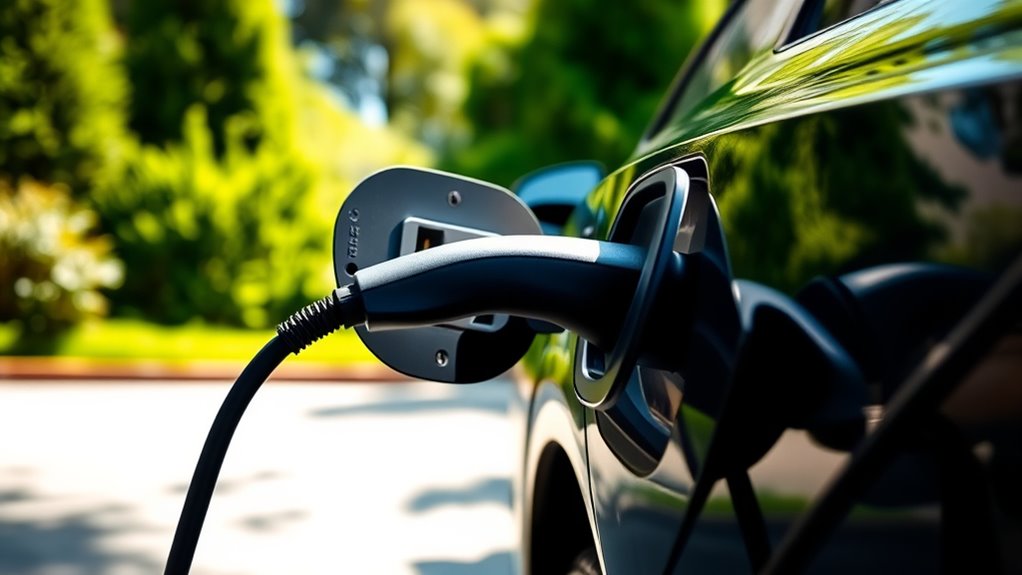
Level 1 EV charging uses 120-volt AC power from a standard household outlet in North America. A typical setup supplies about 1.4 to 1.9 kW and adds roughly 2 to 5 miles of range per hour, depending on the vehicle, temperature, battery state of charge, and charging losses. It is the slowest charging option, but it can work well for plug-in hybrids, short daily driving, and overnight home charging.
Key Takeaways
- Level 1 charging uses a 120V AC outlet and portable EV charging equipment, often called EVSE.
- Typical charging power is about 1.4 kW on a 15-amp circuit or up to about 1.9 kW on a compatible 20-amp circuit.
- Expect roughly 2 to 5 miles of added range per hour, not a fixed number for every EV.
- Eight to 10 hours of overnight charging may add roughly 16 to 50 miles of range.
- Use a properly grounded outlet and follow the EV and charging-equipment manufacturer’s electrical requirements.
- If Level 1 cannot replace the energy you use each day, a 240V Level 2 setup is usually the more practical home option.
What Is a Level 1 EV Charger?
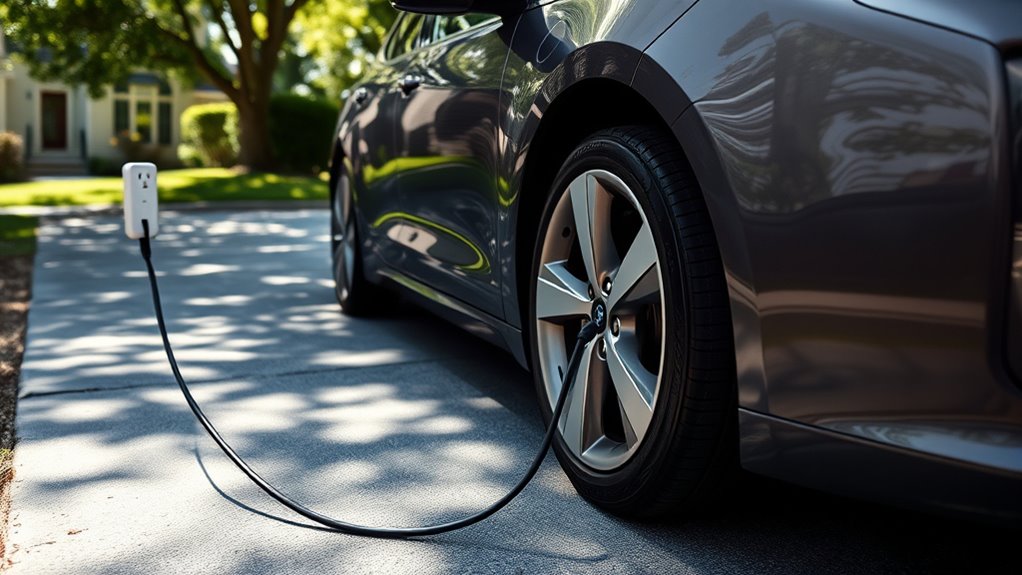
A Level 1 EV charger is the common name for 120V AC electric vehicle charging equipment. More precisely, the cordset is electric vehicle supply equipment, or EVSE. It safely delivers AC electricity to the vehicle, while the vehicle’s onboard charger converts that AC power to DC power for the battery.
In the United States, Level 1 charging commonly uses a NEMA 5-15 household outlet. Some portable charging equipment can also use a NEMA 5-20 outlet and draw more current when the circuit and equipment are designed for it.
Charging power is usually modest. A 120V, 12-amp setup is about 1.44 kW before charging losses, while a compatible 120V, 16-amp setup is about 1.92 kW. Because vehicles vary in efficiency, it is more useful to think of Level 1 as adding roughly 2 to 5 miles of range per hour rather than assuming one exact rate.
Many EVs support portable Level 1 charging, but the cordset included with a new vehicle varies by manufacturer and model. Check what came with your vehicle and follow the owner’s manual for approved equipment and adapters.
How Does Level 1 EV Charging Work?
Level 1 EV charging starts with 120V AC power from the wall. The portable EVSE communicates with the vehicle, confirms that charging can begin, and limits current to the level the equipment and circuit are designed to provide.
- The wall outlet supplies 120V alternating current.
- The EVSE provides safety functions and tells the vehicle how much current is available.
- The vehicle’s onboard charger converts AC electricity to DC electricity.
- The battery management system controls how the battery accepts that energy.
Charging speed depends on more than the outlet. Battery size, vehicle efficiency, outside temperature, battery temperature, state of charge, and the vehicle’s charging controls can all affect how much usable range is added.
For a large battery-electric vehicle, charging from a very low state of charge on Level 1 can take well over a day. That is why Level 1 is usually used to replace daily driving rather than to refill an empty long-range EV battery in one session.
Charging Speed With Level 1 Chargers
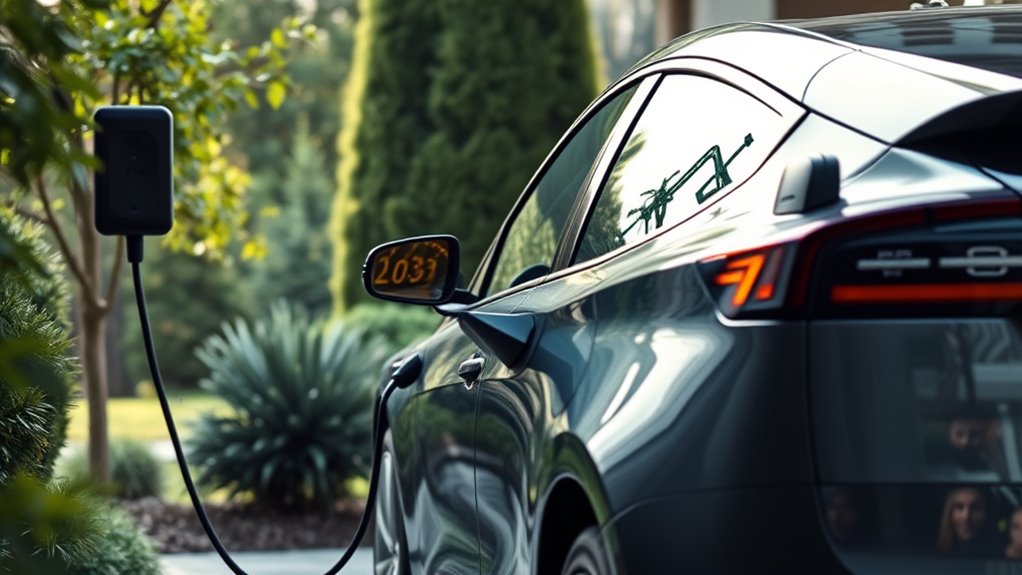
Level 1 charging is the slowest common EV charging method in the U.S. A reasonable planning estimate is about 2 to 5 miles of range per hour.
That means an 8-hour charging window may add about 16 to 40 miles of range, while a 10-hour window may add about 20 to 50 miles. Actual results can be lower in cold weather or with less efficient vehicles.
Charging time also depends on how much energy the battery needs. A plug-in hybrid with a relatively small battery may recharge overnight, while a battery-electric vehicle that is nearly empty can require 40 to 50 hours or more on Level 1.
For daily use, the key question is not “How long does a full charge take?” It is “Can Level 1 replace the miles I normally drive before I need the car again?” If the answer is yes, the slow speed may not be a problem.
Where Is Level 1 EV Charging Most Effective?
Level 1 charging is most effective where a vehicle can remain parked for many hours and only needs a modest amount of energy each day.
- Home charging: Useful when a safe 120V outlet is available near a regular parking space.
- Short daily driving: Practical when overnight charging can replace the range used during the day.
- Plug-in hybrids: Their smaller batteries often make slow overnight charging more workable.
- Workplace charging: A long workday can provide several hours of useful charging when the site permits it.
- Backup charging: A portable cordset can provide slow charging when faster equipment is unavailable.
Level 1 is less suitable when you drive long distances every day, park for only short periods, have no reliable outlet near the vehicle, or frequently need to recover a large amount of range overnight.
What Equipment Do You Need for Level 1 Charging?
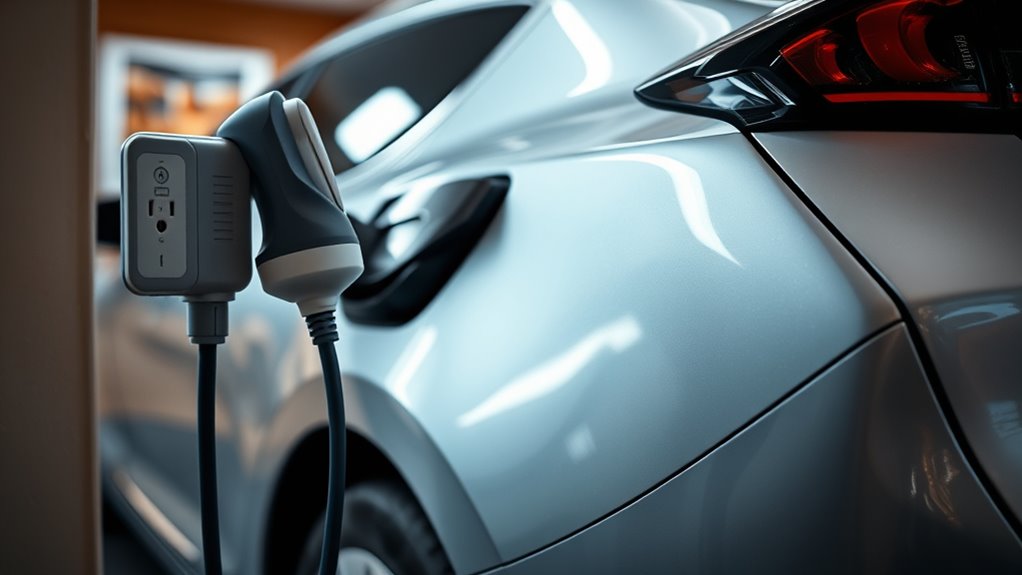
For basic Level 1 charging, you need a suitable 120V outlet, compatible portable EVSE, and a connector that matches your vehicle. In North America, vehicle-side connectors may include SAE J1772 or SAE J3400/NACS, depending on the EV and equipment.
Essential Charging Equipment
A typical Level 1 setup includes:
- A properly grounded 120V branch circuit and receptacle in good condition.
- Portable EV charging equipment rated for the outlet and circuit being used.
- A vehicle connector that is compatible with your EV, either directly or through an automaker-approved adapter when required.
A 15-amp circuit commonly supports a 12-amp continuous charging load. Some equipment can use a 20-amp circuit and compatible receptacle for a 16-amp charging load. Do not assume a receptacle can safely provide more current just because an adapter physically fits.
Outlet Requirements
The outlet should be grounded, firmly hold the plug, and show no signs of heat damage, discoloration, cracking, or looseness. A dedicated circuit is preferable because EV charging is a long-duration electrical load and sharing the circuit with other high-draw devices can lead to breaker trips or overheating.
| Requirement | What to Look For |
|---|---|
| Voltage | 120V AC for U.S. Level 1 charging |
| Outlet | Grounded receptacle in good physical condition |
| Circuit | Correctly sized circuit; dedicated circuit preferred |
| Charging Equipment | Portable EVSE approved for the outlet, circuit, and vehicle |
| Outdoor Use | Weather protection and electrical protection required by applicable code |
If the outlet is old, loose, warm during charging, frequently trips a breaker, or is of uncertain condition, stop using it for EV charging and have a qualified electrician inspect the circuit.
Safety Considerations
Level 1 charging is simple, but the electrical load can continue for many hours. Use the equipment exactly as the vehicle and EVSE manufacturers direct.
- Inspect the plug, cord, control box, and connector before use.
- Do not use damaged, loose, scorched, or overheated outlets or charging equipment.
- Avoid ordinary extension cords and unapproved plug adapters unless the manufacturer specifically allows them.
- Keep connections protected from water and physical damage.
- Do not share an overloaded circuit with other high-power appliances.
Electrical codes and installation rules vary by location. If a new receptacle, dedicated circuit, or wiring change is needed, use a qualified electrician and follow local code.
Benefits and Limitations of Level 1 Charging: What You Should Know?
The main advantage of Level 1 charging is simplicity. If a suitable outlet already exists where you park, you may be able to charge without installing a 240V wall unit.
It can also be a good match for PHEVs and drivers who routinely use only a small portion of an EV’s battery each day. Charging overnight can quietly replace that daily energy without requiring a faster system.
The biggest limitation is speed. Level 1 may not recover enough range between trips for high-mileage drivers, and it can take 40 to 50 hours or more to bring a depleted battery-electric vehicle back toward a high state of charge.
Charging efficiency is another consideration. ENERGY STAR notes that Level 2 charging is, on average, somewhat more efficient than Level 1. The exact difference varies by vehicle, equipment, temperature, and charging conditions, so a single fixed efficiency percentage should not be assumed.
Level 1 also depends on reliable parking near a suitable outlet. Apartment residents, street parkers, and people without assigned parking may need workplace or public charging instead.
How Does Level 1 Charging Compare to Levels 2 and 3?
Level 1, Level 2, and DC fast charging serve different purposes. “Level 3” is often used informally for DC fast charging, although DC fast charging is the clearer term.
| Charging Type | Typical Electrical Supply | Typical Range Added | Best Use |
|---|---|---|---|
| Level 1 | 120V AC | About 2–5 miles per hour | Overnight home charging, PHEVs, short daily driving |
| Level 2 | 208–240V AC | About 10–30 miles per hour | Home, workplace, destination, and public charging |
| DC fast charging | High-power DC charging equipment | About 100–200+ miles in 30 minutes, vehicle permitting | Road trips and rapid public charging |
Key Differences in Speed
Level 1 is intentionally low power. Level 2 uses 208V or 240V AC and can deliver much more power, so it is usually the better choice for a battery-electric vehicle that needs substantial overnight replenishment.
DC fast charging is different because the station supplies DC power directly to the vehicle, bypassing the vehicle’s onboard AC charger. Actual DC fast-charging speed can vary greatly with vehicle capability, battery temperature, state of charge, and station output.
Charging Infrastructure Availability
Level 1 is most common at homes and some workplaces where 120V outlets are available. It is uncommon as dedicated public charging infrastructure because vehicles occupy the space for a long time while gaining relatively little range.
Level 2 is widely used at homes, workplaces, hotels, shopping areas, parking facilities, and other destinations. DC fast charging is concentrated along travel corridors and at locations where drivers need a large amount of range in a short stop.
Connector compatibility is changing in North America. SAE J1772 remains widely used for AC charging, while SAE J3400, based on the connector formerly associated mainly with Tesla, can support AC and DC charging. Always check the connector and adapter requirements for your specific vehicle.
Cost Considerations for Users
Level 1 can have the lowest upfront cost when a suitable outlet and compatible cordset are already available. If the outlet, wiring, or circuit needs work, however, an electrician may still be required.
Level 2 usually has higher installation costs because it needs a 208V or 240V circuit and may require electrical-panel or wiring upgrades. The exact cost varies too much by home and region for one fixed figure to be reliable.
For home charging, the energy cost is mainly determined by how many kilowatt-hours you draw and your utility rate. Level 1 and Level 2 do not create different electricity prices by themselves, although time-of-use rates, charging losses, and utility programs can change the final cost.
Public DC fast charging often uses a different pricing structure from home electricity, so compare the network’s current rate and any session or idle fees before charging.
Common Use Cases for Level 1 Charging: Who Benefits Most?
Level 1 charging works best for drivers whose vehicles spend long periods parked and whose daily energy use is modest.
- PHEV owners: Smaller batteries can often be replenished during an overnight session.
- Low-mileage BEV drivers: If you use 20 or 30 miles of range per day, overnight Level 1 charging may replace most or all of it.
- Drivers with workplace charging: Home Level 1 can supplement charging available during the day.
- Second vehicles: A lightly used EV may not need the speed of Level 2.
- Emergency or temporary use: Portable Level 1 equipment can provide slow charging where a suitable 120V outlet is available.
If you regularly return home with a low battery and cannot recover enough range before the next trip, Level 1 is no longer meeting your daily needs. That is the point at which a Level 2 upgrade becomes worth considering.
How to Set Up Level 1 Charging Safely at Home
Use this order when setting up Level 1 charging:
- Check the vehicle manual. Confirm the approved charging equipment, connector, current limit, and any adapter rules.
- Inspect the outlet. It should be grounded, undamaged, and tight enough to hold the plug securely.
- Check the circuit. A dedicated circuit is preferable, and the breaker, wiring, receptacle, and EVSE must all be correctly matched.
- Inspect the EVSE. Do not use a cordset with damaged insulation, bent pins, corrosion, or heat damage.
- Plug directly into the approved outlet. Avoid ordinary extension cords or unapproved adapters.
- Connect the vehicle. Make sure the connector is fully seated and that the vehicle indicates charging has started.
- Check for heat or faults. Stop charging if the outlet, plug, or cord becomes unusually hot, smells burnt, or repeatedly trips the breaker.
- Use scheduled charging if helpful. Your vehicle or charging equipment may let you charge during off-peak utility hours.
If you are unsure about the outlet or circuit, have a qualified electrician inspect it before relying on it for long-duration EV charging.
Frequently Asked Questions
Are Level 1 Chargers Bad for EV?
No. Level 1 charging is a normal AC charging method and is not inherently harmful to an EV battery. Follow the automaker’s charging recommendations, especially any everyday charge-limit guidance for your battery type.
Is It Cheaper to Charge an EV on Level 1 or Level 2?
Level 1 is often cheaper to set up if you already have a suitable outlet. The electricity cost for either method mainly depends on your utility rate and how many kilowatt-hours the vehicle draws. Level 2 can be somewhat more energy-efficient and may also make it easier to use short off-peak rate windows.
How Long Does It Take to Charge an EV on a Level 1 Charger?
It depends on battery size and how empty the battery is. Level 1 typically adds about 2 to 5 miles of range per hour, and a nearly empty battery-electric vehicle can require 40 to 50 hours or more to reach a high state of charge. A PHEV with a smaller battery may recharge in one overnight session.
What Is the Difference Between Level 1, 2, and 3 EV Chargers?
Level 1 uses 120V AC and is the slowest. Level 2 uses 208V or 240V AC and is much faster for home and destination charging. What many drivers call Level 3 is more accurately called DC fast charging; it supplies high-power DC energy for rapid public charging.
Can I Use an Extension Cord for Level 1 EV Charging?
Ordinary extension cords are generally a poor choice for continuous EV charging because plugs and cords can overheat if they are undersized, damaged, or loosely connected. Follow the EVSE manufacturer’s instructions; if the outlet cannot be reached safely, have a suitable receptacle installed closer to the parking space.
How Do I Know If Level 1 Charging Is Enough?
Compare the range you use each day with the range you can add while parked. If your EV gains about 2 to 5 miles of range per hour and you can charge for 10 hours, Level 1 may replace roughly 20 to 50 miles of daily driving. If that routinely falls short, consider Level 2.
Conclusion
Level 1 EV charging is a simple 120V solution for drivers who have long parking periods and modest daily mileage. It is especially useful for plug-in hybrids, lightly driven battery-electric vehicles, and backup charging.
Its main limitation is speed. If overnight Level 1 charging cannot replace the range you use each day, a properly installed Level 2 setup is usually the more practical long-term choice. Whatever charging level you use, match the equipment to the vehicle and electrical circuit, and treat any loose, hot, damaged, or repeatedly tripping outlet as a reason to stop and have the system inspected.