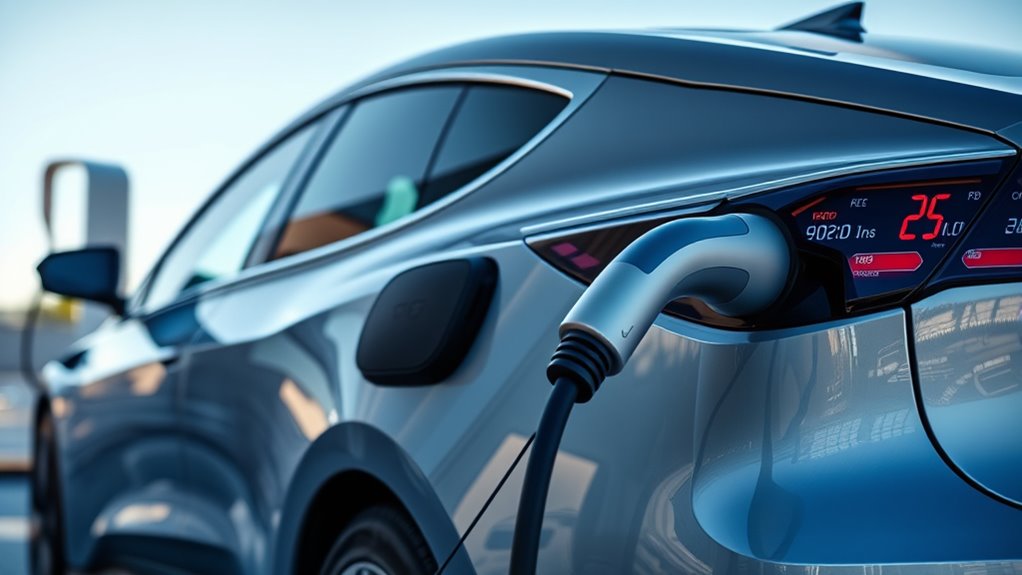
DC fast charging is the quickest way to add range to a battery electric vehicle during a road trip, a busy workday, or any time Level 2 charging is too slow. Instead of sending alternating current to the vehicle’s onboard charger, a DC fast charger converts power at the station and sends direct current to the battery through the vehicle’s fast-charge port.
Quick Answer
DC fast charging, often called Level 3 charging, sends high-power direct current to an EV battery for much faster charging than a home outlet or Level 2 charger. Many EVs can add major range in 20 to 40 minutes, but speed depends on the car, charger, temperature, and battery state of charge.
Key Takeaways
- DC fast charging is best for road trips and quick stops, not as your only daily charging method if home or Level 2 charging is available.
- Charging is usually fastest from a low state of charge up to about 80%, then slows to protect the battery.
- In North America, the main DC fast charging connector types are CCS1, CHAdeMO, and SAE J3400/NACS.
- Pricing changes by network, station, plan, time of day, and idle or congestion fees, so check the charger screen or app before starting.
- Frequent DC fast charging is usually manageable in modern EVs, but heat, cold, high charge levels, and repeated fast sessions can add battery stress.
At a Glance
| Time Required | Often 20 to 60 minutes for a useful fast-charge stop, depending on vehicle and charger. |
| Difficulty | Easy, once you confirm the connector, payment method, and charger status. |
| Tools Needed | EV charging app, payment method, in-car navigation, and a manufacturer-approved adapter if your vehicle requires one. |
| Cost | Varies by station, network, plan, location, energy delivered, taxes, and idle or congestion fees. |
What Is DC Fast Charging?
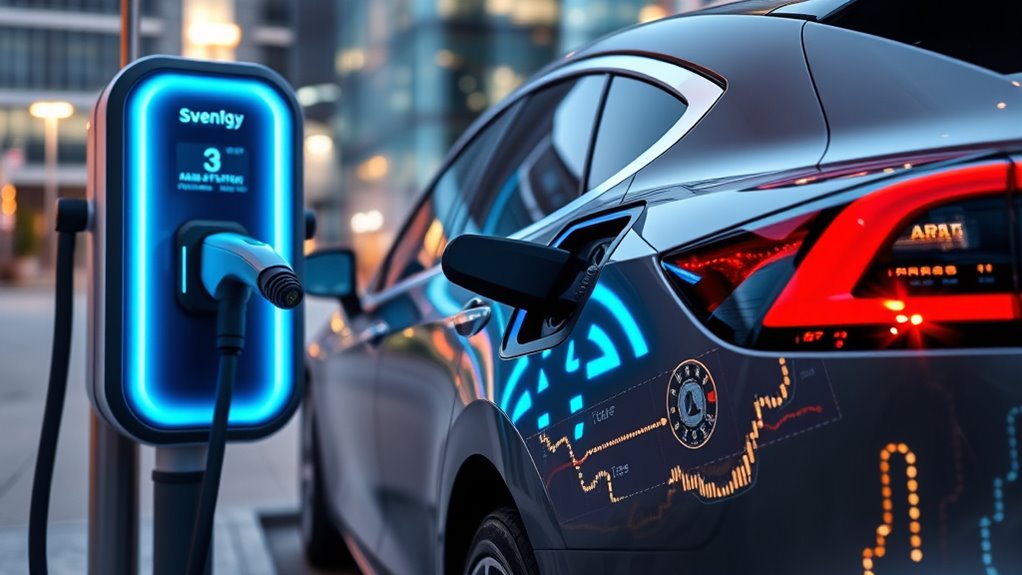
DC fast charging is a high-power public charging method for electric vehicles. The charger takes AC power from the grid, converts it to DC power inside the charging equipment, and sends that DC power directly to the EV battery through the fast-charge port.
This is different from home charging. With Level 1 or Level 2 AC charging, your EV’s onboard charger must convert AC power to DC before the battery can store it. That onboard charger is much smaller than a public DC fast charger, so AC charging is slower.
The U.S. Department of Energy’s Alternative Fuels Data Center describes DC fast charging as rapid charging used along heavy-traffic corridors, with some equipment capable of very high power levels. In simple terms, DC fast charging is the charging option you use when you need range quickly away from home.
Note: Most plug-in hybrids do not support DC fast charging. Many PHEVs use Level 1 or Level 2 AC charging only, so check your owner’s manual or charge-port label before planning a DC fast-charge stop.
Key Differences Between AC and DC Charging
AC and DC charging both fill your EV battery, but they do it at very different speeds. The biggest difference is where the AC-to-DC conversion happens.
| Charging Type | Typical Use | What to Expect |
|---|---|---|
| Level 1 AC | Standard household outlet | Slow charging, often useful for overnight top-ups or low daily mileage. |
| Level 2 AC | Home, workplace, hotel, parking garage | Good for daily charging and overnight charging. |
| DC Fast Charging | Highway stops, public fast-charge hubs, busy travel days | Fastest public option for many battery electric vehicles. |
DC fast charging is sometimes called Level 3 charging, but many charging networks and automakers now prefer the term DC fast charging because it is clearer. The exact charging speed depends on four main things: the charger’s maximum output, your EV’s maximum DC charging rate, the battery temperature, and the current state of charge.
The charger may be rated for 350 kW, but your EV only takes what its battery system can safely accept at that moment.
Why DC Fast Charging Slows After 80%
DC fast charging is not one steady speed from empty to full. It follows a charging curve. When the battery is at a lower state of charge and the temperature is in the right range, the car can often accept power faster. As the battery fills, the car gradually reduces charging power to protect the battery.
That is why road-trip charging is often planned around shorter stops, such as charging from about 10% or 20% up to around 80%, instead of waiting for 100%. The last 20% can take much longer than drivers expect. Tesla also notes that charging to 100% typically takes significantly longer than reaching 80% because charging speeds slow as the battery fills.
Pro Tip: On a road trip, use your EV’s built-in route planner when possible. Many EVs can precondition the battery before a fast-charge stop, which helps the battery reach a better temperature for faster charging.
DC Fast Charging Standards: CCS1, CHAdeMO, and J3400/NACS
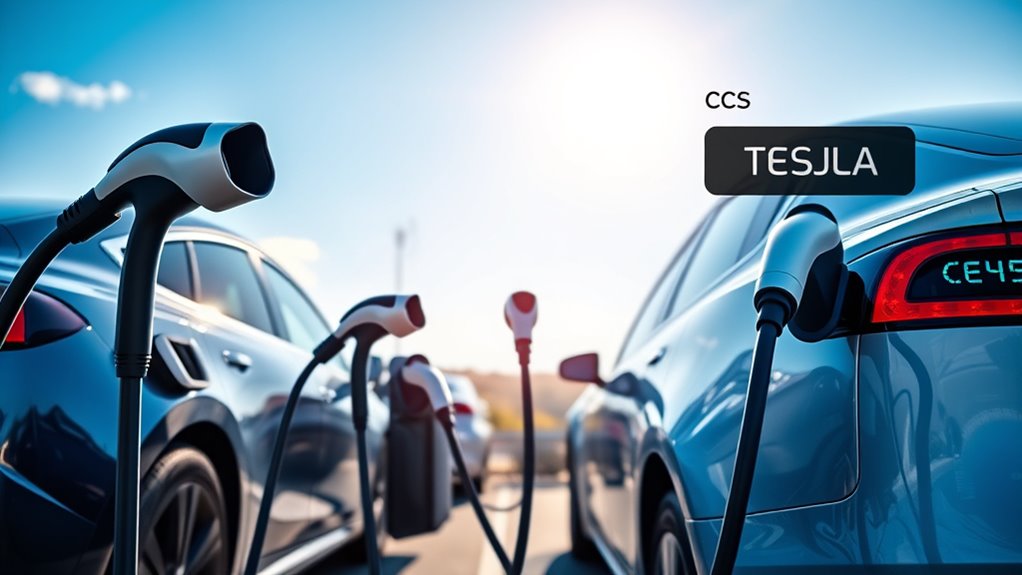
Connector compatibility matters because not every EV can plug into every DC fast charger without the right connector or adapter. In North America, the main DC fast charging connector types are CCS1, CHAdeMO, and SAE J3400, also known as NACS.
- CCS1: Common on many non-Tesla EVs in North America. It combines the familiar J1772 AC connector shape with two larger DC pins below it.
- CHAdeMO: A legacy DC fast charging connector most often associated with older Japanese EVs, especially some Nissan Leaf models.
- SAE J3400/NACS: The connector design originally associated with Tesla in North America. The Joint Office of Energy and Transportation explains that J3400 is based on NACS and is intended to support broader EV and charging-station use across North America.
Tesla Superchargers are part of this story, but it is more accurate now to talk about the connector as J3400/NACS rather than simply calling it the Tesla standard. Many automakers have announced plans to support J3400/NACS in North America, and adapters are part of the transition period.
Warning: Use only adapters approved by your vehicle manufacturer or charging provider. A poorly made or incompatible adapter can cause charging failures, overheating, or damage. If a connector feels loose, damaged, unusually hot, or difficult to latch, stop and choose another charger.
Benefits of Using DC Fast Charging for Your EV
DC fast charging makes electric driving easier when you need to cover more miles than your battery can handle in one stretch. It is especially helpful on highways, during long commutes, for rideshare drivers, and for EV owners who cannot reliably charge at home.
Faster Road-Trip Stops
The main benefit is time. Instead of waiting several hours at a Level 2 station, you can often add enough range for the next leg of your trip while you use the restroom, stretch, buy food, or answer messages.
The fastest session usually happens when your battery is warm and at a lower state of charge. If you arrive at a charger with 70% already in the battery, you may see a much lower speed than the charger’s advertised maximum.
Better Long-Distance Planning
DC fast chargers make long-distance EV travel practical because they are often placed near highways, shopping centers, rest areas, and travel corridors. Your in-car navigation can often plan charging stops based on your current range, elevation, speed, weather, and charger availability.
- Less downtime: Fast stops help you keep moving on long drives.
- More route flexibility: Public fast chargers can fill gaps between home, hotel, and workplace charging.
- Useful backup: A nearby DC fast charger can help when your normal Level 2 charger is unavailable.
Where Can I Find DC Fast Charging Stations?
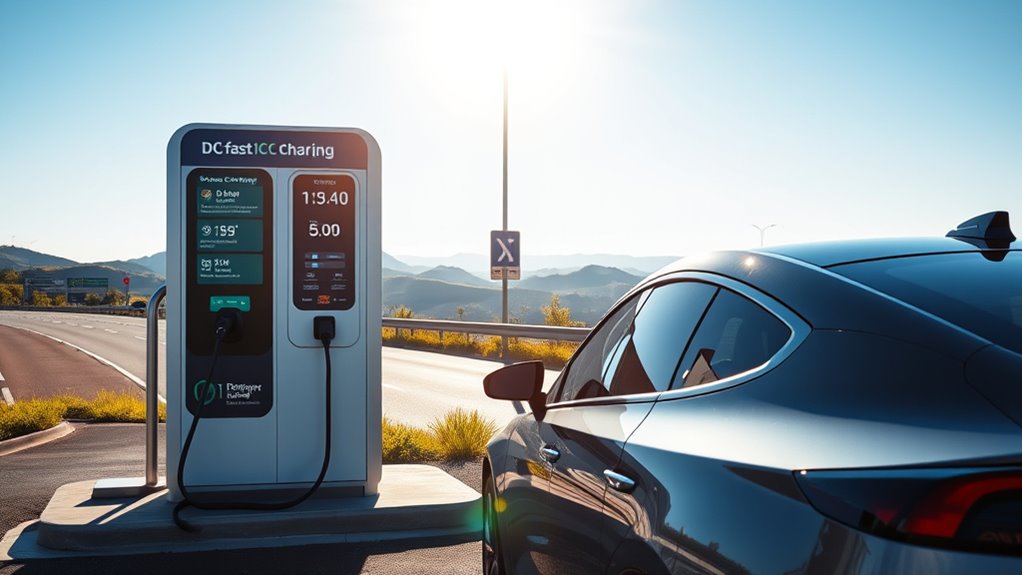
You can find DC fast charging stations through your EV’s built-in navigation, charging-network apps, and public charging maps. Good tools show connector type, station status, power level, pricing, nearby amenities, and whether a charger is already in use.
Useful options include:
- Your EV’s route planner: Often the best option because it knows your car’s battery, range estimate, and compatible chargers.
- Charging network apps: Apps from Tesla, Electrify America, EVgo, ChargePoint, and other providers can show real-time station details and pricing.
- Public maps: Google Maps, PlugShare, Open Charge Map, and the AFDC Station Locator can help you compare locations.
Before you drive to a station, check the connector, charger power, recent user reports, and payment method. If you are road-tripping through an area with limited stations, choose a backup charger before you need it.
What Will DC Fast Charging Cost Me and How Does It Affect My Battery?
DC fast charging usually costs more than home charging because the equipment is expensive, the site may pay demand charges, and the network must maintain high-power hardware. The exact price can change by location, plan, energy delivered, time of day, taxes, and extra fees.
Electrify America says DC fast charging pricing is determined by charger location, your plan, and the amount of energy delivered, with real-time pricing shown in the app or on the charger. EVgo also notes that station-specific pricing is available in its app and that rates can vary by region. Tesla shows Supercharger pricing by site and may use per-kWh or per-minute billing depending on location.
Use this simple estimate before you start:
Cost formula: Estimated session cost = kWh added × station rate, plus any session fee, tax, idle fee, or congestion fee.
For example, if you add 40 kWh and the station costs $0.45 per kWh, the energy portion is about $18 before taxes or extra fees. If a station bills by the minute, your final cost depends on how long you are plugged in and how the network defines its speed tiers.
Does DC Fast Charging Hurt the Battery?
DC fast charging is not automatically bad for your EV. Modern electric vehicles use battery management systems to control current, voltage, temperature, and charging speed. Still, fast charging creates more heat than slower charging, and repeated high-power charging can add stress over time, especially in very hot or very cold conditions.
For everyday battery care, follow your owner’s manual. A practical rule is to use Level 2 charging for routine daily needs when you can, and use DC fast charging when the speed is worth it. On road trips, charging to around 80% is often more efficient than waiting for 100%.
How to Use a DC Fast Charger
- Confirm compatibility. Check whether your EV uses CCS1, CHAdeMO, J3400/NACS, or an approved adapter.
- Check the station status. Use the app or map to confirm the charger is online and not occupied.
- Park close enough for the cable. DC fast charging cables can be heavy and short, so align your charge port with the charger.
- Start the session. Use the network app, credit card reader, Plug & Charge, Autocharge, or your vehicle account if supported.
- Plug in firmly. Make sure the connector latches and the vehicle shows that charging has started.
- Monitor the session. Watch the battery percentage, estimated time, charging speed, and cost.
- Unplug and move when finished. This avoids idle fees and frees the charger for the next driver.
Common DC Fast Charging Problems and Fixes
Fast charging is improving, but public chargers can still fail. If a session does not start or the speed is much lower than expected, try these steps:
- Payment fails: Try the network app, a different payment card, or a different charger at the same site.
- Connector will not latch: Re-seat the connector. If it still feels loose or damaged, stop and switch chargers.
- Charging is slow: Check your battery percentage and temperature. Speed often drops when the battery is cold, hot, or already above 80%.
- Station is offline: Report it in the app and choose a nearby backup charger.
- Cable does not reach: Do not stretch the cable across traffic or park unsafely. Use another stall if available.
Frequently Asked Questions
How does DC fast charging work?
A DC fast charger converts grid AC power into DC power inside the charging equipment. It then sends that DC power directly to your EV battery through a compatible fast-charge connector. Your vehicle’s battery management system controls how much power the battery can safely accept.
Is DC fast charging the same as Level 3 charging?
In everyday EV language, yes. Many drivers use Level 3 charging and DC fast charging to mean the same thing. DC fast charging is the clearer term because it describes the current type and separates it from Level 1 and Level 2 AC charging.
What EV charger does Volvo recommend?
For daily home charging, most Volvo EV owners should use a properly installed Level 2 AC charger that matches the vehicle’s onboard charging capability. For road trips, use compatible DC fast chargers and only use adapters approved for your exact Volvo model and market. Always follow the owner’s manual and the charging guidance shown in the Volvo app or vehicle screen.
What are the disadvantages of DC fast charging?
The main disadvantages are higher cost, possible wait times, charger outages, connector compatibility issues, and more battery heat than slower charging. Charging can also slow sharply after about 80%, so staying plugged in to reach 100% may waste time and trigger idle or congestion fees.
How long does it take a DC fast charger to reach 80%?
Many EVs can reach about 80% in roughly 20 to 60 minutes on a suitable DC fast charger, but the exact time varies. Battery size, starting percentage, charger power, vehicle charging limit, battery temperature, and weather all affect the result.
Should I DC fast charge to 100%?
Usually, no. Charging to 100% can make sense before a long remote drive or when your route has few chargers, but it often takes much longer than stopping around 80%. For most road trips, shorter stops between lower and mid-level battery percentages are faster.
Conclusion
DC fast charging is the best EV charging option when speed matters. It can make long-distance travel practical, reduce downtime, and help drivers who do not always have access to home charging. The key is to plan around your vehicle’s connector, charging curve, battery temperature, and the station’s real-time price.
For the smoothest experience, arrive with a lower state of charge, use your vehicle’s trip planner, choose a compatible charger, stop around 80% when practical, and move your car when the session ends. Used this way, DC fast charging becomes a useful tool rather than a guessing game.
Sources
- U.S. Department of Energy Alternative Fuels Data Center: Electric Vehicle Charging Stations — charging levels, DC fast charging power, connector types, and charging-speed context.
- Joint Office of Energy and Transportation: SAE J3400 Charging Connector — J3400/NACS standardization and connector transition in North America.
- Tesla Support: Supercharging — Supercharger speed, pricing, congestion fees, and charging-slowdown guidance.
- Electrify America: Pricing and Plans for EV Charging — location-based pricing, app pricing, idle fees, and time-of-use pricing.
- EVgo: Pricing and Plans — plan types, session fees, app pricing, and regional rate variability.
- Fabry et al., Degradation-Aware Fast-Charging of Li-Ion Batteries — battery fast-charging, heat, and degradation-control context.