Affiliate disclosure: This roundup contains Amazon affiliate links. We may earn a commission from qualifying purchases at no extra cost to you.
Updated July 12, 2026. Product listings and certifications can change, so confirm the current Amazon listing, the product label, your outlet type, and your EV charger manual before buying.
An EV charger splitter can help you share an existing dryer or range circuit without repeatedly unplugging equipment. However, a passive Y-cord does not create extra electrical capacity and does not automatically prevent two high-draw devices from running together. The safest choice is usually a compatible automatic load-management switch. A passive splitter only makes sense when your charger manufacturer allows it, the outlet and circuit are in good condition, and you can guarantee one high-draw load at a time.
Quick Verdict
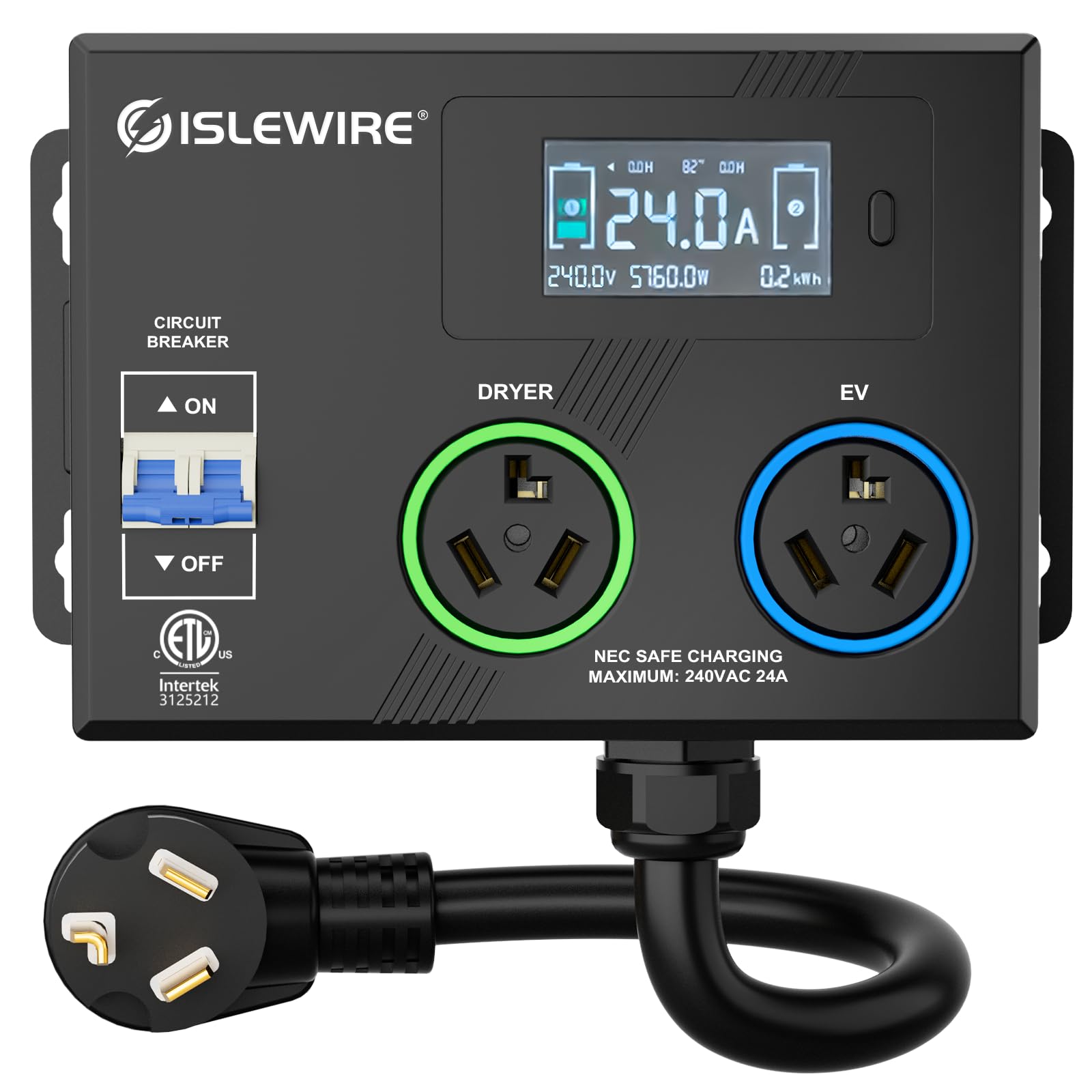
Best overall: The islewire Switch is the strongest fit for buyers who need automatic dryer priority and a clearly managed 24A setup, provided its exact NEMA configuration matches your equipment.
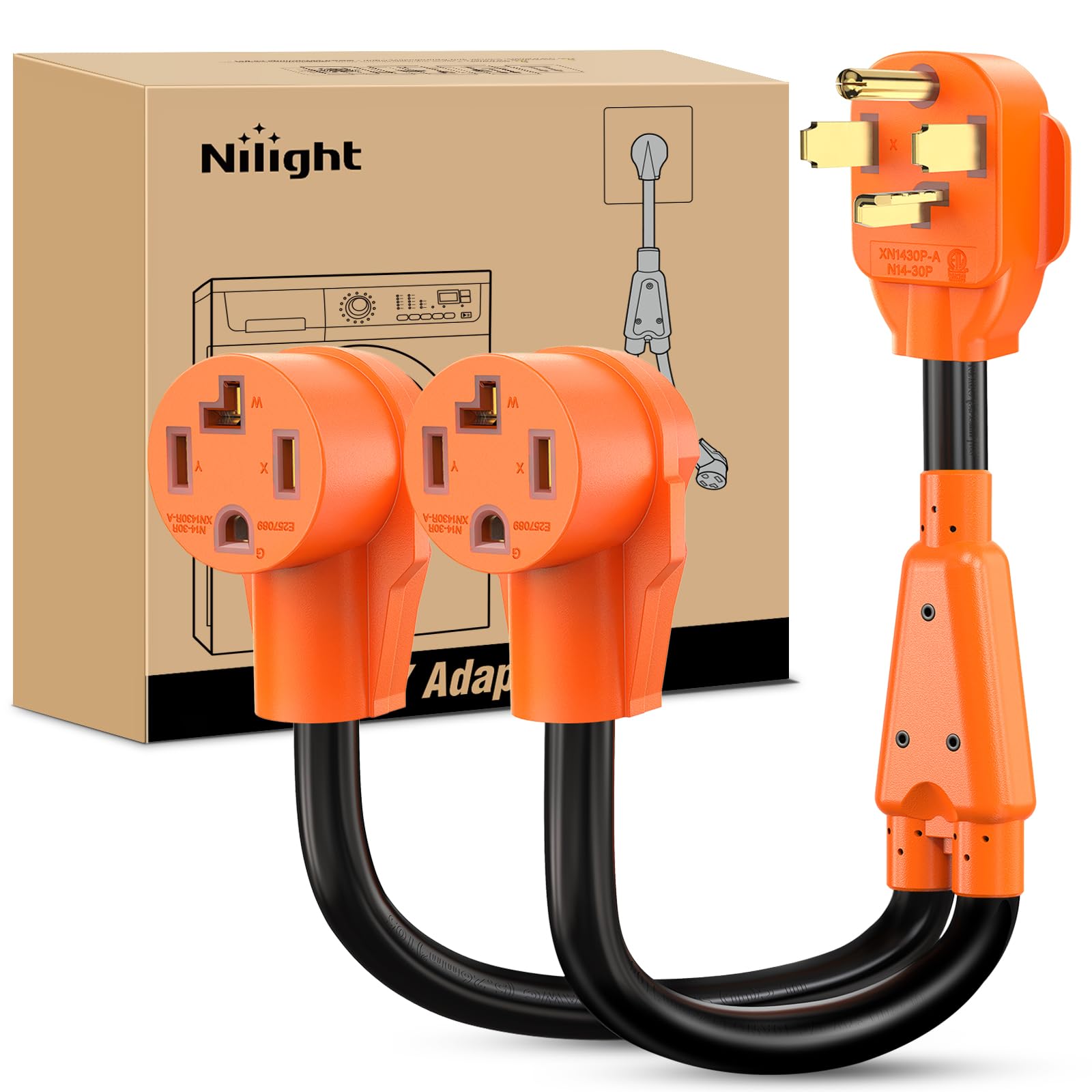
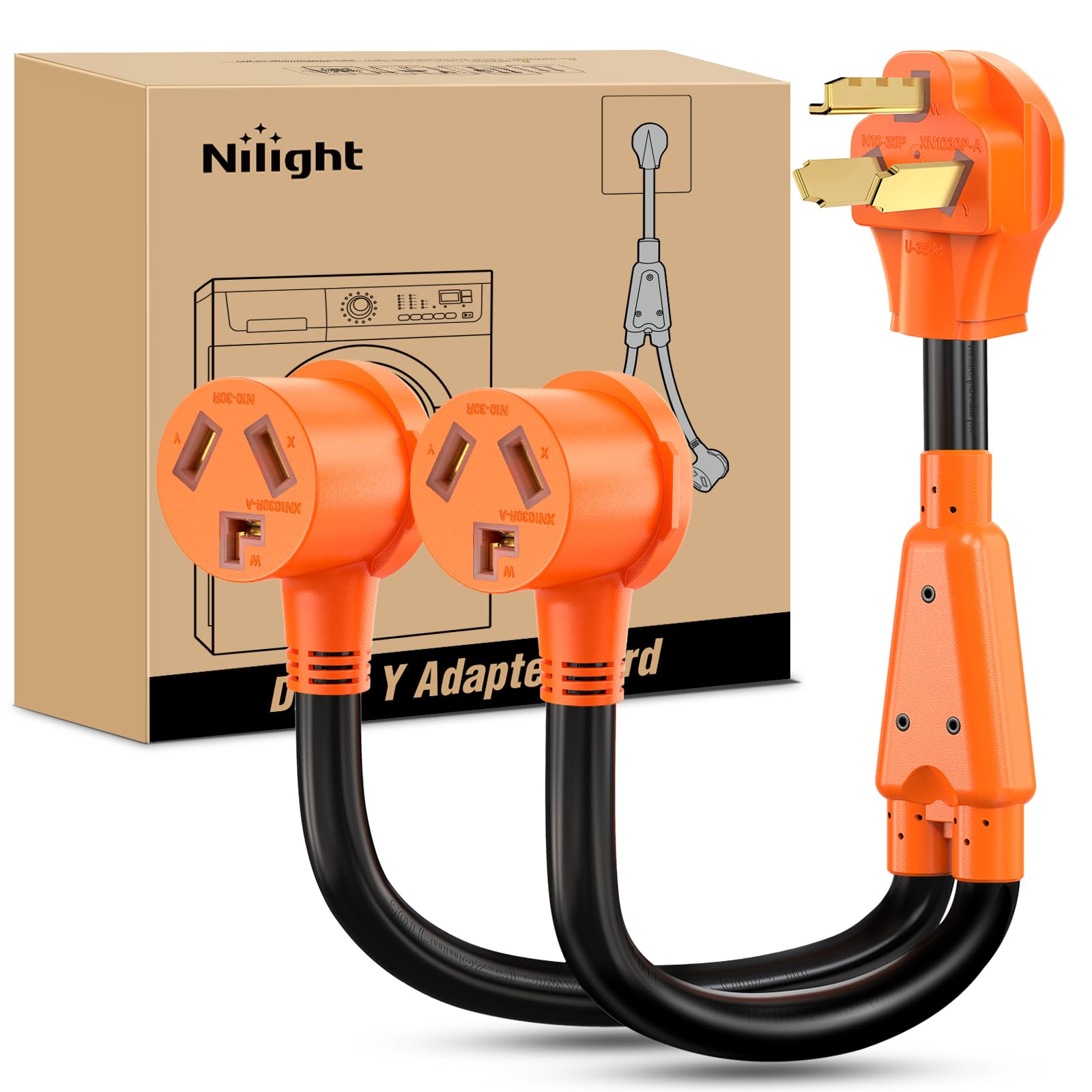
Best simple 14-30 option: The Nilight 14-30 keeps the same plug pattern on both outputs, but it is a passive splitter and should be treated as one-device-at-a-time hardware.
Important: A 14-50-shaped output connected to a 30A input is still limited by the 30A branch circuit. It does not become a 50A source.
Top Picks
|
Category |
Product |
Best For |
|---|---|---|
|
Best Overall Smart Switch |
Drivers who want automatic dryer priority instead of manually unplugging or policing two connected devices. |
|
|
Best Passive 14-30 Splitter |
Homes with a modern four-prong 14-30 dryer outlet and an EVSE that uses a 14-30 plug. |
|
|
Best Simple 10-30 Splitter |
Older homes with an existing 10-30 dryer outlet and an EVSE specifically approved for that legacy connection. |
|
|
Best Modern Mixed-Receptacle Splitter |
Modern four-prong dryer circuits where the buyer needs a compact 14-30 or 14-50-shaped output. |
|
|
Best Legacy Mixed-Outlet Option |
A legacy 10-30 setup where the buyer has confirmed EVSE compatibility and needs either a 10-30 or 14-50-shaped output. |
|
|
Best Compact 14-30 to 14-50 Option |
A compact modern 14-30 setup where the EVSE plug may be 14-30 or 14-50 but the circuit remains 30A. |
|
|
Best 10-30 Option With Ground Lead |
Legacy 10-30 locations where a qualified electrician has approved the grounding method and the EVSE is compatible. |
|
|
Best Compact Multi-Receptacle 10-30 |
Older 10-30 installations where the desired EVSE uses a 14-30 or 14-50-shaped plug and compatibility has been confirmed. |
|
|
Best Heavy-Duty 14-50 Y-Cord |
A 14-50 location where two devices may stay connected but only one high-draw load will be used at a time. |
|
|
Best Legacy 50A Workhorse |
A legacy 10-50 location where the outlet, grounding method, breaker, wiring, and EVSE compatibility have all been checked. |
How We Picked
We compared plug type, branch-circuit rating, seller-stated cable gauge, cord length, outlet configuration, automatic load management, certification claims, and the likelihood of buyer confusion. We gave the strongest position to products that reduce the chance of simultaneous high-draw use.
We did not treat a Y-splitter as a substitute for a dedicated circuit or automatic load-management equipment. We also removed unverified scores, unsupported customer-sentiment claims, and broad safety promises. Product specifications below are described as seller-listed unless independently confirmed on the current listing.
Safety Note
- Check your EVSE manual first. Some charger manufacturers prohibit multi-outlet adapters, conversion plugs, or splitters.
- EV charging is a continuous electrical load. Use the current limit required by your EVSE, circuit rating, and local code.
- On a 30A dryer circuit, a compatible EVSE is commonly limited to 24A. Never assume the connector’s maximum label is the correct charging setting.
- Legacy NEMA 10-30 and 10-50 outlets need extra scrutiny because they do not provide a modern dedicated equipment-grounding conductor.
- Stop using any outlet or adapter that becomes hot, smells burned, feels loose, shows discoloration, or has damaged contacts.
EV Charger Splitter Reviews
Who Should Buy This
Homes with a modern four-prong 14-30 dryer outlet and an EVSE that uses a 14-30 plug.
Why You’ll Like It
The plug pattern stays 14-30 on both outputs, which reduces adapter confusion. Its short cable also keeps a nearby laundry-room or garage setup tidy.
Who Should Avoid It
Skip it if your charger uses a 14-50 plug, your EVSE manual prohibits multi-outlet adapters, or you need automatic load switching.
Before You Buy
- This is a passive Y-cord, not a load-management device.
- Use only one high-draw appliance at a time unless a qualified system explicitly controls the combined load.
- Confirm the EVSE is limited to the safe continuous current for the 30A branch circuit.
Check Product Details on Amazon
Who Should Buy This
Older homes with an existing 10-30 dryer outlet and an EVSE specifically approved for that legacy connection.
Why You’ll Like It
It keeps the same 10-30 plug pattern and avoids a misleading 14-50 receptacle on a 30A input.
Who Should Avoid It
Avoid it when the outlet is loose, heat-damaged, unverified, or when your EVSE requires a dedicated equipment ground that the setup cannot provide.
Before You Buy
- Have the outlet and branch circuit inspected before regular EV charging.
- A 30A circuit generally requires the EVSE to stay within its permitted continuous-load setting.
- Do not run the dryer and EV charger together.
Check Product Details on Amazon
Who Should Buy This
Drivers who want automatic dryer priority instead of manually unplugging or policing two connected devices.
Why You’ll Like It
Automatic switching addresses the central problem passive Y-cords do not solve: preventing both high-draw loads from operating at the same time.
Who Should Avoid It
Skip it if the inlet or outlet pattern does not exactly match your dryer and EVSE, or if the current listing does not show the certification and configuration you need.
Before You Buy
- Confirm the exact NEMA inlet and both output receptacles before ordering.
- Verify the product label and listing show the expected 24A limit and safety certification.
- Follow the unit’s installation instructions and your EVSE manufacturer’s adapter rules.
Check Product Details on Amazon
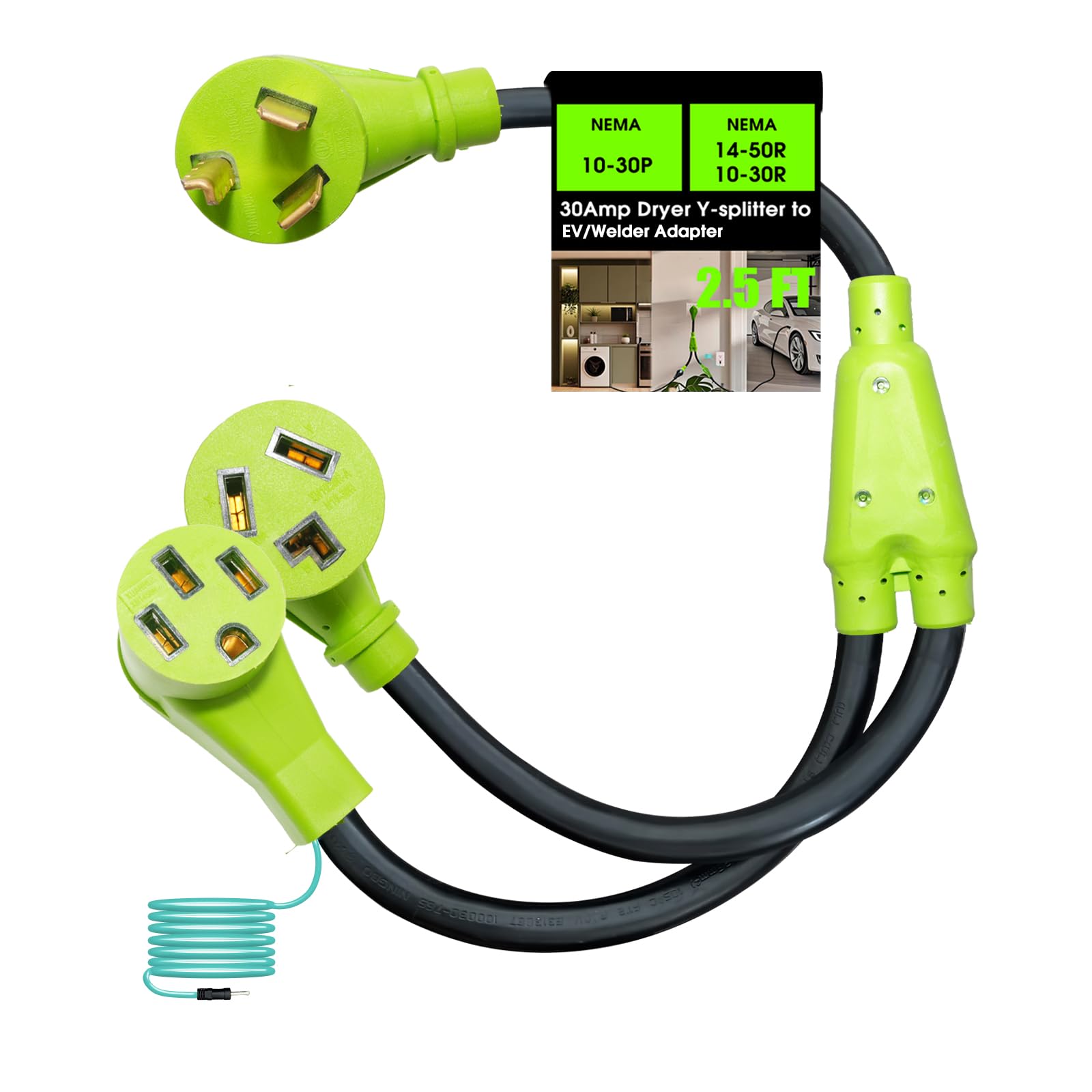
Who Should Buy This
A legacy 10-30 setup where the buyer has confirmed EVSE compatibility and needs either a 10-30 or 14-50-shaped output.
Why You’ll Like It
The mixed receptacles can reduce the number of separate adapters needed in a temporary setup.
Who Should Avoid It
Do not buy it because you expect a 14-50 receptacle to supply 50A. The 10-30 input still limits the entire setup.
Before You Buy
- Limit charging to the safe setting for the 30A branch circuit.
- Verify how grounding is handled and whether your EVSE accepts that arrangement.
- Use one high-draw load at a time.
Check Product Details on Amazon

Who Should Buy This
A 14-50 location where two devices may stay connected but only one high-draw load will be used at a time.
Why You’ll Like It
The heavier cable and matching 14-50 connectors suit short, rugged garage or campsite hookups.
Who Should Avoid It
Avoid it if you need two devices to draw full power at once. A Y-cord does not increase the branch circuit or breaker capacity.
Before You Buy
- Treat the two outlets as shared capacity, not two independent 50A circuits.
- Confirm the receptacle condition and the EVSE’s permitted continuous current.
- Use weather protection and strain relief when the connection is outdoors.
Check Product Details on Amazon
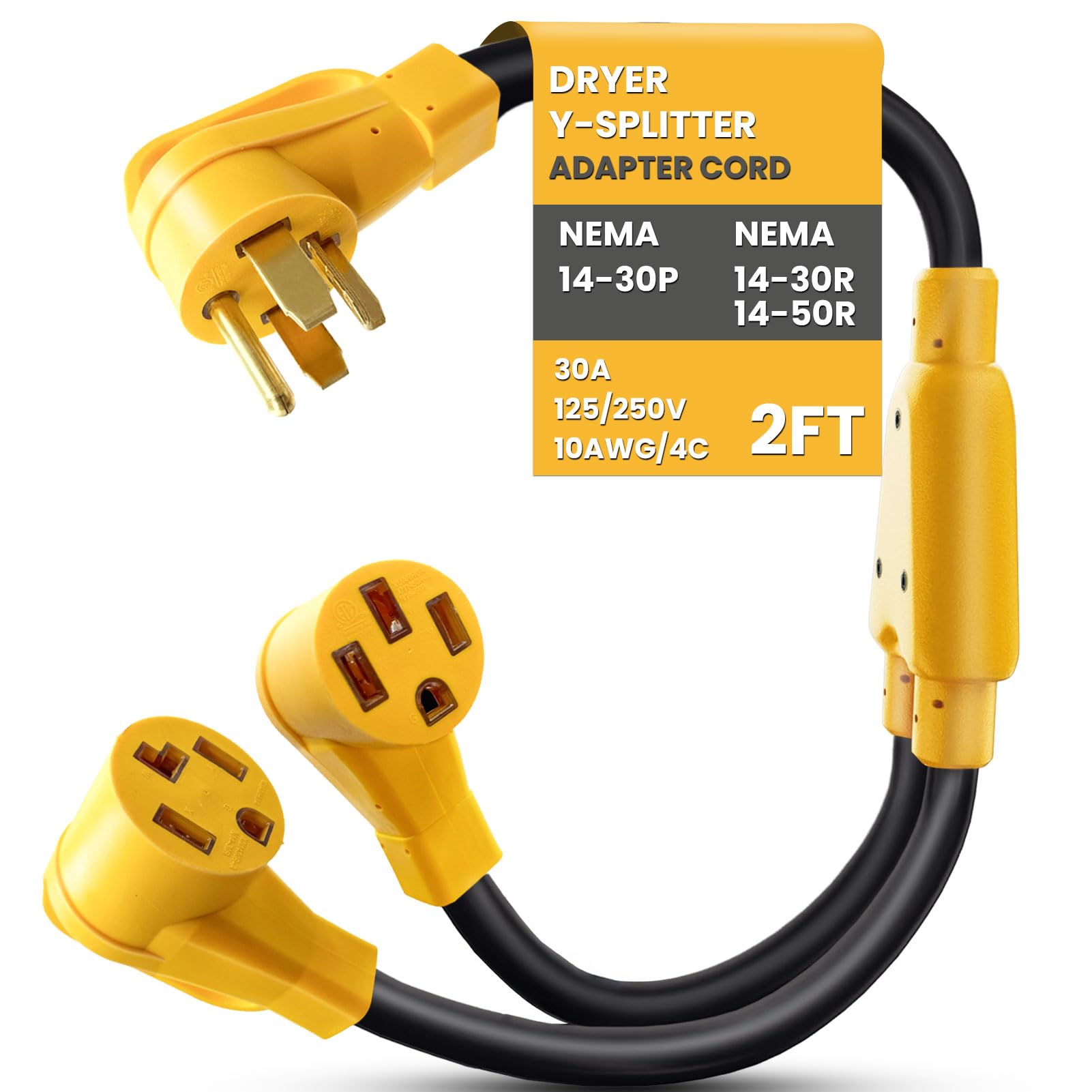
Who Should Buy This
A compact modern 14-30 setup where the EVSE plug may be 14-30 or 14-50 but the circuit remains 30A.
Why You’ll Like It
Its short length reduces cable clutter, and the two receptacle shapes can simplify temporary compatibility.
Who Should Avoid It
Skip it if your charger cannot be manually limited for a 30A source or if its manual prohibits conversion or multi-outlet adapters.
Before You Buy
- The 14-50-shaped output does not provide 50A from a 14-30 input.
- Confirm the current listing and product mark support the ETL claim.
- Do not operate the dryer and EVSE together.
Check Product Details on Amazon
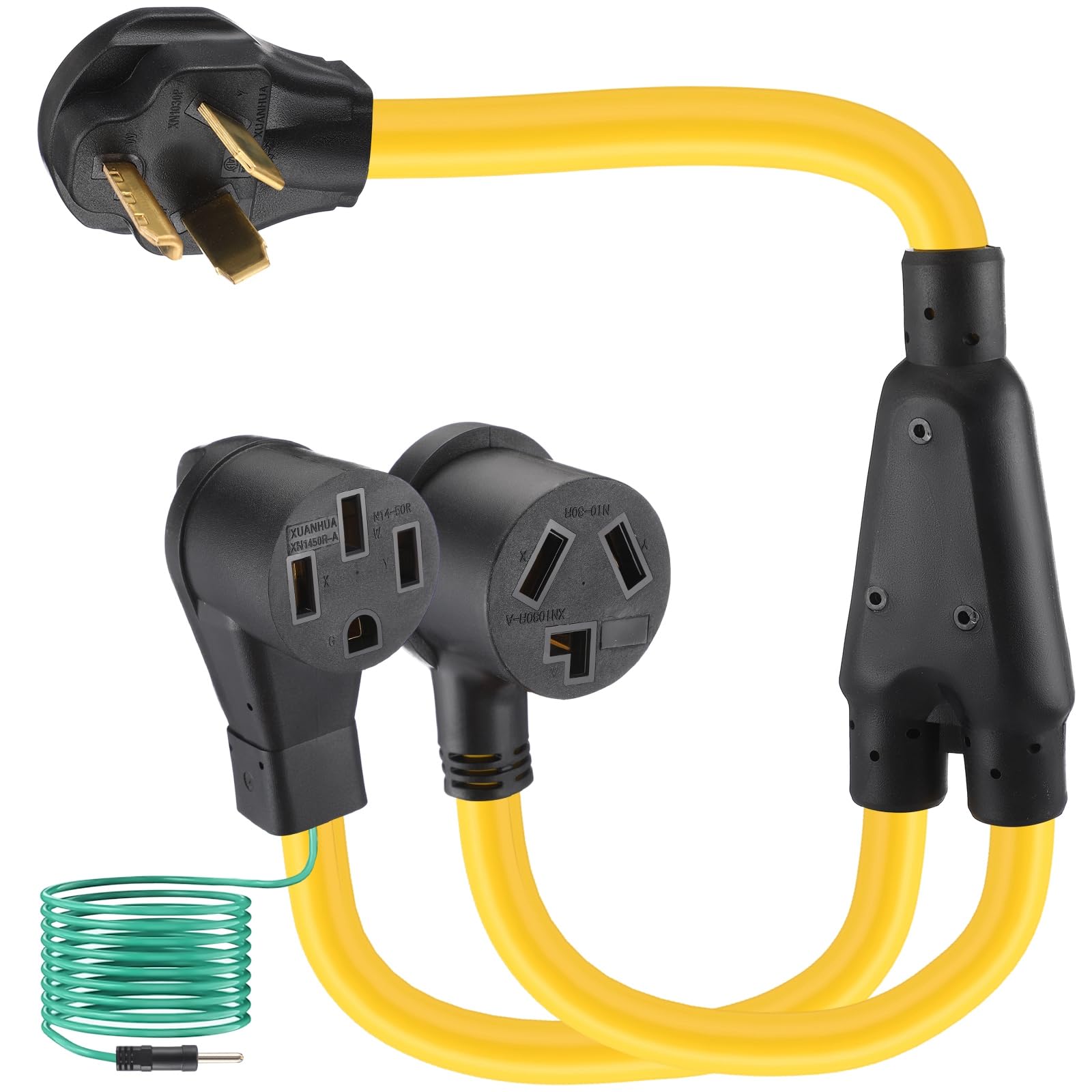
Who Should Buy This
Legacy 10-30 locations where a qualified electrician has approved the grounding method and the EVSE is compatible.
Why You’ll Like It
The separate ground lead directly addresses a concern that many legacy three-prong outlets create.
Who Should Avoid It
Avoid improvised grounding. Do not connect the ground lead to an unverified screw, pipe, or random metal surface.
Before You Buy
- Have a qualified person verify the grounding point and branch-circuit condition.
- Keep EV charging within the permitted setting for the 30A input.
- Use one high-draw device at a time.
Check Product Details on Amazon
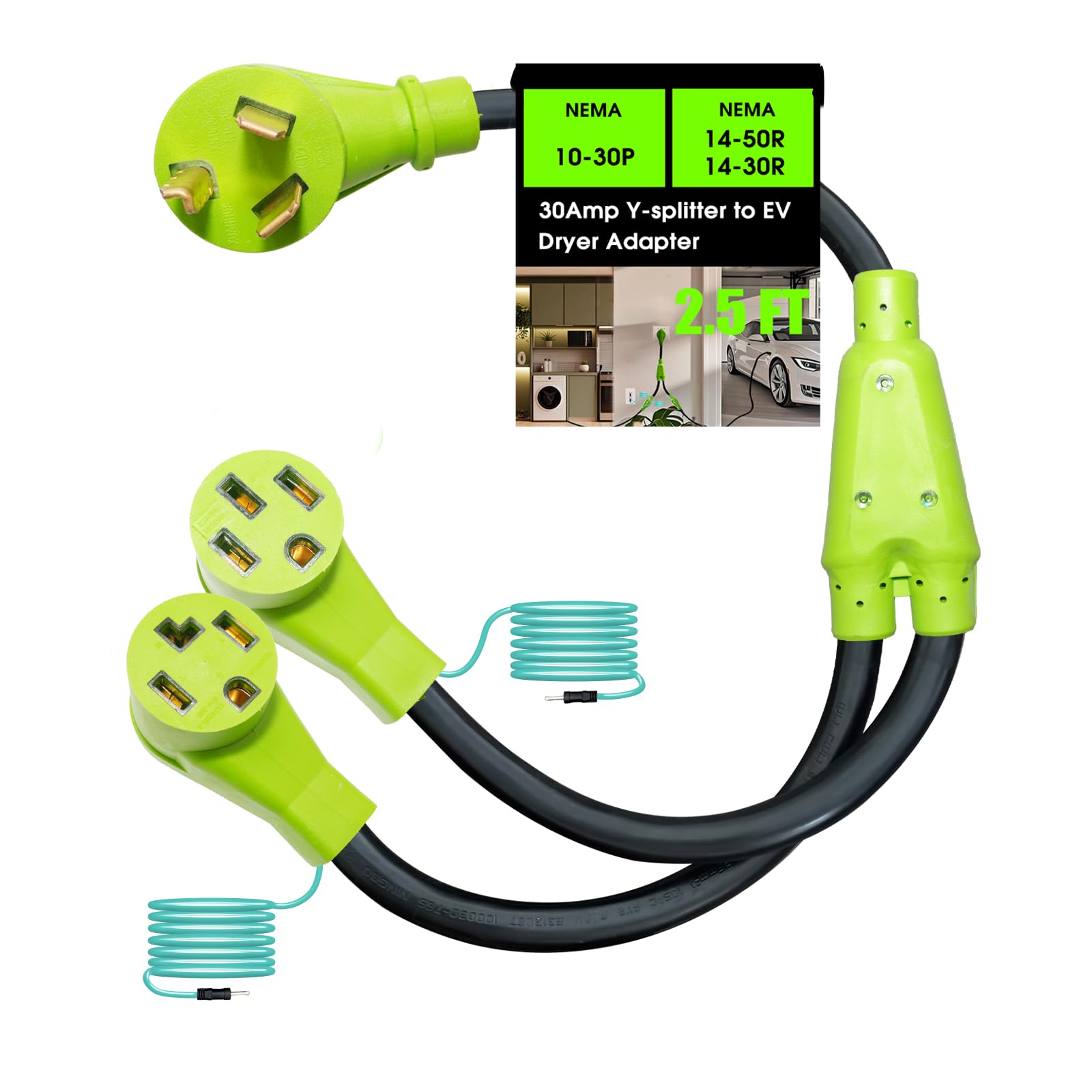
Who Should Buy This
Older 10-30 installations where the desired EVSE uses a 14-30 or 14-50-shaped plug and compatibility has been confirmed.
Why You’ll Like It
The compact cable can solve a plug-shape mismatch without a long extension cord.
Who Should Avoid It
Do not use it to bypass EVSE instructions, grounding requirements, or the 30A branch-circuit limit.
Before You Buy
- Confirm the seller’s UL-listing claim on the current product label and listing.
- Verify the EVSE can safely use the legacy input arrangement.
- Never treat the 14-50 output as a 50A source.
Check Product Details on Amazon
Who Should Buy This
Modern four-prong dryer circuits where the buyer needs a compact 14-30 or 14-50-shaped output.
Why You’ll Like It
The grounded 14-30 input is easier to evaluate than a legacy NEMA 10 connection, and the short cord reduces clutter.
Who Should Avoid It
Skip it if you need automatic switching or if your EVSE cannot be set for a 30A source.
Before You Buy
- Confirm the seller’s UL-listing claim before purchase.
- Limit the EVSE to the permitted continuous current for the branch circuit.
- Do not use both outputs for simultaneous high-draw loads.
Check Product Details on Amazon
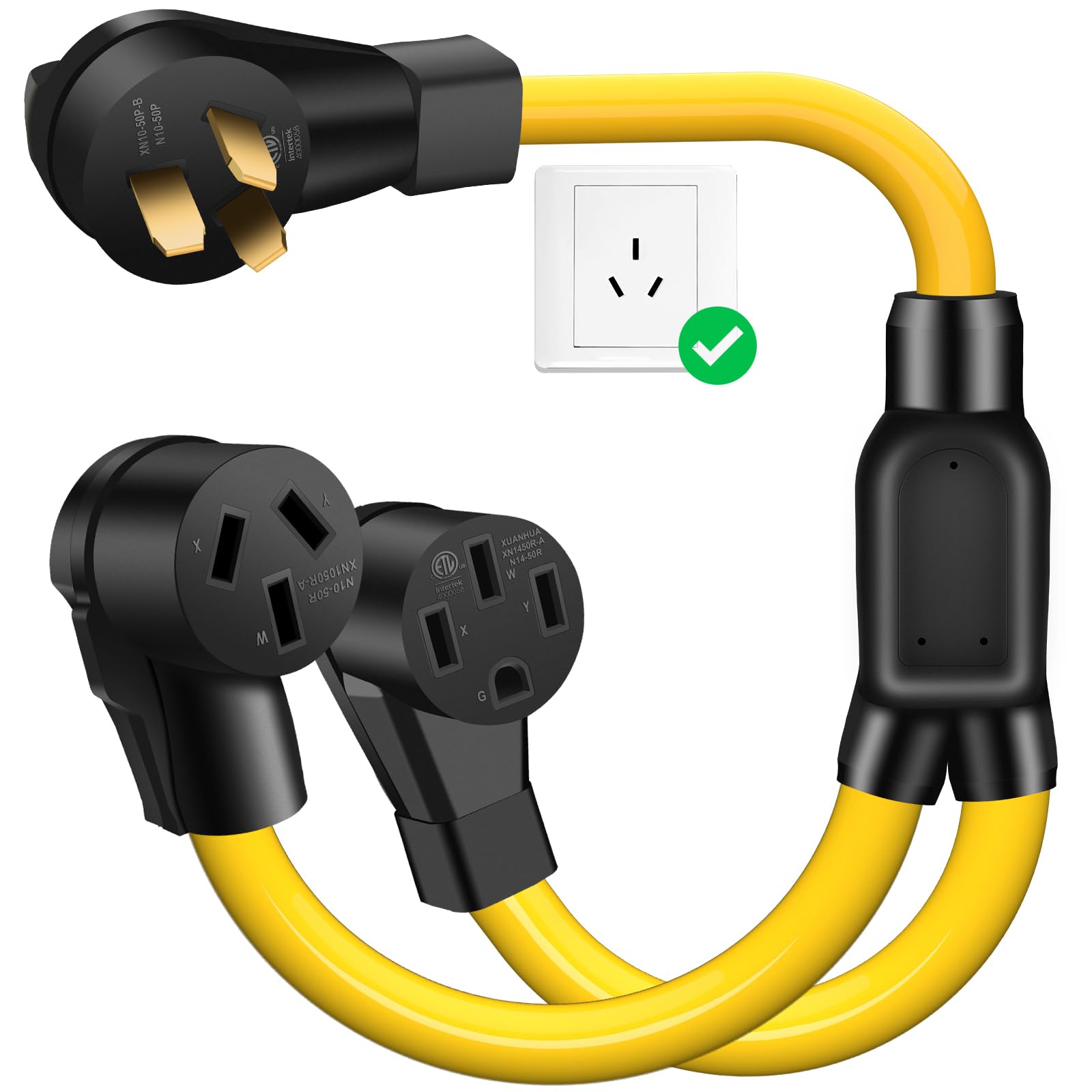
Who Should Buy This
A legacy 10-50 location where the outlet, grounding method, breaker, wiring, and EVSE compatibility have all been checked.
Why You’ll Like It
The heavier conductors and short cable suit demanding temporary hookups better than a light-duty extension.
Who Should Avoid It
Avoid it if the legacy outlet is unverified or if you plan to run an EV and another heavy load at the same time.
Before You Buy
- Confirm grounding and neutral use with a qualified electrician.
- The two receptacles share one branch circuit and one breaker.
- Follow the EVSE manufacturer’s current limit and adapter policy.
Check Product Details on Amazon
EV Charger Splitter Buying Guide
1. Match Every Plug Exactly
Identify the wall receptacle, the splitter inlet, every splitter outlet, and the plug on your portable EVSE. NEMA 14-30 and 14-50 connectors can look similar, but they are different. NEMA 10-30 and TT-30 are also different and must not be confused.
2. Separate Circuit Capacity From Connector Shape
An adapter can change the physical receptacle shape, but it cannot raise the breaker rating or wire capacity. A 14-50 receptacle on a splitter fed by a 30A 14-30 or 10-30 plug remains limited by the 30A source.
3. Choose Smart Switching When Possible
An automatic load-management switch is easier to use safely because it can stop EV charging or prioritize the dryer when the appliance starts. A passive Y-cord relies on you to prevent both devices from drawing high current together.
4. Check Your Charger Manufacturer’s Rules
Do not assume every portable EV charger supports splitters or conversion adapters. Read the EVSE manual and confirm the permitted outlet, grounding arrangement, adapter type, and maximum current before connecting it.
5. Treat Legacy NEMA 10 Outlets Carefully
NEMA 10-30 and 10-50 installations are common in older homes, but they do not have the same dedicated equipment-grounding conductor used by modern NEMA 14 outlets. Have the outlet and branch circuit checked, and use only a grounding method approved for your EVSE and installation.
6. Verify Certification Claims
Look for a current product label from a recognized testing laboratory and make sure the certification applies to the exact model. A listing that merely says “meets a standard” is not the same as a clearly marked, independently listed product.
Before You Buy Checklist
- Photograph the wall receptacle and confirm its NEMA number.
- Check the breaker rating and have the circuit inspected if its condition is unknown.
- Confirm the EVSE manual permits the proposed adapter or splitter.
- Set the EVSE to the correct continuous-current limit.
- Choose automatic load management when both appliances will remain connected.
- Confirm the current listing, model number, certification mark, and return policy.
FAQ
Is It Safe To Use A Splitter With My Dryer Outlet?
It can be safe only when the outlet, branch circuit, splitter, and EVSE are compatible and used within their limits. A passive Y-cord should normally be treated as one-high-draw-device-at-a-time equipment. An automatic load-management switch is a better choice when the dryer and charger will remain connected.
How Many Amps Can I Use On A 30A Dryer Circuit?
EV charging is a continuous load, so the permitted charging current is lower than the breaker’s full rating. Many 30A EV charging setups use a 24A maximum, but you must follow your EVSE manual, local code, and electrician’s guidance.
Does A 14-30 To 14-50 Splitter Give Me 50A Charging?
No. The 14-50 receptacle only changes the connector shape. The 30A inlet, branch wiring, and breaker still limit the available current, so the EVSE must be set for the 30A source.
Can I Run The Dryer And EV Charger At The Same Time?
Not with an ordinary passive Y-splitter unless a qualified design and the entire circuit are specifically approved for the combined load. Use an automatic load-management switch or operate only one high-draw device at a time.
Can I Charge From A NEMA 10-30 Or 10-50 Outlet?
Some EVSE systems support legacy NEMA 10 connections, but compatibility is not universal. These outlets require special attention to grounding, outlet condition, current limits, and the charger manufacturer’s instructions. Have the setup checked before regular use.
Do I Need An Electrician?
Consult an electrician when the outlet is old, loose, discolored, unverified, lacks a clearly acceptable grounding arrangement, trips the breaker, or will be used for frequent charging. A dedicated circuit or approved load-management system is the better long-term solution for regular Level 2 charging.
Wrapping Up
The right EV charger splitter must match your outlet and EVSE while respecting the branch circuit’s real capacity. The islewire Switch is the strongest overall option in this list for buyers who need automatic dryer priority and whose equipment matches its NEMA 10-30 configuration.
Choose a passive Nilight, HonestRv, Blzprty, Tellegloww, or LAZMUMI splitter only after confirming your charger permits it. Use one high-draw load at a time, keep the charging current within the circuit limit, and never assume a larger receptacle shape provides more amperage.
| Nilight EV Dryer Y Splitter Adapter Cord 30 Amp | Nilight EV Dryer Y Splitter Adapter Cord 30 Amp (10-30) | Smart Dryer Splitter for EV and Dryer | |
|---|---|---|---|
 |
 |
 |
|
| Specifications |
|
|
|
| Best For |
|
|
|
| Check Price on Amazon | Check Price on Amazon | Check Price on Amazon |
This roundup is reader-supported. When you click through qualifying links, we may earn a referral commission.