
For a normal, brief red light, leave a diesel automatic in Drive and hold the brake. Neutral can be reasonable during a prolonged stationary wait, but shifting into it at every stop is unnecessary. Your vehicle’s owner’s manual takes priority over any general rule.
The choice involves more than transmission temperature. Stop duration, readiness to move, brake-hold features, and gearbox design all matter. Just as importantly, good transmission maintenance deserves more attention than repeatedly changing between Drive and Neutral.
Key Takeaways
- Stay in Drive with the brakes applied during ordinary, brief traffic-light stops.
- Consider Neutral for prolonged stationary waits, following your vehicle’s specific instructions.
- Auto Hold controls braking and does not necessarily place the transmission in Neutral.
- Appropriate fluid maintenance matters more than repeatedly changing gears at red lights.
Table of Contents
- Which Gear Should You Use When Stopped?
- Check Your Vehicle’s Features Before Changing Your Routine
- What Happens Inside the Transmission in Drive and Neutral?
- Does a Diesel Automatic Need Different Treatment?
- Transmission Habits to Avoid
- Transmission Fluid Maintenance Matters More Than Selector Habits
- The Best Everyday Routine
Which Gear Should You Use When Stopped?
The following timing guide offers a practical way to decide. Treat these durations as rules of thumb, not precise mechanical limits. A transmission does not suddenly become unsafe when a stop reaches a particular number of seconds.
| Expected wait | Practical choice | How to hold the vehicle |
|---|---|---|
| Under 30 seconds | Stay in Drive. | Keep the foot brake applied, or use brake hold as instructed. |
| 30 seconds to 2 minutes | Drive is a convenient default. Neutral is an option for a known, uninterrupted wait. | Keep the brakes applied in either position. |
| More than about 2 to 3 minutes | Consider Neutral if the manual permits it and traffic is completely stationary. | Apply the parking brake or continue holding the foot brake. |
| More than 5 minutes | Consider switching the engine off when safe and consistent with the vehicle’s instructions. | Secure the vehicle and follow its shutdown procedure. |
The most useful distinction is between a temporary pause in moving traffic and a sustained stationary delay. There is little reason to keep selecting Neutral in a queue that advances every few seconds.
Examples That Make the Choice Easier
- A short red light: Remain in Drive with the brakes applied.
- A familiar light with a roughly 90-second cycle: Either Drive or Neutral can be reasonable, subject to the manual.
- A queue that may move in 45 seconds: Drive avoids an extra selector operation each time traffic advances.
- A lengthy railway-crossing or roadwork delay: Neutral becomes more useful if there is clearly no immediate movement.
- A drive-through queue: Decide according to how often it moves, not simply how long you have been in the queue.
Check Your Vehicle’s Features Before Changing Your Routine
The Drive-versus-Neutral debate is mainly about conventional torque-converter automatic transmissions. Do not assume that every diesel vehicle described as an automatic operates identically. Check the gearbox instructions for your particular model.
Manufacturers may give different advice for extended stops. Some vehicles also manage braking or transmission load automatically, making a manual shift unnecessary.
Auto Hold Keeps the Brakes Applied
Auto Hold, also called brake hold, maintains braking after the vehicle stops. When the system is active and its operating conditions are met, you can release the brake pedal without the vehicle moving. Pressing the accelerator normally allows it to move again.
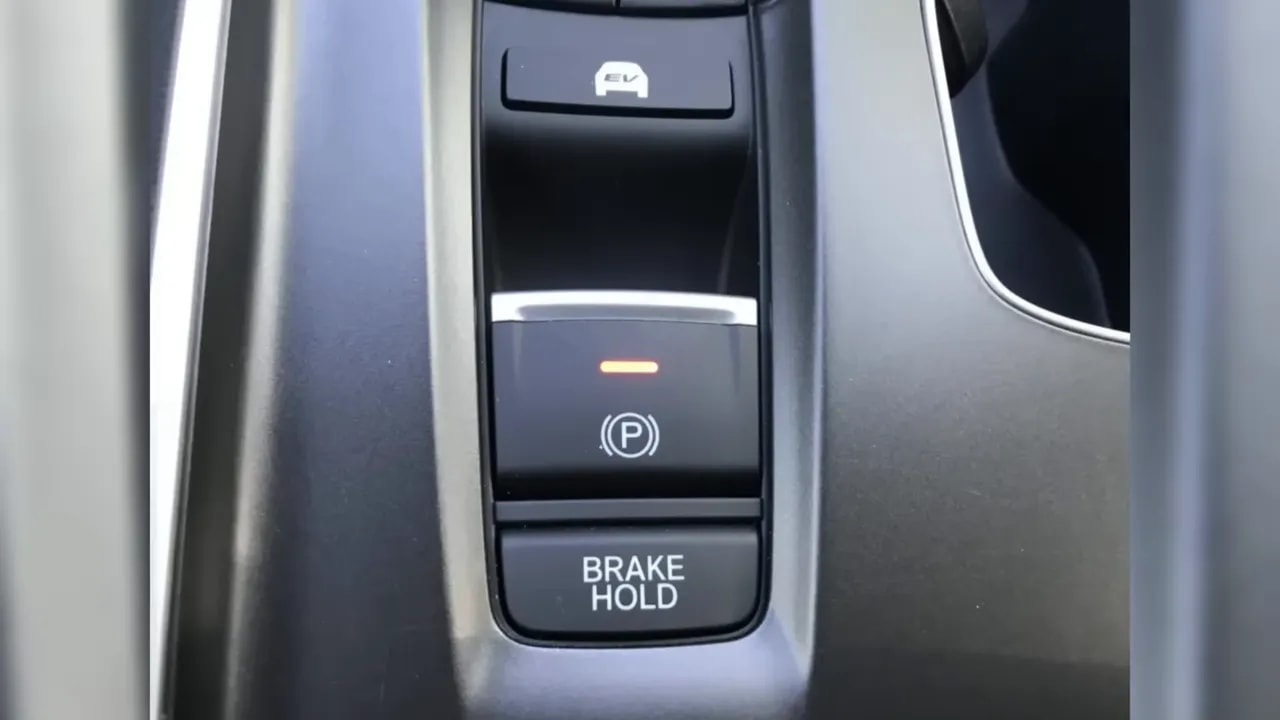
For ordinary traffic-light stops, this can make remaining in Drive more comfortable. Use the feature according to the owner’s manual and confirm that it is holding the vehicle before taking your foot off the pedal.
Brake hold does not, by itself, mean the gearbox has shifted into Neutral. Its basic purpose is to hold the brakes, not to disconnect the drivetrain.
Some Transmissions Reduce Load Automatically
Some automatic transmissions can release internal clutches while stopped even though the selector remains in Drive. This automatic neutral-control function reduces stationary drivetrain load without requiring the driver to move the selector.
Brake hold and automatic neutral control are separate functions. A vehicle may have one without the other, so do not infer transmission behavior from the presence of an Auto Hold button.
Stop-Start Can Handle Engine Shutdown
If your diesel has an automatic stop-start system, it can shut the engine down during suitable stops and restart it when needed. Follow the vehicle’s instructions rather than changing gears solely to imitate that function.
For a very long delay, manual engine shutdown may also avoid unnecessary fuel consumption and further engine-driven converter heat generation. It should be a considered response to a sustained wait, not a routine action at every red light.
What Happens Inside the Transmission in Drive and Neutral?
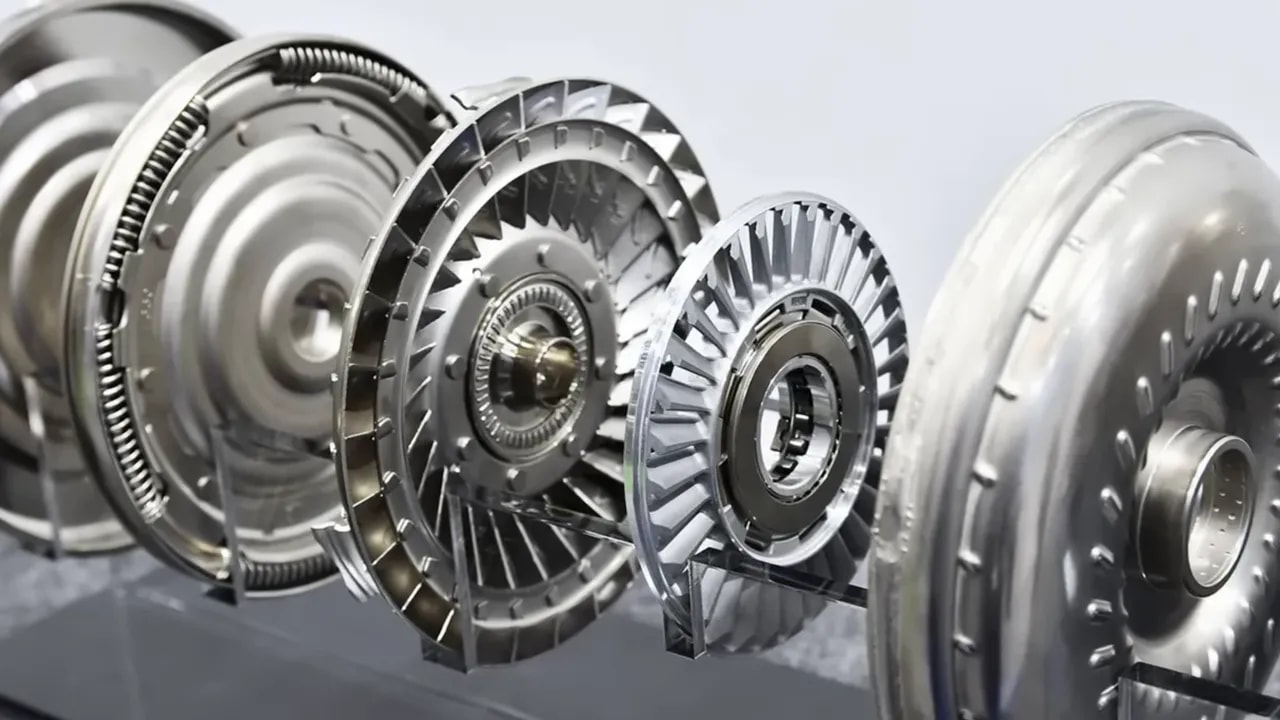
The torque converter explains why a conventional automatic can remain in gear while the vehicle is stationary.
In Drive: The Converter Allows the Engine to Keep Running
Two key torque-converter components are the engine-driven impeller and the turbine, which feeds power into the transmission. The impeller moves fluid against the turbine to transmit torque.
When the vehicle is stopped in Drive with the brakes applied, the engine continues turning the impeller while the drivetrain is held stationary. The difference in rotational speed creates converter slip and generates heat in the transmission fluid.
That sounds alarming, but converter slip at a stop is normal operation. The transmission and its cooling system are designed to manage it during ordinary driving. Leaving a healthy automatic in Drive for a brief red light is not inherently harmful.
In Neutral: The Forward Drive Connection Is Released
Selecting Neutral releases the internal drive connection that would otherwise send torque to the wheels. This reduces stationary drivetrain load and can reduce heat generated by the loaded converter.
Neutral does not mean that every transmission component stops turning or that the torque converter is physically detached from the engine. The useful distinction is that the transmission is no longer engaged to propel the vehicle.
The engine may feel less loaded in Neutral, and idle behavior may change. Neither a particular RPM change nor a specific fuel saving should be assumed for every model.
Why Not Select Neutral at Every Light?
Returning from Neutral to Drive requires the transmission’s engagement components to apply again. Repeating that action at every short pause adds operating cycles without much opportunity to benefit from reduced stationary load.
These are normal operations, not proof that an occasional Neutral-to-Drive shift damages the gearbox. The practical point is simpler: avoid unnecessary cycling during short stops.
Drive also leaves the vehicle ready to move without first selecting a gear. That convenience matters in changing traffic, although remaining in Drive is not a guarantee that you can safely evade an approaching hazard.
Does a Diesel Automatic Need Different Treatment?
Diesel engines commonly deliver strong torque at low engine speeds. That makes the match between engine, torque converter, transmission, and cooling system important.
However, a diesel automatic is designed for its engine’s characteristics. Strong low-speed torque does not mean it needs Neutral at every red light.
Nor should you use an engine’s advertised maximum torque to calculate transmission load at idle. Peak torque and the torque needed to keep an engine idling against a stationary drivetrain are different operating conditions.
For daily driving, the sensible approach remains the same: stay in Drive for brief stops, consider Neutral for prolonged waits, and follow model-specific instructions. Towing, very hot weather, and frequent heavy traffic are particularly relevant when reviewing transmission maintenance needs.
Transmission Habits to Avoid
Using Park as Your Routine Traffic-Light Setting
Park engages a mechanical locking device, commonly called a parking pawl, to restrain the transmission’s output. It serves a different purpose from Neutral.
Using Park at every red light adds unnecessary selector movement and puts the vehicle into its parking state when you are only pausing in traffic. An impact can also load the parking mechanism.
Use Drive or, where appropriate, Neutral for temporary stops. If you are actually parking or shutting the vehicle down, follow the manufacturer’s parking procedure. Do not interpret traffic-light advice as a reason to leave a parked vehicle unsecured.
Changing Between Drive and Reverse Before Stopping
Come to a complete stop before selecting the opposite direction. Using the transmission to reverse the vehicle’s existing motion can impose a harsh load on its engagement components.
Make this a consistent habit when reversing out of a parking space or completing a low-speed maneuver: brake to a stop first, then change direction.
Revving in Neutral Before Selecting Drive
Do not raise engine speed in Neutral and then engage Drive. This produces a much harsher engagement than selecting Drive at idle.
When moving off after a wait in Neutral:
- Keep the brake applied.
- Allow the engine to idle without pressing the accelerator.
- Select Drive and allow it to engage.
- Release the brake or parking brake as appropriate, then accelerate smoothly.
Coasting in Neutral to Save Fuel
Selecting Neutral while stationary is different from coasting in Neutral while moving. Coasting removes engine braking and reduces control, especially on a descent.
Modern fuel-injected engines can cut fuel delivery during suitable in-gear deceleration. In Neutral, the engine must continue receiving fuel to idle, so Neutral is not a reliable fuel-saving shortcut.
The UK Highway Code’s guidance on vehicle control also explains why coasting reduces control. Keep the transmission in an appropriate driving gear while the vehicle is moving.
Transmission Fluid Maintenance Matters More Than Selector Habits
Automatic transmission fluid supports lubrication, hydraulic operation, cooling, and controlled friction. Heat can degrade its additives, while material from internal friction components can contaminate it over time.
A careful red-light routine is not a substitute for appropriate fluid servicing.
How Often Should You Change Diesel Automatic Transmission Fluid?
General preventative-maintenance ranges often considered for diesel automatics are:
- Normal use: Approximately 40,000 to 60,000 miles.
- Demanding use: Approximately 30,000 to 40,000 miles when towing, operating in very hot conditions, or regularly spending time in heavy traffic.
These ranges are not a universal service schedule. Confirm the required fluid specification, interval, and service procedure for your exact transmission. A general recommendation should not override its manufacturer’s instructions.
If the fluid is described as a lifetime fill, ask what that means for your vehicle’s intended service conditions and whether demanding use changes the recommendation. Avoid assuming either that the fluid never deteriorates or that every gearbox needs the same servicing approach.
Plan the Service, Not Just the Mileage
A useful maintenance checklist is:
- Identify the transmission fitted to the vehicle.
- Check its normal-use and demanding-use maintenance guidance.
- Confirm the correct fluid specification.
- Ask whether the approved procedure is a drain-and-fill or another method.
- Keep a record of the mileage and work completed.
As broad budgeting figures, a fluid service may cost around $150 to $400, while a replacement transmission may cost $2,500 to $5,000 or more. Actual prices vary with the vehicle, fluid capacity, procedure, and local labor costs. They are estimates, not guaranteed quotes.
The Best Everyday Routine
For most brief traffic-light stops in a conventional diesel automatic, remain in Drive and hold the brakes. Use Auto Hold if equipped and appropriate. Consider Neutral when a delay becomes a genuine extended wait, and secure the vehicle whenever you do.
Do not chase an exact stopwatch threshold. Follow the owner’s manual, avoid harsh engagements and unnecessary selector changes, and give transmission-fluid maintenance the attention it deserves.