You want a reliable way to keep your electric vehicle support gear, emergency charging setup, or home essentials powered when you are away from the grid. A portable power station can help during outages, road trips, camping, and emergency situations, but only a high-output unit can support EV charging equipment in a meaningful way.
Choosing the right unit matters because capacity, continuous wattage, surge output, and recharge speed determine whether a station can support a portable EVSE for a short emergency top-up or only maintain small devices. For EV use, focus first on continuous AC output and usable watt-hours, then check recharge speed, battery chemistry, and outlet compatibility.
Quick Verdict
For the best overall mix of portable EV emergency support, home backup, and fast recharge, choose the Anker SOLIX C1000 Gen 2. If you need the most capacity for longer outages and heavier household loads, the Jackery HomePower 3600 Plus is the strongest pick. If you want a lighter 1kWh-class station with fast charging and strong appliance support, the Jackery Explorer 1000 v2 is the most balanced portable option.
Top Picks
|
Category |
Product |
Score |
|---|---|---|
|
🏆 Best Overall |
96/100 |
|
|
🔰 Best for Home Backup |
95/100 |
|
|
⚡ Fastest Portable 1kWh Option |
93/100 |
Selection Criteria
You need a power station that matches how you plan to use it, so we focused on the specs that matter most for EV charging and vehicle support. Capacity (Wh) determines how much energy you can deliver during an outage or short top-up, while continuous and peak wattage tell you whether the unit can run a portable EVSE or surge-hungry devices. You should check both numbers before assuming a station can charge your EV.
Recharge speed and input flexibility affect how quickly you can get back on the road. Faster AC or solar recharge cycles make a big difference on trips, so we rewarded units with rapid charge capability and multiple input options. Port selection and output safety features matter too, since USB-C PD, pure sine wave AC and robust protection keep sensitive electronics and EV accessories safe.
Battery chemistry, portability, and real-world load matching were the final filters. Smaller 80W to 300W power stations can be useful for phones and camping electronics, but they do not belong as main recommendations in an EV charging article. This updated list focuses on higher-output stations that make more sense for emergency EV top-ups, home backup, and higher-draw appliances.
Before You Buy
- Check your EVSE draw: The station’s continuous AC output must exceed the charger’s running wattage.
- Do not rely on peak wattage: Surge output is for short startup spikes, not long charging sessions.
- Estimate added range honestly: After inverter losses, even a 1kWh station may only add a few emergency miles to many EVs.
- Confirm outlet compatibility: Check voltage, plug type, grounding, and manufacturer instructions before connecting EV charging gear.
- Plan how you will recharge it: Fast AC recharge and solar input matter if you expect repeated outage or road-trip use.
You’re looking at a high-capacity unit that blends speed and usable power. The SOLIX C1000 Gen 2 gives you a roomy 1,024Wh battery and a strong inverter capable of handling heavier devices and startup surges, while a very fast recharge time means less downtime between uses.
It’s built with plenty of outlets and modern ports so you can run tools, a small fridge, Starlink, laptops and multiple devices at once. For camping, van life or dependable home backup where you need faster recharge and reliable sustained output, this is a solid, practical pick that stays portable enough to move when you need it.
Why You’ll Like It
The Anker SOLIX C1000 Gen 2 is the best overall choice because it gives you strong continuous output, useful 1kWh-class capacity, and fast recharge in a size that still feels portable. It is far more realistic for emergency EV support than small camping power banks, while still being easier to move than large whole-home systems.
Who Should Buy This
- EV owners who want a realistic emergency-support station instead of a small device charger.
- Campers, van-life users, and remote workers who need fast recharge and strong AC output.
- Homeowners who want to keep a fridge, router, lights, or electronics running during shorter outages.
Who Should Avoid This
- Anyone expecting a full EV battery charge from a portable station.
- Buyers who only need phone charging and want the smallest possible unit.
- Users who need long multi-day whole-home backup without adding a larger system.
Buyer Sentiment Snapshot
Buyer feedback for this type of station usually centers on recharge speed, output headroom, port selection, and weight. The included sentiment chart should be viewed as a helpful visual summary, while your final decision should still come down to verified load requirements and the station’s continuous wattage.
Overall Sentiment: Positive

Situational Benefits
|
Situation |
How It Helps |
|---|---|
|
Short EV Emergency Top-Ups |
Can support carefully matched low-amp AC charging when your portable EVSE draw stays within the station’s continuous output rating. |
|
Storm Outages |
Handles essential circuits and starts many appliances thanks to high surge capacity, giving you reliable backup when grid power fails. |
|
Weekend Camping |
Powers small fridges, chargers and entertainment setups for extended stays without needing constant recharges. |
|
Remote Work |
Runs laptops, monitors and networking gear with clean power and lets you recharge fast between long work sessions. |
Versatility
This unit covers a wide spectrum: from running medium-sized appliances and multiple devices at once to supporting off-grid setups with solar recharge. It’s flexible enough for camper vans, job sites and secure home backup, though its strengths are most apparent when you need both substantial capacity and quick recharge rather than ultra-light portability.
Key Benefits
- Fast full charge capability to reduce downtime
- 1,024Wh LiFePO4 battery for long cycle life
- High output with 2,000W continuous and 3,000W peak handling
- Lots of AC, DC and USB ports for simultaneous device use
- App connectivity and well-designed controls for easy monitoring
Check Current Amazon Availability
You’re looking at a heavyweight home backup in a moveable package. The HomePower 3600 Plus pairs a large LFP battery with a 3,600W continuous inverter so you can run major appliances, refrigerators, medical devices and networking gear during outages.
It’s designed for serious home backup or extended RV trips, and the expandable architecture means you can grow capacity if your needs change. Expect straightforward controls, multiple AC outlets and safe indoor use without fumes or noise. If you need dependable, long-duration power that’s still transportable, this unit handles serious loads and gives you flexibility for both daily preparedness and special occasions like long trips or storm season.
Why You’ll Like It
The Jackery HomePower 3600 Plus is the strongest choice when runtime and output matter more than easy one-hand portability. It gives you much more usable battery capacity than 1kWh-class stations, making it a better fit for longer outages, larger appliances, and more realistic emergency energy support.
Who Should Buy This
- Homeowners who want serious outage backup without using a gas generator indoors.
- EV owners who want the most capable option in this list for short AC charging support.
- RV users who need high continuous output for appliances and off-grid comfort.
Who Should Avoid This
- Buyers who need a light grab-and-go station for daily carry.
- Anyone shopping for the lowest-cost emergency phone charger.
- Users who do not need high output or multi-hour appliance runtime.
Buyer Sentiment Snapshot
Buyer interest in this class of station usually focuses on runtime, appliance support, expansion options, and storage reliability. Use the included sentiment chart as a visual summary only, then confirm the output and capacity against your actual home backup needs.
Overall Sentiment: Positive

Situational Benefits
|
Situation |
How It Helps |
|---|---|
|
Home Backup |
Keeps refrigerators, routers, medical gear and a few essential circuits running so you maintain daily routines during outages. |
|
EV Emergency Support |
Provides more wattage and capacity than compact stations for short AC top-ups when your EVSE and vehicle settings are compatible. |
|
RV & Van Life |
Provides stable power for appliances, Starlink and charging setups on extended trips without relying on noisy generators. |
|
Expandable Energy Needs |
Lets you scale capacity for longer off-grid stays or higher household demands. |
Versatility
This system is versatile for anything under its 3,600W continuous limit: full-size fridges, medical devices, communication gear, small HVAC and kitchen appliances. It supports both mobile lifestyles and home backup planning, and the expandability and solar compatibility make it useful for multi-day off-grid use as well as planned emergency scenarios.
Key Benefits
- Large 3,584Wh LFP pack for long runtimes and many cycles
- 3,600W continuous output to run full-size appliances and higher-draw essentials
- Expandable capacity to match growing backup needs
- Safe indoor use with quiet, emission-free operation
- Better suited than small stations for realistic EV emergency support
Check Product Details on Amazon
You get a substantial portable power station that’s built to handle real loads without fuss. The Explorer 1000 v2 pairs a large 1,070Wh LiFePO4 pack with a 1,500W pure sine inverter, so you can run refrigerators, power a Starlink setup, charge laptops at USB-C speeds and handle many appliance startup surges.
It recharges very quickly compared with many older portable stations, so you spend less time waiting and more time using the power. It’s heavier than compact units, but if you need dependable, fast-recharging power for RV trips, weekend off-grid projects or reliable home backup, this one makes those scenarios far easier.
Why You’ll Like It
The Explorer 1000 v2 is the most balanced portable pick because it gives you strong AC output and useful capacity without moving into large home-backup weight. It is a better fit for EV emergency planning than small power banks, but still compact enough for road trips and apartment-friendly backup use.
Who Should Buy This
- Buyers who want a portable 1kWh-class station with strong continuous output.
- EV owners who understand that portable-station EV charging is only for short, carefully managed top-ups.
- Campers and RV users who need fast recharge, clean AC power, and multiple ports.
Who Should Avoid This
- Users whose portable EVSE cannot be set below the station’s continuous output limit.
- Homeowners who need long-duration backup for several appliances at once.
- Anyone expecting DC fast charging or full EV recharging from a portable station.
Buyer Sentiment Snapshot
Buyer interest in this model usually comes from its balance of output, portability, and fast recharge. Treat the included chart as a general visual aid, then compare the station’s wattage and capacity against the devices you actually need to run.
Overall Sentiment: Positive

Situational Benefits
|
Situation |
How It Helps |
|---|---|
|
RV Trips |
Keeps your fridge, lights and entertainment running for overnight stays and powers many appliances reliably when shore power is not available. |
|
Short EV Top-Ups |
Can support carefully matched low-amp AC charging, but only after confirming the EVSE draw stays below the station’s continuous output. |
|
Home Backup |
Runs essential devices like routers, phone chargers, medical devices and a small refrigerator during shorter outages. |
|
Fast Turnarounds |
The 1-hour fast charge means you can recharge between activities quickly, useful when you need repeated bursts of power on a trip. |
Versatility
You can run a wide range of devices within the 1,500W limit: CPAP machines, laptops, small kitchen appliances, routers and even gear with high startup draws thanks to the 3,000W surge rating. The multiple AC outlets plus USB-C PD make it easy to power both modern and legacy devices, and solar recharge support adds flexibility for longer off-grid stretches.
Key Benefits
- Large 1,070Wh LiFePO4 battery for long cycle life
- 1,500W continuous output with 3,000W surge for appliances
- 100W USB-C PD and multiple AC outlets for modern devices
- 1-hour fast charge reduces downtime between uses
- Good balance of portability, output and emergency usefulness
FAQ
Can a Portable Power Station Charge My EV?
You can use some larger portable power stations to give your EV a short emergency AC top-up, but full charges are only practical with much larger energy systems. Level 1 charging from a 120V portable EVSE commonly requires far more continuous output than small camping stations can provide, so you must check your EVSE wattage before connecting.
DC fast charging is not possible from standard consumer power stations, so treat these units as emergency or supplemental power sources rather than replacements for dedicated charging.
How Much Capacity Do I Need for EV Emergency Charging?
Start with watt-hours and then account for inverter losses. A 1,000Wh station does not deliver all 1,000Wh into the EV battery, and many EVs use a few hundred Wh per mile. That means a 1kWh-class station may only add a small amount of emergency range, while a larger 3kWh-class station gives you more usable buffer.
What Specs Should I Look For?
Focus on Capacity (Wh) and continuous wattage first because they determine how much energy you can deliver and what loads the unit will sustain. Make sure the inverter is a pure sine wave for sensitive electronics, check surge or peak ratings for appliance starts, and prefer LiFePO4 or LFP chemistry if you want longer cycle life.
Also consider port selection, recharge speed and how you’ll top the station up, whether from AC, car or solar, so it fits your real-world routine.
How Do I Use One Safely With My EV?
Always verify the power draw of your portable EVSE and confirm the station’s continuous watt rating exceeds that draw before connecting. Use the AC outlet as the EVSE input only when the manufacturer allows it, avoid overloading the inverter, keep the unit cool and ventilated while in use, and monitor remaining Wh so you do not leave yourself stranded.
Follow the manufacturer’s instructions, use the right cables and protections, and avoid attempting DC fast charge workarounds or electrical modifications that could be unsafe.
Are Small 80W to 300W Power Stations Worth Buying for EV Owners?
They can still be useful for phones, laptops, lights, tire inflators, dash cams, and small accessories, but they do not fit this article’s main EV charging and emergency-support intent. If your goal is EV-related backup, choose a station with enough continuous wattage and capacity for the actual load you plan to run.
Wrapping Up
If you want the most capable all-around option for EV support and home backup, choose the Anker SOLIX C1000 Gen 2 for its high output, useful 1kWh-class capacity and very fast recharge. If you are focused on longer home backup for multiple essentials, the Jackery HomePower 3600 Plus provides much more capacity and a stronger inverter for bigger loads.
For a balance of portability and practical power, the Jackery Explorer 1000 v2 is a strong choice because it combines LiFePO4 chemistry, a reliable inverter and a sensible port layout in a manageable size. These three picks are stronger fits for EV owners than compact low-output stations because they give you more usable wattage, more battery reserve and better emergency flexibility.
Think about how much energy you need, how quickly you need to recharge and whether you must run high startup loads. Match those needs to capacity, continuous wattage and recharge speed, and you will pick a unit that actually helps on the road or during an outage.
| Product Name | Image | Battery Capacity | Output Wattage | Weight | Recommended Uses | Check Price |
|---|---|---|---|---|---|---|
| Anker SOLIX C1000 Gen 2 |
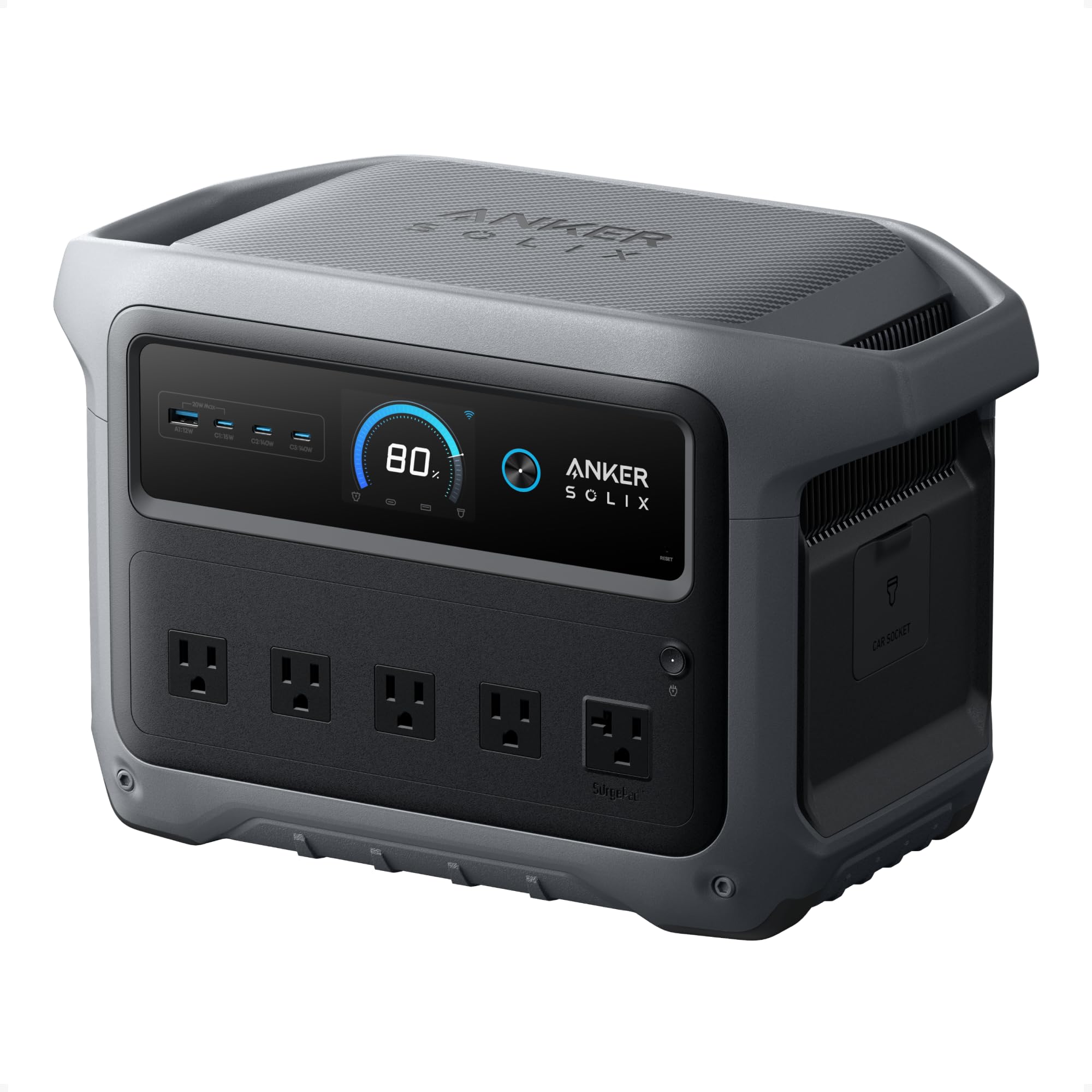 |
1024Wh | 2000W (peak 3000W) | 24.9 lbs |
|
Check Price |
| Jackery HomePower 3600 Plus |
 |
3584Wh | 3600W | 77.16 lbs |
|
Check Price |
| Jackery Explorer 1000 v2 |
 |
1070Wh | 1500W | 23.8 lbs |
|
Check Price |
This Roundup is reader-supported. When you click through links we may earn a referral commission on qualifying purchases.