
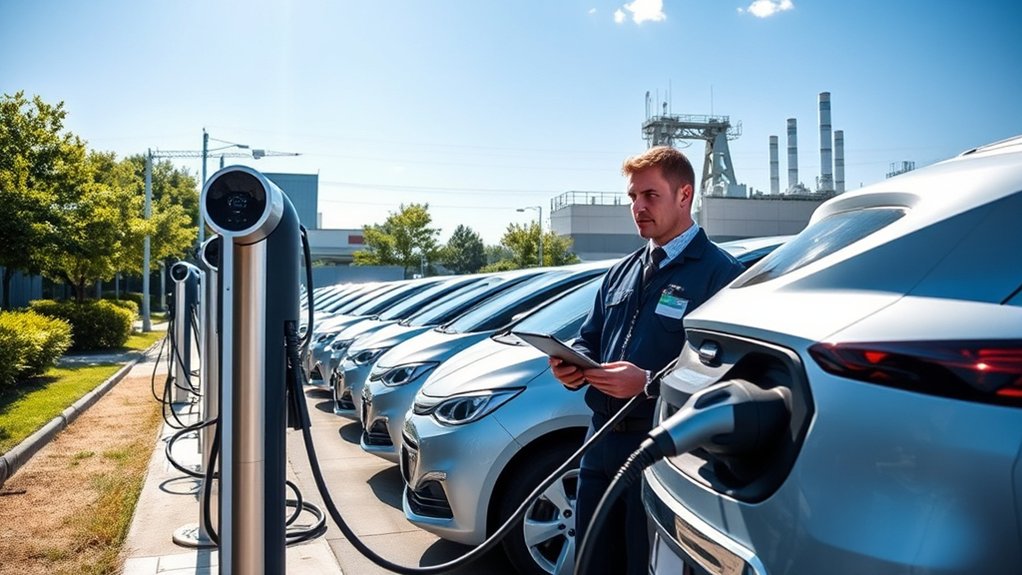
Planning EV charging for a fleet is less about buying the fastest chargers and more about matching charger power to routes, dwell time, site capacity, and growth. Start with real duty-cycle data, then size the charging mix around daily energy use, backup margin, and the utility upgrades your depot can support.
Quick Answer
To assess EV fleet charging requirements, review each vehicle’s daily miles, energy use, route timing, payload, idle windows, and return-to-depot schedule. Then calculate daily kWh demand, choose Level 2 or DC fast charging based on dwell time, confirm electrical capacity, and use charging software to control cost and downtime.
Key Takeaways
- Use route data and kWh demand, not charger speed claims alone, to size your EV fleet charging plan.
- Level 2 charging is usually best for predictable overnight depot dwell time, while DC fast charging fits high-mileage routes or short turnaround windows.
- Check utility service, panel capacity, transformer limits, demand charges, permits, and future fleet growth before installing chargers.
- Verify incentives through official federal, state, local, and utility sources before counting them in your budget.
At a Glance
| Time Required | A basic route and energy review may take a few days. A full depot assessment with utility coordination, load study, permitting, and vendor quotes can take several weeks or longer. |
| Difficulty | Moderate to advanced, depending on fleet size, charger power, and electrical-service limits. |
| Tools Needed | Telematics or route logs, vehicle efficiency data, utility bills, site electrical drawings, charger spec sheets, a licensed electrician, and utility contact information. |
| Cost | Highly variable. Costs depend on charger power, trenching, panel or transformer upgrades, networking, utility work, permits, and whether incentives apply. |
How to Assess Your Fleet’s Charging Requirements?
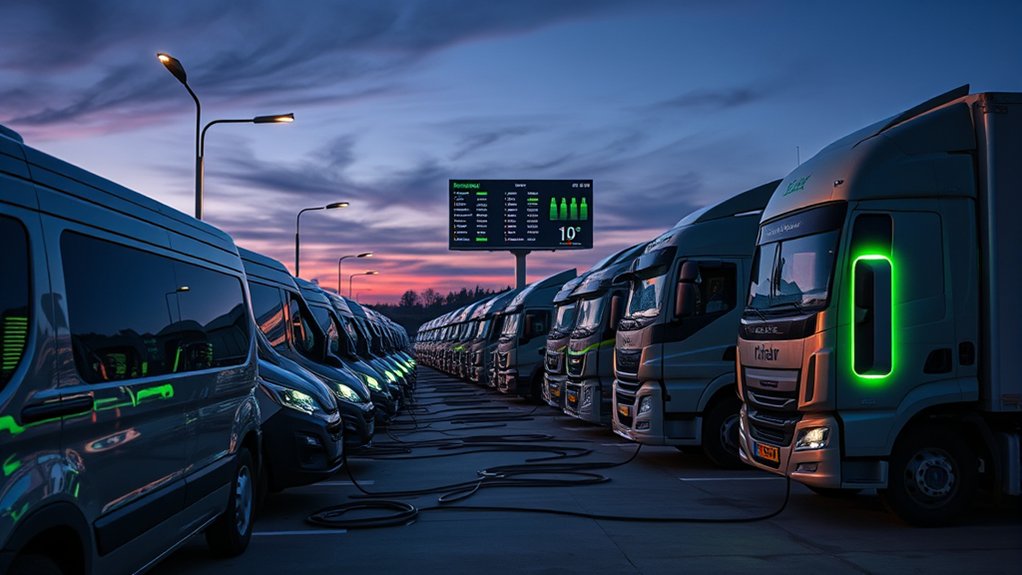
Start by listing every vehicle, route, shift, and return-to-base window. Your goal is to learn how much energy each vehicle must recover before its next assignment, not just how many chargers you can fit in the parking lot.
For each vehicle, collect these details:
- Average and peak daily miles
- Route type, including city, highway, hills, stop-and-go, and idling
- Payload, towing, HVAC use, and seasonal weather effects
- Battery size, usable battery capacity, and expected kWh per mile
- Arrival time, departure time, and available charging window
- Required reserve range for detours, cold weather, traffic, or emergency calls
A simple planning formula is:
Daily charging energy per vehicle = daily miles × expected kWh per mile × reserve buffer.
For example, if a van drives 90 miles per day and uses 0.45 kWh per mile, it needs about 40.5 kWh before adding a reserve buffer. If you add a 20% buffer for weather, payload, and route variation, plan for about 49 kWh of daily charging energy.
Next, compare that energy demand with available charging time:
Required average charging power = daily kWh needed ÷ available charging hours.
If that van needs 49 kWh and sits at the depot for 10 hours, a charger delivering roughly 5 kW to the vehicle may be enough. If the same van has only two hours between shifts, it needs a much higher-power charging solution.
Pro Tip: Build your first plan from your busiest realistic day, not your average day. Average mileage can hide the routes that create charging failures.
Choosing the Right Charging Speed for Your Fleet
Charging speed should match dwell time. A vehicle parked for 10 to 12 hours usually does not need the same charger as a vehicle that must leave again in 45 minutes. The U.S. Department of Energy’s Alternative Fuels Data Center explains common EV charging infrastructure types, but fleet planning should still use your actual routes and vehicle specifications.
Charging Speed Options Available
| Charging Type | Best Fleet Use | Planning Notes |
|---|---|---|
| Level 1 | Low-mileage vehicles, backups, or emergency charging where long dwell time is available. | Usually too slow for high-use commercial fleets. Use only after confirming the route can recover enough energy overnight. |
| Level 2 | Most depot-based fleets with predictable overnight or long-shift parking. | Often the best balance of cost, battery health, and daily readiness. Size by charger kW, vehicle onboard charger limit, and available hours. |
| DC fast charging | Short dwell windows, high-mileage routes, shared charging hubs, or opportunity charging during the day. | Higher installation and utility costs. Actual speed depends on charger output, vehicle max charge rate, battery temperature, and state of charge. |
Do not size your fleet by “miles of range per hour” alone. That number changes by vehicle efficiency, payload, weather, tire condition, driving style, and charger output. For reliable planning, use kW, kWh, and available charging hours.
Assessing Fleet Usage Patterns
Look for patterns in your operation before selecting charger power. A delivery fleet that returns to the same depot every evening can often rely on Level 2 chargers and managed overnight charging. A service fleet with unpredictable emergency calls may need spare charging capacity or a small number of faster chargers. A heavy-duty fleet may need a dedicated utility study and higher-capacity equipment.
Group vehicles into charging profiles:
- Low-use vehicles: short daily routes and long parking windows.
- Standard-use vehicles: predictable daily mileage and overnight depot charging.
- High-use vehicles: long routes, double shifts, or short turnaround time.
- Critical vehicles: vehicles that must stay ready for emergency, safety, or customer-response work.
This grouping helps you avoid overspending on fast chargers for vehicles that do not need them while still protecting the routes that cannot afford charging delays.
Infrastructure Compatibility Considerations
Infrastructure compatibility includes more than plug shape. Confirm charger output, connector type, vehicle charge limits, networking requirements, cable reach, parking layout, weather exposure, accessibility, and future vehicle purchases.
For North American fleets, light-duty and many medium-duty vehicles may use AC connectors covered by standards such as SAE J1772, while DC fast charging may involve CCS, NACS, or vehicle-specific requirements. For heavy-duty trucks and buses, confirm the OEM’s current connector and power roadmap before trenching, pouring pads, or ordering switchgear.
Warning: EV charging equipment should be designed and installed by qualified professionals. Coordinate with your utility, follow local electrical code, secure required permits, and never assume your existing panel or transformer can support the added load.
Selecting Your EV Charging Infrastructure
Once you know the daily energy need and charging windows, choose the hardware, site layout, and software that support your operation. The best infrastructure plan keeps vehicles ready, protects battery health, limits peak demand, and leaves room for growth.
Charging Station Types
Use Level 2 chargers when vehicles have enough dwell time to recover their daily energy. Use DC fast charging when dwell time is short or when one charger must serve multiple high-use vehicles. In many fleets, the best plan is a mixed system: mostly Level 2 chargers with a smaller number of faster chargers for exceptions, peak days, or shared use.
Also decide whether chargers should be:
- Networked: useful for load management, user access, reporting, alerts, and energy tracking.
- Non-networked: simpler and sometimes cheaper, but limited for larger fleets.
- Wall-mounted: practical for small depots or indoor bays.
- Pedestal-mounted: better for parking rows, outdoor lots, and multi-vehicle layouts.
Location Planning Strategies
Place chargers where they reduce vehicle movement, driver confusion, and cable strain. A charger that is electrically convenient but operationally awkward can waste time every day.
| Planning Area | What to Check | Why It Matters |
|---|---|---|
| Depot parking | Assigned spaces, vehicle length, turning radius, and cable reach | Prevents blocked chargers, damaged cables, and wasted driver time |
| Electrical rooms | Panel space, transformer capacity, conduit paths, and switchgear | Controls installation cost and upgrade timing |
| Operations flow | Arrival order, dispatch order, maintenance bays, and wash areas | Keeps charging aligned with daily workflow |
| Weather and safety | Drainage, snow removal, lighting, bollards, and trip hazards | Improves uptime and reduces accident risk |
| Future expansion | Spare conduit, panel capacity, make-ready spaces, and utility timelines | Avoids paying twice for trenching and electrical work |
Cost Considerations and Incentives
Budget for the full charging system, not just the charger price. A realistic total cost of ownership review should include:
- Hardware: chargers, pedestals, cables, mounting equipment, protection posts, and networking hardware.
- Electrical work: trenching, conduit, panels, transformers, switchgear, meters, and service upgrades.
- Soft costs: engineering, permits, utility applications, software setup, and project management.
- Operating costs: electricity, demand charges, subscriptions, maintenance, repairs, and replacement cables.
- Downtime risk: backup chargers, public-charging contingency plans, and spare parts.
Incentives can help, but they should not be treated as guaranteed savings. Federal, state, local, and utility programs change often, and eligibility may depend on location, installation date, tax status, labor rules, public access, or vehicle class. Check the IRS Alternative Fuel Vehicle Refueling Property Credit, the Database of State Incentives for Renewables and Efficiency, your state energy office, and your electric utility before finalizing the budget.
Build a Charging Plan From Data
A strong fleet charging plan usually follows a phased path:
- Measure current operations. Pull mileage, dwell time, fuel use, route duration, and shift schedules from real records.
- Model EV energy demand. Convert each route into estimated kWh per day, then add a reserve buffer.
- Match vehicles to chargers. Assign Level 2, DC fast charging, or shared charging based on dwell time and criticality.
- Check the site. Review electrical capacity, parking layout, charger placement, and utility upgrade timelines.
- Pilot before scaling. Start with a small group of vehicles and chargers, then compare actual charging data with the model.
- Expand in stages. Add make-ready electrical capacity, spare conduit, and software controls so future chargers cost less to install.
This staged approach lowers the risk of buying too much hardware too early or discovering too late that your electrical service cannot support the full fleet.
Manage Utility Capacity, Demand Charges, and Load Growth
Utility planning can make or break an EV fleet project. Before ordering chargers, ask your utility about service capacity, transformer limits, rate structures, make-ready programs, demand charges, and expected lead times for upgrades.
Demand charges are especially important for fleets. If many vehicles begin charging at the same time, your peak demand can rise sharply, even if total energy use is reasonable. Managed charging can stagger start times, limit maximum site load, and prioritize vehicles by departure time.
A cheaper charger can become expensive if it creates peak-demand costs, delays dispatch, or forces an unplanned utility upgrade.
Plan for growth as soon as possible. Even if you electrify only 10 vehicles now, your trenching, conduit, switchgear, and utility plan should account for the next phase of vehicles.
Optimizing Fleet Operations With Charging Management Software
Charging management software helps turn chargers into an operating system for your fleet. It can monitor charger status, schedule sessions, control peak load, track energy use, and alert staff when a vehicle fails to charge.
For fleets, the most useful software features include:
- Departure-based scheduling: vehicles with early routes get priority.
- Load balancing: chargers share available electrical capacity without overloading the site.
- Peak-demand control: charging is shifted away from expensive demand peaks when operations allow.
- Fault alerts: staff can respond when a plug is disconnected or a charger fails.
- Energy reporting: managers can compare route cost, charger use, and vehicle efficiency.
- Access control: drivers, departments, or vehicles can be assigned charging permissions.
Software is most valuable when it connects to your fleet management system. That allows you to compare planned routes, actual miles, energy use, and charging history in one workflow.
Budgeting for EV Charging Incentives
Incentives can reduce upfront cost, but they should be handled carefully. Do not sign a charger contract based only on an advertised rebate amount. Confirm eligibility, application deadlines, required paperwork, approved equipment lists, tax status, and whether funds are first-come, first-served.
Use this incentive checklist:
- Federal programs: check current IRS and Department of Energy guidance because deadlines and eligibility rules can change.
- State programs: review your state energy office, environmental agency, or transportation agency for fleet, depot, or medium-duty vehicle support.
- Utility programs: ask about make-ready support, special EV rates, demand-charge alternatives, and managed-charging pilots.
- Local programs: check city, county, port authority, air-quality district, or economic-development incentives.
- Grant compliance: confirm reporting duties, public-access requirements, wage rules, and equipment standards before accepting funds.
Note: Incentives can improve ROI, but charger uptime, electricity rates, maintenance, vehicle utilization, and avoided fuel cost usually drive the long-term business case.
Training Staff for Efficient EV Operations
Staff training is essential for reliable EV fleet operations. Drivers need to know when to plug in, how to confirm charging has started, how to report charger faults, and how route choices affect energy use. Maintenance teams need training on high-voltage safety, charger inspection, cable care, and emergency procedures.
Train drivers on:
- Pre-trip state-of-charge checks
- Plug-in and unplugging procedures
- Charging etiquette when chargers are shared
- Cold-weather and hot-weather range effects
- What to do if a charger fails before dispatch
Train managers and technicians on:
- Dashboard monitoring and fault alerts
- Basic charger inspection routines
- Lockout and safety procedures
- Vendor support contacts and escalation steps
- How to read energy and utilization reports
Repeat training after software updates, new vehicle deliveries, charger expansions, or route changes.
Maintenance, Safety, and Uptime Checks
A fleet charger is not successful just because it is installed. It must be available when vehicles return, easy for drivers to use, and protected from damage. Build charger maintenance into your regular fleet routine.
Use a basic monthly checklist:
- Inspect cables, connectors, holsters, screens, and status lights.
- Check bollards, wheel stops, signage, and lighting.
- Confirm software alerts, access controls, and payment or reporting tools work correctly.
- Review failed sessions and charger downtime.
- Clean connector areas and remove snow, mud, or debris.
- Keep vendor support numbers visible for dispatch and maintenance staff.
For critical fleets, keep extra charging capacity. A small buffer of spare chargers, shared DC fast charging, or a nearby public-charging backup can prevent one failed plug from disrupting the morning schedule.
Frequently Asked Questions
How many chargers does an EV fleet need?
It depends on daily kWh demand, dwell time, charger power, and how many vehicles must be ready at the same time. Some fleets need one Level 2 charger per vehicle, while others can share chargers if vehicles return in staggered windows.
Is Level 2 charging enough for fleet vehicles?
Level 2 charging is often enough for depot-based vehicles with predictable overnight parking. It may not be enough for double shifts, long routes, high payloads, or short turnaround windows.
When should a fleet use DC fast charging?
Use DC fast charging when vehicles need a quick turnaround, run long routes, operate across multiple shifts, or share charging at a hub. It costs more to install and may require utility upgrades, so it should solve a clear operational need.
What data should I collect before getting charger quotes?
Collect daily mileage, route timing, dwell windows, vehicle efficiency, battery size, payload, seasonal conditions, site electrical information, utility bills, and future fleet-growth plans. Better data leads to better charger sizing.
How do charging costs compare to diesel or gasoline?
Charging can cost less than diesel or gasoline, but the result depends on local electricity rates, demand charges, route efficiency, charger management, maintenance, and vehicle utilization. Compare total cost of ownership, not just energy price.
What incentives are available for EV fleet charging?
Incentives vary by date, location, utility, vehicle type, charger type, and tax status. Check current IRS guidance, DSIRE, your state energy office, and your utility before budgeting. Do not count an incentive until eligibility or award approval is confirmed.
How can we measure ROI for EV charging investments?
Measure avoided fuel cost, electricity cost, demand charges, maintenance changes, charger software fees, incentives, vehicle uptime, and infrastructure depreciation. Track actual kWh per route after deployment and compare it with your original model.
What are the biggest challenges in fleet EV charging?
Common challenges include limited electrical capacity, long utility upgrade timelines, demand charges, charger downtime, poor site layout, driver training gaps, and underestimating peak-day energy needs.
Conclusion
The right EV fleet charging plan starts with route data, not hardware catalogs. Calculate daily energy needs, match charger power to dwell time, confirm site electrical capacity, and build enough flexibility for peak days and future vehicles. With managed charging, staff training, reliable maintenance, and verified incentives, your fleet can reduce downtime, control energy costs, and scale electrification with fewer surprises.
Sources
- U.S. Department of Energy Alternative Fuels Data Center: Electric Vehicle Charging Infrastructure – charging levels and infrastructure planning context.
- National Renewable Energy Laboratory: The 2030 National Charging Network – charging infrastructure demand and planning scale.
- IRS: Alternative Fuel Vehicle Refueling Property Credit – federal tax-credit eligibility reference.
- DSIRE: Database of State Incentives for Renewables and Efficiency – state, local, and utility incentive lookup.
- U.S. Environmental Protection Agency: Electric Vehicle Myths – EV emissions and environmental context.
- SAE J1772 Standard – North American conductive charging standard reference.