
Repeated short trips are one of the hardest driving patterns on a modern diesel. If most journeys are brief, slow, and stop-start, the engine and exhaust may not stay hot long enough for the diesel particulate filter (DPF) to complete regeneration.
The school run, a short commute across town, or five minutes to the shops is not automatically harmful on its own. The risk rises when that pattern makes up nearly all of your driving.
The answer is not to thrash a cold engine or follow a universal “motorway blast” rule. It is to understand how your vehicle regenerates its DPF, follow the handbook, recognise warning signs, and give the car suitable longer runs when the manufacturer recommends them.
Table of Contents
- Key Takeaways
- The Biggest Diesel Driving Mistake: Nothing but Short Trips
- Why the Problem Can Extend Beyond the DPF
- Four Warning Signs Worth Taking Seriously
- What to Do When the DPF Warning Appears
- Three Habits That Help Protect Your Diesel
- Four More Diesel Ownership Traps
- The Real Question: Does Your Driving Suit a Diesel?
Key Takeaways
- Repeated short, low-speed trips can prevent DPF regeneration from completing and allow soot to build up.
- A sustained journey can help some vehicles regenerate, but the correct speed, engine speed, and duration vary by model.
- Recurring DPF warnings or an unexplained rise in engine-oil level deserve prompt attention.
- Use the exact engine-oil specification required by the manufacturer and keep fuel-filter maintenance on schedule.
- When a warning appears, follow the vehicle handbook rather than relying on a generic driving rule.
The Biggest Diesel Driving Mistake: Nothing but Short Trips
Diesels have a workhorse reputation for good reason. They are well suited to regular distance, sustained loads, and longer journeys. That reputation becomes misleading when it is taken to mean that a modern diesel can spend its entire life barely warming up.
An occasional short journey is not the main issue. The problem is the repeated pattern: start from cold, crawl through traffic, arrive a few minutes later, and switch off. Day after day, the engine and exhaust system may rarely reach the conditions needed for normal after-treatment operation.
The component at the centre of this problem is the diesel particulate filter, or DPF. It traps soot from the exhaust so that far less particulate matter leaves the tailpipe.
A DPF cannot collect soot indefinitely. It periodically needs to reduce that soot through a cleaning process called regeneration.
What DPF Regeneration Actually Does
During regeneration, accumulated soot is oxidised at high temperature. In some regeneration strategies, filter temperatures can approach roughly 600°C, although the exact temperature and control method vary by vehicle.
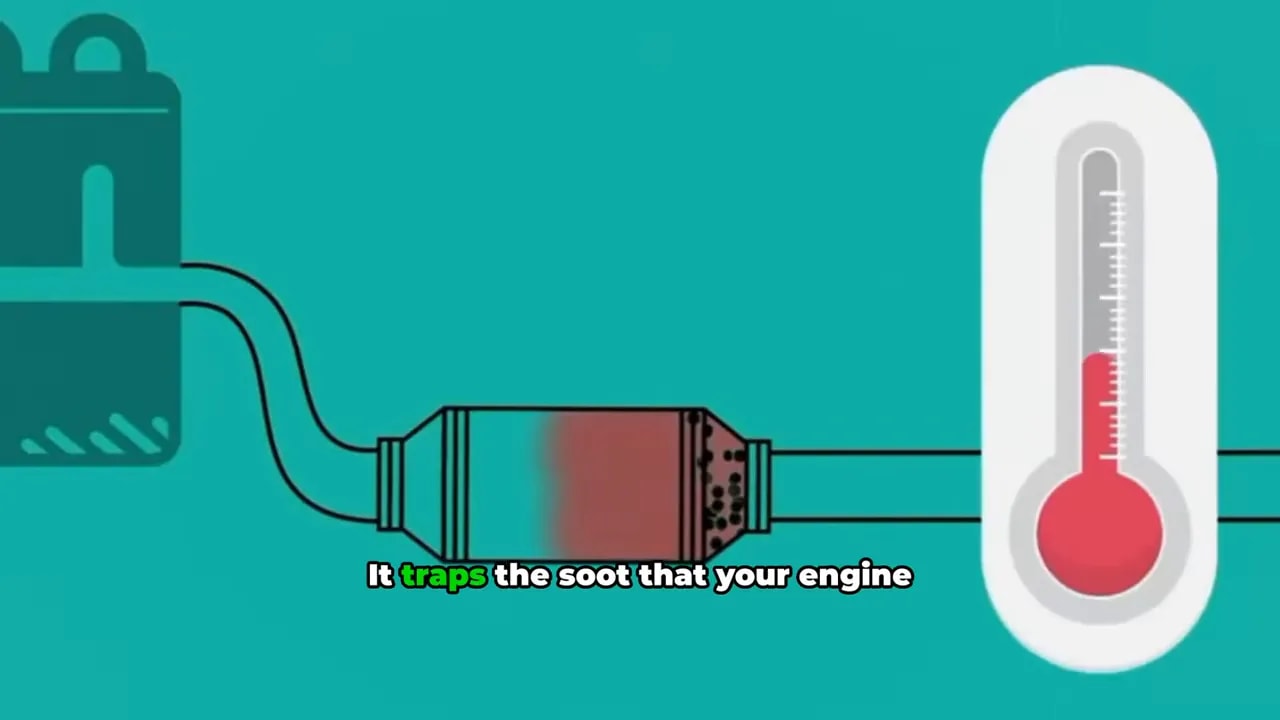
A sustained journey can give the system a better chance to reach and maintain the conditions it needs. Some manufacturer guidance calls for around 20 minutes or more of favourable driving, while other vehicles specify different conditions.
There is no single speed, RPM, or journey length that guarantees regeneration in every diesel. Your handbook and dashboard instructions take priority over generic advice.
With repeated short trips, the car may start an active regeneration only for the journey to end before the process finishes. Repeated interruptions can allow soot loading to increase until the vehicle requests a specific regeneration procedure or service.
If soot loading becomes excessive, the vehicle may show additional warnings or reduce performance. At that point, a normal drive may no longer be the correct remedy, and professional diagnosis or a manufacturer-specified regeneration procedure may be required.
For a useful explanation of the process and the effect of short journeys, see the RAC’s guide to diesel particulate filters.
Why the Problem Can Extend Beyond the DPF
A soot-loaded DPF is not the only concern when a diesel spends most of its life cold and lightly loaded.
On some diesel engines, active regeneration uses late or post-injection of fuel to raise exhaust temperature. A small amount of that fuel can reach the engine oil, so repeated regeneration events or interrupted regeneration can contribute to fuel dilution on susceptible designs.
That is why an unexplained rise in the oil level matters. More liquid on the dipstick does not necessarily mean better lubrication; fuel-diluted oil can lose protective properties.
Diesel EGR systems can also accumulate soot and hydrocarbon deposits over time. The exact causes vary by engine, so a dirty EGR valve or intake should not automatically be blamed on short trips without diagnosis.
You may hear the term wet stacking used for low-temperature, low-load diesel operation. It is more commonly discussed in industrial and stationary diesel contexts, so it is not a useful catch-all diagnosis for every road car used around town.
The practical lesson is simpler: gentle driving while the engine warms is sensible, but a routine in which the engine almost never reaches normal operating temperature can create avoidable problems.
Four Warning Signs Worth Taking Seriously
DPF-related issues can develop without dramatic smoke or noise. These clues are worth noticing, but none of them should be used as a stand-alone diagnosis.
1. A DPF Warning That Reappears
A DPF warning may go out after a successful regeneration, but a warning that repeatedly returns deserves attention. Check the handbook for the exact symbol and message because different warning stages can require different actions.
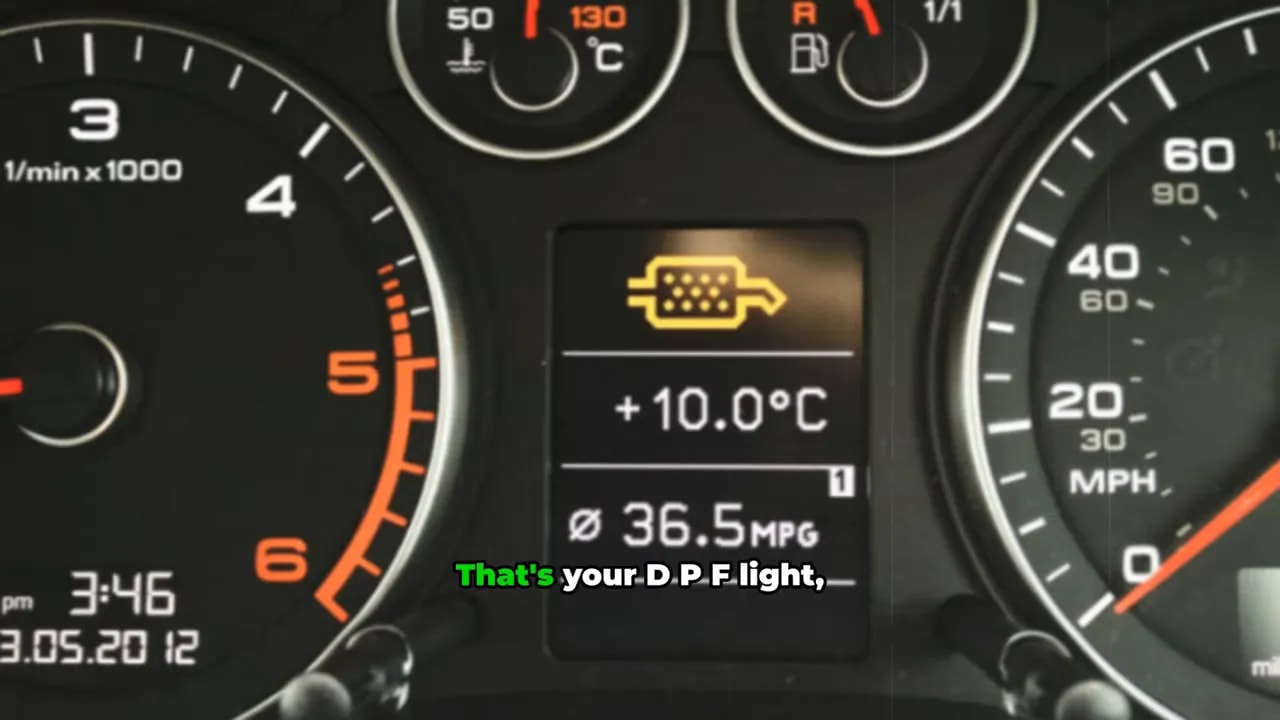
If the warning remains on, changes to a more serious warning state, or is joined by reduced performance or another fault light, do not keep trying generic high-speed drives. Follow the manufacturer’s instructions or have the vehicle inspected.
2. Fuel Economy Gradually Getting Worse
If each tank seems to cover fewer miles without an obvious change in your route or driving, take notice. Repeated active regeneration can temporarily increase fuel use, and a restricted DPF can also affect performance and economy.
Worsening fuel economy is only a clue. Tyre pressure, weather, traffic, mechanical faults, and many other factors can also reduce efficiency.
3. An Oil Level That Is Rising
Most owners expect an engine’s oil level to stay within a defined range between services. If the level rises unexpectedly, fuel dilution is one possible cause on some diesel engines.
Do not try to cure an unexplained high oil level with a hard drive. If the level is above the manufacturer’s permitted maximum or the handbook gives a special warning mark, follow the specified service procedure.
4. Cooling Fans or Other Regeneration Clues
During active regeneration, some vehicles may show clues such as a different engine note, increased idle speed, increased fuel consumption, disabled stop-start, a hot smell, or cooling fans running.
These signs vary by model and do not prove a fault. Fans may also run to remove residual heat after the engine is switched off, but that does not mean a normal engine-driven regeneration is continuing after shutdown.
What to Do When the DPF Warning Appears
- Read the handbook or dashboard message first. The correct response depends on the vehicle and warning stage.
- If the manufacturer permits a drive-to-clean procedure, follow those conditions exactly. Use a safe road, obey speed limits, and allow the engine to warm normally.
- Do not keep forcing regeneration attempts if the warning persists or becomes more serious. Additional warning lights, limp mode, or repeated failure to clear the message can indicate that service is needed.
- Do not ignore abnormal oil level, overheating, or other engine warnings. A DPF warning does not override more serious service or safety concerns.
Safety note: DPF regeneration creates very high exhaust temperatures. Avoid parking over dry grass, leaves, or other combustible material, and follow any hot-exhaust warnings in the handbook.
Three Habits That Help Protect Your Diesel
The best approach is prevention. Give the vehicle the operating conditions its emissions system was designed for, and respond to warnings before soot loading becomes severe.
1. Include Suitable Longer Journeys
If most of your driving is short and urban, include regular longer journeys when practical. Choose a route that allows steady driving rather than another slow crawl through town.
Allow the engine to warm normally, then follow the vehicle’s own regeneration guidance. Some manufacturers specify a minimum time, road speed, or engine-speed range; others use different strategies.
The goal is the right operating conditions, not maximum speed or high revs. Do not push a cold engine, and do not assume that driving harder is better.
A suitable longer drive can help remove soot when the vehicle allows driving regeneration. It cannot remove accumulated ash, repair a damaged filter, or guarantee that a persistent warning will clear.
2. Avoid Repeatedly Interrupting Regeneration
Learn the normal regeneration clues for your car. If the handbook says to continue driving when regeneration is underway, and it is safe and practical to do so, giving the cycle time to finish can reduce repeated interruptions.
Do not assume that a few minutes of idling will complete a regeneration. Some vehicles support stationary or manual regeneration, but only through a specific manufacturer procedure.
3. Use the Exact Correct Engine Oil
“Diesel oil” is not a precise enough specification.
Use oil that meets the exact manufacturer approval and specification listed for your engine. Many DPF-equipped diesels require low- or mid-SAPS oil, but the correct ACEA category, viscosity, and manufacturer approval are vehicle-specific.
The distinction between soot and ash explains why this matters. Regeneration removes combustible soot, while non-combustible ash gradually remains in the filter and may eventually require cleaning or other maintenance.
The wrong oil specification can shorten DPF service life or damage the after-treatment system.
Four More Diesel Ownership Traps
Short trips are the main issue here, but several other habits can make diesel ownership more troublesome.
Long Idling to Warm Up on Cold Mornings
Long stationary idling is generally a poor way to warm a modern diesel. The engine warms more effectively under gentle driving, and unnecessary idling wastes fuel and adds emissions.
Start the vehicle, allow only the brief settling or pre-start routine specified by the manufacturer, then drive gently until it reaches normal temperature. Avoid heavy load or high revs while the engine is cold.
Repeatedly Running the Fuel Tank Very Low
Do not make running nearly out of fuel a habit. Some vehicles may postpone DPF regeneration when fuel level is too low, and running a diesel completely dry can introduce air into the fuel system and require a specific priming procedure.
The sensible rule is simple: refuel before the tank is nearly empty, and never assume a diesel can be restarted normally after it has run dry.
Neglecting the Fuel Filter or Ignoring Water Warnings
The fuel filter protects expensive injection-system components from contamination. Some diesel systems also use a water separator or a water-in-fuel warning.
Replace the fuel filter at the interval specified by the manufacturer and respond promptly to water-in-fuel warnings. Depending on the vehicle, the correct action may be to drain the separator or have the system serviced.
Switching Off Immediately After Heavy Work
Turbocharger cooldown advice is vehicle-specific. Some manufacturers instruct drivers to allow a brief idle period after high-speed driving, towing, or a sustained climb, while other vehicles manage turbo temperatures differently.

After heavy use, a gentle final part of the journey can reduce thermal load. If your handbook specifies an idle period before shutdown, follow it; do not apply a fixed cooldown time to every turbo-diesel.
That is different from prolonged cold-start idling. One is a model-specific cooldown instruction after high load; the other is an inefficient way to warm a cold engine.
The Real Question: Does Your Driving Suit a Diesel?
Diesel can still make sense for drivers who regularly cover longer distances, tow, or spend substantial time on faster roads. The best choice depends on the vehicle, annual mileage, fuel costs, emissions requirements, and how the car is actually used.
If your routine is almost entirely short, slow trips around town, a modern diesel may be a poor fit. The issue is not that every short trip damages the car; it is that repeated low-temperature use can make successful regeneration harder.
That is not automatically a reason to sell the vehicle. It is a reason to understand its maintenance and regeneration requirements.
- Give it suitable opportunities to reach normal operating temperature.
- Learn the DPF instructions for your specific vehicle.
- Check the oil level and use the exact approved oil specification.
- Keep fuel-filter maintenance on schedule.
- Take recurring warning lights seriously instead of waiting for reduced performance.
The cheapest useful change is often the least dramatic one: avoid a routine made up entirely of tiny trips, and give the vehicle the longer, steadier use its manufacturer recommends.
Look after a diesel by giving it the operating conditions it needs, not simply by keeping every journey short and gentle.
Frequently Asked Questions
Are occasional short trips bad for a diesel?
Will a 20-minute drive always clear a DPF warning?
Does DPF regeneration remove ash?
Should I leave my diesel idling before switching it off?
”’ ‘,’ ‘,revised, flags=re.S|re.I)
# metrics
plain2=re.sub(r’
plain2=re.sub(r’<[^>]+>