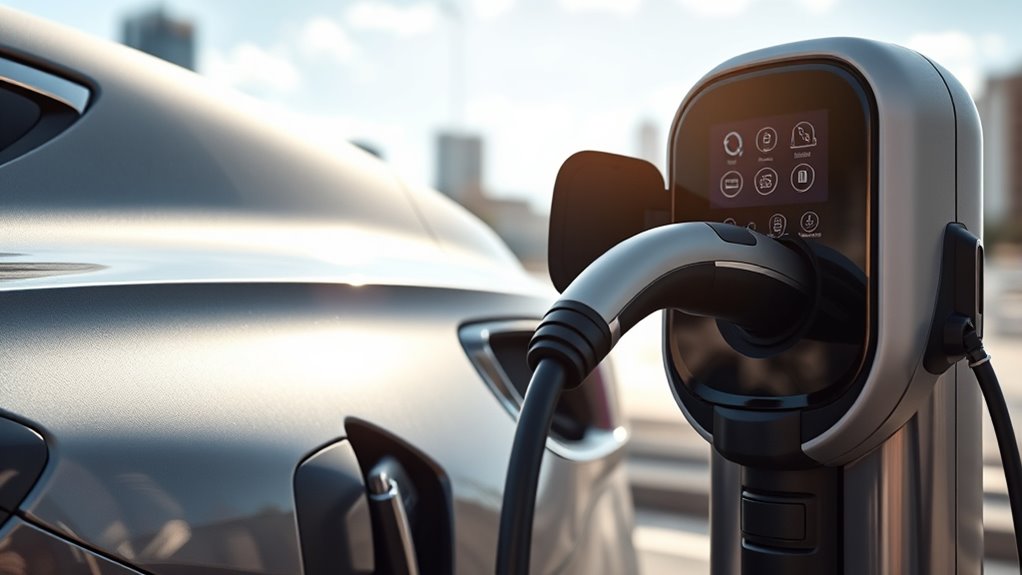
EV charging acronyms can feel confusing at first because the same screen may show plug types, charging speeds, network terms, battery terms, and payment terms all at once. Once you know the basics, the language becomes much easier to read. The main terms to understand are AC, DC, Level 1, Level 2, DCFC, EVSE, CCS, NACS/J3400, kW, kWh, SOC, CPO, OCPP, and V2G.
Quick Answer
EV charging acronyms describe how power reaches your car, what plug fits, who runs the charger, and how fast the session can be. AC and DC describe current type, kW means charging speed, kWh means energy amount, EVSE means charging equipment, and terms like CCS, NACS, OCPP, and V2G explain connectors, networks, and smart charging.
Key Takeaways
- AC charging is common at home and work; DC fast charging is used for quicker stops on road trips.
- kW is charging speed, while kWh is the amount of energy stored or delivered.
- BEV, PHEV, and HEV describe vehicle types, but only BEVs and PHEVs plug in.
- CCS, CHAdeMO, J1772, and NACS/J3400 describe connector standards, so they affect which charger you can use.
- OCPP, OCPI, CPO, eMSP, and roaming explain how charging networks communicate, bill, and share charger access.
Understanding EV Charging Acronyms
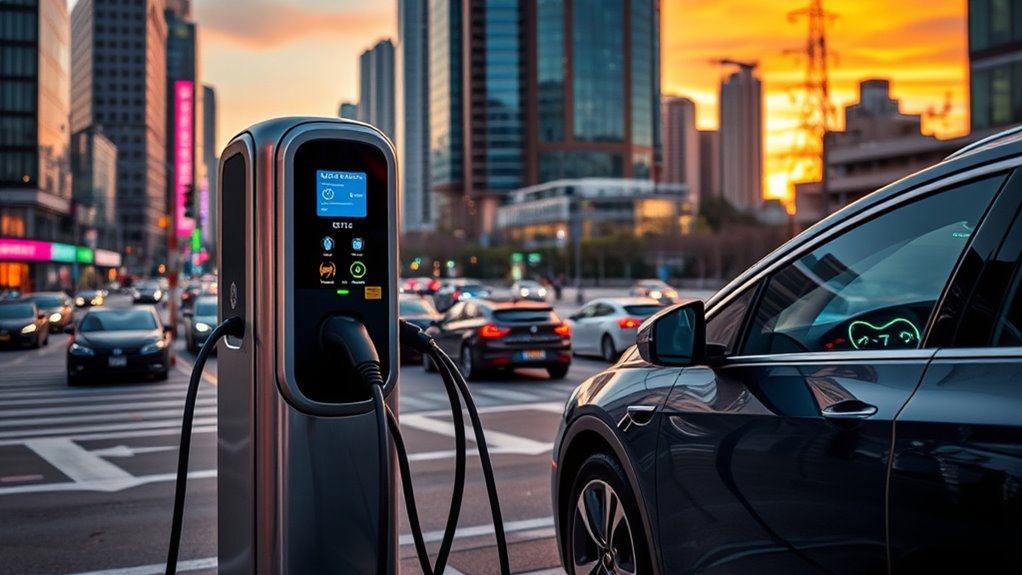
Most EV charging acronyms fall into five groups: charging speed, vehicle type, connector type, charging network, and smart energy features. Here is the simplest way to read them.
| Acronym | Means | Why it matters |
|---|---|---|
| AC | Alternating current | Usually used for Level 1 and Level 2 charging. |
| DC | Direct current | Used for fast charging because the charger sends DC power directly to the battery. |
| EVSE | Electric vehicle supply equipment | The charging equipment that safely delivers power to the EV. |
| kW | Kilowatt | Charging power or speed at a moment in time. |
| kWh | Kilowatt-hour | Energy amount, such as battery size or energy added during a session. |
| SOC | State of charge | Your battery percentage, such as 20% or 80%. |
| CCS | Combined Charging System | A connector system that can support AC and DC charging through one vehicle charge port. |
| NACS / J3400 | North American Charging System / SAE J3400 | A compact connector standard used by Tesla and adopted by many North American EV makers. |
| OCPP | Open Charge Point Protocol | Lets charging stations communicate with charging management software. |
| V2G | Vehicle-to-grid | A bidirectional feature that can send energy from an EV back to the electric grid when supported. |
Pro Tip: Think of kW like water flow and kWh like the amount of water in the bucket. A 150 kW charger is the speed, while adding 45 kWh is the energy amount.
What’s the Real Difference Between AC and DC Charging?
The real difference is where the power conversion happens. Your EV battery stores energy as DC. With AC charging, your car’s onboard charger converts AC power from the grid into DC power for the battery. With DC fast charging, the charging station does that conversion and sends DC power directly to the battery.
| Feature | AC Charging | DC Fast Charging |
|---|---|---|
| Current type | Alternating current | Direct current |
| Common charging levels | Level 1 and Level 2 | DCFC, often called Level 3 |
| Typical use | Home, workplace, hotels, long parking sessions | Highway stops, travel corridors, quick public charging |
| Speed range | Level 1 is slow; Level 2 is faster and commonly used overnight | Much faster, but limited by the charger, vehicle, battery temperature, and SOC |
| Best for | Daily charging and lower cost | Adding range quickly when time matters |
In the United States, the U.S. Department of Energy’s Alternative Fuels Data Center describes Level 1 charging as 120 V AC, Level 2 as 240 V residential or 208 V commercial AC, and DC fast charging as high-power charging that can add range much more quickly. Some DC fast-charging equipment can provide up to 500 kW, but your actual speed depends on what your EV can accept.
Charging Levels: L1, L2, and DCFC
Charging “levels” are another way to describe speed and equipment type. These terms are especially common in charging apps, home charger listings, and public station descriptions.
- L1 or Level 1: Slow AC charging from a standard 120 V household outlet. It can work for short commutes, plug-in hybrids, or emergency top-ups.
- L2 or Level 2: Faster AC charging from 240 V residential service or 208 V commercial service. This is the common choice for home, workplace, apartment, hotel, and destination charging.
- DCFC: DC fast charging. This is public fast charging used when you want to add range quickly.
Warning: Do not treat EV charging like a normal small appliance. Avoid damaged outlets, undersized extension cords, loose plugs, and unpermitted wiring. For a Level 2 home charger, use a qualified electrician and follow your charger, vehicle, and local electrical-code requirements.
Types of Electric Vehicles: BEV, PHEV, and HEV
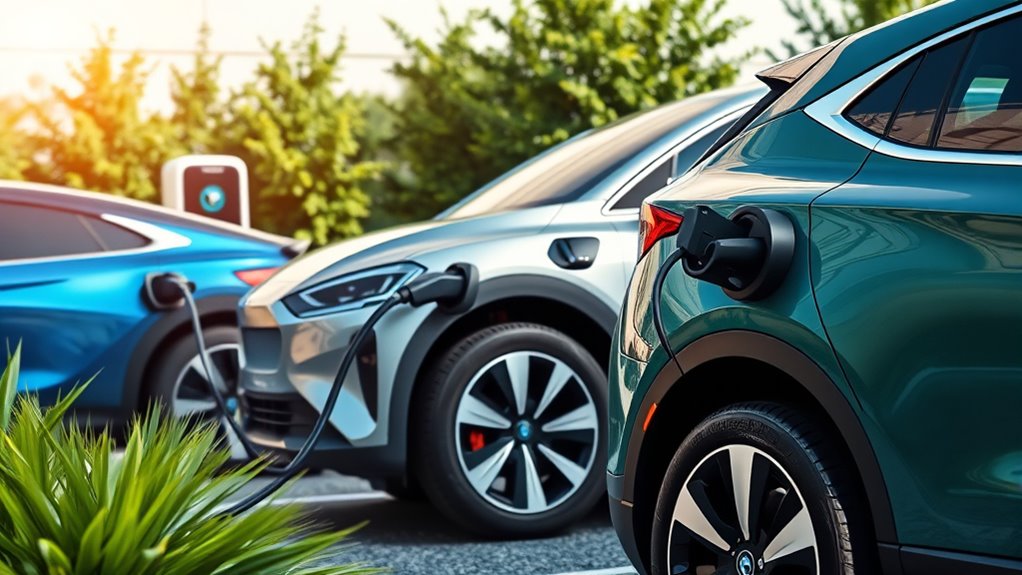
EV acronyms often describe the vehicle itself, not the charger. The three most common are BEV, PHEV, and HEV.
| Term | Full Name | How it works |
|---|---|---|
| BEV | Battery electric vehicle | Runs only on electricity and plugs in to charge. BEVs have no tailpipe emissions, though electricity production can still have upstream emissions. |
| PHEV | Plug-in hybrid electric vehicle | Uses a battery and electric motor plus a gasoline engine. It can plug in and usually drives a limited distance on electricity before using gas. |
| HEV | Hybrid electric vehicle | Uses a gas engine and electric motor, but it does not plug in. The battery charges through regenerative braking and engine operation. |
For charging purposes, the key difference is simple: BEVs and PHEVs plug in. HEVs do not. That means HEVs do not use public EV chargers, charging apps, or home EVSE.
Connector Acronyms: CCS, NACS, J1772, and CHAdeMO
Connector acronyms tell you whether a charger plug can physically connect to your vehicle. A charger may be fast, nearby, and available, but it still needs the right connector or a compatible adapter.
- J1772: A common North American AC connector for Level 1 and Level 2 charging on many non-Tesla EVs and PHEVs.
- CCS: Combined Charging System. In North America, CCS1 combines the J1772-style AC section with two larger DC pins for fast charging.
- CHAdeMO: A DC fast-charging connector used on some older or specific EV models, especially from Japanese automakers.
- NACS / SAE J3400: The North American Charging System connector, standardized as SAE J3400. It supports AC and DC charging in a compact plug design.
- Type 2: A common AC connector in Europe and many other markets.
- MCS: Megawatt Charging System, a high-power DC charging standard being developed mainly for medium- and heavy-duty electric vehicles.
If you are checking a public charger, look for both the connector type and the maximum kW. A 350 kW charger is not useful to you if the connector does not fit your vehicle or your EV can only accept a lower peak charging rate.
EVSE, Port, Connector, and Station Location
Charging apps often use terms that sound similar but mean different things. The AFDC charging-station terminology separates the location, port, and connector so drivers can understand what is actually available.
- Station location: The physical place, such as a parking garage, hotel, grocery store, or highway travel center.
- EV charging port: The charging unit that can charge one vehicle at a time. It may have more than one connector, but only one vehicle can usually charge from that port at once.
- Connector: The plug that goes into your EV, such as CCS, J1772, CHAdeMO, or NACS/J3400.
- EVSE: Electric vehicle supply equipment. In everyday use, people often call it the charger, charging station, or wallbox.
Note: A site can have several station locations, each station location can have several charging ports, and each port may list one or more connectors. When an app says “4 plugs,” check whether it means connectors or ports.
Essential EV Charging Infrastructure Terms: CPMS, CPO, CSMS, and eMSP
Charging infrastructure has its own business and software acronyms. These terms explain who owns the site, who operates the charger, who handles the app, and how different networks communicate.
| Term | Definition |
|---|---|
| CPO | Charge point operator. The company or organization responsible for operating and maintaining chargers. |
| CSO | Charging station owner or charging site owner. This can mean the property owner, site host, or owner of the charging assets, depending on context. |
| CPMS | Charge point management system. Software used to monitor chargers, pricing, users, sessions, faults, and energy use. |
| CSMS | Charging station management system. This is the term often used in OCPP documents for the central system that manages charging stations. |
| eMSP | Electric mobility service provider. This is often the app, account, RFID card, or payment service you use to start and pay for charging. |
| OCPP | Open Charge Point Protocol. It helps charging stations communicate with charging management systems and supports features such as smart charging, device management, and security. |
| OCPI | Open Charge Point Interface. A protocol used for data sharing and roaming between charging networks and mobility service providers. |
| Roaming | The ability to use one charging account, app, or card across another network’s chargers when the networks have an agreement. |
These backend terms matter because they affect whether a charger appears correctly in an app, whether payment works, whether station status is accurate, and whether your charging session can start without calling support.
Plug & Charge, ISO 15118, and Payment Acronyms
Plug & Charge is a feature that lets a compatible EV and compatible charger authenticate automatically after you plug in. Instead of opening an app or tapping a card, the vehicle and charger exchange secure digital credentials and the session starts through a linked account.
ISO 15118 is the vehicle-to-grid communication standard family tied to features such as secure communication, smart charging, Plug & Charge, and bidirectional charging. In simple terms, it helps the EV and charger “talk” in a more advanced way than a basic plug-and-power connection.
You may also see these payment terms:
- RFID: Radio-frequency identification. A card or fob used to start a charging session.
- Ad hoc payment: One-time payment without creating a long-term membership, often by credit card or QR code.
- Idle fee: A fee charged if your vehicle stays plugged in after charging is complete.
- Session fee: A fixed fee added for starting or using a charging session, separate from the energy price.
Innovative Smart EV Charging Solutions: V2G, DLM, and Bidirectional Charging Explained
Smart charging uses software and communication tools to control when, how fast, and sometimes in which direction energy moves. This can reduce costs, protect electrical panels, and help balance electricity demand.
- DLM: Dynamic load management. It shares available electrical capacity across multiple chargers so one building or site does not overload its electrical service.
- Managed charging: A broad term for shifting charging time or speed based on electricity rates, grid demand, renewable energy, or driver preferences.
- V1G: One-way smart charging. The charger can adjust charging speed or timing, but energy only flows into the vehicle.
- Bidirectional charging: Charging hardware and vehicle support that allow energy to flow both into and out of the EV battery.
- V2G: Vehicle-to-grid. The EV can send energy back to the grid when supported by the vehicle, charger, utility, and program rules.
- V2H: Vehicle-to-home. The EV can help power a home during an outage or high-cost period when the right equipment is installed.
- V2L: Vehicle-to-load. The EV can power tools, small appliances, camping gear, or other devices through an outlet or adapter.
- V2X: Vehicle-to-everything. An umbrella term that can include V2G, V2H, V2B, and V2L.
The Open Charge Alliance says OCPP 2.1 adds support for ISO 15118-20, bidirectional power transfer, V2X functionality, distributed energy resource control, and improved smart charging. For everyday drivers, that means future charging may become more automated, more grid-aware, and more flexible.
How to Read an EV Charging App
When you open a charging app, focus on the terms that affect whether you can charge right now:
- Connector: Make sure the plug matches your EV or adapter.
- Power: Look for the listed kW, such as 7 kW, 50 kW, 150 kW, or 350 kW.
- Status: “Available” means the charger should be free, but real-world status can sometimes be wrong.
- Price: Pricing may be per kWh, per minute, per session, or a mix of fees.
- Access: Some chargers require an app, RFID card, credit card, vehicle Plug & Charge setup, or network membership.
- Idle rules: Check whether fees apply after charging is complete.
For the best experience, filter by connector type, charging speed, and real-time availability before driving to a station. Also check recent user notes when the app offers them, especially on road trips.
Frequently Asked Questions
How do I find charging stations near me?
Use your vehicle’s built-in navigation, a charging-network app, or the AFDC station locator. Filter by connector type, charging speed, payment method, and real-time availability when possible.
What is the cost of charging an EV?
The cost depends on your electricity rate, charger pricing, battery size, and how many kWh you add. A simple estimate is: kWh added × price per kWh. For example, adding 40 kWh at $0.18 per kWh costs $7.20 before any taxes, parking fees, idle fees, or session fees.
Can I charge my EV at home?
Yes, most EV owners do much of their charging at home when they have access to a safe outlet or installed charger. Level 1 may work for light daily driving, while Level 2 is faster and more convenient for many BEV owners. Use proper equipment and professional installation when required.
How long does it take to charge an EV?
Charging time depends on battery size, starting SOC, target SOC, charger power, vehicle charging limit, battery temperature, and weather. Level 1 can take many hours, Level 2 often works well overnight, and DC fast charging can add significant range in a shorter stop.
Are there incentives for installing home charging stations?
Possibly, but incentives change often and depend on your location, utility, income rules, property type, and installation date. Check current state, local, and utility programs through official incentive databases such as AFDC Laws and Incentives.
What is the difference between kW and kWh?
kW is power, or how fast energy is moving. kWh is energy, or how much electricity is stored or delivered. A charger rated at 11 kW can add about 11 kWh in one hour under ideal conditions, though real charging may vary.
What does SOC mean in EV charging?
SOC means state of charge. It is your battery percentage. Charging from 10% to 80% is usually faster than charging from 80% to 100% because many EVs slow charging at higher battery percentages to protect the battery.
Is Plug & Charge the same as using an app?
No. With an app, you usually choose the charger and start the session manually. With Plug & Charge, a compatible vehicle and compatible charger can authenticate automatically after you plug in, using credentials linked to your charging account.
Conclusion
Understanding EV charging acronyms helps you choose the right charger, avoid the wrong connector, estimate charging cost, and read charging apps with more confidence. Start with the basics: AC is common for home and destination charging, DC is used for fast charging, kW is speed, kWh is energy, and SOC is battery percentage. Then learn the terms that affect real charging access, such as EVSE, CCS, NACS/J3400, CPO, OCPP, and Plug & Charge.
As electric vehicles and charging networks keep changing, the exact connector, payment method, and smart-charging features may vary by car, charger, and region. When in doubt, check your vehicle manual, your charging app, and the station details before you drive to a charger.
Sources
- U.S. Department of Energy Alternative Fuels Data Center — Electric Vehicle Charging Stations — charging levels, EVSE terminology, connector types, and DC fast-charging context.
- U.S. Department of Energy Alternative Fuels Data Center — Electric Vehicles — BEV, PHEV, and HEV definitions.
- U.S. Department of Energy Alternative Fuels Data Center — Electricity Basics — electricity as a vehicle fuel, charging locations, and cost factors.
- Open Charge Alliance — Open Charge Point Protocol — OCPP, smart charging, ISO 15118 support, and bidirectional charging features.
- AFDC Laws and Incentives — current location-based EV and charging incentive lookup.