If you’re new to electric vehicles, charging terms can feel like a second language. Words like kW, kWh, Level 2, DC fast charging, J1772, CCS, and NACS/J3400 all describe different parts of the same basic task: getting energy into your vehicle safely and efficiently.
This guide explains the most useful EV charging terminology in plain English, so you can choose the right charger, understand public charging stations, estimate charging time, and avoid common compatibility mistakes.
Quick Answer
EV charging terminology describes the vehicle, charger, connector, power level, and battery status. The key terms to know are Level 1, Level 2, DC fast charging, AC, DC, kW, kWh, state of charge, J1772, CCS, CHAdeMO, and J3400/NACS. Once you know those, charging decisions become much easier.
Key Takeaways
- Level 1 is slow 120-volt charging, usually best for overnight home use or plug-in hybrids.
- Level 2 is faster AC charging and is the most common choice for home, workplace, and destination charging.
- DC fast charging is best for road trips, but the speed depends on the charger, vehicle, battery temperature, and state of charge.
- kW measures charging speed, while kWh measures energy stored or used.
- Connector compatibility matters: check whether your vehicle uses J1772, CCS, CHAdeMO, or J3400/NACS before you drive to a station.
What Is an Electric Vehicle (EV) and How Does It Work?
An electric vehicle uses electricity to power one or more electric motors. That electricity is stored in a battery, supplied by a fuel cell, or used alongside a gasoline engine, depending on the type of vehicle.
In everyday use, people often say “EV” for any vehicle that uses electric drive technology. More specifically, the U.S. Department of Energy’s Alternative Fuels Data Center groups all-electric vehicles, plug-in hybrid electric vehicles, and hybrid electric vehicles under the broader electric-drive category.
The charging terms in this article mainly apply to plug-in vehicles: battery electric vehicles and plug-in hybrid electric vehicles. Conventional hybrids use electricity too, but they do not plug into charging equipment.
Understanding Different Types of Electric Vehicles
Before you compare chargers, it helps to know which kind of electric vehicle you have.
| Vehicle Type | What It Means | Does It Plug In? |
|---|---|---|
| BEV | Battery Electric Vehicle. It runs only on electricity stored in a battery. | Yes |
| PHEV | Plug-In Hybrid Electric Vehicle. It can drive on electricity for a limited range, then use gasoline. | Yes |
| HEV | Hybrid Electric Vehicle. It uses gasoline and an electric motor, with the battery recharged by regenerative braking and the engine. | No |
| FCEV | Fuel Cell Electric Vehicle. It uses hydrogen to make electricity onboard. | Usually no; it refuels with hydrogen |
Note: “Zero-emission vehicle” usually refers to vehicles with no tailpipe emissions while operating, such as BEVs and FCEVs. PHEVs and HEVs may still produce tailpipe emissions when using gasoline.
EV Charging Glossary: The Terms You Need First
These are the charging terms you will see most often in owner manuals, charging apps, and public station screens.
| Term | Plain-English Meaning |
|---|---|
| EVSE | Electric Vehicle Supply Equipment. This is the charging equipment that safely sends electricity to the vehicle. |
| Station location | The physical place where chargers are located, such as a parking lot or garage. |
| Charging port | A charger position that can charge one vehicle at a time, even if it has more than one connector. |
| Connector | The plug that goes into your vehicle. Common types include J1772, CCS, CHAdeMO, and J3400/NACS. |
| kW | Kilowatt. This measures charging power, or how fast energy can flow. |
| kWh | Kilowatt-hour. This measures energy, like the size of the battery or how much energy you used. |
| SOC | State of Charge. This is your battery percentage, from empty to full. |
| RPH | Range Per Hour. This estimates how many miles of driving range a charger adds in one hour. |
| Charge curve | The way charging speed rises, peaks, and slows as the battery fills. |
| Plug & Charge | A feature that can start and bill a charging session automatically after you plug in, if the car and network both support it. |
Levels of EV Charging
EV charging levels describe the charging equipment’s power and speed. The three terms you will hear most often are Level 1, Level 2, and DC fast charging.
| Charging Level | Typical Power | Typical Speed | Best Use | Common Connectors |
|---|---|---|---|---|
| Level 1 AC | 120 volts, often about 1.4 to 1.9 kW | About 3 to 5 miles of range per hour | Overnight home charging, short commutes, PHEVs | J1772 or J3400/NACS with compatible equipment |
| Level 2 AC | 208 to 240 volts, often 2.9 to 19.2 kW | Often around 25 miles per hour, but varies | Home, work, hotels, shopping, daily charging | J1772 or J3400/NACS |
| DC fast charging | Commonly 50 to 350 kW; some equipment can be higher | About 100 to 200+ miles in 30 minutes in ideal conditions | Road trips and quick top-ups | CCS, CHAdeMO, J3400/NACS |
Charging speed always depends on more than the station. Your vehicle’s maximum charging rate, battery size, battery temperature, state of charge, and the station’s actual output all affect how quickly you add range. The Alternative Fuels Data Center’s charging equipment guide notes that charging time depends on battery capacity, state of charge, vehicle charger capacity, charging level, equipment output, and electrical service.
How Do AC and DC Charging Differ?
AC means alternating current. Your home, most buildings, and most Level 1 and Level 2 chargers provide AC power. Your EV’s onboard charger converts that AC power into DC power that the battery can store.
DC means direct current. A DC fast charger converts power inside the charging station and sends DC power directly to the battery. This bypasses the vehicle’s onboard AC charger, which is why DC fast charging can be much faster.
Think of AC charging as daily charging and DC fast charging as travel charging. AC is usually cheaper and easier on routine use, while DC fast charging is built for speed when you need to get moving.
Common Charging Connectors for EVs
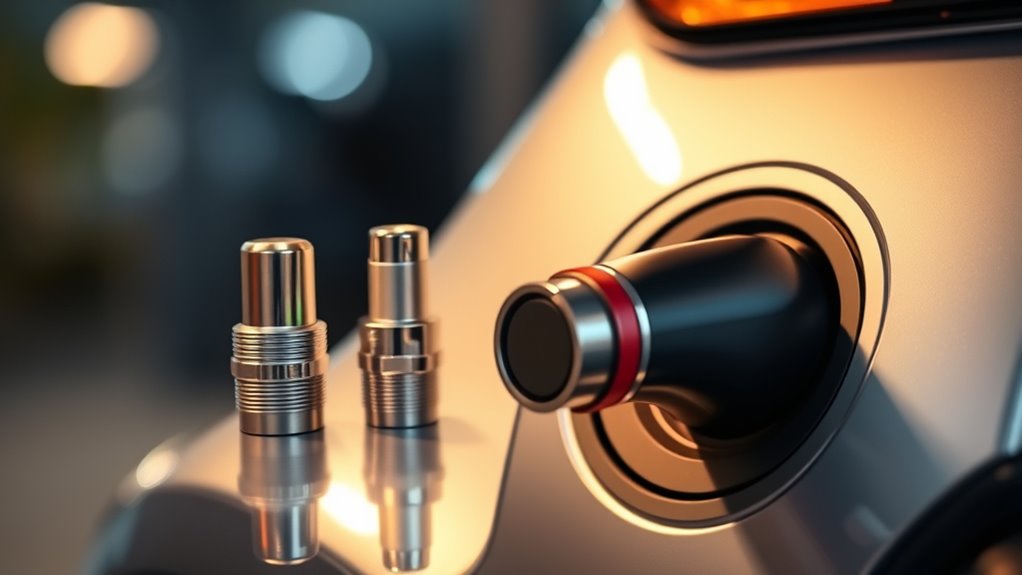
A connector is the plug that physically connects the charger to your car. In North America, these are the main connector names to know.
- J1772: A common AC connector for Level 1 and Level 2 charging on many non-Tesla EVs and PHEVs.
- CCS: Combined Charging System. In North America, CCS adds two DC pins below the J1772-style shape for DC fast charging.
- CHAdeMO: A DC fast charging connector found on some vehicles, especially older Nissan Leaf models and some Japanese-market or legacy vehicles.
- J3400 / NACS: The connector based on Tesla’s North American Charging Standard. It supports AC and DC charging and is being adopted by several automakers for North American vehicles.
Pro Tip: Before using a public fast charger, check your vehicle’s charging port, the station connector, and whether an approved adapter is required. Do not rely only on the charger brand name.
Key Metrics for Understanding EV Charging
The most useful EV charging numbers are kW, kWh, state of charge, and range per hour. Once you understand these, station screens and charging apps make much more sense.
Charging Rate Explained
Charging rate is measured in kilowatts, or kW. A higher kW number means the charger can deliver energy faster, but your vehicle may not accept the charger’s full rating.
For example, plugging a car that can accept 150 kW into a 350 kW charger does not mean it will charge at 350 kW. The car’s battery system decides how much power it can safely accept at that moment.
Kilowatt-Hour Explained
A kilowatt-hour, or kWh, measures energy. EV battery capacity is usually listed in kWh. A larger battery can store more energy, but charging time also depends on charger power and vehicle efficiency.
You may also see efficiency listed as kWh per 100 miles or miles per kWh. A lower kWh-per-100-miles number usually means the vehicle uses less energy to travel the same distance.
State of Charge Importance
State of charge, or SOC, is your battery percentage. A battery at 20% SOC is low, while a battery at 80% SOC is mostly full.
SOC matters because charging is not equally fast from empty to full. Many EVs charge fastest when the battery is warm and somewhere in the lower-to-middle part of its charge range. Charging often slows as the battery gets closer to full.
Why DC Fast Charging Slows Down Near 80 Percent
Many drivers notice that DC fast charging is quick at first and slower near the end. That is normal. The vehicle’s battery management system reduces charging speed as the battery fills to help manage heat, voltage, and battery health.
For road trips, it is often faster to charge from a lower percentage to about 70% or 80%, then continue driving to the next charger, instead of waiting for a slow final push to 100%.
Note: The best daily charge limit depends on your vehicle, battery chemistry, software settings, and driving needs. Follow your owner’s manual or in-car charging recommendations.
Benefits of Smart Charging for Your EV
Smart charging uses software, schedules, utility signals, or app controls to decide when and how your EV charges. It can help you charge when electricity rates are lower, when renewable energy is more available, or when your home’s electrical load is lower.
Enhanced Energy Efficiency
Smart charging can reduce wasted energy by matching the charging session to your schedule. For example, you can plug in after work but delay charging until later at night if your utility offers off-peak rates.
Cost Savings Opportunities
Charging costs depend on your utility rate, time of use, public network pricing, battery size, and vehicle efficiency. Home charging is often lower-cost than public fast charging, especially when paired with off-peak residential rates, but the exact savings vary by region and plan.
Remote Monitoring Capabilities
Many EVs and smart chargers let you check charging status from an app. You may be able to start or stop a session, set a charging limit, schedule departure time, or receive alerts if charging stops unexpectedly.
How to Effectively Use Public Charging Stations
Public charging is easiest when you plan before you arrive. The Alternative Fueling Station Locator, your vehicle’s navigation system, and charging-network apps can help you find stations, check connector types, and review availability.
- Check the connector: Make sure the station has a connector your vehicle can use.
- Check the speed: Choose Level 2 for longer parking stops and DC fast charging for road trips.
- Check access: Some chargers require an app, RFID card, credit card, account, or vehicle plug-and-charge setup.
- Check pricing: Public charging may be billed by kWh, by minute, by session, by membership plan, or with idle fees after charging ends.
- Park correctly: Do not block the charger after your session is complete.
- Have a backup: On road trips, choose a second nearby charger in case the first one is busy, blocked, or offline.
Warning: Never force a connector or use an unapproved adapter. High-power charging equipment should only be used with connectors and adapters approved for your vehicle and the charging network.
Advantages of Home Charging for Electric Vehicles
Home charging is one of the biggest convenience benefits of owning a plug-in vehicle. Most drivers who can charge at home plug in overnight and start the next day with the range they need.
Level 1 charging may be enough if you drive short distances or own a PHEV. Level 2 home charging is faster and is often the better fit for long commutes, larger batteries, or multiple EVs in one household.
The AFDC home charging guide recommends using safety-certified equipment and a qualified electrical contractor for installation. Local permits, panel capacity, circuit size, outdoor rating, and code compliance all matter.
Warning: Do not install a Level 2 charger on guesswork. Have a qualified electrician confirm panel capacity, circuit size, grounding, breaker requirements, permits, and outdoor rating if the charger will be exposed to weather.
How to Estimate EV Charging Cost
To estimate charging cost, you need three numbers: the price of electricity, the energy added, and your vehicle’s efficiency.
For a simple estimate, multiply the number of kWh added by your electricity price per kWh. For example, adding 40 kWh at $0.15 per kWh costs about $6.00 before taxes, fees, or charging-network charges.
To estimate driving cost, divide your electricity cost by the miles that energy adds. If your vehicle uses 30 kWh per 100 miles and electricity costs $0.15 per kWh, the energy cost is about $4.50 per 100 miles.
Common EV Charging Mistakes to Avoid
- Confusing kW and kWh: kW is speed; kWh is energy.
- Assuming every fast charger fits every EV: Connector type and network access matter.
- Waiting for 100% on a road trip: The last part of charging is often slower.
- Ignoring temperature: Very cold or hot batteries may charge more slowly.
- Using the wrong adapter: Only use approved adapters rated for your vehicle and charger.
- Skipping home electrical checks: Level 2 charging should be installed according to code.
Frequently Asked Questions
What is the 80/20 rule for EV charging?
The 80/20 rule is a common habit of keeping the battery roughly between 20% and 80% for routine driving when your vehicle allows it. It is not a universal law. Charge higher when you need the range, and follow your owner’s manual or in-car battery settings.
What EV charger does Volvo recommend?
Volvo owners should use charging equipment that matches their specific model, market, and connector. For home charging, that usually means a compatible Level 2 unit installed by a qualified electrician. For public charging, check whether your Volvo uses J1772/CCS, J3400/NACS, or an approved adapter.
What drains an EV battery the most?
High speed, hard acceleration, cold weather, cabin heat, air conditioning, hills, towing, heavy cargo, low tire pressure, and roof racks can all reduce range. Smooth driving, proper tire pressure, preconditioning while plugged in, and using seat heaters when practical can help.
What are the major parts of an EV charging system?
The main parts are the electrical supply, charging equipment or EVSE, connector and vehicle charge port, onboard charger for AC charging, battery management system, and high-voltage battery. DC fast charging uses power conversion inside the charging station and sends DC power directly to the battery.
Can any EV use any charging station?
No. The charger must match your vehicle’s connector, charging capability, network access, and adapter requirements. Some stations also require a specific app, account, payment method, or plug-and-charge setup.
Is DC fast charging bad for an EV battery?
Occasional DC fast charging is normal for many EVs, especially on road trips. Frequent high-power charging, extreme heat, or repeatedly charging to 100% and leaving the battery full may increase wear on some batteries. Follow your vehicle’s battery-care guidance.
Conclusion
EV charging terminology is much easier once you separate the basics: vehicle type, charging level, connector, power, energy, and battery percentage. Use Level 1 or Level 2 for routine charging when it fits your schedule, use DC fast charging when you need speed, and always confirm connector compatibility before relying on a public station. With the right terms in mind, you can charge with less guesswork and more confidence.
Sources
- Alternative Fuels Data Center: Electric Vehicles — backs up BEV, PHEV, HEV definitions and typical ranges.
- Alternative Fuels Data Center: Electric Vehicle Charging Stations — backs up charging levels, connector types, station/port/connector terminology, and DC fast charging ranges.
- Alternative Fuels Data Center: Charging Electric Vehicles at Home — backs up home charging, Level 2 installation, safety-certified equipment, and code considerations.
- Alternative Fuels Data Center: Charging Electric Vehicles in Public — backs up public charging station use and planning.
- Alternative Fueling Station Locator — official tool for finding public and private charging stations in the United States and Canada.
- ENERGY STAR Certified EV Chargers Product Finder — backs up the recommendation to choose safety-tested, certified charging equipment.