
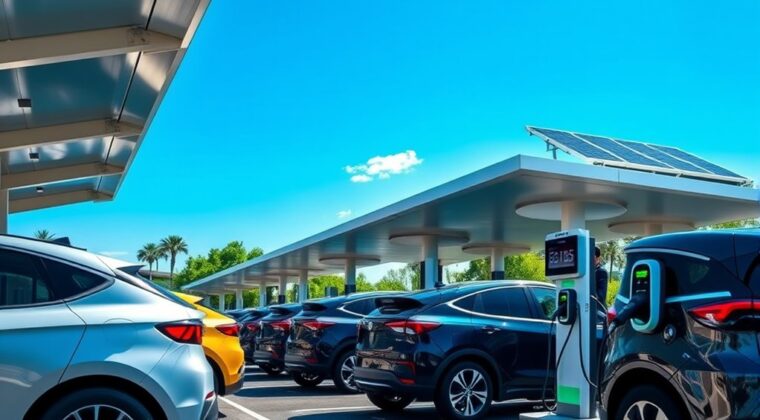
EV charging load balancing helps several chargers share the same electrical capacity without overloading a panel, building service, transformer, or utility connection. It is most useful when two or more EVs charge at the same home, apartment garage, workplace, fleet depot, or public site where the available power is limited.
Quick Answer
EV charging load balancing controls how much power each charger can use so the total charging load stays within a safe site limit. It can share power between vehicles, prevent breaker trips, reduce expensive electrical upgrades, and support lower-cost charging when paired with scheduling, utility rates, or demand-response programs.
Key Takeaways
- Load balancing does not create more power. It shares the available power more intelligently.
- Static load balancing uses a fixed limit, while dynamic load balancing adjusts power based on real-time site demand.
- It is most useful for homes with limited panel capacity, two-EV households, multifamily parking, workplaces, fleets, and public charging sites.
- It can help avoid breaker trips and service overloads, but it is not a replacement for safe wiring, permits, or a proper electrical load calculation.
- Smart chargers, open protocols, utility-rate support, and clear reporting make load balancing easier to manage as charging demand grows.
What Is Load Balancing in EV Charging?
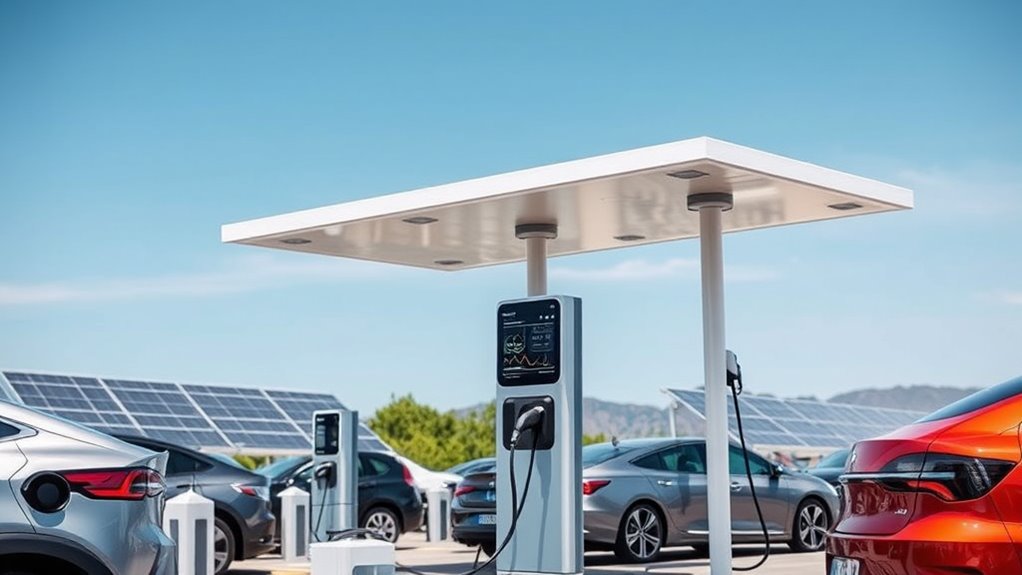
Load balancing in EV charging is a way to control how much power one or more chargers draw at the same time. Instead of letting every charger pull its maximum amperage whenever a car plugs in, the system keeps the total charging load under a set limit.
For example, a site may have four Level 2 chargers but only enough spare capacity for two chargers running at full power. Load balancing can divide the available power across all plugged-in vehicles, raise power when fewer cars are charging, and lower power when the building is using more electricity elsewhere.
This matters because EV charging can be a large continuous electrical load. The U.S. Department of Energy’s Alternative Fuels Data Center explains that EV charging installations must follow local and state codes, and NEC Article 625 covers much of the information related to charging equipment.
How EV Charging Load Balancing Works
Most load balancing systems use a charger, a controller, software, or a separate energy meter to decide how much current each vehicle can receive. The system may consider the site limit, the number of vehicles plugged in, each vehicle’s charging need, time-of-use rates, and the building’s other electrical loads.
Static Load Balancing
Static load balancing uses a fixed power limit. If a parking area has a 100-amp limit for EV charging, the chargers share that 100 amps no matter what the rest of the building is doing. This is simple and predictable, but it may waste available capacity when the building load is low.
Dynamic Load Balancing
Dynamic load balancing adjusts in real time. It can use current transformers, a meter, or a building energy management system to monitor the electrical service. If the building is using less power, chargers may speed up. If the building load rises, chargers slow down so the total load stays within the safe limit.
Smart Charging vs Load Balancing
Smart charging is a broader term. It can include scheduling, app control, utility demand response, pricing rules, energy monitoring, and load balancing. Load balancing is the part that controls power sharing so chargers do not exceed the site limit.
Note: Load balancing may slow one vehicle’s charging session when several cars plug in at once. That is usually the point: each vehicle gets safe, managed power instead of allowing the site to exceed its electrical capacity.
Benefits of Load Balancing for Electric Vehicle Owners
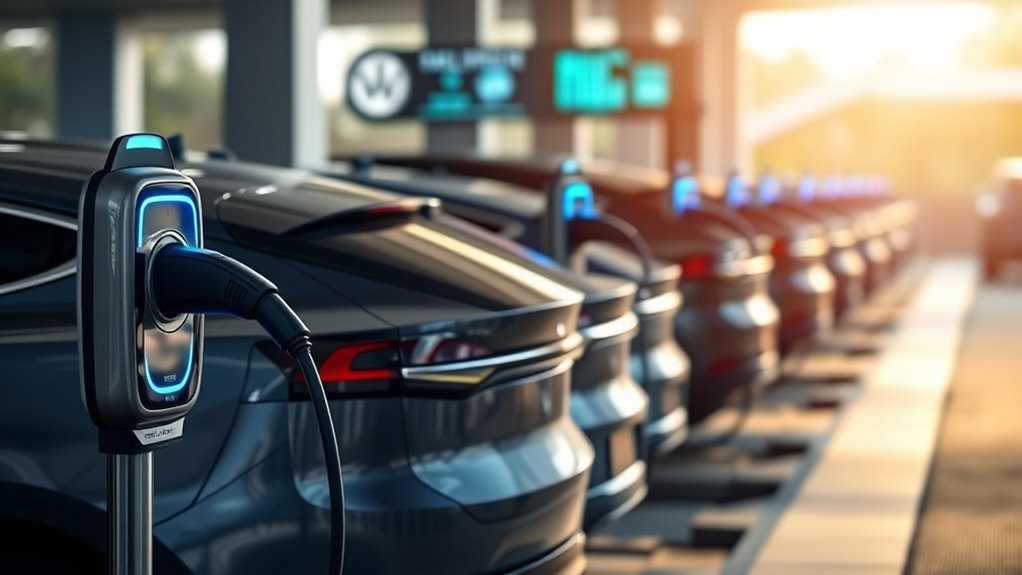
Efficient load balancing can make EV charging easier for owners, property managers, and charging-site operators. The biggest benefit is safe sharing of available power. Instead of paying for a larger service upgrade right away, a site may be able to install more charging ports and let software manage the available capacity.
Here is a practical breakdown:
| Benefit | What It Means | Why It Helps |
|---|---|---|
| More usable charging ports | Several chargers can share one site capacity limit. | Useful for apartments, workplaces, and two-EV households. |
| Overload prevention | The system limits total charging current. | Helps prevent breaker trips and service-capacity problems. |
| Lower upgrade pressure | Charging is managed within existing limits when safe and code-compliant. | May delay or reduce the need for costly electrical upgrades. |
| Cost control | Charging can be scheduled or limited during expensive periods. | Best when paired with time-of-use rates, demand-charge control, or utility programs. |
| Better user experience | More drivers can plug in at once. | Drivers may charge more slowly at peak times, but they are less likely to find no available plug. |
The cost savings are not automatic. They depend on your utility rate, charger settings, available electrical capacity, and charging schedule. ENERGY STAR notes that some smart EV chargers can support remote power monitoring, charging-state control, and utility programs such as demand response or price response.
Do You Need Load Balancing at Home?
You may not need load balancing if you have one properly installed EV charger on a dedicated circuit and your electrical panel has enough capacity. In that case, a standard code-compliant Level 2 installation may be enough.
Load balancing becomes more useful at home when:
- You have two EVs and want both vehicles plugged in overnight.
- Your electrical panel has limited spare capacity.
- You want to avoid a costly service upgrade if a safe managed-load setup is allowed in your area.
- Your charger can use a power meter or current clamps to monitor whole-home electrical demand.
- You want charging to slow automatically when large loads, such as HVAC, an electric dryer, or an electric water heater, are running.
Warning: Do not use load balancing to cover up unsafe wiring, an undersized circuit, or an overloaded panel. Have a licensed electrician confirm your service capacity, circuit rating, permits, and local code requirements before installing or expanding EV charging.
Load Balancing for Apartments, Workplaces, and Fleets
Multifamily buildings, workplaces, and fleets often benefit the most from EV charging load balancing because they need many charging spaces but may have limited electrical capacity. A parking garage may have dozens of EV drivers, while a fleet depot may need vehicles ready by morning without creating a sharp overnight demand spike.
In these settings, load balancing can:
- Prioritize vehicles that need to leave first.
- Set different charging rules for residents, employees, visitors, and fleet vehicles.
- Track energy use by driver, charger, or parking space.
- Limit demand peaks that can increase commercial electricity bills.
- Coordinate charging with solar, battery storage, or building energy management systems.
For public and commercial charging, the stakes can be higher. The Alternative Fuels Data Center notes that AC Level 2 charging is common at home, public, and workplace sites, while DC fast charging can deliver much higher power. A single DC fast charger can place a much larger load on a site than a home Level 2 unit, so planning, utility coordination, and energy management matter more as power levels rise.
NREL modeled a 2030 U.S. charging network sized to support 30 to 42 million plug-in electric vehicles, with a mid-adoption scenario of 33 million vehicles and 28 million charging ports.
Essential Features of Effective EV Charging Load Balancing Software
Good EV charging load balancing software should be easy to monitor, flexible enough for your site, and compatible with the chargers you plan to use. For a single home charger, the main feature may be whole-home current monitoring. For a commercial site, you may need network controls, reporting, pricing, driver access, and utility-program integration.
Look for these features:
- Dynamic load management: The system can adjust charging based on real-time building demand.
- Per-charger limits: You can set maximum current for each charger, group, or parking area.
- Minimum charging current rules: The system avoids dropping below the level needed for reliable vehicle charging.
- Scheduling: Charging can shift to lower-cost or lower-demand periods when practical.
- Open protocol support: Commercial sites should consider systems that support open standards such as Open Charge Point Protocol (OCPP) to reduce vendor lock-in.
- Reporting: Owners and operators can see energy use, charger status, user activity, and billing data.
- Alerts: The system can flag offline chargers, overloaded circuits, communication failures, or abnormal charging patterns.
- Utility compatibility: Some chargers can participate in demand response, time-of-use pricing, or other utility programs.
- Security updates: Networked chargers should support secure communication, access control, and firmware updates.
Pro Tip: For commercial sites, choose the charger hardware and the software platform together. A charger may support load balancing only with certain meters, gateways, cloud platforms, or network subscriptions.
Risks of Overloading Without Load Balancing
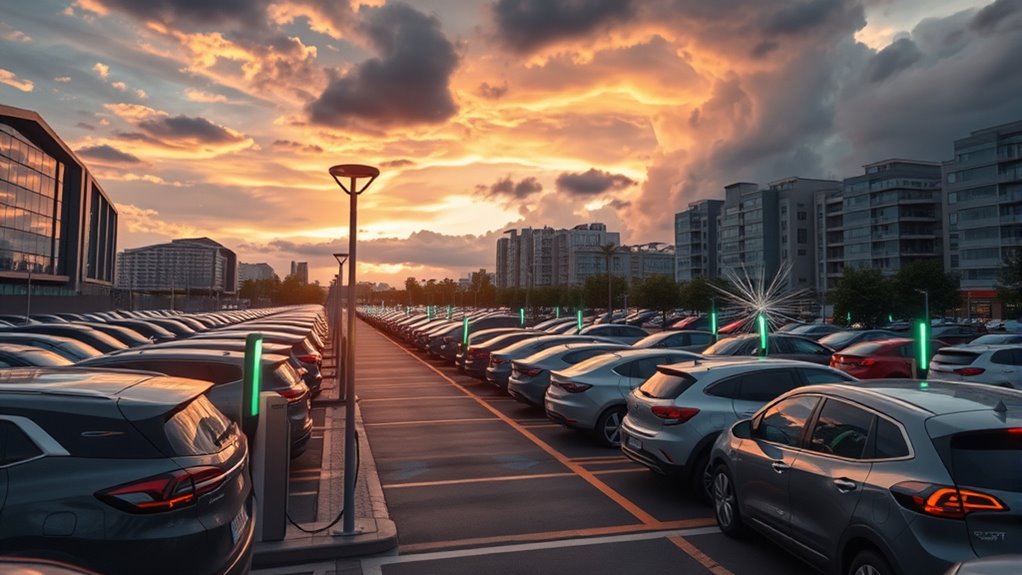
Without load balancing, multiple chargers can create more demand than the electrical system was designed to handle. This can lead to nuisance breaker trips, interrupted charging sessions, overheated equipment, failed inspections, or the need for a costly service upgrade.
For home charging, the risk is usually tied to panel capacity and circuit sizing. For commercial charging, the risk can include demand charges, transformer limits, switchgear limits, and utility interconnection delays.
Load balancing reduces these risks by keeping EV charging within a defined limit. It does not replace proper circuit design, listed equipment, grounding, overcurrent protection, permits, or inspection.
How EV Charging Load Balancing Supports Grid Stability
As EV adoption grows, unmanaged charging can add demand during already busy grid periods. Load balancing helps by spreading charging across vehicles, buildings, and time periods instead of creating sudden peaks.
At the grid level, smart charging and demand response can help utilities shift charging away from peak demand. At the site level, load balancing keeps a home, apartment building, workplace, or fleet depot within its local electrical capacity.
The International Energy Agency reported that more than 1.3 million public charging points were added globally in 2024, and that public charging infrastructure continues to expand as EV adoption grows. More charging ports mean more need for planning, local capacity management, and smart controls.
What Load Balancing Does Not Do
Load balancing is useful, but it has limits. It does not:
- Increase the size of your electrical service.
- Make unsafe wiring safe.
- Guarantee faster charging for every vehicle.
- Replace a permit, inspection, or electrical load calculation.
- Protect equipment from all power surges or utility faults.
- Work during a network outage unless the system has local fallback controls.
Think of it as a traffic controller for electricity. It directs charging power more safely and efficiently, but it still has to work within the road width you actually have.
Load Balancing vs Failover
Load balancing and failover solve different problems. Load balancing manages power across chargers during normal operation. Failover keeps a system running when part of it fails, such as a server, network connection, gateway, or charger controller.
For EV charging, load balancing helps prevent overloads. Failover helps maintain uptime. A strong commercial charging setup may need both, especially when drivers depend on the site every day.
What’s Next for EV Charging Load Balancing?
The next stage of EV charging load balancing will likely combine more real-time data, better utility coordination, open communication standards, battery storage, solar, and bidirectional charging.
Vehicle-to-grid, often called V2G, may eventually let compatible EVs send energy back to a building or grid. That could turn EVs into flexible energy resources, not just loads. But V2G still depends on compatible vehicles, bidirectional chargers, interconnection rules, utility programs, and customer participation.
Artificial intelligence and machine learning may also help larger charging networks forecast demand, detect faults, and schedule charging around energy prices. For most owners today, though, the practical priority is simpler: choose safe equipment, verify capacity, use smart scheduling, and add load balancing when multiple chargers need to share limited power.
Frequently Asked Questions
Do I need load balancing on my EV charger?
You may need load balancing if you have more than one EV charger, limited panel capacity, a multifamily building, a workplace charging site, or a fleet depot. If you have one properly installed charger on a dedicated circuit with enough capacity, you may not need it.
What is load balancing in simple terms?
Load balancing shares available electrical power between chargers. When fewer cars are charging, each car may get more power. When more cars plug in, each one may get less power so the total load stays within a safe limit.
Which is better, load balancing or failover?
Neither is better because they do different jobs. Load balancing controls charging power so the site does not exceed its electrical limit. Failover keeps a system running when a device, server, or network connection fails. Larger charging sites may need both.
Which EV chargers have load balancing?
Many networked Level 2 commercial chargers, some residential smart chargers, and some fleet charging systems offer load balancing. Look for terms such as dynamic load management, power sharing, circuit sharing, whole-home energy monitoring, CT clamp monitoring, OCPP support, or demand-response compatibility.
Does load balancing make charging faster?
Not always. It can make charging access better because more vehicles can plug in, but each vehicle may charge more slowly when the site is busy. Charging may speed up again when other vehicles unplug or the building load drops.
Can load balancing avoid an electrical panel upgrade?
Sometimes, but not always. Load balancing can help use existing capacity more efficiently, but an electrician still needs to confirm whether your panel, service, wiring, and local code allow the planned charger setup.
Conclusion
EV charging load balancing is one of the most practical ways to add charging capacity without letting EVs overwhelm a home, building, parking garage, or fleet site. It shares available power, helps prevent overloads, and can support better cost control when paired with smart scheduling or utility programs.
The key is to treat load balancing as part of a safe electrical plan, not as a shortcut. Start with a proper load calculation, choose compatible smart charging equipment, follow local code, and use a licensed electrician for installation. As EV adoption grows, managed charging will become increasingly important for both driver convenience and grid reliability.
Sources
- National Renewable Energy Laboratory, The 2030 National Charging Network — supports 2030 U.S. plug-in EV and charging-port projections.
- U.S. Department of Energy Alternative Fuels Data Center, Charging Electric Vehicles at Home — supports home charging, electrical capacity, electrician, permit, and NEC Article 625 guidance.
- U.S. Department of Energy Alternative Fuels Data Center, Electric Vehicle Charging Stations — supports Level 2 and DC fast charging context.
- ENERGY STAR, Electric Vehicle Chargers — supports smart charger, energy monitoring, safety certification, and demand-response guidance.
- International Energy Agency, Global EV Outlook 2025: Electric Vehicle Charging — supports global charging growth, U.S. public charging context, and V2G/grid-flexibility updates.
- Open Charge Alliance, Open Charge Point Protocol — supports OCPP interoperability guidance for networked charging sites.
