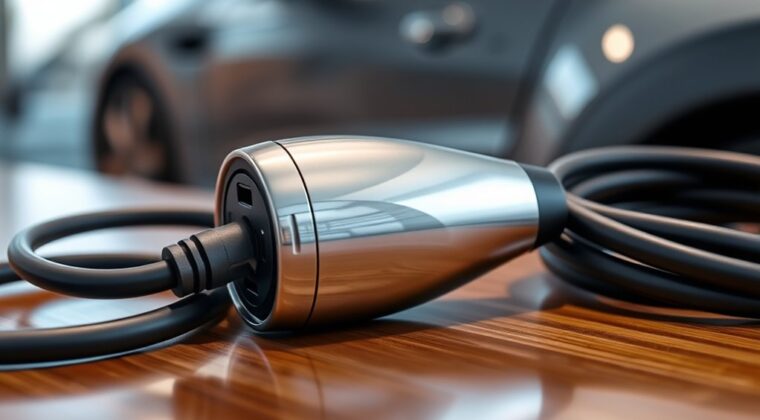
A Tesla Mobile Connector is a portable EV charging cord set that lets you charge from a compatible grounded outlet when a hardwired home charger or public charging station is not available. It is most useful for travel, backup charging, rental homes, second homes, and drivers who only need low-to-medium charging speeds.
In North America, the current Tesla Mobile Connector is a portable charging solution for vehicles that use the North American Charging Standard (NACS), including most Tesla vehicles except the original Roadster. It can use a standard 120V household outlet for slow charging or a compatible 240V outlet for much faster Level 2 charging.
Quick Answer
A Tesla Mobile Connector is a portable charging cable that plugs into a compatible wall outlet and your vehicle’s charge port. It can add a few miles of range per hour from a 120V household outlet or much more from a 240V outlet with the correct adapter.
Key Takeaways
- The Mobile Connector is best for travel, backup charging, and occasional home charging from a compatible outlet.
- A 120V household outlet is slow. A 240V outlet, such as a NEMA 14-50, is far faster when properly installed.
- Use only the adapter that matches the outlet. Do not use extension cords, power strips, loose outlets, or damaged equipment.
- For daily home charging, Tesla still recommends a Wall Connector because it is faster, cleaner, and better suited to regular use.
At a Glance
| Time Required | About 2 to 5 minutes to connect if the outlet is ready and compatible. |
| Difficulty | Easy for an existing compatible outlet. Professional electrical work may be needed for a new 240V outlet. |
| Tools Needed | Tesla Mobile Connector, matching outlet adapter, compatible grounded outlet, and your vehicle key or app access. |
| Cost | The connector price and availability can change. A new 240V circuit or outlet is a separate electrician cost. |
Warning: Do not plug a Mobile Connector into a damaged, loose, ungrounded, wet, or wrong-type outlet. Do not use extension cords, power strips, multi-outlet adapters, conversion plugs, or private generators. If you are unsure about a 240V outlet, have a licensed electrician inspect it first.
What Is a Mobile Connector for EV Charging?
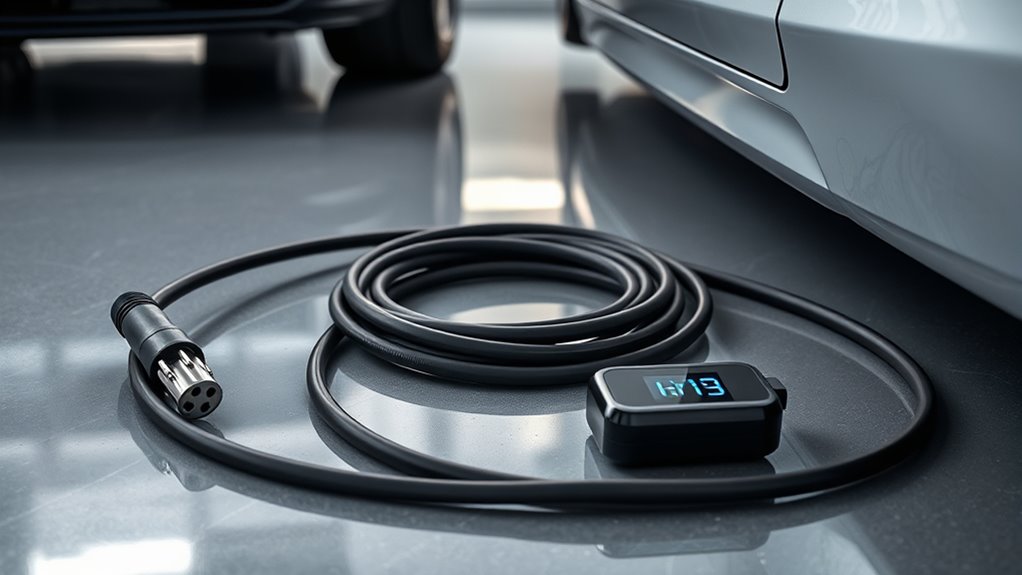
A Mobile Connector is a portable electric vehicle supply equipment unit, often called portable EVSE. It does not create electricity or speed up the outlet by itself. Instead, it safely connects your vehicle to an AC power source and tells the vehicle how much current is available.
The vehicle’s onboard charger then converts that AC power into DC power for the battery. That is different from DC fast charging, where a station sends DC power directly to the battery at much higher power levels.
The current North American Tesla Mobile Connector is meant for low-to-medium charging speeds when you are away from home, on an extended trip, or using an outlet instead of a dedicated wall charger. For regular home charging, Tesla recommends a Wall Connector.
How Does a Tesla Mobile Connector Work?
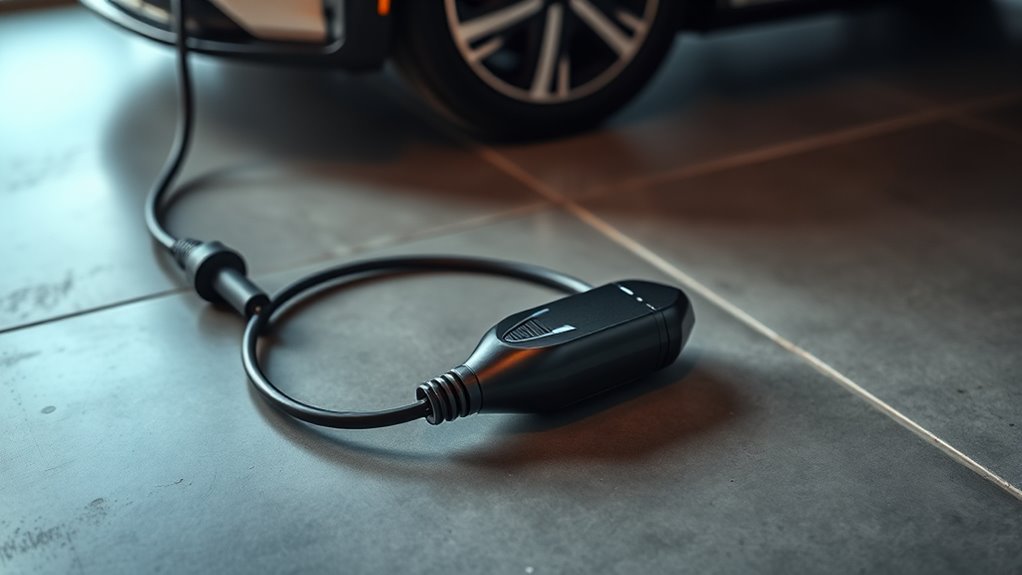
The Tesla Mobile Connector has three main parts: the vehicle connector handle, the controller box, and the outlet adapter. You attach the adapter that matches the outlet, plug the adapter into the wall, then plug the handle into the vehicle.
According to the Tesla Gen 3 Mobile Connector Owner’s Manual, the connector automatically detects the attached adapter and sets the appropriate current draw. This helps prevent the vehicle from pulling more current than the adapter and outlet are designed to provide.
The Mobile Connector supports 100-240V AC single-phase power and up to 32A maximum current, controlled by the adapter. Its cable length is about 20 feet with the adapter installed.
Pro Tip: Before a trip, pack the Mobile Connector, storage bag, and any adapter you are likely to need. The connector is only helpful if the outlet type and adapter match.
Charging Speeds: 120V vs. 240V
Charging speed depends on outlet voltage, breaker size, adapter type, vehicle model, battery temperature, and the vehicle’s onboard charger. A normal household outlet is convenient, but slow. A 240V outlet can add range much faster.
| Outlet / Adapter | Typical Use | What to Expect |
| NEMA 5-15, 120V household outlet | Backup or overnight top-ups | Slow Level 1 charging, often only a few miles of range per hour. |
| NEMA 14-50, 240V / 50A breaker | Faster home or travel charging | Up to 32A and about 23 to 30 miles of range per hour, depending on model. |
| NEMA 6-50, 240V / 50A breaker | Optional 240V setup | Similar maximum output to NEMA 14-50 when supported by the correct Tesla adapter. |
| NEMA 14-30 or 10-30 | Common dryer-style outlets | Lower current than 14-50. Use only the correct matching adapter. |
For broader context, the U.S. Department of Energy’s Alternative Fuels Data Center explains that Level 1 charging uses 120V AC, while Level 2 charging uses 240V in typical residential settings or 208V in many commercial settings. DC fast charging is a different category and is not what a Mobile Connector provides.
How to Use a Tesla Mobile Connector Safely
- Inspect the outlet and connector. Do not use the equipment if the outlet is loose, scorched, cracked, wet, ungrounded, or damaged.
- Match the adapter to the outlet. Never force an adapter into an outlet and never use a conversion plug.
- Plug the adapter fully into the wall outlet. A partially seated plug can create heat.
- Open the vehicle charge port. On many Tesla vehicles, you can press the button on the Mobile Connector handle while the vehicle is unlocked and in Park.
- Plug the handle into the charge port. Confirm that the vehicle begins charging and check the vehicle screen or app for current and estimated time remaining.
- Watch for reduced current or warning lights. If the connector reduces current or shows an error, stop and inspect the outlet, adapter, and location.
- Unplug from the vehicle first when finished. Unlock the vehicle, press and hold the handle button, wait for the latch to release, then remove the handle.
What Makes Tesla’s Mobile Connector Stand Out?
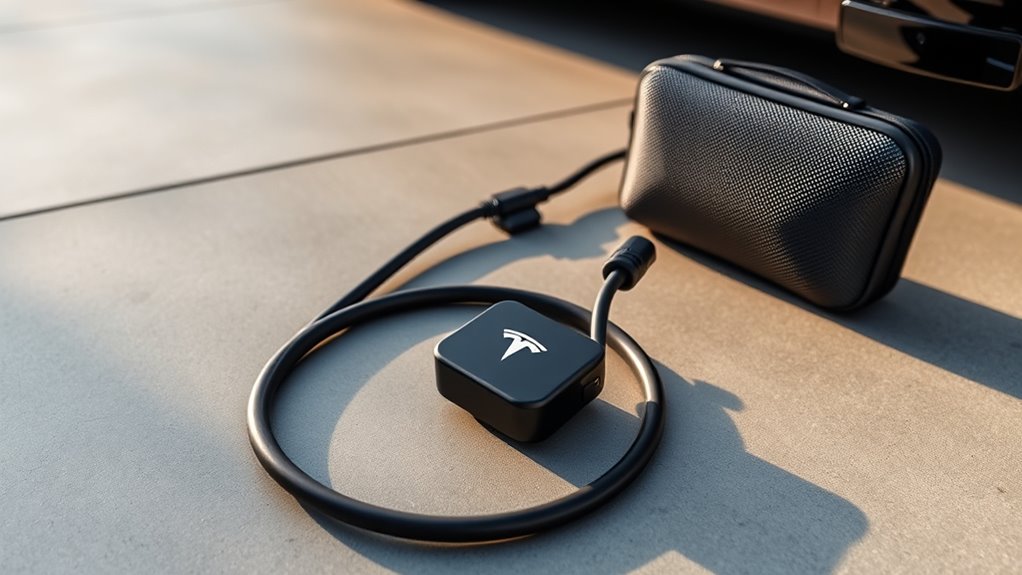
Tesla’s Mobile Connector stands out because it is compact, portable, and adapter-based. You can keep it in the car and use it where a compatible outlet is available. That makes it helpful for road trips, cabins, relatives’ homes, RV-style outlet locations where permitted, and backup charging during unexpected schedule changes.
It also has built-in protections that monitor conditions and reduce or stop charging when something is wrong. Tesla’s manual describes fault states for high temperature, adapter faults, ground faults, and loss of ground. These protections are valuable, but they do not make a bad outlet safe.
Note: A Mobile Connector is not a substitute for safe wiring. If a plug feels hot, the outlet looks worn, the breaker trips, or charging current keeps dropping, stop using that outlet and ask an electrician to inspect it.
Available Adapters for Your Tesla Mobile Connector
The current U.S. Tesla Mobile Connector bundle includes the Mobile Connector with a 20-foot cable, a NEMA 5-15 adapter for standard 120V household outlets, a NEMA 14-50 adapter for compatible 240V outlets, and a storage bag.
Tesla also offers optional adapters for other outlet types in some markets. Common North American examples include NEMA 6-50, 14-30, 10-30, 6-20, and 6-15. Availability can change, so check Tesla’s adapter page for your region before relying on a specific outlet during travel.
International adapters, such as Schuko, Type G, or Type L, are region-specific. Do not assume an adapter sold in one country is correct for another country, outlet, voltage, or local code requirement.
Benefits of Using a Mobile Connector for Charging
Convenience and Flexibility
The biggest benefit is flexibility. You can charge from a standard household outlet when speed is not urgent, or from a compatible 240V outlet when you need more range overnight. This is especially useful if you travel to places without a dedicated EV charger.
Safe Charging Features
The Mobile Connector can manage current through the attached adapter and respond to certain fault conditions. It is designed to detect the adapter and set the proper current limit, which reduces the risk of overloading the adapter itself.
| Feature | Why It Matters |
| Adapter detection | Helps set the right current limit for the attached adapter. |
| Ground-fault protection | Can stop charging when current leaks through an unsafe path. |
| Temperature-related current reduction | Can reduce charging current if heat is detected at the connector, controller, wall plug, or adapter. |
| Portable storage bag | Keeps the cord and adapters together for travel or backup use. |
Compatibility With Various Outlets
The Mobile Connector can work with different outlet types only when you have the correct Tesla adapter and the outlet is safe, grounded, and properly wired. It should never be adapted through a chain of plugs, cords, or power strips.
Troubleshooting Mobile Connector Problems
If charging does not start or slows unexpectedly, check the simple causes first. Many issues come from a hot outlet, a loose plug, a mismatched adapter, or a circuit that is not suitable for continuous EV charging.
| Problem | Likely Cause | What to Do |
| Charging current drops | Heat at the wall plug, adapter, controller, or vehicle connector | Stop, let parts cool, reseat the plug, try a different outlet, or call an electrician. |
| Ground-fault error | Unsafe leakage path or electrical fault | Unplug from the vehicle, try a different suitable outlet, and seek service if it returns. |
| Ground-loss warning | Outlet may not be properly grounded | Do not keep charging. Use another outlet and have the first outlet inspected. |
| Adapter fault | Adapter not seated, damaged, or incompatible | Remove and reattach the adapter. Do not use damaged parts. |
Mobile Connector vs Wall Connector vs Supercharger
These charging options serve different jobs. The Mobile Connector is portable and flexible, but it is not the fastest or cleanest daily home setup.
- Mobile Connector: Best for travel, backup charging, occasional home use, and outlets you already have.
- Wall Connector: Best for daily home charging because it is mounted, tidier, and can support higher charging speeds when installed on a suitable circuit.
- Supercharger: Best for road-trip fast charging. It is a DC fast-charging station, not a wall outlet setup.
For most Tesla owners, the Mobile Connector is a smart backup. For daily charging at home, a properly installed Wall Connector is usually the better long-term choice.
Choosing the Right Charging Solution
Choose a Mobile Connector if you want a portable cable for travel, emergency charging, or occasional use from a compatible outlet. It is also a practical option if you drive short distances and can recover enough range from a 120V outlet overnight.
Choose a 240V outlet with the proper adapter if you need faster overnight charging but still want portability. For a new 240V outlet, use a licensed electrician and follow local electrical code.
Choose a Wall Connector if you charge at home every day, park in the same spot, want a cleaner cable setup, or need faster home charging than a Mobile Connector can provide.
Compatibility With Other Electric Vehicles
In North America, the Tesla Mobile Connector uses the NACS vehicle connector. That means it is not a universal plug for every EV. A non-Tesla EV needs the correct charge port, an approved adapter if required, and manufacturer support for that charging setup.
If you drive a non-Tesla EV, check your owner’s manual and automaker guidance before using any adapter. Some automakers are moving toward NACS, but compatibility depends on model year, region, charging type, and approved hardware.
Frequently Asked Questions
How much does it cost to install a Tesla Mobile Connector?
The Mobile Connector itself does not need installation if you already have a compatible grounded outlet. If you want a new 240V outlet, the cost depends on your panel capacity, wire run, permit rules, outlet type, and electrician rates. Check the Tesla Shop for the current connector price and ask a licensed electrician for the circuit cost.
How fast does a Mobile Connector charge a Tesla?
With a standard 120V outlet, expect slow charging, usually only a few miles of range per hour. With a compatible 240V NEMA 14-50 outlet, Tesla lists up to 32A output and roughly 23 to 30 miles of range per hour, depending on the vehicle model.
Is a Tesla Mobile Connector the same as a Wall Connector?
No. A Mobile Connector is portable and plugs into compatible outlets with adapters. A Wall Connector is mounted to the wall and is the better daily home charging setup for many Tesla owners.
Can I use an extension cord with a Tesla Mobile Connector?
No. Tesla warns not to use extension cords, power strips, multi-outlet adapters, multi-plugs, or conversion plugs with the Mobile Connector. Plug it directly into the correct outlet with the correct Tesla adapter.
Can I leave the Mobile Connector plugged into the wall?
Tesla says leaving it plugged into the wall can reduce wear from daily plugging and unplugging. If you will not use it for a while, unplug it and store it in a clean, dry place.
What kind of charger does the Hyundai Kona Electric use?
A Hyundai Kona Electric is not normally charged with a Tesla Mobile Connector unless Hyundai, Tesla, and the hardware setup support it for your exact model year and region. Many non-Tesla EVs use J1772 for AC charging and CCS for DC fast charging, while newer models and adapters are shifting toward NACS. Check your Hyundai owner’s manual and use only manufacturer-approved adapters.
Does the Mobile Connector work at Tesla Superchargers?
No. Superchargers have their own charging cables and deliver DC fast charging. The Mobile Connector is for compatible AC outlets, such as a standard 120V outlet or a supported 240V outlet.
Conclusion
A Tesla Mobile Connector is one of the most useful charging accessories to keep in your vehicle, but it works best when you understand its limits. Use a 120V outlet for slow backup charging, a compatible 240V outlet for faster charging, and a Wall Connector when you want the best everyday home setup.
The safest approach is simple: match the adapter to the outlet, plug directly into a sound grounded receptacle, avoid extension cords and power strips, and stop charging if you see heat, repeated current drops, or error lights.
Sources
- Tesla Support: Mobile Connector — current bundle contents, household and 240V charge-rate guidance, and Wall Connector recommendation.
- Tesla Shop: Mobile Connector — current product listing, included adapters, cable length, storage bag, price, and availability details.
- Tesla Gen 3 Mobile Connector Owner’s Manual — safety warnings, operating limits, adapter detection, charging steps, specifications, and troubleshooting.
- U.S. Department of Energy Alternative Fuels Data Center: Electric Vehicle Charging Stations — Level 1, Level 2, DC fast charging definitions and public charging context.