
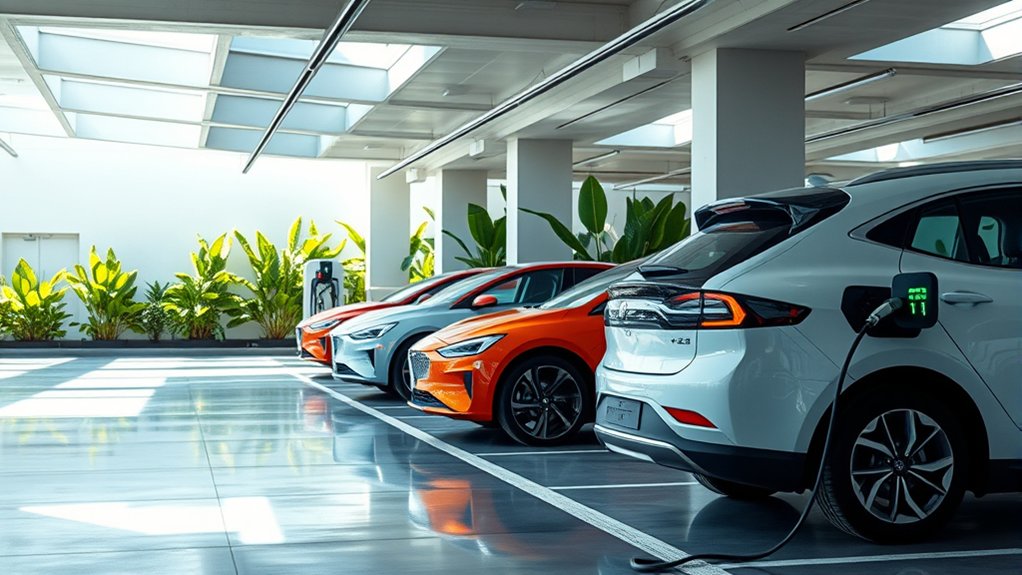
Parking an EV for a week, a month, or an entire season takes more planning than simply leaving it in a space and walking away. The goal is to keep the high-voltage battery away from very low or very high charge levels, reduce parked power drain, protect the tires, and make sure the car is ready when you return.
Quick Answer
For long-term EV parking, store the battery near the level your owner’s manual recommends, often around 50% for extended storage or within a safe 20%–80% range. Use Level 1 or Level 2 charging when allowed, turn off power-hungry parked features, keep the car cool, and set tires to the vehicle’s recommended cold pressure.
Key Takeaways
- Do not store an EV near 0% or 100% unless your owner’s manual gives a specific reason.
- For long stays, a controlled home Level 1 or Level 2 charger is usually better than relying on a public fast charger.
- Turn off unnecessary parked features, such as camera security modes, climate hold, and accessory power, if it is safe to do so.
- Use the tire pressure listed on the vehicle placard or owner’s manual, not the maximum PSI printed on the tire sidewall.
- Check the car before driving again, including battery level, tires, brakes, warning alerts, charge port, and visible damage.
At a Glance
| Time Required | 15–45 minutes before storage, plus a quick monthly check if the EV is parked for more than a few weeks |
| Difficulty | Easy, but you need to follow your vehicle’s owner’s manual |
| Tools Needed | Tire pressure gauge, EV charging cable or wall connector, mobile app access, tire cradles or jack stands for very long storage if recommended |
| Cost | Usually $0–$50 if you already have charging access; more if you add tire cradles, a breathable cover, or professional storage |
Why Battery Charge Levels Matter for Your EV
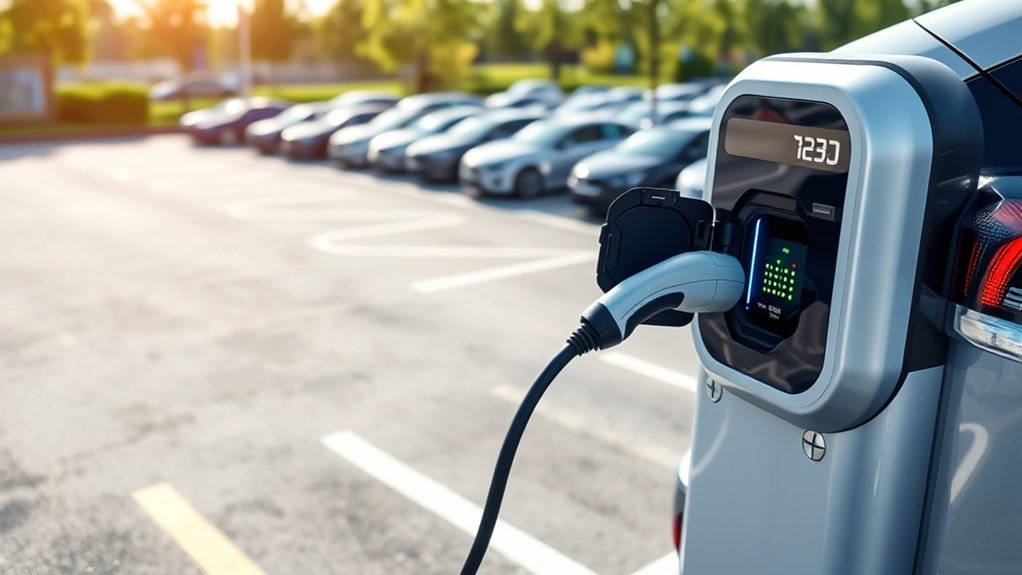
Your EV’s high-voltage battery ages over time, even when you are not driving. Heat, very high charge, very low charge, and parked electrical loads can all add stress. That is why long-term parking starts with the right state of charge, also called SOC.
For many EVs, a safe storage target is around 50% for a long stay, or at least within a practical 20%–80% range if you cannot set an exact storage limit. Tesla’s Model 3 owner’s manual, for example, says to leave the battery around 50% for long-term storage and keep the vehicle plugged in if possible. Other brands may use different wording, so check your own manual before setting the final limit.
Avoid leaving the car near 0% because the high-voltage pack may stop supporting low-voltage systems if the charge falls too far. Also avoid leaving it at or near 100% for long periods unless your manufacturer specifically recommends it for your battery type or calibration routine.
Note: Battery chemistry matters. Some LFP batteries tolerate regular 100% charging better than NMC or NCA packs, but that does not automatically mean 100% is best for months of storage. Follow the storage section in your owner’s manual.
A lower state of charge and lower cell temperature can help reduce calendar aging in lithium-ion batteries, which is why EV storage advice usually avoids both deep discharge and long-term full charge.
Best Charge Level by Storage Length
The right target depends on how long the EV will sit, whether it can stay plugged in, and how much parked power it uses. Use this table as a practical starting point, then follow your vehicle’s manual if it gives different instructions.
| Parking Time | Suggested Battery Plan | What to Check |
|---|---|---|
| Up to 1 week | Park with a normal daily charge level, often 50%–80%. | Turn off unnecessary climate or camera features if parked somewhere secure. |
| 2–6 weeks | Aim near 50%–70%, or use the storage limit your car allows. | Check SOC through the app every few weeks if the car is unplugged. |
| 2–6 months | Use the manufacturer’s long-term storage setting if available. Around 50% is common for storage. | Keep it plugged into Level 1 or Level 2 if allowed, with a charge limit set. |
| More than 6 months | Ask the dealer or read the storage section of the manual before leaving it unattended. | Plan tire support, 12V battery care, pest prevention, and periodic checks. |
How to Choose the Best Charging Station for Long-Term Parking
For long-term EV parking, the best charging setup is usually a safe home outlet, a hardwired Level 2 wall connector, or a managed storage facility that allows EV charging. The U.S. Department of Energy’s Alternative Fuels Data Center explains that Level 1 uses 120V service, while Level 2 uses 208V or 240V service and can usually charge a typical EV battery overnight.
Level 2 is helpful because it can maintain the battery without the high power of DC fast charging. Level 1 can also work for storage because the car only needs enough power to maintain the charge limit and support low background loads. DC fast charging is better saved for trips, not storage, unless you are only topping up before leaving the vehicle.
If you plan to park at an airport, apartment garage, workplace, or public charger, check the rules before you leave the car connected. Some stations charge idle fees, limit how long a vehicle can remain plugged in, or require active payment sessions that can stop after a set time.
- Check connector compatibility: Make sure the station fits your EV or that you have the correct adapter.
- Set a charge limit: Do not let the car sit at 100% unless your manual says to do so.
- Confirm the circuit is safe: Use listed EV charging equipment and avoid damaged outlets, extension cords, or loose plugs.
- Use app alerts: Turn on charging and battery notifications before leaving.
- Protect the cable: Keep the connector seated and avoid a setup where people can trip over the cord.
Pro Tip: If your EV lets you schedule charging, set the charge limit first, then schedule charging during cooler hours. This helps reduce heat around the battery and charging hardware.
Managing EV Temperature and Environmental Factors
Temperature is one of the biggest storage factors for EV battery health. The National Highway Traffic Safety Administration notes that extreme temperatures can affect EV battery performance and shorten battery lifespan. A shaded, covered, dry parking spot is better than leaving the car in direct sun or exposed to repeated freeze-thaw cycles.
Ideal Temperature Range
A moderate environment is best. A garage, shaded carport, or covered parking structure helps limit heat buildup and reduces weather exposure. If your owner’s manual gives a storage temperature range, follow it. Tesla, for example, warns against exposing a Model 3 to very high or very low ambient temperatures for more than 24 hours at a time for better long-term performance.
If the EV will stay plugged in, the battery management system can usually manage temperature more effectively than if the car is left unplugged. That does not mean the car should sit in extreme heat, but it does give the vehicle more energy to protect itself.
Weather Protection Strategies
Weather protection is not just about appearance. It helps reduce battery stress, tire aging, paint damage, and moisture problems. Use the lightest protection that fits your parking location.
| Strategy | Benefits | Tips |
|---|---|---|
| Park in shade | Reduces direct sunlight and cabin heat buildup. | Use a garage, carport, tree shade, or covered parking when safe. |
| Use a breathable cover | Protects paint from dust, sun, and light debris. | Avoid plastic tarps that trap moisture against the body. |
| Store indoors | Keeps temperature and moisture more stable. | Do not use an unsafe outlet or damaged charger just because the car is indoors. |
| Avoid flood-prone spaces | Reduces high-voltage and corrosion risk. | Move the EV before storms if the garage or lot floods. |
Warning: Do not park a flood-damaged EV in a garage or near structures. If the vehicle has been submerged or the high-voltage battery may be damaged, contact the manufacturer, dealer, or emergency services.
Monitoring Environmental Conditions
If your EV will sit outdoors, check the forecast before leaving it. Long heat waves, deep freezes, and severe storms change the storage plan. In hot weather, shade and a lower charge target can help. In freezing weather, leaving the car plugged in gives the battery management system more energy to protect the pack and support the low-voltage system.
Also remove food, trash, and scented items from the cabin. Rodents are more likely to explore a parked vehicle if it smells like food. If the vehicle will sit in a garage, keep the area clean and consider safe pest control around the space, not inside the car.
How to Reduce Vampire Drain While Storing Your EV
Vampire drain is the small amount of energy an EV uses while parked. Some drain is normal because the car may run system checks, listen for app commands, maintain the low-voltage battery, or manage temperature. The problem starts when optional features keep the vehicle awake for days or weeks.
Energy Conservation Tips
Before long-term parking, review the settings that use power while the car is parked. Tesla lists Sentry Mode, accessory power, climate features, preconditioning, Summon standby, and infotainment use as parked energy consumers in its Model 3 manual. Your EV may use different names, but the idea is the same.
- Turn off camera security mode where safe: Use it in public or high-risk areas, but disable it at a secure home garage if you need to save battery.
- Disable climate hold modes: Do not leave pet, camp, keep-climate-on, or cabin-overheat features running for storage unless you understand the battery cost.
- Remove accessories: Unplug dash cams, USB devices, coolers, and other add-ons that may keep circuits awake.
- Limit app wake-ups: Checking the app too often can wake some vehicles and increase standby use.
- Store the key away from the EV: A nearby key fob or phone key may keep some systems more alert.
Monitoring SOC Regularly
If the EV is unplugged, check the state of charge sooner than you think you need to. A monthly check is usually a safe rhythm, and every 4–6 weeks may be enough for vehicles with low standby drain. Check more often in cold weather, hot weather, or if security and connected features remain active.
If the charge falls near 20%, do not wait. Plug in the vehicle, move it to a charging location, or ask someone you trust to charge it. Letting the pack reach 0% can create low-voltage problems and may lead to towing or service.
Warning: Do not disconnect the 12V or low-voltage battery unless your owner’s manual gives a storage procedure. On many EVs, the low-voltage system controls locks, computers, contactors, and charging behavior.
Essential Tire Care for Extended Parking
Tires can develop temporary flat spots when a vehicle sits with the same part of the tread pressed against the ground. Heavy EVs can make this more noticeable, especially during long storage or cold weather.
Start with the correct cold tire pressure from the driver-door placard or owner’s manual. NHTSA TireWise says the proper pressure comes from the vehicle label or owner’s manual, not the number printed on the tire sidewall. Tesla gives similar guidance for Model 3 and says tire pressure should be checked cold with an accurate gauge.
- Set cold pressure correctly: Check after the car has been parked for at least three hours.
- Do not use sidewall max as normal pressure: That number is a tire limit, not the vehicle’s recommended setting.
- Move the vehicle occasionally: If possible, roll it a few feet every few weeks to change the tire contact patch.
- Use tire cradles for longer storage: Curved tire pads can spread the load and reduce flat-spot risk.
- Use jack stands only if approved: EV lift points and battery placement matter, so follow the manual or use a qualified shop.
- Inspect before driving: Look for cracks, bulges, punctures, low tread, or uneven wear.
Note: Some temporary flat-spot vibration can fade after a short drive as the tire warms, but a strong vibration, visible bulge, or sidewall damage needs professional inspection before highway driving.
Pre-Storage Checklist for Your EV
Before you leave the EV parked, take a few minutes to prevent avoidable problems. This is especially useful before a long trip, seasonal storage, military deployment, school break, or extended work travel.
- Set the charge limit: Use the storage level in your owner’s manual, often near 50% for long-term parking.
- Plug in if recommended: Use safe Level 1 or Level 2 charging with a proper charge limit.
- Install updates early: Do not start a major software update right before leaving unless the vehicle is secure and charged.
- Clean the cabin: Remove food, drinks, trash, and anything that can attract pests.
- Wash and dry the exterior: Dirt, salt, and bird droppings can damage paint during storage.
- Check washer fluid and wipers: Lift or protect wipers if your manual recommends it for storage.
- Check brake area: If the car was washed, drive briefly and brake gently to dry the rotors before parking.
- Set tire pressure cold: Use the placard pressure, then add storage aids if needed.
- Secure the charge port: Make sure the connector is fully seated and the cable is not strained.
- Turn on useful alerts: Enable battery, charging, and security notifications in the app.
Preparing Your EV for Use After Long-Term Storage
Before you drive again, treat the EV like a vehicle that has been sitting, not like one you drove yesterday. Start with a slow walkaround, then check the battery, tires, brakes, and warning messages.
| Task | What to Do |
|---|---|
| Battery Check | Confirm the SOC is high enough for your first drive and that charging works normally. |
| Tire Inspection | Check cold tire pressure, tread, sidewalls, and signs of flat spots or cracking. |
| Visual Inspection | Look under and around the vehicle for leaks, animal nesting, damaged cables, or debris. |
| Brake Check | Brake gently at low speed to clear light surface rust and confirm normal pedal feel. |
| System Check | Check lights, HVAC, wipers, cameras, charge-port door, warning alerts, and driver-assist sensors. |
| Short Test Drive | Drive locally first. Listen for vibration, scraping, tire thumping, or unusual fan and pump noises. |
If you see a high-voltage warning, charging fault, severe tire vibration, brake problem, or fluid leak, do not keep driving. Contact the manufacturer, dealer, roadside assistance, or a qualified EV technician.
Warning: Never open, remove, or service orange high-voltage cables, battery covers, or high-voltage components. EV high-voltage systems should be serviced only by trained technicians with proper equipment.
Frequently Asked Questions
Can you leave an EV parked without charging for a week?
Yes, you can usually leave an EV parked for a week without charging if the battery is comfortably above the low range, such as 40%–80%. Turn off unnecessary parked features if the car is in a secure location. If the battery is below 20%, charge it before leaving.
Should I leave my EV plugged in during long-term parking?
If your owner’s manual recommends it and you have a safe charger, yes. Set a charge limit first so the car maintains the right storage level instead of sitting full. If you cannot plug in, leave enough charge to cover standby drain until you return.
Can I leave my Tesla parked for 2 months?
Yes, but set it up first. Tesla recommends leaving the vehicle plugged in when not using it for several weeks and storing the battery around 50% for long periods when possible. Turn off high-drain parked features such as Sentry Mode if the car is in a safe place.
What is the EV 80/20 rule?
The EV 80/20 rule means keeping the battery between about 20% and 80% for routine use to reduce stress from very low and very high charge levels. For long-term storage, many owners aim closer to 50%, unless the manufacturer gives different guidance.
What EV features cause vampire drain while parked?
Common causes include camera security modes, remote app wake-ups, cabin temperature protection, climate hold, accessory power, dash cams, preconditioning, and standby features. Names vary by brand, so review your vehicle’s energy or security settings before storage.
Are EVs more likely to be stolen during long-term parking?
EV theft risk depends on location, model, keys, and security habits. Do not assume any EV is theft-proof. Park in a secure, well-lit area, keep phone keys and fobs away from the car, enable tracking features, and avoid leaving visible valuables inside.
Conclusion
Long-term EV parking is simple when you control the main stress points: battery charge, temperature, parked power use, tire pressure, and charging safety. Set the battery to the storage level your owner’s manual recommends, keep the vehicle plugged in when the manufacturer advises it, turn off features that cause avoidable drain, and protect the tires from sitting in one position too long. When you return, inspect the car before your first real drive so small storage issues do not become expensive repairs.
Sources
- Tesla Model 3 Owner’s Manual: High Voltage Battery Information — supports long-term storage charge, plugged-in guidance, vampire-drain examples, and temperature cautions.
- Tesla Model 3 Owner’s Manual: Sentry Mode — supports Sentry Mode power-use and parked security guidance.
- U.S. Department of Energy AFDC: Electric Vehicle Charging Stations — supports Level 1, Level 2, DC fast charging, connector, and charging-speed information.
- NHTSA: Electric and Hybrid Vehicles — supports EV battery, temperature, charging, high-voltage safety, and flood-damage guidance.
- NHTSA TireWise — supports correct tire pressure, tire maintenance, tread, aging, and safety guidance.
- Electrochemical Modeling of Calendar Capacity Loss of NMC-Graphite Lithium-Ion Batteries — supports the relationship between storage SOC, temperature, and lithium-ion battery calendar aging.