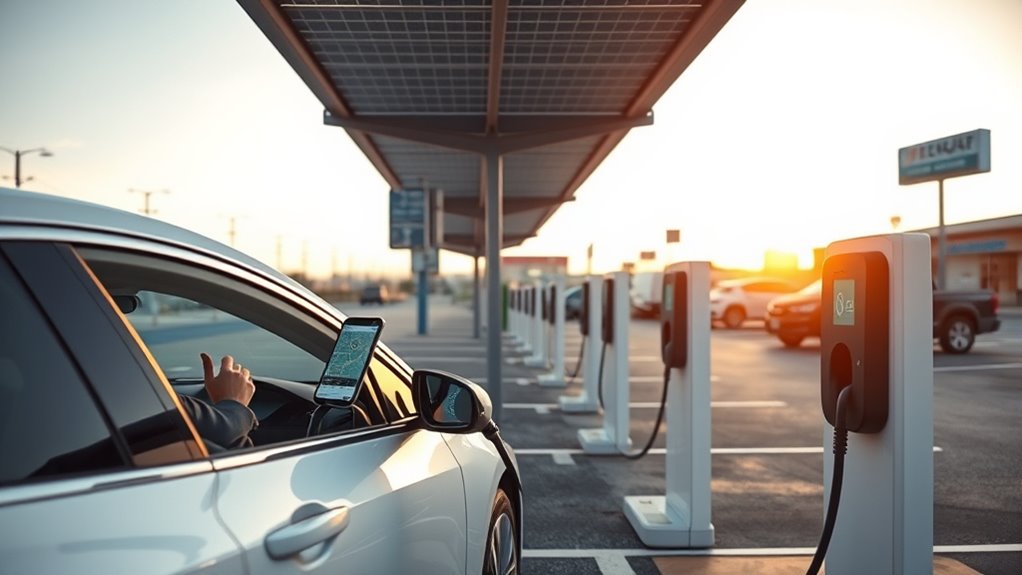
You can find free EV charging stations in the US by combining official station maps, EV charging apps, and recent driver check-ins. Start with a nearby search, filter for free public chargers, confirm your connector type, and read the latest station notes before you drive. Free charging is helpful, but it is not always unlimited, open to everyone, or available in real time.
Quick Answer
To find free EV charging stations near you, use PlugShare, ChargePoint, ChargeHub, ABRP, or the DOE AFDC station locator. Filter for free public chargers, match the connector to your EV, check recent user reviews, confirm access hours, and keep a backup charger nearby in case the station is busy, blocked, or no longer free.
Key Takeaways
- The easiest way to find free charging is to search in an EV app, then filter by price, connector, charging speed, and access type.
- Free chargers are often found at retail centers, hotels, libraries, municipal buildings, workplaces, campuses, and some dealerships.
- Always check the latest station notes because a charger may be busy, broken, gated, limited to customers, or recently changed to paid use.
- Connector compatibility matters: many EVs use J1772 for Level 2, CCS for DC fast charging, NACS/Tesla-style connectors, or adapters.
At a Glance
| Time Required | 3 to 10 minutes to find and verify a nearby station |
| Difficulty | Easy, if you know your EV connector and charging limit |
| Tools Needed | Phone, EV charging app, vehicle connector info, and optional adapter |
| Cost | Free if the host allows it, but idle fees, parking fees, or customer-only rules may apply |
How to Find Free EV Charging Stations Near You
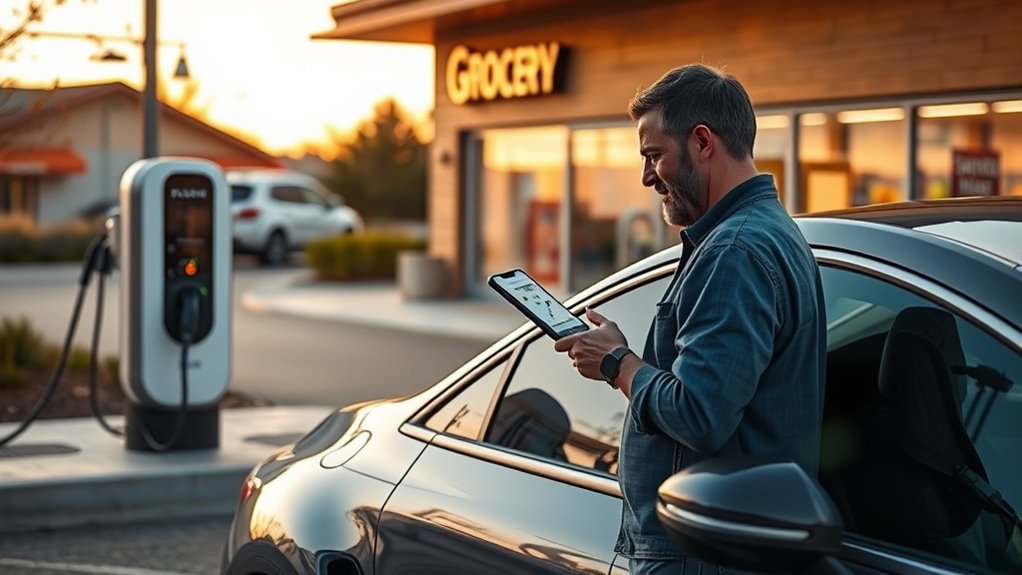
Start with a trusted map such as the U.S. Department of Energy Alternative Fuels Data Center station locator, then compare the results with driver-focused apps like PlugShare, ChargePoint, ChargeHub, and ABRP.
- Search your current location. Start within 2 to 5 miles for local errands. For a road trip, search along your route instead of only near your current location.
- Filter by price. Choose “free” or “no fee” where the app offers that filter. If the app does not show a free filter, open each nearby station and check the pricing notes.
- Match your connector. Confirm whether your EV needs J1772, CCS, NACS/Tesla, CHAdeMO, or an adapter.
- Check charging speed. Level 2 is common at free public locations. DC fast charging is less often free and may have stricter limits.
- Read recent check-ins. Look for notes from the past few days or weeks about broken plugs, blocked spaces, access gates, or pricing changes.
- Confirm rules before you drive. Check hours, time limits, parking fees, idle fees, customer-only rules, and whether the station is inside a paid lot.
Warning: Do not rely on “free” alone. A station can be free to charge but still require paid parking, a hotel stay, a customer purchase, a resident permit, or a move-after-charging rule.
Best Apps for Free EV Charging Stations
The best app depends on what you are trying to do. For quick local searches, PlugShare is strong because driver check-ins often reveal whether a charger is still free and working. ChargePoint is useful for stations on its network and can show details such as pricing, driver tips, photos, connector types, and charging speeds. ChargeHub works well as another map view, and ABRP is best when you need to plan free or low-cost charging stops along a longer route.
| App or Map | Best For | What to Check |
|---|---|---|
| PlugShare | Finding free chargers and reading recent driver check-ins | Price notes, recent reviews, photos, access rules, and reliability reports |
| ChargePoint | Using ChargePoint stations and checking station-level details | Connector type, charging speed, pricing, tips, and station status |
| ChargeHub | Comparing map results and connector options | Network, connector, access type, and location notes |
| ABRP | Planning a road trip with charging stops | Route, state of charge, backup chargers, and charging time |
| DOE AFDC Locator | Checking an official public charging database | Public access, fuel type, connector, location, and station details |
Pro Tip: Use at least two sources before driving to a free charger. One app may show the station as free while another has newer driver notes saying it is broken, blocked, or now paid.
Where Free EV Charging Stations Are Common
Free EV charging stations are most common where a business, city, school, or property owner benefits from keeping you on-site. You will often have better luck at destinations where your car can sit for 30 minutes to several hours while you shop, work, eat, or attend an appointment.
Free EV chargers are usually destination chargers, not guaranteed fuel stops. Treat them as a bonus, then verify access before you count on them.
- Shopping malls and retail centers: Often installed to attract shoppers and increase visit time.
- Grocery stores: Useful for short Level 2 top-ups while you shop.
- Hotels: Sometimes free for guests, but many require registration, a room booking, or front-desk approval.
- Public libraries and municipal buildings: Some cities offer free or low-cost charging as part of clean-transportation programs.
- Park-and-ride lots and transit stations: Helpful for commuters, but time limits and permit rules are common.
- Universities and workplaces: Access may be free but restricted to students, staff, tenants, or employees.
- Car dealerships: Some chargers are public, but many are reserved for service customers or dealership vehicles.
Check Free Charging Rules Before You Go
Before you plug in, check each station’s rules. A charger can show up as free in an app but still be limited by time, parking access, business hours, or customer-only policies. Free charging also does not always mean free parking.
- Access hours: Confirm whether the charger is available 24/7 or only during business hours.
- Eligibility: Look for resident-only, guest-only, employee-only, customer-only, or fleet-only rules.
- Time limits: Many free stations limit sessions to 30 minutes, 2 hours, or 4 hours.
- Idle fees: Some networks charge a fee if your vehicle stays plugged in after charging ends.
- Parking fees: A free charger inside a garage or paid lot may still cost money to access.
- Network account: Some free sessions still require an app, RFID card, QR code, or account activation.
Note: Recent reviews matter because station data can lag. If the last successful check-in is old, choose a backup charger before you leave.
Confirm Connector Type and Charging Speed
Connector compatibility is one of the most common reasons a “nearby free charger” does not help. Before you drive, check your EV manual or charging screen and confirm the plug type your vehicle can use.
- J1772: Common for Level 2 AC charging on many non-Tesla EVs and plug-in hybrids in North America.
- CCS: Common for DC fast charging on many non-Tesla EVs, especially older and current models built before full NACS adoption.
- NACS / Tesla-style connector: Used by Tesla vehicles and increasingly supported by other brands through factory ports or adapters as SAE J3400 adoption expands.
- CHAdeMO: A legacy DC fast-charging connector still used by some older vehicles, especially certain Nissan Leaf models.
- Adapters: Useful only when approved for your vehicle and charging type. Do not assume an adapter works for both Level 2 and DC fast charging.
Also compare the station’s power level with what your EV can accept. A free Level 2 charger may be perfect while shopping or working, but it may add range slowly. DC fast charging is faster, but free DC fast charging is less common and more likely to have time or access limits.
Free EV Charging Tips to Save Time and Money
A few smart habits can cut wait time and help you avoid surprise costs when you are looking for free EV charging.
- Search around errands you already plan to run. A free Level 2 charger is more useful if you can shop, eat, or work while the car charges.
- Go during off-peak hours. Early mornings, later evenings, and weekdays can be less crowded than weekend afternoons.
- Bring the right adapter. Keep approved adapters in the vehicle if your EV supports them.
- Save reliable stations. Favorite the chargers that are truly free, easy to access, and recently verified.
- Check the charger before parking. Make sure the screen, cable, and connector look usable before you settle into the space.
- Move when finished. Leaving your EV plugged in after charging blocks the station and may trigger idle fees.
What to Do If a Free Charger Is Not Working
If a free charger is broken, blocked, or unavailable, do not waste time trying the same failed step over and over. Move through a quick checklist and switch to a backup station if needed.
- Check the app status and latest comments. Look for reports of payment errors, broken handles, short cables, or network outages.
- Try another plug at the same site. Some locations have one failed connector while another still works.
- Restart the session through the app or station screen. Follow the charger’s instructions rather than forcing the connector.
- Call the support number on the station. Many networked chargers list a phone number or station ID.
- Leave a clear driver note. Report whether the charger is broken, blocked, no longer free, or restricted.
- Use your backup charger. Keep enough battery to reach another station instead of arriving nearly empty.
Free EV Charging Etiquette
Free charging works best when drivers share the space fairly. Follow posted rules, move your vehicle when charging ends, and avoid using a free charger as long-term parking. Do not unplug another vehicle unless the station or owner has clearly allowed it, and never use private or residential charging without permission.
Note: If a station is on private property, the property owner sets the rules. App listings do not override signs, gates, permits, or staff instructions.
Frequently Asked Questions
How do I find free public EV charging stations?
Open PlugShare, ChargePoint, ChargeHub, ABRP, or the DOE AFDC locator. Search your area, filter for free public charging when possible, choose your connector type, then check recent reviews, access hours, and parking rules before you drive.
Can I charge my EV for free anywhere?
No. Many public chargers require payment, and many free chargers have limits. Free access may depend on the property owner, business hours, parking fees, customer status, time limits, or local program rules.
What is the best app to find free EV charging stations?
PlugShare is often the best starting point for free chargers because it relies heavily on driver check-ins and station notes. ChargePoint is useful for its network, ChargeHub gives another map view, ABRP is better for route planning, and the DOE AFDC locator is a helpful official reference.
Is EV charging free in the USA?
Some EV charging is free in the USA, but it is not the default everywhere. Free stations are most often found at destinations such as retail centers, hotels, libraries, workplaces, campuses, municipal buildings, and promotional charging locations.
Are free EV chargers usually fast chargers?
Usually no. Many free public chargers are Level 2 chargers, which are best for longer stops while shopping, working, dining, or staying at a hotel. Free DC fast charging exists, but it is less common and often comes with stricter access rules.
Why does an app show a free charger that is not actually free?
Station data can lag behind real-world changes. A property owner may add fees, restrict access, require paid parking, or change network settings before every app updates. That is why recent driver reviews and posted signs matter.
Conclusion
Finding free EV charging stations is easiest when you combine maps, filters, recent driver reviews, and a quick rules check before you leave. Start with trusted apps, confirm your connector and charging speed, then verify whether the charger is truly free, public, and available. Free chargers can save money, but the best results come from planning ahead, keeping a backup option, and moving your EV as soon as charging is complete.
Sources
- U.S. Department of Energy Alternative Fuels Data Center — official EV charging station locator for the United States and Canada.
- PlugShare — EV charging station map and community check-in resource.
- ChargePoint — charging map, app filters, connector details, pricing, and driver station information.
- ChargeHub Charging Station Map — EV charger map for comparing station locations and connectors.
- A Better Routeplanner — EV route-planning tool for charging stops on longer trips.
- Reliability of Open Public Electric Vehicle Direct Current Fast Chargers — field study supporting the need to check recent charger status and backup options.