
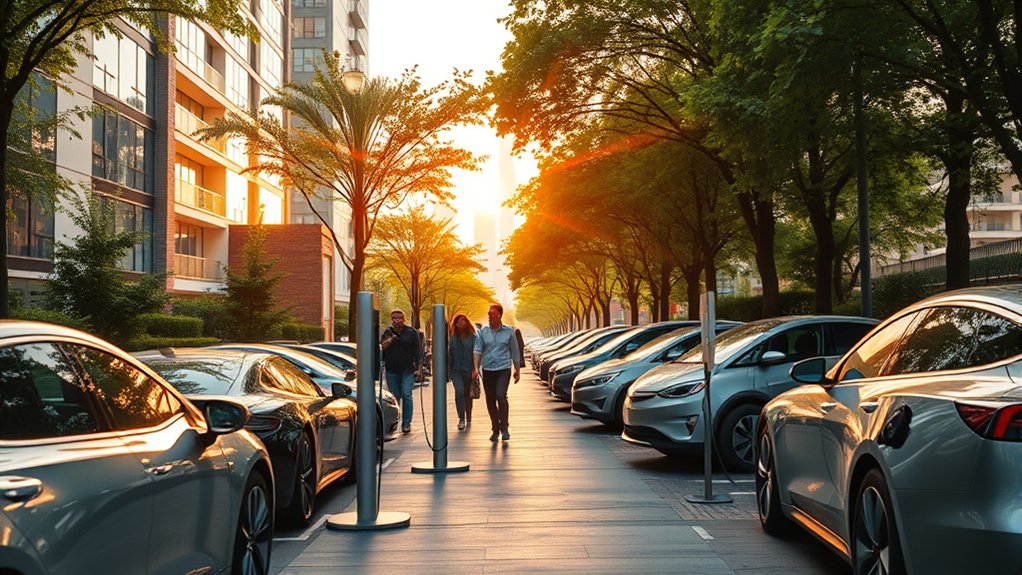
As a renter without a garage, you can still keep an electric vehicle charged, but the best setup depends on your parking space, lease rules, daily mileage, and access to outlets or nearby stations. Start by checking what you already have: an assigned parking spot, a standard 120-volt outlet, on-site chargers, workplace charging, or reliable public chargers near your routine stops.
Quick Answer
Renters without a garage can charge an EV through approved Level 1 outlet charging, shared apartment chargers, workplace charging, public stations, or a landlord-approved Level 2 installation. The safest plan is to match charging speed to your daily miles, get written permission, use outdoor-rated equipment, and have any new circuit installed by a licensed electrician.
Key Takeaways
- Level 1 charging can work for short commutes if you have safe, approved access to a dedicated 120-volt outlet.
- Level 2 charging is faster, but it usually needs landlord approval, permits, electrical capacity, and professional installation.
- Shared apartment, workplace, and public chargers can fill the gap if your rental property does not allow a private charger.
- Never run extension cords across walkways or use common-area outlets without written permission.
- Check local laws, utility rebates, and property policies before you spend money on equipment or installation.
At a Glance
| Time Required | 30–60 minutes to make a charging plan; several days to several weeks if landlord approval, permits, or electrical work are needed. |
| Difficulty | Easy if using public or workplace charging; moderate if requesting a Level 2 charger at a rental property. |
| Tools Needed | EV owner’s manual, lease or parking rules, charging apps, utility rate plan, landlord contact, and electrician quote if installing equipment. |
| Cost | Public charging costs vary by network. Level 1 may use an existing approved outlet. Level 2 cost depends on charger, wiring distance, permits, panel capacity, labor, and rebates. |
Understanding Your EV Charging Needs as a Renter
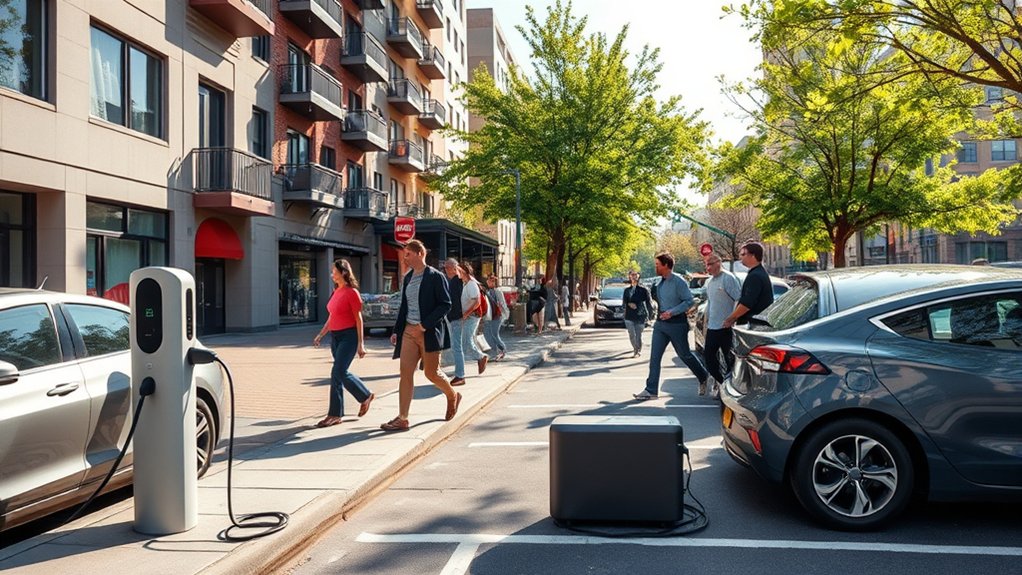
Before you ask your landlord for a charger or depend on public stations, estimate how much charging you actually need. Most renters do not need a full battery every day. If your commute is 20 miles and your errands add another 10 miles, you may only need to replace 30–40 miles overnight or during the workday.
The U.S. Department of Energy’s Alternative Fuels Data Center explains that Level 1 charging uses a 120-volt outlet and can add about 5 miles of range per hour for a typical mid-size EV, while Level 2 charging uses 208- or 240-volt service and adds about 25 miles of range per hour in many setups. Your actual speed depends on the vehicle, charger output, battery state of charge, temperature, and electrical service.
Note: Think in weekly range, not just daily range. A renter who drives 150 miles per week may be fine with Level 1 plus one public fast-charge stop, while a renter who drives 70 miles per day will usually need dependable Level 2, workplace, or public charging.
Compare Your Main Charging Options
Your best EV charging option is usually a mix of convenience, permission, speed, and cost. Use this comparison before buying equipment or signing a lease with EV ownership in mind.
| Charging Option | Best For | Main Catch |
|---|---|---|
| Approved Level 1 outlet | Short commutes, plug-in hybrids, overnight parking | Slow speed and need for a safe, approved, dedicated outlet |
| Dedicated Level 2 charger | Longer commutes, faster overnight charging, assigned parking | Requires landlord approval, electrical capacity, permits, and professional installation |
| Shared apartment charger | Buildings with multiple EV drivers | Needs scheduling, billing rules, and fair-access policies |
| Workplace charging | Drivers parked at work for several hours | Depends on employer access, pricing, and availability |
| Public charging | Renters with no home access or occasional top-ups | Can cost more and may require planning around availability |
Check Your Lease, Parking, and Outlet Access First
Start with the basics before you buy a portable EVSE or ask for a wall charger. Check whether your lease allows vehicle charging, whether you have an assigned parking space, and whether any outlet near your space is part of your meter or a common-area circuit.
Ask property management these questions:
- Can residents charge EVs from existing outlets?
- Are common-area outlets available, metered, or prohibited for vehicle charging?
- Does the building already have shared Level 2 chargers?
- Can a resident install a charger in an assigned parking space?
- Who pays for electricity, maintenance, insurance, and removal when the tenant moves?
- Are there state, city, or utility incentives for multifamily EV charging?
The AFDC multifamily charging guidance notes that apartments and condos have special considerations, including parking access, electrical service, billing, and legal concerns. That is why a written approval process matters.
Warning: Do not plug into a hallway, laundry-room, exterior, or parking-lot outlet without written permission. Do not run an extension cord across a sidewalk, stairway, driveway, or shared parking area. That can create shock, trip, fire, and liability risks.
Use Level 1 Charging for Shorter Daily Drives
Level 1 charging is the simplest renter-friendly option when you have safe, approved access to a standard 120-volt outlet. It is slow, but it may be enough if you drive fewer than 30–40 miles per day and park overnight.
Level 1 can work well when:
- You have an assigned space near a safe outlet.
- The outlet is on a suitable circuit and approved for EV charging.
- You drive short daily distances.
- You can leave the vehicle plugged in overnight.
- Your landlord agrees in writing to the arrangement and billing method.
Use the cordset or EVSE recommended by your vehicle maker, inspect the plug and outlet for heat or damage, and stop using the outlet if the plug feels hot, the breaker trips, or charging becomes inconsistent.
Request a Dedicated Level 2 Charger the Right Way
A dedicated Level 2 charger is the most convenient home-style option for many EV drivers, but renters should treat it as a property-improvement request, not a casual plug-in accessory. Your landlord may need to consider electrical capacity, parking rights, permitting, billing, insurance, charger ownership, and what happens when you move.
A strong landlord proposal should include:
- Your charging need: daily miles, vehicle model, parking space number, and why Level 1 or public charging is not enough.
- The requested setup: wall-mounted or pedestal Level 2 charger, shared charger, or dedicated outlet-based solution.
- Professional installation: licensed electrician, permits, code compliance, and outdoor-rated equipment.
- Cost plan: who pays for equipment, installation, electricity, networking fees, maintenance, and removal.
- Property benefits: EV charging can help attract and retain residents and improve the building’s amenities.
- Incentives: state, local, utility, or property-owner rebates from resources such as the AFDC laws and incentives search.
- Fair access: whether the charger is private, shared, reserved, or billed through a networked system.
Pro Tip: Ask for a shared charger if your landlord is hesitant about a private charger. A shared station can serve more residents, may qualify for more property-focused incentives, and can be easier to justify as a building amenity.
Evaluate Shared Apartment Charging
Shared charging can be the best compromise for renters in apartments, condos, and townhome communities. Instead of installing one charger per tenant, the property can place chargers in common parking areas and manage access through apps, RFID cards, reservations, or billing software.
Effective Scheduling Methods
Shared chargers work best when the rules are clear. A building should decide how long each session can last, whether overnight reservations are allowed, how idle fees are handled, and what happens if a vehicle stays plugged in after charging is complete.
- Use reservations: Allow residents to book charging windows during high-demand times.
- Add idle rules: Encourage drivers to move after charging so others can use the station.
- Track usage: Usage data helps property managers decide whether more chargers are needed.
- Use load management: Smart systems can share available power across multiple chargers when electrical capacity is limited.
- Bill fairly: Networked chargers can bill by kWh, session, or time where allowed by local rules.
Community Charging Solutions
If your building has several EV owners or expects more, community charging may be more practical than private chargers. Property management can start with a few shared Level 2 stations, then expand as demand grows.
| Feature | Benefit | Consideration |
|---|---|---|
| Shared Level 2 stations | Serve multiple residents without one charger per space | Need access rules and scheduling |
| Networked billing | Separates EV electricity use from common-area costs | May add software or transaction fees |
| Load management | Helps avoid expensive electrical upgrades | Requires compatible hardware and planning |
| Utility incentives | May reduce installation cost | Programs vary by location and date |
| Future expansion | Lets the property add chargers as demand grows | Needs conduit, panel, and parking planning |
Use Workplace Charging if Home Charging Is Limited
Workplace charging can make EV ownership much easier for renters. If your car sits at work for six to eight hours, even a Level 2 charger used a few days per week can cover a large share of your driving.
Ask your employer or building manager:
- Who can use the chargers?
- Is charging free, paid, or limited by time?
- Are chargers reserved, first-come-first-served, or app-managed?
- Can employees charge during off-peak hours?
- Are plug-in hybrids and battery EVs treated differently?
If workplace charging is reliable, you may not need a home Level 2 charger. You might use Level 1 at home for small top-ups and workplace charging for the bulk of your weekly energy.
Find Nearby Public Charging Stations for Weekly Use
Public charging is not always as convenient as home charging, but it can work well if stations fit naturally into your routine. Look for chargers near grocery stores, gyms, libraries, shopping centers, medical offices, parking garages, and highways you already use.
Charging App Recommendations
Use more than one charging app because no single app always shows every station perfectly. Helpful tools include:
- Alternative Fueling Station Locator for a broad station search.
- PlugShare for user reviews, photos, and community notes.
- ChargePoint for networked station access and availability.
- EVgo for DC fast charging in many metro areas.
- Electrify America for highway and metro DC fast charging.
Before depending on a station, check connector type, power level, recent driver comments, payment method, parking fees, and whether the site is available after business hours.
Build a Weekly Public Charging Routine
Public charging works best when it is planned, not desperate. Choose two or three dependable backup stations near your home, job, or regular errands. If one station is full or offline, you will not be stuck searching at a low battery percentage.
For daily battery health, follow your vehicle manual. Many EVs let you set a daily charge limit, and some manufacturers recommend saving 100% charges for longer trips. Battery chemistry differs, so your car’s manual is the final guide.
Stay Safe With Outdoor Charging Solutions
Outdoor EV charging can be safe when the equipment and installation are designed for outdoor use. The AFDC home charging guidance states that outdoor installation and use can be safe, even in rain, when outdoor-rated equipment is used.
Follow these safety rules:
- Get written permission first: Do not install or use rental-property electrical equipment without approval.
- Use listed equipment: Choose safety-certified EVSE, such as products listed by a Nationally Recognized Testing Laboratory or found through the ENERGY STAR certified EV charger finder.
- Hire a licensed electrician: Any new Level 2 circuit should be evaluated and installed by a qualified professional.
- Follow permits and code: EV charging work may require local permits and must follow applicable electrical codes, including NEC Article 625 where adopted.
- Avoid extension cords: Use the EVSE as designed. Extension cords can overheat and create shock or fire hazards.
- Protect the cable path: Do not create trip hazards across sidewalks, stairs, driveways, or shared walkways.
- Inspect regularly: Stop using equipment if you see melting, burn marks, cracked housings, loose outlets, water intrusion, or repeated breaker trips.
Warning: EV charging is a continuous electrical load. If a landlord approves charging from an outlet, ask whether the circuit is suitable for continuous EV use. A weak outlet, overloaded circuit, or damaged receptacle can overheat.
Check Local Laws, Incentives, and Utility Programs
Some states and cities have rules that limit how landlords, HOAs, or condo boards can deny reasonable EV charging requests. These are often called “right-to-charge” laws, but details vary. Some laws apply to condos but not rentals. Some require you to pay for installation, insurance, electricity, and removal. Always check your state and local rules before making a formal request.
Also check utility incentives. Some utilities offer rebates for Level 2 chargers, multifamily charging, panel upgrades, make-ready wiring, or time-of-use charging rates. The AFDC laws and incentives search is a good starting point because it lets you look up federal, state, and local programs.
Sample Landlord Request for EV Charging
You do not need a long legal letter to start the conversation. A short, clear request works better.
Sample request:
I own or plan to own an electric vehicle and would like to discuss safe charging options for my assigned parking space. I am open to an approved Level 1 outlet, a shared building charger, or a professionally installed Level 2 charger. I can provide vehicle details, estimated charging needs, electrician quotes, billing options, and information about available incentives. I will not install equipment or use common-area power without written approval.
Attach a charger spec sheet, electrician quote, proof of safety certification, proposed billing plan, and any incentive information. The easier you make the decision, the more likely property management is to consider it seriously.
Frequently Asked Questions
Can you charge an EV without a garage?
Yes. You can charge an EV without a garage by using an approved outdoor outlet, a landlord-approved Level 2 charger, shared apartment chargers, workplace charging, or public charging stations. The best choice depends on your daily mileage, assigned parking, local rules, and charger access.
How do people charge electric cars if they live in an apartment?
Apartment residents usually charge through shared building chargers, approved Level 1 outlets, workplace chargers, nearby public Level 2 stations, or DC fast chargers. Some renters ask property management to add chargers, especially when several residents own or plan to buy EVs.
What is the 80/20 rule for EV charging?
The 80/20 rule usually means keeping the battery roughly between 20% and 80% for everyday use, then charging higher when you need extra range for a trip. This is a general battery-care habit, not a strict rule for every EV. Follow your vehicle manual because battery chemistry and manufacturer guidance differ.
Can I have an EV charger without a driveway?
Yes, but you need a safe parking and power arrangement. Options include a charger in an assigned parking space, a shared apartment charger, curbside charging where available, workplace charging, or nearby public charging. Do not run a cable across public walkways or shared areas unless the setup is approved and code-compliant.
Should I buy a portable EV charger as a renter?
A portable EVSE can be useful, but only if you have permission to use a suitable outlet. Check your vehicle manual, outlet type, circuit capacity, landlord rules, and local code. Avoid adapters or extension cords unless the manufacturer specifically allows the setup.
Is public charging enough if I rent?
Public charging can be enough if stations are reliable, close to your routine, and priced reasonably. It works best when you have several backup stations and can charge while doing errands. For high-mileage drivers, relying only on public charging can become inconvenient or expensive.
Conclusion
Renting without a garage does not have to block EV ownership. Start with your daily mileage, then match it to the safest charging options you can actually use: approved Level 1 charging, shared apartment chargers, workplace charging, public stations, or a landlord-approved Level 2 installation. Get written permission, use certified outdoor-rated equipment, follow local code, and plan backup charging before your battery is low. With the right setup, EV charging can become a normal part of your weekly routine instead of a constant problem.
Sources
- U.S. Department of Energy Alternative Fuels Data Center: Electric Vehicle Charging Stations — supports Level 1, Level 2, DC fast charging, connector, and charging-speed information.
- U.S. Department of Energy Alternative Fuels Data Center: Charging Electric Vehicles at Home — supports outdoor-rated equipment, home charging, permits, electrical-code, and safety guidance.
- U.S. Department of Energy Alternative Fuels Data Center: Electric Vehicle Charging for Multifamily Housing — supports apartment, condo, billing, parking, and multifamily charging considerations.
- U.S. Department of Energy Alternative Fuels Data Center: Laws and Incentives Search — supports checking current federal, state, local, and utility EV charging programs.
- ENERGY STAR Certified EV Chargers Product Finder — supports choosing certified EV charging equipment.
- Tesla Model Y Owner’s Manual: High Voltage Battery Information — supports manufacturer-specific daily charge-limit and battery-care guidance examples.