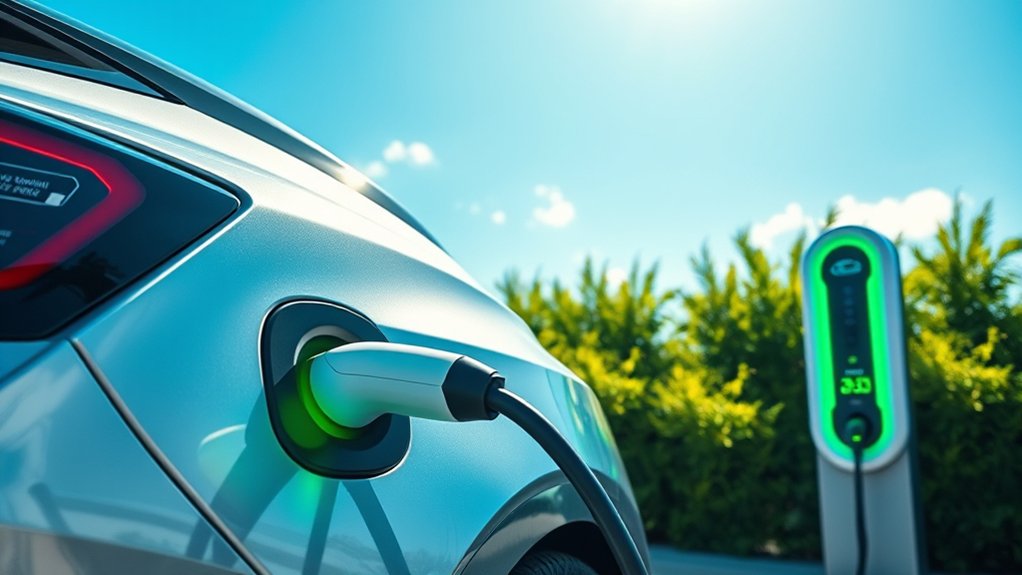
EV charging stations give your electric vehicle a safe way to receive electricity from the grid. The exact process depends on the charger type, your vehicle, the connector, and the battery’s state of charge. Once you know the difference between Level 1, Level 2, and DC fast charging, it becomes much easier to choose where to charge, how long to stay, and what you may pay.
Quick Answer
An EV charging station supplies and controls electricity so your electric vehicle can charge safely. Level 1 and Level 2 chargers send AC power to your car’s onboard charger. DC fast chargers convert power inside the station and send DC power directly to the battery for much faster charging.
Key Takeaways
- Level 1 is slow but simple, Level 2 is best for most home and daily charging, and DC fast charging is best for road trips or quick top-ups.
- Connector compatibility matters. In North America, common passenger EV connectors include J1772, CCS1, J3400/NACS, and CHAdeMO.
- Charging speed depends on charger output, vehicle limits, battery size, temperature, and state of charge.
- Home charging is usually the most convenient option, but Level 2 installation should follow local code and may need a qualified electrician.
- Public charging may include kWh fees, time fees, session fees, parking fees, or idle fees, so check the station screen or app before you start.
At a Glance
| Time Required | About 1-5 minutes to start a session. Charging can take under 30 minutes at some DC fast chargers or 20+ hours on Level 1, depending on the vehicle and battery. |
| Difficulty | Easy for public charging. Moderate for choosing and installing a home Level 2 charger. |
| Tools Needed | Your EV, compatible connector or adapter, charging app, RFID card, payment card, and the vehicle owner’s manual. For home charging, use safety-certified EV charging equipment. |
| Cost | Home charging depends on your electric rate. Public charging may bill by kWh, minute, session, parking time, or idle time. Home Level 2 equipment and installation vary by site. |
What Is an EV Charging Station and Its Purpose?
An EV charging station, also called electric vehicle supply equipment or EVSE, is the equipment that delivers electricity to your electric vehicle in a controlled way. It does more than act like a simple outlet. It communicates with the vehicle, checks that the connection is safe, controls the flow of power, and stops power delivery when the session ends or a fault is detected.
A 2030 U.S. charging network may need about 28 million charging ports in a mid-adoption scenario, and most of those would be private Level 1 and Level 2 ports at homes, multifamily properties, and workplaces.
The basic purpose is simple: move energy from the electrical grid into your EV battery safely. How that happens depends on whether the station supplies AC power or DC power.
- AC charging: Level 1 and Level 2 stations send alternating current to the vehicle. Your car’s onboard charger converts that AC power into DC power for the battery.
- DC fast charging: The station converts AC power to DC power inside the charging unit. It then sends DC power directly to the battery, which allows much faster charging.
The U.S. Department of Energy’s Alternative Fuels Data Center explains that charging time depends on battery size, state of charge, vehicle limits, charger output, and electrical service. That is why two EVs can plug into the same station and charge at different speeds.
Note: People often call every charging unit a “charger,” but the actual charger may be inside the vehicle for AC charging. The station supplies and controls the power, while the vehicle decides how much it can safely accept.
How to Initiate the EV Charging Process
Starting an EV charging session is usually simple, but the exact steps depend on the network and connector. Use your vehicle’s screen, the station display, and the charging-network app together so you do not miss pricing, idle fees, or connection alerts.
Steps to Plug In
- Park close enough for the cable to reach: Avoid stretching the cable across another parking space or walkway.
- Check the connector: Make sure the station connector matches your vehicle or adapter. Common North American connectors include J1772, CCS1, J3400/NACS, and CHAdeMO.
- Inspect the cable and plug: Do not use a connector that is cracked, burned, wet inside the pins, or damaged.
- Open your charging port: Some vehicles unlock the port from the screen, key fob, or app.
- Plug in firmly: Push the connector in until it seats fully. Many vehicles lock the connector once charging starts.
- Start the session: Use the station screen, network app, RFID card, QR code, credit card reader, or plug-and-charge feature if your EV and network support it.
- Check that charging begins: Look for the vehicle’s charge indicator, the station display, or an app notification.
- Monitor progress: Watch the battery percentage, added range, charging speed, estimated finish time, and any idle-fee timer.
- Stop the session before unplugging: Use the app, station screen, or vehicle control to stop charging, then unlock and remove the connector.
- Return the cable: Place the connector back in its holster so it stays clean, dry, and out of the way.
Warning: Do not force a connector into your EV, use a damaged plug, or unplug another driver’s vehicle unless the station clearly shows the session is finished and the connector is unlocked.
Payment Method Selection
Public EV charging payment varies by charging network. Some stations let you tap a credit card. Others require an app, account, RFID card, QR code, or vehicle-based plug-and-charge setup.
| Payment Method | Best For | What to Check |
|---|---|---|
| Mobile app | Frequent use of one network | kWh price, session fee, idle fee, and account balance |
| RFID card | Drivers who want quick station activation | Membership fee and network coverage |
| Credit or debit card | One-time public charging | Card reader availability, preauthorization hold, and final receipt |
| QR code | Guest checkout where supported | Correct station ID and secure payment page |
| Plug and charge | Compatible EVs and networks | Vehicle enrollment and billing account status |
Always review the price before you start. Public charging may be billed by energy used, time connected, time actively charging, session start, parking time, or idle time after charging is complete.
Understanding Different Types of EV Chargers
EV chargers are usually grouped by charging level. The higher the power, the faster the possible charge, but your vehicle controls the final rate. A charger rated for high output will not force your car to charge faster than the car and battery can safely accept.
| Charging Type | Power Source | Typical Speed | Best Use |
|---|---|---|---|
| Level 1 | 120V AC outlet | About 5 miles of range per hour for many EVs | Overnight charging for short commutes or plug-in hybrids |
| Level 2 | 208V or 240V AC circuit | About 25 miles of range per hour for a typical setup | Home, work, hotels, parking garages, and destination charging |
| DC fast charging | High-power DC output from the station | Often 100-200+ miles in about 30 minutes, depending on the EV | Road trips, quick stops, and drivers without reliable home charging |
Level 1 Charging
Level 1 charging uses a standard 120V outlet. It is slow, but it can work well if you drive short distances each day or have a plug-in hybrid with a smaller battery. Many EVs include a portable Level 1 cordset, but you still need a safe outlet on a suitable circuit near your parking spot.
Level 2 Charging
Level 2 charging uses 208V or 240V power. It is the most practical option for many EV owners because it can add meaningful range while the vehicle is parked overnight. Level 2 stations are common at homes, workplaces, hotels, shopping centers, and public parking areas.
DC Fast Charging
DC fast charging is designed for speed. It is most useful on road trips or when you need a quick top-up. Charging speed is usually fastest at a lower battery percentage and slows as the battery fills. That slowdown is normal because the battery management system protects the pack from heat and stress.
Pro Tip: On road trips, it is often faster to charge from a lower battery level to about 70-80% and then continue driving, rather than waiting for the last 20% to fill slowly.
Key Components of EV Charging Stations
When you pull up to an EV charging station, several parts work together to make charging safe and reliable. You do not need to know every electrical detail, but understanding the main components helps you solve problems faster.
Power Supply System
The power supply system connects the charging equipment to the electrical service. For Level 1 and Level 2 charging, the station delivers AC power and the vehicle’s onboard charger handles conversion to DC. For DC fast charging, the station itself contains power electronics that convert power before sending it to the battery.
Large public charging sites may also include transformers, switchgear, meters, network equipment, cooling systems, cable-management hardware, and sometimes battery storage or solar canopies. The larger and faster the site, the more planning it needs.
Charging Connector Types
Your EV and the station must use compatible hardware. In North America, the most important passenger EV connector types are J1772, CCS1, J3400/NACS, and CHAdeMO. The Joint Office of Energy and Transportation notes that J3400 is based on the North American Charging Standard connector and is becoming a major standard for both vehicles and charging stations.
| Connector | Used For | What to Know |
|---|---|---|
| J1772 | AC Level 1 and Level 2 | Common on many non-Tesla EVs and plug-in hybrids for AC charging. |
| CCS1 | DC fast charging, with J1772-style AC compatibility | Adds two large DC pins below the J1772 layout. Still important for many public fast chargers. |
| J3400 / NACS | AC and DC charging | Originally based on Tesla’s connector design. Many automakers have committed to this connector for North American EVs. |
| CHAdeMO | DC fast charging | Found on some older or specific Japanese EVs. Availability varies by location. |
| Type 2 | AC charging in many markets outside North America | Important globally, but not the main connector for U.S. passenger EV charging. |
| MCS | Medium- and heavy-duty EV charging | Designed for very high-power commercial vehicle charging, not typical passenger EV use. |
Control and Communication Protocols
Charging stations and EVs communicate before and during a session. This communication helps confirm that the connector is secure, the vehicle is ready, and the charger can deliver power safely.
Networked public chargers may also communicate with a back-end system for user authentication, payment, pricing, station status, fault reports, and load management. These systems help charging operators monitor reliability and help drivers see whether a station is available.
- Control pilot signaling: Helps the EV and station agree on whether charging can begin and how much current is available.
- Vehicle charge controller: The embedded controller in the EV that helps manage communication between the vehicle and station.
- Network communication: Allows apps, payment systems, and charging networks to start, stop, price, and track sessions.
- Smart charging: Can adjust power delivery based on grid demand, pricing, time of day, or site limits.
How Do Public Charging Stations Work and Their Fees?
Public EV charging stations usually offer Level 2 charging, DC fast charging, or both. You will often find them at highway travel centers, shopping centers, hotels, airports, parking garages, government buildings, workplaces, and urban charging hubs.
Public charging works by matching your vehicle, connector, account, and payment method with the station. Once the session starts, the station sends power and records details such as time connected, energy delivered, charging speed, and cost.
Common Public Charging Fees
- Per-kWh fee: You pay for the energy delivered to your vehicle.
- Per-minute fee: You pay for time, sometimes based on how long charging is active.
- Session fee: A fixed fee may apply each time you start charging.
- Parking fee: Some garages or lots charge separately for parking.
- Idle fee: A fee may start after your vehicle finishes charging but remains plugged in.
- Membership pricing: Some networks offer lower charging rates to paid members.
Charging to 80% is often enough at a DC fast charger. Above that point, the vehicle may slow charging to protect the battery. If you need a full battery for a long or remote drive, charging to 100% can make sense, but it may take much longer.
Note: Public charger pricing can change by location, time, network, and vehicle. Always check the station screen or app before starting the session.
Why Home Charging Is Beneficial for EV Owners
Home charging is the easiest daily charging method for many EV owners. You plug in when you park, let the car charge while you sleep, and start the next day with the range you need.
Level 1 can work if you drive short distances, have a plug-in hybrid, or do not need to refill a large battery quickly. Level 2 is better for longer commutes, larger batteries, shared household vehicles, or drivers who want more range added overnight.
Home Charging Benefits
- Convenience: You do not need to make a separate stop just to charge.
- Lower daily cost: Residential electricity is often cheaper than public fast charging, especially with time-of-use rates.
- Predictable routine: You can schedule charging overnight and avoid peak-hour prices if your utility offers off-peak rates.
- Less public charging dependence: Public chargers become backup options instead of your main charging plan.
- Battery-friendly charging: Slower AC charging can be a calm daily charging method for many vehicles.
Home Level 2 Installation and Safety
Before installing Level 2 charging, check your electrical panel capacity, parking location, cable reach, charger amperage, weather exposure, and local permit rules. The AFDC charging infrastructure guide notes that charging equipment costs and installation costs vary based on equipment type, electrical upgrades, labor, permitting, and site conditions.
Many Level 2 chargers need a dedicated circuit. Some can plug into a suitable 240V receptacle, while others are hardwired. Outdoor chargers should be outdoor-rated, and installation should follow local electrical code.
Warning: Do not rely on a household extension cord for EV charging unless your vehicle and charging-equipment manufacturer specifically allow it. A poor connection can overheat. Use properly rated, code-compliant equipment.
How to Select the Best EV Charger for Your Lifestyle
The best EV charger depends on how far you drive, where you park, how fast you need to recharge, and what your home electrical system can support. Start with your real driving pattern instead of buying the highest-power charger you can find.
Questions to Ask Before Choosing a Charger
- How many miles do you drive on a normal day? Short daily driving may only need Level 1 or a lower-power Level 2 setup.
- Can you charge where you park overnight? A garage, driveway, or assigned parking spot makes home charging easier.
- Does your panel have enough capacity? A qualified electrician can check whether you need a new circuit, load management, or a panel upgrade.
- What connector does your EV use? Confirm whether you need J1772, J3400/NACS, or an adapter.
- Do you need smart features? Wi-Fi, app scheduling, energy tracking, and utility rate integration can help, but they are not required for every driver.
- Will the charger be outside? Choose outdoor-rated equipment if rain, snow, heat, or direct sun are factors.
- Do you rent or live in a multifamily building? You may need landlord approval, HOA approval, shared billing, or a public/workplace charging plan.
Charger Choice by Driver Type
| Driver Type | Best Charging Setup | Why It Fits |
|---|---|---|
| Short commute | Level 1 or basic Level 2 | You may not need high overnight charging speed. |
| Long commute | Level 2 home charging | Adds more range overnight and reduces public charging stops. |
| Apartment or rental | Workplace, public Level 2, or approved shared charger | You may need permission, shared billing, or charging outside your home. |
| Frequent road trips | Home Level 2 plus DC fast charging access | Home charging covers daily use, while DC fast charging supports travel. |
| Two-EV household | Level 2 charger with load management or shared schedule | Helps avoid overloading the panel while charging both vehicles. |
Why Charging Speed Changes During a Session
EV charging speed is not fixed from start to finish. It can rise, hold steady, then taper down as the battery fills. This is normal.
The biggest factors are:
- Battery state of charge: A low battery can usually accept power faster than a nearly full battery.
- Battery temperature: Cold or hot batteries may charge more slowly until the battery management system brings them into a safer range.
- Vehicle charge limit: Your EV has a maximum AC and DC charging rate.
- Charger output: A low-power charger cannot deliver more than its rating.
- Shared power: Some stations split power when more than one vehicle is plugged in.
- Battery protection: The vehicle may slow charging near 80% or higher to reduce heat and stress.
For daily use, many EV owners set a charge limit around 80% when they do not need the full range. Follow your owner’s manual because battery guidance varies by vehicle and battery chemistry.
Troubleshooting Common EV Charging Problems
Most charging problems have simple causes. Work through the basics before assuming the vehicle or station is broken.
Charger Will Not Start
- Confirm the connector is fully seated.
- Check that your vehicle is in Park and the charge port is open.
- Make sure the station number in the app matches the station you are using.
- Try a different payment method if the card reader or app fails.
- Check the station screen for fault messages.
- Move to another plug if the station appears offline or damaged.
Charging Is Slower Than Expected
- Your battery may be cold, hot, or already near a high state of charge.
- The station may be sharing power with another EV.
- Your vehicle may have a lower maximum charge rate than the station.
- The cable, connector, or station may be limiting power due to heat or a fault.
- At home, your charger may be set to a lower amperage to protect the circuit.
Connector Is Locked
- Stop the session in the app or on the station screen.
- Unlock the vehicle doors.
- Use the vehicle’s charge-port unlock control if it has one.
- Check your owner’s manual for the emergency release procedure if the connector remains stuck.
EV Charging Etiquette and Safety
Good charging habits help every driver get a better experience. They also reduce station damage and avoid unnecessary fees.
- Move your vehicle after charging is complete, especially at busy DC fast chargers.
- Do not park in a charging space unless you are actively charging.
- Do not unplug another vehicle unless the driver clearly gave permission or the station rules allow it after charging is complete.
- Return the cable to the holster after use.
- Report damaged stations in the app or on the station website.
- Keep charging cables out of pedestrian paths when possible.
- Use adapters only if they are approved for your vehicle and charging level.
Frequently Asked Questions
What is the 80/20 rule for EV charging?
The 80/20 rule means keeping your EV battery roughly between 20% and 80% for normal daily use when it is practical. This can reduce time spent at DC fast chargers because charging often slows above about 80%. Use 100% when you need the extra range, and always follow your vehicle owner’s manual.
How do you pay when charging an electric car?
You can often pay with a charging-network app, RFID card, credit card, debit card, QR code, or plug-and-charge setup. Before you start, check whether the station charges by kWh, minute, session, parking time, or idle time.
Are electric cars safe for pacemakers?
Most people with implanted cardiac devices use cars and public places normally, but device guidance can vary. If you have a pacemaker, ICD, or similar device, follow your cardiologist’s and device manufacturer’s instructions. Do not rest charging cables or power electronics near your chest, and step away if you feel symptoms.
What drains an EV battery the most?
High speeds, hard acceleration, steep climbs, cold weather, cabin heat, air conditioning, low tire pressure, roof cargo, towing, and heavy loads can reduce EV range. Regenerative braking can recover some energy, but driving style and weather still matter.
Do all EV charging stations fit all electric cars?
No. Connector type matters. Many North American EVs use J1772 for AC charging, CCS1 for DC fast charging, or J3400/NACS for AC and DC charging. Some older or specific models use CHAdeMO for DC fast charging. Check your vehicle’s connector and adapter support before you arrive.
Is home charging cheaper than public charging?
Home charging is often cheaper because residential electricity rates are usually lower than public DC fast charging rates. Your real cost depends on your utility rate, time-of-use plan, charger efficiency, and how much energy your EV uses.
Conclusion
EV charging stations are easier to use once you understand the basics. Level 1 works for slow charging, Level 2 fits most daily routines, and DC fast charging helps when you need range quickly. Before you plug in, check the connector, price, payment method, and station status. For home charging, choose safe equipment, follow local code, and match the charger to your driving habits. The right setup turns EV charging from a guess into a simple routine.
Sources
- U.S. Department of Energy Alternative Fuels Data Center – Electric Vehicle Charging Stations – charger levels, charging speeds, DC fast charging, and connector types.
- U.S. Department of Energy Alternative Fuels Data Center – Charging Electric Vehicles at Home – home charging, Level 1 and Level 2 use, outdoor-rated equipment, safety-certified equipment, and charging costs.
- U.S. Department of Energy Alternative Fuels Data Center – Charging Electric Vehicles in Public – public charging locations, Level 2 charging, and DC fast charging use cases.
- U.S. Department of Energy Alternative Fuels Data Center – Procurement and Installation for EV Charging Infrastructure – equipment costs, installation factors, permitting, site planning, and infrastructure cost considerations.
- Joint Office of Energy and Transportation – SAE J3400 Charging Connector – J3400/NACS, CCS1, CHAdeMO, adapters, and connector terminology.
- National Renewable Energy Laboratory – The 2030 National Charging Network – 2030 charging-port needs and plug-in electric vehicle adoption scenarios.