
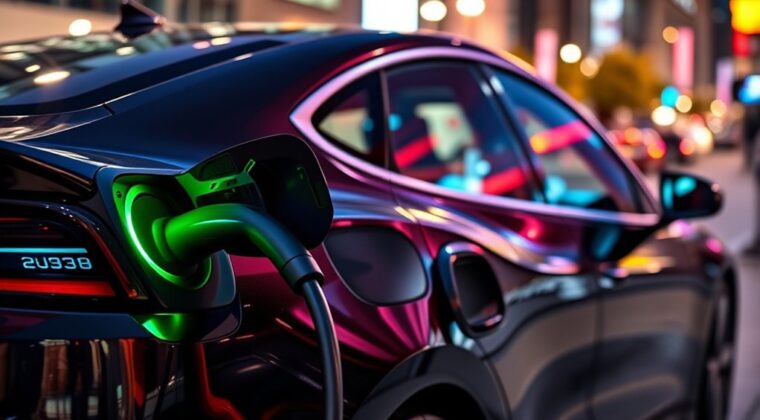
Yes, you can usually turn on your EV while it is charging. In most modern electric vehicles, you can use cabin climate, lights, infotainment, seat heaters, and other low-voltage systems while the charge cable stays connected. The car should remain parked and should not shift into Drive while plugged in, but exact behavior varies by model, so always follow your owner’s manual.
Quick Answer
You can usually turn on an EV while it is charging to use climate control, infotainment, lights, and comfort features. This is generally safe when the vehicle and charger are working normally, but using heat or A/C can slow charging, especially on Level 1 or low-power Level 2 chargers.
Key Takeaways
- Most EVs let you use cabin systems while charging, but they normally prevent driving while the connector is attached.
- A/C, heat, defrost, seat heaters, and infotainment use some incoming power, so less power may go to the battery.
- The charging slowdown is most noticeable on 120-volt Level 1 charging and least noticeable on high-power DC fast charging.
- Staying inside is usually fine if everything is normal, but exit and stop charging if you see warnings, smell smoke, notice unusual heat, or see damaged equipment.
- For best battery care, use moderate climate settings, avoid unnecessary high-power loads, and follow your vehicle manual.
At a Glance
| Time Required | Immediate once the EV is plugged in and charging |
| Difficulty | Easy, but settings vary by vehicle |
| Tools Needed | Your EV key, touchscreen, mobile app, or owner’s manual if you are unsure |
| Cost | No separate fee, but cabin use can add a little charging time and electricity use |
What Happens When You Turn On an EV While Charging?
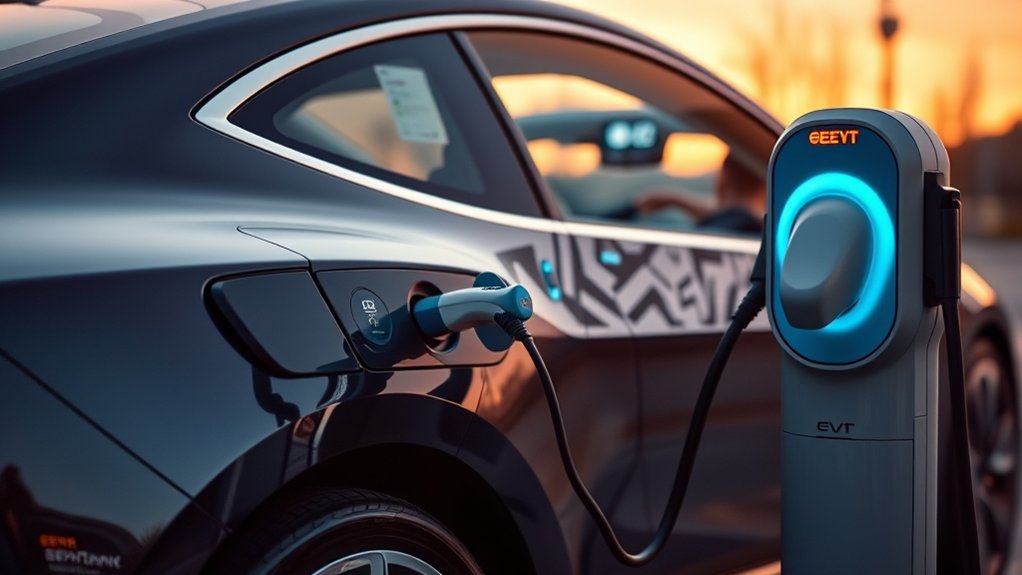
When you turn on an EV while it is plugged in, the vehicle usually wakes its computers and low-voltage systems. Depending on the model, this may be called accessory mode, On mode, Ready mode, Camp mode, Utility mode, or simply climate control from the app.
The high-voltage battery can keep charging while the car powers cabin features. The important limit is movement: most EVs will not let you shift into Drive while the charging connector is attached. This prevents you from accidentally pulling away with the cable connected.
Note: “Turn on” does not always mean the same thing in every EV. Some cars let you fully wake the cabin systems, while others only allow remote climate or accessory power. Check your owner’s manual if the screen uses terms such as Ready, Accessory, Camp, Utility, or Charge Mode.
What Functions Work While an EV Is Charging?
Most EVs allow common comfort and convenience features while plugged in. These systems may draw from the charger, the high-voltage battery, or the 12-volt system depending on the vehicle design.
| Usually Available | A/C, heat, defrost, heated or ventilated seats, infotainment, cabin lights, phone charging, navigation, and many app-based controls |
| Usually Not Available | Driving, shifting into Drive, or moving the vehicle while the charging connector is attached |
| Model-Dependent | Video streaming, gaming, accessory outlets, camping modes, pet modes, and high-power outlets |
For the smoothest experience, confirm the car is actually charging before turning on cabin features. If the charge rate drops, the session pauses, or the dashboard shows a warning, reduce the cabin load and follow the vehicle’s message.
Can You Sit Inside an EV While It Charges?
Yes, you can usually sit inside an EV while it charges. Many drivers do this at public chargers to stay cool, warm up, use navigation, listen to audio, or wait during a road-trip stop.
The safer answer is conditional: staying inside is fine when the charger, cable, connector, and vehicle are working normally. Do not stay in the car if something seems wrong.
Warning: Stop charging and move away from the vehicle if you see smoke, smell burning plastic, hear popping or sizzling, notice unusual heat at the connector, see a battery or charging warning, find damaged charging equipment, or the vehicle has been exposed to flooding or saltwater.
If you are using a public station, also respect site rules. Do not block a charger longer than needed, do not stretch the cable across a walkway, and move the car when the session is complete.
Does A/C or Heat Slow EV Charging?
Yes, using A/C or heat can slow charging because some incoming power is used to run the cabin system instead of going into the battery. The effect depends on charger power, outside temperature, cabin temperature, and how hard the climate system is working.
The slowdown is usually most noticeable on Level 1 charging. The U.S. Department of Energy’s Alternative Fuels Data Center explains that AC Level 1 charging uses a 120-volt outlet and is much slower than Level 2 or DC fast charging. Level 2 equipment can deliver much more power, while DC fast charging is designed for rapid charging on travel routes and high-traffic corridors.
| Charging Type | Climate Impact | What to Expect |
| Level 1 home outlet | High | Strong heat or A/C can noticeably reduce the amount of energy added to the battery. |
| Level 2 home or public charger | Low to moderate | You may see a small drop in charging speed, especially in very hot or cold weather. |
| DC fast charger | Usually low | Cabin use may still consume power, but the effect is often less noticeable because the charger output is much higher. |
The biggest drain is usually heating or cooling a very hot or very cold cabin. Once the cabin reaches a comfortable temperature, the power draw often drops. That is why moderate settings are better than blasting maximum heat or maximum cooling for the whole session.
Pro Tip: Use the lowest comfortable climate setting while charging. Seat heaters or steering-wheel heat can be more efficient than heating the entire cabin in cold weather.
How to Use Your EV Safely While It Charges
- Park fully and plug in first. Make sure the connector is seated and the charging session has started.
- Confirm charging on the screen or app. Look for the charge rate, estimated time, or charging indicator.
- Turn on only the systems you need. Use A/C, heat, defrost, infotainment, or lights as needed, but avoid unnecessary high-power loads.
- Keep the car in Park. Do not try to defeat shift-lock or charger interlocks.
- Watch for warnings. If the vehicle or charger reports a fault, pause and follow the instructions on the screen.
- Unplug correctly when finished. Stop charging through the car, app, or charger when required, then remove the connector according to the vehicle manual.
If you are charging at home, use properly rated equipment. The U.S. Department of Energy’s AFDC home charging guidance notes that outdoor charging can be safe, including in rain, when outdoor-rated equipment is used. It also recommends safety-certified equipment and proper code-compliant installation.
Battery Stress and Temperature: What Really Matters
Turning on cabin features during a normal charging session does not automatically damage the battery. EVs use battery management systems to control charging, temperature, and safety limits. Still, battery temperature, state of charge, and repeated high-power charging can affect charging speed and long-term battery wear.
For example, Tesla’s high-voltage battery guidance explains that charge rate may decrease when the battery is too cold, nearly full, or affected by age and usage. It also recommends regular charging, avoiding long periods near 0% or 100% when possible, and using Level 1 or Level 2 charging when practical for daily use.
That does not mean you should avoid cabin comfort. It means you should use it wisely. A few minutes of A/C while waiting at a charger is normal. Running maximum heat for hours on a weak Level 1 outlet is much less efficient.
Manufacturer Recommendations on EV Use While Charging
Most manufacturers allow some form of cabin use while charging, but the names and limits vary. Some vehicles support remote climate from the mobile app. Others have a dedicated camp, utility, or accessory mode. Some limit certain features while the charging connector is attached.
Tesla’s owner manual, for example, lists climate control as an energy-consuming feature and recommends preconditioning while plugged in before driving. You can review Tesla’s range and preconditioning guidance in the Model 3 Owner’s Manual. Your EV may use different wording, so your own manual is the final source.
Common manufacturer-style advice includes:
- Do not drive or attempt to shift into Drive while plugged in.
- Use climate control while plugged in when you need cabin comfort or preconditioning.
- Reduce unnecessary accessory use if charging is slower than expected.
- Follow all dashboard, app, and charger warnings.
- Use the correct charging equipment for your vehicle and location.
When You Should Not Turn On or Stay in an EV While Charging
Do not treat every charging session as risky, but do take clear warning signs seriously. Leave the vehicle and stop the session if conditions are abnormal.
- The connector, cable, outlet, or charging station looks damaged.
- The plug feels unusually hot or smells like burning plastic.
- The car or charger shows a charging fault, battery warning, or high-voltage warning.
- You see smoke, sparks, liquid leaking, or hear popping sounds.
- The vehicle has been exposed to floodwater, especially saltwater.
- The station is blocked, unstable, vandalized, or unsafe to use.
In those cases, stop the session if you can do so safely, move away, and contact the charging network, roadside assistance, or emergency services as appropriate.
How Public Charging Etiquette Changes the Answer
Using your EV while charging is fine, but public chargers are shared. If you are at a busy DC fast charger, use the cabin systems you need, but do not stay plugged in after the battery has enough charge for your next stop.
Fast charging often slows as the battery gets closer to full. For many trips, charging to the next practical stop is faster than waiting for 100%. If other drivers are waiting, unplug and move once your session is complete or once the charger/app asks you to move.
Note: DC fast charging is best used for road trips and quick top-ups. For daily charging, Level 1 or Level 2 home charging is usually more convenient when available.
Key Considerations Before Turning On Your EV While Charging
Before you turn on the cabin systems, think about your goal. If you only need to wait 10 minutes at a fast charger, using A/C or heat is reasonable. If you are charging overnight on a 120-volt outlet, heavy climate use can make charging feel much slower.
Use these practical rules:
- For comfort: Use moderate A/C or heat and close windows to reduce wasted energy.
- For speed: Turn off high-power features and let more power go to the battery.
- For battery care: Avoid letting the battery sit near empty or full for long periods unless your manual says otherwise.
- For safety: Never ignore charging faults, burning smells, heat at the connector, smoke, or visible damage.
- For public etiquette: Move when done, especially at busy fast chargers.
The bottom line is simple: you can use your EV while it charges, but use only what you need, watch the charging screen, and follow the manual for your specific car.
Frequently Asked Questions
Can I turn my EV car on while it is charging?
Yes. Most EVs let you turn on cabin systems while charging, including A/C, heat, infotainment, and lights. The vehicle should remain parked and normally will not let you drive while the charge connector is attached.
Can you drive an EV while it is plugged in?
No, not under normal operation. Modern EVs are designed to prevent driving away while the charging cable is connected. If your vehicle behaves differently or shows an error, stop and check the owner’s manual before continuing.
Does using A/C while charging hurt the battery?
Normal A/C use while charging should not automatically hurt the battery. It can slow charging because some power runs the climate system. For best efficiency, use moderate settings and avoid unnecessary high-power cabin loads during slow charging.
What drains an EV battery the most?
High speed, hard acceleration, cold weather, strong cabin heat, aggressive A/C use, uphill driving, heavy cargo, underinflated tires, and roof racks can all increase energy use. Climate control matters, but driving speed and weather often have a bigger effect.
Are electric cars safe for pacemakers?
For most people with modern pacemakers or ICDs, normal EV use is unlikely to be a problem. Still, medical devices vary. If you have an implanted cardiac device, follow your cardiologist’s and device manufacturer’s guidance, and avoid leaning directly against high-power charging cables or connectors.
What is the most expensive part of an electric car?
The high-voltage battery pack is usually the most expensive single component, but actual repair or replacement cost depends on the vehicle, battery design, warranty, labor, and whether the whole pack or only a module needs service.
Is it better to precondition an EV while plugged in?
Yes, when your vehicle supports it. Preconditioning while plugged in can warm or cool the cabin before you leave, using external power instead of relying only on stored battery energy. It can also help some EVs prepare the battery for better charging or driving performance.
Conclusion
You can turn on most EVs while they are charging, and it is usually safe to use comfort features such as A/C, heat, lights, infotainment, and seat heaters. The trade-off is efficiency: those systems use some power, so charging may take longer, especially on Level 1 or lower-power Level 2 charging.
Use the cabin features you need, keep the vehicle in Park, watch for warnings, and stop charging if anything looks, smells, or feels abnormal. For the safest and most efficient routine, use properly rated charging equipment, follow your owner’s manual, and keep public chargers available once your session is done.
Sources
- U.S. Department of Energy AFDC: Electric Vehicle Charging Stations — charging levels, equipment types, charge-time factors, and DC fast-charging context
- U.S. Department of Energy AFDC: Charging Electric Vehicles at Home — home charging, outdoor-rated equipment, certified equipment, and code-compliant installation
- Tesla Model 3 Owner’s Manual: Getting Maximum Range — climate-control energy use and plugged-in preconditioning guidance
- Tesla Model 3 Owner’s Manual: High Voltage Battery Information — battery care, charging behavior, and temperature-related charge-rate limits
- National Highway Traffic Safety Administration — vehicle safety oversight and EV safety context