
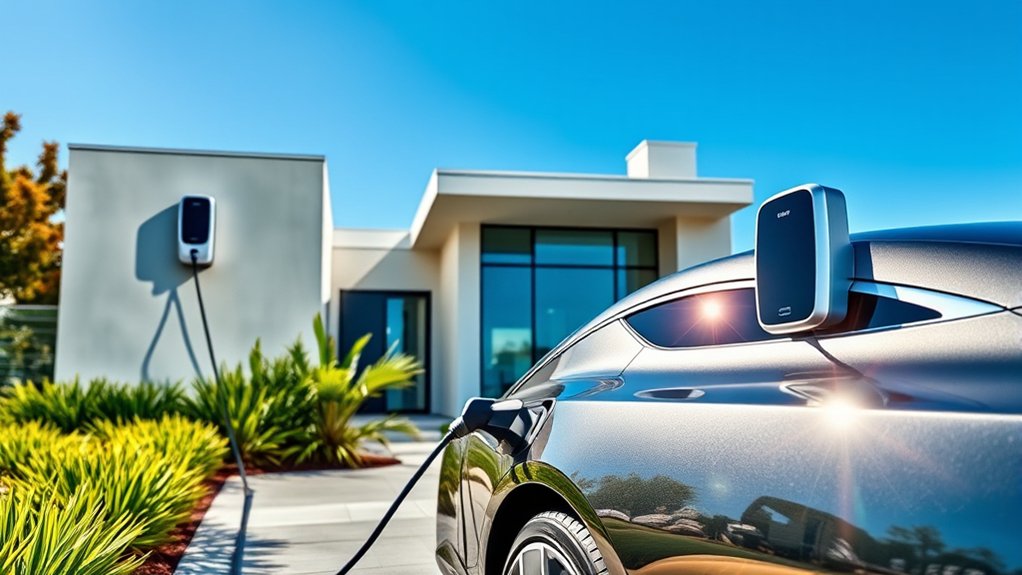
Installing a home EV charger can make your property more useful today and more appealing to future buyers, especially in neighborhoods where electric vehicles are common. It is not a guaranteed dollar-for-dollar home value boost, though. The real payoff depends on your local market, charger type, installation quality, utility rates, and whether buyers in your area see home charging as a must-have feature.
Quick Answer
A home EV charger can increase buyer interest and may support resale value, but there is no reliable national rule that guarantees a specific dollar increase. A permitted Level 2 charger usually adds the most appeal because it gives EV owners faster, easier overnight charging at home.
Key Takeaways
- A home EV charger is best viewed as a marketability upgrade, not a guaranteed home-value multiplier.
- A properly permitted Level 2 charger or 240V EV-ready setup is more attractive than a basic wall outlet.
- The federal 30C residential EV charger credit window ended June 30, 2026, but some state, local, and utility rebates may still be available.
- Installation quality matters. Buyers may value permits, a dedicated circuit, safety-certified equipment, and clear documentation.
Does an EV Charger Increase Your Home’s Value?
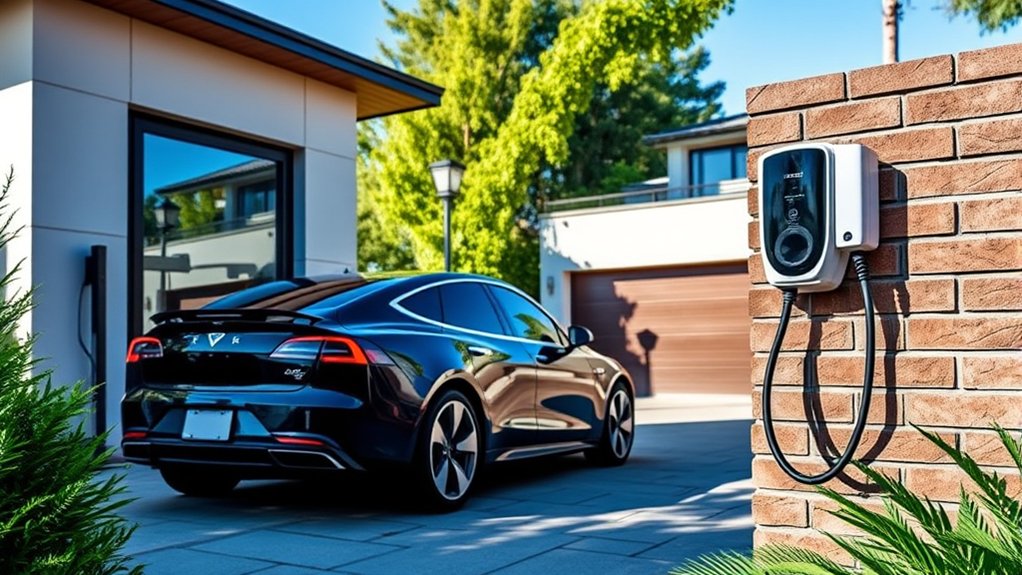
Yes, an EV charger can help your home stand out, but the value increase depends on the buyer and the market. A charger is most valuable when it solves a real problem for the next owner: charging an electric vehicle overnight without relying on public stations.
That is why you should be careful with exact value claims. A home EV charger should not be described as automatically adding $17,000 or more to every property. A better, more accurate way to frame it is this: a properly installed charger can improve resale appeal, especially in areas with high EV ownership, higher incomes, newer homes, long commutes, or limited public charging access.
Market interest is growing. Reporting based on Realtor.com and Cox Automotive data found that 0.9% of U.S. homes listed in 2023 were described as EV-friendly, up from 0.1% five years earlier. That still makes EV-ready homes uncommon, which can help a listing stand out when the right buyer is shopping.
The U.S. Department of Energy’s Alternative Fuels Data Center notes that many EV drivers charge overnight at home with Level 1 or Level 2 equipment. That daily convenience is the real selling point.
What Buyers Value Most in a Home EV Charger
Not every charging setup has the same resale appeal. Buyers usually care less about the charger brand and more about whether the setup is safe, useful, and ready to use.
| Feature | Why It Matters to Buyers |
|---|---|
| Level 2 charging | Uses 240V power and charges much faster than a normal 120V outlet. |
| Dedicated circuit | Shows the charger was planned for EV use rather than added casually. |
| Permits and inspection | Gives buyers confidence that the electrical work meets local code. |
| Good location | The cable should easily reach the vehicle in a garage, driveway, or carport. |
| Outdoor-rated equipment | Important when the charger is installed outside or exposed to weather. |
Pro Tip: Keep your permit, electrician invoice, charger manual, warranty details, and panel-load information. These documents can make the upgrade easier to explain during a home sale.
Rising Demand for EV Chargers Among Home Buyers
Home buyers are paying more attention to EV-ready features because charging at home is easier than planning trips around public stations. A buyer who already owns an EV may see a charger as a daily convenience. A buyer who plans to buy an EV later may see it as future-ready infrastructure.
Still, demand is not equal everywhere. An EV charger usually matters more in:
- Markets with higher EV adoption
- Suburbs where owners park in garages or private driveways
- Areas with high gas prices or strong time-of-use electricity plans
- Neighborhoods with fewer convenient public chargers
- Homes marketed to tech-forward, commuter, or sustainability-focused buyers
In markets where few buyers drive electric vehicles, the charger may not add much direct resale value. In those cases, it still gives you convenience while you own the home.
How EV Chargers Enhance Property Value
A home EV charger can support property value in three practical ways.
It Adds Daily Convenience
The strongest benefit is simple: you can plug in at night and leave with a charged vehicle in the morning. That convenience can be meaningful to buyers who do not want to rely on public stations.
It Shows the Home Is Electrification-Ready
A clean, code-compliant charger setup signals that the home may already be prepared for modern electrical needs. That can matter to buyers thinking about electric vehicles, heat pumps, induction cooking, solar, or battery backup.
It Reduces One More Buyer Project
Many buyers prefer a home that already has useful upgrades installed. If the charger is permitted and well placed, the buyer does not have to hire an electrician, compare charger models, or wait for installation.
Note: A charger is more likely to help resale appeal when it looks permanent, safe, and professionally installed. A loose extension cord or unpermitted outlet can have the opposite effect.
Financial Benefits of Installing an EV Charger
The financial benefit of a home EV charger comes from convenience, possible resale appeal, and lower charging costs compared with some public charging options. The benefit is real for many homeowners, but it should be calculated carefully.
Increased Property Resale Appeal
A home EV charger can make your listing more appealing to EV owners, but the value depends on local buyer demand. Avoid assuming that every buyer will pay a fixed premium. Some buyers may love the feature. Others may ignore it if they do not own an electric vehicle.
The best resale case is a permitted Level 2 charger in a market where EV ownership is common. The weakest resale case is an old, poorly located, undocumented, or unpermitted setup.
Tax Incentives and Rebates
As of July 2026, the federal Alternative Fuel Vehicle Refueling Property Credit is no longer an ongoing incentive for new residential installations after June 30, 2026. The IRS states that eligible individual taxpayers could claim 30% of the cost, up to $1,000 per item, for qualifying main-home property placed in service from January 1, 2023, through June 30, 2026. The property also had to be in an eligible location.
That does not mean all incentives are gone. State, city, and utility programs may still offer rebates, discounted charger programs, or time-of-use electricity plans. Check your utility first because local programs change often.
Long-Term Energy Savings
Home charging can be cheaper than public DC fast charging, especially when you charge during off-peak hours. Your electric bill increase depends on three numbers:
- How many miles you drive each month
- Your EV’s efficiency in kWh per mile
- Your electricity rate per kWh
Use this simple formula:
Monthly EV charging cost = miles driven ÷ miles per kWh × your electricity rate.
For example, if your EV uses 300 kWh in a month and your home electricity rate is $0.15 per kWh, the charging cost is about $45 for that month. Your actual cost can be higher or lower depending on your vehicle, driving, weather, and utility plan.
How to Leverage Tax Incentives and Rebates
To get the best financial result, research incentives before installation rather than after the work is complete.
- Check your utility website. Look for EV charger rebates, off-peak charging rates, and demand-response programs.
- Search state and local programs. The Alternative Fuels Data Center tracks many federal and state transportation incentives.
- Ask the electrician about permits. Some rebates require proof of permitted work or a specific charger type.
- Confirm charger eligibility. Some programs require a Wi-Fi-enabled smart charger or an ENERGY STAR-certified model.
- Save all documents. Keep receipts, permits, inspection records, charger specs, and rebate approvals.
If your charger was placed in service before June 30, 2026, ask a qualified tax professional whether you can still claim the federal 30C credit on the correct return. This is tax guidance territory, so do not rely on a contractor or seller alone.
Why Homeowners Love EV Chargers for Convenience
For daily use, convenience is often the biggest reason to install a home EV charger. You control where, when, and how your vehicle charges.
Overnight Charging Convenience
Overnight home charging lets you treat your EV like a phone: plug it in before bed and start the next day with the range you need. This is especially useful for commuters, parents, rideshare drivers, and households with more than one vehicle.
No Public Station Hassles
Public charging is useful on road trips, but it is not always the easiest option for daily driving. A home charger helps you avoid detours, waiting lines, broken stations, app issues, and peak public-charging prices.
Control Charging Schedule
Many EVs and smart chargers let you schedule charging during off-peak hours. That can lower costs if your utility offers time-of-use rates. It can also reduce stress on your home electrical system and the local grid when set up correctly.
Future-Proofing Your Home With EV Charging Solutions
Future-proofing does not mean guessing the exact resale value of a charger. It means making the home easier to live in as more vehicles and appliances move toward electricity.
| Benefit | How to Evaluate It |
|---|---|
| Buyer Appeal | Stronger in areas where EV ownership is common. |
| Charging Convenience | Best when the cable reaches the normal parking spot easily. |
| Electrical Readiness | More useful when the panel can safely support the charger load. |
| Documentation | Permits, invoices, and manuals make the upgrade easier to trust. |
If you plan to sell soon, ask a local real estate agent whether EV-ready features are showing up in comparable listings. If you plan to stay in the home, focus more on your own charging needs than on a predicted resale premium.
How Home EV Chargers Help the Planet
Home chargers support electric vehicle use by making charging easier. That matters because the EPA says EVs typically have a smaller carbon footprint than gasoline cars, even when accounting for the electricity used for charging. EVs also have no tailpipe emissions.
The environmental benefit depends partly on your local power grid. Charging from a cleaner grid, charging during times when renewable power is more available, or pairing home charging with solar can improve the overall footprint.
- Less tailpipe pollution: EVs do not emit exhaust while driving.
- Lower lifetime greenhouse gases in most cases: EVs typically produce fewer greenhouse gas emissions over their lifetime than comparable gasoline vehicles.
- More flexible energy use: Smart charging can shift demand to off-peak periods when your utility supports it.
Why Professional Installation of EV Chargers Matters
Professional installation matters because Level 2 charging is a high-demand electrical load. A licensed electrician can check your panel capacity, install the correct circuit, follow local code, and help you avoid unsafe shortcuts.
Warning: Do not install a 240V EV charger yourself unless you are legally qualified to do that electrical work in your area. Use a licensed electrician, follow local permitting rules, and choose equipment rated for the installation location.
| Installation Factor | Why It Matters | Resale Benefit |
|---|---|---|
| Code Compliance | EV charging installations must follow local and state electrical rules. | Increases buyer confidence. |
| Panel Capacity | Some homes need a load calculation, circuit upgrade, or panel upgrade. | Reduces concern about hidden electrical problems. |
| Permits and Inspection | A permit record shows the work was reviewed under local rules. | Helpful during disclosure and sale. |
| Safety-Certified Equipment | Certified equipment reduces safety and reliability concerns. | Makes the upgrade feel more professional. |
Frequently Asked Questions
Does an EV charger add value to a home?
It can add resale appeal, especially in EV-friendly markets, but it does not guarantee a fixed value increase. A permitted Level 2 charger is usually more attractive than a basic outlet because it gives buyers faster home charging.
How much does a home EV charger increase the electric bill?
It depends on how much you drive, your EV’s efficiency, and your electricity rate. Multiply the kWh your vehicle uses each month by your cost per kWh. Off-peak charging can lower the cost if your utility offers time-of-use rates.
Is the federal EV charger tax credit still available in 2026?
For new residential installations after June 30, 2026, the federal 30C EV charger credit is no longer available. If your charger was placed in service from January 1, 2023, through June 30, 2026, and met the location and use rules, ask a tax professional whether you can claim it.
Is Level 1 or Level 2 charging better for home value?
Level 2 usually has stronger resale appeal because it uses 240V power and charges faster. Level 1 can work for low-mileage drivers, but it is less impressive as a property feature because it uses a standard 120V outlet.
What is the 80/20 rule for EV charging?
The 80/20 rule usually means charging the battery to about 80% for daily use and avoiding frequent drops below about 20%. This can help reduce battery stress, though you should follow your vehicle manufacturer’s guidance.
Should I install an EV charger before selling my house?
Install one before selling only if EV-ready homes are attractive in your local market or if the installation cost is reasonable. If you are unsure, ask a local real estate agent whether EV chargers appear in nearby listings and whether buyers are asking for them.
Conclusion
An EV charger can be a smart home upgrade, but it should be presented honestly. It may improve buyer appeal, convenience, and future readiness, especially when it is a permitted Level 2 installation in an EV-friendly market. It should not be treated as a guaranteed $17,000 value boost. For the strongest result, focus on safe installation, useful charger placement, clear documentation, and local rebate opportunities.
Sources
- U.S. Department of Energy Alternative Fuels Data Center: Charging Electric Vehicles at Home — home charging levels, installation considerations, permits, safety, and charging cost basics.
- IRS: Alternative Fuel Vehicle Refueling Property Credit — federal 30C credit rules, dates, eligibility, and claim process.
- Alternative Fuels Data Center: Alternative Fuel Infrastructure Tax Credit — federal incentive status and June 30, 2026 expiration.
- EPA: Electric Vehicle Myths — EV emissions, efficiency, charging availability, and environmental context.
- Axios: Where Homes for Sale Are the Most EV-Friendly — Realtor.com and Cox Automotive reporting on EV-friendly home listings.