
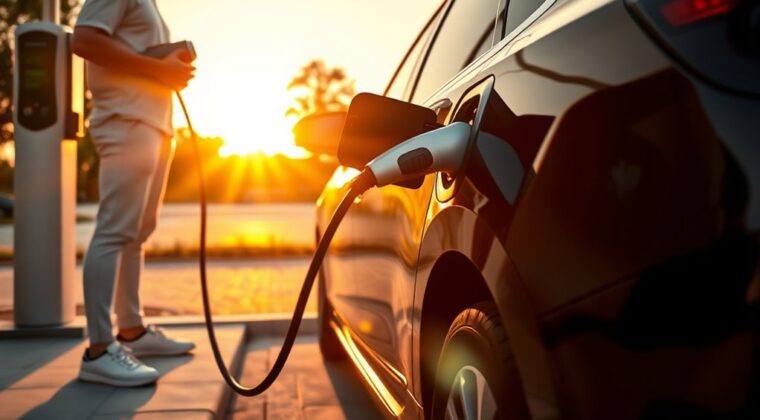
You can charge an EV in hot weather, but heat changes how the car manages the battery, cabin cooling, and charging speed. The safest approach is simple: use proper charging equipment, avoid leaving the battery heat-soaked, pre-cool while plugged in when possible, and pay attention to vehicle warnings.
Quick Answer
Yes, you can charge an EV in hot weather. For daily charging, Level 1 or Level 2 is usually the gentlest choice. In extreme heat, park in shade, pre-cool while plugged in, avoid leaving the battery at 100% longer than needed, and follow any battery temperature or charging warnings.
Key Takeaways
- Hot weather does not make EV charging automatically unsafe, but it can slow charging and reduce range.
- Level 1 and Level 2 charging are usually better for daily summer charging because they add less heat than DC fast charging.
- Use DC fast charging when you need it, but expect the car to reduce power if the battery is hot or already near a high state of charge.
- Pre-cooling while plugged in, parking in shade, and checking tyre pressure can help protect summer range.
- If your EV shows a battery, charger, or high-temperature warning, stop and follow the owner’s manual before continuing.
At a Glance
| Time Required | 5 to 15 minutes to check conditions before plugging in; longer if the car needs to cool after a hard drive. |
| Difficulty | Easy. Most steps use your EV app, dashboard, charger settings, and basic tyre checks. |
| Tools Needed | EV app or infotainment screen, charging cable or station, tyre pressure gauge, and shade or a sunshade when available. |
| Cost | Usually no extra cost beyond electricity. Optional items such as a sunshade or tyre gauge are low-cost upgrades. |
Can You Charge an EV in Hot Weather?
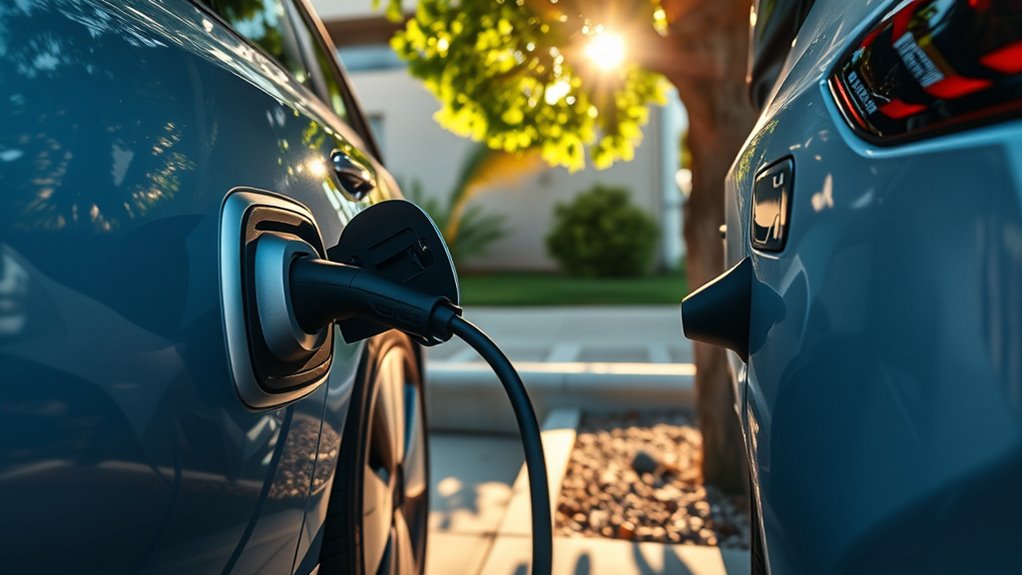
Yes, you can charge an EV in hot weather. Modern electric vehicles are built with battery management systems that monitor temperature, state of charge, and charging power. When the battery gets too warm, the car may cool the pack, slow the charging rate, or limit power to protect the battery.
That means hot-weather charging is usually a managed condition, not an emergency. Still, you should make smart choices. For daily charging, use Level 1 or Level 2 when it fits your schedule. For road trips, DC fast charging is fine when you need it, but it may slow down if the battery is hot, nearly full, or the charger is sharing power.
The U.S. Department of Energy’s Alternative Fuels Data Center explains that charging time depends on battery state of charge, battery size, vehicle charger capacity, charging level, and equipment power. It also notes that Level 1, Level 2, and DC fast charging have very different power levels and charging speeds.
Warning: Do not keep charging if you see a high-voltage battery warning, charger fault, melted plastic, smoke, a burning smell, or a damaged connector. Stop the session, unplug only if it is safe, and follow your owner’s manual or roadside support guidance.
How Heat Affects EV Batteries and Charging
Heat affects an EV in three main ways: the battery may need cooling, the cabin may need more air conditioning, and the charging system may reduce power to stay within safe limits. The car is doing this to protect battery health and keep charging stable.
High temperatures can increase stress on lithium-ion battery chemistry, especially when the battery is very hot and held at a high state of charge for a long time. That does not mean one hot day ruins a battery. It means repeated heat exposure, heavy DC fast charging, and long periods near 100% can add stress over time.
Hot weather can also affect range. Your EV may use energy to cool the battery and cabin before, during, or after charging. If you start with a very hot cabin, the air conditioning has to work harder, especially in slow traffic or stop-and-go driving.
Hot weather usually does not stop EV charging, but it can make the car spend more energy on cooling and may reduce charging speed until temperatures settle.
How to Cool Your EV Before Charging
Cooling your EV before charging is mostly about reducing heat load. You do not need a complicated routine. Focus on shade, airflow, preconditioning, and avoiding unnecessary stress right after a hard drive.
Precondition While Plugged In
Use your EV app or infotainment screen to precondition the cabin while the car is still connected to power. This cools the interior before you leave and reduces the amount of battery energy used for cabin cooling at the start of your trip.
Some EVs can also prepare the battery when you navigate to a fast charger. This feature is often called battery preconditioning or route-based charging preparation. In hot weather, the car may use that preparation to cool or stabilize the pack before a faster charging session.
- Start cabin preconditioning before departure if your EV supports it.
- Keep the car plugged in while cooling the cabin.
- Use the app or dashboard to check charge level and any temperature warnings.
- For DC fast charging, use built-in navigation to the charger if your EV uses route-based battery preparation.
Pro Tip: If your car has scheduled departure, set it before work, school runs, or road trips. The car can cool the cabin while connected instead of using extra battery energy after you unplug.
Park in Shade or Add Airflow
Shade helps because it lowers cabin heat and can reduce the work your air conditioning system must do. Park under a roof, tree, carport, or shade structure when you can. If shade is not available, use a reflective windshield cover and choose a well-ventilated space.
Shade is especially useful before DC fast charging. A battery that starts cooler has a better chance of accepting higher power without the car cutting the charging rate early.
Let the Car Settle After Hard Driving
If you have just climbed steep roads, driven at motorway speed in extreme heat, or arrived with a heavy load, the battery and tyres may already be warm. In that case, you can still plug in, but do not be surprised if the car lowers charging power at first.
If the dashboard shows a battery temperature warning or reduced charging message, give the car time to cool, move to shade if possible, and continue only when the warning clears.
What Charging Speed Is Best in Hot Weather?
For normal daily use, Level 1 or Level 2 charging is usually best in hot weather because it adds energy more gently and produces less heat than high-power DC fast charging. This is why many EV owners charge overnight at home with AC Level 1 or Level 2 equipment.
The AFDC notes that most EV drivers charge overnight at home using Level 1 or Level 2. It also recommends safety-certified equipment and proper electrical installation for home charging.
Level 1 Charging in Heat
Level 1 uses a standard household outlet and is the slowest option. It is gentle, but it may not add enough range if you drive a lot each day. Use only a safe, dedicated outlet that matches your EV’s charging instructions. Avoid extension cords unless the vehicle manufacturer specifically allows them.
Level 2 Charging in Heat
Level 2 is the best daily choice for many EV owners because it is much faster than Level 1 but still gentler than DC fast charging. It can often refill the car overnight or during a long workday. If your charger lets you schedule sessions, charge during cooler hours or during lower-cost utility periods.
DC Fast Charging in Heat
DC fast charging is useful on road trips and busy days. It is not something you must avoid completely in summer. The key is to use it wisely. Arrive with a reasonable state of charge, use route-based battery preparation if your EV supports it, and expect charging to slow as the battery gets warmer or closer to full.
For many road trips, charging to about 70% or 80% and continuing to the next stop is faster than waiting for the last 20%. Charging slows near the top of the battery, and that slowdown can feel more noticeable when the pack is hot.
Note: Your EV’s owner manual is the final guide. Some vehicles handle repeated DC fast charging very well, while others recommend limits for daily charging, long storage, or repeated high-power sessions.
Hot-Weather Charging Checklist
Use this quick checklist before charging on a very hot day:
- Look for shade first. A cooler parking spot helps the cabin and battery cooling system.
- Check the connector. Do not use a damaged plug, frayed cable, wet-damaged outlet, or loose wall socket.
- Pre-cool while plugged in. Use cabin preconditioning before you leave or before you start a longer drive.
- Choose the right speed. Use Level 1 or Level 2 for daily charging. Use DC fast charging when time or travel distance requires it.
- Avoid sitting at 100% in heat. Charge to full only when you need the range soon, unless your manual says otherwise.
- Watch for warnings. A reduced charging message is usually the car protecting itself, but a fault warning needs attention.
- Check tyres cold. Measure pressure before driving, and use the pressure listed on the vehicle placard or owner’s manual.
Why Fast Charging May Slow Down in Summer
If your DC fast charging session slows down in hot weather, it does not always mean the charger is broken. Several things can reduce charging speed:
- High battery temperature: The car may reduce power to protect the pack.
- High state of charge: Charging naturally slows as the battery gets fuller.
- Shared charger power: Some stations split power between charging stalls.
- Charger limits: The station may not deliver the peak power your EV can accept.
- Vehicle limits: Your EV’s charging curve decides how much power it can take at each battery level and temperature.
If the charging speed is lower than expected, check your state of charge first. If the battery is already above 70% or 80%, slower charging may be normal. If the battery is low and charging is still unusually slow, try another charger, check the app for station issues, or let the car cool if it shows a temperature message.
How to Protect EV Range in Summer
Hot weather can reduce EV efficiency, but small habits help you keep more usable range. The biggest goal is to reduce cooling load before the drive starts.
- Pre-cool while connected. Cool the cabin before you unplug so the grid supplies more of that energy.
- Use shade and sunshades. A cooler cabin means less air conditioning work at startup.
- Drive smoothly. Hard acceleration and high speeds use more energy and add heat.
- Use regenerative braking when it feels natural. Smooth one-pedal driving can reduce wasted energy in traffic.
- Plan charging stops. On long trips, shorter DC fast charging stops can be better than pushing the battery close to full.
- Reduce heavy loads. Extra cargo, roof boxes, and towing can cut range, especially in heat.
Do not turn off air conditioning if it makes driving unsafe or uncomfortable. A tired, overheated driver is a bigger risk than a few miles of range loss. Instead, use efficient settings, pre-cool before departure, and avoid blasting the cabin colder than needed.
How to Park and Drive Smarter on Hot Days
Parking and driving habits can have a measurable effect on EV efficiency in hot weather. When you park your EV, use shade or reflective window covers to limit cabin heat and reduce the cooling load when you return.
When you can choose your travel time, drive in the early morning or evening. Cooler conditions reduce the work needed from the air conditioning and battery cooling system.
On the road, keep your speed steady. Rapid acceleration, hard braking, and high motorway speeds use more energy. In traffic, leave enough space to coast gently and use regenerative braking where it suits the conditions.
If you are using public charging, choose a stall with shade when available. If the station has no shade, use cabin preconditioning only as much as needed while charging so you do not add unnecessary cooling demand.
What to Check for Battery and Tyre Care
In hot weather, check three things more often: battery warnings, state of charge, and tyre pressure.
For the battery, avoid letting the car sit for long periods at 0% or 100%, especially in extreme heat. A full charge is fine before a long trip, but it is best to time that full charge close to departure. For normal daily use, follow your EV’s recommended daily charge limit if it has one.
For tyres, check pressure when the tyres are cold. Heat from driving can raise the reading, which makes it harder to know whether the tyre was correctly inflated before the trip. Use the pressure listed on the vehicle placard or owner’s manual, not the maximum pressure printed on the tyre sidewall.
- Check for battery temperature or charging warnings before starting a long charge.
- Keep daily charging within your vehicle’s recommended range.
- Charge to 100% only when you need the full range soon.
- Measure tyre pressure before driving, especially before long summer trips.
- Inspect tyres for cracks, bulges, uneven wear, or low tread.
How to Store an EV in Hot Weather
If you will not drive your EV for weeks or months, heat matters even more because the car may sit at one state of charge for a long time. Check the owner’s manual first, because storage advice varies by vehicle and battery chemistry.
In general, avoid storing the car with a completely empty battery or a full battery. Many EVs prefer a moderate state of charge for storage. If your manufacturer recommends leaving the car plugged in so the thermal system can manage the battery, follow that guidance. If not, check the battery level periodically and recharge before it gets too low.
Store the car in a garage, carport, or shaded area if possible. Remove unnecessary heavy cargo, set tyre pressure correctly, and make sure the 12-volt battery system is maintained according to the manual.
Frequently Asked Questions
Is it okay to charge an EV in hot weather?
Yes. It is usually okay to charge an EV in hot weather because the vehicle manages battery temperature and charging power. Use proper charging equipment, park in shade when possible, and stop if the vehicle shows a battery, charging, or high-temperature warning.
What drains EV batteries the most in summer?
Air conditioning, high speed, hard acceleration, heavy cargo, towing, hills, and battery cooling can all reduce summer range. You can limit the loss by pre-cooling while plugged in, driving smoothly, using shade, and keeping tyres properly inflated.
Should I avoid DC fast charging when it is hot?
You do not need to avoid DC fast charging completely. Use it when you need it, especially on road trips. In very hot weather, expect slower speeds if the battery is warm or nearly full. For daily charging, Level 1 or Level 2 is usually gentler.
What temperature is too hot for electric cars?
There is no single outdoor temperature that is too hot for every EV. The vehicle’s battery management system decides when to cool the battery, slow charging, or show a warning. If your EV displays a high-temperature or charging fault message, follow the manual and let the vehicle cool.
What happens if you do not drive an electric car for 6 months?
The main risks are battery discharge, 12-volt battery issues, tyre flat spots, and heat stress if the car sits in direct sun. Before long storage, check the owner’s manual, leave the battery at the recommended storage level, park in a cool or shaded place, and check the car periodically.
Is Level 1 or Level 2 better for hot-weather charging?
Level 2 is usually the better daily option because it is faster than Level 1 but still gentler than DC fast charging. Level 1 can work well if you drive short distances and have enough time. In extreme heat, schedule charging during cooler hours when possible.
Conclusion
You can charge your EV safely in hot weather if you manage heat instead of ignoring it. Use Level 1 or Level 2 for daily charging, use DC fast charging when you need it, and expect the car to slow charging if the battery is hot. Park in shade, pre-cool while plugged in, avoid leaving the battery full longer than needed, and check tyre pressure before long summer drives. When your EV gives a temperature or charging warning, trust the warning and follow the manual.
Sources
- U.S. Department of Energy Alternative Fuels Data Center: Electric Vehicle Charging Stations — charging levels, charging speed ranges, and charging-time variables.
- U.S. Department of Energy Alternative Fuels Data Center: Charging Electric Vehicles at Home — home charging, outdoor-rated equipment, and installation safety.
- U.S. Department of Energy Alternative Fuels Data Center: Electric Vehicles — basic EV and plug-in vehicle definitions.
- Optimal Battery Thermal Management for Electric Vehicles with Battery Degradation Minimization — hot-weather battery thermal management and battery durability context.
- Battery Thermal-Safety Reserve Erosion by Mandatory Cabin Ventilation in Shared-Cooling Electric Vehicles — current research on hot-weather cabin and battery cooling loads.