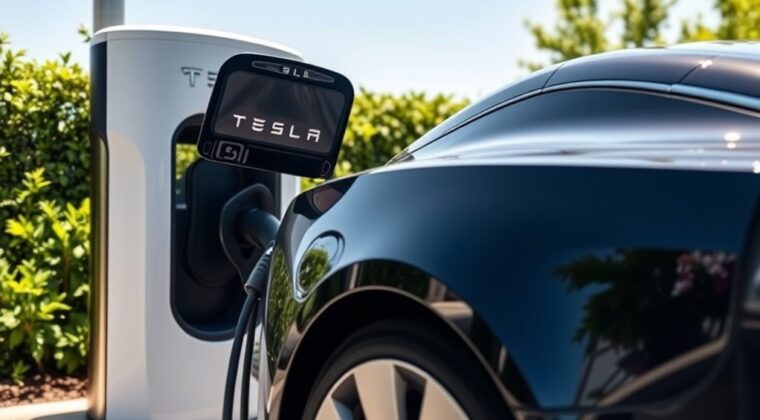
Charging a non-Tesla EV at a Tesla Supercharger is possible at select sites, but the right setup depends on your vehicle, connector, adapter, and the specific Supercharger location. Before you drive there, use the Tesla app or Tesla map to confirm that the site supports your vehicle.
Quick Answer
To charge a non-Tesla EV at a Tesla Supercharger, add your vehicle and payment method in the Tesla app, choose a compatible Supercharger, select the correct stall, connect with native NACS, a Tesla or automaker-approved NACS DC adapter, or Magic Dock, then follow the app prompts.
Key Takeaways
- Not every Tesla Supercharger is open to non-Tesla EVs. Check your vehicle and station in the Tesla app before you arrive.
- A native NACS vehicle can plug in directly at compatible NACS Superchargers.
- A CCS1 vehicle usually needs a Tesla or automaker-approved NACS DC adapter unless the station has Magic Dock.
- Do not use unsupported third-party adapters or AC adapters at Superchargers.
- Pricing, available stalls, speed, and fees vary by site, vehicle, time, and Tesla app settings.
At a Glance
| Time Required | 5 to 10 minutes to set up the app; charging time depends on your EV, battery level, and stall output. |
| Difficulty | Easy once compatibility is confirmed. |
| Tools Needed | Tesla app version 4.30.5 or later, Tesla account, payment method, and an approved adapter if your vehicle needs one. |
| Cost | Pay-per-use pricing shown in the Tesla app. A Supercharging Membership may lower rates at select sites. |
Understanding the Tesla Supercharger Network for Non-Tesla EVs
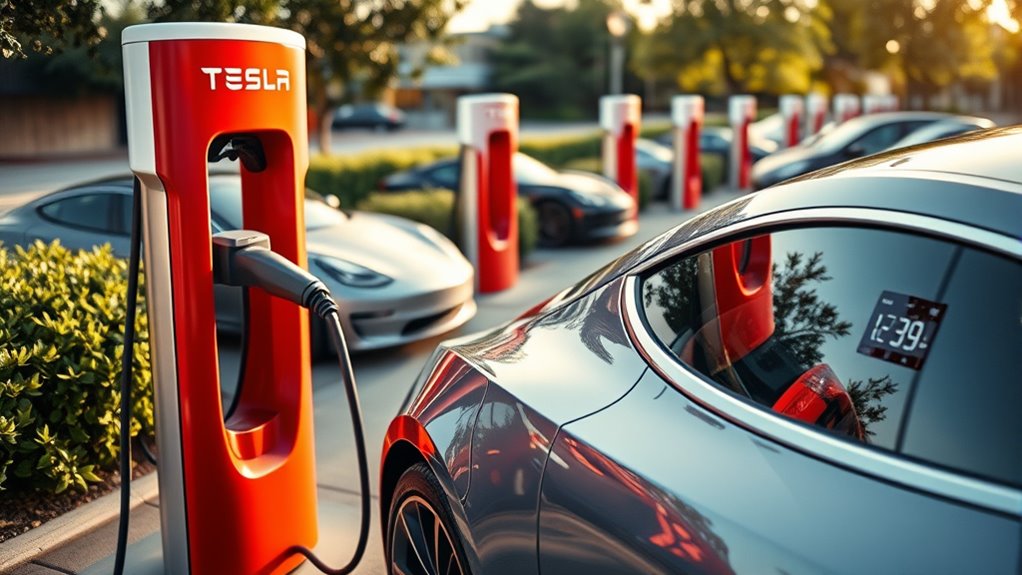
The Tesla Supercharger network is not one single access type for every EV. For non-Tesla drivers in North America, Tesla currently separates access into three main categories:
- Tesla-only Superchargers: These work only with Tesla vehicles.
- All EV Superchargers: These include a built-in Magic Dock adapter at the charging post, so many CCS1-equipped EVs can charge without bringing their own adapter.
- NACS Superchargers: These open gradually by vehicle manufacturer. A native NACS vehicle can plug in directly, while many CCS1 vehicles need a Tesla or vehicle-manufacturer provided NACS DC adapter.
Tesla says select Superchargers are open to vehicles outside of Tesla that are NACS-equipped or have NACS DC adapters. You can review Tesla’s current guidance on Supercharging Other EVs and confirm live site compatibility in the Tesla app.
The key question is not “Can non-Teslas use Tesla Superchargers?” It is “Does this specific Supercharger support my vehicle and adapter setup today?”
NACS, also called the North American Charging System, is the Tesla-developed connector now standardized as SAE J3400. Tesla says its North American network includes thousands of stalls for NACS and a smaller number of stalls for other EVs. Because access continues to change by brand and location, the Tesla app is the safest source for your specific trip.
Essential Checks Before Using Tesla Superchargers With Non-Tesla EVs
Before you rely on a Supercharger, run through these checks. They can save you from arriving at a stall that your EV cannot use.
- Confirm your vehicle type. Battery-electric vehicles are the main fit for Supercharging. Many plug-in hybrids do not have DC fast charging hardware, so they cannot use Superchargers.
- Check your charge port. Your EV may have native NACS, CCS1, or, on some older models, CHAdeMO. CHAdeMO vehicles such as many older Nissan Leaf models generally need another charging network.
- Confirm automaker access. Tesla lists supported manufacturers in its app and on its support pages. Access can vary by brand, model, model year, software, and adapter availability.
- Use the Tesla app. Download the Tesla app, create or sign in to your Tesla account, add your vehicle details, and add a payment method.
- Filter for compatible stations. In the app, choose Charge Your EV or Find a Charger, then select a station that is shown as compatible with your vehicle.
- Bring the correct adapter if needed. If your CCS1 vehicle needs an adapter, use only a Tesla or automaker-approved NACS DC adapter.
Warning: Do not use unsupported third-party adapters or AC charging adapters at Tesla Superchargers. Tesla says Supercharging is limited to NACS-equipped vehicles and CCS1 vehicles using a Tesla or vehicle-manufacturer provided NACS DC adapter. An incorrect adapter can fail to charge and may damage your vehicle.
Compatibility Guide: Which EVs Can Use Tesla Superchargers?
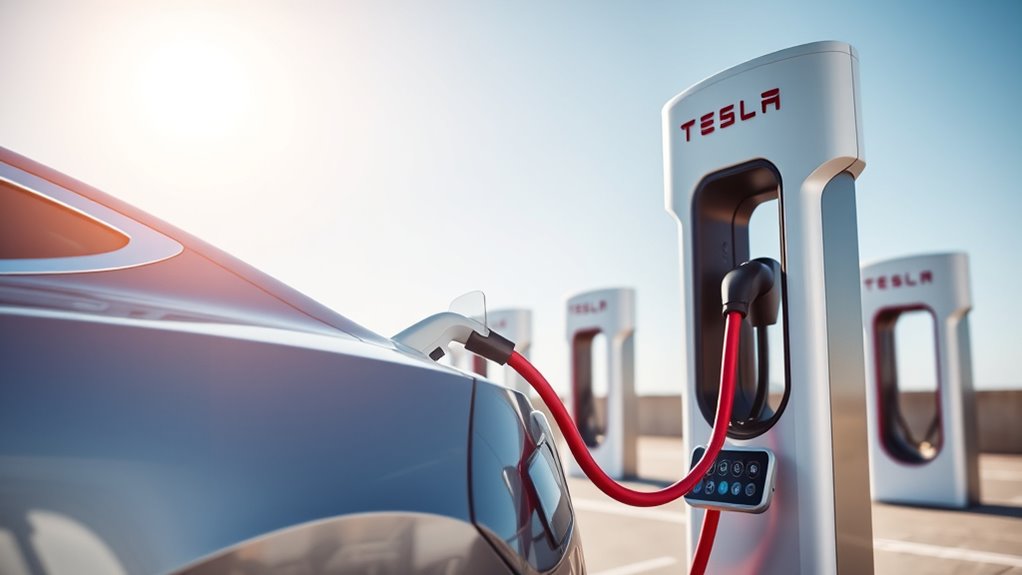
Compatibility depends on the charger type, your EV’s port, and whether your automaker has enabled Tesla Supercharger access. The easiest way to check is to add your vehicle in the Tesla app and view compatible Supercharger sites.
| Your EV Setup | What You Need | Best Way to Verify |
| Native NACS port | No adapter at compatible NACS Superchargers. | Add the vehicle in the Tesla app and check compatible locations. |
| CCS1 port, automaker enabled | Approved NACS DC adapter from Tesla or your vehicle manufacturer. | Check your automaker app, owner account, owner’s manual, and Tesla app. |
| CCS1 port at Magic Dock site | Built-in Magic Dock adapter at the charging post. | Filter for compatible All EV or Magic Dock sites in the Tesla app. |
| CHAdeMO or no DC fast-charge port | Usually not compatible with Tesla Superchargers. | Use another DC fast charging or Level 2 network. |
Supported EV Models
Tesla’s current supported manufacturer list includes Acura, Audi, BMW, Ford, General Motors, Genesis, Honda, Hyundai, JLR, Kia, Lucid, Mercedes-Benz, Nissan, Polestar, Porsche, Rivian, Stellantis, Subaru, Toyota, Volkswagen, and Volvo. This does not mean every model year and trim can charge at every Supercharger. It means Tesla has opened NACS Supercharger access by manufacturer, with details handled through vehicle software, adapters, and app compatibility.
If your brand appears in the Tesla app but your vehicle still does not show compatible stations, check for a vehicle software update, adapter eligibility, or automaker-specific enrollment steps.
Connector Compatibility Requirements
The most common connector situations in North America are NACS, CCS1, and CHAdeMO. The U.S. Department of Energy explains that DC fast charging can use connector systems such as CCS, CHAdeMO, and J3400/NACS, and that charging speed depends on the vehicle, battery state of charge, and equipment. You can read the DOE overview of electric vehicle charging stations for connector and charging-level context.
For Tesla Superchargers, a native NACS port is the simplest setup. A CCS1 port can work when your vehicle is supported and you use an approved NACS DC adapter or a Magic Dock-equipped stall. CHAdeMO vehicles typically need a different public charging network.
Charging Adapter Options
There are two main adapter paths for non-Tesla EVs:
- Magic Dock: The adapter is built into the Supercharger post. You unlock it through the Tesla app, then plug the combined handle into your CCS1 vehicle.
- NACS DC adapter: You bring an approved adapter from Tesla or your automaker, connect it to the Supercharger cable, then plug it into your CCS1 vehicle.
Do not confuse DC fast-charging adapters with Level 2 AC adapters. A Level 2 adapter is not for Supercharging.
How to Charge Your Non-Tesla Vehicle at a Tesla Supercharger
Once your vehicle, site, and adapter are confirmed, the charging process is straightforward.
- Open the Tesla app. Sign in or create a Tesla account.
- Add your vehicle details. This helps the app show compatible Superchargers for your EV.
- Add a payment method. Tesla app sessions require a payment method. Some limited sites may also support card, mobile payment, or text-to-pay at the charger.
- Tap “Charge Your EV” or “Find a Charger.” Choose a compatible Supercharger site.
- Park at the stall carefully. Line up your charge port with the short Supercharger cable as well as you can.
- Select the correct stall number. Each post has an identifier, such as 4A. Choose the same identifier in the app.
- Connect the adapter if needed. If you are using a NACS DC adapter, attach it to the Supercharger cable before plugging into your vehicle. If you are using Magic Dock, follow the app prompt to unlock the built-in adapter.
- Plug in promptly. Tesla says you may need to start over if you do not remove the connector within 30 seconds and plug in within one minute after selecting a post.
- Watch the session start. Confirm charging begins in the app and on your vehicle screen.
- Stop charging when finished. Use the Tesla app to stop the session, then unplug and move your EV so the stall is open for the next driver.
Pro Tip: Before a road trip, open the Tesla app at home and save a few compatible Superchargers along your route. Do not wait until your battery is low to discover that a nearby Tesla-only site will not work with your EV.
Common Challenges When Charging at Tesla Superchargers
Most problems come from one of four areas: station compatibility, adapter mismatch, cable reach, or app/payment setup. Here is how to handle the common issues.
Common Adapter Issues
If charging does not start, first check whether you are using the correct adapter for DC fast charging. A CCS1 vehicle needs a Tesla or automaker-approved NACS DC adapter unless the stall has Magic Dock. If the app does not show the station as compatible with your vehicle, do not assume the adapter alone will solve it.
Also check that the adapter is fully seated. Many DC fast-charging adapters need a firm connection before the vehicle and charger can communicate.
Cable Reach and Parking Problems
Some Tesla Supercharger cables were designed around Tesla charge-port locations. Your non-Tesla EV may have its port in a different place. Tesla says most cables at NACS Supercharger sites should reach, but some drivers may need to park slightly over the line to charge comfortably. Avoid parking diagonally, and block as few posts as possible.
Note: If your vehicle’s charge port is on the front driver side, rear passenger side, or far from the stall, choose a spot that lets the cable reach without stretching or blocking multiple stalls.
Charging Speed Variability
Charging speed can vary even when everything is compatible. Common reasons include:
- Your EV’s maximum DC fast-charging rate.
- The Supercharger version and available power.
- Battery temperature and whether your vehicle preconditioned the battery.
- Battery state of charge. EVs usually charge fastest at lower to mid battery levels and slow down as the pack fills.
- Adapter and vehicle communication limits.
Do not expect your non-Tesla EV to match the peak speed advertised for every Supercharger. The app and your vehicle screen are the best indicators during the session.
Magic Dock Availability
Magic Dock access is useful, but it is not available at every station. If your CCS1 EV depends on Magic Dock and you do not have an approved NACS DC adapter, filter carefully in the Tesla app. If the site does not show as compatible, choose another charger.
What to Do if Charging Does Not Start
- Confirm the stall number in the app matches the post you are using.
- Unplug and reseat the connector or adapter.
- Check whether your payment method needs updating.
- Close and reopen the Tesla app.
- Move to another compatible stall if one is open.
- Check your vehicle screen for an error message.
- Try another charging network if the app does not show your EV as supported at that site.
Charging Costs at Tesla Superchargers
Tesla Superchargers are pay-per-use for non-Tesla EVs. The price can vary by site, time, local taxes, charging speed, and Tesla app settings. Always check the price shown in the Tesla app before you start.
| Cost Factor | What to Know |
| Per-kWh or session pricing | Shown in the Tesla app before and during charging where available. |
| Supercharging Membership | Optional. It may lower the charging rate at select sites. Check the current monthly price in the Tesla app. |
| Temporary authorization hold | Tesla may place a temporary hold when a non-Tesla session starts through the app. |
| Congestion or idle-related fees | Fees may apply based on Tesla’s current Supercharger fee rules and site conditions. Turn on app notifications. |
| Limited on-site payment options | Some sites may support credit card, mobile payment, or text-to-pay, but the Tesla app is the normal method for non-Tesla drivers. |
If you charge often on road trips, compare the membership price with your expected monthly Supercharger use. If you only use Tesla Superchargers occasionally, the standard pay-per-use rate may be simpler.
Other Charging Options You Should Consider
Tesla Superchargers can be helpful, but they should not be your only plan. A good EV charging routine usually combines home charging, workplace charging, and several public networks.
- Home Level 2 charging: Best for daily use if you have a driveway, garage, or approved parking setup. The DOE says most EV owners do most charging at home.
- Electrify America: Useful for many CCS1 vehicles and highway trips.
- ChargePoint: Common for Level 2 charging at workplaces, parking garages, hotels, and public destinations.
- EVgo and Blink: Additional public charging options in many metro areas.
- DOE station locator: The Alternative Fueling Station Locator can help you find public EV charging stations by location and connector type.
For road trips, plan at least one backup charger near each planned fast-charging stop. This matters more in cold weather, rural areas, and busy travel periods.
Frequently Asked Questions
Can I charge a non-Tesla vehicle at a Tesla Supercharger?
Yes, if the Supercharger supports your vehicle. Your EV may need native NACS, an approved NACS DC adapter, or a Magic Dock-equipped stall. Add your vehicle in the Tesla app to see compatible stations.
How much does it cost to charge a non-Tesla at a Supercharger?
The cost varies by location, time, taxes, and Tesla app pricing. Tesla shows pricing for each site in the app. A Supercharging Membership may lower the rate at select sites, but you should check the current membership price in the app.
Which Superchargers are open to non-Teslas?
Tesla-only Superchargers are not open to other brands. All EV Superchargers with Magic Dock can support many CCS1 EVs. NACS Superchargers are opening gradually by manufacturer and can work with native NACS vehicles or supported CCS1 vehicles using approved adapters.
How do I pay for a Tesla Supercharger if I do not have a Tesla?
Use the Tesla app, add a payment method to your Tesla account, choose a compatible site, and follow the charging prompts. At limited sites, Tesla may also support credit card, mobile payment, or text-to-pay at the charger.
Can I use any CCS to NACS adapter at a Tesla Supercharger?
No. Use only a Tesla or vehicle-manufacturer approved NACS DC adapter for Supercharging. Unsupported third-party adapters are prohibited by Tesla, and AC adapters are not for Superchargers.
Why is my non-Tesla charging slower than expected?
Charging speed can drop because of your vehicle’s max DC rate, battery temperature, high battery state of charge, adapter limits, charger output, or site conditions. Check both the Tesla app and your vehicle screen during the session.
Conclusion
Charging a non-Tesla at a Tesla Supercharger is no longer unusual, but it still takes a quick compatibility check. The safest approach is simple: add your EV in the Tesla app, choose a compatible Supercharger, use the correct approved adapter if needed, and confirm pricing before you plug in.
If your route depends on Supercharging, check the station before you leave and keep a backup public charger nearby. With the right planning, Tesla Superchargers can become one more practical fast-charging option for your non-Tesla EV.
Sources
- Tesla Support: Supercharging Other EVs — non-Tesla access types, Tesla app steps, payment, approved adapter guidance, and cable reach notes.
- Tesla NACS: Charging for All — NACS access, supported automakers, and Tesla’s current public stall categories.
- U.S. Department of Energy Alternative Fuels Data Center: Electric Vehicle Charging Stations — charging levels, connector types, DC fast charging context, and public charging terminology.
- SAE J3400 North American Charging System — official standardization reference for the NACS/J3400 connector.
- Tesla Find Us Map — Tesla’s location tool for finding current Supercharger sites.