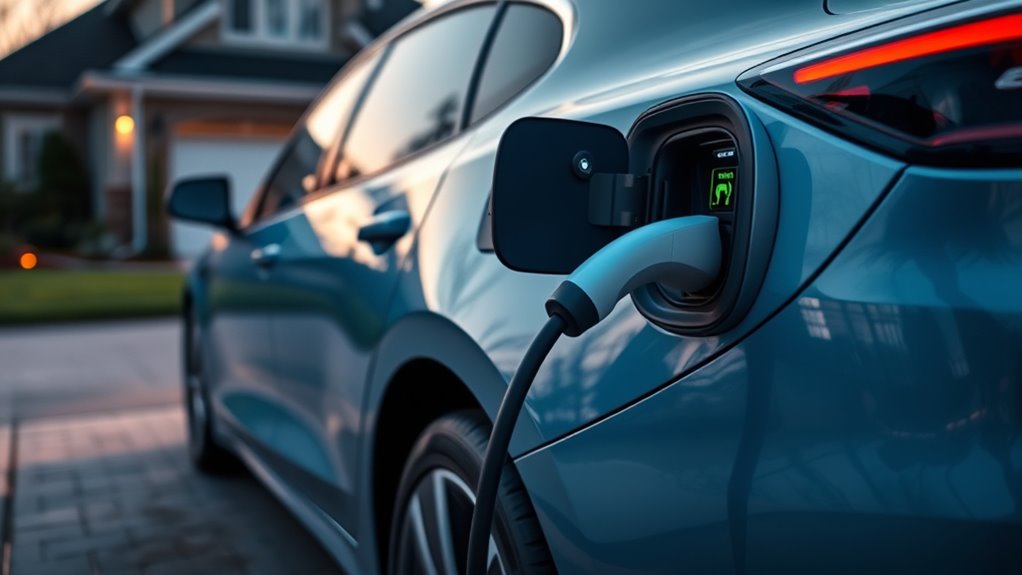
You should charge your plug-in hybrid around your daily miles, parking access, and time available. For short commutes, a standard 120-volt outlet can often recharge the battery overnight with Level 1 charging. If you need faster recovery, a 240-volt Level 2 charger can refill many PHEV batteries in about 1 to 4 hours. Most North American PHEVs use a J1772 connector for Level 1 and Level 2 charging, while DC fast charging is limited to select models. The best setup is the one that fits your vehicle, your circuit, and your routine.
Quick Answer
Charge a PHEV with Level 1 if you drive short daily trips and can plug in overnight. Choose Level 2 if you need faster charging, share the car, or return home with a low battery often. Use J1772 Level 1 or Level 2 stations unless your owner’s manual confirms DC fast charging.
Key Takeaways
- Level 1 charging uses a normal 120-volt outlet and works best when the car can sit overnight.
- Level 2 charging uses 240 volts at home or 208 volts at many commercial sites and is the faster daily option.
- Most PHEVs in North America use a J1772 plug for Level 1 and Level 2 charging, but you should still check your vehicle port before using a public station.
- Most PHEV owners do not need DC fast charging because the gas engine is available when the battery is low.
- Off-peak scheduling, station-price checks, and safe electrical setup can lower costs and prevent charging problems.
At a Glance
| Time Required | Level 1: several hours to overnight. Level 2: about 1 to 4 hours for many PHEVs, depending on battery size and onboard charger limits. |
| Difficulty | Easy for Level 1 if you have a safe outlet. Moderate for Level 2 because a qualified electrician may need to inspect or install a dedicated circuit. |
| Tools Needed | Vehicle charging cord, J1772-compatible EVSE or station, vehicle app, public charging app, and an electrician for new Level 2 wiring. |
| Cost | Level 1 may need no added hardware if the outlet is safe and suitable. Level 2 costs vary by EVSE, wiring, permits, utility rate, and incentives. |
How Should You Charge a PHEV?
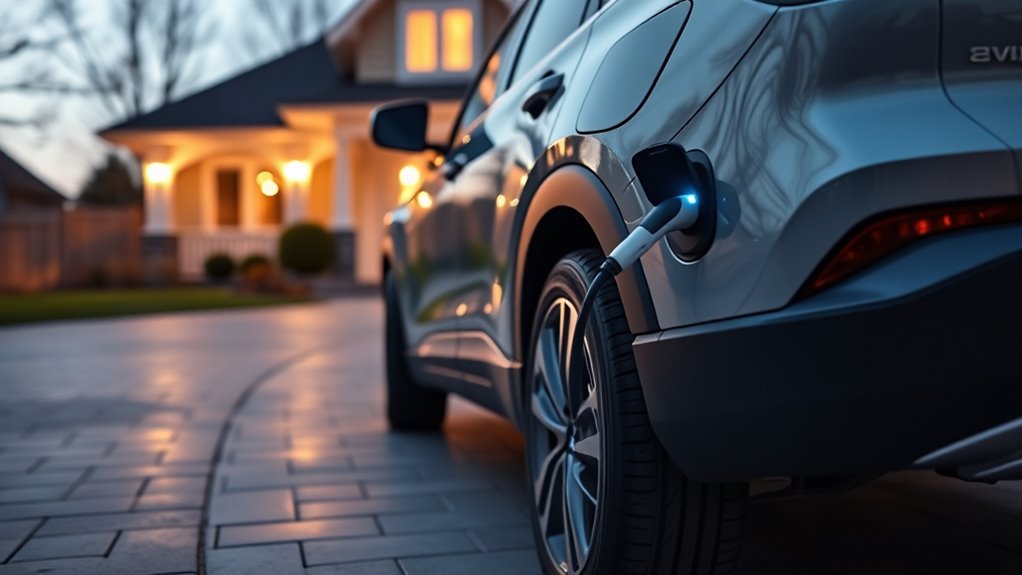
You should charge a PHEV with the slowest safe method that still meets your schedule. That usually means Level 1 or Level 2 charging, not DC fast charging.
Start with your daily electric miles. If you drive 10 to 30 miles a day and park at home overnight, Level 1 may be enough. If you drive farther, share the vehicle, make several trips a day, or want the battery ready again after dinner, Level 2 makes more sense.
Your actual charge time depends on four things:
- Battery size: Larger PHEV batteries take longer to refill.
- State of charge: A half-empty battery charges faster than a fully depleted one.
- EVSE power: A higher-power Level 2 unit can supply more electricity if the car accepts it.
- Onboard charger limit: The car controls how much AC power it can convert into battery power.
Most PHEV owners get the best result by plugging in when they park, scheduling charging for lower-rate hours, and letting the car’s battery management system handle the rest.
When Is Level 1 Charging Enough?
Level 1 charging is enough when your daily driving is modest and the car can stay plugged in for several hours. It uses a standard 120-volt household outlet and commonly adds about 5 miles of range per hour under typical conditions.
That makes Level 1 practical for short commutes, school runs, errands, and overnight parking. If your PHEV has 25 to 45 miles of electric range and you only use part of that each day, a normal overnight session can often restore what you used.
A 120-volt Level 1 cord is slow, but it can be the easiest and cheapest home setup when your PHEV sits parked overnight.
Before relying on Level 1, check that the outlet is in good condition, grounded, and suitable for continuous charging. Avoid loose outlets, damaged cords, overheated plugs, or improvised extension-cord setups. If the outlet trips a breaker or feels hot, stop charging and have it inspected.
Note: Level 1 is easiest when the outlet is near your parking spot and on a circuit that is not already loaded with freezers, tools, space heaters, or other high-draw devices.
Why Choose Level 2 Charging?
Choose Level 2 charging when you want faster, more predictable recovery. Level 2 uses 240 volts in most homes or 208 volts in many commercial locations. It can add about 25 miles of range per hour in many EV charging setups, though your PHEV may charge slower if its onboard charger has a lower limit.
For many plug-in hybrids, Level 2 can refill the battery in about 1 to 4 hours. That makes it useful when you want to drive in electric mode again later the same day, when your commute uses most of the battery, or when several drivers use the same car.
Do not choose a Level 2 unit by amperage alone. Match the EVSE to your vehicle manual, onboard charger capacity, panel capacity, circuit rating, and local code. A 30- or 32-amp unit may be more than some PHEVs can use, while other models may accept higher AC power. The car will only draw what it can safely accept.
Warning: Have a qualified electrician review any new 240-volt home charging setup. EV charging is a continuous electrical load, and installations may need a dedicated circuit, permit, outdoor-rated equipment, and code-compliant wiring.
Level 1 vs Level 2: Which One Fits You?
| Your situation | Best fit | Why it works |
|---|---|---|
| You drive short daily trips and park overnight | Level 1 | Slow charging is usually enough to replace the miles you used that day. |
| You often drain most of the battery | Level 2 | Faster charging helps you start the next drive with more electric range. |
| You share the PHEV with another driver | Level 2 | A faster refill helps between back-to-back trips. |
| You rent or cannot install wiring | Level 1 or public Level 2 | You avoid permanent installation while still charging when available. |
| You want lower charging costs | Either, scheduled off-peak | Timing often matters more than charging speed for cost control. |
Why Most PHEVs Don’t Use DC Fast Charging
Most PHEVs do not need DC fast charging because their batteries are smaller than full EV batteries and the gas engine is available when the battery is low. They are designed to cover daily local driving on electricity, then continue as hybrids when needed.
DC fast charging is built for high-power charging during longer electric-only trips. It uses different connectors, higher power, and larger station equipment. That is helpful for many battery-electric vehicles, but less important for a PHEV that can keep driving on gasoline.
Some plug-in hybrids may offer DC fast charging, often through CCS or CHAdeMO depending on the model and market. Do not assume your PHEV can use a DC fast charger just because a station is nearby. Check your charge port, owner’s manual, or vehicle app first.
For most PHEV owners, dependable home Level 1 or Level 2 charging is more useful than searching for high-power public fast chargers.
Which Connector Does a PHEV Use?
In North America, most PHEVs use the SAE J1772 connector for Level 1 and Level 2 AC charging. That connector works with many home chargers, workplace stations, retail-lot stations, and public Level 2 chargers.
The connector landscape is changing for full EVs as SAE J3400, often called NACS, expands across North America. For PHEV owners, the safest rule is simple: check the port on your car and filter public stations by the connector your car can actually use.
J1772 Connector Basics
A J1772 plug is used for AC charging. On Level 1, the charging cord usually plugs into a household outlet on one end and into the car’s J1772 inlet on the other. On Level 2, the station or wall unit supplies higher-power AC electricity through the same basic connector type.
The wall unit is often called a “charger,” but technically it is electric vehicle supply equipment, or EVSE. The car’s onboard charger converts the incoming AC power to DC power for the battery.
Level 1 and Level 2
Level 1 and Level 2 are the main charging methods for most PHEVs. Level 1 is slower but simple. Level 2 is faster but may require electrical work. Both can use J1772 on most North American PHEVs.
If a public station uses J1772 and your PHEV has a J1772 inlet, it should physically connect. Still, always check station status, pricing, and parking rules before you plug in.
DC Fast Compatibility
DC fast charging is not the default for most plug-in hybrids. Some models support it, but many do not. The connector table below shows the practical difference.
| Connector | Common use | PHEV note |
|---|---|---|
| J1772 | Level 1 and Level 2 AC charging | Standard fit for many North American PHEVs. |
| CCS | DC fast charging, with AC support on compatible ports | Available on select PHEVs only. Verify your model. |
| CHAdeMO | DC fast charging on some older or specific models | Rare for PHEVs in North America. |
| J3400 / NACS | Growing North American EV connector standard | Check whether your vehicle needs an adapter or cannot use the station. |
How Long Does PHEV Charging Take?
PHEV charging time depends on voltage, battery size, starting charge level, temperature, and onboard charger capacity. A small PHEV battery may refill quickly, while a larger one can take longer even on the same charger.
As a practical guide, Level 1 charging from a 120-volt outlet often takes several hours to overnight. Level 2 charging from a 240-volt home setup or public station often takes about 1 to 4 hours for many PHEVs.
- Use Level 1 when the car sits long enough to recover overnight.
- Use Level 2 when you want faster routine charging.
- Check the onboard charger rating before buying a high-amperage EVSE.
- Expect slower charging near full if the vehicle tapers power to protect the battery.
- Use the vehicle app to track charge status and scheduled charging.
Where Can You Charge a PHEV in Public?
You can charge a PHEV at many public Level 2 stations, including workplace lots, shopping centers, hotels, parking garages, municipal lots, and highway-adjacent locations. Public charging is most useful when your car will be parked for a while.
Use a station app or the Alternative Fueling Station Locator to filter by connector, availability, access hours, and network. For most PHEVs, filter for J1772 Level 2 first.
Before you start a session, check:
- Connector type: Confirm J1772, CCS, CHAdeMO, or J3400 compatibility.
- Station status: Look for available and working ports.
- Pricing: Check per-kWh, per-minute, session, parking, and idle fees.
- Access rules: Some chargers are for customers, residents, employees, or specific hours only.
- Cord reach: Make sure the cable can reach your charge port without strain.
When the session finishes, move the car if the space is needed for active charging. That keeps public stations useful for other drivers and helps you avoid idle fees where they apply.
Smart PHEV Charging Habits That Save Money
Smart PHEV charging starts with timing. Many utilities offer time-of-use plans or EV charging incentives, so charging late at night or during other off-peak windows may reduce your cost. Check your utility’s rate schedule before you set a charging timer.
Off-Peak Charging Times
Off-peak windows vary by utility, season, and rate plan. Some drivers save money by setting the vehicle or charger app to start after peak evening demand. Others use workplace or public charging only when the price is clear and the car will be parked long enough to make the stop worthwhile.
Pro Tip: Set your departure time in the vehicle app if your PHEV supports scheduled charging. The car can finish charging close to when you leave, which may reduce time spent sitting at full charge.
- Check your utility’s time-of-use rate windows.
- Use scheduled charging instead of plugging in during peak evening hours.
- Compare home rates with public station prices before paying for a top-up.
- Watch for idle fees after charging ends.
- Use the car’s electric range first on short local trips when practical.
Match Charger to Needs
Matching the charger to your driving pattern helps you avoid overspending. A driver who uses 12 electric miles per day may be fine with Level 1. A driver who uses the full battery daily may benefit from Level 2. A renter without home charging may need a mix of workplace charging, public Level 2 stations, and gasoline backup.
| Use case | Charger | Result |
|---|---|---|
| Short commute | Level 1 | Simple overnight recovery with little added setup. |
| Longer daily driving | Level 2 | Faster refill and more electric miles between trips. |
| No home charging | Workplace or public Level 2 | Useful top-ups while parked, with gasoline backup when needed. |
What If Your PHEV Won’t Charge?
If your PHEV will not charge, start with simple checks before assuming the battery has failed.
- Check the outlet or station: Make sure it has power and no breaker has tripped.
- Inspect the plug: Look for dirt, moisture, bent pins, cracks, or a loose connection.
- Confirm the car is unlocked or ready: Some vehicles lock the charge port or require a specific start sequence.
- Review scheduled charging: The car may be waiting for an off-peak start time.
- Check the app or dashboard message: It may show a charging fault, full battery, or timer setting.
- Try another station or cord: This helps separate a car issue from an EVSE issue.
- Call service if warnings remain: Do not keep retrying if you see heat, burning smell, damaged equipment, or persistent charging errors.
Frequently Asked Questions
What is the best way to charge a plug-in hybrid?
The best way to charge a plug-in hybrid is to plug in at home whenever possible and match the charging level to your schedule. Use Level 1 for short daily driving and overnight parking. Use Level 2 if you need faster recovery or want to maximize electric driving.
Should I charge my plug-in hybrid every night?
Yes, if you want to start each day with the most electric range. Nightly charging is normal for many PHEV owners, especially when you schedule charging during lower-cost utility hours. Always follow your owner’s manual for model-specific charging guidance.
What kind of charger do most PHEVs use?
Most PHEVs in North America use J1772 for Level 1 and Level 2 charging. Some newer or specific models may support CCS, CHAdeMO, or other connector options for faster charging, so check your vehicle port and manual before choosing a station.
What can drain a hybrid battery overnight?
A PHEV’s high-voltage battery should not normally drain overnight. If the vehicle is dead in the morning, the problem is often the 12-volt battery, lights left on, an accessory draw, a charging timer setting, or a fault that needs diagnosis. Check the dashboard message and contact service if the issue repeats.
Can a PHEV use a DC fast charger?
Some PHEVs can, but many cannot. Most plug-in hybrids are designed around Level 1 and Level 2 AC charging because they have smaller batteries and a gasoline engine for longer trips. Use DC fast charging only if your owner’s manual confirms that your model supports it.
Conclusion
To charge your plug-in hybrid the right way, match the charging method to your daily driving and your home electrical setup. Use Level 1 when overnight charging covers your routine. Choose Level 2 when you need faster recovery or want to drive in electric mode more often. Check your connector before using public stations, schedule charging during lower-cost hours when possible, and let a qualified electrician handle new 240-volt installations. A PHEV works best when charging is simple, safe, and consistent.
Sources
- FuelEconomy.gov: Plug-in Hybrids — PHEV definition, benefits, and typical 120-volt and 240-volt charging time guidance.
- Alternative Fuels Data Center: Electric Vehicle Charging Stations — Level 1, Level 2, DC fast charging, J1772, J3400, charging-speed factors, and connector terminology.
- Alternative Fuels Data Center: Charging Electric Vehicles at Home — home charging, certified equipment, electrician guidance, permits, NEC Article 625, and charging cost factors.
- Alternative Fuels Data Center: Charging Electric Vehicles in Public — public charging locations, Level 2 and DC fast charging use, and planning considerations.
- Alternative Fueling Station Locator — tool for finding public charging stations by location and filters.