
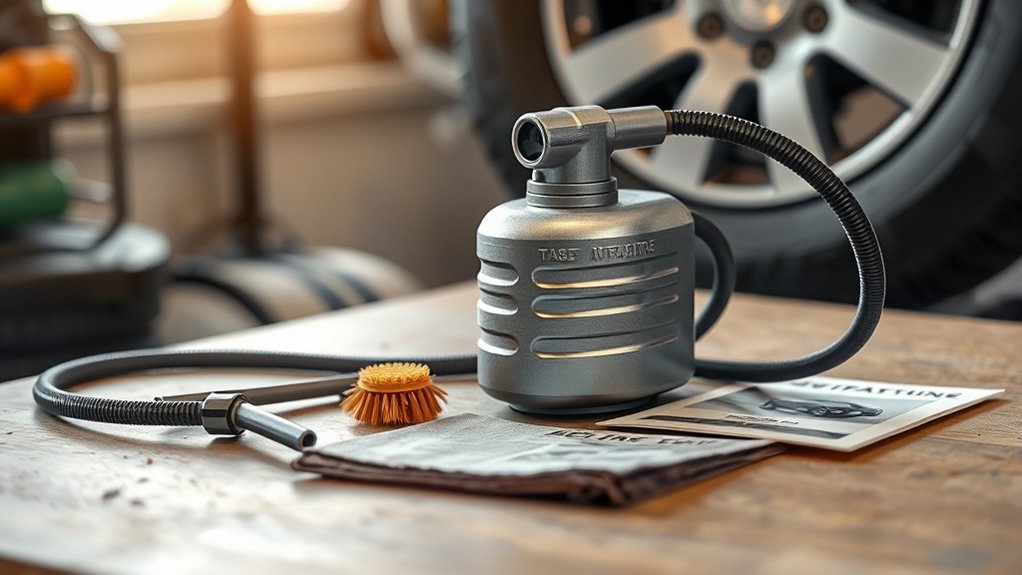
To extend your tire inflator’s lifespan, focus on the things that cause the most avoidable stress: overheating, blocked airflow, damaged hoses or cords, moisture, incorrect power, and poor storage. Follow the exact duty cycle and power requirements in your model’s manual, use the vehicle’s recommended cold tire pressure, keep the inflator clean and dry, and stop using it if the hose, cord, plug, battery, or housing is damaged.
Quick Answer
The safest maintenance routine is simple: inspect the inflator before use, place it on a clean surface with its vents clear, follow its duty cycle, verify tire pressure with an accurate gauge, let the unit cool before storage, and keep it in a dry location. Do not lubricate a portable inflator unless its manual specifically tells you to do so; many modern units use permanently lubricated, maintenance-free motors.
Key Takeaways
- Follow the manufacturer’s manual for duty cycle, cooling time, voltage, current limits, maximum working pressure, and maintenance.
- Inspect the hose, chuck, power cord, plug, battery, and housing for damage before use.
- Keep air intakes and cooling vents clear, and operate the inflator on a hard, clean surface when the manual requires it.
- Inflate vehicle tires to the vehicle manufacturer’s recommended cold pressure, not the maximum pressure molded on the tire sidewall.
- Let the inflator cool as directed before using it again or putting it away.
- Keep the unit dry and avoid internal repairs or lubrication unless the manual specifically allows them.
What Shortens Tire Inflator Lifespan?
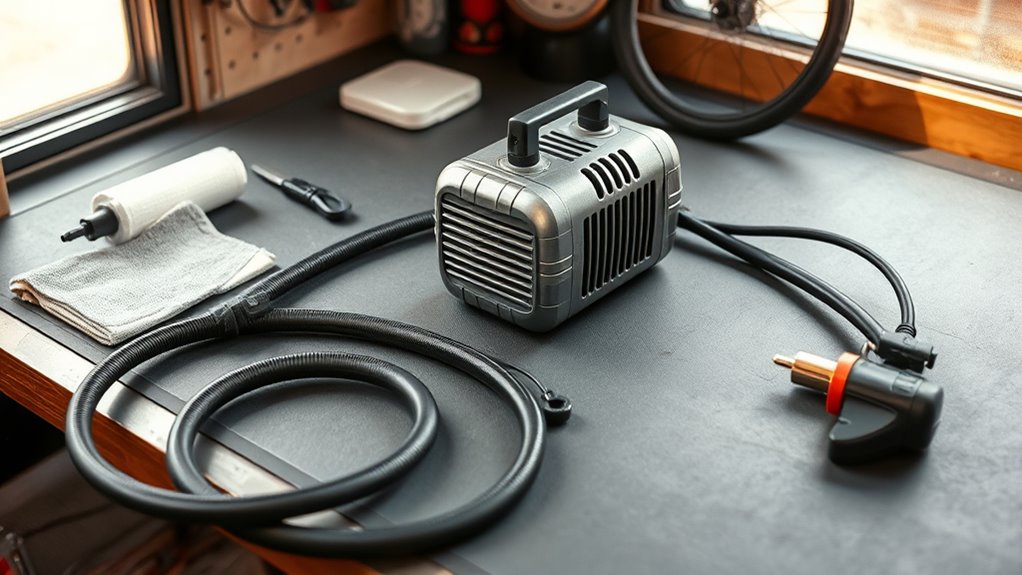
The biggest avoidable problems are excessive heat, blocked airflow, using the wrong power source, moisture, damaged hoses or electrical parts, and rough storage. A portable compressor can become very hot during normal operation, which is why manufacturers publish model-specific duty cycles and cool-down instructions.
For long service life, follow your inflator’s duty cycle rather than relying on a generic run-time rule.
Duty cycles vary widely. For example, one current portable compressor may allow 25 minutes at a stated pressure, while another model may require a long cooling period after 20 minutes of continuous use. The correct limit is the one printed in your manual.
Dirt can also cause trouble if it blocks cooling vents or enters the air intake. Moisture can damage electrical components, and a cracked hose or loose chuck can waste air and lengthen inflation time.
Follow the Manual
Treat the manufacturer’s manual as the primary operating and maintenance guide. It should tell you the correct voltage, connection method, maximum working pressure, duty cycle, allowed operating conditions, and whether any parts are user-serviceable.
Do not assume that all 12-volt inflators work the same way. Some connect to an accessory outlet, while higher-draw models connect directly to a vehicle battery. Instructions can also differ on whether the engine should be running during use.
Before operating the inflator, confirm that its power requirements match the outlet, battery, or battery pack you plan to use. Using the wrong supply, an underrated outlet, or a damaged cord can create overheating or electrical problems.
Check Hoses and Valves
Inspect the air hose, chuck, adapters, and tire valve connection before each use. Look for cracks, cuts, bulges, fraying, loose fittings, or anything that prevents the chuck from sealing securely on the valve stem.
If the inflator takes much longer than usual to add the same amount of air, check for a poor connection or leak before assuming the motor is failing. A leaking connection can increase run time and heat.
Inspect Hoses for Leaks
Run your hand and eyes along the hose while the unit is off and cool. Pay extra attention near the compressor outlet and the tire chuck, where repeated bending can stress the hose.
If you hear air escaping during inflation, stop the unit and reseat the chuck. If the hose itself is cracked, split, blistered, or otherwise damaged, do not keep using it under pressure. Replace it only with a part approved for that model or have the inflator serviced according to the manual.
Store the hose without sharp kinks. Use the built-in hose channel, reel, or carrying case if the product provides one.
Test Valve Seals Regularly
Keep the chuck and adapters clean so they can seat squarely on the tire valve. Dirt or damage at the sealing surface can cause hissing, slow inflation, or inaccurate readings while air is escaping.
A soapy-water leak check can be useful on an external hose or fitting, but keep liquid away from vents, switches, battery contacts, and other electrical openings. If your manual prohibits liquid cleaners or gives a specific leak-test method, follow that instruction instead.
Keep the Tire Inflator Clean and Dry
Allow the inflator to cool, disconnect its power source, and wipe dust or road grime from the exterior after use. Keep cooling vents and air intakes unobstructed.
Do not wash or soak the inflator. Many portable compressors are not waterproof, even if they have some resistance to dust or moisture.
Wipe After Each Use
Use the cleaning method specified by the manufacturer. A soft dry cloth is the safest default for most surfaces. If the manual allows a damp cloth or mild soap on plastic parts, keep moisture out of the housing and dry the unit before storage.
A clean exterior also makes it easier to spot a cracked case, damaged cord, worn hose, or loose fitting before the next roadside emergency.
Store In Dry Place
Store the inflator in a clean, dry location after it has cooled completely. Avoid direct sunlight, standing water, and temperatures outside the storage range in the manual.
If you keep the inflator in a vehicle, remember that parked vehicles can become extremely hot. Cordless models also have battery-specific storage and charging limits, so follow the battery or inflator instructions rather than using one generic temperature rule.
Check For Moisture
Before use, make sure the housing, hose connections, plug, and battery contacts are dry. If the unit has been exposed to rain, flooding, or liquid entering the housing, do not power it on until the manufacturer or a qualified service provider says it is safe.
| Check | Action |
|---|---|
| Hose and chuck | Check for cracks, leaks, and a secure valve connection. |
| Power cord or battery | Check for fraying, damaged contacts, swelling, or other visible damage. |
| Vents and air intake | Remove loose debris without pushing dirt into the housing. |
| Storage area | Keep the inflator cool, dry, and protected from crushing or sharp bends. |
Use the Right Pressure Settings
For a vehicle tire, use the pressure listed on the vehicle’s Tire and Loading Information label or in the owner’s manual. That recommendation is a cold tire pressure. The maximum pressure molded on a tire sidewall is not the normal inflation target for the vehicle.
Check tire pressure when the tires are cold whenever practical. The National Highway Traffic Safety Administration recommends checking tires at least monthly and using an accurate gauge. If you must add air when a tire is warm, recheck and adjust the pressure when the tire is cold.
Also stay within the inflator’s own maximum working pressure. The tire’s target pressure and the compressor’s maximum pressure are two different limits, and both matter.
Avoid Running the Inflator Too Long
Overheating is one of the most important risks to manage. Follow the exact duty cycle and cooling instructions for your model instead of assuming every inflator should run for the same number of minutes.
Keep the inflator’s intake and outlet clear, place it on the surface specified by the manufacturer, and never cover it while it is running. Stop if the unit shuts down from thermal protection, smells unusually hot, produces smoke, makes abnormal mechanical noises, or has visibly damaged wiring or a battery problem.
After inflation, switch the unit off and allow it to cool before packing it into a closed case. Some metal parts can remain hot enough to burn skin immediately after use.
Lubricate Only If the Manual Requires It
Do not apply oil, silicone lubricant, grease, or spray lubricant to a portable tire inflator unless the manufacturer specifically instructs you to do so. Many portable compressors use oil-less designs, permanently lubricated bearings, or maintenance-free motors.
Adding lubricant to a unit that is designed to run dry can attract debris, contaminate air passages, damage materials, or conflict with the manufacturer’s maintenance instructions. If the manual lists a user-serviceable filter, O-ring, or other part, service it only as directed.
Internal motor, electrical, or compressor repairs should be left to a qualified technician when the manual says there are no user-serviceable internal parts.
Store the Tire Inflator Properly
Let the inflator cool fully, then place it in its case or storage compartment where it will stay clean and dry. Coil the hose and power cord loosely so they are not sharply bent, pinched, or crushed under other gear.
Never pack away a hot inflator or use the hose or power cord as a carrying handle unless the manufacturer specifically designed it for that purpose.
For a removable rechargeable battery, follow the battery maker’s storage and charging instructions. For inflators with a built-in lithium-ion battery, follow the inflator maker’s recharge schedule; some models specify periodic charging during storage, and the interval is model-specific.
Keep adapters, needles, and spare approved fuses in their designated storage spots if provided. This reduces the chance of damaged connectors or missing parts when you need the inflator.
Replace Worn Parts on Time
Do not wait for visibly damaged safety-related parts to fail. Stop using the inflator if you find a split air hose, exposed electrical conductors, a melted plug, cracked battery housing, swollen battery, damaged switch, or a connector that will not stay secure.
There is no universal replacement interval for tire-inflator hoses, seals, cords, or chucks. Replace only user-serviceable parts listed by the manufacturer and use the specified replacement part or an approved equivalent.
If the product is sealed or the manual says repairs must be performed by a service center, do not open the housing. Unauthorized internal repair can create electrical, pressure, or fire hazards.
Simple Tire Inflator Maintenance Schedule
| When | What to Do |
|---|---|
| Before each use | Inspect the hose, chuck, cord or battery, housing, and vents; confirm the correct power source and tire pressure target. |
| During use | Keep vents clear, monitor the unit for abnormal heat or noise, and stay within the model’s duty cycle. |
| After use | Switch off, disconnect power, let the unit cool, wipe it clean, and store the hose and cord without sharp bends. |
| Periodically | Check model-specific maintenance items in the manual, such as approved filters, fuses, battery charging, or service needs. |
Frequently Asked Questions
How to Increase Tire Lifespan?
Tire maintenance is separate from inflator maintenance. For vehicle tires, keep them at the vehicle manufacturer’s recommended cold pressure, inspect them regularly, rotate them according to the vehicle or tire manufacturer’s schedule, and address alignment or balance problems when needed.
NHTSA recommends checking tire pressure at least once a month when the tires are cold. Do not use a generic rotation interval if your vehicle manufacturer specifies a different schedule.
How to Maintain an Inflator?
Inspect the hose, chuck, housing, and power source before use; keep vents clear; follow the duty cycle; keep the unit dry; let it cool before storage; and follow model-specific battery, filter, fuse, or service instructions.
Do not add lubricant or open the housing unless the manufacturer specifically authorizes that maintenance.
What Is the 7-7 Rule for Tires?
The original article’s definition was incorrect. The “7-7 rule” is commonly used as an informal seasonal-tire guideline: consider switching to winter tires after temperatures stay around or below 7°C (45°F) for seven consecutive days, and switch back after sustained warmer weather.
It is not a standard rule telling drivers to check pressure every seven days or rotate tires every 7,000 miles. For pressure checks, follow your vehicle and tire manufacturer guidance; in the United States, NHTSA recommends checking pressure at least monthly when tires are cold.
What Is the 5 PSI Rule?
There is no universal “5 PSI rule” that says a vehicle tire is acceptable as long as it stays within 5 PSI of the manufacturer’s recommendation. Use the vehicle’s specified cold pressure as the target.
Some tire guidance uses a roughly 4–5 PSI adjustment only when checking a warm tire, but that is not a general tolerance band. Recheck the tire when cold as soon as practical.
Conclusion
To extend your tire inflator’s lifespan, manage heat first: follow the exact duty cycle, keep vents clear, and let the unit cool before storage. Inspect the hose and electrical parts, use the correct power source, keep the inflator dry, and use the vehicle’s recommended cold tire pressure.
Most importantly, avoid generic maintenance advice that conflicts with your model’s manual. Many portable inflators are maintenance-free internally, so lubrication or DIY disassembly can do more harm than good.