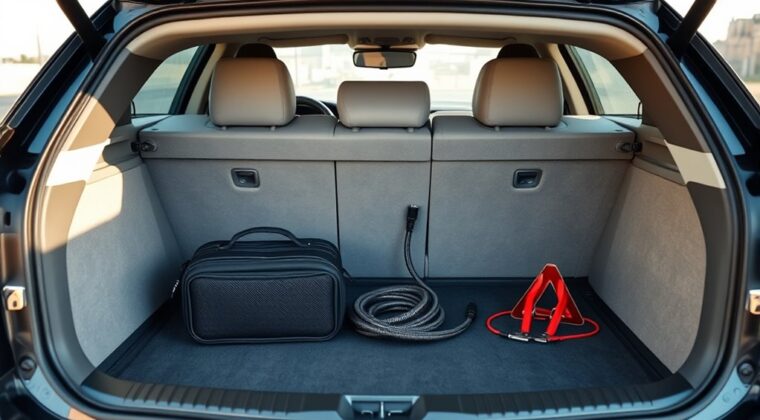
Store your tire inflator in a padded, rigid case in the trunk or cargo area, and secure it with straps so it won’t shift or short against metal items. Keep the battery at about 40–60% charge for storage, and avoid leaving it in extreme heat or freezing cold. Check the charge every few months, clean the terminals, and test it before winter travel so you’re ready when it matters most. More details below.
Key Takeaways
- Store the tire inflator in a padded, rigid case to prevent movement, moisture damage, and short circuits.
- Keep it in a climate-controlled area when possible, avoiding temperatures below 20°F or above 130°F.
- Maintain the battery at about 40–60% charge for longer storage life and better readiness.
- Secure the inflator with straps in the trunk so it stays accessible and does not shift during driving.
- Check battery charge and terminals every few months to catch corrosion, wear, or loss of performance early.
What Makes a Good Tire Inflator Storage Spot?
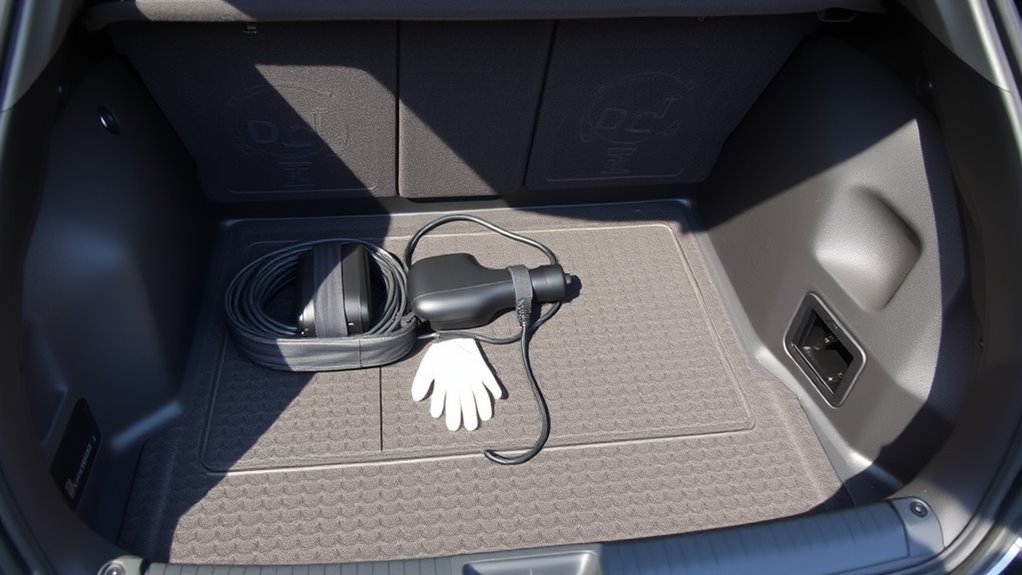
A good tire inflator storage spot keeps the unit protected from temperature extremes, movement, and battery degradation. You should choose a climate-controlled area in your car, because lithium-ion batteries can lose performance below 20°F or above 130°F.
Keep the inflator in a compartment or padded bag so it doesn’t shift, rub, or short-circuit during travel. Before storage, set the battery to about 40-60% state of charge; that helps preserve capacity and slows oxidation.
Store the inflator in a padded compartment and keep the battery at 40–60% charge to preserve capacity.
You also want easy access for emergency use, so place it where you can reach it without digging through clutter. In summer, a shaded trunk area can reduce heat exposure; in winter, it helps limit cold-soak damage.
Check battery voltage regularly, and inspect terminals for debris. If you keep a tire pressure gauge with the inflator, you’ll be ready to verify inflation accurately and maintain control over your vehicle’s safety.
How to Secure a Tire Inflator in the Trunk
You can mount the tire inflator in the trunk with a padded case or bag and secure it against a stable surface using cargo straps or bungee cords.
This setup limits movement, reduces vibration damage, and helps prevent the unit from shifting, rolling, or activating accidentally.
Keep the battery isolated from loose metal objects and check that the trunk stays within a moderate temperature range to reduce short-circuit and battery degradation risk.
Trunk Mounting Options
For trunk mounting, keep the tire inflator in a dedicated storage bag or case designed for vehicle use, then secure it with straps or a cargo net so it can’t slide around while driving.
This trunk mounting options setup supports proper storage and keeps your tire inflator ready for vehicle maintenance.
Place it away from exhaust heat, battery terminals, and sharp tools, and choose a vertical mount if your trunk layout allows it; that saves space and lets you read the gauge fast.
Check that the case shields the unit from temperature swings.
Keep the inflator battery at 40–60% charge for longer service life.
Follow these safety tips so you stay prepared, independent, and in control when roadside pressure drops.
Preventing Movement Damage
To prevent movement damage, secure the tire inflator with straps or elastic cords so it can’t shift while driving, and keep it in a dedicated compartment or container to limit exposure to harsh conditions.
This approach gives you preventing movement damage without wasting trunk space or freedom of access. Keep the unit upright so internal fluids or compressor parts stay contained and your trunk lining stays clean.
Don’t stack heavy cargo on top; pressure can deform the housing and stress connections. Choose a rigid case or bin that holds the inflator snugly, then inspect the storage area for moisture or debris before each trip.
If you notice loose tie-downs, tighten them immediately to maintain stability and protect performance.
Short Circuit Protection
Keep the tire inflator in a protective case or pouch, and secure that case with straps or cable ties so it can’t slide into metal tools or other hard items in the trunk. This short circuit protection method keeps terminals, cords, and connectors isolated from conductive contact.
| Check | Purpose |
|---|---|
| Case intact | Blocks impact |
| Straps tight | Stops movement |
| Cord inspected | Finds insulation wear |
| Heat avoided | Protects battery |
| Manual followed | Meets storage specs |
Place the unit away from sunlight and heat sources. Inspect the power cord and connectors regularly; damaged insulation can create a fault path. You’re controlling risk, not accepting it, so store the inflator exactly as the manufacturer directs.
How to Keep a Tire Inflator Ready in Winter
Winter storage matters because a tire inflator’s lithium-ion battery can lose performance quickly when it’s exposed to extreme cold and heat swings. To keep your tire inflator ready, treat winter as a control problem, not a guess.
- Store it in a temperature-controlled space, not the trunk, so you avoid damaging temperature swings.
- Keep the battery at 40–60% charge during storage; that reduces stress and slows capacity loss.
- Run the Fridge Test: place the inflator in a refrigerator for 24 hours, then verify it starts and pumps normally in cold-soak conditions.
- Check battery voltage regularly and keep it above 40% so you’ve got reliable output when you need it.
Secure the inflator in the vehicle so it won’t shift, short, or take impact damage.
This approach keeps your gear ready, your choices flexible, and your mobility intact when winter cuts hard.
Why Summer Heat Hurts Tire Inflator Batteries
Summer heat can be just as hard on a tire inflator’s battery as winter cold. When your trunk hits 130°F or more, the battery ages faster, loses output, and can’t deliver full pressure when you need it.
Inside a lithium-ion cell, high temperature speeds up growth of the solid electrolyte interphase, or SEI, layer. That extra buildup increases internal resistance and cuts usable capacity.
If you leave the inflator fully charged in summer heat, oxidation accelerates and the pack wears out sooner. Heat can also break down the electrolyte, creating gas that makes the battery swell and can damage the inflator’s electronics.
You don’t have to accept that drift toward failure. Check the charge regularly, and keep the battery in a moderate state when possible so it stays ready, reliable, and free from avoidable thermal stress.
The 40-60 Battery Storage Rule
For lithium-ion tire inflator batteries, the best storage range is usually 40-60% state of charge. This 40-60 rule cuts chemical stress, limits oxidation, and keeps your pack ready without forcing it to sit at full charge.
You get longer service life and steadier output, which means more freedom when you need air fast.
- Keep charge near 50% before storage.
- Avoid parking it at 100% SOC.
- Stay above 40% to preserve readiness.
- Use the range to reduce cold-soak risk.
When you store within this window, you balance capacity retention with practical use. The battery works less hard, internal wear slows, and performance stays reliable across temperature swings.
Storing within this window balances capacity and readiness, reducing wear while keeping performance steady through temperature swings.
If you want a tire inflator that remains dependable in your car, treat the 40-60 rule as a maintenance baseline, not a suggestion.
Check Your Tire Inflator Battery Every Few Months
Every few months, check your tire inflator battery’s state of charge and keep it above 40% so it stays healthy and ready to use.
When you check your tire inflator battery every few months, read the SOC first, then top it off if it’s drifting low. You should also perform a quick voltage check each quarter to spot hidden wear before it becomes a failure.
Inspect the terminals for dust, corrosion, or grit; clean them so the connection stays firm and efficient. If the battery management system seems out of sync, reset it according to the manual so the pack reports accurately and operates safely.
This routine takes only a few minutes, but it protects your gear, preserves performance, and keeps you independent from roadside uncertainty.
With consistent checks, you’re not waiting for a dead battery to remind you. You’re maintaining control, keeping the inflator charged, and making sure it’s ready whenever you need it.
How to Test Cold-Weather Performance at Home
To test cold-weather performance at home, charge the tire inflator to 100% and place it in a refrigerator for 24 hours to simulate a cold soak.
After that, remove it and check function immediately. A cold-soaked unit can show reduced lithium-ion efficiency, so you’re verifying real-world readiness, not ideal-bench behavior. At about 20°F, it may run only briefly, which tells you how much margin you actually have.
- Charge fully before the test.
- Refrigerate for 24 hours.
- Run a short function check.
- Measure voltage and confirm it stays above 40% SOC.
If the reading drops below that threshold, recharge and retest.
Repeat this cold-soak test regularly, especially before winter, so you’re not left dependent on weak performance when freedom from roadside trouble matters most.
Long-Term Tire Inflator Storage Tips
For long-term storage, keep the battery at about 40–60% state of charge so you don’t accelerate lithium-ion degradation.
You should also avoid leaving the inflator in a trunk that gets hotter than 130°F or colder than 20°F, since temperature extremes reduce battery life and performance.
Use a padded case to protect the unit from impact and help prevent short circuits while it’s stored.
Battery Charge Storage
When you store a lithium-ion tire inflator in your vehicle long term, keep the battery at about 40% to 60% state of charge, since higher voltage speeds up battery degradation. This battery charge storage range reduces stress and preserves capacity.
To keep control, follow this routine:
- Check voltage monthly and confirm it stays above 40%.
- Recharge only when it falls near 40%, not to full.
- Run quarterly maintenance checks to verify readiness.
- Secure the inflator so terminals can’t short-circuit.
You’re choosing energy discipline over waste, and that keeps your tool ready for action.
If you want a simple validation step, perform a fridge test after full charging to compare cold-soak performance.
Trunk Temperature Protection
Battery charge matters, but trunk heat and cold can wear down a tire inflator just as quickly.
For trunk temperature protection, keep the unit in a temperature-controlled space whenever you can; car trunks can swing 50°F, which hurts battery life. Don’t leave it in a parked vehicle that can hit 130°F, because lithium-ion cells degrade faster under heat.
Store the battery at 40-60% SOC, not full charge, to reduce oxidation and stress. Each season, run a cold-soak test so you know the inflator can start in low temperatures, where internal resistance rises and runtime drops.
Also check voltage regularly and clean terminals. That keeps your gear ready, reliable, and free from avoidable failure when you need backup air.
Frequently Asked Questions
Can I Keep a Portable Tire Inflator in My Car?
Yes, you can keep a portable tire inflator in your car if you manage Inflator Safety carefully.
You should store it where temperatures stay moderate, protect the lithium-ion battery from heat above 130°F and cold below 20°F, and keep it at about 40–60% charge.
You’ll also want to secure it firmly, check voltage regularly, and verify the BMS works.
Follow the manufacturer’s guidance for reliable, safe use.
What Is the 3 Tire Rule?
An ounce of prevention keeps you rolling: the 3 tire rule means you check and inflate the three other tires whenever one goes flat.
You keep pressures balanced, improve Inflation Safety, and avoid uneven wear. Even small pressure gaps hurt handling, fuel economy, and control.
You don’t just patch the problem; you restore system integrity, reduce rolling resistance, and stay free from preventable roadside failure.
Should Tires Be Stored Vertically or Horizontally?
You should store tires vertically. Tire orientation keeps sidewalls from bearing constant load, so you reduce distortion and preserve shape.
Vertical storage also improves air circulation, which helps prevent moisture buildup, mold, and degradation. Make sure you clean and dry each tire first.
For long-term storage, use racks or stands so you can keep them organized, accessible, and free from unnecessary pressure that compromises performance and control.
How to Maintain a Car Tire Inflator?
You maintain your car tire inflator by keeping the battery at 40–60% SOC, checking voltage regularly, and cleaning terminals quarterly.
For example, if you leave it in your trunk for a month, a quick voltage test can catch low charge before it fails.
You should also run a cold Fridge Test and reset the BMS after long storage.
These steps protect inflator lifespan and keep you ready, independent, and mobile.
Conclusion
In the end, storing your tire inflator right keeps it ready when you need it most. Choose a secure, dry spot, protect the battery from extreme heat and cold, and keep it charged between 40% and 60% during long storage. Check it every few months and test it before winter hits. A little maintenance goes a long way—don’t let a simple fix turn into a flat-out headache. Stay prepared, and your inflator’ll work when it counts.