
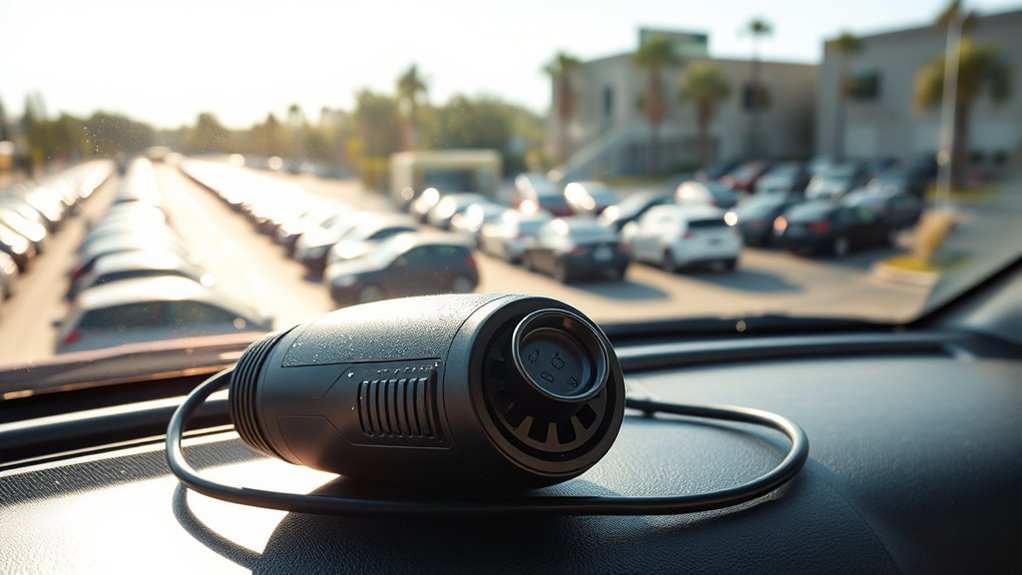
Yes, you can leave a tire inflator in a hot car, but you shouldn’t leave it in direct sun, a sealed hard case, or the trunk. Heat above 140°F can degrade lithium batteries, harden hoses and seals, and cut capacity by 20% to 40%. Store it in a breathable bag in the passenger footwell instead. Check it for swelling or unusual warmth before use, and you’ll see the best way to keep it ready.
Key Takeaways
- Yes, but prolonged heat above 140°F can degrade battery capacity and stress internal components.
- Direct sunlight and hard cases can trap heat, creating unsafe “mini-oven” conditions.
- Store the inflator in the passenger cabin, ideally in a breathable mesh bag or soft case.
- Avoid the trunk when possible, since it often runs hotter and has poor airflow.
- Inspect the inflator regularly for swelling, leaks, damaged seals, or unusual warmth.
Can You Leave a Tire Inflator in a Hot Car?
Yes, but only with caution: leaving a tire inflator in a hot car can expose it to temperatures above 150°F (65.5°C), which can stress internal components and reduce reliability.
You can keep your tire inflator in the vehicle, but you shouldn’t treat that space as neutral storage. Heat buildup, especially after parking in direct sun, can push conditions beyond what many portable air units handle well.
Vehicle storage isn’t neutral—direct sun and trapped heat can push portable tire inflators beyond safe conditions.
Lithium-ion batteries often start degrading above 140°F (60°C), so repeated exposure can cut capacity by 20% to 40%. Hard cases can trap heat and create a mini-oven effect, raising risk further.
For better protection, store the inflator in a breathable mesh bag or soft-sided case, and place it in the passenger footwell where temperatures usually stay lower.
Check storage conditions regularly, avoid prolonged sunlight, and move the unit out of the hottest zones. That’s how you preserve readiness and keep your gear free from preventable failure.
How Heat Damages a Tire Inflator
Heat in your car can push a tire inflator’s lithium-ion battery past 140°F, where capacity starts dropping and performance can fall by 20% to 40%.
It can also harden rubber seals and hoses, which leads to air leaks and mechanical failures.
If you store it in a hard case, that case can trap heat and accelerate this damage.
Battery Heat Degradation
When a tire inflator sits in a hot car, the battery is often the first component to suffer. In portable tire inflators, battery heat degradation starts fast once cabin temperatures climb above 140°F.
At 150°F, lithium-ion cells can lose 20% to 40% of capacity over time, and repeated exposure drives electrochemical breakdown. You’ll notice weaker output, shorter runtime, and less reliable starts.
- Store it in shade or indoors.
- Don’t leave it in a parked car.
- Check charge retention regularly.
- Inspect for swelling or unusual warmth.
- Replace units that show heat damage.
If you want dependable inflation, treat heat like a failure multiplier. Cooler storage preserves performance and keeps your tools ready when you need them.
Seal And Hose Damage
Battery damage isn’t the only concern in a hot car. Heat also attacks the seal and hose in your tire inflator.
Rubber seals can harden, lose elasticity, and stop forming an airtight fit, which leads to leaks during inflation. A stressed hose can dry out, crack, or split, and even a small break can make the tool unreliable.
Heat can also shift internal parts as they expand, creating misalignment or mechanical failure. Electronic components don’t escape either; elevated temperatures speed wear and reduce performance.
You should inspect the seal and hose after any hot exposure, looking for stiffness, cracks, or kinks. That quick check keeps your equipment ready, protects your mobility, and helps you stay in control when the road demands action.
Storage Case Heat Trap
Even if the car cabin only feels moderately warm, a hard storage case can trap that heat and push the inflator’s internal temperature well above 150°F (65.5°C).
Your tire inflator doesn’t need extreme ambient heat to suffer; the storage case itself becomes a heat trap. When temperatures stay elevated, battery capacity can drop 20% to 40%, and rubber seals can harden, reducing flexibility and sealing performance.
That means weaker output, air leaks, and failure when you need freedom from roadside stress.
- Choose breathable storage, not rigid insulation.
- Avoid direct sunlight on the storage case.
- Check the tire inflator regularly for heat exposure.
- Let the case cool before sealing it.
- Store it where airflow can disperse residual heat.
Why Car Trunks Run So Hot
Your car trunk traps heat because its enclosed space limits airflow and builds a mini-oven effect, especially when the vehicle sits in direct sun.
Even if the outside air is around 90°F, trunk temperatures can exceed 150°F as solar radiation heats the body panels and the interior air.
That heat load can quickly stress a tire inflator, so you’ll get better protection if you move it to the cooler passenger cabin.
Trunk Heat Build-Up
Car trunks can become far hotter than the outside air, often climbing past 150°F (65.5°C) when it’s only about 90°F (32°C) outside. This creates a mini-oven effect that can damage stored gear.
In that trunk heat build-up, your tire inflator faces real stress, especially if it uses lithium-ion cells.
- Heat above 140°F (60°C) can reduce battery performance.
- Rubber seals can harden and leak.
- Hard cases can trap heat longer.
- Inflators may fail when you need them.
- You can store gear in the footwell instead.
Sun Exposure Effects
Direct sunlight can turn a car trunk into a heat trap, driving temperatures above 150°F (65.5°C) even when the outside air is only 90°F (32°C).
When you park in direct sunlight, the trunk absorbs radiation, then holds it, so your tire inflator sits in a mini-oven. That heat can push lithium-ion batteries past 140°F (60°C), where performance drops and safety risks rise.
Rubber seals also harden, lose elasticity, and leak. If you keep the inflator in a hard case, you may trap even more heat inside.
You can protect your gear by choosing shaded parking, moving the tire inflator out of the trunk, and checking storage conditions often. Smart placement keeps your equipment ready, reliable, and under your control.
The Best Place to Store a Tire Inflator
Where should you store a tire inflator for the best protection?
Put your tire inflator in the passenger cabin footwell, not the trunk, when you can. That location can stay 30-40°F cooler, so your equipment faces less thermal stress and better storage conditions.
Use a breathable mesh bag or soft-sided case to keep air moving around the unit; that reduces heat buildup and helps preserve battery life.
Avoid hard cases, because they can trap heat and create a mini-oven effect that strains internal components.
Keep the inflator out of direct sunlight, since two hours of exposure can push temperatures high enough to hurt performance and reliability.
Check the storage conditions regularly, especially during heat waves, and move the unit if the cabin becomes too hot.
- Passenger cabin footwell
- Breathable mesh bag
- Soft-sided case
- No direct sunlight
- Frequent condition checks
Common Hot-Car Storage Mistakes
Even with the right storage spot, a few common mistakes can undo the benefit. Don’t lock your tire inflator in a hard case inside a hot trunk; that case can trap heat and create a mini-oven effect, pushing internal temperatures above 150°F (65.5°C).
At those high temperatures, battery capacity can drop 20% to 40%, so the unit may fail when you need it most. Heat also stiffens rubber seals, which can lose elasticity, leak air, and trigger mechanical faults.
You shouldn’t leave the inflator in direct sunlight for long periods, either. Instead, move it to the passenger cabin footwell, where it can stay 30-40°F (17-22°C) cooler than the trunk.
Check storage conditions regularly, and keep the tire inflator in a stable, shaded location. That simple discipline preserves performance, protects components, and keeps your emergency gear ready.
How to Test Your Tire Inflator
Before you trust your tire inflator in an emergency, run a quick test: power it from the vehicle outlet or battery, confirm every connection is secure, and check the tire’s current pressure with a gauge before you attach the hose.
Then connect your portable inflator and watch the display as it climbs to the target PSI. Use a tire pressure gauge again after inflation to verify accuracy and catch any drift.
- Verify power from outlet or battery
- Inspect hose, chuck, and cord connections
- Measure pressure before inflating
- Confirm automatic shutoff at the set PSI
- Run the unit briefly after storage
If the inflator hesitates, overheats, or fails to shut off, stop and troubleshoot before relying on it.
A short, regular test keeps the battery healthy and proves the tool can help you stay self-reliant when the road turns rough.
Hot-Weather Tire Pressure Rules
Hot weather changes tire pressure fast, so the numbers you see in the morning may not hold by afternoon. You should check each tire when it’s cold, ideally before sunrise or before the sun heats the pavement, because pressure can rise about 1 PSI for every 10°F increase.
That shift can push a tire past safe limits, raising blowout risk and shortening tread life. If you see low pressure, correct it early; under-inflated tires run hotter, waste fuel, and dull handling.
Keep your inflator ready, but read the spec label first and fill to the vehicle’s recommended PSI, not the maximum on the sidewall. For EVs, summer often calls for the higher end of the recommended range, since extra load and range demands make precise pressure even more important on long trips.
Stay free by staying informed: a quick morning check protects your ride, your time, and your control.
When to Replace a Heat-Damaged Inflator
If your inflator has been left in extreme heat, inspect it before you trust it again. Heat damage can distort housings, weaken seals, and reduce output. You should replace the unit if you spot swelling, warping, or any visible deformation.
Inspect inflators after extreme heat; swelling, warping, or deformation means it’s time to replace the unit.
Performance loss matters too: if it inflates slowly or can’t reach target pressure, the internal components may be compromised. Check the battery carefully; lithium-ion cells can lose 20% to 40% of capacity in high temperatures, and a battery that won’t hold a charge is a replacement trigger.
Also watch for cracked seals or air leaks, which show thermal hardening. If the automatic shut-off or another safety feature fails, don’t gamble with overheating risk.
- Swelling means replace it.
- Slow inflation signals degradation.
- Dead batteries point to heat damage.
- Cracks and leaks demand replacement.
- Failed safety controls require action.
Trust tools that still serve you.
Summer Tire Inflator Care Checklist
A heat-damaged inflator needs more than a quick visual check; it also needs better summer storage habits.
Keep your tire inflator in a breathable mesh bag or soft-sided case, not a hard case, so trapped heat can escape instead of building a mini-oven. Move it from the trunk to the passenger footwell when you can; that spot can stay 30-40°F cooler.
Don’t leave the unit in direct sun for over two hours, because heat can weaken seals, wiring, and batteries. Check storage conditions often during summer, especially after long drives or parking in unshaded areas.
Run the inflator after trips to confirm the battery still powers up and holds charge; high heat can cut capacity by 20% to 40%. Keep it ready, so you stay independent when air pressure drops and you need fast, reliable inflation.
Frequently Asked Questions
Can I Keep a Portable Tire Inflator in My Car?
Yes, you can keep a portable tire inflator in your car, but you should manage heat exposure for tire inflator safety.
Use practical car storage tips: keep it in the passenger footwell, not the trunk, and choose a breathable soft case.
Avoid long heat soak above 140°F, since battery performance can drop fast.
Check it regularly so you’re ready, independent, and not stranded when you need inflation.
Is It Safe to Inflate My Tires in Hot Weather?
Yes, you can, but you should be careful.
Check tire pressure when tires’re cold, ideally in the early morning, because heat effects can raise pressure about 1 PSI per 10°F. If you inflate warm tires, you might overfill them and risk blowouts.
Keep your readings precise, reduce rolling resistance, and protect your freedom on the road.
Use shade, ventilate tools, and verify pressure again after driving.
At What Temperature Do Tires Lose Air Pressure?
You’ll see tire air pressure drop as temperatures fall, and rise as they heat up; roughly 1 PSI changes for every 10°F.
So there isn’t one exact threshold, but you should expect loss below about 70°F and more noticeable shifts in colder weather.
For practical tire maintenance, check pressures when tires’re cool, then adjust to the maker’s spec.
That keeps you safer, saves fuel, and preserves control.
Is It Okay to Inflate Car Tires When They Are Hot?
Yes, but you shouldn’t rely on hot readings; like a steam-age gauge, they can mislead you.
When you inflate hot tires, heat effects raise pressure about 1 PSI per 10°F, so you may underinflate once they cool. That hurts tire performance, fuel economy, and safety.
Check and set pressure when tires are cold, ideally before driving, so you keep control and drive with freedom.
Conclusion
In hot weather, you should still protect your tire inflator. Keep it in a cool, dry spot, not a roasting trunk, and you’ll reduce heat stress, seal strain, and battery damage. Check it regularly, test it before travel, and replace it if it won’t hold pressure or power. By staying smart and simple, you’ll keep your inflator ready, reliable, and road-trip ready when summer heat spikes.

