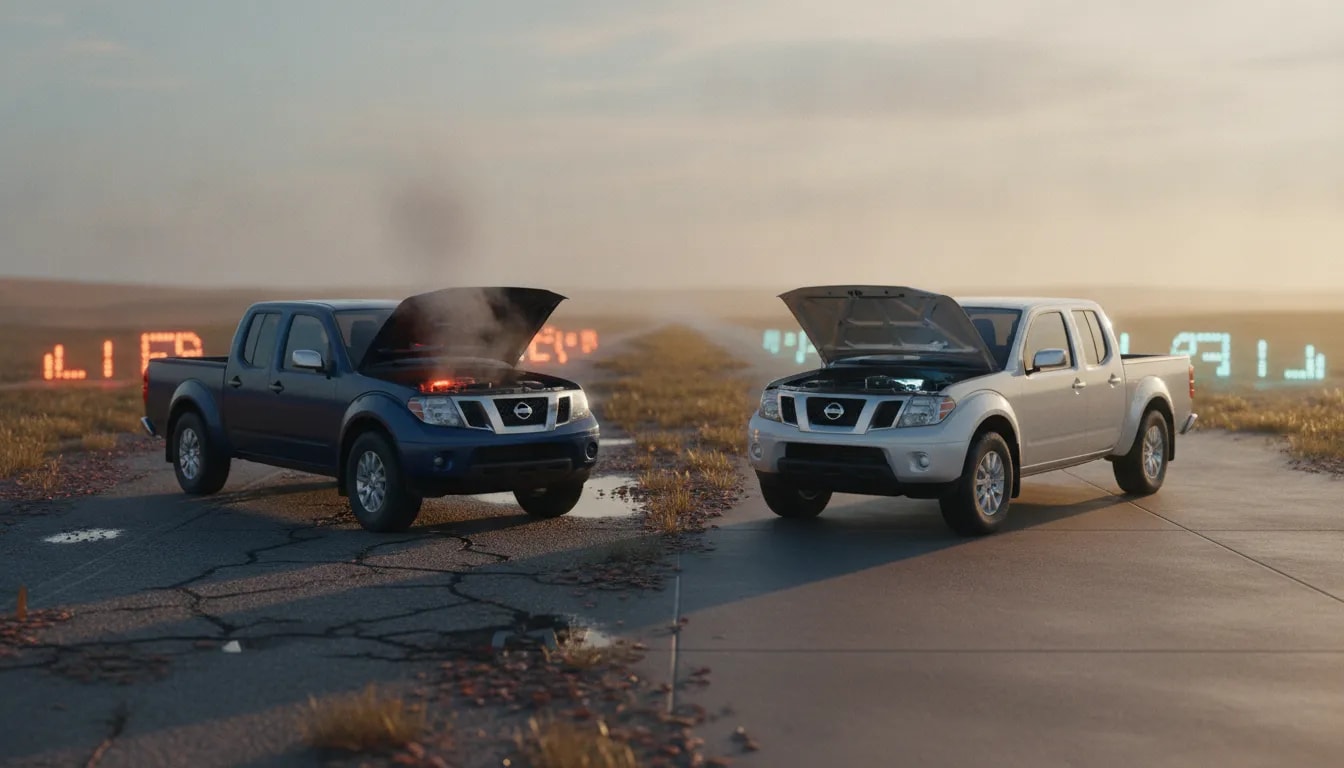
The Nissan Frontier can be one of the better-value midsize trucks on the used market, but model year and maintenance history matter. The highest-risk group is 2005 to 2010, especially automatic trucks with the documented radiator-to-transmission coolant contamination problem. For a simpler used-truck shortlist, 2018 to 2021 remains a strong place to start, while 2024 is the most convincing newer choice in the 2022–2024 generation based on current reliability evidence.
Do not judge a Frontier by model year alone. A well-maintained truck with completed recalls and documented repairs can be a better purchase than a “good year” with neglect, rust, collision damage, or poor service history.
Key Takeaways
- 2005 to 2010 automatic Frontiers deserve the most caution because Nissan documented an internal radiator cooler failure that could let engine coolant contaminate the transmission.
- 2018 to 2021 are strong used-truck candidates, but 2018–2019 use the older 4.0-liter V6 while 2020–2021 use the 310-hp 3.8-liter V6 and nine-speed automatic.
- 2022 remains a cautious buy because it was the first redesign year and has six NHTSA recalls on record.
- 2023 has mixed reliability evidence; 2024 has a more encouraging current Consumer Reports reliability assessment.
- 2025 and 2026 are too new for a confident long-term used-reliability ranking.
- Always check the VIN for open recalls and get a pre-purchase inspection before buying.
Table of Contents
- Nissan Frontier Model Years at a Glance
- Nissan Frontier Years to Avoid
- The Best Nissan Frontier Years to Buy
- What About 2025 and 2026 Frontiers?
- Three Critical Checks Before Buying a Used Frontier
- Buy the Condition, Not Just the Model Year
Nissan Frontier Model Years at a Glance
| Model years | Buying recommendation | Main reason |
|---|---|---|
| 2005 to 2010 | Avoid unless the history is exceptionally well documented | Radiator-related transmission contamination risk on automatic trucks plus timing-chain concerns on VQ40 V6 models |
| 2012 | Lower-priority choice | Higher owner-complaint total than nearby 2013–2015 model years in the cited CarComplaints database |
| 2013 to 2015 | Good budget candidates | Outside the documented 2005–2010 radiator warranty-extension group, with relatively modest CarComplaints totals |
| 2016 | Conditional buy | More owner complaints than surrounding years, including acceleration and fuel-system reports |
| 2018 to 2019 | Top simple-workhorse shortlist | Late examples of the long-running second-generation platform with the 4.0-liter V6 |
| 2020 to 2021 | Strong shortlist with recall verification | 310-hp 3.8-liter V6 and nine-speed automatic; some trucks are covered by transmission parking-pawl recalls |
| 2022 | Approach cautiously | First-year redesign with six NHTSA recalls and below-average current Consumer Reports reliability |
| 2023 | Conditional newer choice | Only one NHTSA recall, but current reliability sources give mixed signals |
| 2024 | Preferred newer used choice | More encouraging current reliability evidence than 2022–2023, though VIN recall status still matters |
| 2025 to 2026 | Too new for a long-term used-reliability verdict | Recent refresh and feature updates with limited long-term ownership history |
A model-year recommendation is only a screening tool. Complaint databases are useful for spotting patterns, but raw complaint totals are not failure rates because they are not adjusted for sales volume, mileage, age, or how often owners choose to report a problem.
Nissan Frontier Years to Avoid
2005 to 2010: The Biggest Financial Risk
These early second-generation Frontiers deserve the strongest caution. Their best-known problem is commonly called the Strawberry Milkshake of Death, or SMOD, a nickname for coolant and automatic-transmission fluid mixing after an internal radiator cooler failure.
Nissan’s own warranty-extension communication covered 2005–2010 Frontier, Pathfinder, and Xterra vehicles equipped with automatic transmissions. It stated that an internal crack in the radiator’s oil-cooler tube could allow engine coolant to leak internally. Nissan ultimately extended radiator-related coverage as far as 10 years or 100,000 miles under specified terms.
Once coolant enters an automatic transmission, replacing the radiator alone may not reverse damage already done to clutch material, seals, valves, and other internal components. Historical NHTSA petition material described total radiator-and-transmission repair costs in the several-thousand-dollar range, which is why a cheap purchase price can be misleading.

This was not handled as a broad safety recall for the radiator defect. Nissan used warranty extensions, and the problem also became the subject of litigation and federal defect-investigation material. For a buyer in 2026, the old warranty coverage is no longer the main issue; the important question is whether the truck has already suffered contamination and what repairs were actually completed.
The current CarComplaints’ Nissan Frontier database still lists the following owner-complaint totals for the earliest years:
- 2005: 284 owner complaints.
- 2006: 218 owner complaints.
- 2007: 202 owner complaints.
Those totals are not probabilities of failure. They are a signal to inspect these trucks carefully and to put more weight on repair documentation than on the asking price.
The Second Problem: VQ40 V6 Timing Chains
The VQ40 4.0-liter V6 used in this era also has a documented history of timing-chain noise and repairs. Nissan issued technical guidance for timing-chain-area buzzing or whining and later published revised timing-chain service procedures for 2005–2010 VQ40-powered Frontier, Pathfinder, and Xterra models.
A high-pitched whine, buzz, or rattle from the front of the engine deserves diagnosis before purchase. Timing-chain work can be labor-intensive, and ignoring an abnormal chain or tensioner condition can turn a manageable repair into a much larger engine problem.
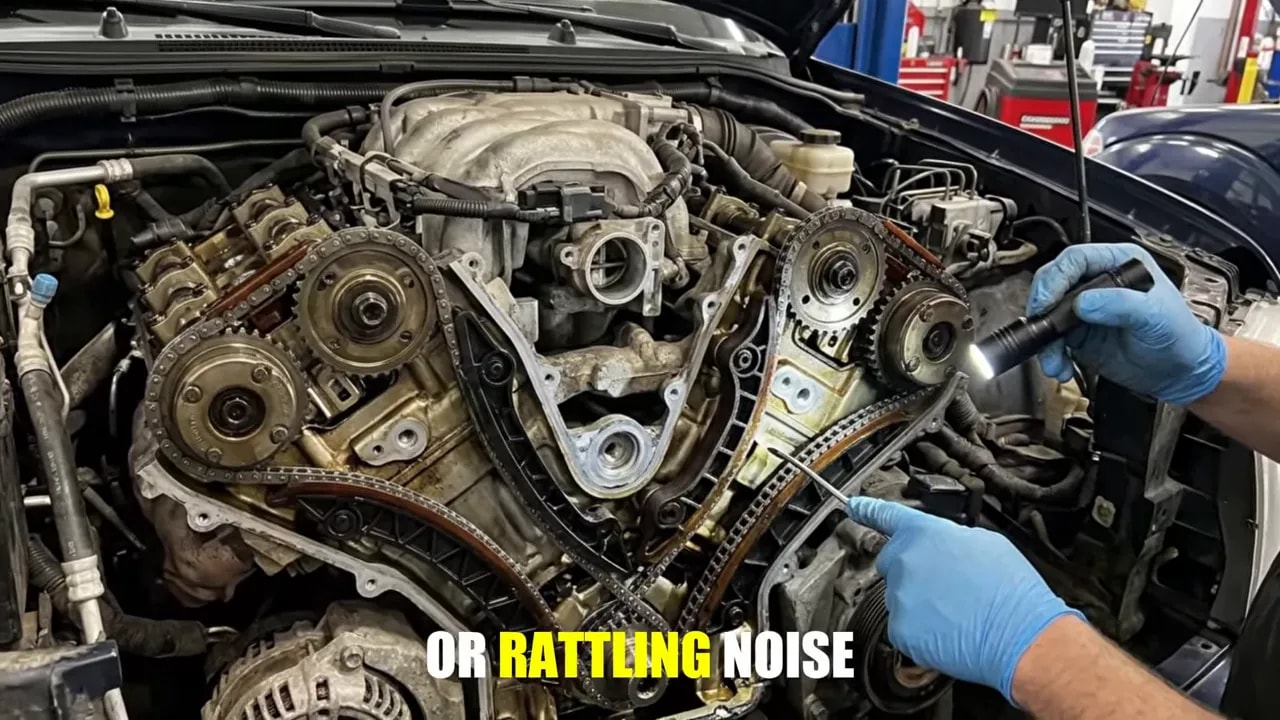
Because the radiator contamination and timing-system concerns overlap in the same general 2005–2010 period, my default recommendation is to choose a later Frontier when comparable trucks are available. If you still want one of these years, insist on a cold-start inspection, clean transmission fluid, and documentation for radiator, transmission, and timing-system work.
2012: Lower Priority, but Not an Automatic No-Buy
The original draft treated 2012 as a clear avoid year. The data support caution, but a blanket rejection is too strong. CarComplaints currently lists 51 owner complaints for 2012, compared with 18 for 2013, 18 for 2014, and 17 for 2015 in its model-year comparison.
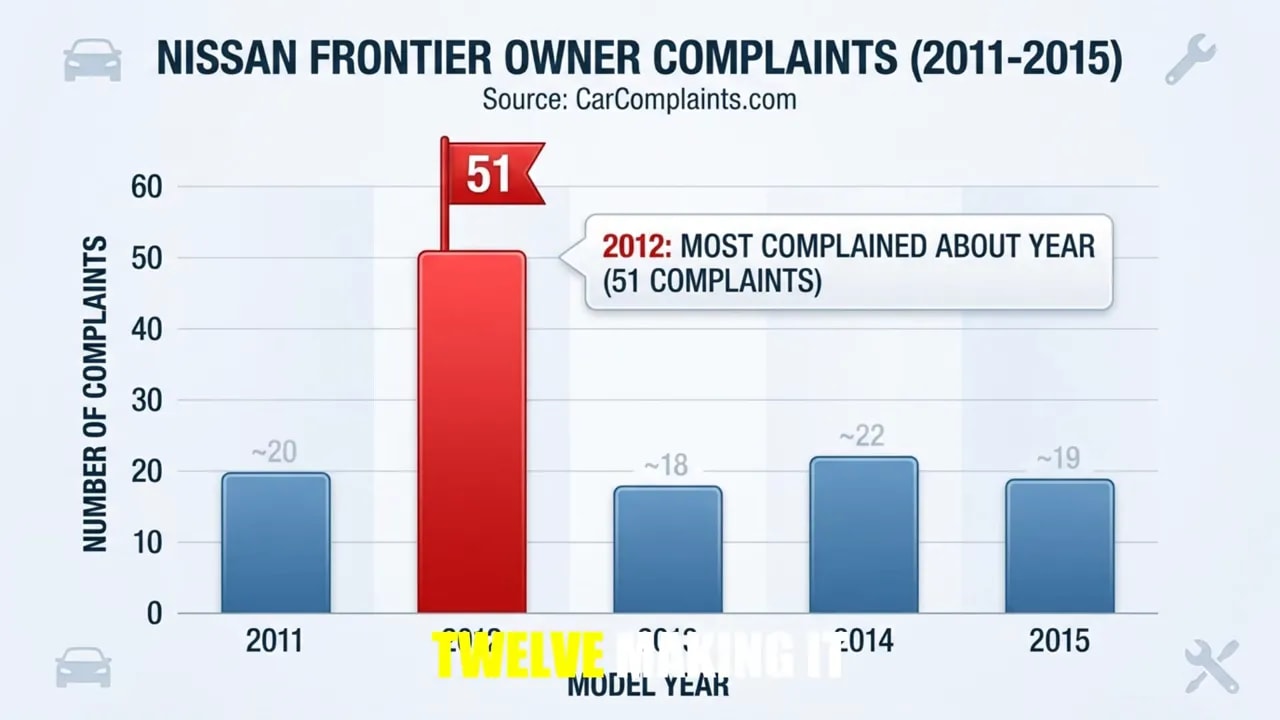
That difference makes 2012 a reasonable year to scrutinize, but complaint totals alone cannot establish a true failure rate. If a 2012 truck has a clean frame, good service records, smooth shifting, no warning lights, and a strong pre-purchase inspection, it should not be rejected solely because of the model year.
If similarly priced 2013–2015 or 2018–2019 trucks are available in comparable condition, I would still favor the later alternatives.
2016: A Conditional Buy, Not a Top Pick
The 2016 Frontier is not in the same risk category as the early SMOD years. CarComplaints currently lists 32 owner complaints for 2016, higher than the adjacent 2015 and 2017 totals in the same database.
Reported concerns include poor acceleration and fuel-system or stalling complaints. Those reports do not prove that every 2016 has a common defect, but they are enough to justify a careful test drive and diagnostic scan.
A well-priced 2016 with complete service records and a clean inspection can still be acceptable. If the price difference is small, however, a clean 2018 or 2019 is easier to recommend.
2022: Be Careful With the First-Year Redesign
Nissan redesigned the Frontier for 2022 after the second-generation truck’s long production run. The new body and cabin brought much-needed technology and refinement, but the first model year also accumulated six NHTSA recalls.
Those campaigns included two rearview-camera issues, two transmission parking-pawl/rollaway campaigns, a left-rear seat-belt fastener problem, and a very small campaign involving certain Crew Cab Long Bed trucks that were missing a required tow hitch and could have reduced fuel-tank protection in a rear crash.
Consumer Reports currently describes the 2022 Frontier as less reliable than other vehicles from the same model year. That does not mean every 2022 is a bad truck, but it reinforces the case for checking recall completion, infotainment operation, transmission behavior, and service history.
If you consider a 2022, use the NHTSA VIN recall lookup before purchase. Two trucks from the same model year can have different recall applicability and repair histories.
The Best Nissan Frontier Years to Buy
2018 to 2019: The Simple Used-Truck Sweet Spot
For buyers who want a straightforward workhorse, 2018 and 2019 are excellent starting points. They are late examples of the long-running second-generation platform and still use the familiar 4.0-liter V6 rather than the later 3.8-liter/nine-speed combination.
The 2019 model is especially appealing for shoppers who value mechanical familiarity over newer cabin technology. As always, age-related issues such as rust, fluid leaks, worn suspension parts, and neglected maintenance can matter more than the model-year label.
2020 to 2021: Newer Powertrain in the Older Body
There is an important powertrain split in the late second-generation Frontier. The 310-horsepower 3.8-liter V6 and nine-speed automatic arrived for 2020 and continued for 2021. Nissan’s official 2020 and 2021 press materials confirm that change.
These years can be strong used choices, but they are not recall-free. Some 2020–2021 Frontiers fall under transmission parking-pawl campaigns that can allow vehicle rollaway if the parking mechanism does not engage correctly. Verify recall completion by VIN.
The trade-off is that the older body and interior do not offer the same cabin design or driver-assistance suite as the 2022-and-newer generation. For buyers who care more about utility than a modern dashboard, that can be a reasonable compromise.
A well-maintained late second-generation Frontier can be a reasonable high-mileage ownership candidate, but no model year can guarantee 200,000 trouble-free miles. Maintenance history, corrosion, prior towing, accidents, and past repairs still determine the individual truck’s outlook.
2024: The Strongest Newer Used Candidate
Among 2022–2024 trucks, 2024 currently makes the strongest case. Consumer Reports describes the 2024 Frontier as much more reliable than other vehicles from the same model year, although it also lists three NHTSA recalls. That makes recall verification important even on a year with encouraging reliability survey results.
The 2024 Frontier keeps the 310-hp 3.8-liter V6 and nine-speed automatic, offers Apple CarPlay and Android Auto, and was available with the retro-inspired Hardbody Edition package.
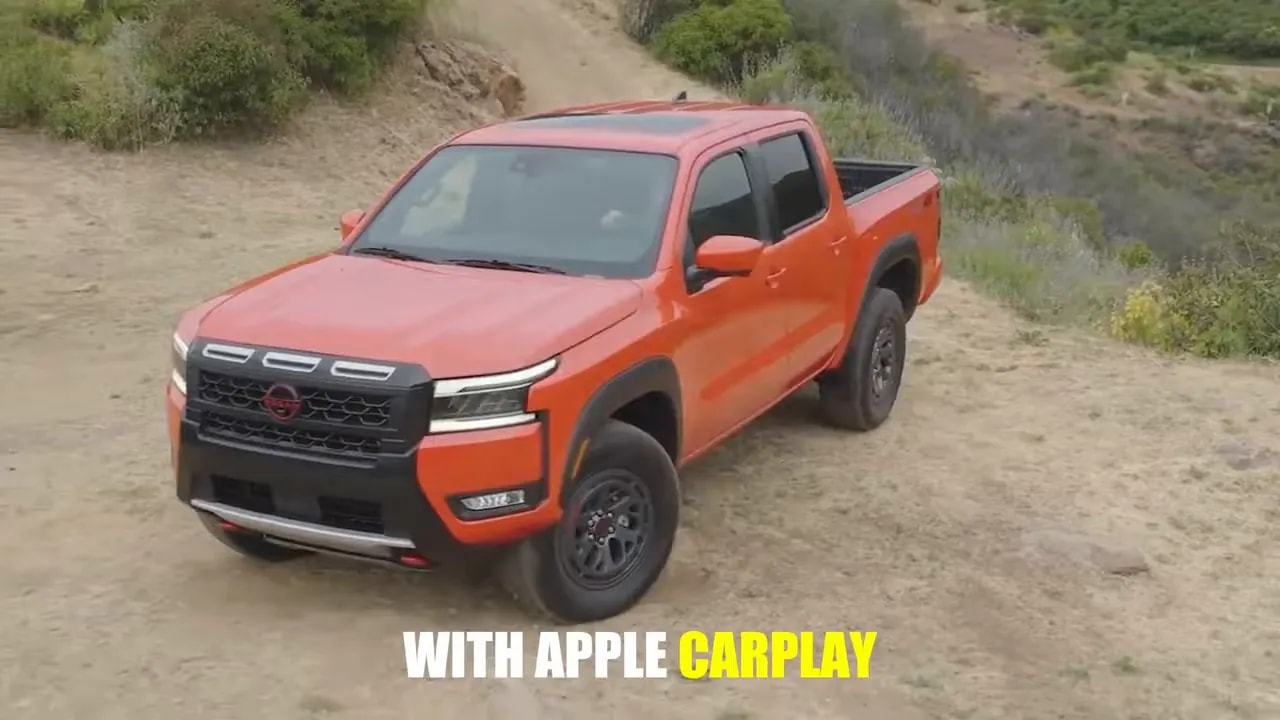
If your priority is a newer cabin, current safety equipment, and a more refined daily-driver experience, 2024 is the model year I would put first on the modern used shortlist.
2023: Mixed Evidence Means Inspect Carefully
The 2023 Frontier is harder to rank cleanly. It has only one NHTSA recall listed by Consumer Reports, and J.D. Power currently shows a quality-and-reliability score of 84 out of 100. Cars.com owner reviews also show a 4.5-out-of-five reliability rating.
However, Consumer Reports currently describes the 2023 Frontier as less reliable than other vehicles from the same model year. Because those sources measure reliability differently, it is better to call 2023 a conditional newer choice rather than automatically placing it beside 2024.
For a specific 2023 truck, condition, battery and electrical behavior, service records, recall completion, and a professional inspection should decide the purchase.
2013 to 2015: Worth Considering on a Tighter Budget
The 2013 to 2015 Frontiers remain sensible middle-ground options when they are meaningfully cheaper than a clean 2018 or 2019. They fall outside Nissan’s documented 2005–2010 radiator warranty-extension group and have relatively modest totals in the cited CarComplaints model-year index.
The 4.0-liter V6 in these years is rated at 261 horsepower. That is less than the later 310-hp 3.8-liter engine, but outright power is usually less important on an older used truck than maintenance, corrosion, transmission behavior, and repair history.
If a clean 2013–2015 truck costs nearly as much as a comparable 2018–2019, I would choose the newer one. If the older truck is substantially cheaper and passes a thorough inspection, it can still be a good value.
What About 2025 and 2026 Frontiers?
The 2025 Frontier received a substantial refresh, including broader availability of the 6-foot bed, a larger available 12.3-inch touchscreen, wireless Android Auto on compatible grades, and a higher maximum tow rating. The 2026 model added a drive-mode selector on selected 4×4 grades and other equipment changes.
Those trucks are current and appealing, but they are too new to rank confidently for long-term used reliability in October 2026. Early complaint and recall counts have had far less time to develop than the data for older Frontiers, so I would not label 2025 or 2026 as a “best reliability year” yet.
Three Critical Checks Before Buying a Used Frontier
1. Verify the Radiator and Transmission History on 2005–2010 Automatics
For a 2005–2010 automatic Frontier, ask for receipts showing radiator replacement, transmission repairs, fluid service, and any related diagnostic work. A mechanic should confirm what radiator is installed and inspect both coolant and transmission fluid for signs of cross-contamination.
Some owners bypass the transmission cooler inside the radiator or use an external cooler to remove that specific failure path. However, a preventive modification does not prove that the transmission was never contaminated before the modification was installed.
2. Listen for Timing-Chain Noise on VQ40 Trucks
Listen closely during a cold start for persistent whining, buzzing, or rattling from the front of the engine. Nissan issued service information for timing-chain-area noise and revised timing-chain procedures on VQ40-powered 2005–2010 Frontiers.
If the truck has had timing-system work, ask for invoices showing exactly what parts were replaced. If abnormal noise is present, get a diagnosis before negotiating the purchase rather than assuming a routine service will fix it.
3. Check Transmission Operation, Fluid, and Recall Status
Transmission fluid should not appear milky or foamy. A cloudy pink mixture on an early automatic truck is a major contamination warning, while a burnt smell, delayed engagement, shuddering, or rough shifts also deserve professional diagnosis.
On 2020–2022 trucks, verify completion of the applicable transmission parking-pawl recalls. On every Frontier, use the VIN rather than the model year alone because recall coverage can depend on the specific build.
Buy the Condition, Not Just the Model Year
The Frontier can offer good used-truck value, but a cheap example is not automatically a bargain. Before committing, get a pre-purchase inspection from a mechanic familiar with Nissan trucks, review maintenance records, inspect the frame and body for corrosion, scan for stored trouble codes, and check for open recalls.
You can also consult Frontier owner forums for model-year-specific experiences, but treat forum posts as owner reports rather than verified failure-rate data.
My current recommendation for October 7, 2026: put 2018–2019 near the top if you want a simple, proven older Frontier; consider 2020–2021 if you want the newer 3.8-liter powertrain and confirm recall completion; choose 2024 first among the 2022–2024 redesign years; treat 2023 as conditional; and approach 2022 cautiously. The 2005–2010 automatic trucks remain the group I would avoid unless their repair history is exceptionally well documented.
For 2012 and 2016, use the model year as a reason for extra inspection rather than an automatic rejection. For 2025–2026, the trucks are simply too new for a confident long-term used-reliability verdict.
A cheap truck is only a bargain if its condition and history support the price.