
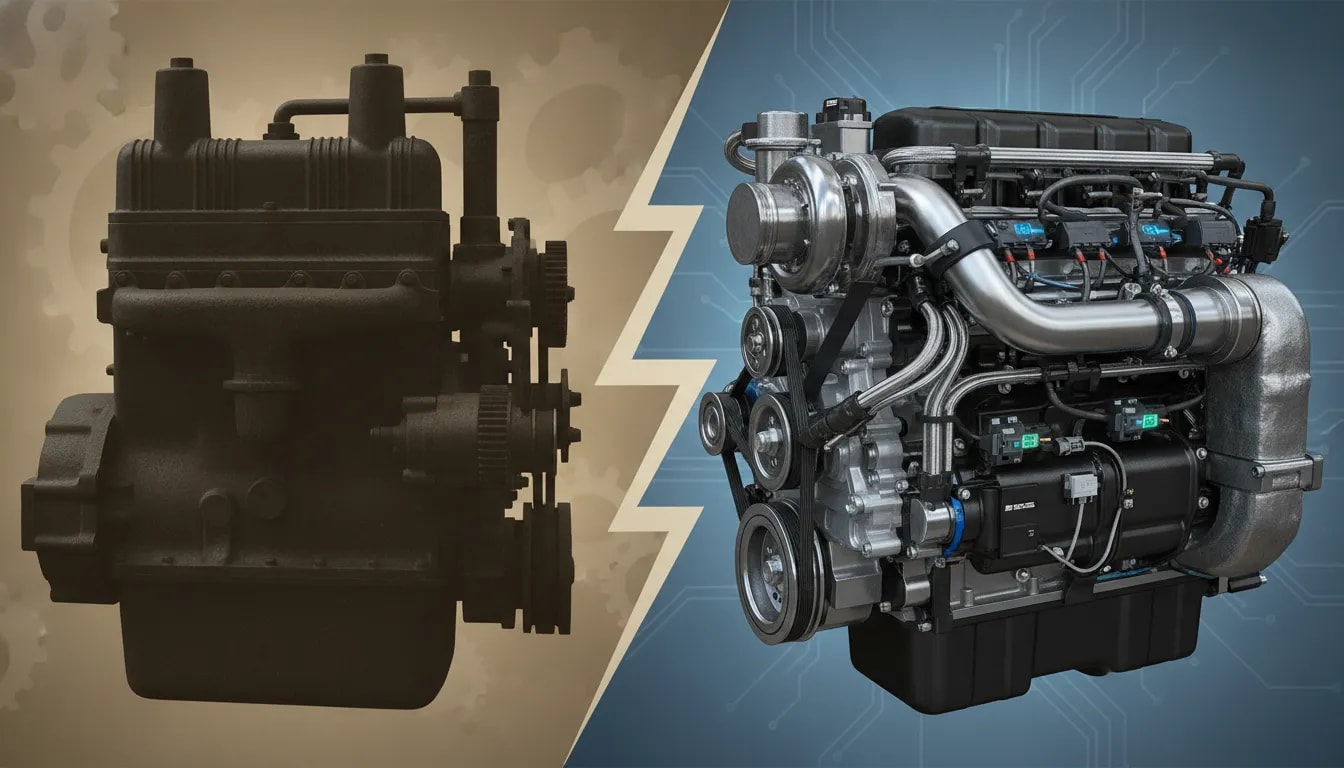
Reliability is one of the biggest reasons people buy a diesel. That reputation is well earned: many older Mercedes diesels, Toyota diesels, pickups, taxis, and commercial vehicles have covered very high mileages while staying in service.
Modern diesels can still last an extremely long time, but the diesel in your driveway is not the same kind of machine that built the almost-indestructible reputation. Today’s engines combine strong mechanical durability with high-pressure fuel systems, turbocharging, emissions equipment, and electronic controls.
The key point is that a modern diesel can have a healthy engine while one of the systems around it is struggling. Reliability therefore depends not only on the engine itself, but also on driving pattern, fuel cleanliness, correct oil, scheduled filtration, and timely diagnosis.
Quick Answer
Modern diesel engines are not inherently unreliable. Many can cover very high mileages, but they are more complex and less tolerant of unsuitable use or neglected maintenance than older mechanical diesels. Frequent short trips can be hard on some DPF-equipped vehicles, while contaminated fuel, incorrect oil, missed filter changes, or ignored warning lights can turn small problems into expensive repairs.
Key Takeaways
- Modern diesel engines remain durable, but their supporting systems need suitable use and correct maintenance.
- Repeated short journeys can prevent some DPF-equipped diesels from completing regeneration.
- Clean fuel, scheduled fuel-filter changes, and manufacturer-approved oil help protect expensive diesel components.
- A blocked DPF can be a symptom of another problem, so diagnose the cause before considering repairs or modifications.
- Turbocharger life also depends heavily on correct lubrication, filtration, and manufacturer-specified servicing.
Table of Contents
- Modern Diesel Reliability at a Glance
- Older Diesels Built Their Reputation on Simplicity
- DPF Regeneration: Why Your Driving Pattern Matters
- Common Rail Fuel Systems Need Clean Fuel and Proper Filtration
- The Correct Diesel Engine Oil Is More Than a Viscosity Grade
- Turbochargers Need the Same Maintenance Discipline
- DPF and EGR Deletes Can Miss the Original Problem
- Why Identical Diesels Can Have Completely Different Reliability Stories
- Is a Modern Diesel a Good Match for Your Driving?
- How to Give a Modern Diesel the Long Life You Expect
Modern Diesel Reliability at a Glance
| Area | Older mechanical diesel | Modern diesel |
|---|---|---|
| Fuel system | Relatively simple mechanical injection | Electronically controlled high-pressure common rail on many vehicles |
| Emissions equipment | Little or no modern aftertreatment | May include EGR, DPF, SCR/DEF, and multiple sensors |
| Short-trip sensitivity | Generally less affected by regeneration needs | Repeated short trips can be unsuitable for some DPF-equipped vehicles |
| Oil requirements | Usually simpler specifications | Correct manufacturer specification can be critical, including aftertreatment compatibility |
| Reliability focus | Mainly the engine and basic fuel system | The engine plus fuel, turbo, emissions, sensors, and control systems |
Older Diesels Built Their Reputation on Simplicity
Think about a diesel from 30 or 40 years ago. Many used mechanical injection, very little electronics, and none of the elaborate exhaust-aftertreatment systems found on current road vehicles.
They could be noisy, smoky, and less refined. But there was simply less equipment to maintain and fewer interconnected systems that could trigger a fault.
A modern diesel can still have a very strong basic engine. Around it, though, you may find:
- Electronically controlled common rail fuel injection.
- A turbocharger.
- Exhaust gas recirculation, or EGR.
- A diesel particulate filter, or DPF.
- Exhaust pressure and temperature sensors.
- Depending on the vehicle, selective catalytic reduction, or SCR, using AdBlue or diesel exhaust fluid, known as DEF.
Those systems do not automatically make a vehicle unreliable. They are used to improve performance, fuel efficiency, driveability, and control of regulated emissions.
The trade-off is that complexity changes the ownership experience. You are maintaining a complete, closely connected system, not just a tough engine block.
DPF Regeneration: Why Your Driving Pattern Matters
The DPF is one of the clearest examples of how modern diesel ownership differs from the old days. Its job is to trap particulate matter, including soot, before it leaves the exhaust. The filter periodically needs regeneration, during which accumulated soot is oxidised at high temperature.
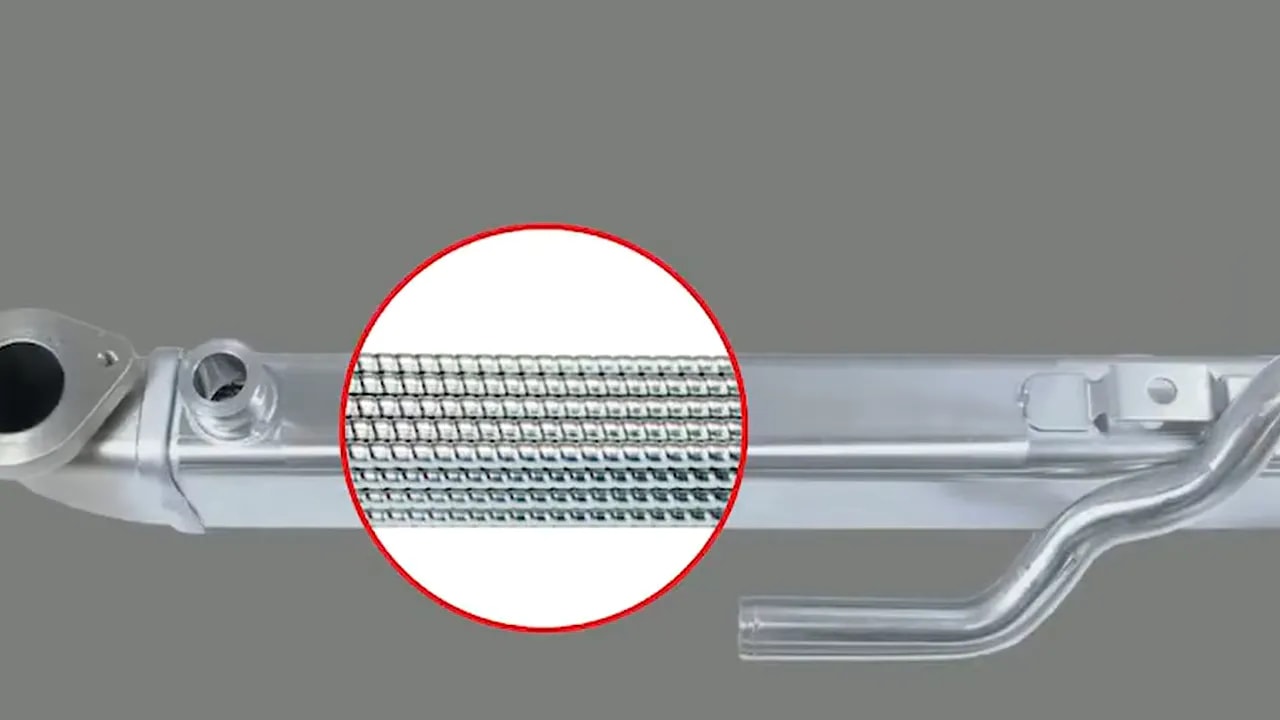
With suitable use, regeneration can happen automatically in the background. You might own the vehicle for years without giving it much thought.
Now imagine the same vehicle spending its life on a very different routine: five minutes to school, engine off; ten minutes to the shops, engine off; a slow trip home through traffic, engine off. Repeat that every day.
Short journeys do not instantly damage a diesel. The issue is that frequent short trips can prevent some DPF-equipped vehicles from reaching or maintaining the conditions needed to complete regeneration.
Repeated Interruptions Can Create a Cycle
The vehicle may start an active regeneration, but you arrive home and switch it off. It tries again on another journey, but that trip ends too soon as well.
One interrupted regeneration is not automatically a problem. Repeated interruptions, however, can allow soot loading to rise until the vehicle requests a longer drive, manual regeneration, workshop regeneration, or diagnosis, depending on the model and fault state.
This is why two identical diesel cars can have very different experiences with their DPFs. The hardware may be the same, but the opportunities to complete regeneration are not.
Possible Signs of an Active Regeneration
Your diesel may give you clues that regeneration is happening. Depending on the vehicle, you might notice:
- A higher idle speed than normal.
- The cooling fan running harder or for longer.
- The stop-start system temporarily becoming unavailable on some vehicles.
- A temporary increase in fuel consumption.
- A hot or metallic smell from the exhaust area.
- A change in engine or exhaust sound.
These signs do not prove regeneration is taking place on every vehicle. They are model-dependent clues, not a universal diagnostic checklist. Knowing your own car’s normal behaviour is what makes them useful.
There is another detail that often gets missed: some vehicles require a minimum fuel level before certain regeneration procedures can run. That is why a low-fuel warning and a DPF warning should be handled according to the vehicle handbook rather than by following generic internet advice.
Combine mostly five-minute journeys with repeated shutdowns just as the exhaust gets properly hot, and the supporting systems can have a much harder life even when the engine itself remains mechanically healthy.
You Do Not Need to Drive Every Diesel Hard
Blanket advice that every diesel needs to be “driven hard” is poor advice. Sitting on the driveway and revving the engine is not a universal DPF solution either.
What matters is giving the vehicle the operating conditions its manufacturer specifies. On many vehicles used mainly for short trips, that means occasional uninterrupted driving long enough for the engine and exhaust system to warm properly.
If a DPF warning appears, follow the procedure for your particular vehicle. Do not assume advice for another diesel applies to yours, and do not invent a universal road speed, engine speed, or driving duration.

The AA’s guide to diesel particulate filters provides useful general background, but your vehicle’s handbook remains the place to check its specific requirements.
Common Rail Fuel Systems Need Clean Fuel and Proper Filtration
Older mechanical diesels could be remarkably tolerant. Modern common rail systems operate in a different world of pressure and precision.
Current common rail systems can operate at pressures above 2,000 bar; Bosch, for example, offers systems rated up to 2,500 bar. The injectors meter very small quantities of fuel with precise electronic control, and the injection event can be split into closely controlled stages.
That precision helps modern diesels run more smoothly and efficiently, but it also makes clean fuel and effective filtration especially important.
The Fuel Filter Is Boring Until It Saves You a Repair Bill
Nobody proudly shows their friends a newly fitted fuel filter. It does not add horsepower or improve the car’s appearance. Most of the time, you replace it and notice absolutely nothing.
That is exactly why it is easy to neglect.
Diesel fuel filters are designed to remove particles and, on many systems, water before contamination reaches sensitive injection components. A late or unsuitable filter can therefore create a risk far beyond the cost of the filter itself.
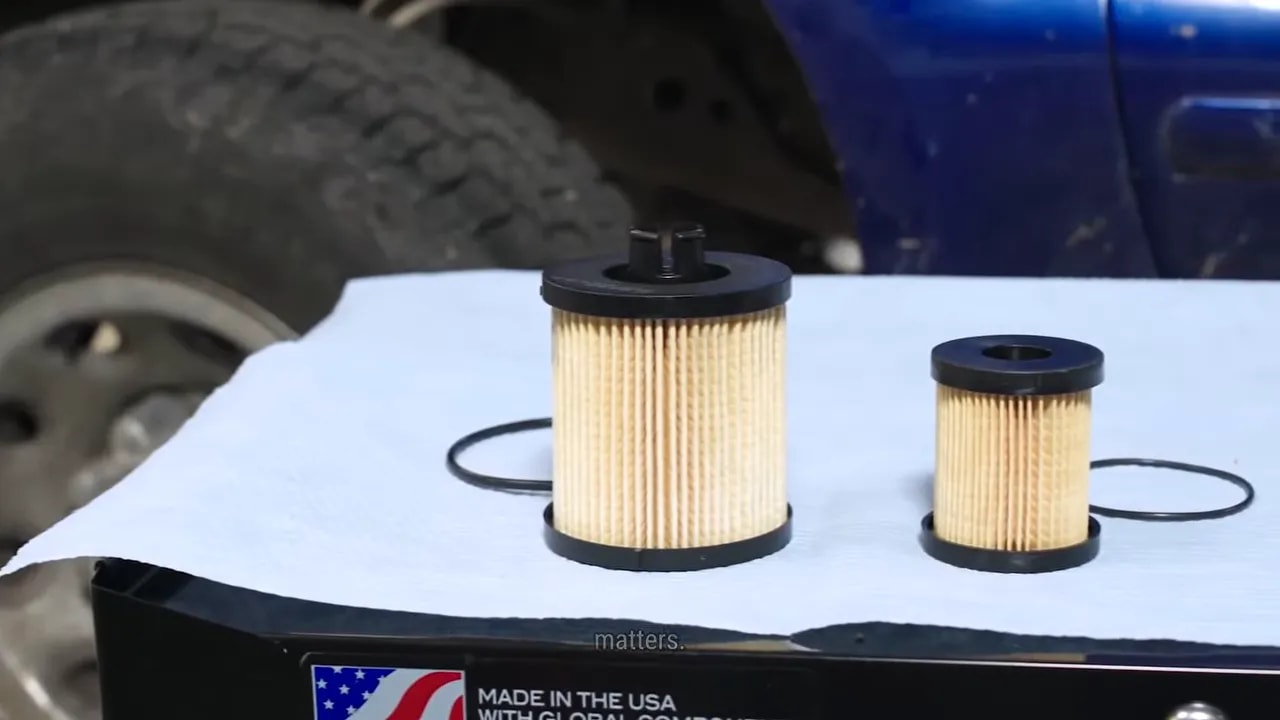
With some high-pressure pump failures, internal wear debris can contaminate the rail and injectors as well as the pump. At that point, the repair may involve much more than one component.
This is not evidence that modern injection systems are badly designed. They accomplish things older systems could not. Their precision simply depends on clean fuel, proper filtration, and correct maintenance.
- Replace the fuel filter at the manufacturer’s specified interval. Do not treat it as an optional extra.
- Understand the water separator, if your vehicle has one. Follow the handbook’s draining and warning-light instructions.
- Use fuel that meets the specification required by the vehicle. If contamination is suspected, do not ignore symptoms or warning messages.
Put Petrol in a Diesel? Do Not Gamble on It
Misfuelling sounds like an obvious mistake, but it happens. If you realise you have put petrol, or gasoline, into your diesel before starting it, do not start the engine or switch on the ignition if doing so would prime the fuel system.
Do not assume that adding more diesel will make the problem harmless because there was only a small amount of the wrong fuel. Get model-appropriate professional advice before circulating contaminated fuel through a high-pressure system.
Discovering the mistake at the pump is usually a much better situation than discovering it after the engine has been running.
The Correct Diesel Engine Oil Is More Than a Viscosity Grade
Most owners recognise viscosity grades such as 5W-30, 0W-30, and 5W-40. But the right viscosity on the bottle does not necessarily mean the oil is right for your engine.
The manufacturer’s actual oil specification matters. On many DPF-equipped diesels, the required formulation also considers exhaust-aftertreatment compatibility. Depending on the engine, that can include a low- or mid-SAPS oil specification.
Soot and Ash Are Not the Same Thing
This distinction matters:
- Soot: Regeneration is designed to oxidise much of the accumulated soot.
- Ash: Non-combustible material remains in the filter and can build up over time.
Regeneration therefore does not make a DPF permanently “as new.” It manages soot loading, while long-term ash accumulation is a different maintenance issue.
Using the correct oil matters for more than lubrication and bearing protection. On engines that specify aftertreatment-compatible oil, the correct formulation also helps protect the emissions system.
“I always buy expensive oil” is not much of an answer. Price does not establish suitability. The best oil is the one that meets the exact specification your engine requires.
Turbochargers Need the Same Maintenance Discipline
Most modern diesels are turbocharged, so the turbocharger is another part of the reliability picture. Turbochargers rely on the engine’s lubrication system, and manufacturers of turbo hardware repeatedly identify poor oil supply, contaminated oil, and neglected filtration as major causes of damage.
That makes basic servicing more important than fashionable “turbo-saving” rituals. Use the correct oil, change it and the oil filter at the required interval, maintain the air-filter system, and investigate abnormal smoke, noise, oil consumption, or loss of boost rather than assuming the turbo itself is automatically at fault.
Avoid hard acceleration from a cold engine and follow any manufacturer-specific operating guidance. If a turbo fails, diagnosis should also look for the underlying cause so a replacement is not damaged by the same oil, air, fuel, or exhaust-system problem.
DPF and EGR Deletes Can Miss the Original Problem
This is the part that tends to start arguments. A warning light appears, the DPF gives trouble, and somebody suggests removing the equipment and tuning out the warning.
An expensive emissions-system fault on an otherwise healthy diesel can be frustrating. But a blocked DPF can be the final symptom rather than the original cause.
Possible underlying issues include:
- The engine producing excessive soot because of another fault.
- An EGR or air-management fault.
- A fuel-injection problem.
- A pressure or temperature sensor problem.
- Regeneration conditions repeatedly not being met.
- A driving pattern that does not suit that particular system.
Making the warning disappear without understanding the cause is like silencing a smoke alarm without finding out what triggered it. Less noise does not necessarily mean the problem has been solved.
Emissions modifications can also affect road legality, inspection, warranty, insurance, and resale. In the United States, federal law prohibits tampering with required emissions controls; in the United Kingdom, a missing DPF that was fitted as standard is an MOT failure. Rules elsewhere vary, so check the current requirements where the vehicle is registered and used.
The sensible first step is diagnosis. Find out what is actually happening before deciding what needs to be repaired.
Why Identical Diesels Can Have Completely Different Reliability Stories
Someone will always have a diesel with 300,000 miles, its original engine and turbo, and no DPF trouble. That does not contradict any of this.
Modern diesels can still cover enormous distances. What has changed is the number of systems around the engine and how closely they work together.
Consider two identical vehicles:
- One spends its life on long motorway journeys: It reaches normal operating temperature regularly, gets the correct oil, and receives fuel-filter changes on schedule.
- The other spends years on five-minute cold journeys: Regenerations are repeatedly interrupted, service intervals are stretched, and warning lights are ignored.
Same engine. Same badge. Completely different life.
That is why the statement that diesels are not as reliable as they used to be needs context. The engines can still be extremely durable. Modern diesels are generally less simple, and their supporting systems may be less forgiving when maintenance or operating conditions are unsuitable.
Is a Modern Diesel a Good Match for Your Driving?
A diesel can make excellent sense for drivers who regularly cover longer distances, spend meaningful time at operating temperature, or need the torque and efficiency a diesel provides for their use case. It can also work well in mixed driving when the vehicle gets regular opportunities to complete its normal emissions-management cycles.
If almost every journey is short, cold, and stop-start, a modern diesel may be a less natural fit, especially if the specific vehicle depends on regular DPF regeneration. That does not mean a diesel will automatically fail, but it is a reason to compare petrol, hybrid, or electric alternatives before buying.
For a used diesel, service history is more useful than mileage alone. Look for evidence of correct oil, fuel-filter servicing, unresolved warning lights, emissions-system faults, and any history of non-standard tuning or removed emissions equipment.
How to Give a Modern Diesel the Long Life You Expect
You do not need to be scared of owning a modern diesel. You do not need to obsess over every sound, and two trips to the shops are not going to make it fall apart.
You do need to understand what you own.
- Learn how your DPF behaves. This is especially important if most of your journeys are short.
- Give the vehicle suitable uninterrupted running. Follow the handbook rather than treating hard driving as a universal cure.
- Use oil that meets the required manufacturer specification. Viscosity and price alone are not enough.
- Maintain the fuel system. Keep filter changes on schedule and follow any water-separator instructions.
- Maintain the air and oil systems that protect the turbo. Correct filtration and lubrication matter.
- Investigate warning lights. Find the cause rather than simply finding a way to hide the warning.
- Keep records. A documented service history helps you spot patterns and makes future diagnosis easier.
Those habits give a modern diesel the conditions it needs to deliver what made diesels attractive in the first place: torque, efficiency, range, and a long working life.
The diesel reputation is not wrong. The machines have changed. Older diesels often achieved durability through simplicity. Modern diesels can achieve remarkable durability through precision, but that precision asks the owner to meet it halfway.
What diesel do you drive, how many miles or kilometres has it covered, and what has actually needed repair? The mileage is interesting, but the maintenance and repair history behind it is what makes the story useful.
Frequently Asked Questions
Are modern diesel engines unreliable?
Does one interrupted DPF regeneration damage the vehicle?
Is the right viscosity enough when choosing diesel engine oil?
Can short trips block a diesel particulate filter?
Does a DPF warning mean the filter itself has failed?
”’
plain2 = re.sub(r’<[^>]+>