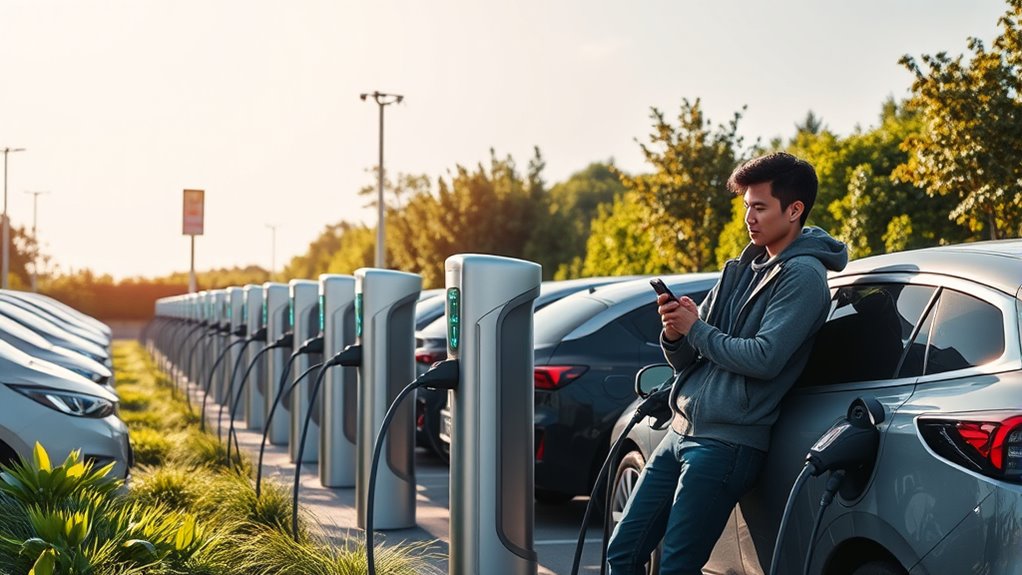
An EV charging network is the system that helps you find, start, pay for, and monitor public electric vehicle charging. It is more than a row of plugs in a parking lot. A good network connects the charging hardware, mobile app, payment system, pricing data, maintenance tools, and real-time station status so you can plan a charge with fewer surprises.
Quick Answer
An EV charging network connects charging stations to software that shows location, connector type, power level, price, availability, payment options, and charging status. It matters because it helps drivers find compatible chargers, plan longer trips, avoid broken or busy stations, and pay safely without guessing what will happen at the plug.
Key Takeaways
- An EV charging network is the software and service layer behind public chargers, not just the charger hardware.
- Compatibility depends on your vehicle, connector type, charging speed, network access, and payment method.
- Reliable networks show real-time port status, clear pricing, customer support, and maintenance updates.
- DC fast chargers are best for road trips, while Level 2 chargers are better for overnight, workplace, hotel, and destination charging.
- Future networks are moving toward SAE J3400/NACS, Plug & Charge, smarter load management, and bidirectional charging support.
What Is an EV Charging Network and Why Does It Matter?
An EV charging network is a connected group of chargers managed through a central software platform. The network usually handles station listings, live port status, user accounts, payments, pricing, charger monitoring, maintenance alerts, and sometimes roaming between partner networks.
The U.S. Department of Energy’s Alternative Fuels Data Center separates charging infrastructure into clear terms: a station location is the physical place, an EV charging port charges one vehicle at a time, and a connector is the plug that attaches to the vehicle. That distinction matters because one station can have several ports, and one port may have more than one connector.
For you as a driver, the network is what turns those parts into a usable charging stop. It helps answer practical questions before you arrive:
- Is the station public, private, planned, or temporarily down?
- Does it have the connector your EV can use?
- How many ports are open right now?
- What power level can the charger deliver?
- What will the session cost before you start?
- Can you pay by app, card, Plug & Charge, or another method?
That information reduces range anxiety because you are no longer guessing. You can choose a charger based on route, speed, price, amenities, and backup options.
How EV Charging Networks Work
Most public EV charging networks include three layers: the charger hardware, the network software, and the driver-facing app or payment system.
- Hardware: The physical charger delivers power through a cable and connector. It may be AC Level 2 or DC fast charging.
- Network software: The charger communicates with a central system for status, diagnostics, updates, pricing, user access, and payment handling.
- Driver tools: The app, in-car navigation, website, RFID card, credit-card reader, or Plug & Charge setup lets you find and start a session.
Note: OCPP, OCPI, ISO 15118, and connector standards do different jobs. OCPP helps chargers communicate with network management software. OCPI supports roaming and data exchange between networks. ISO 15118 supports features such as Plug & Charge. Connector standards, such as CCS, CHAdeMO, and SAE J3400/NACS, affect the physical plug and charging interface.
A strong network also supports remote monitoring. If a charger goes offline, fails to start, or needs a software update, the operator can often see the issue before a driver reports it. That is one reason network quality can matter as much as charger power.
How Do EV Charging Networks Facilitate Long-Distance Travel?
EV charging networks make long-distance travel easier by placing chargers along highways, at travel centers, near restaurants, in shopping areas, and at hotels. They also give you live information so you can plan charging stops around your battery level, route, weather, and vehicle charging speed.
Fast-growing networks have made road trips more practical. Tesla lists 80,000+ global Superchargers and says its app can show stall availability and charging status. Electrify America lists 5,600+ Hyper-Fast EV chargers and 1,080+ EV charging stations in North America. Those are not the only networks, but they show how large public fast-charging systems have become.
For road trips, use the network data in this order:
- Check connector compatibility. Confirm whether your EV uses J1772, CCS, NACS/J3400, CHAdeMO, or an adapter.
- Plan around charging speed. A 350 kW charger does not mean your car can accept 350 kW. Your vehicle, battery temperature, state of charge, and charger condition all affect speed.
- Look for real-time port status. Do not rely only on a station appearing on the map. Check whether specific ports are available and working.
- Choose backup stops. Pick a second nearby station in case the first one is full, blocked, offline, or incompatible.
- Confirm payment before arrival. Set up the app, card, RFID, or Plug & Charge account before your battery is low.
Pro Tip: On a long trip, do not plan to arrive at a charger with 1% or 2% battery unless you know the area well. A safer buffer gives you time to reach a backup charger if a port is busy or down.
Essential Features of a Reliable EV Charging Network
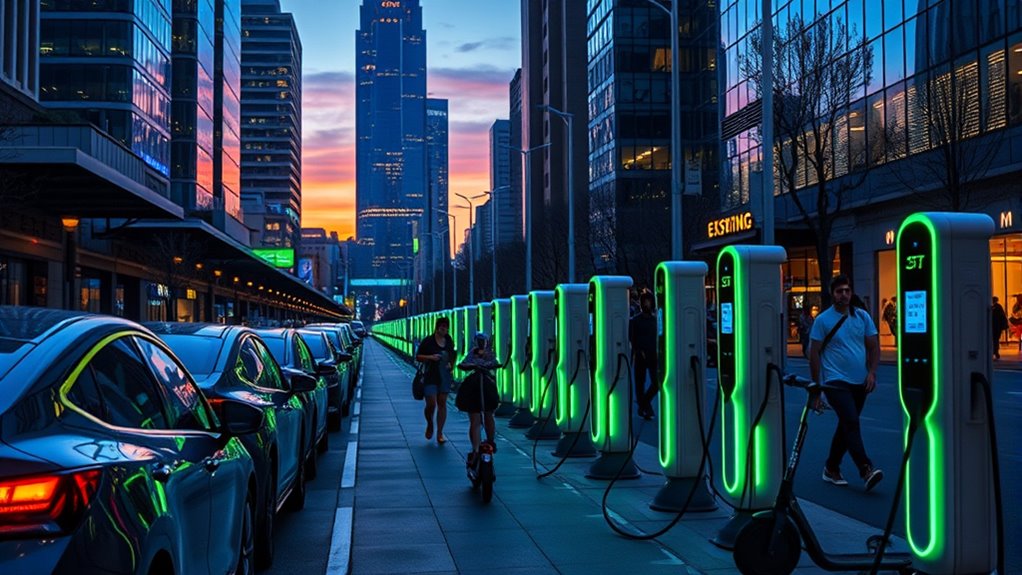
A reliable EV charging network should make charging predictable. That means the station data in your app should match what you find when you arrive, and the charger should start without forcing you through confusing payment steps.
| Feature | Why It Matters | What to Look For |
|---|---|---|
| Real-time availability | Helps you avoid full or offline stations. | Live port status, not just a station pin on a map. |
| Clear pricing | Prevents surprise fees. | $/kWh or clear time-based pricing, idle fees, taxes, and membership discounts. |
| Multiple payment options | Makes charging easier if an app fails. | App, contactless card, RFID, phone/SMS payment, or Plug & Charge. |
| High uptime | A charger is only useful if it works when you arrive. | Maintenance history, network transparency pages, and recent driver check-ins. |
| Roaming support | Lets one account or app work across partner networks. | Partner access, Plug & Charge support, or OCPI-based roaming. |
U.S. federal charging standards also push networks toward better driver information. The NEVI standards and requirements include rules for location data, pricing, real-time availability, payment access, network connectivity, and more than 97% average annual uptime for covered charging ports.
Charging Levels and Connectors You Will See
Not every charger is built for the same job. A Level 2 charger at a hotel may be perfect overnight, but too slow for a lunch-stop road trip. A DC fast charger may be ideal on the highway, but it can cost more than home charging.
| Type | Best Use | Common Connectors |
|---|---|---|
| Level 1 | Emergency or slow home charging from a standard outlet. | Usually J1772 in North America, depending on vehicle and cord set. |
| Level 2 | Home, workplace, hotel, apartment, and destination charging. | J1772 or SAE J3400/NACS, depending on vehicle and region. |
| DC fast charging | Highway stops and quick charging when time matters. | CCS, SAE J3400/NACS, and older CHAdeMO on some vehicles. |
The DOE AFDC notes that charging time depends on battery size, state of charge, charger type, vehicle charging capacity, and equipment power output. In other words, the network can show a high-power charger, but your vehicle decides how much power it can accept at that moment.
Public vs Home Charging Networks
Most EV owners who can charge at home use public networks less often. Home charging is usually the cheapest and most convenient option because the car charges while parked overnight. Public networks are still important for road trips, apartment dwellers, workplace charging, rideshare drivers, delivery fleets, and anyone who cannot install a home charger.
Home chargers can also be networked. A connected home charger may let you schedule off-peak charging, track energy use, limit current, receive software updates, and integrate with solar or utility programs. Public networks add more layers, such as pricing display, customer support, payment acceptance, roaming, and public station maintenance.
Warning: Do not install a hardwired Level 2 home charger unless your electrical panel, wiring, breaker, and local code requirements support it. Use a qualified electrician and follow the charger manufacturer’s installation instructions.
Pricing, Payment, and Roaming
EV charging prices vary by network, charger speed, location, membership plan, time of day, and idle-fee policy. Some networks charge by kWh, some by minute where allowed, and some add session fees or parking fees. Always check the final price screen before you start.
Payment can happen through a mobile app, RFID card, credit or debit card, phone/SMS payment, or Plug & Charge. The federal NEVI rule requires covered stations to support secure payment methods, including contactless payment that accepts major credit and debit cards plus either automated toll-free phone payment or SMS payment, unless charging is permanently free.
Roaming is another important feature. With roaming, one account or app may start a charge on another partner network. This can reduce the number of apps you need, but coverage varies by country, vehicle brand, and network agreement.
Regional Variations in EV Charging Infrastructure
EV charging infrastructure does not grow evenly everywhere. Dense urban areas, major highways, and high-EV-adoption regions usually get better coverage first. Rural areas, older apartment districts, and remote travel corridors may need more time because of grid capacity, permitting, land access, and lower early demand.
In the United States, federal charging programs and standards focus on building a more reliable, accessible national network. The DOE AFDC Station Locator and charging infrastructure reports help track public and private charging growth.
In Europe, the Alternative Fuels Infrastructure Regulation has applied since April 13, 2024. It sets mandatory targets and includes user-facing requirements such as interoperability, payment options, price transparency, consumer information, non-discriminatory access, and smart recharging.
In fast-growing EV markets such as China and India, charger deployment is often shaped by national policy, utility planning, automaker strategy, and city-level demand. In emerging markets, the biggest issue may not be charger technology itself, but where chargers are placed, how reliable the electrical grid is, and whether drivers can count on payment and maintenance support.
Security, Privacy, and Data Integrity
EV charging networks handle more than electricity. They may process account details, payment data, vehicle identifiers, location history, plug-in times, and charging behavior. That makes cybersecurity and privacy important parts of network reliability.
Good networks use secure communication, software updates, authentication, payment protections, and monitoring. They also need accurate data. If an app says a charger is available when the port is actually broken, blocked, or offline, the network has failed the driver even if the map looks complete.
Data integrity also matters for station owners. Reliable data helps operators spot failing hardware, compare uptime across sites, plan repairs, manage peak demand, and decide where new chargers should go.
What Future Trends Will Shape EV Charging Networks?
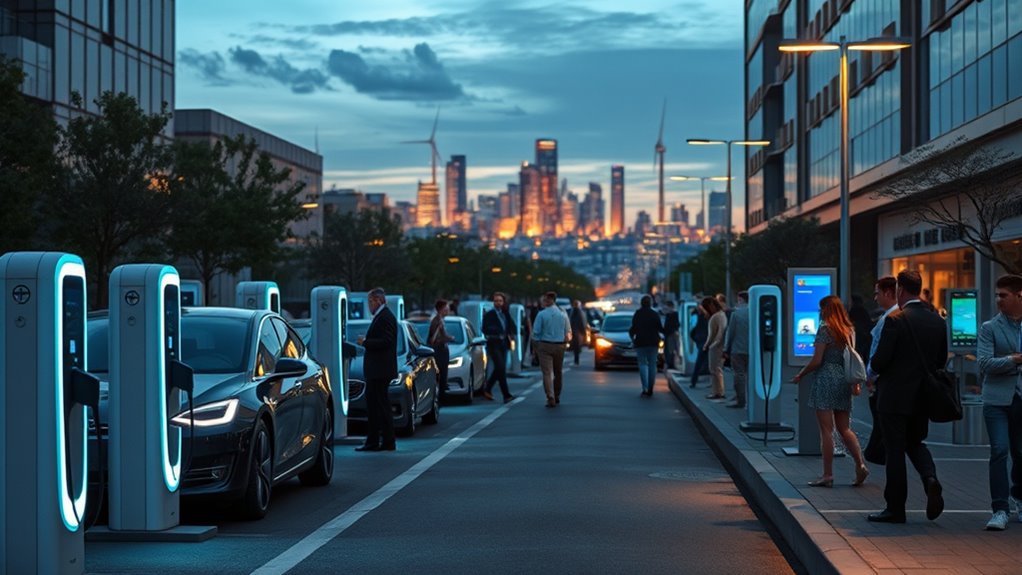
EV charging networks are moving toward easier access, better reliability, and smarter energy management. The biggest trends include standardization, automatic authentication, grid-aware charging, and better maintenance visibility.
The next phase of EV charging is not just more plugs. It is better data, clearer pricing, stronger uptime, and fewer steps between parking and charging.
- SAE J3400/NACS adoption: More North American vehicles and charging networks are moving toward the Tesla-style connector standardized as SAE J3400.
- Plug & Charge: More vehicles and networks will support automatic authentication and billing when the driver plugs in.
- OCPP 2.1 and smarter software: The Open Charge Alliance says OCPP 2.1 adds support for ISO 15118-20, bidirectional charging, distributed energy resource control, improved smart charging, and more payment options.
- Battery-backed charging sites: Some fast-charging stations use onsite batteries to reduce grid strain and support high-power charging.
- Bidirectional charging: Vehicle-to-home, vehicle-to-building, and vehicle-to-grid systems may let EVs supply energy when conditions and equipment allow.
- Accessibility improvements: Better charger placement, cable reach, payment access, lighting, signage, and app data will matter as EV adoption expands.
For drivers, the best networks will be the ones that feel boring in the best way: the charger is where the app says it is, the plug fits, the price is clear, payment works, and the session starts without drama.
Frequently Asked Questions
What is an EV charger network?
An EV charger network is a connected system of charging stations, software, apps, payments, pricing data, and maintenance tools. It helps drivers find compatible chargers, check live availability, start a session, pay for charging, and monitor progress.
Do all EV charging networks work with every EV?
No. Access depends on your vehicle’s connector, the charger’s connector, your charging account, network rules, adapter support, and payment method. Some stations are open to many brands, while others may require a specific app, membership, adapter, or vehicle compatibility.
What EV charger does Volvo recommend?
Volvo charging recommendations vary by country, vehicle model, and home electrical setup. For many owners, the practical choice is a professionally installed Level 2 wallbox that matches the vehicle’s onboard charger and local connector standard. Check your Volvo owner resources, Volvo app, or dealer before buying a charger.
What type of charger cable does a Nissan LEAF use?
It depends on the model year and market. Older North American Nissan LEAF models commonly use J1772 for AC charging and CHAdeMO for DC fast charging. The 2026 Nissan LEAF in the U.S. promotes access to Tesla Superchargers through an integrated NACS port. Always check your exact model year before choosing a station or adapter.
Is charging an EV cheaper than buying gas?
Often, yes, especially when you charge at home during lower-cost electricity periods. Public DC fast charging can cost more, and prices vary by network, region, membership, idle fees, and vehicle efficiency. Compare cost per mile, not just cost per session.
What should I check before using a public EV charging network?
Check connector type, charger speed, live port availability, pricing, payment options, recent driver reports, parking rules, idle fees, and backup chargers nearby. For road trips, set up the needed apps or accounts before you leave.
What is Plug & Charge?
Plug & Charge lets a compatible EV and charger authenticate automatically when you plug in, then bill the linked account without a separate app start or card swipe. It can make charging easier, but it only works when the vehicle, network, and account setup all support it.
Conclusion
An EV charging network is what makes public charging usable. The charger supplies the power, but the network helps you find the station, confirm compatibility, see real-time status, understand the price, pay for the session, and trust that help is available if something goes wrong.
For everyday driving, home or workplace charging may cover most of your needs. For road trips, apartments, fleets, and backup charging, public networks are essential. The best experience comes from planning around connector type, charger speed, reliability, price, and backup options instead of relying on a single map pin.
Sources
- U.S. Department of Energy Alternative Fuels Data Center — EV charging station terminology, charging levels, connector context, and infrastructure planning.
- Federal Register: National Electric Vehicle Infrastructure Standards and Requirements — U.S. rules for uptime, payment, real-time availability, pricing, and mapping data.
- Open Charge Alliance: Open Charge Point Protocol — OCPP 2.0.1 and OCPP 2.1 features, charger-network communication, and ISO 15118 support.
- European Commission: Alternative Fuels Infrastructure — AFIR requirements for deployment, interoperability, user information, payment options, and smart recharging.
- Tesla Supercharger — current Tesla Supercharger network information, app-based availability, trip planning, and charging status features.
- Electrify America — current North American charging network scale, app, maintenance updates, and public fast-charging access.