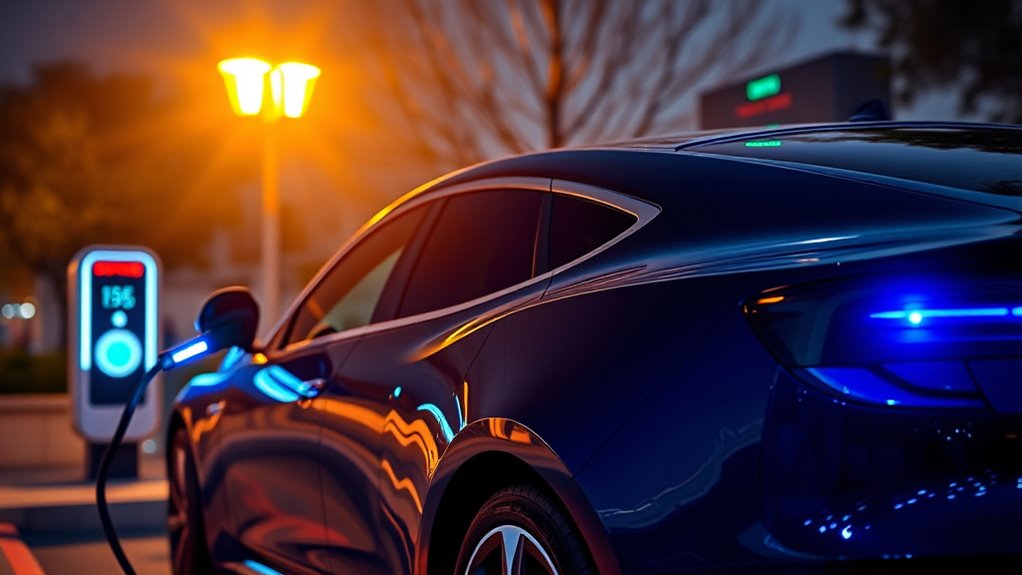
An EV charging session is the time between plugging your electric vehicle into a charger and ending the charge so the connector can be removed. During that session, the charger and vehicle confirm the connection, set a safe power level, track energy use, and send session data for billing when the charger is networked.
Quick Answer
An EV charging session starts when you plug in, authenticate if needed, and the charger begins sending power. It ends when you stop charging through the app, station screen, vehicle, RFID card, Plug & Charge account, or charger controls. Cost depends on kWh added, station pricing, and any session or idle fees.
Key Takeaways
- A session includes connection, authentication, charging, monitoring, stopping, and connector release.
- Charging speed depends on charger power, your EV’s limit, battery temperature, and state of charge.
- Home charging is usually cheaper than public charging, but your exact cost depends on your utility rate.
- Public chargers may use apps, RFID cards, contactless payment, guest checkout, or Plug & Charge.
- If a charger fails, check the connector, payment, vehicle settings, station status, and error messages before moving stalls.
At a Glance
| Time Required | A few minutes to start and stop; total charging time ranges from under 30 minutes on some DC fast chargers to overnight on Level 2 or much longer on Level 1. |
| Difficulty | Easy once you know your connector type, payment method, and vehicle charge settings. |
| Tools Needed | Charging cable or station connector, network app or RFID card if required, payment method, and your vehicle display or mobile app. |
| Cost | Home cost is usually kWh added × your utility rate. Public charging may add per-kWh, per-minute, session, parking, or idle fees. |
What Is an EV Charging Session and How Does It Work?
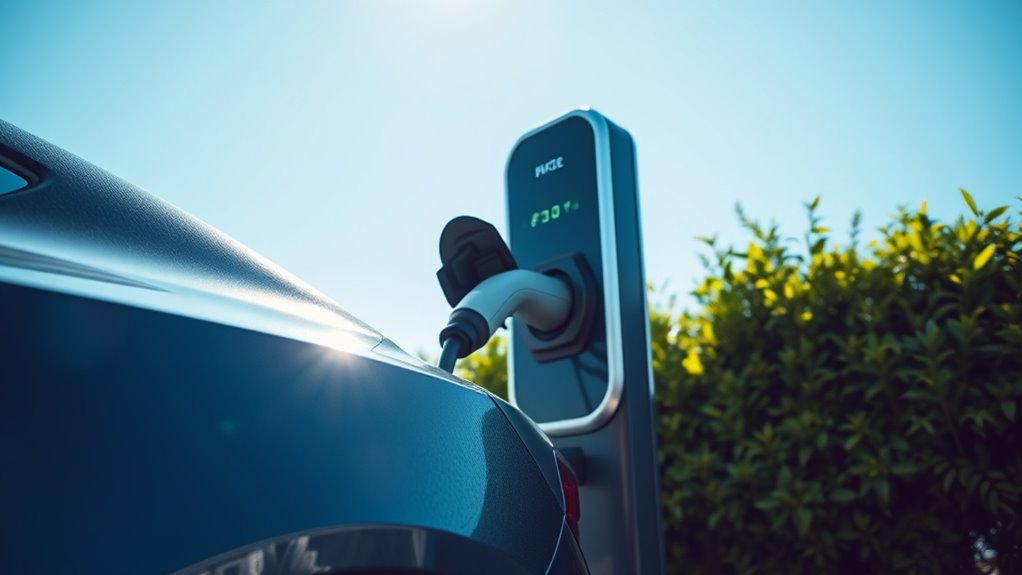
An EV charging session is one complete charging event. It begins when your vehicle connects to a charger and the charger is allowed to deliver power. It ends when charging stops, billing closes if payment is required, and the connector unlocks or is ready to remove.
Most sessions follow the same basic flow:
- Connect: You plug the connector into your EV’s charge port.
- Authenticate: You start the session with an app, RFID card, credit card reader, station screen, Plug & Charge, or a free-start button.
- Handshake: The charger and vehicle confirm the connection and safe charging limit.
- Charge: Power flows into the battery based on the charger’s output and your EV’s maximum acceptance rate.
- Monitor: The vehicle, station, and app may show state of charge, time remaining, kWh added, and cost.
- Stop: You end the session through the app, card, screen, vehicle, or station controls.
- Disconnect: The connector releases after the charger confirms charging has stopped.
The Control Pilot signal helps the charger and vehicle manage basic connection status and available current. On networked public chargers, billing and session records are handled by the charger, its meter, and the charging network software. The Open Charge Point Protocol is one common open protocol used between charging stations and charging management systems.
A charging session is not just “plugging in.” It is a controlled exchange between your EV, the charger, and often the charging network that tracks power, safety, status, and payment.
How to Properly Connect Your Vehicle for Charging
Before you plug in, make sure the charger matches your vehicle. In North America, Level 1 and Level 2 AC charging often use J1772 or J3400/NACS, while DC fast charging commonly uses CCS, J3400/NACS, or older CHAdeMO connectors. The U.S. Department of Energy’s Alternative Fuels Data Center explains that connector type, charger level, charger power, vehicle limits, and state of charge all affect charging time.
| Step | What to Do | Why It Matters |
|---|---|---|
| 1. Choose a compatible charger | Check connector type, charger status, price, and parking rules in the app or on the station screen. | A connector that fits physically may still need the right adapter, network access, or payment method. |
| 2. Park close enough | Line up your charge port so the cable reaches without pulling tight. | A strained cable can fail to latch, disconnect, or block nearby stalls. |
| 3. Inspect the connector | Look for cracked handles, bent pins, exposed wires, heavy corrosion, or burn marks. | Damaged equipment can fail or create a safety risk. |
| 4. Plug in firmly | Push the connector in until it seats fully or clicks. | A loose connection is one of the most common reasons a session fails to start. |
| 5. Start the session | Use the app, RFID card, card reader, Plug & Charge, or station screen. | The charger needs authorization before it can send power on paid networks. |
Warning: Do not use a charger if you see exposed wiring, a cracked connector, melted plastic, standing water around electrical equipment, a burning smell, or a station warning that says the unit is out of service. Move to another charger and report the problem to the network.
How to Start and Monitor Your Charging Session
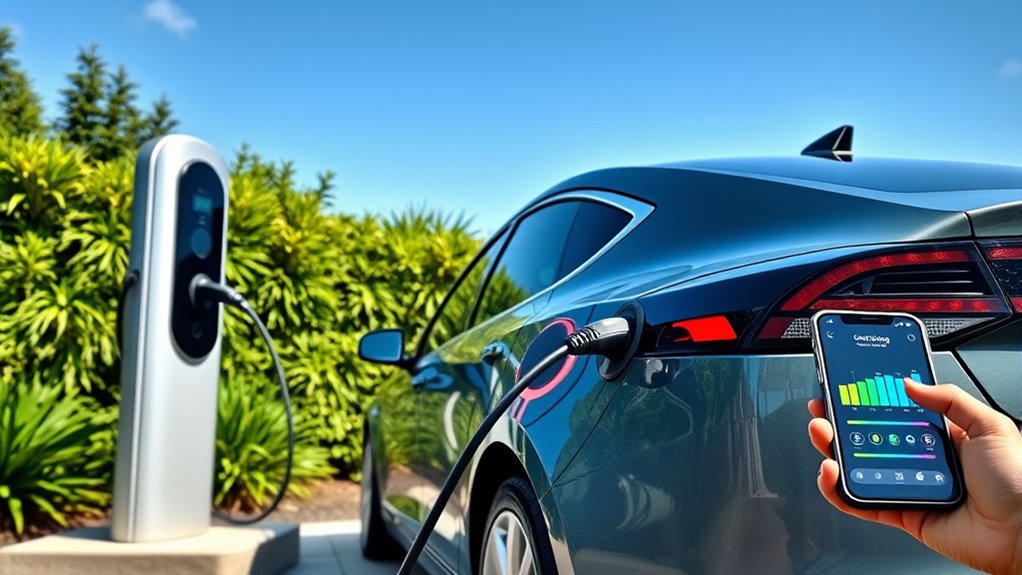
To start your EV charging session, plug in first unless the station tells you to authenticate before connecting. Then follow the station prompt. Some chargers ask you to scan a QR code, tap an RFID card, use a network app, insert or tap a payment card, or choose a charger ID inside the app.
Once the session starts, check for three signs that charging is active:
- The vehicle charge light turns on or changes color.
- The station screen or app shows energy flowing.
- Your vehicle display shows charging speed, time remaining, or added range.
During the session, watch the state of charge, kWh added, cost estimate, and time limit. DC fast charging usually slows as the battery fills, especially at higher percentages, because the battery management system protects the pack by reducing power.
Pro Tip: On road trips, it is often faster to charge enough to reach the next reliable stop instead of waiting for 100%. Many EVs charge quickest in the lower and middle part of the battery.
What Payment Options Are Available at Charging Stations?
Payment options vary by charging network, charger age, location, and funding rules. Common options include:
- Network app: Start, stop, monitor, and pay from your phone.
- RFID card: Tap a card linked to your charging account.
- Credit or debit card: Tap or insert a card where the charger has a reader.
- Guest checkout: Pay without creating a full account when the network supports it.
- Plug & Charge: A compatible EV and charger use digital certificates to authenticate and bill automatically.
- Free charging: Some workplaces, hotels, dealers, shopping centers, and municipal locations still offer free sessions.
Federally funded public chargers covered by 23 CFR Part 680 must provide secure payment methods, cannot require membership for use, and cannot limit power flow because of the payment method or membership status. Older or privately funded chargers may still vary, so it is smart to check the station details before you arrive.
Note: A charging account can still be useful even when guest payment is available. Apps often show live charger status, price, receipts, waitlists, idle fees, and remote stop controls.
How Much Does an EV Charging Session Cost?
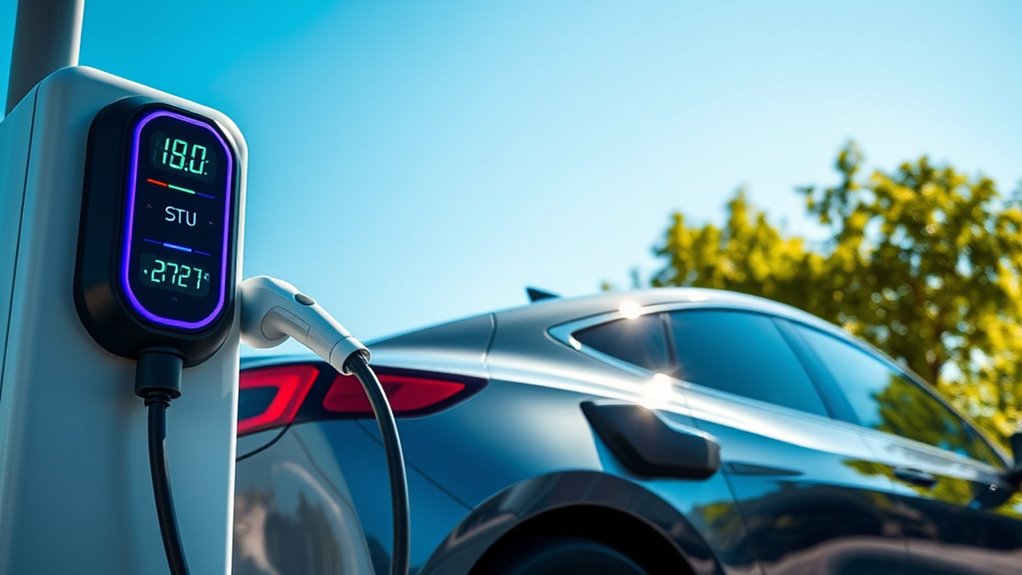
The cost of an EV charging session is usually based on the energy added, measured in kilowatt-hours (kWh). The simplest formula is:
Charging cost = kWh added × price per kWh, plus any session, parking, or idle fees.
For a current benchmark, the U.S. Energy Information Administration listed the U.S. average residential electricity price at 18.83 cents per kWh for April 2026. At that rate, adding 40 kWh at home would cost about $7.53 before charging losses. Adding 54 kWh would cost about $10.17 before charging losses.
Charging Cost Factors
Your final session cost can change based on:
- Electricity rate: Home rates vary by state, utility, time of day, and plan.
- Energy added: Charging from 20% to 70% costs less than charging from 5% to 100%.
- Public charger pricing: Public stations may bill per kWh, per minute, or by a blended structure.
- Session fees: Some networks add a flat start fee.
- Idle fees: You may be charged if you stay plugged in after charging ends.
- Parking fees: Garages, airports, hotels, and city lots may charge for parking separately.
- Charging losses: Some electricity is lost as heat during charging, so wall energy can be slightly higher than battery energy added.
Public vs. Home Rates
Home charging is usually the cheapest and most predictable option because you pay your utility rate. It is also convenient because many EV owners can charge overnight.
Public Level 2 charging can be free, low cost, or priced like a parking amenity. DC fast charging is usually more expensive because the equipment, power demand, site costs, and network operation are higher. Always check the price shown in the app or on the station before starting.
| Example Session | Simple Cost Example |
|---|---|
| Add 20 kWh at home at $0.1883/kWh | About $3.77 before losses |
| Add 40 kWh at home at $0.1883/kWh | About $7.53 before losses |
| Add 40 kWh at a public charger at $0.45/kWh | About $18.00 before any session, parking, or idle fees |
Factors That Affect Charging Speed
Charging speed is not controlled by the station alone. The charger, vehicle, battery, and site power all matter.
| Charging Type | Typical Use | What to Expect |
|---|---|---|
| Level 1 AC | Standard 120V outlet | Slow charging, often useful for short daily driving or plug-in hybrids. |
| Level 2 AC | Home, workplace, hotel, parking garage, public destination | Good for overnight charging or longer stops. |
| DC fast charging | Road trips and quick public stops | Fastest option, but speed varies widely and usually slows as the battery fills. |
The main factors that affect charging speed include:
- Charger power: A higher-kW charger can send more power, but only if your EV can accept it.
- Vehicle limit: A car with a 50 kW DC fast-charging limit will not charge at 150 kW just because the station can provide 150 kW.
- Battery state of charge: Charging is often faster at lower and middle percentages and slower near full.
- Battery temperature: Cold or very hot batteries may charge more slowly until the battery warms or cools.
- Battery size and chemistry: Larger packs and different battery designs have different charging curves.
- Shared power: Some sites split available power across stalls when several EVs charge at the same time.
- Vehicle settings: A charge limit, scheduled charging, or battery protection setting may pause or slow the session.
How to Wrap Up Your Charging Session Safely
When you have enough charge, stop the session before pulling on the connector. The safest steps are:
- Stop charging through the app, RFID card, station screen, vehicle screen, or charger button.
- Wait for confirmation on the station, app, or vehicle display.
- Check for final cost and kWh delivered if the station shows a receipt.
- Unlock the connector from the vehicle if your EV keeps it latched.
- Remove the connector straight out without twisting or yanking.
- Return the cable to its holder so it does not become a trip hazard or get damaged.
- Move your vehicle if you are finished, especially at a busy DC fast charger.
If the connector will not release, do not force it. Confirm the session has ended, unlock the vehicle, check the app for a stop button, and use the vehicle’s charge-port release procedure from your owner’s manual. If you are at a public station and the connector remains locked, call the charging network support number shown on the station.
Note: Some networks charge idle fees after your session ends. Set a phone alert so you can move your EV when charging is complete.
Troubleshooting Charging Issues: What to Do When Your EV Won’t Charge
If your EV will not charge, start with the simple checks before assuming the vehicle or charger has failed.
| Problem | Likely Cause | What to Try |
|---|---|---|
| Session will not start | Loose connector, payment failure, app issue, or station fault | Reseat the connector, confirm the charger ID, retry payment, or try another stall. |
| Charging starts then stops | Vehicle charge limit, charger error, overheated connector, or network interruption | Check the vehicle limit, read the error code, inspect the connector, and call support if needed. |
| Charging is slower than expected | Cold battery, high state of charge, shared power, or vehicle max limit | Precondition the battery if your EV supports it, try a different stall, or charge from a lower state of charge on road trips. |
| Connector will not release | Session still active or vehicle lock engaged | Stop the session, unlock the vehicle, use the app release option, or follow the owner’s manual release procedure. |
| Payment is declined | Expired card, weak signal, app problem, or account issue | Try another payment method, use guest checkout if offered, or call the network support line. |
For a public charger, do not try to reset the station by opening panels, unplugging equipment from power, or using the electrical disconnect. Use the app, screen, help number, or another stall. For a home charger or portable cordset, follow the manufacturer’s manual and call a qualified electrician if a breaker trips repeatedly or the outlet feels hot.
Frequently Asked Questions
What is the basic understanding of EV chargers?
EV chargers supply electricity to your vehicle so the onboard battery system can store it safely. Level 1 uses a standard household outlet, Level 2 uses higher-power AC charging, and DC fast charging sends direct current to the battery for much faster public charging.
How do I stop an EV charging session?
Use the same method you used to start it, such as the app, RFID card, station screen, payment card, or vehicle controls. Wait for the charger or vehicle to confirm that charging has stopped before removing the connector.
Are electric cars safe for pacemakers?
Many people with pacemakers or ICDs use electric vehicles, but you should follow your device manufacturer’s guidance and your clinician’s advice. As a cautious habit, avoid leaning your chest directly against active charging equipment, high-power cables, or strong magnets, and ask your device clinic about any personal restrictions.
What EV charger does Volvo recommend?
For home charging, Volvo owners should follow the charger guidance in their specific owner’s manual and choose a properly installed Level 2 charger that matches the vehicle’s onboard charging limit. For public fast charging, use a compatible DC fast charger and the correct connector or approved adapter for your model.
Why did my EV stop charging before 100%?
Your EV may have reached a charge limit set in the vehicle or app. Charging can also slow or stop because of battery temperature, station limits, a network error, or a charger fault. Check your vehicle’s charge target, the station screen, and the app message.
Can I unplug my EV before it is fully charged?
Yes. You do not have to wait for 100%. Stop the session first, wait for confirmation, then remove the connector. Ending a session early is common at public chargers, especially when you only need enough range to reach your next stop.
Do I need a charging app for every public charger?
Not always. Some chargers support contactless card payment, guest checkout, or Plug & Charge. Still, the network app can help you check live availability, pricing, receipts, charging status, and remote stop options.
Conclusion
An EV charging session becomes simple once you know the sequence: connect, authenticate, confirm charging, monitor progress, stop the session, and disconnect safely. The biggest variables are connector compatibility, charger level, battery state of charge, payment method, and price. Check the station details before you plug in, watch for idle fees, and move your vehicle when finished. If something fails, a secure connection, active payment method, correct charger ID, and station support number solve many common problems.
Sources
- U.S. Department of Energy Alternative Fuels Data Center: Electric Vehicle Charging Stations — charging levels, connector basics, charging-speed factors, and DC fast-charging ranges.
- U.S. Energy Information Administration: Average Price of Electricity to Ultimate Customers — April 2026 residential electricity price benchmark.
- eCFR: 23 CFR Part 680, National Electric Vehicle Infrastructure Standards and Requirements — public charger payment, access, connector, and Plug & Charge definitions for covered projects.
- Open Charge Alliance: Open Charge Point Protocol — charging station to charging management system communication and transaction support.
- ENERGY STAR Certified EV Chargers Product Finder — certified EV charging equipment reference for home and commercial buyers.